
In Charleston, walking a few blocks always takes longer than it should. It’s not the distance. It’s the stopping.
A pastel house catches your eye. Then an iron gate with a hidden garden behind it. A church steeple rises over the rooftops, and a cobblestone lane leads toward the harbor. Then someone mentions shrimp and grits, and the whole plan gets pushed back another hour.
Charleston packs centuries of history, a world-class food scene, gardens, museums, a working harbor and five beach towns into one compact corner of the Lowcountry. This guide covers 35 of the best things to do in Charleston, South Carolina, from the classic downtown sights to museums that tell the city’s full story, nearby beaches, plantations and gardens, food, nights out and day trips. You’ll also find free things to do, ideas for families and couples, an events calendar, where to stay, how to get around and itineraries for one to three days.
What Are the Best Things to Do in Charleston, South Carolina?
The best things to do in Charleston, South Carolina are walking the Historic District, seeing Rainbow Row and The Battery, relaxing at Waterfront Park, browsing the Charleston City Market, taking the ferry to Fort Sumter, visiting the International African American Museum, touring the USS Yorktown at Patriots Point, exploring a plantation site like McLeod or Middleton Place, eating Lowcountry food, and spending a day at Folly Beach or Isle of Palms.
Don’t try to cram all of that into one day. Charleston is at its best when you leave room to wander.
| Planning Detail | What to Know |
|---|---|
| Best for | History, food, architecture, couples, families |
| Ideal first trip | 3 days (4–5 with a beach day) |
| Best base | The Historic District |
| Must-sees | The Battery, Rainbow Row, Fort Sumter, IAAM, Waterfront Park |
| Best free things | Historic walks, Waterfront Park, City Market, Angel Oak |
| Best beaches | Folly Beach, Isle of Palms, Sullivan’s Island |
| Best with kids | South Carolina Aquarium, Patriots Point, Charles Towne Landing |
| Getting around | Walk downtown; a car helps for beaches and plantations |
| Best months | March–May and October–November |
Explore Historic Downtown Charleston
1. Walk the Historic District
Start on foot. The historic peninsula is compact, and most of the places you’ve seen in Charleston photos are surprisingly close together. Walk through the French Quarter, head south of Broad Street, and turn down side streets just because they look interesting. Look for “piazzas” (the long side porches built to catch the breeze), earthquake bolts on old brick walls, and joggling boards on porches. Go early in summer, before the heat and humidity build.
2. See Rainbow Row
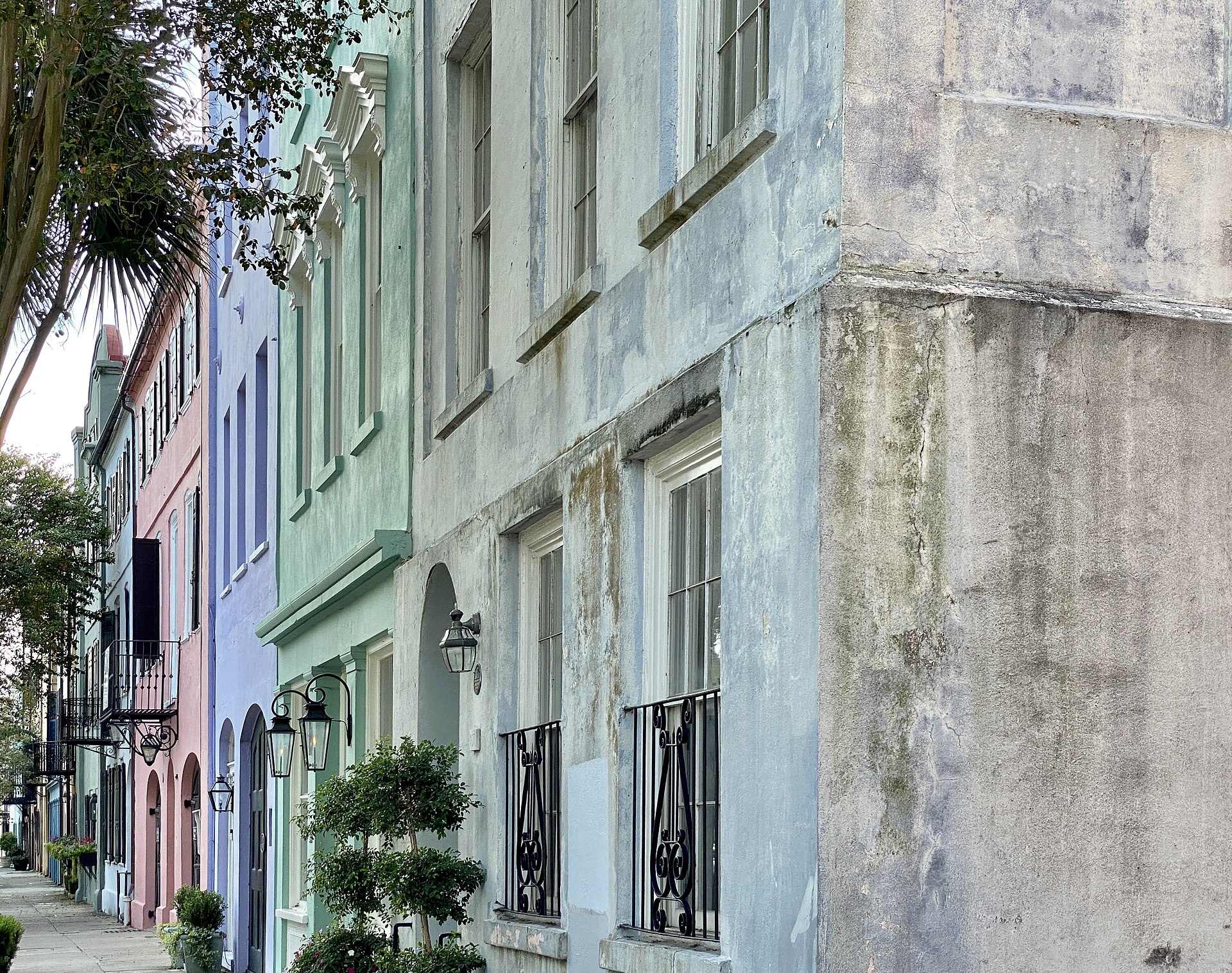
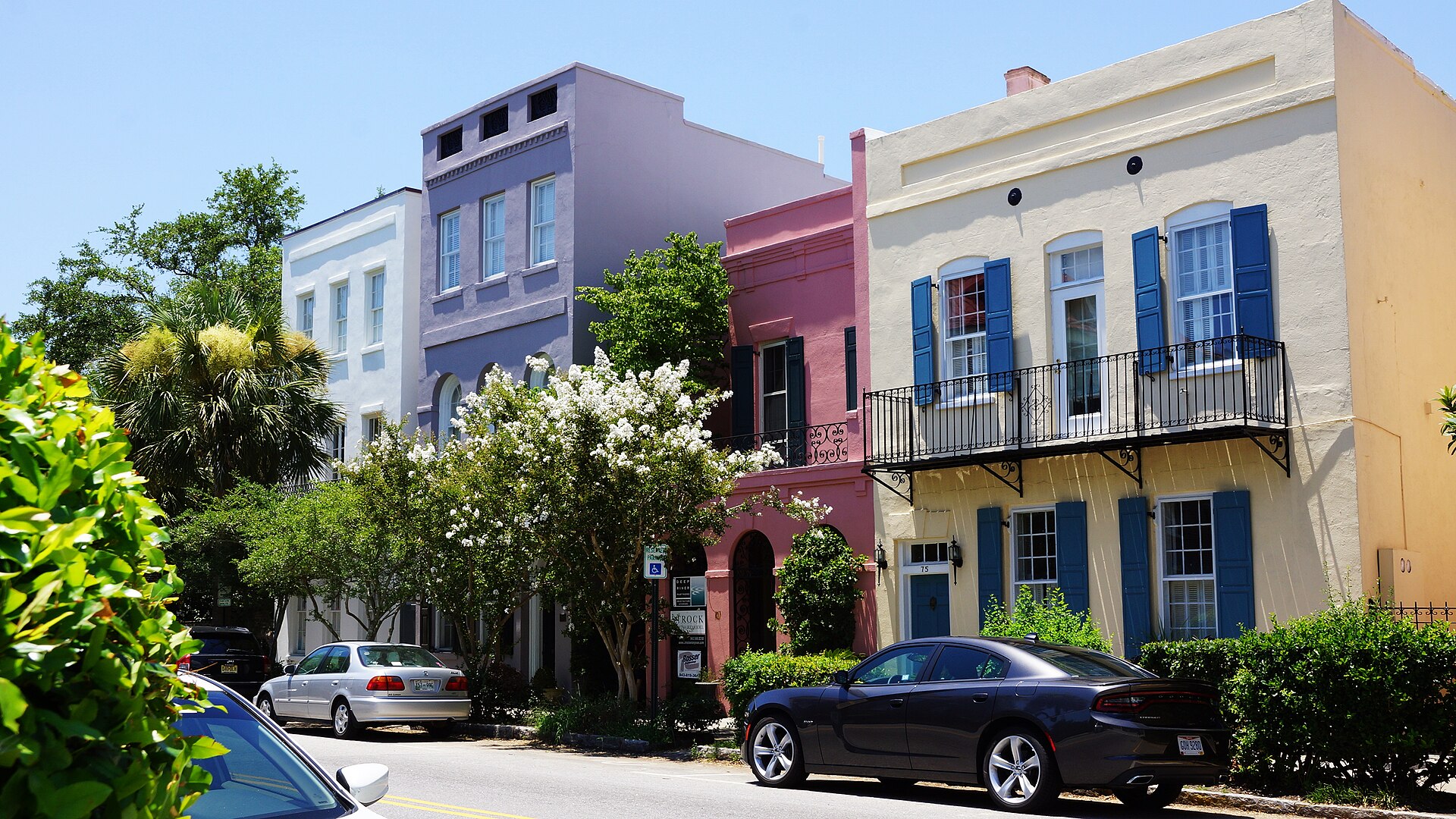
Rainbow Row is the line of 13 pastel Georgian houses along East Bay Street, and it’s probably the most photographed street in South Carolina. It’s a quick stop, not a half-day attraction. Come early for photos without crowds, and remember these are private homes, so admire them from the sidewalk.
3. Walk The Battery and White Point Garden
Continue south from Rainbow Row to The Battery, the raised seawall promenade at the tip of the peninsula. On one side, Charleston Harbor opens toward Fort Sumter. On the other stand some of the grandest antebellum mansions in the city. Next door, shady White Point Garden has old cannons, monuments and benches under live oaks. It’s free, and it’s especially lovely at sunrise or sunset.
4. Swing at Waterfront Park
Waterfront Park is an eight-acre park along the Cooper River with lawns, gardens, the famous Pineapple Fountain and a long pier lined with wooden bench swings. Take the fountain photo, then walk out to the pier, grab a swing and watch the boats go by. It’s one of Charleston’s best free spots, morning or night.
5. Browse the Charleston City Market
The historic City Market stretches four blocks through open-air sheds and houses more than 300 small businesses and artisans. Look for the sweetgrass baskets woven by Gullah Geechee artisans, a craft passed down for generations from West African traditions. They’re true works of art, priced accordingly. The day market is open daily, and a night market runs on weekend evenings in warmer months. Allow 45 minutes to an hour.
6. Shop and Eat Along King Street
King Street is Charleston’s main shopping street, and it changes as you walk north. Lower King has antiques and art galleries, Middle King has big-name fashion stores, and Upper King is packed with restaurants, cocktail bars and nightlife. Walk it in the late afternoon and stay for dinner.
7. Visit the Churches of the “Holy City”
Charleston earned the nickname “the Holy City” for its skyline of church steeples and its long history of religious tolerance. St. Michael’s, with the oldest church building in the city, and St. Philip’s, whose steeple glows at night, are both downtown landmarks. Mother Emanuel AME Church is one of the oldest Black congregations in the South and a deeply important site. The overgrown graveyards of the Unitarian Church and the Circular Congregational Church are quiet and atmospheric. Visit respectfully, especially during services.
8. Find the Hidden Alleys
Some of Charleston’s best corners aren’t on most maps. Look for Philadelphia Alley (once known as “Dueler’s Alley”), cobbled Chalmers Street, narrow Longitude Lane and Stoll’s Alley. Peek through gates into private gardens, but don’t go through them. It’s easy to spend an hour just looking.
9. Take a Horse-Drawn Carriage Tour
Carriage tours are touristy, but they’re also a relaxing way to learn the city’s history while someone else does the walking. Most last about an hour and cover a different set of streets each time, assigned by the city to spread out traffic. Book a morning or late-afternoon slot, since carriages stop running on the hottest summer afternoons to protect the horses.
History and Museums
Charleston is beautiful, but you can’t understand it through pretty houses alone. Much of the city’s wealth was built on slavery, and some of its best museums tell that story honestly. Mix the postcard sights with the places that explain them.
10. Take the Ferry to Fort Sumter
The first shots of the Civil War were fired at Fort Sumter in April 1861, and the fort still sits on its island in Charleston Harbor. You can reach it only by boat, with the National Park Service’s authorized ferry leaving from Liberty Square downtown or Patriots Point in Mount Pleasant. Rangers explain what happened, and the ride gives you great harbor views. Allow about two and a half hours round trip.
11. Visit the International African American Museum
Opened in 2023, the International African American Museum (IAAM) stands at Gadsden’s Wharf, where many enslaved Africans first arrived in North America. It traces African American history and culture across the Atlantic world, includes a center for tracing family ancestry, and has the African Ancestors Memorial Garden outside, which is free to visit. Admission is by timed ticket, so book ahead and give it at least two to three hours. Don’t squeeze it in between lunch and something else.
12. See the Old Slave Mart Museum
On cobbled Chalmers Street, the Old Slave Mart Museum is housed in a building where enslaved people were once auctioned. It’s small but powerful, and it explains the domestic slave trade in Charleston. It takes about 45 minutes and pairs naturally with a visit to IAAM.
13. Explore the Charleston Museum and the Old Exchange
Founded in 1773, the Charleston Museum calls itself America’s first museum. It covers the Lowcountry from natural history to the Revolution and the Civil War, and it also runs two historic houses. At the foot of Broad Street, the Old Exchange and Provost Dungeon is a colonial customs house with a damp brick dungeon below, where costumed guides tell stories of pirates and Revolutionary War prisoners. Kids tend to love the dungeon.
14. Tour a Historic House Museum
Charleston has several preserved historic homes open for tours, including the Nathaniel Russell House with its “flying” spiral staircase, the Aiken-Rhett House (preserved rather than restored, with its original slave quarters intact), the Heyward-Washington House and the Edmondston-Alston House on The Battery. You don’t need to see them all. Pick one or two. The best tours talk about the enslaved people who lived and worked there, not just the furniture.
15. Visit the Gibbes Museum of Art
The Gibbes Museum of Art, in a beautiful Beaux-Arts building on Meeting Street, focuses on art of the American South, from colonial portraits to contemporary work. It’s a peaceful break from the heat and a good rainy-day choice.
16. Board the USS Yorktown at Patriots Point
Across the Cooper River in Mount Pleasant, Patriots Point Naval & Maritime Museum is anchored by the USS Yorktown, a World War II aircraft carrier with planes parked on its flight deck. General admission also includes the destroyer USS Laffey, the Vietnam Experience exhibit and the Medal of Honor Museum. You can easily spend three to four hours here, and it’s a hit with kids who get bored in traditional museums. The Fort Sumter ferry also leaves from here.
17. See the H.L. Hunley Submarine
In 1864, the Confederate submarine H.L. Hunley became the first submarine to sink an enemy warship, then vanished. Raised in 2000, it’s now being conserved in a lab in North Charleston. Tours run mainly on weekends and are small, so book ahead.
18. Explore Charles Towne Landing
Charles Towne Landing State Historic Site marks the spot where English colonists founded Charleston in 1670. It has trails, gardens, exhibits, an Animal Forest with native wildlife, and the Adventure, a replica 17th-century trading ship. It’s especially good for families because kids can switch between history, animals and open space. The ship is usually closed on Tuesdays and removed for maintenance in the winter months, so check before you go.
Plantations, Gardens and the Angel Oak
The plantations along the Ashley River and in Mount Pleasant are among the most visited places near Charleston. They’re beautiful, but they were also places of forced labor. The best visits treat them as historic sites, not just photo backdrops. Each one takes at least half a day, so pick one or two.
19. Visit McLeod Plantation Historic Site
On James Island, just 15 minutes from downtown, McLeod Plantation centers its story on the enslaved people who lived and worked there and on their descendants. The guided tour is thoughtful and honest, and many visitors call it the most meaningful plantation visit in the area. If you see only one, make it this one.
20. Stroll Middleton Place or Magnolia Plantation
Along the Ashley River, Middleton Place has some of the oldest landscaped gardens in America, with terraced lawns and reflecting pools, plus exhibits about the enslaved people who lived there. Next door, Magnolia Plantation and Gardens is famous for its romantic, informal gardens and the Audubon Swamp Garden. Magnolia’s admission includes its “From Slavery to Freedom” tour. Both are spectacular in spring, when the azaleas bloom.
21. See Drayton Hall or Boone Hall
Drayton Hall, also on the Ashley River, is one of the oldest preserved plantation houses in the country. It was left unrestored and unfurnished, so you see the bare architecture. In Mount Pleasant, Boone Hall is famous for its Avenue of Oaks, and its admission includes Gullah culture presentations and an exhibit on Black history in the original brick cabins where enslaved people lived.
22. Stand Under the Angel Oak
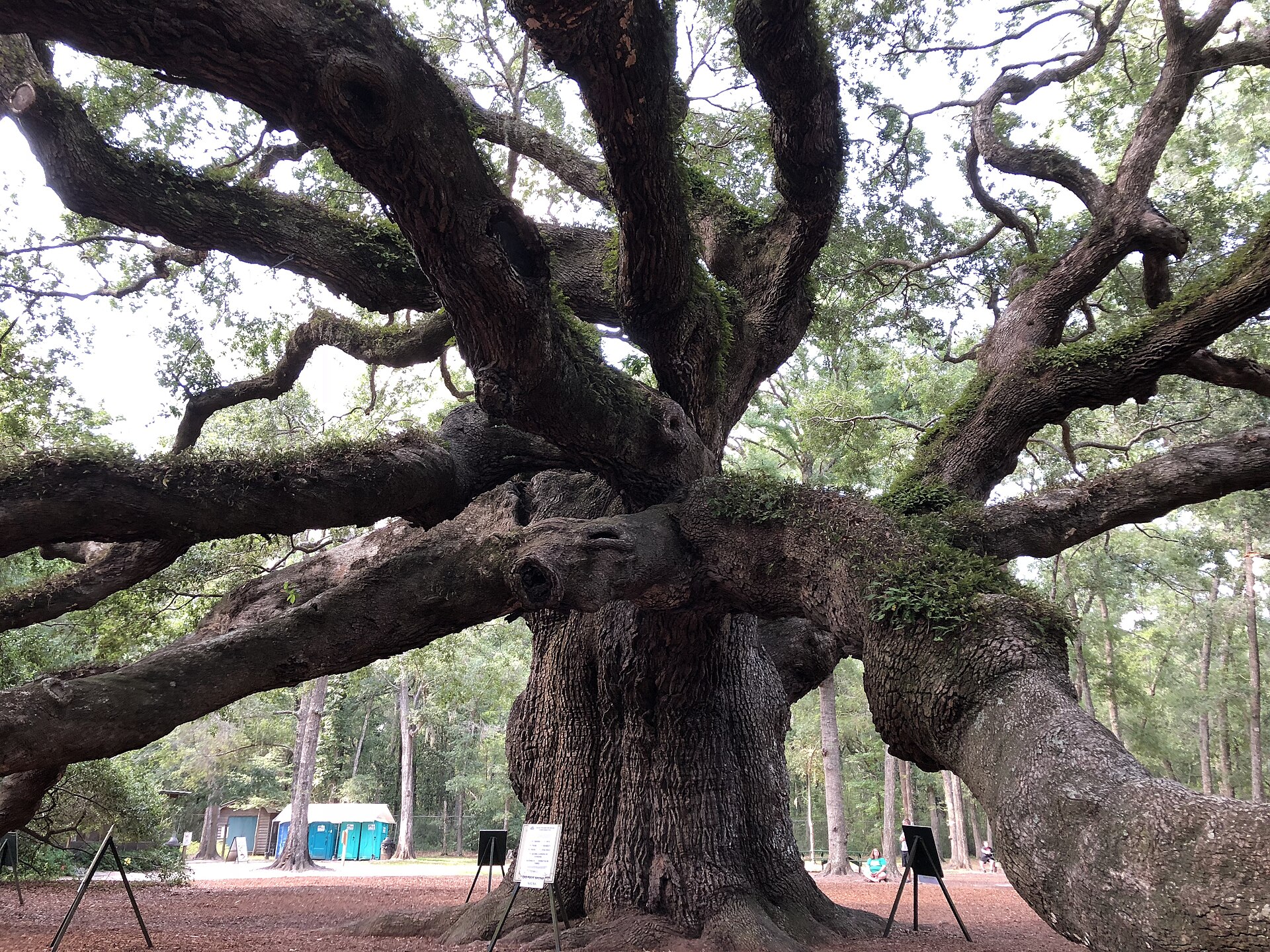
On Johns Island, about 25 minutes from downtown, the Angel Oak is a Southern live oak estimated at 300 to 400 years old. It stands about 65 feet tall and shades roughly 17,000 square feet, with limbs so long and heavy they rest on the ground. Admission is free. Allow 30 to 45 minutes, stay outside the fence and check hours, since the park closes in the evening.
On the Water and at the Beach
23. Take a Harbor Cruise
Charleston looks completely different from the water. A harbor cruise or sunset sail passes the steeples of the skyline, the Ravenel Bridge, Fort Sumter and the old forts at the harbor mouth, often with dolphins nearby. It’s a great way to rest your legs after a morning of walking.
24. Kayak the Marsh at Shem Creek
For something active, rent a kayak or paddleboard, or book a guided tour, from Shem Creek in Mount Pleasant. You’ll paddle through tidal creeks and marsh where dolphins often feed and herons and egrets wade. Go with a guide if you’re new to paddling, because the tides here are strong.
25. Walk the Ravenel Bridge
The Arthur Ravenel Jr. Bridge, the big cable-stayed bridge to Mount Pleasant, has a protected walking and biking path. Walking up to the middle gives you sweeping views of the harbor, the city and the port. It’s free. Start from the Mount Pleasant side, where parking is easier, then reward yourself with a drink on Shem Creek.
26. Spend a Day at Folly Beach
Folly Beach, about 20 minutes from downtown, is Charleston’s laid-back surf town, with casual restaurants, beach bars and a long fishing pier. Walk to the north end and take the trail at Lighthouse Inlet Heritage Preserve to see the Morris Island Lighthouse standing alone in the waves. Arrive early in summer, because parking fills fast.
27. Relax on Isle of Palms or Sullivan’s Island
Isle of Palms has a wide, family-friendly beach with a county park that has lifeguards in season. Next door, quieter Sullivan’s Island pairs a calm beach with Fort Moultrie, part of the same national park as Fort Sumter, which covers coastal defense from the Revolution to World War II. Fort Moultrie is a good choice if you want history without a ferry trip. For a quiet, natural beach, try Kiawah’s Beachwalker Park.
Food, Drinks and Nights Out
28. Eat Lowcountry Food
In Charleston, food isn’t something you fit between attractions. It is one of the attractions. Lowcountry cooking grew out of rice, seafood and West African, Caribbean and European traditions. Try shrimp and grits, she-crab soup, red rice, Carolina Gold rice dishes, fresh oysters, fried green tomatoes and Gullah Geechee dishes. Mix one special dinner with seafood shacks and casual spots, and book popular restaurants well ahead, especially on weekends.
For specific restaurant picks, from oyster bars to barbecue, see our guide to the best places to eat and drink in Charleston, SC.
29. Take a Food Tour
A good food tour gives you history along with the bites: why rice made Charleston rich, how Gullah cooks shaped Southern food, and where the locals actually eat. It’s a smart first-day activity, because you’ll leave knowing where you want to go back for a full meal.
30. Shop the Saturday Farmers Market
From spring through late fall, the Charleston Farmers Market fills Marion Square on Saturday mornings with local produce, crafts, food stalls and live music. It’s free to browse and a great place to grab breakfast and watch local life.
31. Have Drinks on a Rooftop or Upper King
Because Charleston has no skyscrapers, even a few stories up gives you a view over the steeples to the harbor. Several hotel rooftop bars are open to the public. Go about an hour before sunset for a seat. After dinner, Upper King Street is the city’s liveliest nightlife strip, while the French Quarter has quieter cocktail bars.
32. Take a Ghost Tour After Dark
With old graveyards, dungeons and centuries of dark history, Charleston is made for ghost tours. Even if you don’t believe a word of the supernatural parts, a lantern-lit walk is a fun way to hear local stories once the heat fades. Choose a history-focused tour over a pure scare show if you want more substance.
Charleston’s Local Side and Day Trips
33. Escape to Hampton Park and Watch the Citadel Parade
After a few days in the busy core, head north to Hampton Park, a big green space with seasonal flower gardens and a walking loop where locals jog and walk dogs. It sits next to The Citadel, the state’s historic military college. On select Friday afternoons during the school year, cadets hold a free dress parade on the parade ground, with a marching band and rows of cadets in full uniform. Check the schedule if you want to see it.
34. Take a Day Trip
Charleston is a great base for day trips:
- Wadmalaw Island (40 minutes): the Charleston Tea Garden, a working tea plantation, plus a vineyard. Stop at the Angel Oak on the way.
- Beaufort (about 1 hour 15 minutes): a quieter, moss-draped historic town with a waterfront park.
- Edisto Beach (about 1 hour): an old-fashioned beach town reached by a scenic byway through the ACE Basin.
- Summerville (30 minutes): a pretty town known as the birthplace of sweet tea.
- Myrtle Beach (about 2 hours): for a classic beach resort trip. See our guide to things to do in Myrtle Beach, South Carolina.
35. Leave Time to Wander
This isn’t an attraction, but it might be the best thing to do in Charleston. Walk South of Broad with no destination. Browse a bookstore. Sit by the water. Charleston rewards wandering because getting a little lost downtown almost always leads somewhere worth seeing. The city itself is the main sight.
Free Things to Do in Charleston
Free things to do in Charleston include walking the Historic District, Rainbow Row, The Battery and White Point Garden, the Waterfront Park swings, browsing the City Market, King Street, the Angel Oak, the African Ancestors Memorial Garden at IAAM, the Saturday Farmers Market, walking the Ravenel Bridge, the Citadel dress parade and beach access at Folly, Isle of Palms and Sullivan’s Island (parking usually costs money). For dozens more ideas, see our guide to free things to do in South Carolina.
Things to Do in Charleston With Kids
Charleston works well for families as long as every day isn’t a history lesson. The best picks for kids are the South Carolina Aquarium (allow about two hours, and visit its sea turtle hospital), Patriots Point, Charles Towne Landing, the Fort Sumter ferry, the Old Exchange dungeon, the Children’s Museum of the Lowcountry, the Waterfront Park fountains and a beach day. A good family day looks like the aquarium in the morning, lunch, Waterfront Park, a hotel break and then the beach. For more ideas, see things to do in South Carolina with kids.
Things to Do in Charleston for Couples
Charleston might be the most romantic city in the South, and the day almost plans itself. Walk the Historic District in the morning, have a long lunch, tour a garden at Middleton Place or Magnolia, rest at the hotel, catch sunset from a rooftop or on a harbor sail, and finish with dinner and a walk along The Battery. More ideas are in our guide to things to do in South Carolina for couples.
Things to Do in Charleston for Adults and at Night
Traveling without kids opens up food tours, cocktail bars, rooftops, Upper King nightlife, long museum days, distillery and brewery tastings in North Charleston, ghost tours and live shows at the Charleston Gaillard Center or Dock Street Theatre. Best of all, you can spend two hours over lunch without anyone asking when you’re leaving. For more, see things to do in South Carolina for adults.
Things to Do in Charleston When It Rains
Keep a few indoor options ready: the International African American Museum, the South Carolina Aquarium, the Charleston Museum, the Gibbes Museum of Art, the Old Slave Mart Museum, a historic house tour, the Old Exchange, a cooking class or a long lunch. Patriots Point works too, since much of it is inside the ships. Save these for bad weather instead of using a perfect morning indoors.
Best Beaches Near Charleston
| Beach | Distance from Downtown | Best For |
|---|---|---|
| Folly Beach | ~20 min | Surfing, beach bars, lighthouse views |
| Sullivan’s Island | ~20 min | Quiet beach plus Fort Moultrie |
| Isle of Palms | ~25 min | Families, wide beach, lifeguards in season |
| Kiawah (Beachwalker Park) | ~45 min | Quiet, natural beach |
| Seabrook Island | ~45 min | Resort-style quiet (mostly private access) |
Charleston Events Calendar
| When | Event |
|---|---|
| January | Charleston Restaurant Week, Lowcountry Oyster Festival |
| February | Southeastern Wildlife Exposition |
| March | Charleston Wine + Food; Festival of Houses and Gardens begins |
| Spring | Cooper River Bridge Run |
| Late May–June | Spoleto Festival USA |
| Late Sept.–Oct. | MOJA Arts Festival, Fall Tours of Homes and Gardens |
| Mid-Nov.–Dec. | Holiday Festival of Lights, Parade of Boats |
Dates shift each year, so check before you book. Planning a fall or holiday trip? See things to do in South Carolina in October and things to do in South Carolina in December.
Best Time to Visit Charleston
The best time to visit Charleston is March through May or October through November, when the weather is comfortable for walking and the gardens bloom in spring. Spring is the busiest and most expensive season. Summer is hot and humid, so sightsee early and save midday for museums or the beach. Fall is just as pleasant as spring, with oyster season starting. Winter is quiet and affordable, with holiday lights in December. Hurricane season runs June through November. For month-by-month details, see our guide to the best time to visit South Carolina.
How Many Days Do You Need in Charleston?
Three days is a good minimum for a first trip to Charleston. Two days covers the downtown highlights. Three lets you add Fort Sumter, a big museum or a plantation. With four or five, you can add a beach day without rushing the city.
Charleston Itineraries
One Day in Charleston
| Time | Plan |
|---|---|
| Morning | Waterfront Park, Rainbow Row, The Battery and White Point Garden |
| Late morning | Historic District alleys and churches, then the City Market |
| Lunch | A proper Lowcountry meal; don’t rush it |
| Afternoon | One big attraction: IAAM, the aquarium or a historic house |
| Evening | Rooftop sunset, dinner on King Street, then a ghost tour |
Two Days in Charleston
Day 1, historic downtown: follow the one-day plan above.
Day 2, the harbor: morning ferry to Fort Sumter from Patriots Point, then the USS Yorktown, lunch on Shem Creek, a walk on the Ravenel Bridge and dinner in Mount Pleasant or back downtown.
Three Days in Charleston
Days 1 and 2: as above. Day 3: choose your priority. For history and gardens, visit McLeod Plantation in the morning and Middleton Place or Magnolia in the afternoon. For the coast, see the Angel Oak, then spend the afternoon at Folly Beach and watch the sunset by the Morris Island Lighthouse. Don’t try to do a big garden and a full beach day together.
Where to Stay in Charleston
| Area | Best For | Trade-Off |
|---|---|---|
| Historic District and French Quarter | First-timers who want to walk everywhere | Most expensive |
| Upper King | Food lovers and nightlife | Livelier and noisier |
| Mount Pleasant | Families, easy beach access, Patriots Point | Need a car |
| Folly Beach or Isle of Palms | Beach-first trips | Downtown becomes the day trip |
| North Charleston | Budget stays near the airport | Drive to the sights |
Getting Around Charleston
You don’t need a car downtown. In fact, it’s often more hassle than help. Walk the Historic District, use rideshares or pedicabs for longer hops, and look for the free DASH trolley routes that loop around downtown. Street parking is metered and garages fill on weekends, so if you do drive in, park once and walk.
A car is useful for the beaches, the plantations, the Angel Oak, Mount Pleasant and day trips. Charleston International Airport (CHS) is about 20 minutes from downtown.
Charleston Travel Tips and Mistakes to Avoid
- Don’t skip the hard history. Pair the pretty houses with IAAM, McLeod Plantation or the Old Slave Mart Museum.
- Don’t tour every plantation. Pick one or two and give them time.
- Book ahead. Popular restaurants, IAAM tickets, Fort Sumter ferries and Hunley tours fill up.
- Respect the heat. From June to September, sightsee early and take a midday break.
- Watch for flooding. Some downtown streets flood during heavy rain and very high tides. Don’t drive through flooded roads.
- Wear good shoes. Cobblestones and uneven sidewalks are hard on sandals.
- Respect residents. Most historic homes are private. Stay on the sidewalk, and keep voices down at night South of Broad.
- Don’t spend the whole trip downtown. Add the water, a beach or a garden.
Charleston vs. Myrtle Beach
Choose Charleston for history, architecture, food, museums and walkable neighborhoods, with beaches as a side trip. Choose Myrtle Beach for a resort-style beach vacation with family attractions, mini golf, shows and golf. With a week, do both; they’re only about two hours apart. For the full statewide picture, see our guide to the best things to do in South Carolina.
Related Guides
Here’s where to go next as you plan the rest of your trip:
FAQ: Things to Do in Charleston, South Carolina
What are the best things to do in Charleston, South Carolina?
Walk the Historic District, see Rainbow Row and The Battery, relax at Waterfront Park, browse the City Market, take the ferry to Fort Sumter, visit the International African American Museum, tour Patriots Point, visit a plantation site and spend a day at a nearby beach.
What is Charleston most famous for?
Charleston is famous for its preserved historic district, pastel houses like Rainbow Row, church steeples, Lowcountry food, Fort Sumter and its deep and complex history.
Is Charleston worth visiting?
Yes. Charleston combines history, architecture, food, museums, waterfront views and nearby beaches in a compact, walkable city that works for weekends or longer trips.
How many days do you need in Charleston?
Three days is ideal for a first visit. Four or five days lets you add beaches, gardens and a slower pace.
What can you do in Charleston for free?
Walk the Historic District, Rainbow Row and The Battery, visit Waterfront Park, the City Market, the Angel Oak, the African Ancestors Memorial Garden, the Saturday Farmers Market and the Ravenel Bridge, and enjoy free beach access.
Is Charleston good for families?
Yes. The South Carolina Aquarium, Patriots Point, Charles Towne Landing, Fort Sumter, the Children’s Museum of the Lowcountry and nearby beaches are all great for kids.
Do you need a car in Charleston?
Not downtown, which is best on foot. A car is useful for beaches, plantations, the Angel Oak and Mount Pleasant.
Is Fort Sumter worth visiting?
Yes, especially if you’re interested in American history. The boat ride is the only way to get there, and it gives you great views of Charleston Harbor.
Which plantation should I visit in Charleston?
McLeod Plantation offers the most honest look at the lives of enslaved people. Middleton Place and Magnolia are best for gardens, Drayton Hall for architecture and Boone Hall for its famous Avenue of Oaks.
What is the best month to visit Charleston?
April and October are the best months, with comfortable weather for walking. April adds blooming gardens, while October brings fewer crowds and the start of oyster season.
Charleston Is Better When You Slow Down
It’s tempting to race through Charleston: Rainbow Row, photo, Battery, photo, market, museum, Fort Sumter, next. The city doesn’t really reward that.
Walk a little slower. Sit by the harbor. Read the signs inside the museums. Take a long lunch. Turn down a street just because it looks pretty. Then leave downtown for a day and see the marsh, a garden or the beach. What makes Charleston special isn’t any single sight. It’s the way history, food, architecture and the coast all sit on top of each other. Give yourself enough time to notice.