
Most national parks make you work for the big view. Grand Teton hands it to you almost the moment you arrive. There are no foothills here. The Teton Range shoots straight up from the flat valley floor of Jackson Hole, so you can stand next to your car, coffee in hand, and stare at a wall of granite more than 7,000 feet above you.
That’s the good news. The tricky part is choosing what to do with your time. Jenny Lake gets all the attention, but the park also has historic barns, river bends full of moose, a mountain you can drive up, lakes you can paddle, and canyons that lead straight into the high country.
This guide covers the 20 best things to do in Grand Teton National Park, plus how many days you need, when to go, what’s closed in 2026, and simple 1, 2 and 3 day plans. It’s written for first-time visitors, but there’s plenty here for a second trip too.
Grand Teton Things to Do at a Glance
| Experience | Best For | Time Needed |
|---|---|---|
| Jenny Lake | First-time visitors | 2–6 hours |
| Hidden Falls + Inspiration Point | A short, classic hike | 2–4 hours |
| Cascade Canyon | Strong hikers | 5–8+ hours |
| Mormon Row | Sunrise and photos | 30–60 min |
| Schwabacher Landing | Mountain reflections | 30–60 min |
| Oxbow Bend | Wildlife and sunset | 30–60 min |
| Signal Mountain | Big valley views by car | 1–2 hours |
| Jackson Lake and Colter Bay | Easy walks and boating | 2–4 hours |
| Taggart Lake | A moderate lake hike | 2–3 hours |
| Wildlife drive | Everyone | 1–3 hours |
| Snake River float | A relaxed half day | 2–3 hours |
| Scenic drive loop | Non-hikers | Half or full day |
In This Guide
- The best things to do (quick answer)
- Jenny Lake, Hidden Falls and Cascade Canyon
- Scenic stops and sunrise spots
- Wildlife watching
- Jackson Lake, Colter Bay and Signal Mountain
- Boating, paddling and floating
- How many days you need
- 1, 2 and 3 day plans
- 2026 closures and construction
- FAQs
What Are the Best Things to Do in Grand Teton National Park?
The best things to do in Grand Teton National Park are exploring Jenny Lake, hiking to Hidden Falls and Inspiration Point, watching sunrise at Mormon Row or Schwabacher Landing, looking for moose and bison, stopping at Oxbow Bend and the Snake River Overlook, driving up Signal Mountain, and spending time on Jackson Lake. With more time, add Cascade Canyon, Taggart Lake, a Snake River float and the quieter north end of the park.
One tip before the list: don’t try to see everything in a single loop. The park rewards slowing down. Pick one main activity for each day and fill in the scenic stops around it.
Where Is Grand Teton National Park?
Grand Teton sits in northwest Wyoming, just north of the town of Jackson and just south of Yellowstone. The park covers about 310,000 acres, including most of the Jackson Hole valley and the whole Teton Range.
It helps to think of the park in three parts. The south end (Moose, Mormon Row, Taggart Lake) is closest to Jackson. The middle is the Jenny Lake and String Lake area. The north end is Jackson Lake, Signal Mountain, Oxbow Bend and Colter Bay, on the way to Yellowstone. Jackson Hole Airport is actually inside the park, which is unusual and very handy.
The park is open 24 hours a day, all year. But many roads, visitor centers and services are seasonal, so what you can do depends a lot on when you go.
1. Explore Jenny Lake
If you only have time for one place, make it Jenny Lake. The water sits right at the foot of the mountains, with Teewinot Mountain and the mouth of Cascade Canyon rising straight above the far shore. It’s the busiest part of the park for good reason.
Jenny Lake is also a hub. From here you can catch the shuttle boat, hike to a waterfall, climb to a viewpoint, walk the shoreline, rent a kayak or head deep into the mountains. Give it at least half a day if you plan to hike.
Parking tip: in summer, arrive before about 8–9 a.m. or after 3 p.m. The lots fill quickly in the middle of the day, and early mornings also bring calmer water, cooler air and a better chance of wildlife. Our Jenny Lake Grand Teton guide covers parking, the boat and every trail in detail.
2. Take the Jenny Lake Shuttle Boat
You can walk around Jenny Lake, but the boat saves a lot of time and legs. A commercial shuttle runs across the lake from the east shore dock to the west boat dock, where the trails to Hidden Falls and Inspiration Point begin.
The difference is big. On foot from the visitor center, Hidden Falls is about 5 miles round trip and Inspiration Point is closer to 6. From the west boat dock, it’s roughly 1 mile round trip to Hidden Falls and about 2 to Inspiration Point. That makes the boat a smart choice for families, anyone short on time, and hikers saving energy for Cascade Canyon.
The boat runs in the warmer months only and charges a separate fee. Check the current season and prices before you go, and expect a line at the dock in mid-morning.
3. Hike to Hidden Falls
Hidden Falls is the easiest way to get a boat ride, a forest walk and a waterfall into one outing. The falls drop about 100 feet through a shady gully on the west side of the lake. From the boat dock, it’s a short, gentle walk along Cascade Creek.
It’s busy in summer, so don’t expect solitude. The best combination for most first-timers is simple: take the boat across, walk to Hidden Falls, keep going to Inspiration Point, and ride the boat back.
4. Climb to Inspiration Point
Once you’ve seen Hidden Falls, keep climbing. Inspiration Point sits about 420 feet above Jenny Lake on a rocky ledge with a wide view east across the lake and the whole Jackson Hole valley.
From the main Jenny Lake area without the boat, the hike is about 5.7 miles round trip with roughly 870 feet of climbing, and takes around 3 hours. With the boat, it drops to about 1.8 miles round trip and 550 feet of gain. The last section is steeper and rockier than the walk to the falls, so wear proper shoes.
5. Hike Into Cascade Canyon
Most people turn around at Inspiration Point. If you have the legs and the daylight, don’t. Just past the viewpoint, the crowds thin out and the trail levels into Cascade Canyon, a glacier-carved valley squeezed between Teewinot, Mount Owen and the Grand Teton itself.
This is where Grand Teton changes from a park you look at into a park you’re inside. You walk beside a rushing creek with cliffs on both sides, through meadows where moose often feed. You can walk as far as you like and turn around, or push on toward the Forks and Lake Solitude for a long, big day.
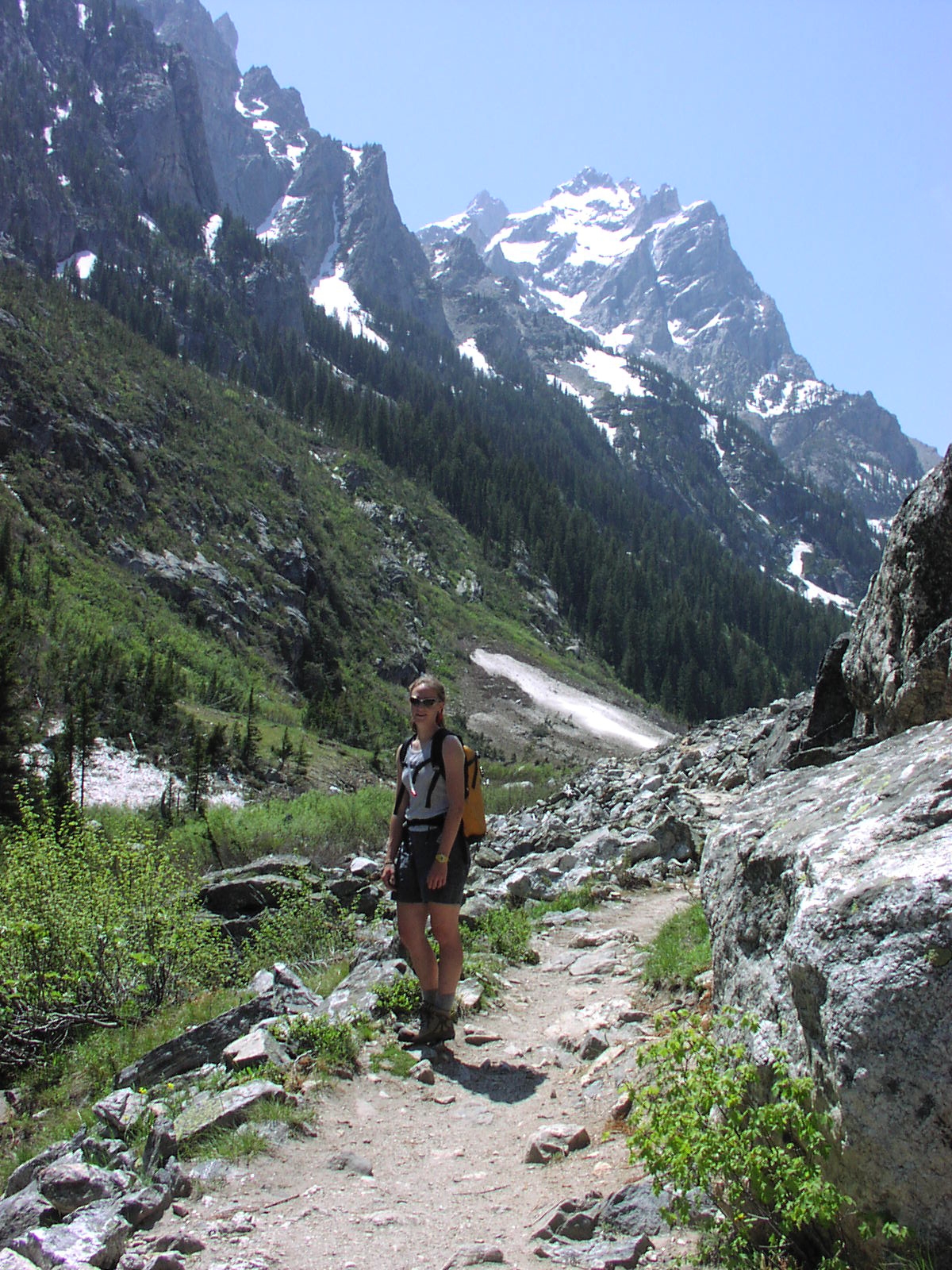
Bring bear spray, plenty of water and layers. Our Cascade Canyon Trail guide has distances, turnaround points and the Lake Solitude extension.
6. Photograph Mormon Row at Sunrise
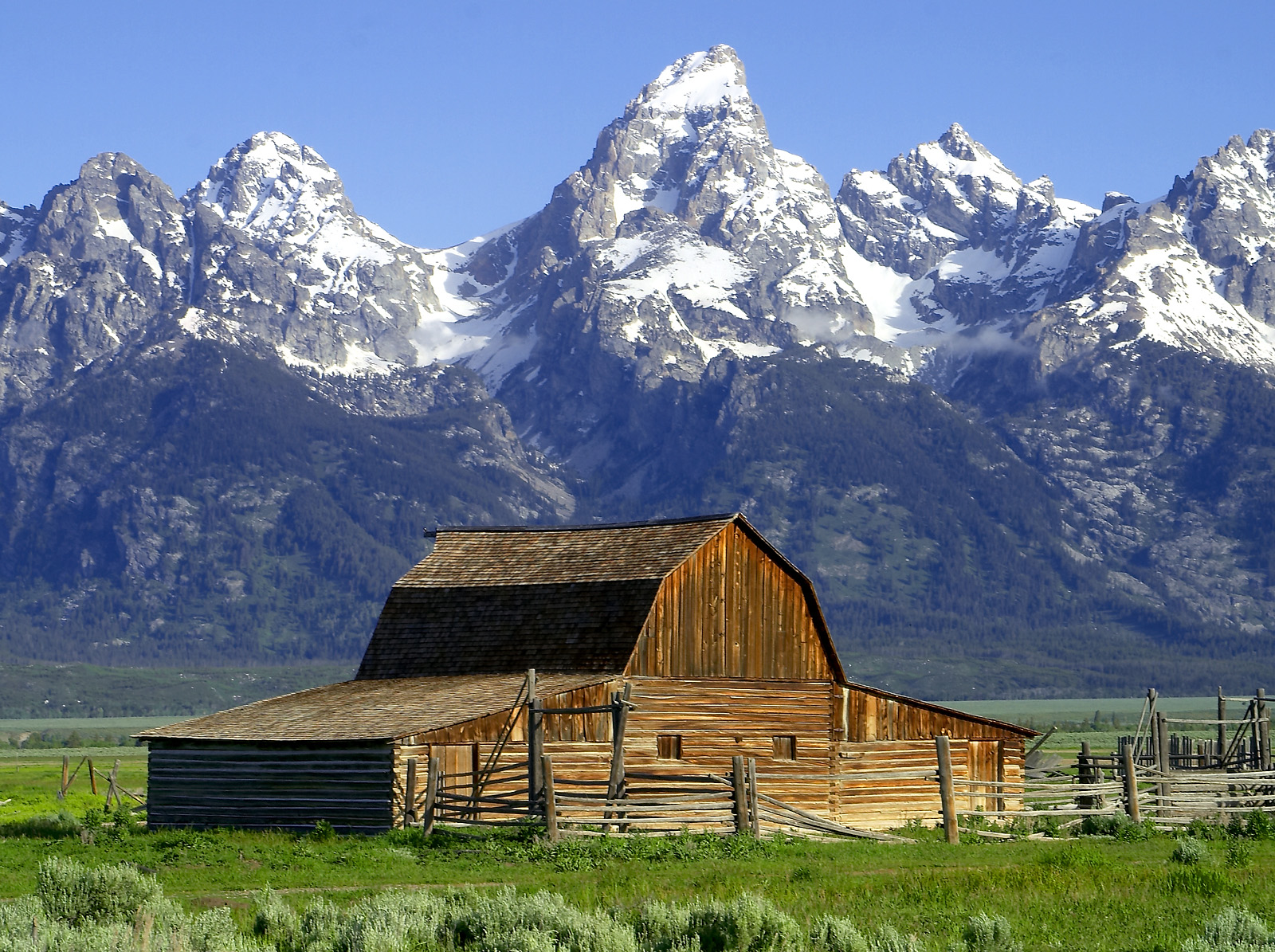
Mormon Row is a line of old homesteads and barns built by settlers in the late 1800s and early 1900s, standing alone in the sagebrush with the Tetons behind them. The T. A. Moulton Barn is the famous one, and you’ve probably seen it on a calendar.
Go at sunrise, when the first light turns the peaks pink behind the barn. Then take a few extra minutes to walk around. There are more buildings than most visitors realize, and bison and pronghorn often graze in the surrounding fields of Antelope Flats.
2026 note: the Mormon Row Historic District is open, but construction is ongoing and access to some buildings is closed.
7. Catch the Reflections at Schwabacher Landing
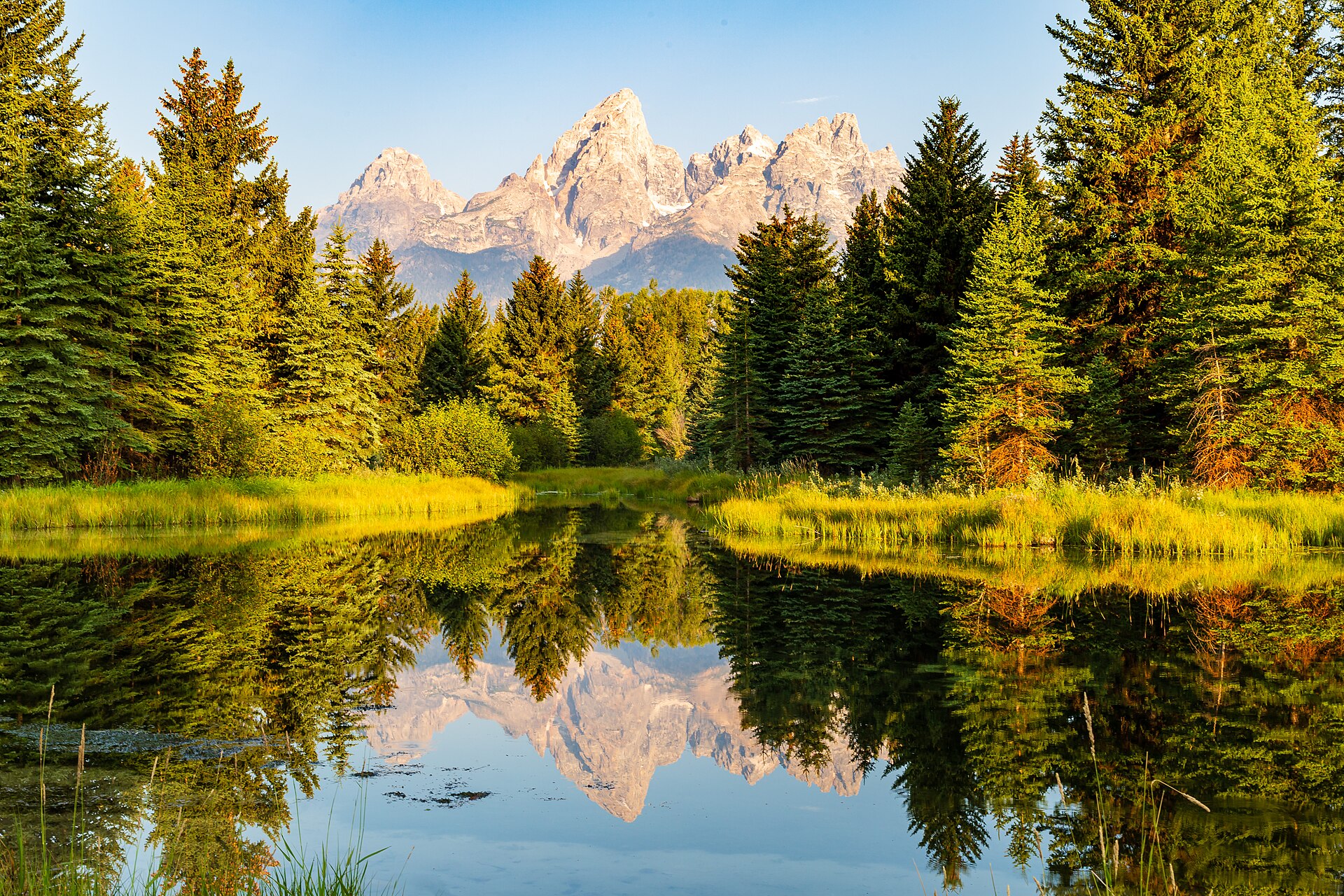
Schwabacher Landing is where you go for the mirror shot. A short gravel road drops down to a quiet side channel of the Snake River. Beaver dams slow the water, and on a still morning the whole Teton Range reflects in it.
Mormon Row and Schwabacher give you two different pictures. One has old wooden barns in front of the mountains. The other has water, willows and reflections. If photos matter to you, try one on each morning of your trip. Walk the easy path upstream from the parking area for quieter spots and a decent chance of seeing beavers or ducks.
8. Stop at the Snake River Overlook
This roadside pullout is one of the most famous views in America. The Snake River curves through the valley below, with the full Teton Range lined up behind it. No hiking is needed. Just park, walk a few steps, and look.
It’s an easy stop on the highway between Moose and Moran, and it works at any time of day. Early morning and late evening light give the best colors.
9. Go Looking for Wildlife
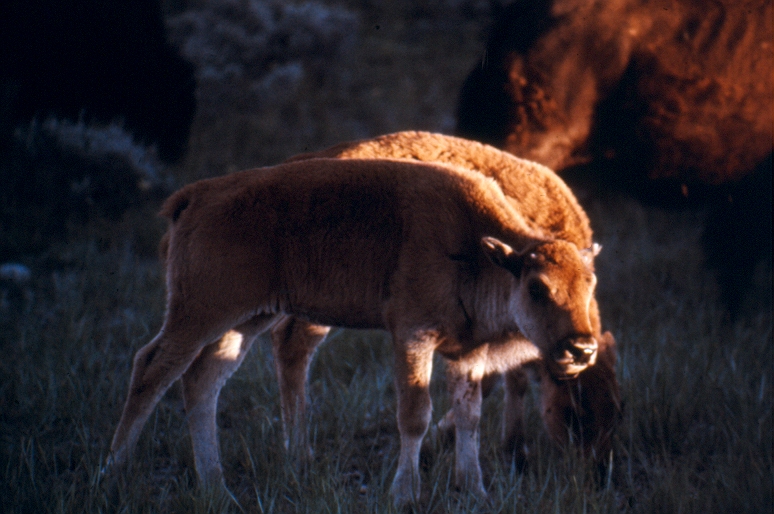
Grand Teton is one of the easiest parks in the country to see big animals, often from your car. Moose, elk, bison and pronghorn are all common. Black bears and grizzly bears live here too, along with coyotes, bald eagles, osprey and the occasional wolf.
Nothing is guaranteed, but you can stack the odds. Go out in the first and last hours of light. Drive slowly. Use pullouts instead of stopping in the road. Bring binoculars. And watch where other people are looking, since a line of parked cars often means something is out there.
Some of the best areas are Oxbow Bend, Willow Flats near Jackson Lake Lodge, Antelope Flats around Mormon Row, Blacktail Ponds and the Gros Ventre River for moose, and the open sagebrush along the main highway for bison and pronghorn.
Wildlife Distance Rules
In Grand Teton you must stay at least 100 yards (91 meters) from bears and wolves, and at least 25 yards (23 meters) from all other wildlife, including moose, bison and elk. Moose look calm but can charge, and bison are faster than they appear. Use a zoom lens instead of moving closer. For the best places and seasons for each animal, see our Grand Teton wildlife guide.
10. Watch the Light Change at Oxbow Bend
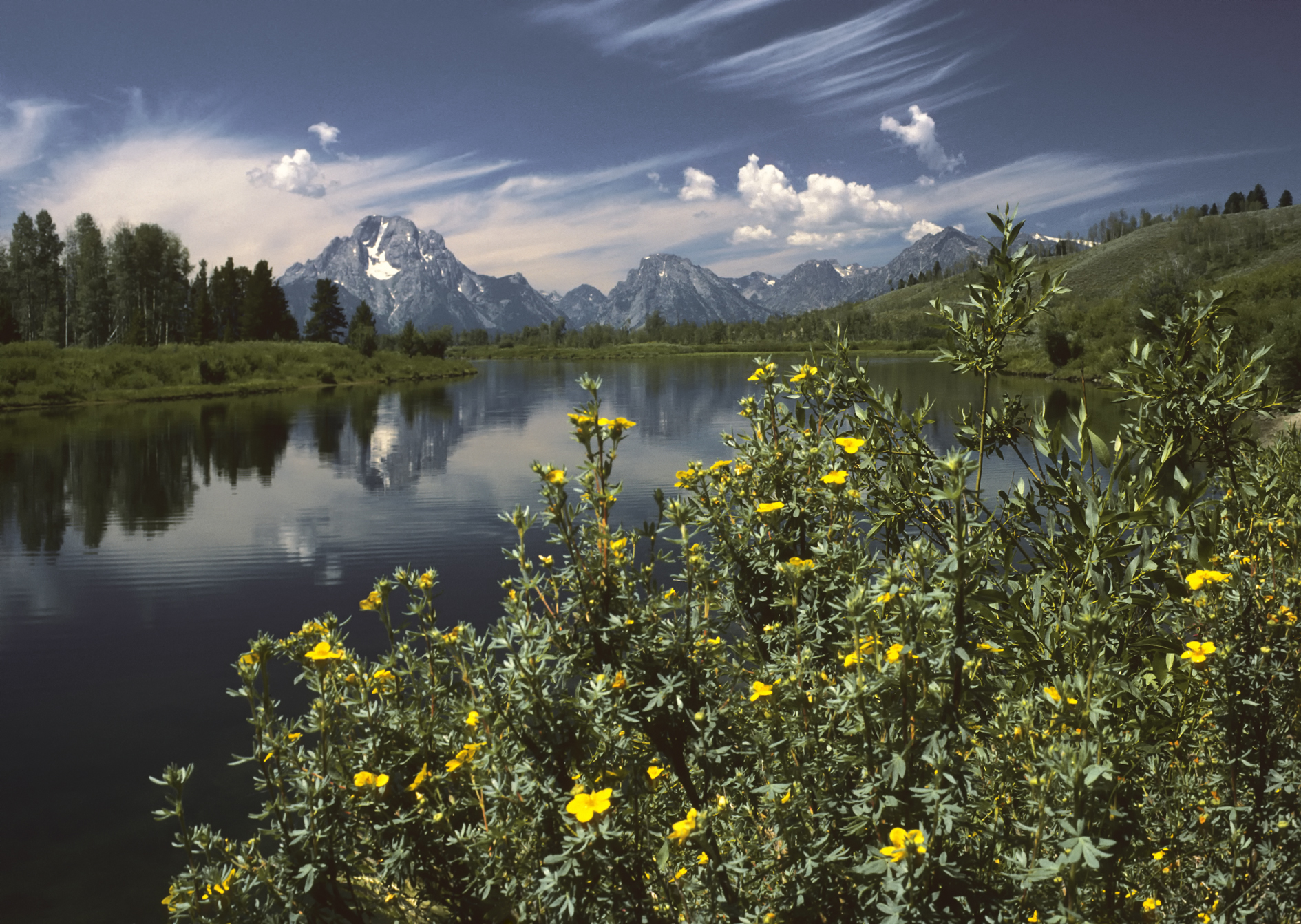
At Oxbow Bend, the Snake River loops slowly through wetlands with Mount Moran towering behind. On a calm day, the mountain reflects perfectly in the water. It’s one of the easiest scenic stops in the park, right beside the road east of Jackson Lake Junction.
It’s also a reliable spot for wildlife. Moose wade in the shallows, pelicans and otters use the river, and bald eagles and osprey fish here. Come back more than once if you can. Sunrise, sunset and late September, when the aspens turn gold, all look completely different.
11. Visit Menor’s Ferry and the Chapel of the Transfiguration
Near Moose, an easy half-mile loop takes you back to homesteading days. Menor’s Ferry is a restored river crossing with a replica ferry, an old general store and cabins from the early 1900s. It’s flat, short and good for kids.
Right next to it stands the small log Chapel of the Transfiguration. Step inside and you’ll see why people love it: the window behind the altar frames the Grand Teton. It’s still used for services, so be quiet and respectful if something is going on.
12. Start at the Craig Thomas Discovery and Visitor Center
If it’s your first visit, the main visitor center in Moose is a good first stop. You can pick up maps, check trail and road conditions, ask rangers about recent wildlife sightings, and look at exhibits on the park’s geology, history and climbing. It also has restrooms and water bottle refills before you head out.
Ranger programs run from here and other visitor centers in summer, and kids can pick up a Junior Ranger booklet.
13. Hike to Taggart Lake
Taggart Lake is one of the best short-to-moderate hikes in the park. You start in open sagebrush with the Grand Teton straight ahead, cross a creek, climb a low glacial ridge through aspens and finish at a clear lake right below Avalanche Canyon. No boat or long drive needed.
2026 alert: the Taggart Lake trailhead and trail are only partially open because of construction. The usual shorter route is closed, and the open southern route is longer and steeper. Check current conditions and follow the signs. Our Taggart Lake Trail guide explains the detour.
14. Walk or Paddle String Lake and Leigh Lake
Just north of Jenny Lake, String Lake is the relaxed alternative. It’s narrow, shallow and a little warmer than the other lakes, with a flat trail along the shore and picnic spots under the trees. Families love it, and it’s one of the nicest places in the park to paddle a canoe or kayak.
From the String Lake area, an easy trail continues to Leigh Lake, which has sandy beaches and big views of Mount Moran. It’s a good choice if you want mountain scenery without a steep climb.
15. Spend a Day Around Jackson Lake
Jenny Lake gets the crowds, but Jackson Lake is the giant of the park. It stretches about 15 miles along the base of the northern Tetons, with Mount Moran rising straight from its western shore.
Good places to enjoy it include Jackson Lake Dam, the lakeshore pullouts along the main road, and the back deck of Jackson Lake Lodge. The lodge’s huge lobby windows look out over Willow Flats to the mountains, and moose often feed in the willows below. You don’t need to be a guest to walk in and enjoy the view.
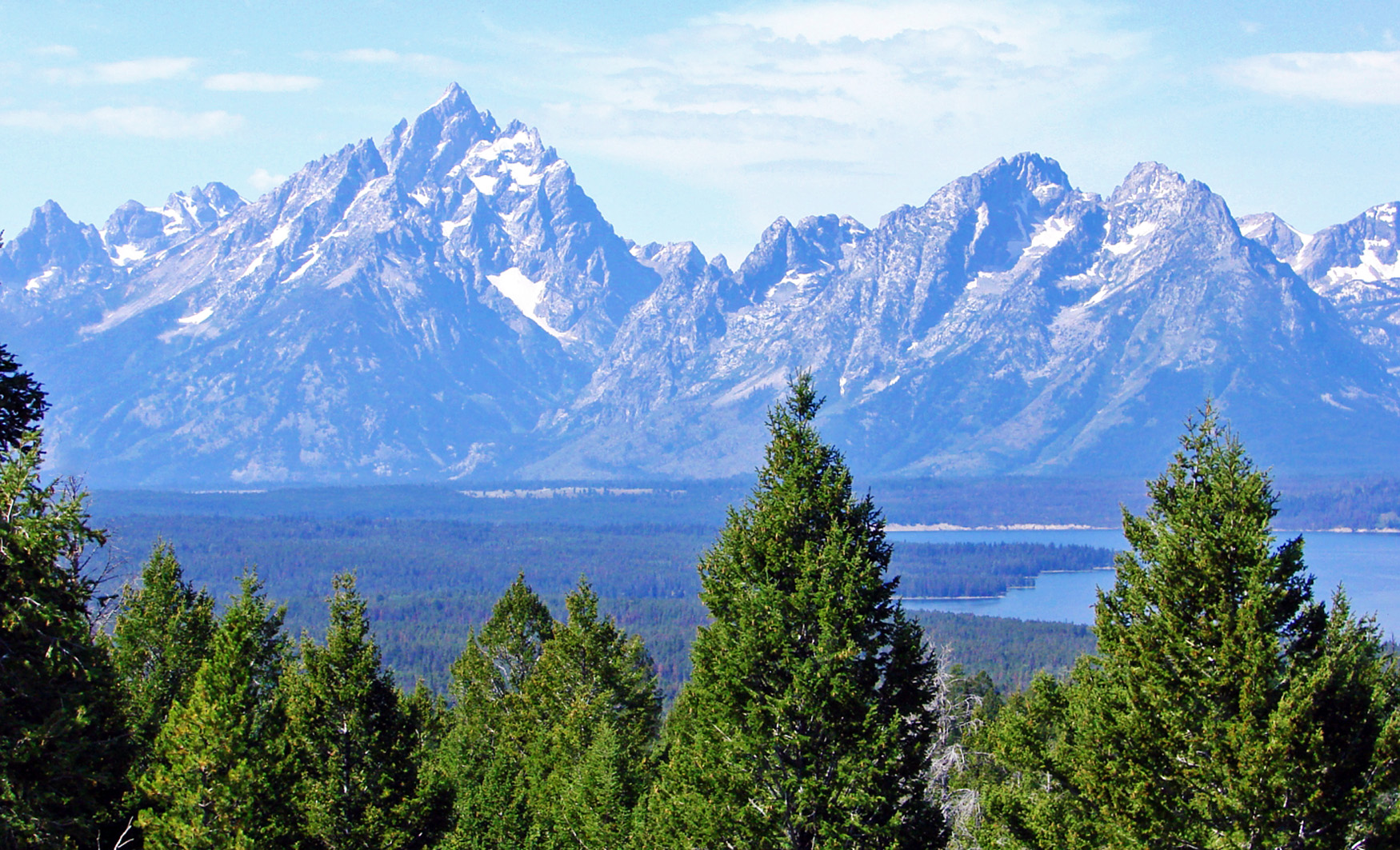
Water levels on Jackson Lake can change a lot depending on snowpack and dam releases, so some beaches and ramps look very different from year to year.
16. Slow Down at Colter Bay
Colter Bay, on the east shore of Jackson Lake, is the easygoing side of the park. It has a visitor center, a marina, cabins, a campground, a general store and some of the gentlest trails in Grand Teton.
The Lakeshore Trail is a flat loop of about 2 miles with views across the lake to the Tetons, and it’s a great sunset walk. Colter Bay also makes a good backup plan when Jenny Lake parking is full, and it’s the natural base if you’re heading on to Yellowstone.
17. Drive Up Signal Mountain
Signal Mountain is the easiest way to get above the valley without a long hike. A narrow, winding road climbs about 5 miles to viewpoints near the 7,700-foot summit. From the top, you can see Jackson Lake, the Snake River and most of Jackson Hole spread out below the peaks.
It gives you a sense of scale that the lake shores can’t. From Jenny Lake you look up at the mountains. From here, you see how the whole valley fits together. The road is steep and tight, so leave trailers and large RVs at the bottom. It’s also seasonal and usually closes for winter in the fall.
18. Get Out on the Water
Seeing the Tetons from the water is a completely different experience. In summer, you can rent canoes and kayaks at Jenny Lake, take a scenic cruise or rent a boat on Jackson Lake from the Colter Bay and Signal Mountain marinas, or bring your own paddleboard to String Lake and Leigh Lake.
Another classic is a guided Snake River scenic float. These aren’t whitewater trips. You drift calmly down a stretch of river inside the park while a guide points out eagles, osprey, beavers and moose, with the mountains in view the whole time. It’s a great half-day for families and anyone who wants a break from hiking.
If you bring your own boat or paddleboard, you’ll need a park boat permit and an aquatic invasive species inspection first. Marinas and rentals are seasonal. As of the park’s September 30, 2026 update, the Colter Bay and Signal Mountain marinas had already closed for the season.
19. Take the Scenic Drive Loop
You don’t need to hike a single mile to have a great day here. The main roads form a loop of about 42 miles: Teton Park Road runs along the base of the mountains past Jenny Lake, and the highway (US 26/89/191) runs back down the valley’s east side with the wide views.
A good no-hike route is Moose, Menor’s Ferry, Jenny Lake, Signal Mountain, Jackson Lake Dam, Oxbow Bend, the Snake River Overlook, Schwabacher Landing and Mormon Row. Driving alone takes about two hours. With stops, short walks and a picnic, it easily fills a whole day.
Keep in mind that the middle part of Teton Park Road closes to cars in winter, usually from November through April.
20. Stay Out for Sunset and Stars
The Tetons face east, so sunrise lights them up directly. But sunset has its own magic. The peaks turn into dark silhouettes, the sky behind them glows, and clouds over the range can catch amazing color. Jackson Lake, Oxbow Bend, Signal Mountain and the Snake River Overlook are all good places to end the day.
Stick around after dark, too. Away from Jackson, the skies are very dark, and on a clear, moonless night you can see the Milky Way rising above the mountains. Bring a warm layer, since nights are cold even in summer.
More Things to Do If You Have Extra Time
- Bike the pathway: a paved multi-use path runs from Jackson through Moose to Jenny Lake, with mountain views the whole way.
- Go horseback riding: guided trail rides run in summer from areas like Colter Bay and Jackson Lake Lodge.
- Try fishing: the Snake River and park lakes are known for cutthroat trout. You need a Wyoming fishing license.
- Join a ranger program: short talks and walks run in summer at visitor centers and popular stops.
- Climb with a guide: licensed guide services teach beginners and lead climbs of the Grand Teton for experienced climbers.
- Camp in the backcountry: overnight trips need a backcountry permit.
For the full list of trails, from easy lake walks to all-day alpine hikes, see our guide to the best hikes in Grand Teton National Park.
Best Things to Do Without Hiking
Grand Teton is one of the best national parks for people who don’t want to hike. A full day can include sunrise at Mormon Row or Schwabacher Landing, the Snake River Overlook, the Jenny Lake shore, the Signal Mountain summit road, Jackson Lake Lodge and Willow Flats, Oxbow Bend, Menor’s Ferry and a wildlife drive at dusk. Add the Jenny Lake boat ride or a Snake River float and you’ll see most of the park’s best views without breaking a sweat.
Best Things to Do With Kids
Kids tend to remember the boat ride, the animals and the water more than the big views. Good family picks are the Jenny Lake shuttle boat to Hidden Falls, wading at String Lake, the Lakeshore Trail at Colter Bay, Menor’s Ferry, a Snake River float, a wildlife drive and the Junior Ranger program. Skip the long canyon hikes with young children. Our guide to Grand Teton National Park with kids has more ideas and sample days.
Best Things to Do for Couples
For a slower, romantic trip, try sunrise at Schwabacher Landing, a canoe on String Lake, a picnic at Leigh Lake, drinks with a view at Jackson Lake Lodge and sunset at Oxbow Bend. The park works well for couples because you can mix one active morning with an easy, scenic afternoon every day.
Free Things to Do in Grand Teton
Once you’ve paid the entrance fee or have a valid pass, most of the park costs nothing extra. Scenic drives, hiking trails, Mormon Row, Schwabacher Landing, Oxbow Bend, the Snake River Overlook, visitor centers, ranger programs and wildlife watching are all included. You’ll pay extra for the Jenny Lake boat, rentals, guided floats, horseback rides, camping and a fishing license.
Do You Need a Reservation to Enter Grand Teton?
No. Grand Teton does not use timed-entry or vehicle reservations. You only need an entrance pass, which is $35 per private vehicle and is valid for seven days.
Motorcycles are $30, and visitors on foot or bike pay $20 per person. The same pass also covers Yellowstone’s neighbor, the John D. Rockefeller Jr. Memorial Parkway. Since May 2026, the park has been cashless, so bring a card. Some international visitors pay different rates under the 2026 fee rules, so check the official fee page before you buy. Campsites, lodging and some tours need their own reservations, and in summer they book up early.
How Many Days Do You Need in Grand Teton?
Plan on 2–3 days for a first visit. One day covers the highlights, two lets you add a real hike and the north end, and three gives you time for a big hike, wildlife and a slower pace without rushing.
| Trip Length | What You Can Do |
|---|---|
| 1 day | Sunrise stop, Jenny Lake with the boat, scenic drive, Oxbow Bend |
| 2 days | Add one longer hike, Jackson Lake, Signal Mountain and a wildlife drive |
| 3 days | Add Cascade Canyon or Taggart Lake, Colter Bay and a float or paddle |
| 4+ days | Lake Solitude, more paddling, photography and spare days for bad weather |
Simple Grand Teton Itineraries
One Day in Grand Teton
Start with sunrise at Mormon Row or Schwabacher Landing. Head to Jenny Lake by 8 a.m., take the boat across, and hike to Hidden Falls and Inspiration Point. Have lunch near Jenny Lake or Signal Mountain. In the afternoon, drive north to Signal Mountain, Jackson Lake Dam and Jackson Lake Lodge. Finish at Oxbow Bend for sunset and a slow wildlife drive back. That’s a full day, so don’t add another big trail.
Two Days in Grand Teton
Day 1: sunrise at Mormon Row, Jenny Lake with Hidden Falls and Inspiration Point, then Menor’s Ferry and the Snake River Overlook. Day 2: a longer morning hike (Cascade Canyon or Taggart Lake), then Jackson Lake, Colter Bay, Signal Mountain and sunset at Oxbow Bend.
Three Days in Grand Teton
Day 1: scenic stops and Jenny Lake. Day 2: your big hike, such as Cascade Canyon toward Lake Solitude. Day 3: String Lake or a Snake River float in the morning, then Colter Bay, Jackson Lake and a final wildlife drive. Three days also gives you a spare morning if storms ruin a hiking plan.
For hour-by-hour plans, see our full Grand Teton National Park itinerary for 1 to 4 days.
Best Time to Visit Grand Teton National Park
For most people, the best time to visit Grand Teton is mid-June through September, when roads, trails, boats and visitor services are all open. September is the sweet spot, with cooler hiking weather, fewer crowds, active wildlife and fall colors.
| Season | What to Expect |
|---|---|
| Late May–June | Green valleys, baby animals, snow lingering on high trails |
| July–August | Warmest weather, all trails open, biggest crowds, afternoon storms |
| September | Great hiking, elk rut, aspens turning gold |
| October | Cold, quiet, possible snow, many services closing |
| November–April | Winter. Snowshoeing and skiing, with many roads closed to cars |
Our month-by-month guide to the best time to visit Grand Teton National Park goes deeper. If you’re going in autumn, also read Grand Teton in September, Grand Teton in October and our Grand Teton fall colors guide.
Things to Do in Grand Teton in Winter
Winter turns the park quiet and white. When the middle of Teton Park Road closes to cars, it becomes a groomed route for cross-country skiing, snowshoeing and walking. Taggart Lake is a popular snowshoe outing, and rangers lead snowshoe walks in some winters. Moose, elk and bighorn sheep are easier to spot against the snow. Dress for serious cold and check which roads are open.
Grand Teton Weather: What to Pack
Mountain weather changes fast here. Summer afternoons can be warm, but mornings are often in the 40s °F, and thunderstorms build over the peaks most afternoons in July and August. Snow is possible in any month at higher elevations.
Pack layers, a rain jacket, a warm hat for mornings, sun protection, sturdy shoes, binoculars and bear spray. Start exposed hikes early so you’re coming down before storms roll in. Our Grand Teton weather by month guide has temperatures for every month.
2026 Grand Teton Closures and Construction
Several big projects are underway in 2026. As of the park’s September 30, 2026 conditions update:
| Area | Status |
|---|---|
| Taggart Lake trailhead and trail | Partially open, construction ongoing |
| Mormon Row Historic District | Open, some buildings closed |
| Death Canyon Road and trailhead | Closed |
| Moose-Wilson Road (Laurance S. Rockefeller Preserve to Moose) | Closed |
| Cottonwood Creek Picnic Area | Closed |
| US 26/89/191 near Moran Junction | About 20-minute delays |
| Moose roundabout on Teton Park Road | About 20-minute delays plus entrance wait |
These change often. Check the park’s current conditions page the day before you visit, follow posted signs, and build some extra driving time into your plans. The closure of the Moose-Wilson Road also affects access to the Laurance S. Rockefeller Preserve, a peaceful area of trails around Phelps Lake, so confirm how to reach it before you go.
Bear Safety in Grand Teton
Black bears and grizzly bears live throughout the park, including near roads, trails and campgrounds. Carry bear spray where you can reach it fast, and learn how to use it before your hike. Hike in groups, talk or make noise around blind corners and thick brush, and never leave food in a tent or open car. If you’re flying in, you can rent bear spray in Jackson instead of buying a can you can’t take home on the plane.
Where to Stay for Grand Teton
Where you stay depends on what you want from the trip. Inside the park, lodges, cabins and campgrounds near Jenny Lake, Signal Mountain, Jackson Lake Lodge and Colter Bay put you close to early-morning light and wildlife, but they book up months ahead in summer. Jackson, about 20–40 minutes from the main sights, has the biggest choice of hotels, restaurants and gear shops. The north end around Colter Bay is best if you’re also visiting Yellowstone. Our guide to where to stay near Grand Teton National Park compares every area, lodge and campground with drive times.
Grand Teton vs. Yellowstone
The two parks sit only about 10 miles apart, but they feel completely different. Grand Teton is about sharp peaks, clear lakes, hiking and photography. Yellowstone is about geysers, hot springs, canyons and huge wildlife valleys. If you can, do both. A common first trip is 2–3 days in Grand Teton followed by 3–4 days in Yellowstone. Our Yellowstone and Grand Teton road trip guide lays out the route.
Common Grand Teton Mistakes to Avoid
- Arriving at Jenny Lake at midday. Parking is hardest from late morning to mid-afternoon.
- Treating it as a drive-through park. The best moments come when you get out and walk, even a little.
- Getting too close to wildlife. Stay 100 yards from bears and wolves, 25 yards from everything else.
- Trying to do Cascade Canyon and the whole park in one day. One big activity per day is plenty.
- Skipping bear spray. Even short, busy trails are bear country.
- Trusting old maps in 2026. Construction has changed some routes and roads.
- Underestimating the weather. A sunny morning doesn’t mean a dry afternoon.
Grand Teton National Park FAQs
What should you not miss in Grand Teton National Park?
Don’t miss Jenny Lake, the hike to Hidden Falls and Inspiration Point, sunrise at Mormon Row or Schwabacher Landing, Oxbow Bend, the Snake River Overlook and a wildlife drive at dawn or dusk.
How many days do you need in Grand Teton?
Two to three days is ideal for a first visit. One day covers the main highlights, but three lets you add a longer hike, the north end and wildlife watching at a relaxed pace.
Can you see Grand Teton in one day?
Yes. Focus on one sunrise spot, Jenny Lake with the boat, the scenic drive north to Signal Mountain and Jackson Lake, and sunset at Oxbow Bend.
Do you need a reservation for Grand Teton National Park?
No. There’s no timed-entry or vehicle reservation system. You only need an entrance pass, which is $35 per vehicle for seven days.
What is the best month to visit Grand Teton?
September is the best month for most visitors, with cool hiking weather, smaller crowds, the elk rut and fall colors. July and August are best for full access to high trails.
What is the best easy hike in Grand Teton?
Hidden Falls with the Jenny Lake boat, the String Lake trail and the Lakeshore Trail at Colter Bay are all easy and scenic. Taggart Lake is a good step up.
Where is the best place to see wildlife in Grand Teton?
Oxbow Bend, Willow Flats, Antelope Flats near Mormon Row, Blacktail Ponds and the Gros Ventre River are all good. Go early or late in the day and keep a safe distance.
Is Grand Teton worth visiting if you don’t hike?
Absolutely. The scenic drive, roadside viewpoints, Jenny Lake boat, Signal Mountain, Jackson Lake Lodge and wildlife watching can fill one or two great days without a hard hike.
Can you visit Grand Teton and Yellowstone on the same trip?
Yes. The parks are only about 10 miles apart, and many travelers spend 2–3 days in Grand Teton before driving north into Yellowstone.
Is Grand Teton open all year?
Yes, 24 hours a day. But many roads, visitor centers, boats and campgrounds are seasonal, and part of Teton Park Road closes to cars in winter.
Final Thoughts
It’s easy to treat Grand Teton as a quick stop: take the boat at Jenny Lake, snap a photo of the mountains, drive on to Yellowstone. Plenty of people do. But the park gets better the slower you go.
Watch the first light hit the peaks behind the Moulton Barn. Walk a little farther into Cascade Canyon than you planned. Sit at Oxbow Bend until a moose wanders out of the willows. Then come back the next morning and see how different the same mountains look in new light. That’s when Grand Teton really starts to make sense.
For more trip ideas, browse all of our travel guides.