
Picture this. It’s the second evening of a three-day hike. You’ve used GPS all day, snapped a hundred photos, and now your phone says 12%. Tomorrow’s route is on that phone.
That’s the moment a small power bank earns its place in your pack.
The tricky part is the balance. Too small and you run out on day three. Too big and you’re hauling a brick up every hill. We compared six portable chargers from INIU, BLAVOR, UGREEN and TORRAS, and did the math on how much power a 3-day hike really needs.
Affiliate disclosure: As an Amazon Associate, JoinHikes earns from qualifying purchases. When you buy through an Amazon link on this page, we may earn a commission at no extra cost to you.
How we researched this: Capacity, output and weight come from the makers’ published specs and retailer listings. JoinHikes has not hands-on tested these power banks. Amazon prices change, so check the price before you buy.

Quick Answer: What Is the Best Compact Power Bank for a 3-Day Hiking Trip?
For most solo hikers, a 10,000mAh power bank is the sweet spot. It gives most phones about 1.5 extra full charges, which is enough for three days if you use airplane mode and offline maps.
Our top pick is the INIU Mini P50 10,000mAh. INIU lists it at about 5.6 oz (160 g) and palm-sized, with 45W USB-C and a digital battery display.
Charging two phones, a GPS watch and a headlamp? Step up to 20,000mAh. Just skip solar-only plans. The small panels on power banks add very little charge.
Quick Comparison: Best Compact Power Banks for Hiking
On a phone, swipe the table sideways.
| Power bank | Capacity | Weight | Max wired output | Extras | Best for | Shop |
|---|---|---|---|---|---|---|
| INIU Mini P50 | 10,000mAh (37Wh) | ~5.6 oz / 160 g | 45W USB-C | Digital display | Best overall | Check price |
| INIU 10,000mAh 45W | 10,000mAh | ~5.6 oz / 160 g | 45W USB-C | 3 ports | Best value | Check price |
| BLAVOR 10,000mAh Solar | 10,000mAh | 9.3 oz / 264 g | 20W USB-C | Solar, 10W wireless, flashlight, IPX5 | Outdoor extras | Check price |
| UGREEN Uno Magnetic | 10,000mAh | ~8 oz / 226 g | 20W USB-C | Magnetic wireless, kickstand, screen | iPhone users | Check price |
| TORRAS MiniMag | 5,000mAh (18.5Wh) | ~5.3 oz / 151 g | Up to 18W | Ultra-slim magnetic | Day hikes | Check price |
| BLAVOR 20,000mAh Hand-Crank Solar | 20,000mAh | Heavy (≈7 in long) | 20W USB-C | Crank, solar, built-in cables, lights | Basecamp & emergencies | Check price |
Weights are maker or retailer figures. INIU lists about 160 g for its 10,000mAh 45W chargers. Check the exact Amazon listing before buying.
How Much Power Bank Do You Need for a 3-Day Hike?
Short answer: about 10,000mAh for one phone, 20,000mAh for two phones or lots of gadgets. Here’s why.
A 10,000mAh power bank stores about 37 watt-hours of energy. Some is lost as heat and voltage conversion, so in real life you get roughly 60–70% of that into your phone. That’s about 22–26Wh of usable charge.
Most modern smartphones have batteries around 13–19Wh. So a 10,000mAh bank gives you roughly 1.3–1.8 full phone charges. These are rough estimates, not product test results.
| Capacity | Approx. phone charges | Good for |
|---|---|---|
| 5,000mAh | About 0.6–0.9 | Day hikes, emergency top-up |
| 10,000mAh | About 1.3–1.8 | Most solo 2–3 day hikes |
| 20,000mAh | About 2.6–3.6 | Two people, heavy GPS use, cameras |
Light phone use
Airplane mode, offline maps checked now and then, a few photos. Your phone may only lose 25–40% a day. 10,000mAh is plenty.
Heavy phone use
Live GPS tracking all day, lots of photos and video. You could burn 60–100% a day. Consider 20,000mAh.
Extra gadgets
A GPS watch, rechargeable headlamp or earbuds each need a share. Add them up before choosing.
The 6 Best Compact Power Banks for a 3-Day Hike, Reviewed
1. INIU Mini P50 10,000mAh 45W — Best Overall for a 3-Day Hike
Best for: Solo hikers and weekend backpackers.
The Mini P50 (INIU also calls it the “Pocket Rocket P50”) packs 10,000mAh into a small block. INIU lists it at about 3.3 × 2.0 × 1.0 inches and 160 g (5.6 oz). It fits easily in a hip-belt pocket.
It has two USB-C ports and one USB-A port. A single USB-C port can deliver up to 45W, which is fast for phones. Charge several devices at once and the total output drops to 15W, which is still fine overnight in the tent.
The digital display shows the exact battery percentage. On day two, knowing you have “58%” left is much more useful than guessing from four blinking dots.
- Small and pocket-friendly.
- Right capacity for a 3-day solo trip.
- Fast 45W USB-C.
- Exact percentage display.
- Three ports.
- Not waterproof (use a dry bag).
- Output drops to 15W when charging several devices.
- Not enough for two heavy phone users.
Who should buy it?
Solo hikers charging a phone, earbuds and maybe a headlamp over two nights.
Who should skip it?
Groups sharing one battery, or photographers charging cameras.
2. INIU 10,000mAh 45W Portable Charger — Best Value Alternative
Best for: Hikers who want one charger for the trail, travel and daily life.
This is INIU’s everyday 10,000mAh 45W charger. Like the Mini, it has two USB-C ports with up to 45W each and a USB-A port, and INIU lists its 10,000mAh 45W chargers at about 160 g.
The main reason to pick it over the Mini is price. If it’s cheaper on Amazon the day you shop, you lose very little on the trail. Check the shape on the listing too. A flatter pack can slide into a lid pocket more easily than a chunky one.
- Same useful 10,000mAh capacity.
- Fast USB-C charging.
- Charges several devices.
- Great for everyday use too.
- Not waterproof.
- No solar or outdoor extras.
- Compare size with the Mini P50 first.
Who should buy it?
Value shoppers who want a reliable 10,000mAh bank for hiking and travel.
Who should skip it?
Anyone who specifically wants the smallest possible size.
3. BLAVOR 10,000mAh Solar Power Bank — Best for Outdoor Extras
Best for: Campers who want a tougher, splash-resistant bank with a flashlight.
This BLAVOR is built for the outdoors. Retailers list it as IPX5 water-resistant, with 20W USB-C, 10W wireless charging and two built-in flashlights. That rain resistance is something the INIU chargers don’t offer.
The cost is weight. At about 9.3 oz (264 g), it’s around 3.7 oz heavier than the INIU for the same capacity.
And be realistic about the solar panel. The listing shows a maximum solar input of about 1.15W. Filling a 37Wh battery at that rate would take roughly 30+ hours of perfect, direct sun. Treat solar as a tiny emergency trickle, not a charging plan.
- IPX5 splash and rain resistance.
- Built-in flashlights.
- Wireless charging option.
- Rugged outdoor design.
- Much heavier than INIU.
- Solar adds very little charge.
- Wireless charging wastes energy.
Who should buy it?
Car campers and hikers in rainy areas who like a built-in light.
Who should skip it?
Ultralight backpackers counting ounces.
4. UGREEN Uno Magnetic 10,000mAh — Best for iPhone Users
Best for: iPhone owners who want cable-free charging.
The Uno snaps onto the back of a MagSafe-compatible iPhone and charges it wirelessly. No cable to dig out at a rest stop. UGREEN lists 20W wired USB-C output, a fold-out kickstand and a little screen with cute emoji faces that show charging status.
It weighs about 226 g (8 oz), roughly 2.4 oz more than the INIU. Wireless charging also wastes more energy than a cable, so you’ll get fewer phone charges from the same 10,000mAh.
- Snap-on magnetic charging.
- Kickstand for watching or video calls.
- Fun, clear status screen.
- Great for daily use too.
- Heavier than INIU.
- Wireless loses more energy.
- Magnet can slip off while hiking.
- Best only for MagSafe phones.
5. TORRAS MiniMag 5,000mAh — Best Ultra-Slim Emergency Charger
Best for: Day hikes and short trips.
The MiniMag is about 0.3 inches thin and sticks to the back of a MagSafe iPhone like a second skin. TORRAS lists up to 15W wireless (7.5W for iPhone) and 18.5Wh of energy.
Here’s what most reviews don’t point out: TORRAS lists it at about 151 g. That’s only around 9 g lighter than the INIU Mini P50, but it holds half the energy. For a three-day hike, the INIU gives you far more power per ounce.
- Very slim, pocket-friendly.
- Snaps onto MagSafe phones.
- Good emergency top-up.
- Only about one partial phone charge.
- Not enough alone for three days.
- Poor power-per-ounce for backpacking.
6. BLAVOR 20,000mAh Hand-Crank Solar Power Bank — Best for Basecamp and Emergencies
Best for: Car camping, group trips and home emergency kits.
This is the “do everything” battery. The Amazon listing describes 20,000mAh, 20W USB-C, up to 15W wireless, a solar panel, a hand crank, built-in charging cables, a flashlight and a camp light. It measures about 7.16 × 3.86 × 1.7 inches.
That size is the problem for backpacking. It’s roughly twice the bulk of a 10,000mAh bank. And like all small solar panels, the panel and hand crank only add small amounts of power. Fully charge it at home.
- Double the capacity.
- Charges several phones over a weekend.
- Built-in cables, no tangle.
- Light and crank for emergencies.
- Big and heavy for a backpack.
- Solar and crank add little power.
- More features than most hikers need.
Which Power Bank Should You Buy? Picks by Hiker Type
| If you are… | Get this power bank |
|---|---|
| A solo hiker on a 2–3 day trip | INIU Mini P50 |
| Looking for the best price | INIU 10,000mAh 45W |
| Hiking somewhere rainy | BLAVOR 10,000mAh Solar (IPX5) |
| An iPhone user who hates cables | UGREEN Uno Magnetic |
| Only going on day hikes | TORRAS MiniMag |
| Car camping or sharing with a group | BLAVOR 20,000mAh Hand-Crank |
Power per Ounce: The Number Backpackers Should Check
When you carry everything for three days, the best power bank isn’t just the lightest. It’s the one that gives you the most energy per ounce.
| Power bank | Energy | Weight | Energy per ounce |
|---|---|---|---|
| INIU Mini P50 | 37Wh | 5.6 oz | ~6.6Wh/oz (best) |
| UGREEN Uno | ~37Wh | 8 oz | ~4.6Wh/oz |
| BLAVOR 10,000mAh Solar | ~37Wh | 9.3 oz | ~4.0Wh/oz |
| TORRAS MiniMag | 18.5Wh | 5.3 oz | ~3.5Wh/oz |
Calculated from listed capacity and weight. Wh for 10,000mAh models estimated at 3.7V.

Do Solar Power Banks Work for Hiking?
Not really, at least not the built-in panels. The panel on a phone-sized power bank is tiny. The BLAVOR 10,000mAh, for example, lists about 1.15W of solar input at best. Even in full sun, that adds only a few percent per hour, and clouds, trees and the angle of the sun cut it further.
What works better
Start with a 100% charged bank. If you truly need solar on long trips, a separate folding panel (often 10–20W or more) is far more effective.
When built-in solar helps
Emergency trickle charging at basecamp, or keeping a battery topped up over several sunny days in camp.
Head-to-Head Comparisons
INIU Mini P50 VS BLAVOR 10,000mAh Solar
| Feature | INIU Mini P50 | BLAVOR Solar |
|---|---|---|
| Weight | ~5.6 oz Lighter | 9.3 oz |
| Max USB-C | 45W Faster | 20W |
| Water resistance | Not rated | IPX5 Tougher |
| Flashlight | No | Yes |
| Shop | Check price | Check price |
UGREEN Uno VS TORRAS MiniMag
| Feature | UGREEN Uno | TORRAS MiniMag |
|---|---|---|
| Capacity | 10,000mAh Double | 5,000mAh |
| Weight | ~226 g | ~151 g Lighter |
| Thickness | ~0.9 in | ~0.3 in Slimmer |
| Shop | Check price | Check price |
10,000mAh INIU VS 20,000mAh BLAVOR
| Feature | INIU Mini P50 | BLAVOR 20,000mAh |
|---|---|---|
| Phone charges | ~1.3–1.8 | ~2.6–3.6 More |
| Pack size | Pocket-size Smaller | ~7 in long |
| Emergency extras | None | Crank, solar, lights More |
| Shop | Check price | Check price |
10 Tips to Make Your Phone Last 3 Days on the Trail
1. Download offline maps
Get your trail maps before you leave home. GPS works without cell signal.
2. Use airplane mode
Searching for a signal in the mountains drains batteries fast.
3. Dim the screen
The screen is the biggest battery user. Lower brightness and shorten the timeout.
4. Use a cable, not wireless
Wired charging wastes much less energy.
5. Charge at night
Top up in the tent while you sleep, when you aren’t using the phone.
6. Keep it warm
Cold drains lithium batteries. Sleep with your phone and power bank in your sleeping bag.
7. Keep it dry
Most power banks aren’t waterproof. Use a zip bag or small dry bag.
8. Bring one short cable
A short USB-C cable is lighter and tangles less. Pack the right one for your phone.
9. Charge everything before you go
Leave home with your phone, power bank, watch and headlamp at 100%.
10. Save a reserve
Keep 20% in the power bank for emergencies on the last day.
Using a rechargeable headlamp? Our guide to the best budget camping headlamps under $30 covers USB-C and AAA options that pair well with a power bank.
Flying to the Trailhead With a Power Bank
Power banks must go in your carry-on bag, not checked luggage. In the US, the FAA allows spare lithium batteries up to 100Wh in carry-on bags without airline approval. Every power bank in this guide is under that limit. A 20,000mAh bank is about 74Wh.
Airline rules can change and some carriers have extra limits, so check your airline’s policy before you fly.
6 Mistakes to Avoid When Buying a Hiking Power Bank
1. Buying the biggest battery
A 20,000mAh brick is overkill for one phone on a solo trip.
2. Trusting solar to save you
Built-in panels add very little. Start full.
3. Ignoring weight
Compare energy per ounce, not just capacity.
4. Relying on wireless
Magnetic charging is handy but wastes energy on the trail.
5. Forgetting the cable
A power bank is useless without the right cable.
6. Not testing at home
Charge your phone from it once before the trip so you know what to expect.
Frequently Asked Questions
What is the best compact power bank for a 3-day hiking trip?
The INIU Mini P50 10,000mAh is our top pick. It’s about 5.6 oz, palm-sized, charges at up to 45W over USB-C and shows the exact battery percentage.
Is 10,000mAh enough for 3 days of hiking?
For one phone with sensible use (airplane mode, offline maps), usually yes. It gives about 1.3–1.8 full charges for most phones.
How many times can a 10,000mAh power bank charge my phone?
Roughly 1.3–1.8 times for most modern phones over a cable. Phones with bigger batteries get fewer charges, and wireless charging gets fewer still.
Should I bring a 20,000mAh power bank backpacking?
Only if you’re charging several devices or sharing with a partner. For one person, it usually adds weight you don’t need.
Are solar power banks worth it for hiking?
The built-in panels are too small to matter much. A fully charged regular power bank is more reliable. For long trips, use a separate folding solar panel.
Is a 5,000mAh power bank enough for hiking?
For a day hike or an emergency top-up, yes. For three days without power, it’s not enough on its own.
Can I bring a power bank on a plane?
Yes, in your carry-on only. The FAA allows batteries up to 100Wh without approval. All power banks in this guide are under that.
Do I need a waterproof power bank?
It helps, but a cheap dry bag works just as well. The BLAVOR models are listed as IPX5 water-resistant if you want built-in protection.
Does cold weather affect power banks?
Yes. Lithium batteries lose capacity in the cold. Keep your power bank in an inside pocket by day and in your sleeping bag at night.
INIU or BLAVOR: which is better for hiking?
INIU is lighter and faster, which is better for backpacking. BLAVOR adds rain resistance, lights and solar, which suits car camping and emergencies.
Final Verdict: The Best Power Bank for 3 Days on the Trail
For most solo hikers, the INIU Mini P50 10,000mAh is the one to pack. It’s small, fast and holds enough for three days of careful phone use.
Want to save money? The INIU 10,000mAh 45W is nearly identical on the trail. Need rain resistance and a flashlight? Take the BLAVOR 10,000mAh Solar. iPhone fans will love the UGREEN Uno, day hikers the TORRAS MiniMag, and groups or emergency kits the BLAVOR 20,000mAh Hand-Crank.
Match the battery to how you really use your phone, charge it fully before you go, and keep a little in reserve.
Our winner: Check INIU Mini P50 on AmazonMore Backpacking Gear Guides
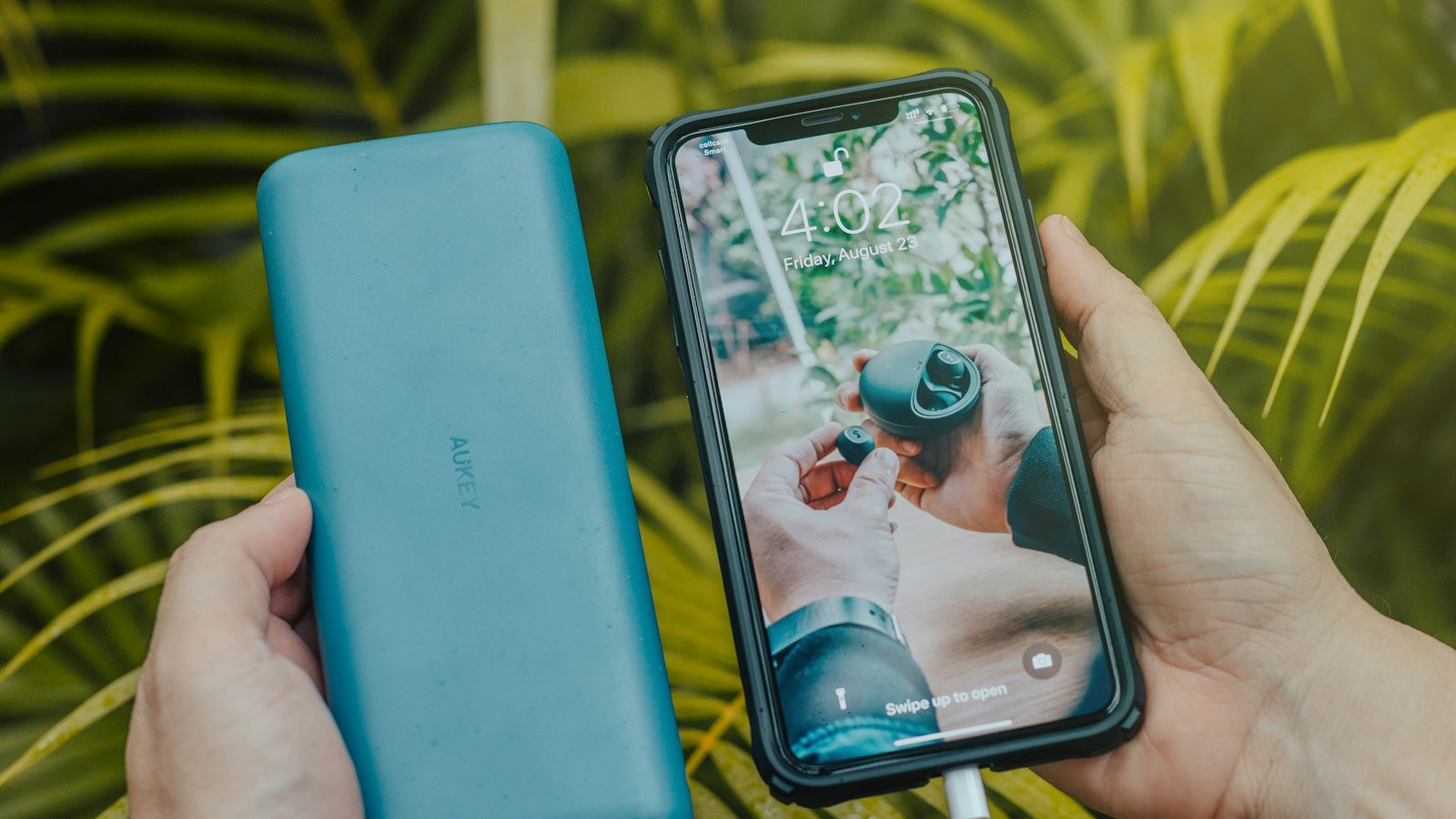
Editorial disclosure: JoinHikes researched these power banks using specifications from INIU, UGREEN, TORRAS and retailer listings for BLAVOR. Phone-charge estimates are calculations, not product tests. This is not a hands-on comparison by JoinHikes. Amazon prices, availability and ratings change, so check product details before buying. Photos are illustrative stock images from Unsplash and do not show the exact products.
2 thoughts on “Best Compact Power Bank for a 3-Day Hiking Trip (2026): 6 Picks Compared”