
Out in the desert around Hanksville, timing can make or break a trip.
Come in April and you can wander Goblin Valley all morning in a T-shirt, then drive out to Factory Butte as the low sun lights up the badlands. Come in late July and that same walk is a battle with 100-degree heat, and a storm 20 miles away can send a flash flood roaring through the slot canyon you planned to hike. Come in January and you may have the whole Moonscape Overlook to yourself, with a dusting of snow on the grey hills, as long as you don’t mind freezing mornings.
This guide explains the best time to visit Hanksville, Utah, month by month. You’ll find average temperatures, what each season is good for, the best time for Goblin Valley, Capitol Reef, slot canyons, photography and stargazing, when crowds peak, and how to stay safe in summer heat and winter cold.
When Is the Best Time to Visit Hanksville, Utah?
The best time to visit Hanksville, Utah is April to May and late September to October. Days are mild to warm (about 70 to 85°F), nights are cool, and conditions are ideal for hiking, slot canyons, photography and dirt-road exploring. Summer is dangerously hot, with highs near 100°F and flash flood risk from July to September, while winter is cold but quiet and uncrowded.
If you can pick only one month, choose October for comfortable hiking and soft autumn light, or April for spring weather and the chance of desert wildflowers.
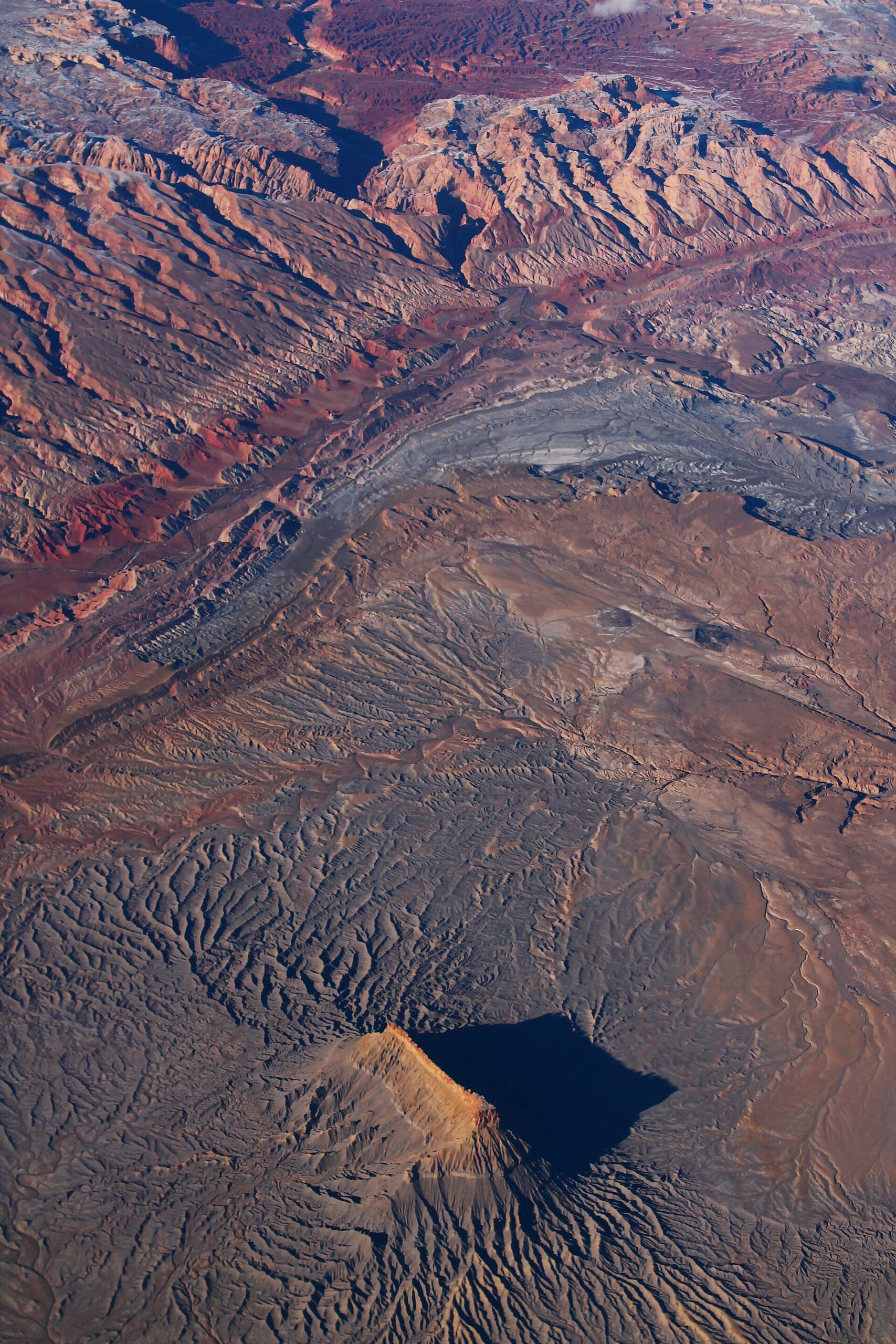
Best Time to Visit Hanksville at a Glance
| Season | Conditions | Best For | Rating |
|---|---|---|---|
| March–May | Mild days, cool nights, some wind | Hiking, Goblin Valley, wildflowers | Excellent |
| June | Hot and dry | Early-morning outings, Henry Mountains | Good |
| July–August | Very hot, monsoon storms | Sunrise trips, Lake Powell, stargazing | Challenging |
| September–October | Warm to mild days, cool nights | Hiking, photography, road trips | Excellent |
| November | Cool days, freezing nights | Quiet trips, photography | Good |
| December–February | Cold, occasional snow | Solitude, winter photos | Limited but beautiful |
Hanksville Weather by Month
Hanksville sits at about 4,300 feet in a high desert, which means big swings between day and night. Even in summer, nights can be 35 to 40 degrees cooler than the afternoon. These are approximate long-term averages:
| Month | Avg. High | Avg. Low | What It Feels Like |
|---|---|---|---|
| January | 43°F | 15°F | Cold, often frozen mornings |
| February | 51°F | 21°F | Cold to cool |
| March | 64°F | 29°F | Cool to mild, windy |
| April | 71°F | 35°F | Pleasant |
| May | 81°F | 44°F | Warm |
| June | 93°F | 53°F | Hot and dry |
| July | 99°F | 61°F | Very hot, storms possible |
| August | 95°F | 58°F | Very hot, storms possible |
| September | 86°F | 48°F | Warm, cooling off |
| October | 72°F | 35°F | Mild days, chilly nights |
| November | 56°F | 24°F | Cool to cold |
| December | 43°F | 15°F | Cold |
Hanksville is very dry, with only a few inches of rain a year. Most of it falls in short, intense summer thunderstorms, which is why flash floods are a bigger worry than everyday rain. Always check the real forecast before your trip. These numbers are averages, not promises.
Hanksville Month by Month
January
January is the coldest month, with nights often in the teens and occasional snow. It’s also the quietest, so Goblin Valley and the badlands feel almost private. A light dusting of snow on Factory Butte and the grey Moonscape hills looks incredible in photos. Days are short (under 10 hours of daylight), and dirt roads can turn to mud when snow melts. Some local businesses shorten their hours or close for the season.
Verdict: beautiful and empty, but only if you’re prepared for real cold.
February
Afternoons start creeping into the 50s, but nights are still well below freezing. It’s still winter, still quiet, and still a good month for photography and scenic drives on paved roads. Long hikes and camping are easier a few weeks later.
Verdict: quiet and underrated, but bring warm layers.
March
March is when the desert wakes up. Afternoons reach the 60s, daylight stretches longer, and hiking season begins. It can be windy, and spring storms sometimes kick up dust. Spring break starts later in the month, so Goblin Valley gets busier on weekends. Mornings can still feel like winter.
Verdict: very good, especially later in the month.
April
April is one of the best months to visit Hanksville. Days average around 70°F, perfect for long hikes in Goblin Valley, slot canyons and Capitol Reef. Nights are still cold (mid-30s), so pack a jacket for sunrise trips to the Moonscape Overlook. In wet years, wildflowers and cacti bloom around Factory Butte and the badlands. The catch: spring break and Easter weekends bring crowds to Goblin Valley, and Hanksville’s few motels fill up fast.
Verdict: excellent. Book rooms early and visit popular spots on weekdays.
May
May brings warm days around 80°F with cool, comfortable nights. That makes it a great month to combine Hanksville with Capitol Reef and Goblin Valley. By late May, midday starts to feel hot on exposed trails, so start hikes early. Small biting gnats can be a nuisance around Capitol Reef in late spring. Memorial Day weekend is busy.
Verdict: one of the best months of the year.
June
June turns hot fast, with highs in the 90s, but it’s usually dry, so flash flood risk is lower than later in summer. Plan outdoor time for early morning and evening. June is also when the high Henry Mountains open up as snow melts, a cool escape from the desert below. In Capitol Reef, cherry season in the Fruita orchards usually starts in June.
Verdict: good if you plan around the heat.
July
July is the hottest month, with average highs near 100°F and little shade anywhere. The summer monsoon usually arrives in July, bringing sudden afternoon thunderstorms. These storms can flood slot canyons and washes in minutes, even when the sky above you is clear, and they turn clay roads into slick mud.
If July is your only option, explore at sunrise, spend the afternoon at Lake Powell or in the cool Henry Mountains, and save the evenings for stargazing.
Verdict: the least comfortable month for sightseeing.
August
August stays very hot, and monsoon storms continue. Storm clouds can make for dramatic photos over the badlands, but safety comes first. Check the forecast every morning, and again before you enter any canyon. Late summer is also peach and pear season in the Fruita orchards in Capitol Reef.
Verdict: dramatic but demanding.
September
Early September can still feel like summer, with storms possible. By late September, highs drop into the low 80s, skies clear, and hiking becomes pleasant again. This is one of the best stretches of the year, and it’s usually less crowded than spring. Labor Day weekend is busy.
Verdict: excellent, especially after mid-month.
October
October rivals April as the best month to visit Hanksville. Days are in the low 70s, monsoon season is over, and the low autumn light makes the badlands glow. Cottonwoods along the Fremont River in Capitol Reef turn gold, and apple season fills the Fruita orchards. Nights get chilly, often near freezing by late month. Many Utah schools take a fall break in mid-to-late October, so Goblin Valley can be busy that week.
Verdict: excellent. Arguably the best month overall.
November
November is cool and quiet, with afternoons in the 50s and freezing nights. Crowds disappear after mid-month, and the low light is great for photography. Days are short, so don’t plan to be on unfamiliar dirt roads after dark. The high roads in the Henry Mountains usually close with snow.
Verdict: good for solitude and photos.
December
December is cold, with highs in the low 40s and nights in the teens. Snow is possible but usually light. It’s a peaceful month for scenic drives along Highway 24, winter photography and some of the year’s longest, darkest nights for stargazing. Pack for real cold, and expect some businesses to have limited hours.
Verdict: beautiful but cold.
Spring vs. Fall: Which Is Better?
Choose spring (April–May) for longer daylight, the chance of desert wildflowers and a classic Utah road trip. Be ready for wind, spring break crowds and a few gnats in late May.
Choose fall (late September–October) for steadier weather, golden light for photography, gold cottonwoods in Capitol Reef and generally fewer people.
For a first trip focused on hiking and photography, October has a slight edge. For wildflowers and spring energy, go in April.
Best Time to Visit Each Attraction Near Hanksville
Goblin Valley State Park
Best months: April, May, late September and October. Summer temperatures can top 100°F, and there’s almost no shade among the hoodoos. Go early in the morning or late in the afternoon for cooler temperatures, softer light and fewer people. Spring break, Easter and Utah’s fall break are the busiest times, and the park can fill up.
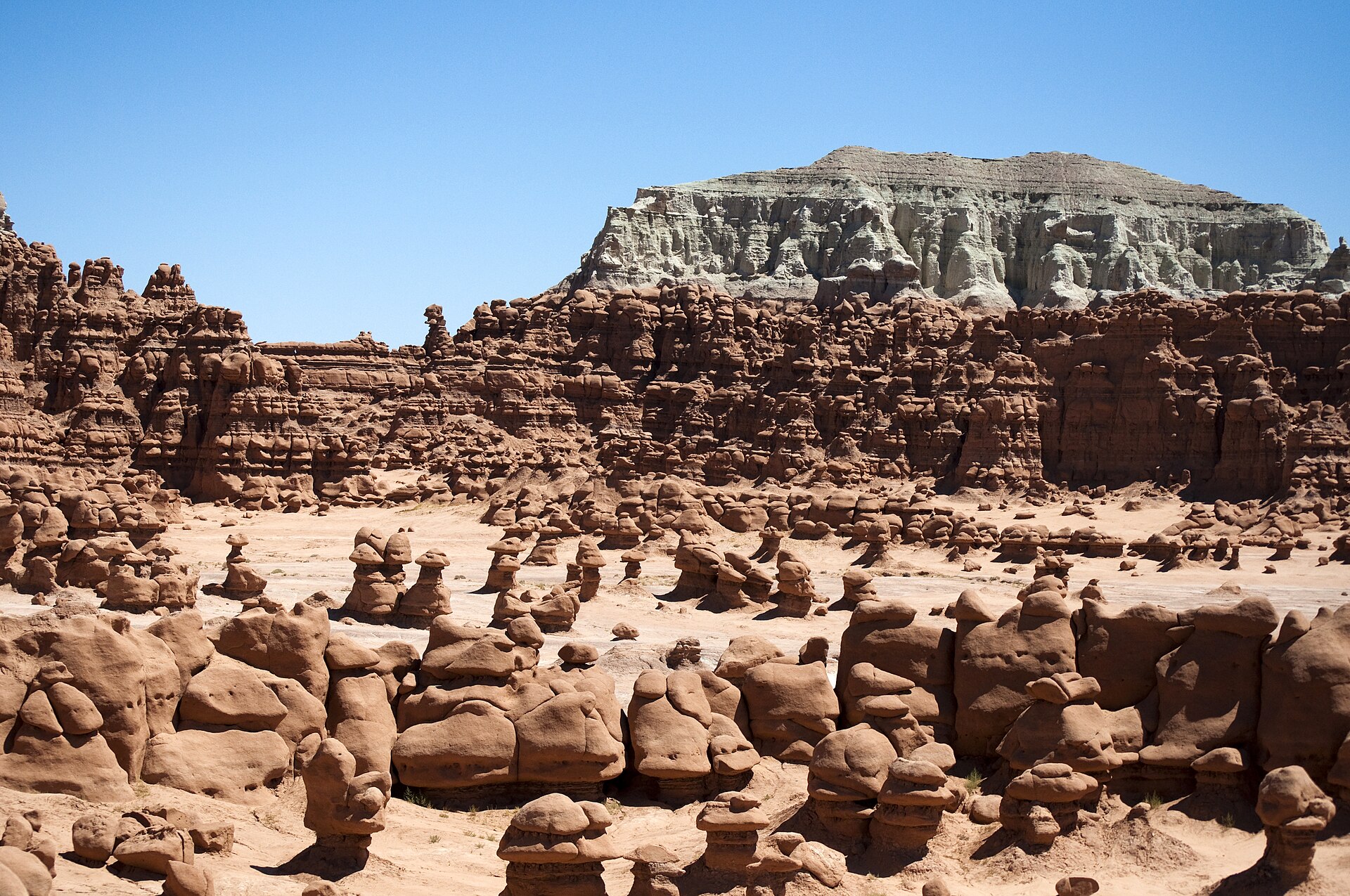
Factory Butte, Moonscape Overlook and the Bentonite Hills
Best months: spring and fall. These open badlands have no shade, so summer heat matters a lot. What matters even more is the light. The ridges and channels look flat under midday sun and come alive at sunrise (Moonscape faces east) and sunset (the Bentonite Hills). Most important of all, never drive these clay roads after rain. They turn slick and gluey, sometimes for days.
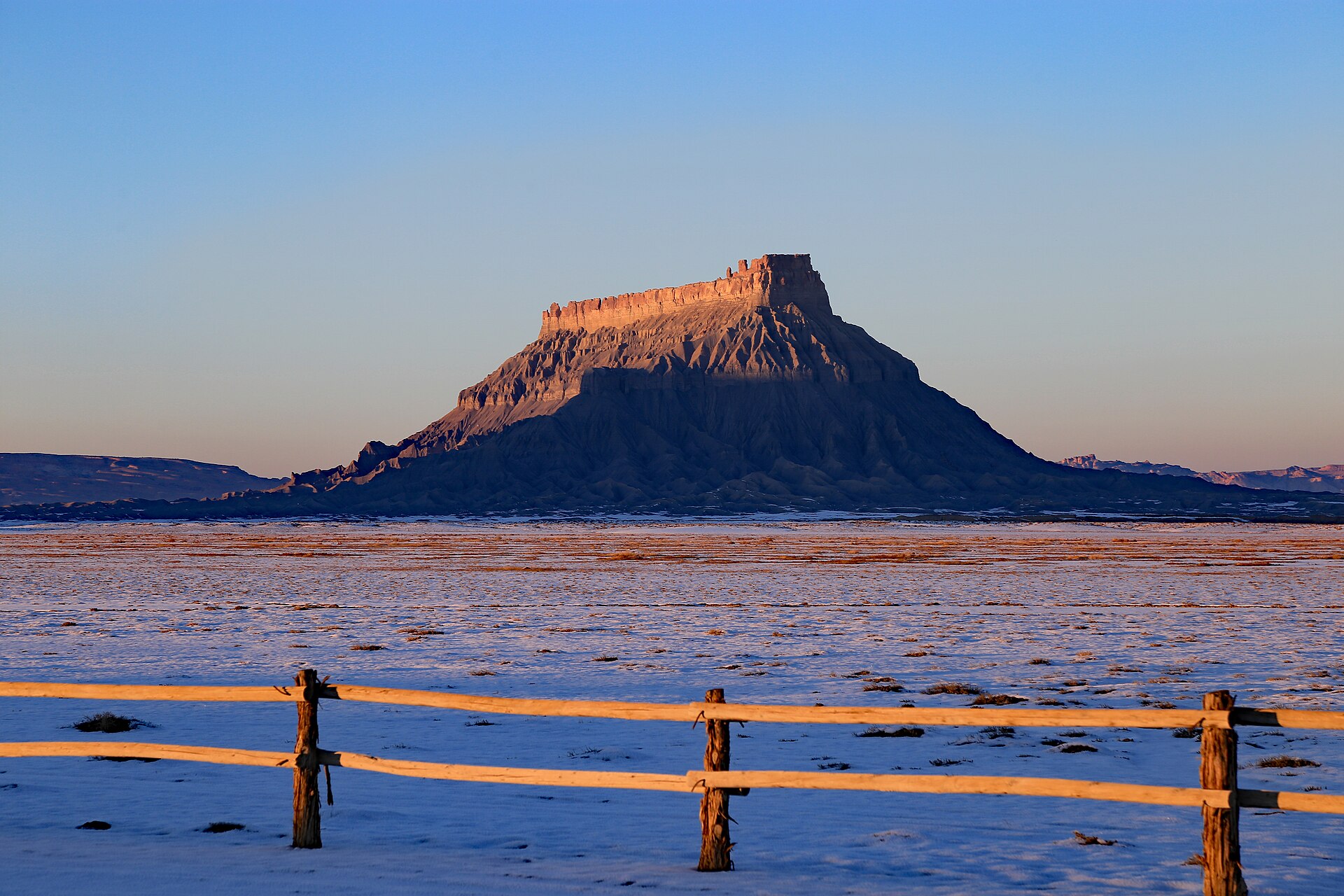
Little Wild Horse Canyon and Other Slot Canyons
Best months: April, May, late September and October. Avoid slot canyons whenever thunderstorms are possible anywhere in the region, especially from July to mid-September. Even in spring, you may wade through cold pools after wet winters.
Capitol Reef National Park
Best months: April–May and September–October, the park’s busiest seasons. A fun bonus is fruit season in the historic Fruita orchards. Cherries usually ripen in June, apricots in early summer, peaches and pears in late summer, and apples in fall. When an orchard is open for picking, you can pick and pay for fruit by the pound. The park is open year-round, though some roads close briefly after snow or storms.
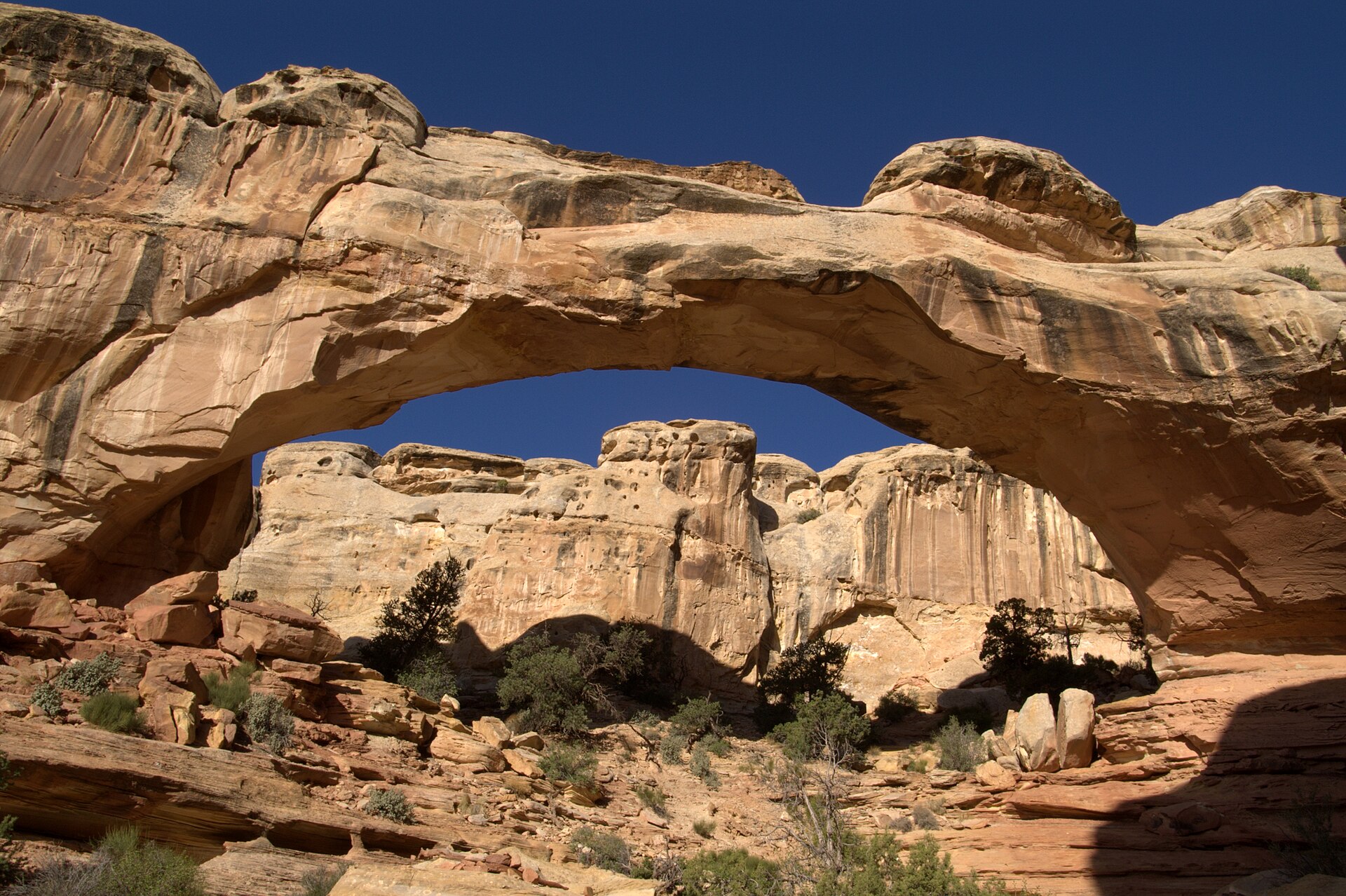
Cathedral Valley and Horseshoe Canyon
Best months: spring and fall, in dry weather. Both are reached by long dirt roads that become impassable after rain or snowmelt. The Horseshoe Canyon hike to the Great Gallery climbs out of the canyon in full sun, so avoid summer afternoons. Rangers often lead hikes there in spring and fall.
Henry Mountains
Best months: June to early October. These peaks rise above 11,000 feet, and their upper roads are usually snowed in from late fall to late spring. In summer, they’re the best escape from the desert heat. Ask at the BLM office in Hanksville about road conditions before you go.
Lake Powell (Hite and Bullfrog)
Best months: late May to September. Summer is the one season when Lake Powell beats everything else near Hanksville. Swimming, boating and paddleboarding are a perfect break on a 100-degree day.
Mars Desert Research Station
You can only view the station from the road, since it’s not open to the public. Crews mostly run their simulated Mars missions in the cooler months, roughly fall through spring, so you’re more likely to see activity then. Please don’t approach the habitat.
Best Time for Each Activity
| Activity | Best Time |
|---|---|
| Hiking | April–May, late September–October |
| Slot canyons | Spring and fall, never when storms are possible |
| Photography | Spring, fall and winter, at sunrise and sunset |
| Milky Way photos | Roughly April–September, on moonless nights |
| Wildflowers | April–May, after a wet winter |
| ATV and UTV riding | Spring and fall, on dry roads |
| Camping | April–May, September–October |
| Capitol Reef fruit picking | June (cherries) to October (apples) |
| Henry Mountains | June–early October |
| Lake Powell swimming | June–September |
| Solitude | November–February |
Best Time for Stargazing
The skies around Hanksville are some of the darkest in the country, and Goblin Valley and Capitol Reef are both certified International Dark Sky Parks. You can stargaze any time of year, but the bright core of the Milky Way is best placed from roughly April to September, highest in the sky on summer nights. Pick a night near the new moon, get away from town lights, and bring a warm layer. The desert cools off fast after dark, even in summer.
Best Time for Wildflowers
Spring gives you the best chance, usually April into May, but desert blooms depend heavily on winter and spring rain. In good years, wildflowers and blooming cacti brighten the badlands around Factory Butte. Think of flowers as a bonus, not a guarantee.
When Is Hanksville Most Crowded?
Hanksville itself never feels crowded, but nearby attractions do. The busiest times are:
- Spring break and Easter (mid-March to April), especially at Goblin Valley.
- Memorial Day and Labor Day weekends.
- Utah’s school fall break in mid-to-late October.
- Any spring or fall weekend at Capitol Reef’s popular trailheads.
To avoid crowds, travel midweek, arrive at popular spots early or late, or visit in November or winter. Since Hanksville has only a handful of motels, book rooms well ahead for spring and fall.
Cheapest Time to Visit Hanksville
The cheapest time to visit Hanksville is from November to February, when demand is lowest and rooms are easiest to find. Summer can also bring lower rates, because many travelers avoid the heat. Spring and fall weekends are the most expensive and hardest to book.
Worst Time to Visit Hanksville
For most travelers, July and August are the hardest months because of extreme heat and monsoon flash floods. December and January can be tough too if you want to hike or camp, since nights drop into the teens and days are short. That said, every season has something to offer if you plan around it.
How to Visit Hanksville in Summer
If summer is your only window, you can still have a great trip by flipping your schedule:
| Time | Plan |
|---|---|
| 5:30–10 a.m. | Hiking, Goblin Valley, badlands photography |
| 10 a.m.–5 p.m. | Lake Powell, the Henry Mountains, scenic drives with A/C, or rest |
| 6 p.m.–sunset | Short walks and photography |
| After dark | Stargazing |
Carry at least a gallon of water per person per day, wear a wide-brim hat, and skip slot canyons and washes if storms are in the forecast anywhere nearby.
Visiting Hanksville in Winter
Winter swaps the heat for cold, ice, short days and muddy roads after snowmelt. Paved drives along Highway 24 and Highway 95, Goblin Valley and Capitol Reef’s main area are usually fine, and the scenery with snow is stunning. Check road conditions before any dirt-road trip, pack warm layers and a sleeping bag rated well below freezing if you’re camping, and plan to be back on pavement before dark.
A 2-Day Hanksville Itinerary for Spring or Fall
Day 1: sunrise at the Moonscape Overlook, a stop at Factory Butte, then Goblin Valley in the late morning. Hike Little Wild Horse Canyon in the afternoon (dry weather only), and come back to Goblin Valley for sunset and stars.
Day 2: drive west to Capitol Reef. Hike to Hickman Bridge, pick fruit in Fruita if it’s in season, and drive the Scenic Drive. On the way back, catch sunset at the Bentonite Hills near the Mars Desert Research Station. For a fuller plan with timings, plus 1-day and 3-day versions, see our Hanksville, Utah itinerary.
For more ideas, see our guide to the best things to do in Hanksville, Utah, and for full details on each destination, our guide to the best places to visit near Hanksville, Utah.
What to Pack for Hanksville by Season
| Season | Pack |
|---|---|
| Spring | Layers, warm jacket for mornings, windbreaker, sunscreen, bug spray for late May |
| Summer | Lots of water, wide-brim hat, sun shirt, electrolytes, swimsuit for Lake Powell |
| Fall | Light day clothes, warm layer for evenings, headlamp for short days |
| Winter | Insulated jacket, hat, gloves, traction devices for icy trails |
| Every season | Offline maps, first-aid kit, spare tire, extra water in the car, power bank |
Common Mistakes When Planning a Hanksville Trip
- Entering slot canyons without checking the forecast. This is the dangerous one.
- Hiking at midday in summer. Sunrise is your friend.
- Driving clay roads after rain. Wait for them to dry.
- Forgetting how cold desert nights get. Even mild spring days end in chilly evenings.
- Not booking a room in spring or fall. Hanksville has very few beds.
- Leaving town with a low tank. Gas is scarce in every direction.
Related Guides
Planning more of this trip? These guides pick up where this one leaves off:
- Capitol Reef From Hanksville, Utah
- Goblin Valley From Hanksville, Utah
- Moonscape Overlook, Utah
- Factory Butte, Utah
FAQ: Best Time to Visit Hanksville, Utah
What is the best time to visit Hanksville, Utah?
April to May and late September to October, when temperatures are comfortable for hiking, slot canyons, photography and dirt-road driving.
What is the best month to visit Hanksville?
October and April are the best months. October brings steady weather and golden light, while April offers mild days and a chance of wildflowers.
Is Hanksville too hot in summer?
It can be. July averages near 100°F with little shade. Summer trips work if you explore at sunrise and spend afternoons at Lake Powell or in the Henry Mountains.
When is monsoon season near Hanksville?
Roughly July to mid-September. Afternoon thunderstorms can cause sudden flash floods in slot canyons and washes and make clay roads impassable.
Does it snow in Hanksville?
Yes, occasionally in winter, though usually only light amounts that melt quickly. Nights are often in the teens from December to February.
Is Hanksville worth visiting in winter?
Yes, for solitude and photography. Expect cold nights, short days and possible muddy or icy dirt roads, and check business hours ahead.
When is the best time to visit Goblin Valley?
April, May, late September and October, early in the morning or late in the afternoon. Summer often tops 100°F.
When is the best time to visit Factory Butte and the Moonscape Overlook?
Spring and fall, at sunrise or sunset, and only when the clay roads are dry.
When can you see the Milky Way near Hanksville?
The Milky Way’s bright core is best from roughly April to September on clear, moonless nights. Goblin Valley and Capitol Reef are certified dark sky parks.
When should I avoid slot canyons near Hanksville?
Any time thunderstorms are possible in the area, even if the sky above you is clear. The risk is highest from July to mid-September.
So, When Should You Go?
For the simplest answer: go in April, May, late September or October. Those months give you long, comfortable days outside without battling either extreme heat or deep cold.
But the desert doesn’t close outside peak season. It just changes. Summer brings dazzling night skies and cool mountain escapes. Winter brings snow on the badlands and total quiet. Pick the season that fits your trip, respect the weather, and the landscape around Hanksville will reward you whenever you come.