
Leaving Hanksville on Highway 24, you drive west through grey badlands so bare they look like another planet. Past the tiny farming town of Caineville, the road starts following the Fremont River. Cottonwoods appear, the cliffs turn red and cream, and suddenly you’re surrounded by towering sandstone walls, green orchards and a national park.
That’s Capitol Reef, and it’s only about 37 miles from Hanksville. It’s close enough for an easy day trip, and different enough from the Hanksville badlands that it feels like a whole new trip.
This guide covers how to visit Capitol Reef from Hanksville: the drive and stops along the way, what to see in one day, the best short hikes, fees and hours, the best time to go, where to eat, and whether to stay in Hanksville or move on to Torrey.
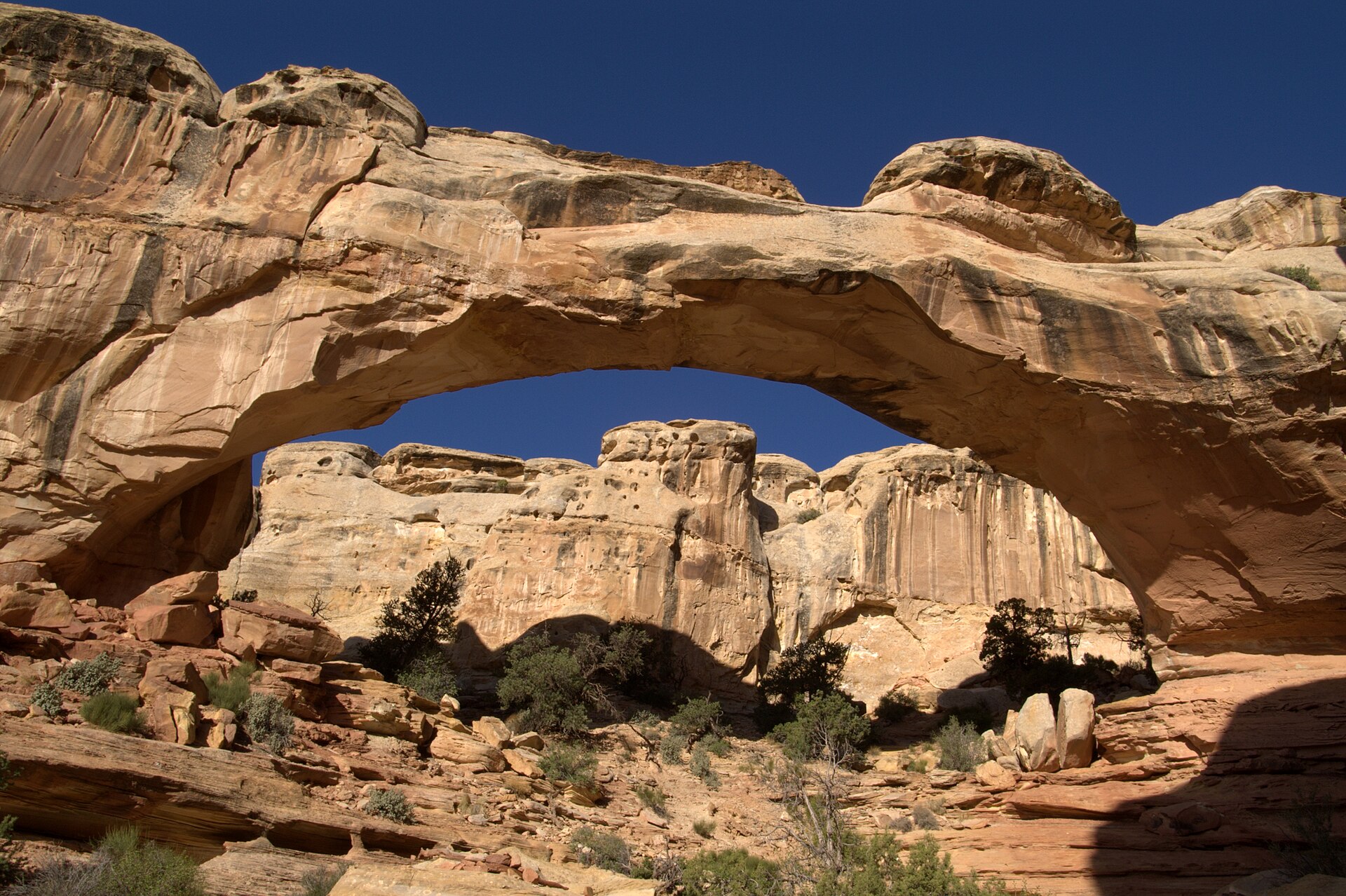
Capitol Reef From Hanksville at a Glance
| Trip Detail | What to Know |
|---|---|
| Distance | About 37 miles to the visitor center |
| Drive time | 45 minutes to 1 hour without long stops |
| Road | Highway 24, paved the whole way |
| 4WD needed? | No, not for the main sights |
| Park hours | Open 24 hours, year-round |
| Fee | $20 per vehicle for the Scenic Drive; Highway 24 is free |
| Reservations | Not required |
| Time needed | A full day is best |
| Gas and food | None in the park; fill up in Hanksville |
| Cell service | Mostly none; Wi-Fi at the visitor center |
| Best seasons | Spring and fall |
How Far Is Capitol Reef From Hanksville?
Capitol Reef’s visitor center is about 37 miles west of Hanksville on Highway 24, roughly 45 minutes to an hour of driving. Hanksville is the closest town on the park’s east side, and Torrey is the closest town on the west side, about 11 miles beyond the visitor center. You can easily drive over in the morning, spend the day and be back in Hanksville for dinner.
Is the Road Paved? Do You Need 4WD?
Yes, it’s paved, and no, you don’t need 4WD. Highway 24, the visitor center, Fruita and the paved Scenic Drive are all fine in a regular car. The park’s remote areas are different. Cathedral Valley and parts of the southern Waterpocket District need high clearance and dry weather, so save those for another trip.
That also makes Capitol Reef a great backup day. If rain has made the clay roads around Factory Butte or the Moonscape Overlook impassable, the paved road to Capitol Reef is still fine.
Is Capitol Reef Worth Visiting From Hanksville?
Yes. It’s the best full-day trip from Hanksville, because the scenery is completely different from the badlands around town. Instead of grey moonscapes, you get red cliffs and white domes, ancient rock art, a river lined with cottonwoods, historic orchards where you can pick fruit, canyon hikes and one of the darkest night skies in America. It’s also much quieter than Utah’s famous parks like Zion and Arches.
What Is Capitol Reef?
Capitol Reef protects the Waterpocket Fold, a wrinkle in the earth’s crust that runs nearly 100 miles through south-central Utah. Its name comes from two things early travelers noticed: white sandstone domes that looked like the U.S. Capitol, and a long line of cliffs that blocked travel like an ocean reef blocks ships.
The park has three main areas: the Fruita District along Highway 24 (where you’ll spend your day), remote Cathedral Valley in the north, and the long, rugged Waterpocket District in the south. For a day trip from Hanksville, stick to Fruita and the Highway 24 corridor.
The Drive: Stops Between Hanksville and Capitol Reef
Don’t treat the drive as dead time. Some highlights along the way (stop only at safe pullouts):
- Factory Butte: the huge lone mesa north of the highway about 15 minutes from town.
- The Caineville badlands: grey and striped clay hills, with Caineville Mesa and the cliffs of Caineville Reef rising beside the road.
- Caineville: a tiny farm community with a seasonal farm stand and bakery, a nice stop for fresh bread or produce in summer and fall.
- The Fremont River canyon: just inside the park, the road follows the river between sheer sandstone walls.
What to See in Capitol Reef in One Day
Fremont Culture Petroglyphs
About 1.1 miles east of the visitor center, two wooden boardwalks along Highway 24 lead to cliff panels carved by the Fremont people, who lived here from roughly 300 to 1300 CE. Look for human figures with trapezoid bodies and headdresses, plus bighorn sheep. It’s free, takes 15 to 30 minutes, and is right on your way in. Binoculars help.
The Visitor Center
Stop here early to check trail and road conditions, the flash flood forecast, which orchards are open, and ranger programs. Hours change by season, but the park itself is open around the clock. It’s also the only place with Wi-Fi.
Historic Fruita
Fruita is a green oasis in the desert. Pioneer families settled here in the 1880s and planted orchards, and today the park cares for around 1,900 fruit trees beneath the red cliffs. Walk past the one-room Fruita Schoolhouse, the old barn and the pastures, and stop at the Behunin Cabin, a tiny stone home just east along Highway 24 where a family of more than ten once lived.
Pie at the Gifford Homestead
The Gifford Homestead is a restored pioneer farmhouse, and its store sells small fruit pies, homemade ice cream and local goods. It’s usually open from mid-March to late November, around 9 a.m. to 4:30 p.m., but the pies often sell out by early afternoon. Grab one early and save it for your picnic.
Pick Fruit in the Orchards
When an orchard is open for picking, you can eat fruit for free while you’re in the orchard and pay a small amount per pound for fruit you take home. Rough harvest windows:
| Fruit | Usual Season |
|---|---|
| Cherries | Late June to early July |
| Apricots | Early to mid-July |
| Peaches and pears | August |
| Apples | September to mid-October |
Timing shifts every year with the weather, so check which orchards are open at the visitor center. In spring, the trees blossom against the red rock, beautiful even with no fruit.
Drive the Scenic Drive
The paved Scenic Drive runs 7.9 miles south from the visitor center along the face of the Waterpocket Fold. It’s a dead end, so you return the same way. Allow about 90 minutes round trip with stops. It’s the only part of the park with an entrance fee: $20 per vehicle, or free with an America the Beautiful pass. No reservation is needed.
Two dirt spur roads branch off it: Grand Wash Road and Capitol Gorge Road. They’re usually fine for regular cars in dry weather, but they close for flash floods, mud, snow or ice, so check first.
Best Short Hikes for a Day Trip
Pick one or two. You don’t need to tire yourself out. Popular trailheads often fill by 9 a.m. and stay busy until late afternoon, so start with your top choice. If a lot is full, move on to another trail instead of circling.
| Hike | Distance | Difficulty | Highlight |
|---|---|---|---|
| Hickman Bridge | About 1.8 miles round trip | Moderate | A huge natural stone bridge |
| Grand Wash | Up to 2.2 miles one way (turn back anytime) | Easy | Narrow canyon with towering walls |
| Capitol Gorge | About 1 mile one way | Easy | The Pioneer Register, names carved by early settlers |
| Cassidy Arch | About 3.4 miles round trip | Strenuous | Stand on top of an arch named for Butch Cassidy |
| Goosenecks | About 0.1 mile one way | Very easy | Canyon views over Sulphur Creek |
| Sunset Point | About 0.4 mile one way | Easy | Wide sunset views of the Waterpocket Fold |
Only have time for one? Choose Hickman Bridge for a big natural feature, Grand Wash for canyon walls, or Sunset Point if you’d rather not hike much at all. Avoid narrow canyons like Grand Wash and Capitol Gorge if thunderstorms are possible.
One-Day Itinerary: Capitol Reef From Hanksville
| Time | Plan |
|---|---|
| 7:30 a.m. | Fill up in Hanksville, pack lunch and water, drive west on Highway 24 |
| 8:30 a.m. | Hike Hickman Bridge before the lot fills |
| 10:00 a.m. | Petroglyph boardwalks and the Behunin Cabin |
| 10:30 a.m. | Visitor center, then Fruita and the Gifford Homestead for pie |
| 11:30 a.m. | Scenic Drive, with a walk into Capitol Gorge or Grand Wash |
| 1:30 p.m. | Picnic lunch in Fruita; pick fruit if an orchard is open |
| 3:00 p.m. | Goosenecks overlook, or rest by the river in the shade |
| Sunset | Sunset Point or Panorama Point |
| Evening | Drive back to Hanksville, or on to Torrey |
Have less time? With four hours, do the petroglyphs, Fruita, pie and part of the Scenic Drive. With six, add one hike.
Stay for the Stars
Capitol Reef is a certified International Dark Sky Park, and on a moonless night the Milky Way stretches across the whole sky. Panorama Point, about 2.5 miles west of the visitor center with a very short walk, is great for both sunset and stargazing. The park sometimes runs ranger-led night sky programs, so ask at the visitor center. Afterward, drive back to Hanksville carefully and watch for deer on the road.
Best Time to Visit Capitol Reef From Hanksville
The best time is spring (April–May) or fall (September–October), when hiking is comfortable and the orchards are blooming or full of apples. The park’s main area sits around 5,500 feet, so it’s usually a little cooler than Hanksville.
- Spring: fruit blossoms and mild weather, but it’s the busy season, so arrive early.
- Summer: hot, with afternoon thunderstorms from July to September. Hike early, and stay out of narrow canyons when storms threaten. Cherries and peaches are in season.
- Fall: maybe the best overall, with cooler days, golden cottonwoods along the river and apple picking.
- Winter: quiet and cold. Highway 24 stays open, but dirt side roads can close for snow or ice.
For month-by-month details, see our guide to the best time to visit Hanksville, Utah.
Food, Gas, Cell Service and Rules
- Food: there’s no restaurant in the park. Bring a picnic from Hanksville (apart from Gifford pies), or eat in Torrey, about 15 minutes west.
- Gas: none in the park. Fill up in Hanksville. Torrey is the next stop west.
- Cell service: generally none in the park. Download maps before you leave. Wi-Fi is available at the visitor center.
- Drones: not allowed anywhere in the park, as in all US national parks.
- Pets: allowed on paved roads, in the campground and in developed areas on a leash, but not on most trails. Check current rules before bringing a dog.
Capitol Reef With Kids or Non-Hikers
Capitol Reef is great for families and for people who don’t hike. Much of the park can be enjoyed from a car or with short walks: the petroglyph boardwalks, Fruita, the schoolhouse, the orchards, the Scenic Drive and Panorama Point. Kids can earn a Junior Ranger badge at the visitor center, and picking fruit (in season) is a highlight for little ones.
Stay in Hanksville or Move to Torrey?
| Stay in Hanksville If… | Stay in Torrey If… |
|---|---|
| You’re also seeing Goblin Valley, Factory Butte and the Moonscape Overlook | Capitol Reef is your main focus for several days |
| You’re heading back east or south on Highway 95 afterward | You’re continuing west on Scenic Byway 12 toward Bryce |
| You want to be close to the badlands for sunrise | You want more restaurants and lodging choices |
On a westbound road trip, a smart plan is to sleep in Hanksville for two nights, spend Day 3 in Capitol Reef, then drive on to Torrey that evening instead of backtracking. See our guide to where to stay in Hanksville, Utah for lodging options. From Torrey, Scenic Byway 12 continues to Bryce Canyon and eventually Zion.
Have More Time? Explore Cathedral Valley
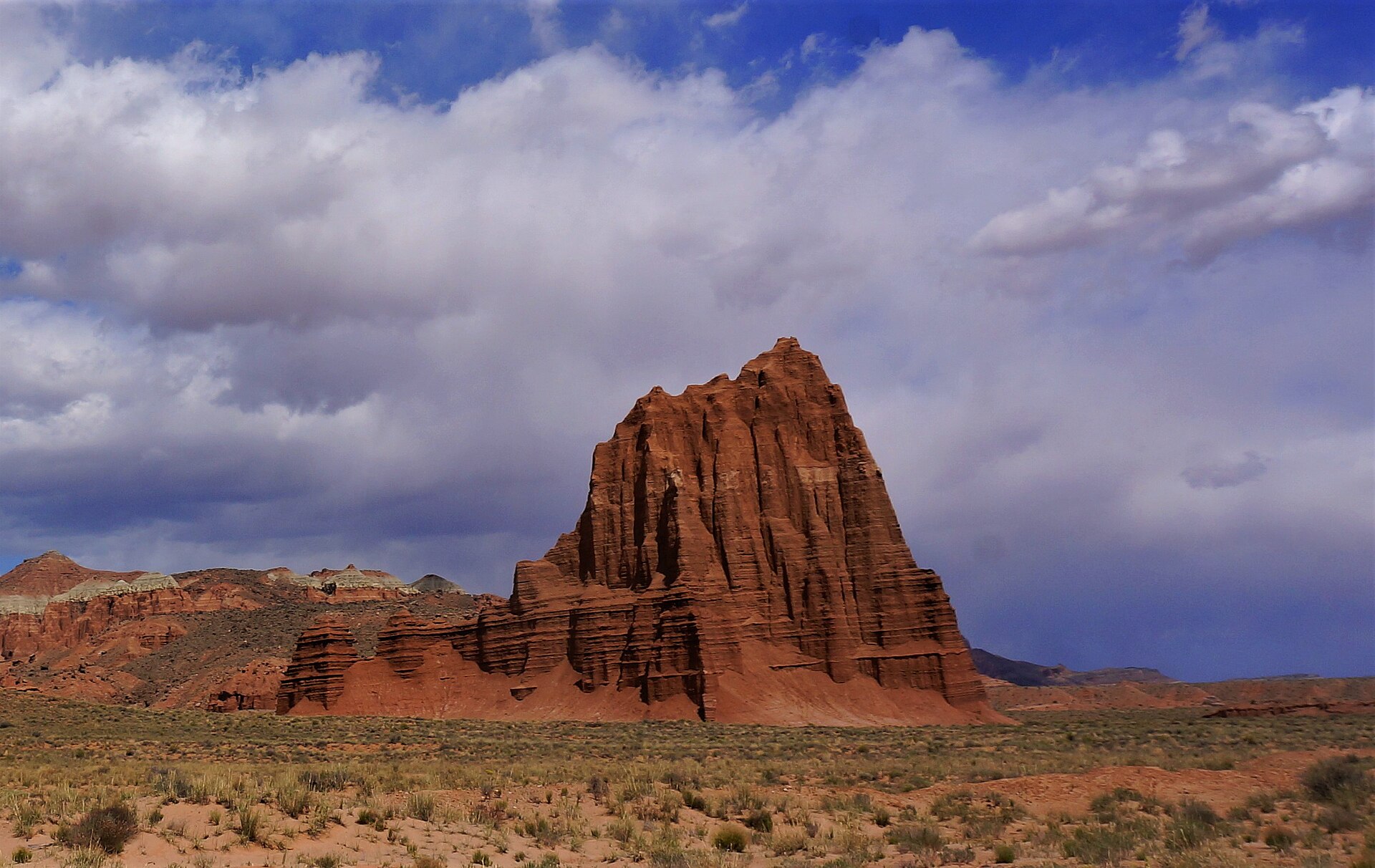
Capitol Reef’s remote north holds Cathedral Valley, where giant sandstone monoliths like the Temple of the Sun rise from the desert floor. It’s a long day on dirt roads that requires a high-clearance vehicle and dry weather. Don’t try to add it to a regular day trip. The Caineville Wash Road, which starts just west of Caineville on Highway 24, is the easiest way in from the Hanksville side.
Capitol Reef vs. Other Day Trips From Hanksville
| Day Trip | Distance | Road | Best For | Time Needed |
|---|---|---|---|---|
| Capitol Reef | ~37 miles west | Paved | Hiking, history, orchards, variety | Full day |
| Goblin Valley | ~32 miles north | Paved | Families, wandering among hoodoos | Half to full day |
| Factory Butte | ~12 miles west | Paved views, dirt beyond | Photography | 1–2 hours |
| Moonscape Overlook | ~16 miles | Dirt, high clearance | Sunrise views | 2–3 hours |
Can you do Capitol Reef and Goblin Valley in one day? Technically yes, but you’ll spend most of it driving. A much better plan is Day 1 for the badlands, Day 2 for Goblin Valley and Little Wild Horse Canyon, and Day 3 for Capitol Reef. Our Hanksville, Utah itinerary lays it out step by step. One combination that does work: a sunrise stop at Factory Butte on your way to Capitol Reef.
What to Pack
- Plenty of water and a picnic lunch
- Hiking shoes, a sun hat, sunglasses and sunscreen
- A warm layer for the evening
- Offline maps and a phone charger
- Your America the Beautiful pass if you have one
- A small bag or container for fruit picking in season
Common Mistakes to Avoid
- Leaving late. Trailhead parking fills by mid-morning.
- Not bringing food. There’s no restaurant in the park.
- Trying to fit in Cathedral Valley. Save it for its own day.
- Doing too many hikes. One or two is plenty for a day trip.
- Assuming dirt spur roads are always open. Check conditions at the visitor center.
- Arriving for pie at 3 p.m. It’s often sold out by then.
- Driving straight past the petroglyphs. They’re right on your route.
For other trips from town, see our guides to the best places to visit near Hanksville, Utah and the best things to do in Hanksville, Utah.
FAQ: Capitol Reef From Hanksville
How far is Capitol Reef from Hanksville?
The visitor center is about 37 miles west of Hanksville on Highway 24, roughly 45 minutes to an hour of driving.
Is the road from Hanksville to Capitol Reef paved?
Yes. Highway 24 is paved all the way, and so is the park’s Scenic Drive.
Do you need 4WD to visit Capitol Reef?
Not for the main areas. Remote places like Cathedral Valley need a high-clearance vehicle and dry roads.
How much does Capitol Reef cost?
Driving Highway 24 through the park is free. The Scenic Drive costs $20 per vehicle, or it’s free with an America the Beautiful pass.
Can you see Capitol Reef in one day?
Yes. One full day covers the petroglyphs, Fruita, the Scenic Drive, one or two hikes and sunset.
Do you need a reservation for Capitol Reef?
No reservation is currently needed for the park or the Scenic Drive.
What is the best short hike in Capitol Reef?
Hickman Bridge, about 1.8 miles round trip to a huge stone bridge. For an easier option, walk into Grand Wash or Capitol Gorge.
Is there food in Capitol Reef?
There’s no restaurant, but the Gifford Homestead sells fruit pies and ice cream seasonally. Bring a picnic or eat in Torrey or Hanksville.
Should I stay in Hanksville or Torrey for Capitol Reef?
Stay in Hanksville if you’re also seeing Goblin Valley and the badlands. Stay in Torrey if Capitol Reef is your main focus or you’re continuing west.
Is Capitol Reef open in winter?
Yes, it’s open year-round. Highway 24 stays open, but some dirt roads can close for snow, ice or mud.
A National Park Right Next Door
Goblin Valley is easier, Factory Butte is quicker and the Moonscape Overlook is stranger. But for a full day out, nothing near Hanksville gives you as much variety as Capitol Reef: rock art in the morning, orchards and pie at lunch, a canyon hike in the afternoon, and red cliffs glowing at sunset.
And it’s only 37 miles away. You don’t have to choose between exploring the Hanksville desert and seeing a national park. Fill the tank, pack a picnic, and go do both.