
Picture reaching camp after 12 miles with energy to spare. Your shoulders don’t ache, and everything you need has its place. That’s what a good ultralight kit feels like.
Most ultralight gear lists either tell you to buy $600 tents or give you a vague checklist with no real numbers. This guide is different. We picked 10 affordable pieces of gear, added up exactly what they weigh, showed how they work together, and built a complete checklist you can tick off on your phone.
Affiliate disclosure: As an Amazon Associate, JoinHikes earns from qualifying purchases. When you buy through an Amazon link on this page, we may earn a commission at no extra cost to you.
How we researched this: Weights and specs come from the brands, Garage Grown Gear and REI listings, and published tests by OutdoorGearLab, CleverHiker and SectionHiker. JoinHikes has not hands-on tested all 10 products. Amazon prices and versions change, so check each listing before you buy.
Quick Answer: What Should Be on an Ultralight Backpacking Gear List?
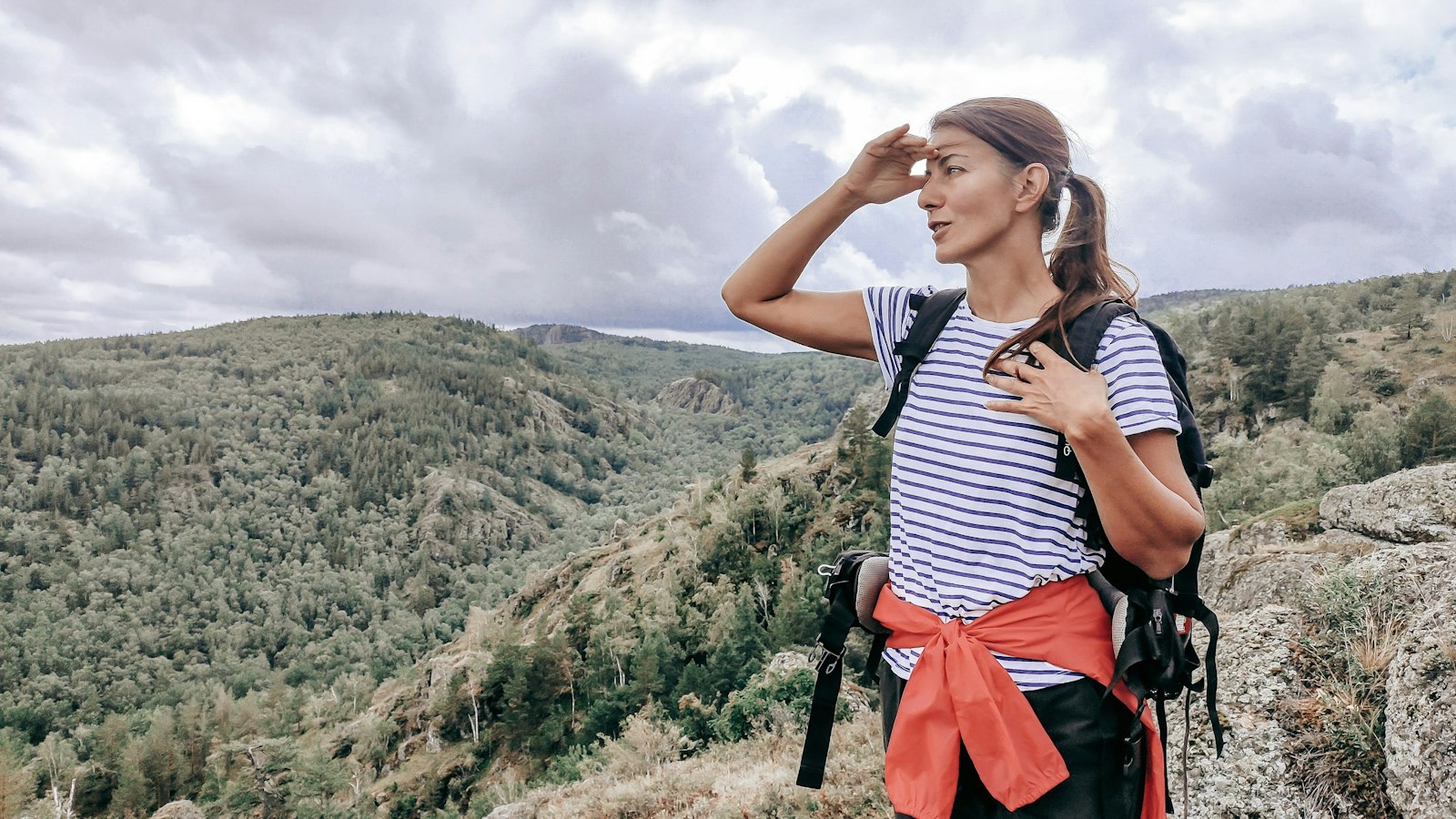
Start with the “big three”: a light shelter, a warm-enough sleep system and a backpack that fits. Then add a water filter, a small stove, a headlamp, a power bank, trekking poles and dry bags.
The 10 products in this guide weigh about 1.39 kg (3.1 lb) together, not counting trekking poles you carry in your hands. That leaves around 6.9 lb for your pack, sleep system, clothes and first aid if you’re aiming for a sub-10 lb base weight.
Biggest single upgrade: the Lanshan 2 Pro tent. Most important small item: the Sawyer Squeeze.
Ultralight Backpacking Basics: Base Weight and the Big Three
Base weight is the weight of your pack and everything in it, minus food, water and fuel (the things you use up). It’s how backpackers compare kits fairly.
| Base weight | Common label |
|---|---|
| Over 20 lb | Traditional backpacking |
| 10 to 20 lb | Lightweight |
| Under 10 lb | Ultralight |
| Under 5 lb | Super ultralight |
These are widely used community benchmarks, not official standards.
The big three (backpack, shelter and sleep system) are usually the heaviest items you carry, so they’re where you save the most weight. Small items still add up, which is why the weight table below matters.
What This Exact Gear Weighs (Real Numbers)
Most gear lists skip this. Here’s what each item weighs, based on published specs and lab measurements:
| Item | Weight | Source |
|---|---|---|
| 3F UL Gear Lanshan 2 Pro (tent) | ~900 g (31.7 oz) | Garage Grown Gear (SilNylon) |
| BRS-3000T (stove) | ~25 g (0.9 oz) | BRS listed weight |
| Sawyer Squeeze (filter only) | 85 g (3 oz) | Sawyer |
| CNOC Vecto 2L, 28mm (dirty-water bag) | 79 g (2.8 oz) | CNOC via Garage Grown Gear |
| HydraPak Seeker 3L (water storage) | 92 g (3.2 oz) | HydraPak |
| Nitecore NU25 UL (headlamp) | 47 g (1.7 oz) | Nitecore |
| INIU Mini P50 10,000mAh (power bank) | ~160 g (5.6 oz) | INIU |
| Total of these 7 items | ~1,388 g (3.06 lb) | Calculated |
| TrailBuddy poles (pair, usually in your hands) | 20 oz (567 g) | OutdoorGearLab measured |
| Frelaxy dry bags, 5-pack | A few ounces in total | Check listing |
| Swap: Naturehike Cloud Up 2 instead of Lanshan | ~1,380 g minimum (+480 g) | Naturehike |
Trekking poles are usually left out of base weight when you hike with them. Weights for your exact Amazon version may differ slightly.
What it means
These 10 items take up about 3.1 lb of a 10 lb ultralight budget, leaving roughly 6.9 lb for everything else.
Biggest trade-off
Choosing the Cloud Up 2 over the Lanshan 2 Pro adds about 1 lb but gives you an easier, freestanding pitch.
Quick Comparison: 10 Ultralight Backpacking Essentials
On a phone, swipe the table sideways.
| Gear | Category | Weight | Key advantage | Shop |
|---|---|---|---|---|
| Lanshan 2 Pro | Shelter | ~900 g | Biggest weight saving | Check price |
| BRS-3000T | Stove | ~25 g | Tiny and cheap | Check price |
| Sawyer Squeeze | Water filter | 85 g | 0.1-micron filtration | Check price |
| Nitecore NU25 UL | Headlamp | 47 g | 400 lm, red light | Check price |
| INIU Mini P50 | Power bank | ~160 g | 10,000mAh, 45W | Check price |
| TrailBuddy 7075 | Trekking poles | 20 oz/pair | Budget tent poles too | Check price |
| HydraPak Seeker 3L | Water storage | 92 g | 3 L that rolls up small | Check price |
| Frelaxy 5-Pack | Dry sacks | Light | Organized, dry gear | Check price |
| CNOC Vecto 2L | Water collection | 79 g | Screws onto Sawyer | Check price |
| Naturehike Cloud Up 2 | Tent alternative | ~1.38 kg min | Easy freestanding pitch | Check price |
The 10 Ultralight Essentials, Reviewed
1. 3F UL Gear Lanshan 2 Pro — Best Ultralight Shelter
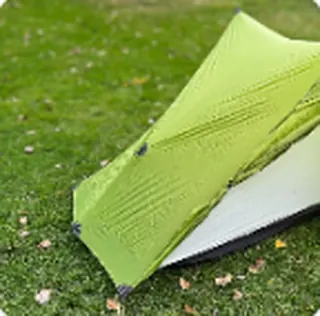
The Lanshan 2 Pro skips tent poles and pitches with two trekking poles set to about 120 to 125 cm. That’s how it gets to about 900 g while offering a roomy 270 × 120 × 125 cm, two doors and two vestibules.
CleverHiker rated it 4.6 out of 5 and called it unmatched value in the budget ultralight category. The catches: it’s a single-wall tent (watch condensation), it needs good staking ground, and 3F UL Gear doesn’t seam seal it, so you must seal the seams before heavy rain.
- About 900 g for 2 people.
- Two doors and vestibules.
- Great value.
- Needs trekking poles.
- Needs seam sealing.
- Learning curve to pitch.
2. BRS-3000T — Best Ultralight Stove
BRS lists this titanium stove at about 25 g, and it folds small enough to live inside your mug. In OutdoorGearLab’s tests, it boiled 0.5 L in 3 minutes 8 seconds.
The weak spots are wind (it scored 2 out of 10 there and blew out a few times) and small, less stable pot legs. Use it with a small pot, cook behind a rock, and always pack a lighter.
- Extremely light.
- Very cheap.
- Packs inside a mug.
- Poor in wind.
- Wobbly with big pots.
- No igniter.
3. Sawyer Squeeze — Best Water Filter
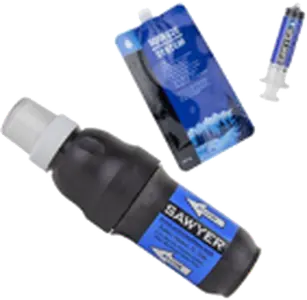
Water weighs about 1 kg per liter, so being able to refill from streams is one of the biggest weight savers there is. The Sawyer Squeeze weighs just 3 oz and uses a 0.1-micron hollow-fiber filter.
Sawyer says it removes 99.99999% of bacteria, 99.9999% of protozoa (including giardia and cryptosporidium) and 100% of microplastics. The kit includes two pouches, a cleaning plunger and adapters, and the filter threads onto standard 28mm bottles.
Know its limits: it’s not designed to remove viruses or chemicals. Once it’s been wet, keep it from freezing (sleep with it on cold nights), because ice can damage the fibers without you knowing.
- Only 3 oz.
- Fast, simple squeezing.
- Backflushable.
- Fits 28mm bottles.
- Not for viruses.
- Must not freeze.
- Flow slows without cleaning.
4. Nitecore NU25 UL — Best Ultralight Headlamp
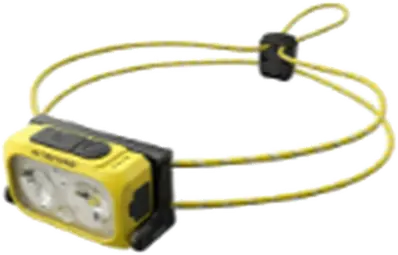
Nitecore lists the NU25 UL at just 47 g with its headband. It reaches 400 lumens and 132 m of beam distance, runs about 2 h 40 min on high and 13 hours on low, and has a separate red light that won’t blind your camp mates.
The 700 mAh battery is built in and charges by USB-C, so your power bank can top it up. It’s rated IP66 against dust and heavy rain.
- Only 47 g.
- Bright 400 lumens.
- Red light modes.
- USB-C charging.
- Battery not swappable.
- Short runtime on high.
- Needs recharging on long trips.
5. INIU Mini P50 10,000mAh — Best Compact Power Bank
Your phone is your map, camera and emergency backup. INIU lists the Mini P50 at about 160 g (5.6 oz), with 10,000mAh, 45W USB-C fast charging and a digital battery display. It’s palm-sized and fits in a hip-belt pocket.
For a solo 3-day trip with normal phone use, 10,000mAh is a sensible starting point, with enough left to top up the NU25 UL.
- Small and light.
- Fast 45W USB-C.
- Digital display.
- Not waterproof.
- Real output is less than 10,000mAh.
- Heavy use needs more capacity.
6. TrailBuddy 7075 Aluminum Trekking Poles — Best Budget Poles
TrailBuddy poles are a popular starter pair with 7075 aluminum shafts, cork grips and lever locks, adjusting from about 25 to 54 inches. That range easily covers the 120 to 125 cm the Lanshan 2 Pro needs, so one pair does two jobs.
Be aware: OutdoorGearLab measured them at 20 oz per pair and ranked them last in their test, after a plastic lever lock broke on day one. They’re fine for a budget start, but check the locks before each trip.
- Inexpensive.
- Wide length range.
- Doubles as tent poles.
- Heavier than carbon.
- Lock durability concerns.
- Long when packed.
7. HydraPak Seeker 3L — Best Lightweight Water Storage
HydraPak lists the 3L Seeker at just 92 g (3.2 oz). It’s a tough, flexible TPU bag that rolls up smaller than a soda can, with a 42mm cap. Use it for dry camps, long waterless stretches, or carrying water from the stream to your tent.
Note: the Sawyer Squeeze uses 28mm threads, so pair the Seeker with the Vecto below for filtering.
- Only 92 g for 3 L.
- Rolls up tiny.
- Freezable.
- Can puncture.
- 42mm cap won’t fit the Sawyer directly.
8. Frelaxy Ultralight Dry Bags 5-Pack — Best for Organization
Five color-coded dry sacks in different sizes, made from 210T polyester with taped seams and roll-top closures. Give each one a job: sleep clothes, spare layers, toiletries, electronics and food.
They’re built for rain inside a pack, not for submersion. If you’re chasing every gram, a single pack liner can be lighter than five bags, but nothing beats separate sacks for finding things fast.
- Five sizes.
- Color-coded.
- Packs flat.
- Not for submersion.
- Thin fabric can tear.
9. CNOC Vecto 2L (28mm) — Best Dirty-Water Bag
The Vecto’s trick is its wide opening at one end, so you can scoop water from shallow streams in seconds. The other end has a 28mm thread that screws straight onto the Sawyer Squeeze. CNOC lists the 28mm version at 79 g (2.8 oz).
Hang it up as a gravity filter at camp, or squeeze it on the trail. It’s rated up to 120°F (49°C), so don’t fill it with boiling water.
- Fast scooping.
- Fits Sawyer Squeeze.
- Only 79 g.
- Not for hot water.
- Pick the right thread size.
10. Naturehike Cloud Up 2 — Best Beginner-Friendly Tent
If a trekking-pole tent feels like too much to learn, the Cloud Up 2 is the easier path. It’s freestanding with its own aluminum poles, a mesh inner and a separate rainfly. Naturehike lists about 1.38 kg minimum and 1.8 kg packed.
It has one door and one vestibule and feels snug for two adults, but it’s roomy for one and pitches on rock or platforms where a Lanshan struggles.
- Easy freestanding pitch.
- No poles to borrow.
- Double-wall.
- About 1 lb heavier.
- One door only.
How These 10 Items Work Together
An ultralight kit is a system, not a shopping list. Here’s how these pieces connect:
Poles + tent
The TrailBuddy poles hold up the Lanshan 2 Pro. Set them to about 120 to 125 cm.
Vecto + Sawyer
Scoop with the Vecto, screw on the Sawyer, and squeeze clean water into your bottle.
Seeker for camp
Fill the Seeker with filtered water for cooking and the morning, so you’re not running to the stream.
Power bank + headlamp
The INIU’s USB-C output recharges the NU25 UL and your phone.
Stove in your mug
The BRS folds small enough to store inside a pot or mug. Pair it with a titanium pot.
Dry bags for sleep gear
Keep your quilt and sleep clothes in a Frelaxy bag so they stay dry no matter what.
The Complete Ultralight Backpacking Checklist
Tick items off as you pack. It works on your phone, and you can print this page too.
Big three
Water
Kitchen
Clothing
Navigation and electronics
Safety and hygiene
Sample Sub-10 lb Base Weight Budget
Use this as a planning target. It shows where your weight usually goes.
| Gear system | Target weight | From this list |
|---|---|---|
| Backpack | 1.5 lb | Not included |
| Shelter | 2.0 lb | Lanshan 2 Pro (~2.0 lb) |
| Sleep insulation | 1.5 lb | Not included |
| Sleeping pad | 0.8 lb | Not included |
| Cooking (no fuel) | 0.5 lb | BRS-3000T + your pot |
| Water treatment and containers | 0.5 lb | Sawyer + Vecto + Seeker (~0.6 lb) |
| Packed clothing | 1.5 lb | Not included |
| Lighting and electronics | 0.7 lb | NU25 UL + INIU (~0.5 lb) |
| First aid, hygiene, repair, misc. | 0.8 lb | Frelaxy bags + your kit |
| Total base weight | 9.8 lb |
Remember: food, water and fuel come on top. Three liters of water alone adds about 6.6 lb, so plan refills with your filter instead of carrying everything.
Where Should Beginners Save Weight First?
1. Shelter
A trekking-pole tent like the Lanshan 2 Pro can save pounds over an old dome tent.
2. Sleep system
A quilt is often lighter than a bag, but never skimp on warmth.
3. Backpack
Once your gear shrinks, a smaller, lighter pack often fits it all.
4. Water
Carry a filter and less water. Refill often instead.
5. Extras
Weigh everything. Leave out duplicates and things you never used last trip.
6. Small items
Grams add up. A 47 g headlamp and 25 g stove help, but come last.
Beginner vs Experienced Ultralight Priorities
| Gear | Beginner | Experienced |
|---|---|---|
| Shelter | Cloud Up 2 (easy pitch) | Lanshan 2 Pro (lightest) |
| Stove | Stable, with igniter | BRS-3000T |
| Water | Sawyer + Vecto | Sawyer + Vecto |
| Power | 10,000mAh bank | Calculated to need |
| Organization | 5 dry bags | One pack liner |
How to Pack an Ultralight Backpack
Bottom
Sleep system and sleep clothes in a dry bag. You won’t need them until camp.
Middle, near your back
Heavy, dense items: food, water, stove and fuel.
Top
Rain jacket, warm layer and first aid for quick access.
Pockets
Snacks, phone, map, filter and headlamp.
6 Mistakes to Avoid
1. Buying before planning
Make sure parts fit: poles for the tent, threads for the filter.
2. Trusting labels
Weigh your actual gear. Advertised weights often leave things out.
3. Cutting safety gear
Never drop first aid, navigation, rain gear or warmth to save grams.
4. Ignoring the forecast
A summer kit can be dangerous in cold, wet weather.
5. Freezing your filter
A frozen Sawyer can fail without warning. Keep it warm.
6. No test run
Pitch the tent and use the stove at home before your trip.
Frequently Asked Questions
What should be on an ultralight backpacking gear list?
A backpack, shelter, sleep system, water filter, stove and pot, headlamp, power bank, rain gear, warm layer, navigation, first aid and hygiene items. Our checklist above covers them all.
What is base weight?
The weight of your pack and gear, not counting food, water and fuel. Under 10 lb is widely considered ultralight.
How much do these 10 items weigh?
The tent, stove, filter, Vecto, Seeker, headlamp and power bank total about 1,388 g (3.06 lb). Poles add about 20 oz but are usually carried in your hands.
What are the big three in backpacking?
Your backpack, shelter and sleep system. They’re usually the heaviest items, so they offer the biggest weight savings.
Is a 10 lb base weight realistic for beginners?
It can be, but don’t rush. A comfortable 12 to 15 lb base weight is already a big improvement for most people.
Does the Sawyer Squeeze fit the CNOC Vecto?
Yes, if you buy the Vecto with the 28mm thread. The 42mm version won’t fit the Sawyer.
Can I use TrailBuddy poles with the Lanshan 2 Pro?
Yes. They adjust from about 25 to 54 inches, which covers the 120 to 125 cm the tent needs.
Does the Sawyer Squeeze remove viruses?
No. It’s rated for bacteria, protozoa and microplastics. Use chemical treatment too if viruses are a concern.
Is a 10,000mAh power bank enough for 3 days?
For one phone with normal use, usually yes, with some left over to charge a headlamp.
Do I need dry bags if I have a pack liner?
Not necessarily. A liner is lighter, but dry bags make it much easier to stay organized.
What’s the best first upgrade?
A water filter if you don’t have one, then a lighter tent. Those two usually save the most weight per dollar.
Can I skip a sleeping pad to save weight?
No. Pads insulate you from the cold ground as well as adding comfort. Skipping one is a poor trade.
Final Verdict: Build a System, Not Just a Shopping List
For the biggest weight cut, choose the Lanshan 2 Pro, pitched with TrailBuddy poles. For water, pair the Sawyer Squeeze with the CNOC Vecto 28mm, and add the HydraPak Seeker for camp. Light the way with the 47 g Nitecore NU25 UL, keep it charged with the INIU Mini P50, and cook on the 25 g BRS-3000T.
New to backpacking? Start with the easier Naturehike Cloud Up 2 and keep everything dry in Frelaxy bags.
Weigh your gear, practice at home, and never trade safety for grams.
Start with the essential: Check Sawyer Squeeze on AmazonMore Hiking Gear Guides
Editorial disclosure: JoinHikes researched this gear using information from the brands, retailer listings and published tests by OutdoorGearLab, CleverHiker and SectionHiker. This is not a hands-on test of all 10 products by JoinHikes. Amazon prices, versions and ratings change, so check product details before buying. Product photos are shown on illustrative camp backgrounds.
4 thoughts on “Ultralight Backpacking Gear List (2026): 10 Essentials, Real Weights & Checklist”