
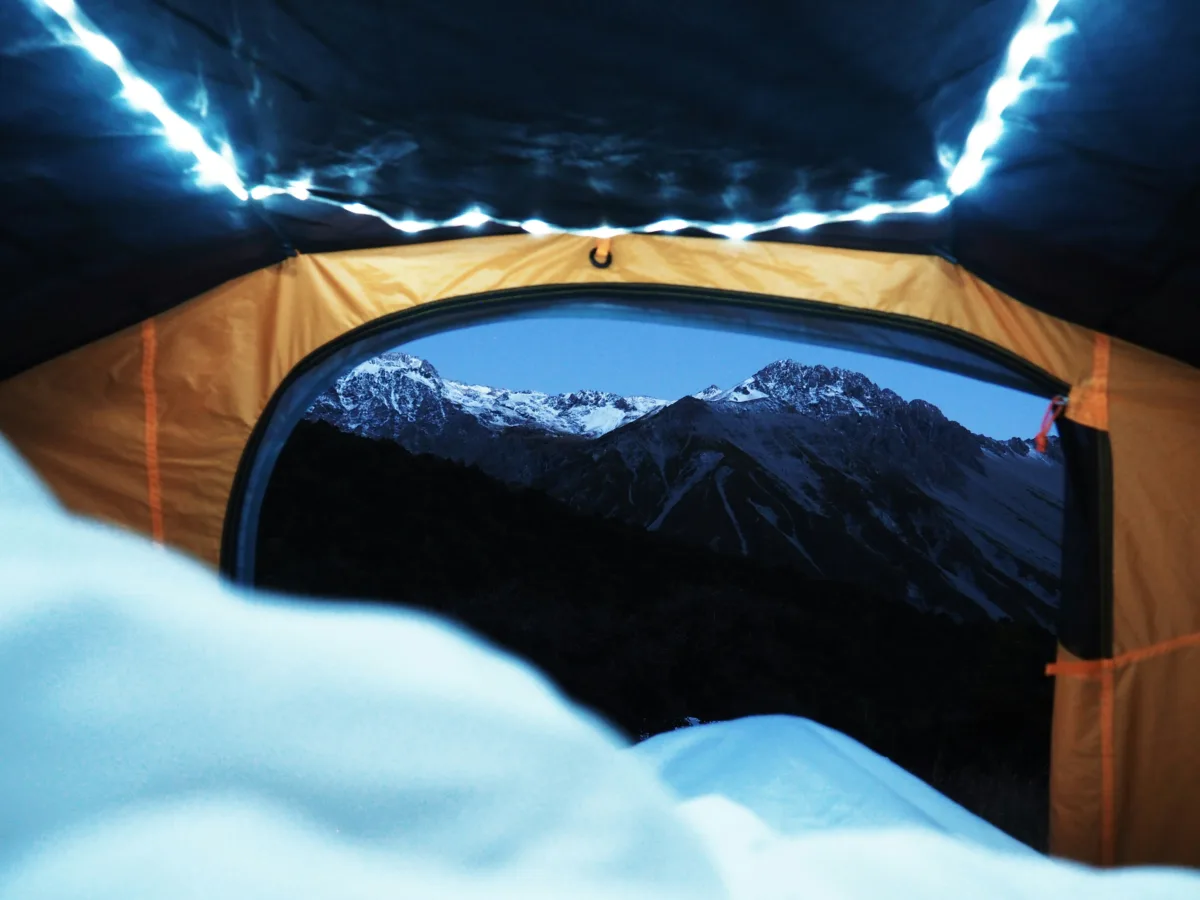
Picture setting up camp after a long day on the trail. Both sleeping pads fit by the door, so you figure you’re fine. Then you slide them into place and discover the floor narrows at the foot end. One pad rides up the wall, and the only dry spot for your pack is exactly where your feet need to go.
That’s the problem with tent sizes: a “2-person” label tells you roughly how many people the maker squeezed in, not how comfortable those people will be. This guide answers what size tent do i need for hiking using the gear you already own, so you can catch a bad fit before you order, not at 9 p.m. in the rain.
Hiking Tent Size Chart
| Who’s sleeping inside? | Start with | When to size up |
|---|---|---|
| One adult | 1-person | Choose a 2-person tent for indoor gear space, a wide pad, or more room to move. |
| Two adults | 2-person | Compare a 3-person tent if you use two wide pads, want gear inside, or bring a dog. |
| Two adults and a dog | Roomy 2-person or 3-person | Size up if the dog’s bed takes space you need for pads or for reaching the door. |
| Three adults | 3-person | Compare a 4-person tent, or two smaller tents for more privacy and easier access. |
| Four people | 4-person, or two 2-person tents | Decide based on who carries it, how much flat ground there is, and how much room everyone wants. |
| Family of four, car camping | 6-person | An 8-person tent if you use air beds or cots, or want a separate gear or play area. |
Use the chart to narrow your shortlist. Then compare exact floor dimensions, especially on ultralight tents that taper at the feet to save weight. Some brands sell roomier “plus” versions of their 2-person tents, which can fix a width problem without the weight of a full 3-person tent.
What Tent Capacity Ratings Really Mean
A tent’s capacity tells you how many people the maker says can sleep inside. There’s no single industry standard for how much space each “person” gets, so a 2-person tent from one brand can be noticeably wider than another’s. In general:
- Backpacking tents are cut close to save weight. Expect a snug fit at the stated capacity, with gear going in the vestibule.
- Camping (car camping) tents are usually roomier, but the stated capacity still assumes people lying close together on standard-width pads.
- Capacity is about sleepers, not stuff. Shop as though packs, boots, dog beds and air mattresses are not included.
That’s why the next step, measuring your actual gear, matters more than the number on the box.
How to Check If a Hiking Tent Will Fit
1. Add up the widths of your sleeping pads
Two 20-inch pads need 40 inches side by side. A 20-inch pad plus a 25-inch pad needs 45 inches. Two 25-inch pads need 50 inches. Those are the bare minimum widths for the pads alone. Allow a little extra if you want a gap between sleepers or a clear path to the door. For tapered or mummy-shaped pads, compare their shape with the tent floor, not just their widest point.
2. Check the head and foot widths separately
Many backpacking tents are wider at the head than at the foot. A tent can be wide enough at your shoulders and still too narrow for two rectangular pads at your feet. Look at the floor-plan diagram on the product page and find both measurements. If a listing only gives one width or only the floor area in square feet, check the manufacturer’s drawing before you buy. Floor area alone won’t tell you where the usable width is.
3. Leave room for your full length
Your pillow and the foot of your sleeping bag both need space, and a thick pad lifts you closer to the sloping walls. If you’re tall, check how steeply the walls slope at the head and foot, not just the floor length. A tent can be “long enough” on paper and still push your sleeping bag into a wet wall all night. Our guide to the best camping tents for tall people lists roomier options.
4. Decide what actually needs to be inside
Make a quick list: people, sleeping pads, a dog bed, and anything you want within reach overnight. A vestibule (the covered porch outside the door) can hold muddy boots and packs so they don’t eat into sleeping space. Check that the vestibule holds those items without blocking the entrance. Food is a separate question: follow the campsite’s food storage rules, and see our guide to hiking food storage for bear-safe options.
5. Check doors, weight and pitch space
If you share a tent and one person gets up at night, two doors can make a snug tent much easier to live with. For backpacking, compare the weight of the parts you’ll actually carry. And at camp, make sure there’s room for the fully pitched fly, vestibules and guylines, not just the floor. Our campsite guide covers how much room to look for.
6. Tape out the floor at home
Use painter’s tape to mark the tent’s floor dimensions on your living room floor. If the floor tapers, mark the narrow end too. Lay down your pads, pillows and dog bed, then lie down and roll over the way you normally would. Put your pack where you expect it to go. It takes five minutes and shows you exactly what living in that tent will feel like.

Common Sleeping Pad and Mattress Sizes
Sizes vary by brand, so always check your own gear. These are typical widths to help you plan:
| What you sleep on | Typical width | What it means for tent size |
|---|---|---|
| Regular backpacking pad | About 20 in | Two fit in most 2-person tents |
| Wide backpacking pad | About 25 in | Two need about 50 in of usable width; many 2-person tents are tight |
| Car-camping mat | Often 25–30 in | Plan on a 3- or 4-person tent for two people |
| Twin air mattress | About 39 in | Check length and height too; tall air beds hit sloping walls |
| Queen air mattress | About 60 in | Often needs a 4- to 6-person tent to leave room to reach the door |
| Camping cot | Varies by model | Check the assembled size and whether the legs fit under sloping walls |
Not sure which pad to bring? Our guide to sleeping pad R-value explains warmth, and how to sleep comfortably while camping covers comfort. If you prefer to sleep off the ground, see the best camping cots for adults, but measure the tent first.
Other Things That Affect the Size You Need
- Peak height: How high the tent is at its tallest point. If two people want to sit up or change at the same time, check how quickly the roof slopes away on either side.
- Wall shape: Tents with steep, near-vertical walls feel much bigger inside than dome tents with the same floor size.
- Vestibules: One large or two smaller vestibules can free up a lot of interior space.
- Weather: If you often camp in rain, you’ll spend more time inside, so a little extra room helps. See our best waterproof camping tents and tips for camping in the rain.
- Season: Winter means bulkier sleeping bags and more gear inside. Our best 4-season tents guide covers tents built for snow and wind.
- Weight: Each size up adds weight. For backpacking, it’s usually worth it for two people; for solo hikers, it depends on how much you value space versus a lighter pack.
- Footprint: A tent footprint should match the floor size. If you size up the tent, size up the footprint too.
What Size Tent Do I Need for Camping?
For car camping, weight hardly matters, so comfort wins. A good rule of thumb is to compare tents rated for one or two more people than will actually sleep inside, as long as it fits your car and your campsite. Two adults using a double air mattress will usually find a 3- or 4-person tent far more comfortable than a snug backpacking tent. A family of four can start by comparing 6-person tents against the size of their actual bedding.

Before you buy a big tent, check the size of your usual campsites. If you camp on a reserved tent pad, look up its dimensions. A huge tent still needs room for the full pitch, and on a small pad the vestibule or guylines can be what makes it impractical. Our car camping essentials checklist helps you plan the rest of the setup, and heavy-duty tent stakes help a large tent stay put in wind.
Backpacking vs. camping tent sizes at a glance
| Group | Backpacking (carry it) | Car camping (drive it) |
|---|---|---|
| Solo | 1-person, or 2-person for comfort | 2- or 3-person |
| Couple | 2-person, or 3-person with wide pads | 3- or 4-person |
| Couple + dog | Roomy 2-person or 3-person | 4-person |
| Family of four | 4-person, or two 2-person tents | 6-person, or 8-person with air beds |

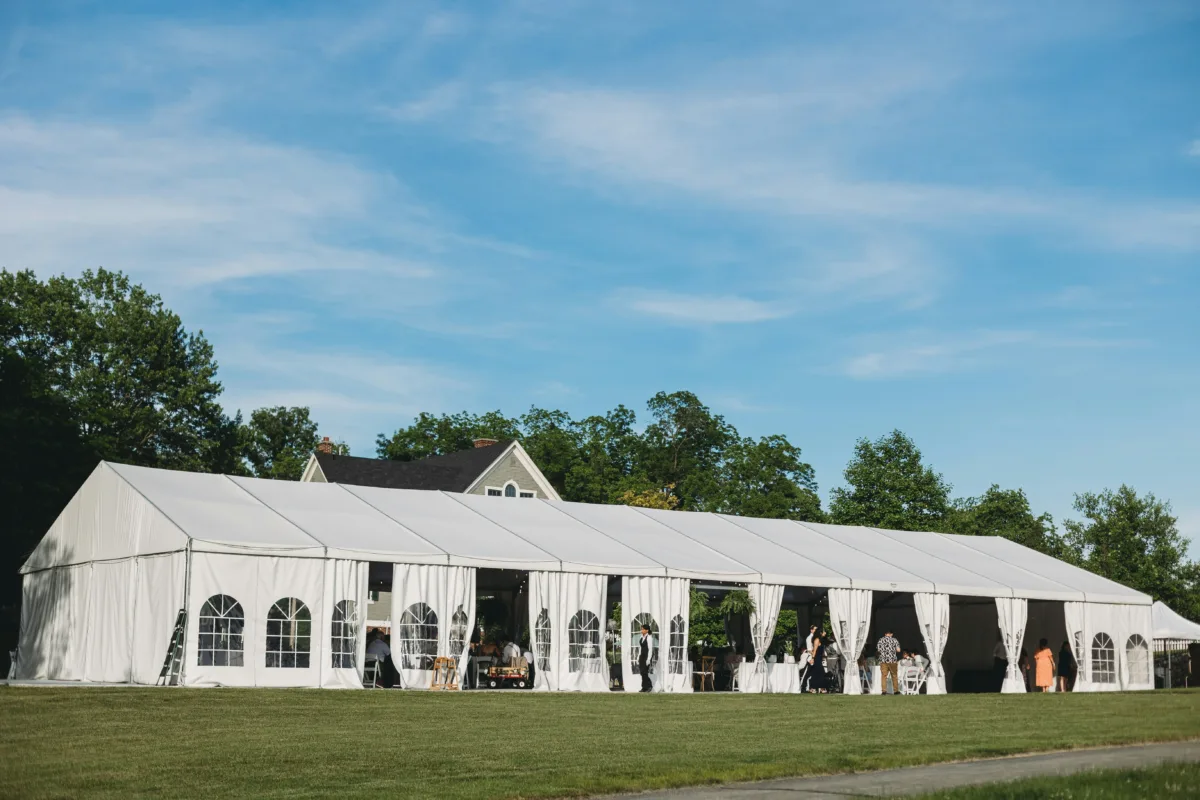
What Size Event Tent Do I Need for 30 to 300 Guests?
Guest counts apply to party, wedding and event tents, not camping tents. For a seated dinner (banquet seating), a common starting estimate is 10–12 square feet per guest. Multiply your guest count by that range, then add space separately for a buffet, bar, stage or dance floor. The table below estimates seating area only, as a starting point for talking to rental companies.
| Guests | Estimated seated area | Example tent size (gross area) |
|---|---|---|
| 30 | 300–360 sq ft | 20 × 20 ft (400 sq ft) |
| 50 | 500–600 sq ft | 20 × 30 ft (600 sq ft) |
| 100 | 1,000–1,200 sq ft | 30 × 40 ft (1,200 sq ft) |
| 150 | 1,500–1,800 sq ft | 30 × 60 ft (1,800 sq ft) |
| 200 | 2,000–2,400 sq ft | 40 × 60 ft (2,400 sq ft) |
| 250 | 2,500–3,000 sq ft | 50 × 60 ft (3,000 sq ft) |
| 300 | 3,000–3,600 sq ft | 60 × 60 ft (3,600 sq ft) |
Before You Buy: Quick Fit Checklist
- I know the width and length of every pad, mattress or cot going inside.
- The floor is wide enough at both the head and foot ends.
- Tall sleepers won’t push their bag into the end walls.
- There’s room (inside or in a vestibule) for packs and boots.
- Everyone can reach a door without climbing over someone.
- The packed weight works for whoever is carrying it.
- The fully pitched tent fits the campsites I usually use.
Frequently Asked Questions
1. What size tent do I need for hiking alone?
Start with a 1-person tent if pack weight matters most and your pad fits. Choose a 2-person tent if you want room to change, keep your pack inside, or stretch out on a rainy evening.
2. Is a 2-person tent big enough for two adults?
Often, yes. Check both pads against the floor plan, including the narrow foot end. Two 25-inch rectangular pads need at least 50 inches of usable width where they lie.
3. Is a 3-person tent worth it for two backpackers?
It can be worth the extra weight if you use wide pads, bring a dog, or expect to spend a lot of time inside. If width is your only worry, compare a roomy 2-person tent first.
4. What size tent do I need for camping with my family?
Count sleepers, then lay out everyone’s bedding. For four people car camping, a 6-person tent is a sensible starting point if you want space for bags or a walkway.
5. Do tent capacity ratings include backpacks?
No. Shop as though the stated capacity is for sleepers only, then check the floor and vestibule dimensions to see where packs and boots will go.
6. What size tent fits two 25-inch sleeping pads?
Look for at least 50 inches of usable width across the whole area those pads cover. If the floor tapers below 50 inches and your pads are rectangular, choose a wider or less tapered tent.
7. What size hiking tent should I buy if I’m tall?
Check the floor length, how steeply the end walls slope, and how thick your pad is. Your pillow and sleeping bag should fit without the bag pressing into the wall.
8. What size tent do I need for two people and a dog?
Compare a roomy 2-person tent with a 3-person model, using the dog’s actual bed or mat to check the floor plan. A dog that sleeps across the doorway can make a tent feel tight.
9. Can three adults share a 3-person backpacking tent?
Yes, if their pads fit and they’re comfortable with little spare room. Check the door positions so you know whether the middle sleeper has to climb over someone.
10. Is one 4-person tent better than two 2-person tents?
One tent keeps everyone together. Two smaller tents give more privacy, split the weight, and fit more easily on small or uneven sites. Check what your campsite reservation allows.
11. How much does tent peak height matter?
Peak height is only the tallest point. If two people want to sit up or change at once, look at how quickly the roof slopes down, or choose a tent with steeper walls.
12. Should I size up if I camp in the rain often?
Extra space helps if you often wait out showers inside. First check whether the vestibule holds wet boots and gear without blocking the door; better storage may help more than another sleeping spot.
13. Does a 4-person tent fit a queen air mattress?
Sometimes, but check the inflated mattress size against the tent floor, including any taper. Leave space to reach the door, and remember a tall air bed can push into the sloping walls.
14. What size tent do I need for 30 guests?
Allow about 300–360 sq ft for a seated dinner as a starting estimate. A 20 × 20 ft tent (400 sq ft) is worth discussing with your rental company.
15. What size tent do I need for 50 guests?
Start with 500–600 sq ft for seated dining. A 20 × 30 ft tent has 600 sq ft of gross area. Ask for a drawing showing tables, aisles and any buffet.
16. What size tent do I need for 100 guests?
Budget 1,000–1,200 sq ft for seated dining. A 30 × 40 ft tent has 1,200 sq ft. A bar, stage or dance floor will need extra space.
17. What size tent do I need for 150 guests?
Plan around 1,500–1,800 sq ft for seated dining. A 30 × 60 ft tent has 1,800 sq ft. Have the rental company check that your tables and extras fit.
18. What size tent do I need for 200 guests?
Start at 2,000–2,400 sq ft for seated dining. A 40 × 60 ft tent has 2,400 sq ft of gross area. Ask the supplier to confirm the layout and exits for your venue.
19. What size tent do I need for 250 guests?
Allow about 2,500–3,000 sq ft for seated dining. A 50 × 60 ft tent has 3,000 sq ft before any extras. Confirm the sizes your rental company offers and how much outside clearance it needs.
20. What size tent do I need for 300 guests?
Start with 3,000–3,600 sq ft for seated dining. A 60 × 60 ft tent has 3,600 sq ft. Have the rental provider and venue confirm the floor plan, exits, anchoring and any local approvals.
The Measurement to Take Before You Buy
Before you open another product page, write down the width and length of your sleeping pads. Solo hikers can then compare a 1-person tent with a roomy 2-person model. Pairs can check whether their pads really fit a 2-person floor before paying (and carrying) for a 3-person tent. If everything fits and you can still get out the door without crawling over anyone, you’ve found your size.
When the trip’s over, a dry, loosely packed tent lasts far longer. Our guide on how to store camping gear shows how.
2 thoughts on “What Size Tent Do I Need for Hiking? Tent Size Chart, Fit Guide & 20 FAQs”