
You’ve found a flat spot for the tent, but when you kneel down to clear it, there’s sharp gravel pressed into the dirt. You flick away the obvious stones. What’s left is fine grit, and your tent floor will grind against it every time someone climbs in, shifts on a sleeping pad or rolls over at 3 a.m. That’s exactly the moment a tent footprint earns its place in your pack.
Do you actually need one? If you mostly camp on smooth, established sites, you might never miss it. If you regularly pitch on gravel, carry a thin, lightweight backpacking tent, or are tired of scrubbing mud off a family tent floor, it’s worth considering. The decision comes down to three things: how much wear your floor sees, how much weight you’re willing to carry, and whether you need a fitted attachment system. This guide walks you through all of it, including how to size one, set it up and make your own.
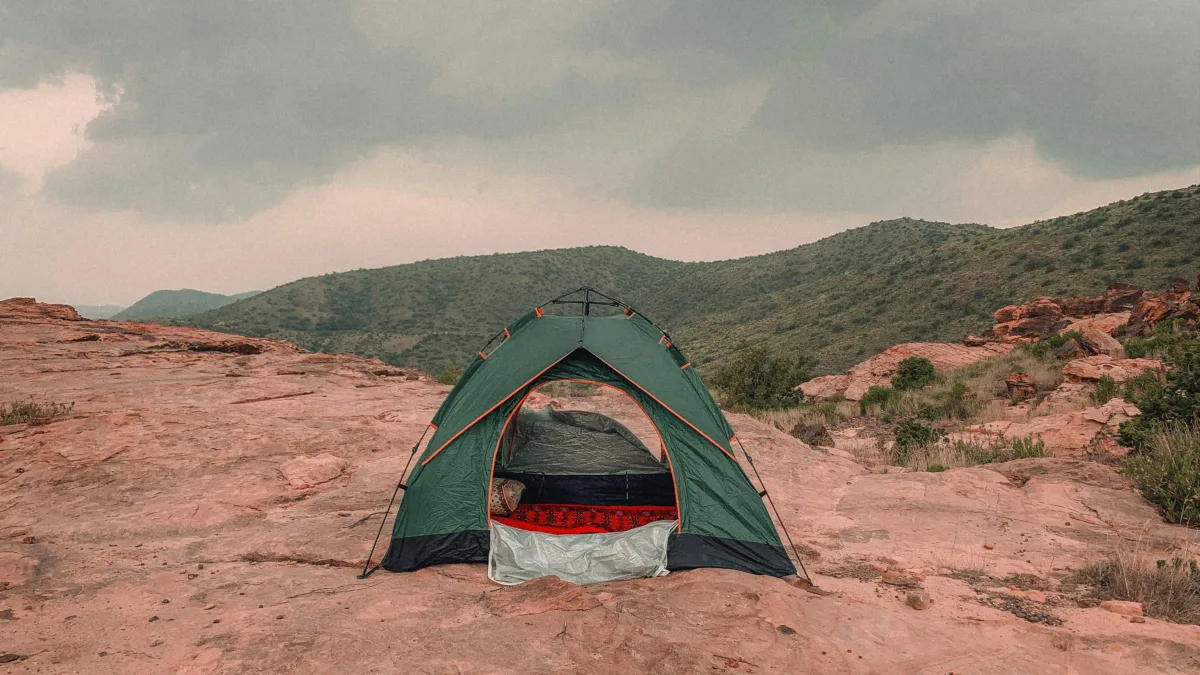
Tent Footprint vs Groundsheet: What’s the Difference?
In most camping listings, footprint means a removable sheet cut to fit under one particular tent, often with grommets or clips at the corners. Groundsheet is a broader term. It can mean a separate sheet under a tent, a floor you use with a tarp shelter, or the built-in floor of a canvas or family tent. Brands use the words differently, so look at how the product attaches and where it sits rather than trusting the name.
| Term | What it usually means | What to check before buying |
|---|---|---|
| Fitted tent footprint | A removable underlay shaped for a specific tent | Model, capacity, version/year and attachment points |
| Universal groundsheet | A separate sheet sold by dimensions | Whether it fits inside the actual tent floor outline |
| Built-in or sewn-in groundsheet | The tent’s own floor | Whether you’re buying a replacement floor or an extra underlay |
| Tarp used as a footprint | A general-purpose tarp under the tent | Whether you can fold or trim it so no edges catch runoff |
One more meaning to know about: on campground maps and tent spec sheets, “footprint” can also describe how much ground the pitched tent takes up. If you’re checking whether a tent will fit a campsite pad, allow room for the vestibules and guylines, not just the floor.
What Does a Tent Footprint Do?
1. It takes the wear instead of your tent floor
The floor gets the most ground contact of any part of the tent, and it’s also what you kneel on, walk across and press down with sleeping pads or cot legs. On rough ground, a footprint adds a layer that takes much of that abrasion. When it eventually wears out, replacing a cheap separate sheet is far easier than repairing or replacing a tent floor.
It’s not armor, though. Still clear sticks, pine cones and sharp stones before you pitch. A thin sheet gives limited protection against a sharp point under someone’s knee. If a puncture has already happened, our guide on how to repair a tent shows you how to patch it.
2. It keeps mud and grit off the tent body
This is the benefit you notice most when packing up. On the last muddy morning, the dirty footprint goes into its own bag for the drive home, while the tent body stays much cleaner. That’s handy if you’re moving camp several nights in a row or squeezing the tent back into a shared gear bag.
Unpack both pieces when you get home. The underside of a footprint is often still damp when the tent feels dry, so let them dry separately before storing. A damp footprint folded against a clean tent is a common cause of mildew (see how to clean a moldy tent).
3. It adds a layer between your floor and damp ground
A properly fitted footprint helps keep the tent floor away from moisture and dirt on the ground. But fit and drainage matter far more than size. If rainwater collects between the footprint and the floor, the footprint makes things worse, not better. And if a floor seam is leaking or its coating is failing, fix that problem first. A footprint won’t make a leaky tent waterproof. For more wet-weather setup tips, read our guide to camping in the rain.
4. On some tents, it enables a lighter “fast pitch”
Some tents let you pitch just the poles, rainfly and footprint without the inner tent. This is often called a fast-pitch or fly-only pitch. It saves weight and gives you a quick shelter, but it usually needs the official footprint with matching grommets or clips. Check your tent’s setup instructions to see whether it’s supported.
Tent Footprint Pros and Cons
- Protects the floor from abrasion and small punctures
- Extends the life of thin, lightweight tent floors
- Keeps the tent body cleaner when packing up
- Adds a barrier against damp ground
- Cheaper to replace than a tent floor
- Can enable a fly-only fast pitch on some tents
- Adds weight and bulk to your pack
- Official fitted footprints can be pricey
- Can trap rain under the tent if it sticks out
- One more thing to dry and clean after a trip
- Won’t fix a tent that’s already leaking
- Gives little protection against sharp objects
Do You Need a Tent Footprint?
| Where or how you camp | What makes sense |
|---|---|
| Gravel tent pads or gritty ground | Bring one if you regularly pitch on rough surfaces. |
| Smooth, dry, established tent sites | Optional, as long as the floor is sound and you can clear the pitch. |
| Ultralight backpacking | Weigh the protection against the extra ounces. A thin DIY sheet may be enough if you only want abrasion protection. |
| Family car camping | A fitted or universal sheet makes muddy pack-ups much easier, and weight doesn’t matter when the car is close. |
| Sand and beaches | Helpful for keeping sand off the tent body and out of zippers when you pack. |
| Snow camping | Often skipped, since snow isn’t abrasive. Some campers still use one for extra protection when stamping out a platform. |
| A tarp or floorless shelter | A separate groundsheet gives you a clean surface for your sleeping pad and gear. |
| A tent with a known floor leak | Repair and test the floor before the trip. A footprint can then protect the repair from more wear. |
Still unsure? Think about your last few campsites. If you keep pitching on gravel, or spend the last morning wiping mud off the tent, you’ve got your answer. If your tent has a sturdy floor and you camp on smooth sites, try leaving the footprint at home on an easy trip and see whether you miss it. Backpackers counting every ounce can compare options in our guide to the best ultralight backpacking tents, where floor thickness varies a lot from model to model.
How to Size and Use a Tent Footprint
Start with the floor shape, not the tent size
Pitch the tent at home and look straight down at the floor outline. Lots of tents taper toward the feet. A universal rectangle might match the widest end and still stick out at the narrow end. The measurements that matter are where the floor meets the ground, not including the vestibule.
For a DIY sheet, trim it so its edges sit slightly inside the floor all the way around. For a branded footprint, use the compatibility chart for your exact model and version. Two different two-person tents can have different pole-tip positions and attachment hardware, even if the floor size looks similar.

How to set up a tent with a footprint
- Pick a level, well-drained spot and clear away loose debris that could damage the floor.
- Lay out the footprint and line it up with the head, foot and corners of where the tent will go.
- Check which side faces up. Many footprints have a coated side; follow your maker’s instructions.
- Pitch the tent on top. If your footprint has grommets or clips, attach the pole tips or corner straps as the instructions show.
- Walk around the finished pitch. Check the door, the corners and the tapered end. Fold any edge that sticks out underneath before it rains.
- Check again after tensioning the fly. Make sure the floor and footprint are still lined up and that runoff has somewhere to drain away.
Tent Footprint Materials Compared
| Material | Good for | Keep in mind |
|---|---|---|
| Coated nylon or polyester (most official footprints) | A close fit, attachment points and fast-pitch options | Usually costs more; check denier and weight on the spec sheet |
| Polycryo (thin plastic sheeting) | Ultralight backpacking where weight matters most | Very light and cheap, but less tough on sharp ground |
| Tyvek (house wrap) | A tough, budget DIY footprint | Crinkly and bulky when new; often softened by washing |
| Polyethylene tarp | Car camping and family tents | Heavy and bulky; must be folded or trimmed to fit under the floor |
Should You Buy a Fitted Footprint or Make Your Own?
Buy the official footprint if you’ll use the attachments
A fitted footprint is worth it if your tent has an unusual floor shape, you want the corners to attach neatly, or your tent supports a fly-only fast pitch. An ordinary sheet protects the floor just fine, but a fast pitch usually needs the model-specific grommets or clips. If you’re shopping, our guide to the best tent footprints for camping and backpacking compares fitted and universal options.
Use a universal groundsheet for a simple floor shape
A universal sheet works well if you can match the shape or fold the extra material underneath. Measure your tent floor first. For car camping on rough, muddy sites, a slightly heavier sheet can be worth it. Compare the actual dimensions, packed size and attachment points, not just the listed tent capacity.
Make a DIY footprint if you only need floor protection
- Choose your material: a piece of polycryo, Tyvek or a lightweight tarp that’s a little bigger than your tent floor.
- Pitch the tent over it at home on a flat surface.
- Trace the floor outline with a marker, including any taper.
- Cut slightly inside the line so the sheet ends up a little smaller than the floor all the way around.
- Test the fit by pitching the tent on it again before your trip.
Want to keep a tarp you already own intact? Fold the edges underneath instead of cutting, then check that the folds stay put once the tent is staked.
How to Clean and Store a Tent Footprint
- Shake it out at camp before packing, and pack it separately from the tent body when it’s muddy.
- Rinse off mud at home with clean water and a soft sponge. Use a gear-safe cleaner if needed.
- Dry both sides fully before storing. Hang it over a line or chair.
- Store it loosely in a cool, dry place, ideally in its own bag.
- Patch small holes with repair tape, or replace a worn-out footprint. It’s doing its job if it’s wearing out instead of your tent.
Common Tent Footprint Mistakes
- Letting it stick out past the floor, so it collects rain under the tent.
- Skipping site clearing because “the footprint will handle it.”
- Putting it inside the tent by mistake. A standard footprint goes underneath, outside.
- Buying a footprint for the wrong tent version, so the grommets don’t line up.
- Storing it damp folded against the tent.
- Expecting it to keep you warm. That’s your sleeping pad’s job.
Frequently Asked Questions
Is a tent footprint the same as a groundsheet?
Sometimes. A removable groundsheet placed under a tent works as a footprint. But “groundsheet” can also mean a shelter’s built-in floor, so check the product description and how it attaches.
Should a tent footprint be smaller than the tent?
Yes. It should sit slightly inside the floor outline so it doesn’t catch rain running off the fly. Check the tapered end and corners as well as the overall length and width.
Can I use a regular tarp as a tent footprint?
Yes, if it lies flat and you can keep every edge tucked under the floor. A big tarp spread out past the tent will collect rain and channel it under the floor.
Does a tent footprint go inside or outside the tent?
A standard footprint goes outside, underneath the tent floor. If you’re using a separate interior floor liner, or a canvas tent with a removable groundsheet, follow that tent’s instructions.
Can a footprint make a leaking tent waterproof?
No. It limits ground contact and protects the floor from wear, but if water comes in through a seam, puncture, zipper or worn coating, you need to find and fix that. Our guide on how to waterproof a tent covers seam sealing and coating repairs.
Will a tent footprint keep me warmer?
Not really. A typical footprint is built for floor protection, not insulation. For warmth from below, an insulated sleeping pad matters far more. If you feel cold through your hips or shoulders, check your pad’s R-value. Our guide to sleeping pad R-value explains how. For more cold-weather tips, read how to keep a tent warm.
Does a footprint stop condensation inside a tent?
No. Condensation comes from moisture, temperature and airflow inside the tent. Start with your vents, fly tension and where you put wet gear. See how to stop condensation in a tent.
Is an official footprint worth the extra cost?
It makes the most sense when you want exact corner attachments, a close fit on a tapered floor, or a fly-only fast pitch. For basic abrasion protection, a universal or DIY sheet that fits fully underneath does the job for less.
Do I need a footprint if my tent has a thick floor?
Probably not on smooth sites. Heavier family and car-camping tents often have tougher floors. A footprint still helps keep the tent clean on muddy or gritty ground.
Which way up does a tent footprint go?
Follow your maker’s instructions. Many fitted footprints have a coated side and specific attachment points that only line up one way.
Which Footprint Should You Pack? It Depends on the Campsite
For a family weekend on a gravel pad, a sheet that fits the floor and rinses off easily at home is a smart choice. For a backpacking trip on soft forest ground, weigh a thin sheet against the wear you actually expect. And if your tent supports a fly-only pitch, check the official footprint first, because its attachment points do part of the work.
Whatever you bring, check the fit at home. It takes a minute to walk around the tent and tuck in an edge that’s showing. Moving your sleeping bag out of a puddle at midnight takes a lot longer.
6 thoughts on “What Is a Tent Footprint? Footprint vs Groundsheet and When You Need One”