
Here’s something most people only learn after they book: in Washington, DC, the neighborhood you sleep in shapes your trip more than the hotel does.
Pick well and your mornings start with a short walk to the museums. Dinner is around the corner. The Metro station is two blocks away. Pick badly and you’ll spend a surprising part of your vacation on escalators, in traffic, or staring at a rideshare app while your feet ache.
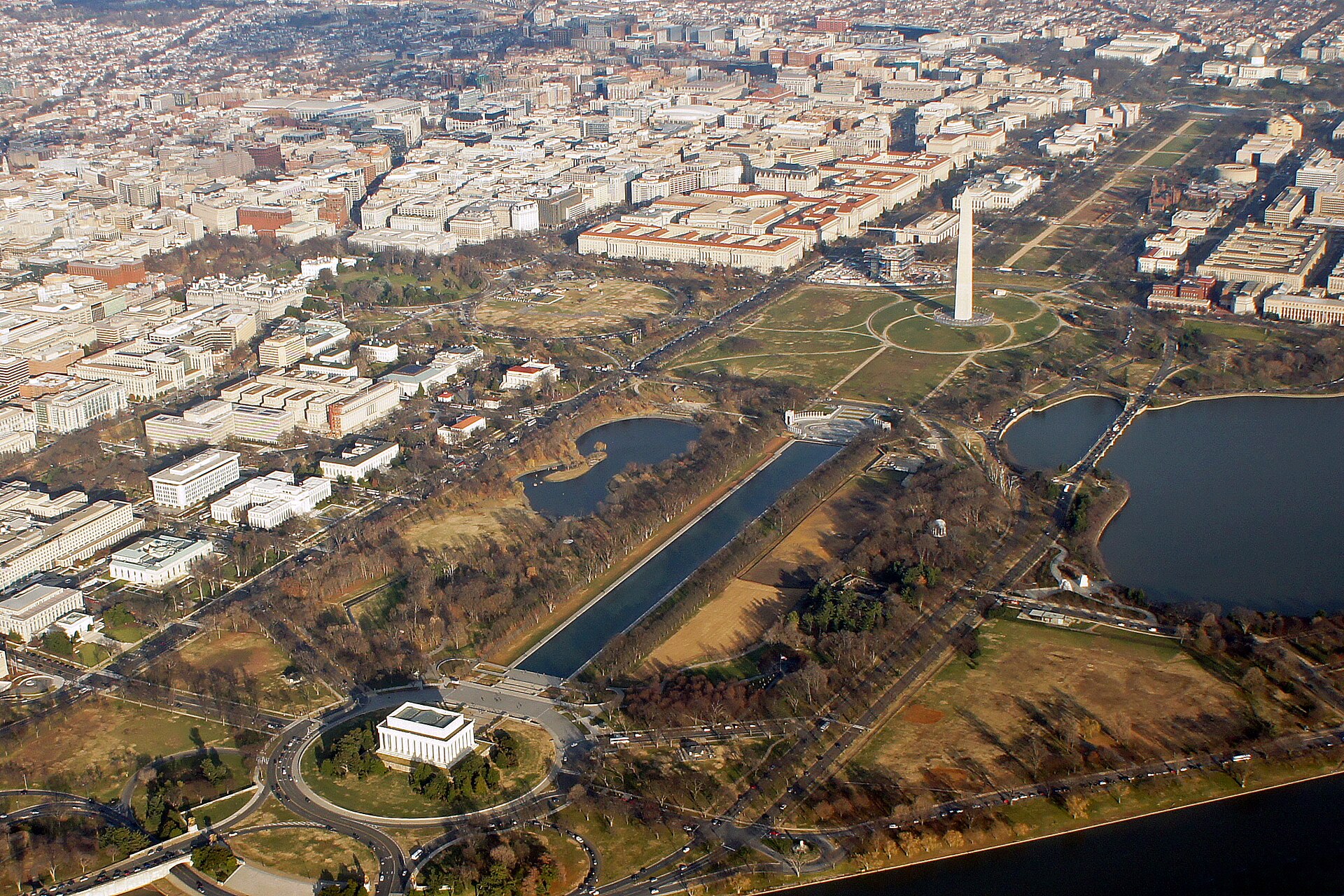
The tricky part is that DC looks small on a tourist map. It isn’t. The National Mall alone runs about two miles from the Capitol to the Lincoln Memorial, and the city’s best neighborhoods are spread out around it like spokes on a wheel.
So this guide on where to stay in Washington DC doesn’t just list neighborhoods. It tells you who each area actually suits, how long it takes to get to the sights, what the downsides are, and which hotels are worth looking at. By the end, you should know exactly which part of the city fits your trip.
What Is the Best Area to Stay in Washington DC?
For most first-time visitors, the best areas to stay in Washington DC are Downtown, Penn Quarter and Dupont Circle. Downtown and Penn Quarter put the White House, the National Mall and the Smithsonian museums within walking distance. Dupont Circle adds more restaurants and neighborhood life, with a direct Red Line Metro connection. Couples often prefer Georgetown, families like Capitol Hill or Woodley Park, and The Wharf is best for waterfront evenings.
That’s the short answer. The better answer depends on how you plan to spend your days, and what you want to do once the museums close at 5:30.
Where to Stay in Washington DC at a Glance
| Area | Best For | Nearest Metro | Feel |
|---|---|---|---|
| Downtown | First-time visitors | Metro Center, Farragut, McPherson Sq | Central, busy by day |
| Penn Quarter / Chinatown | Museums and dining | Gallery Place, Archives | Lively |
| Dupont Circle | Best all-round balance | Dupont Circle (Red) | Local, lively |
| Georgetown | Couples, luxury, shopping | None (walk to Foggy Bottom) | Historic, upscale |
| Capitol Hill | History, families | Capitol South, Eastern Market | Residential |
| Foggy Bottom / West End | Western monuments | Foggy Bottom-GWU | Quieter, central |
| The Wharf / Southwest | Waterfront evenings | Waterfront, L’Enfant Plaza | Modern, lively |
| Woodley Park | Families, the Zoo | Woodley Park (Red) | Green, calm |
| Adams Morgan | Nightlife | Woodley Park (walk) | Energetic |
| Navy Yard | Sports, new hotels | Navy Yard-Ballpark (Green) | New, active |
| Logan Circle / 14th St | Food lovers | Dupont, U Street (walk) | Trendy |
| U Street / Shaw | Live music, local vibe | U Street, Shaw-Howard U | Local, lively |
| NoMa / Union Station | Train arrivals, value | Union Station, NoMa (Red) | Practical |
| Arlington, VA | Budget, airport access | Rosslyn, Crystal City | Suburban-urban |
| Old Town Alexandria, VA | Charm on a budget | King St-Old Town | Historic, relaxed |
In This Guide
- How Washington DC is laid out
- The 15 best areas to stay in Washington DC
- Neighborhoods compared side by side
- Where to stay by type of traveler
- Where to stay near the Mall, Capitol, airports and more
- Safest areas to stay in DC
- Getting around without a car
- Stay in DC or Virginia?
- How to choose a hotel (and when to book)
- FAQs
How Washington DC Is Laid Out (and Why It Matters for Your Hotel)
Spend two minutes on this and your hotel search gets much easier.
The city is split into four quadrants: Northwest, Northeast, Southwest and Southeast. They meet at the U.S. Capitol. Every address ends with one of them, and it matters. “700 F Street NW” and “700 F Street NE” are two completely different places, about a mile apart.
Most visitor neighborhoods sit in Northwest: Downtown, Penn Quarter, Dupont Circle, Georgetown, Foggy Bottom, Logan Circle, Adams Morgan and Woodley Park. Capitol Hill straddles the line between Southeast and Northeast. The Wharf is in Southwest, and Navy Yard is in Southeast.
The National Mall runs east to west through the middle of it all, with the Capitol at one end and the Lincoln Memorial at the other. The Smithsonian museums line its eastern half. The big memorials cluster around its western half and the Tidal Basin. Keep that picture in your head, because “near the National Mall” can mean very different things.
The 15 Best Areas to Stay in Washington DC
1. Downtown: Best for First-Time Visitors
Best for: first trips, short stays, sightseeing · Metro: Metro Center, McPherson Square, Farragut North and West, Federal Triangle
If you want the simplest answer to where to stay in Washington DC, start here. Downtown puts you a few blocks from the White House, a short walk from the National Mall, and on top of several Metro stations that connect to every line in the system.
That central position is the whole point. On a two- or three-day trip, you can walk to the Washington Monument after breakfast, duck back to the hotel at lunch, and still catch the memorials lit up at night without planning a single transfer.
Downtown also has the widest choice of hotels in the city. You’ll find grand historic properties near Lafayette Square, big international chains, stylish mid-range options and plenty of business hotels.
Nearby: White House, Lafayette Square, National Mall, Washington Monument, Renwick Gallery, National Museum of Women in the Arts, CityCenterDC shopping, Old Ebbitt Grill.
The catch: parts of Downtown are office-heavy, so some blocks feel empty after 7 p.m. and on Sunday mornings. Weekday rates also climb when conventions or political events are in town.
Hotels to look at: Willard InterContinental and The Hay-Adams (classic luxury near the White House), Waldorf Astoria in the Old Post Office, Conrad at CityCenterDC, and the Moxy or Hamilton Hotel for younger travelers on a tighter budget. See our full list of the best luxury hotels in Washington DC if you want to splurge.
2. Penn Quarter and Chinatown: Best for Museums and Restaurants
Best for: museum-focused trips, food, shows, arena events · Metro: Gallery Place-Chinatown (Red, Green, Yellow), Archives, Judiciary Square
Penn Quarter sits between Downtown and the eastern end of the Mall, and for a short sightseeing trip it might be the most practical area in the city. The National Archives is a few minutes away. So are Ford’s Theatre, the National Portrait Gallery and the Smithsonian American Art Museum, which share one grand building.
What makes it stand out is dinner. After a long day of walking, you don’t want another 30-minute trip to eat. Here, you step out of the hotel and have dozens of restaurants within a few blocks, from casual dumplings in Chinatown to well-known spots like Zaytinya and Jaleo.
Gallery Place-Chinatown station is also one of the handiest in the city. Three lines stop there, so you can reach Dupont Circle, Union Station, Navy Yard and the airport without much fuss.
The catch: it’s a busy central district, not a quiet neighborhood. When there’s a game or concert at Capital One Arena, the streets fill up fast. A few blocks around the arena can also feel rough late at night, so stick to busy streets and check recent hotel reviews.
Hotels to look at: Kimpton Hotel Monaco (in a historic marble building), Riggs Washington DC (a former bank), Motto by Hilton Chinatown and Grand Hyatt Washington near Metro Center.
3. Dupont Circle: Best Overall Balance
Best for: couples, food lovers, first and repeat visits · Metro: Dupont Circle (Red Line)
Dupont Circle gives you something the federal core often lacks: a real neighborhood. There are bookstores, cafés, historic mansions, embassies, wine bars and people actually living their lives, all centered on a traffic circle with a marble fountain where locals sit, read and people-watch.
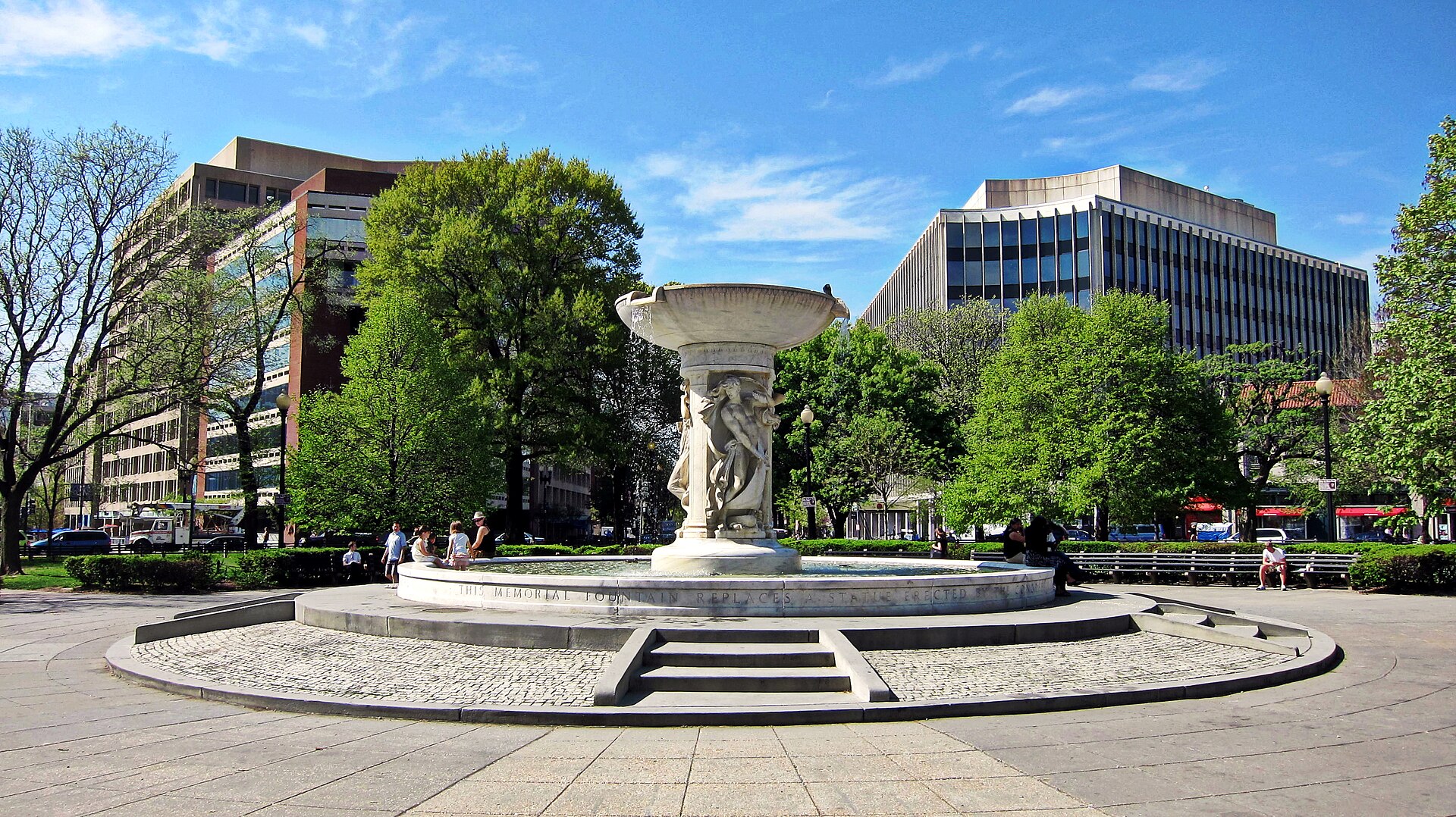
It’s not beside the monuments, but it isn’t far either. The Red Line gets you to Metro Center in a few minutes, and the White House is roughly a 25-minute walk down Connecticut Avenue. For most travelers, that’s a fair trade for better evenings.
Nearby: The Phillips Collection (America’s first modern art museum), Embassy Row along Massachusetts Avenue, Kramers bookstore and café, the Sunday farmers market, and easy walks to Logan Circle and Adams Morgan. It’s also the historic center of DC’s LGBTQ+ community, with a relaxed, welcoming bar scene.
The catch: you’ll ride the Metro or walk 20 to 30 minutes for most major sights. Rooms also aren’t cheap, because everyone likes staying here.
Hotels to look at: The Dupont Circle Hotel (right on the circle), The Ven at Embassy Row, The Royal Sonesta Dupont Circle and Kimpton Carlyle. The Jefferson sits just south, halfway to the White House.
4. Georgetown: Best for Couples, History and Luxury
Best for: couples, shopping, historic charm, repeat visits · Metro: none; nearest is Foggy Bottom-GWU (15 to 25 minutes on foot)
Georgetown is older than Washington itself. It was a busy tobacco port long before the capital was planned, and it still feels like its own little town: brick sidewalks, Federal-style row houses, the C&O Canal and a waterfront park along the Potomac.
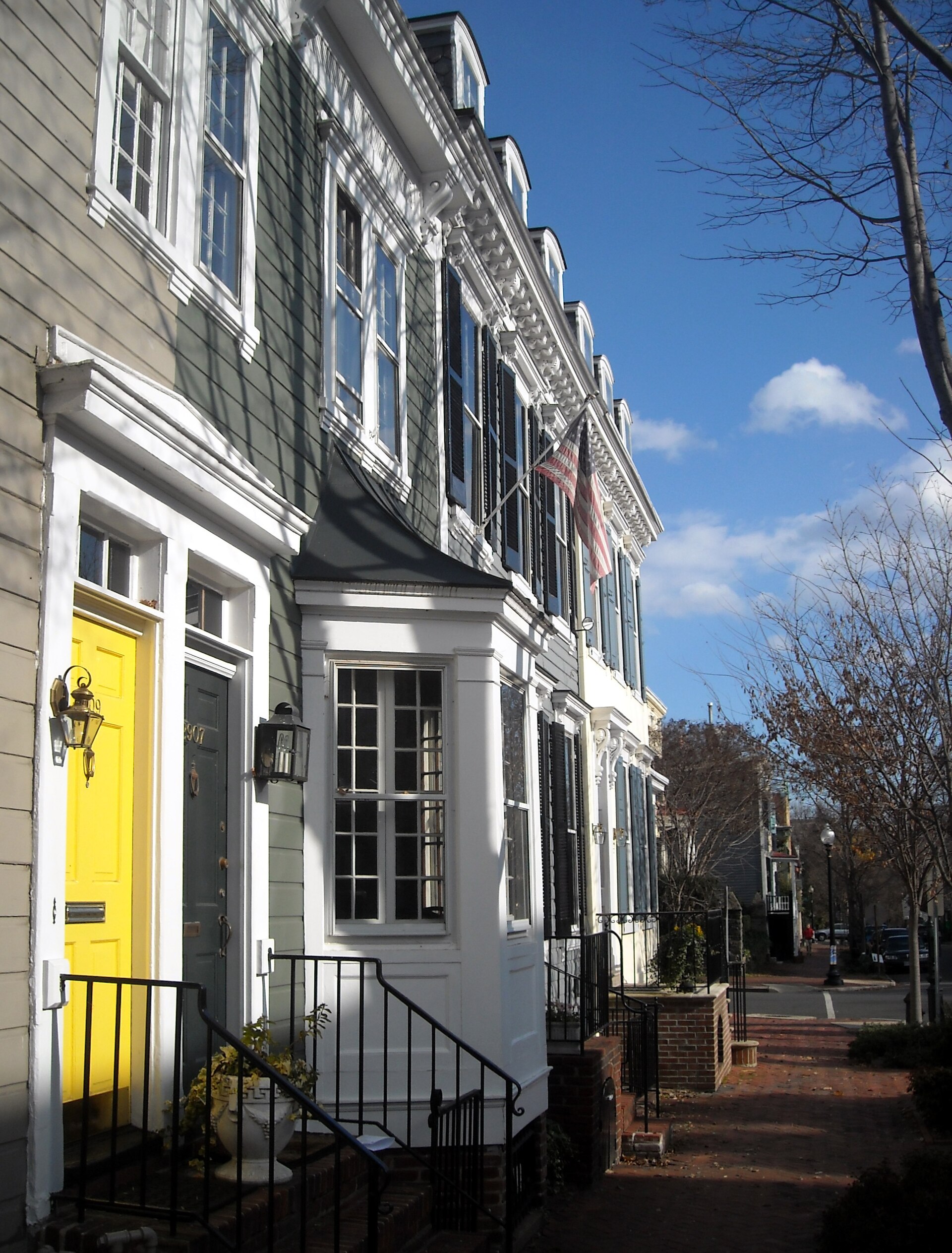
This is where you stay when the neighborhood is part of the vacation. Mornings can start with a canal walk. Afternoons drift between shops on M Street and Wisconsin Avenue. Evenings are for dinner by the river, then a slow walk home under the streetlights. For a romantic trip, few parts of DC can compete.
The Georgetown Metro Problem
Georgetown has no Metrorail station. That surprises a lot of first-time visitors. You can walk to Foggy Bottom-GWU, take a Metrobus, or use rideshares, and the old DC Circulator bus no longer runs, so don’t plan around it. If your days are all Smithsonian museums and Capitol Hill, those extra minutes add up.
Hotels to look at: Four Seasons (DC’s only Forbes Five-Star hotel), Rosewood Washington with its rooftop pool, The Graham Georgetown, The Ritz-Carlton Georgetown and the Georgetown Inn.
5. Capitol Hill: Best for History and a Residential Feel
Best for: families, history lovers, longer stays · Metro: Capitol South, Eastern Market (Blue, Orange, Silver), Union Station (Red)
Walk a few blocks east of the Capitol dome and the city changes. Government buildings give way to colorful Victorian row houses, tree-lined streets and small parks. Capitol Hill is one of the largest historic districts in the country, and it feels lived-in rather than built for tourists.
You’re close to the Capitol, the Library of Congress, the Supreme Court and the U.S. Botanic Garden, plus the eastern Smithsonian museums like Air and Space and the National Gallery of Art.
Then there’s Eastern Market, a food hall and market that’s been running since the 1870s. On weekends, the outdoor stalls fill with artists, farmers and antique sellers. Nearby, Barracks Row along 8th Street SE has some of the city’s best-loved restaurants, including Rose’s Luxury.
The catch: there aren’t many hotels inside the historic core, and Georgetown or Dupont Circle are a longer ride away.
Hotels to look at: Capitol Hill Hotel (suite-style rooms, good for families), Hyatt Regency Washington on Capitol Hill, The Royal Sonesta Capitol Hill and Kimpton George near Union Station.
6. Foggy Bottom and West End: Best for the Western Monuments
Best for: Lincoln Memorial, Kennedy Center, GW University visits · Metro: Foggy Bottom-GWU (Blue, Orange, Silver)
Foggy Bottom rarely tops neighborhood lists, but its location is quietly excellent. It sits between Downtown and Georgetown, so you get easy walks to the Lincoln Memorial, the Vietnam Veterans Memorial and the Kennedy Center, plus a straightforward walk into Georgetown for dinner.
The Metro station connects straight to Arlington National Cemetery, the Smithsonian stop and Reagan National Airport. If you’re visiting George Washington University, touring campus or attending graduation, this is the obvious base.
The West End, just north, adds a cluster of polished hotels and a few excellent restaurants, like Blue Duck Tavern inside the Park Hyatt.
The catch: between the university, hospital and offices, parts of Foggy Bottom feel institutional. Nightlife is thin.
Hotels to look at: Hotel Hive (tiny, trendy rooms at lower prices), The River Inn (suites with kitchens), The Watergate Hotel, Park Hyatt and The Ritz-Carlton West End.
7. The Wharf and Southwest Waterfront: Best for Waterfront Evenings
Best for: couples, concerts, modern hotels · Metro: Waterfront (Green), L’Enfant Plaza (all lines except Red)
Ten years ago, this stretch of the Washington Channel was mostly parking lots and an old fish market. Today The Wharf is one of the city’s liveliest districts, with waterfront restaurants, rooftop bars, marinas, fire pits in winter and The Anthem concert hall.
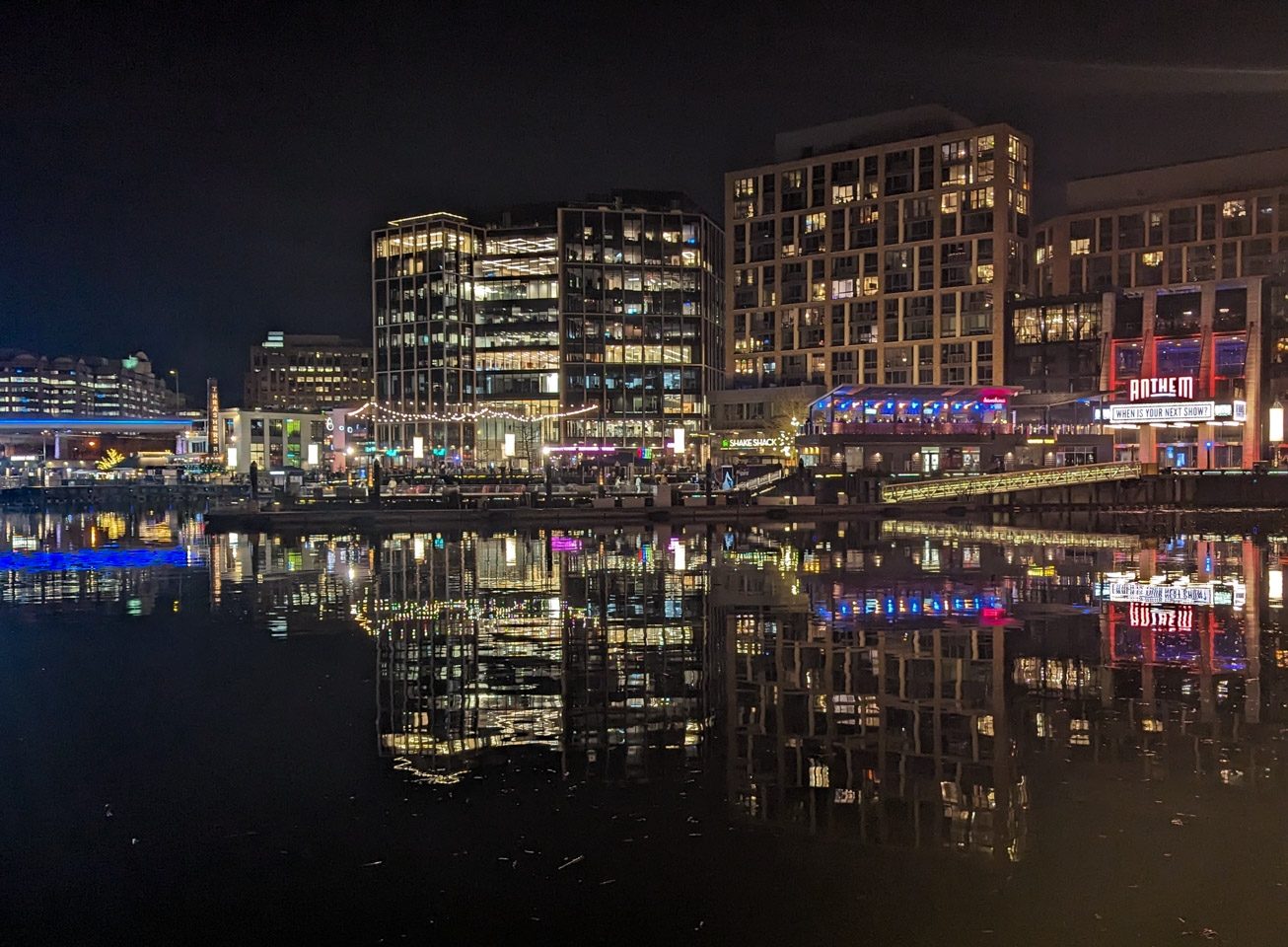
The Municipal Fish Market is still there, one of the oldest continuously operating fish markets in the country, and it’s a fun, messy contrast to the shiny new buildings around it. The Tidal Basin, the Jefferson Memorial and the International Spy Museum are all within a walk.
The catch: it feels new, because it is. If you came for historic streets, this isn’t that. The walk from Waterfront station to the far end of the pier also takes longer than you’d expect.
Hotels to look at: Pendry Washington DC (outdoor pool), InterContinental The Wharf, Canopy by Hilton, Hyatt House (handy for families) and Salamander, which has one of the city’s biggest spas.
8. Woodley Park: Best for Families
Best for: families, the National Zoo, quiet evenings · Metro: Woodley Park (Red Line)
After a full day of museums with kids, coming back to a calm, leafy street feels like a small gift. Woodley Park is mostly residential, with big old houses, a strip of family-friendly restaurants on Connecticut Avenue and Rock Creek Park right next door.
The Smithsonian’s National Zoo is a short walk up the road and free to enter (you’ll need a free timed pass). The Washington National Cathedral is also nearby. Downtown is about 10 minutes away on the Red Line.
The catch: you’ll commute to the Mall every day. On a two-day trip, that time matters. Also note the station has one of the longest escalators in the system, which is fun once and less fun with a stroller.
Hotels to look at: Omni Shoreham (a big historic hotel with an outdoor pool in summer) and a handful of small guesthouses.
9. Adams Morgan: Best for Nightlife
Best for: bars, live music, young travelers · Metro: Woodley Park or Columbia Heights, both about a 10 to 15 minute walk
Adams Morgan is DC with its tie off. Colorful row houses, rooftop bars, Ethiopian and Latin American restaurants, jumbo pizza slices at 2 a.m., and Madam’s Organ, the blues bar with the famous mural outside. If you want the night to keep going after dinner, this is the place.
Meridian Hill Park, with its cascading fountain and Sunday drum circle, is a short walk away. For more ideas on where to go once you’re here, see our guide to the best places to go out in Washington DC.
The catch: no Metro in the middle of the neighborhood, and 18th Street gets loud on weekend nights. Light sleepers should ask for a room at the back.
Hotels to look at: The LINE DC (inside a converted 1900s church) and small hotels like The Normandy and The Churchill toward Kalorama. Generator Washington DC, a budget hotel with private rooms and shared rooms, is a short walk toward Dupont.
10. Navy Yard: Best for Sports and Modern Hotels
Best for: Nationals and DC United games, newer hotels, riverside walks · Metro: Navy Yard-Ballpark (Green Line)
Navy Yard has been rebuilt almost from scratch over the last 15 years. Now it’s all glass apartment towers, breweries, rooftop bars and the Anacostia Riverwalk, with Nationals Park at its center and Audi Field just to the west.
If you’re in town for a game, you can walk to your seat. Capitol Hill is next door, and The Wharf is a short ride away. Bluejacket, a brewery in an old boilermaker building, is a good first stop.
The catch: you’re far from Georgetown and the western monuments, and game nights get crowded.
Hotels to look at: Thompson Washington DC, Hampton Inn & Suites Navy Yard and several newer mid-range chain hotels.
11. Logan Circle and 14th Street: Best for Food Lovers
Best for: restaurants, cocktail bars, a local feel · Metro: none inside; Dupont Circle, U Street and McPherson Square are 10 to 15 minutes on foot
Many competitor guides skip Logan Circle, and that’s a mistake if you care about food. The 14th Street corridor is one of the most exciting restaurant streets in the city, lined with busy patios, cocktail bars and small theaters.
The circle itself is ringed with grand Victorian mansions, and the side streets are some of the prettiest in DC. It’s also close to the Walter E. Washington Convention Center, which makes it a smart pick for conference trips where you want a better dinner scene.
The catch: no Metro stop of its own, and restaurant tables fill fast on weekends.
Hotels to look at: Viceroy Washington DC (rooftop pool), Hotel Zena on Thomas Circle and the Washington Plaza Hotel.
12. U Street and Shaw: Best for Live Music and Local Culture
Best for: music, history, a less touristy trip · Metro: U Street, Shaw-Howard University (Green, Yellow)
Long before it was trendy, U Street was known as “Black Broadway.” Duke Ellington grew up nearby, and legends played its clubs. That history is still visible at the Lincoln Theatre, the African American Civil War Memorial and Ben’s Chili Bowl, a local institution since 1958.
Today, it’s one of the best areas in DC for live music, from the 9:30 Club to smaller jazz rooms. Shaw, just south, has a strong food scene and a younger, local crowd.
The catch: fewer big hotels, so many visitors book short-term rentals here instead. Nightlife stretches can be noisy on weekends.
13. NoMa and Union Station: Best for Train Travelers and Value
Best for: Amtrak arrivals, day trips, better rates · Metro: Union Station, NoMa-Gallaudet U (Red Line)
Coming by train from New York, Philadelphia or Baltimore? Staying near Union Station means you roll off the platform and into your hotel. NoMa, just north, is a newer district of apartments and mid-range hotels that often price a little below Downtown.
Union Market is the local highlight, a food hall packed with stalls from some of the city’s best small kitchens. The H Street Corridor to the east adds bars and restaurants with a younger, easygoing crowd. The Capitol is about a 10 to 15 minute walk from Union Station.
The catch: it’s practical rather than charming, and some blocks are quiet at night.
Hotels to look at: The Morrow (near the H Street Corridor), Kimpton George and Washington Court Hotel near the Capitol, plus several mid-range chains in NoMa.
14. Arlington, Virginia: Best for Budget and Airport Access
Best for: lower rates, drivers, early flights · Metro: Rosslyn, Courthouse, Pentagon City, Crystal City
Arlington sits right across the Potomac, and parts of it are closer to the Lincoln Memorial than Capitol Hill is. Rosslyn is one Metro stop from Foggy Bottom and a walk across Key Bridge from Georgetown. Crystal City and Pentagon City (now often called National Landing) are minutes from Reagan National Airport.
Hotels here are often cheaper, especially on weekends, and parking is easier than in DC. Arlington National Cemetery and the Marine Corps War Memorial are right on your doorstep.
The catch: it can feel like a business district at night, and you’ll ride the Metro into the city every day.
15. Old Town Alexandria, Virginia: Best for Charm on a Budget
Best for: historic atmosphere, couples, slower trips · Metro: King St-Old Town (Blue, Yellow)
Old Town Alexandria is what you might get if Georgetown were a bit calmer and a bit cheaper. Cobblestone lanes, 18th-century townhouses and a busy waterfront make it a lovely place to come home to. A free trolley runs along King Street down to the river.
The catch: getting to the National Mall takes around 25 to 35 minutes by Metro. It’s better for a relaxed four- or five-day trip than a packed weekend.
Best Areas to Stay in Washington DC Compared
Here’s how the main neighborhoods stack up, rated out of five. Use it to narrow your list to two or three areas, then compare hotels inside those.
| Neighborhood | First Trip | Families | Couples | Nightlife | Sightseeing | Metro |
|---|---|---|---|---|---|---|
| Downtown | 5 | 4 | 4 | 3 | 5 | 5 |
| Penn Quarter | 5 | 4 | 4 | 4 | 5 | 5 |
| Dupont Circle | 5 | 4 | 5 | 4 | 4 | 5 |
| Georgetown | 4 | 4 | 5 | 4 | 3 | 2 |
| Capitol Hill | 4 | 5 | 4 | 3 | 4 | 4 |
| Foggy Bottom | 4 | 4 | 3 | 2 | 5 | 5 |
| The Wharf | 4 | 4 | 5 | 4 | 4 | 4 |
| Woodley Park | 3 | 5 | 4 | 2 | 3 | 5 |
| Adams Morgan | 3 | 2 | 4 | 5 | 2 | 3 |
| Navy Yard | 4 | 4 | 4 | 4 | 3 | 5 |
| Logan Circle | 4 | 3 | 5 | 5 | 3 | 3 |
| NoMa / Union Station | 4 | 4 | 3 | 3 | 4 | 5 |
Where to Stay in Washington DC by Type of Traveler
Where to Stay in Washington DC for First-Time Visitors
Downtown, Penn Quarter and Dupont Circle are the three areas to consider first. Downtown is best for the White House and central sightseeing. Penn Quarter is best if museums and restaurants are the priority. Dupont Circle trades a little walking distance for a much better neighborhood feel.
On a short trip, location should carry real weight. Saving 30 to 40 minutes of travel every morning can be worth more than a bigger room farther out. Once you’ve picked your base, our Washington DC 3-day itinerary shows how to plan each day around it.
Where to Stay in Washington DC With Family
Look at Capitol Hill for history and quieter streets, Woodley Park for the Zoo and a calm base, Foggy Bottom for practical sightseeing, and Downtown for pure convenience on a short trip. The Wharf also works well, since it has open space, water and plenty of casual food.
Check room size carefully. Many central DC hotel rooms are built for business travelers and couples. Suites, apartment-style hotels with a small kitchen, or connecting rooms make a family trip much easier. If connecting rooms matter, call the hotel directly, because “available on request” isn’t a guarantee.
Where to Stay in Washington DC for Couples
Start with Georgetown, Dupont Circle and The Wharf. Georgetown has the most romantic streets. Dupont Circle and Logan Circle have the best restaurant and bar scene. The Wharf is perfect if waterfront dinners and live music sound more like your kind of evening. Old Town Alexandria is a quieter, cheaper alternative.
Where to Stay in Washington DC for Nightlife
It depends on your idea of a good night. Adams Morgan is for bars and late nights. U Street is for live music and clubs. Dupont and Logan Circle are for cocktails, great dinners and LGBTQ+ nightlife. Penn Quarter is for shows, concerts and games. The Wharf is for waterfront bars and big-name concerts.
One honest tip: if you plan to be at the Smithsonian when it opens, staying directly above a busy bar strip gets old by the second night.
Where to Stay in Washington DC on a Budget
Central DC is rarely cheap, but you don’t need to stay far away to save. Compare NoMa, Woodley Park, Navy Yard, Arlington and Old Town Alexandria, and check Downtown on weekends, when business hotels often drop their prices. Budget-friendly options like Hotel Hive, the Moxy and Generator are also worth a look.
The good news is that your sightseeing can be almost free. Most of the big museums and memorials don’t charge admission. Our guide to free things to do in DC covers the best ones and which need a free timed pass.
Where to Stay in Washington DC for Luxury
Luxury hotels cluster in Downtown, Georgetown, the West End, Dupont Circle and The Wharf. Downtown is about landmark addresses near the White House. Georgetown mixes luxury with historic charm. The Wharf has newer properties with pools and water views. We compare 13 of them in our guide to the best luxury hotels in Washington DC.
Where to Stay for Solo Travelers
Solo travelers usually do best somewhere that stays busy in the evening, so walking back to the hotel feels comfortable. Dupont Circle, Logan Circle, Penn Quarter and The Wharf all fit. Downtown is great by day but can be quiet on some blocks at night.
Where to Stay for Business and Conventions
Let the meeting decide. For the Walter E. Washington Convention Center, look at Mount Vernon Square, Penn Quarter, Chinatown or Logan Circle. For federal offices and K Street, stay Downtown. For Capitol Hill meetings, stay on the Hill or near Union Station.
Where to Stay for Longer Trips
If you’re staying a week or more, a quieter, more residential base makes sense. Capitol Hill, Woodley Park, Navy Yard and Arlington all have grocery stores, apartment-style hotels and a slower pace, while still being close to the Metro.
Accessible Stays
DC is one of the more accessible U.S. cities for visitors. Every Metro station has elevators, and the Smithsonian museums are wheelchair accessible. The flatter areas around Downtown, Penn Quarter and the National Mall are easiest to get around. Georgetown’s brick sidewalks and hills can be tough, so check the hotel’s accessible room details and nearby Metro elevator status before you book.
| Traveler | Areas to Consider |
|---|---|
| First visit | Downtown, Penn Quarter, Dupont Circle |
| Families | Capitol Hill, Woodley Park, Foggy Bottom |
| Couples | Georgetown, Dupont Circle, The Wharf |
| Luxury | Downtown, Georgetown, West End, The Wharf |
| Budget | NoMa, Woodley Park, Arlington, Alexandria |
| Nightlife | Adams Morgan, U Street, Logan Circle |
| Foodies | Logan Circle, Penn Quarter, Shaw |
| Museums | Penn Quarter, Downtown, Southwest |
| No car | Downtown, Penn Quarter, Dupont Circle |
| Train arrival | Union Station, NoMa, Capitol Hill |
| Sports | Navy Yard, Penn Quarter |
| Waterfront | The Wharf, Georgetown, Old Town Alexandria |
Where to Stay Near DC’s Main Attractions
Where to Stay Near the National Mall
Downtown, Penn Quarter, Foggy Bottom, Capitol Hill and Southwest all put you close to the National Mall, but to different parts of it. A hotel near the Capitol end is not close to the Lincoln Memorial. Decide which sights matter most, then check the hotel’s actual position on a map instead of trusting “near the National Mall” in the listing.
Where to Stay Near the Smithsonian Museums
Most of the big Smithsonian museums, including Natural History, American History, Air and Space and the National Museum of African American History and Culture, sit between the Capitol and the Washington Monument. Penn Quarter, Downtown and L’Enfant Plaza in Southwest are the most practical bases. If you’re only planning one museum day, location matters less.
Where to Stay Near the White House
Stay Downtown around Lafayette Square, McPherson Square or Farragut Square. The Hay-Adams, the St. Regis and the Willard are all within a few minutes’ walk.
Where to Stay Near the U.S. Capitol
Capitol Hill and the Union Station area are closest. Navy Yard and NoMa are a short Metro ride away and often cheaper.
Where to Stay During Cherry Blossom Season
Peak bloom usually lands in late March or early April, and it’s the busiest time of year. Hotels in Southwest, The Wharf, Foggy Bottom and Downtown put you within walking distance of the Tidal Basin, which is valuable if you want sunrise photos before the crowds arrive. Book early, and don’t pick a hotel just because it says “cherry blossom” in its marketing. Check the real walking distance, and pack layers: spring here is famously changeable (see our Washington DC weather by month guide). For timing tips, read our guide to the best time of year to visit Washington DC.
Where to Stay Near the Airports
Reagan National (DCA) is the closest airport and sits on the Blue and Yellow Metro lines, about 15 to 20 minutes from downtown. Crystal City and Pentagon City hotels are minutes away. Dulles (IAD) is farther out but now connected by the Silver Line, so Rosslyn, Foggy Bottom and Metro Center are one-seat rides. BWI near Baltimore links to Union Station by MARC and Amtrak trains, which makes Union Station and NoMa handy.
Airport hotels work for a late arrival or an early flight. They’re rarely a good base for a whole sightseeing trip.
What Are the Safest Areas to Stay in Washington DC?
The areas visitors most often choose, including Georgetown, Dupont Circle, Foggy Bottom, Capitol Hill, Woodley Park, Downtown and The Wharf, are generally considered safe, busy places to stay. Like any big city, DC has pockets where you should pay more attention, especially late at night.
A few simple habits go a long way:
- Stick to busy, well-lit streets after dark, and take a rideshare if a late walk crosses quiet blocks.
- Keep your phone in hand only when you need it, especially near Metro entrances.
- Read the most recent hotel reviews for comments about the surrounding block, not just the room.
- Don’t judge by quadrant alone. Every quadrant has great neighborhoods and less comfortable ones.
Getting Around: Do You Need a Car in Washington DC?
Usually not. For most trips, a car causes more trouble than it solves. Hotel parking is expensive, street parking is tricky, and traffic can be slow. Washington is one of the easiest U.S. cities to explore without driving.
Metrorail has six color-coded lines covering almost everything a visitor needs. You can pay with a SmarTrip card or a SmarTrip card saved in your phone’s wallet, and unlimited day passes are available. Check Metro’s official site for current fares and hours before you go.
Metrobus fills the gaps, especially for Georgetown and Adams Morgan. Capital Bikeshare has docks all over the city and is a great way to ride along the Mall. And you’ll walk a lot. The museums are huge, and the distances between monuments are longer than they look. Bring comfortable shoes.
So is it better to stay near the National Mall or near the Metro? For most travelers, good Metro access matters more. A hotel five minutes from a useful station makes the whole city easy to reach. Being right beside the Mall matters most on a very short, monument-focused trip.
As a rule, try to stay within a 5 to 10 minute walk of a station, and check which lines it serves. A Red Line station and an Orange Line station get you to very different places.
Should You Stay in Washington DC or Virginia?
Arlington and Alexandria are connected to DC by Metro, and staying there can make sense. Bethesda and Silver Spring in Maryland are also on the Red Line. Here’s how to decide.
| Stay in DC If… | Stay in Virginia If… |
|---|---|
| Your trip is short | You find much better hotel value |
| You want to walk to sights | You’re comfortable riding the Metro daily |
| Restaurants and nightlife matter | You have a car and need parking |
| You want to pop back to the hotel midday | You need quick access to Reagan Airport |
Compare travel time, not just nightly rates. Saving $40 a night isn’t much of a deal if it adds an hour of commuting every day.
Hotels or Vacation Rentals?
Vacation rentals are popular in residential areas like Capitol Hill, Shaw, Columbia Heights and U Street, where hotels are scarce. Many are basement or top-floor apartments in row houses where the owner lives upstairs. DC requires short-term rentals to be licensed, and the license number should appear on the listing. If it’s missing, look elsewhere. Rentals work especially well for families and longer stays, while hotels are easier for short trips.
How to Choose a Washington DC Hotel
Don’t choose by star rating alone. Check these five things first.
- Real distance to Metro. “Near Metro” can mean one block or fifteen minutes. Measure it yourself.
- The neighborhood after dark. Ask what you want to do after sightseeing: restaurants, bars, quiet streets or a waterfront walk.
- The total price. Add taxes, any destination or amenity fee, parking, breakfast and Wi-Fi, and read the cancellation policy.
- Recent reviews. Look for comments on noise, cleanliness, room size, elevators and air conditioning. DC summers are hot and humid.
- Your actual itinerary. Map the hotel against the places you plan to visit. A cheaper room isn’t a better deal if every day starts with a long commute.
When to Book and What Affects Prices
In Washington, events move hotel prices more than seasons do. Cherry blossom season, big conferences, graduations in May, inauguration years and major concerts can double rates and fill hotels fast. Business-heavy areas often get cheaper on Friday and Saturday nights, and late summer and the weeks around New Year can be good value. Always check your exact dates, and book early for spring.
Hotels Worth Comparing by Area
Here’s a quick shortlist to start your search. Prices and facilities change, so confirm the details with the hotel before booking.
| Area | Splurge | Mid-Range | Budget-Friendly |
|---|---|---|---|
| Downtown | Willard InterContinental | Hamilton Hotel | Moxy Washington DC Downtown |
| Penn Quarter | Riggs Washington DC | Kimpton Hotel Monaco | Motto by Hilton Chinatown |
| Dupont Circle | The Dupont Circle Hotel | The Ven at Embassy Row | Generator Washington DC |
| Georgetown | Rosewood Washington | The Graham Georgetown | Georgetown Inn |
| Capitol Hill | Royal Sonesta Capitol Hill | Capitol Hill Hotel | Hotels in nearby NoMa |
| Foggy Bottom | The Watergate Hotel | The River Inn | Hotel Hive |
| The Wharf | Pendry Washington DC | Canopy by Hilton | Hyatt House The Wharf |
| Navy Yard | Thompson Washington DC | Hampton Inn & Suites | Chain hotels nearby |
How Many Nights Should You Stay in Washington DC?
For a first visit, three to four nights works well. That’s enough for the National Mall, the monuments, a couple of Smithsonian museums, Capitol Hill and one neighborhood like Georgetown. Four or five nights leaves room for Arlington National Cemetery, the National Zoo and slower days. For a day-by-day plan, follow our 3 days in Washington DC guide.
One Day in DC: Where to Stay
Stay Downtown or in Penn Quarter. Walk the Mall from the Capitol to the Lincoln Memorial, pick one museum, then see the memorials lit up at night. You won’t need the Metro much at all.
Two Days in DC: Where to Stay
Stay Downtown, Penn Quarter or Dupont Circle. Day one: Capitol, Library of Congress and two Smithsonian museums, then dinner in Penn Quarter. Day two: White House area, Washington Monument, the western memorials and the Tidal Basin, then an evening in Georgetown or at The Wharf.
With extra time, DC is also a great base for day trips. Historic Ellicott City, Maryland is under an hour away, and the best hikes in Shenandoah National Park are around 75 miles west.
Mistakes to Avoid When Choosing Where to Stay
- Booking a far-out suburb to save money. Long commutes eat into short trips fast.
- Choosing Georgetown for a museum-heavy trip. It’s wonderful, but the lack of Metro adds up over three days of Smithsonians.
- Staying above a bar strip as a light sleeper. Lively sounds nice until the music runs past midnight.
- Mixing up NW and NE addresses. Always check the quadrant.
- Bringing a car you don’t need. Overnight parking can cost as much as a nice dinner.
Related Guides
Planning more of this trip? These guides pick up where this one leaves off:
- Best Things to Do in Washington DC
- Washington DC for Couples
- Washington DC With Kids
- Free Museums in Washington DC
FAQ: Where to Stay in Washington DC
What is the best area to stay in Washington DC for first-time visitors?
Downtown, Penn Quarter and Dupont Circle are the strongest choices. They combine central locations, good Metro access, restaurants and easy sightseeing.
Where should I stay in Washington DC without a car?
Choose a hotel within a 5 to 10 minute walk of a Metro station in Downtown, Penn Quarter, Dupont Circle, Foggy Bottom, Capitol Hill, Woodley Park, Navy Yard or near Union Station.
Is Georgetown a good place to stay in Washington DC?
Yes, especially for couples, luxury travelers, shopping and historic atmosphere. The main downside is that Georgetown has no Metrorail station, so you’ll rely on walking, buses or rideshares.
Is it better to stay Downtown or in Georgetown?
Downtown is more convenient for first-time sightseeing. Georgetown has more character, better shopping and a more romantic feel, but longer trips to the museums.
Where should families stay in Washington DC?
Capitol Hill, Woodley Park, Foggy Bottom and Downtown are the best options. Pick Woodley Park or Capitol Hill for a quieter base, and Downtown for maximum convenience.
What is the safest area to stay in Washington DC?
Georgetown, Dupont Circle, Foggy Bottom, Woodley Park, Capitol Hill and Downtown are popular, busy areas that most visitors find comfortable. Use normal big-city caution everywhere, especially late at night.
Is it cheaper to stay in Virginia instead of Washington DC?
Often, yes. Arlington and Alexandria hotels are frequently cheaper and have Metro access. Compare the room price together with daily travel time before deciding.
How close should my hotel be to the Metro?
Ideally within a 5 to 10 minute walk of a station on a line that serves the places you plan to visit.
Where should I stay in DC for nightlife?
Adams Morgan for bars, U Street for live music, Dupont and Logan Circle for cocktails and dining, and The Wharf for waterfront bars and concerts.
How many nights do you need in Washington DC?
Three to four nights is ideal for a first trip. Add more if museums are a big priority or you want to explore neighborhoods beyond the National Mall.
Choosing Where to Stay in Washington DC
Stop looking for one “best” neighborhood, and the decision gets much easier.
For a first trip, Downtown and Penn Quarter make sightseeing simple. Dupont Circle gives you the best mix of Metro access, food and neighborhood life. Georgetown is made for couples and slow evenings. Capitol Hill and Woodley Park are calm places to bring the kids home to. The Wharf is for waterfront nights, Logan Circle is for food, and Arlington or Alexandria can stretch your budget.
Whatever you choose, remember one rule: don’t underestimate the distances. DC is walkable, but its sights are spread over a much bigger area than the map suggests. Pick a neighborhood that fits your plans, stay close to a Metro station, and you’ll spend your trip exploring Washington instead of crossing it.
Ready to plan the rest? Start with our list of free things to do in DC, find out the best time to visit Washington DC, or browse all our travel guides.