
Hanksville is the kind of town you could drive through in under a minute. There’s a gas station built into a rock, a few motels, a couple of burger joints, and around two hundred people. Then the pavement ends and the desert takes over.
And what a desert it is. Within an hour of town, you can walk among thousands of goblin-shaped hoodoos, squeeze through slot canyons barely wider than your shoulders, stand on a cliff overlooking grey badlands that look like the Moon, ride an ATV through rainbow-striped clay hills, and see 2,000-year-old rock art in a remote canyon. At night, the sky here is so dark that Mars researchers chose this spot to practice living on another planet.
This guide covers the 25 best things to do in Hanksville, Utah, organized by type of adventure: in-town stops, badlands and off-roading, hikes and slot canyons, scenic drives, rock art and stargazing. You’ll also find drive times, road conditions, where to stay and eat, the best time to go, safety tips and simple one- and two-day itineraries.
What Are the Best Things to Do in Hanksville, Utah?
The best things to do in Hanksville, Utah are exploring the hoodoos at Goblin Valley State Park, hiking the Little Wild Horse Canyon slot, seeing Factory Butte and the Moonscape Overlook, photographing the Bentonite Hills, riding ATVs or UTVs at Swing Arm City, stopping at the Hollow Mountain gas station, hiking in Capitol Reef National Park, scrambling into Leprechaun Canyon, seeing the Great Gallery rock art in Horseshoe Canyon, and stargazing under some of the darkest skies in the country.
| Thing to Do | Drive From Hanksville | Road | Best For |
|---|---|---|---|
| Hollow Mountain and Wolverton Mill | In town | Paved | Quick stop |
| Bentonite Hills and Mars station | ~20–25 min | Paved + dirt (dry only) | Photos, sunset |
| Factory Butte | ~25–30 min | Paved + graded dirt | Photos |
| Swing Arm City OHV area | ~25 min | Dirt | ATV and UTV riding |
| Moonscape Overlook | ~40–50 min | Dirt, high clearance best | Sunrise views |
| Goblin Valley State Park | ~40–45 min | Paved | Families, hiking |
| Little Wild Horse Canyon | ~45 min | Paved and graded dirt | Slot canyon hike |
| Leprechaun Canyon | ~30 min | Paved pullout | Short slot canyon |
| Capitol Reef (Fruita) | ~45 min | Paved | Hikes, pie, history |
| Hite Overlook (Lake Powell) | ~45 min | Paved | Scenic drive |
| Horseshoe Canyon | ~1.5–2 hr | Long graded dirt road | Rock art |
| Henry Mountains | ~1 hr+ | Rough dirt, 4WD | Bison, mountain views |
Drive times are approximate and assume dry roads.
Where Is Hanksville, Utah?
Hanksville sits in south-central Utah, in Wayne County, at the junction of Highway 24 and Highway 95. It’s roughly halfway between Capitol Reef National Park (about 45 minutes west) and Moab (about two hours east). It’s about an hour south of Green River and Interstate 70, and close to four hours from Salt Lake City.
Highway 95 heads south from town toward Lake Powell and Natural Bridges, so Hanksville is a natural stop on a Southern Utah road trip between the national parks. The Fremont River and Muddy Creek meet just outside town to form the Dirty Devil River. The town was settled in the early 1880s and named after Ebenezer Hanks, one of its founders.
Is Hanksville Worth Visiting?
Yes, if you like empty landscapes, off-road adventure and hikes without crowds. The town itself is tiny and basic, so don’t come expecting shopping or nightlife. But as a base, it’s hard to beat. Hanksville puts you within an hour of Goblin Valley, Capitol Reef, the San Rafael Swell, Lake Powell and some of the strangest scenery in America. Most of it is far less crowded than Zion or Arches.
If you only want paved roads and big-name parks, one night here is enough. If you have a high-clearance vehicle and like to explore, give it two or three.
Things to Do in Hanksville Itself
1. Stop at Hollow Mountain
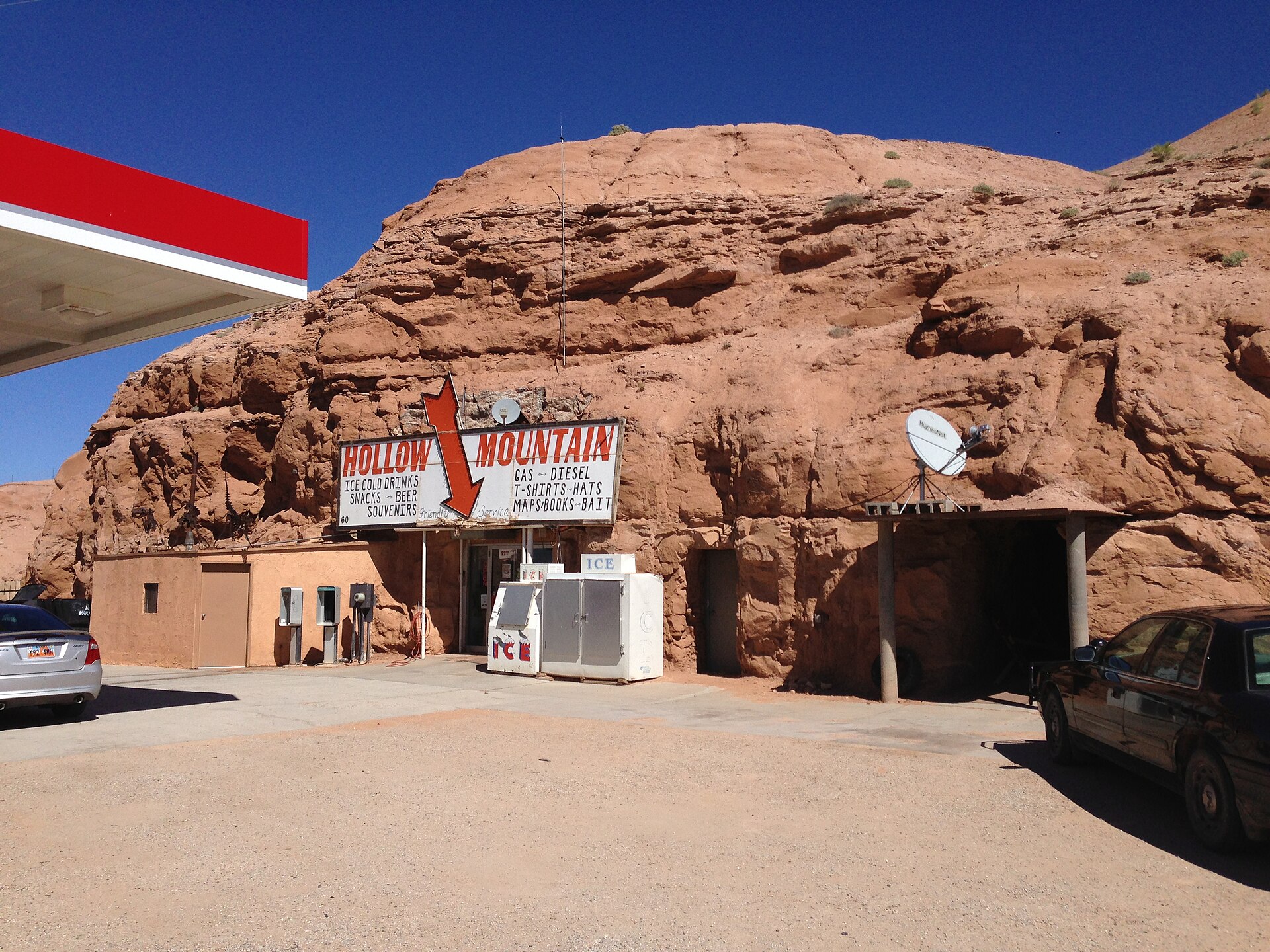
Everybody stops here, and for good reason. Hollow Mountain is a gas station and convenience store dug right into a big sandstone rock at the main intersection. You’ll walk through a door in the cliff and shop inside the rock itself. Fill up your tank (this matters out here), grab water and snacks, and take the photo everyone takes.
2. See the Historic Wolverton Mill
Behind the BLM office in town stands the Wolverton Mill, a hand-built wooden mill once used up in the Henry Mountains to grind ore and cut lumber. It was moved to Hanksville in 1974 and restored in 1988. It’s a quick, free stop that gives you a feel for how tough life was for early settlers and miners out here.
While you’re at the BLM office, ask about current road conditions. Staff know which dirt roads are passable, which matters a lot around here.
3. See the Mars Desert Research Station (From the Road)
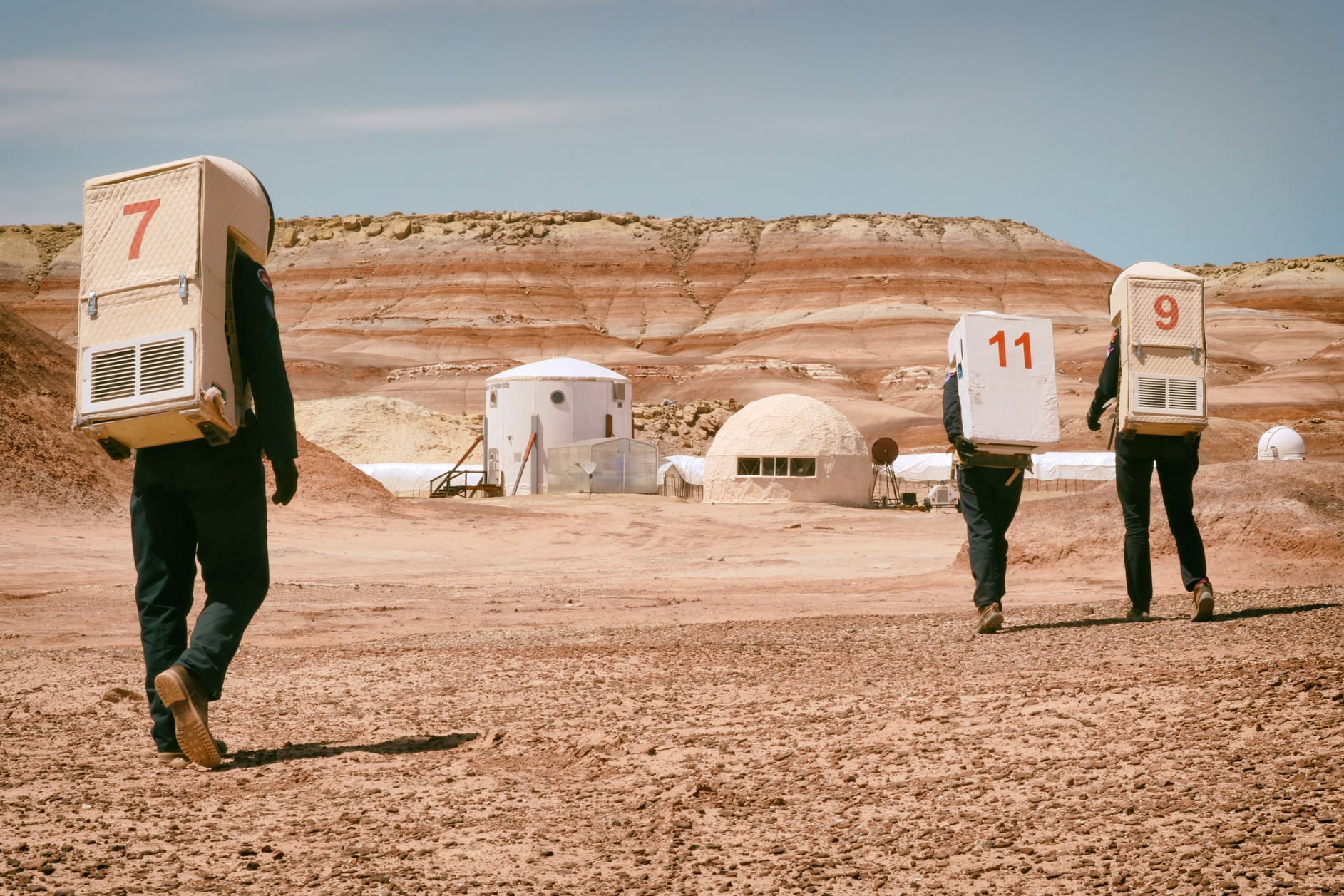
A few miles northwest of town, a white two-story cylinder sits among red and purple clay hills. This is the Mars Desert Research Station, run by the Mars Society, where small crews of scientists and students live in simulated Mars missions, sometimes going outside only in spacesuits. The landscape was chosen because it looks so much like the surface of Mars.
It isn’t open for public tours, and crews are working, so view and photograph it from the road and don’t walk up to the habitat.
Badlands, Viewpoints and Off-Roading
West of town, along Highway 24 toward Caineville, the land turns into grey, purple and striped clay badlands. This is the area that gives Hanksville its “Mars on Earth” reputation.
4. Photograph Factory Butte
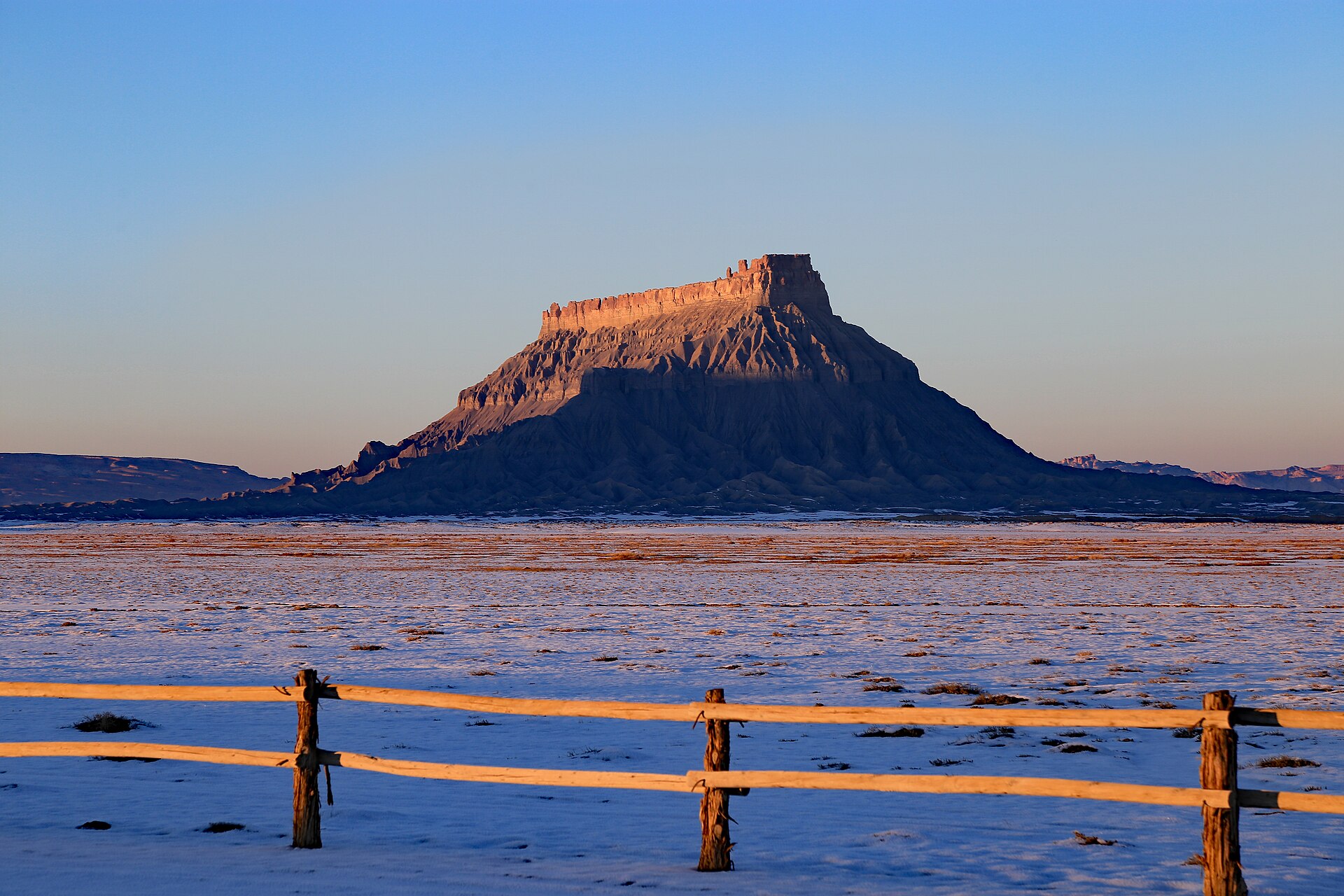
Factory Butte is a huge, lonely mesa rising about 1,400 feet out of grey badlands west of Hanksville. You can see it from Highway 24, and the best close-up views are 25 to 30 minutes from town along the graded Factory Butte Road, on the way to the Moonscape Overlook. For directions, road conditions and photo tips, see our full Factory Butte, Utah guide. It’s most dramatic early in the morning or late in the afternoon, when the light picks out every ridge in the clay.
5. Watch Sunrise at the Moonscape Overlook
The Moonscape Overlook, sometimes called Skyline Rim, is a cliff edge looking down over grey, wrinkled badlands that really do look lunar, with Factory Butte in the distance. It’s a favorite spot for sunrise photos. You reach it by a dirt road off Highway 24. A high-clearance vehicle is best, and the road is impassable when wet. There are no railings, and the edge is crumbly, so stay well back.
6. See the Bentonite Hills
The Bentonite Hills are rounded clay hills striped in purple, red, cream and grey, like layered sherbet. The most colorful ones are a few miles past the Mars Desert Research Station on Cow Dung Road, about 20 to 25 minutes from town. They’re especially striking at sunset and blue hour; under harsh midday sun the stripes wash out.
Two important rules: don’t walk or drive on the hills themselves, since footprints and tire tracks scar the clay for years, and don’t drive here after rain. Wet bentonite turns into something like grease, and vehicles get stuck fast.
7. Ride ATVs and UTVs at Swing Arm City
About 12 miles west of town, Swing Arm City is one of the West’s best-known off-road playgrounds. It’s an area of steep bentonite hills inside the BLM’s Factory Butte Recreation Area where riders are allowed to climb and play off the trails. Elsewhere, OHVs must stay on designated routes. It’s a thrill for experienced riders, but the hills are steep and accidents happen, so know your limits, wear a helmet and ride with a buddy.
8. Take a Guided UTV Tour or Horseback Ride
Don’t have your own vehicle? Local outfitters in Hanksville rent UTVs and run guided tours to places like the badlands, Factory Butte and the slot canyons. Some also offer horseback trail rides and shuttle service. A guide is a smart choice if you’re new to desert driving, because they know which roads are safe that day.
Goblin Valley and the San Rafael Swell
9. Wander Among the Hoodoos at Goblin Valley State Park
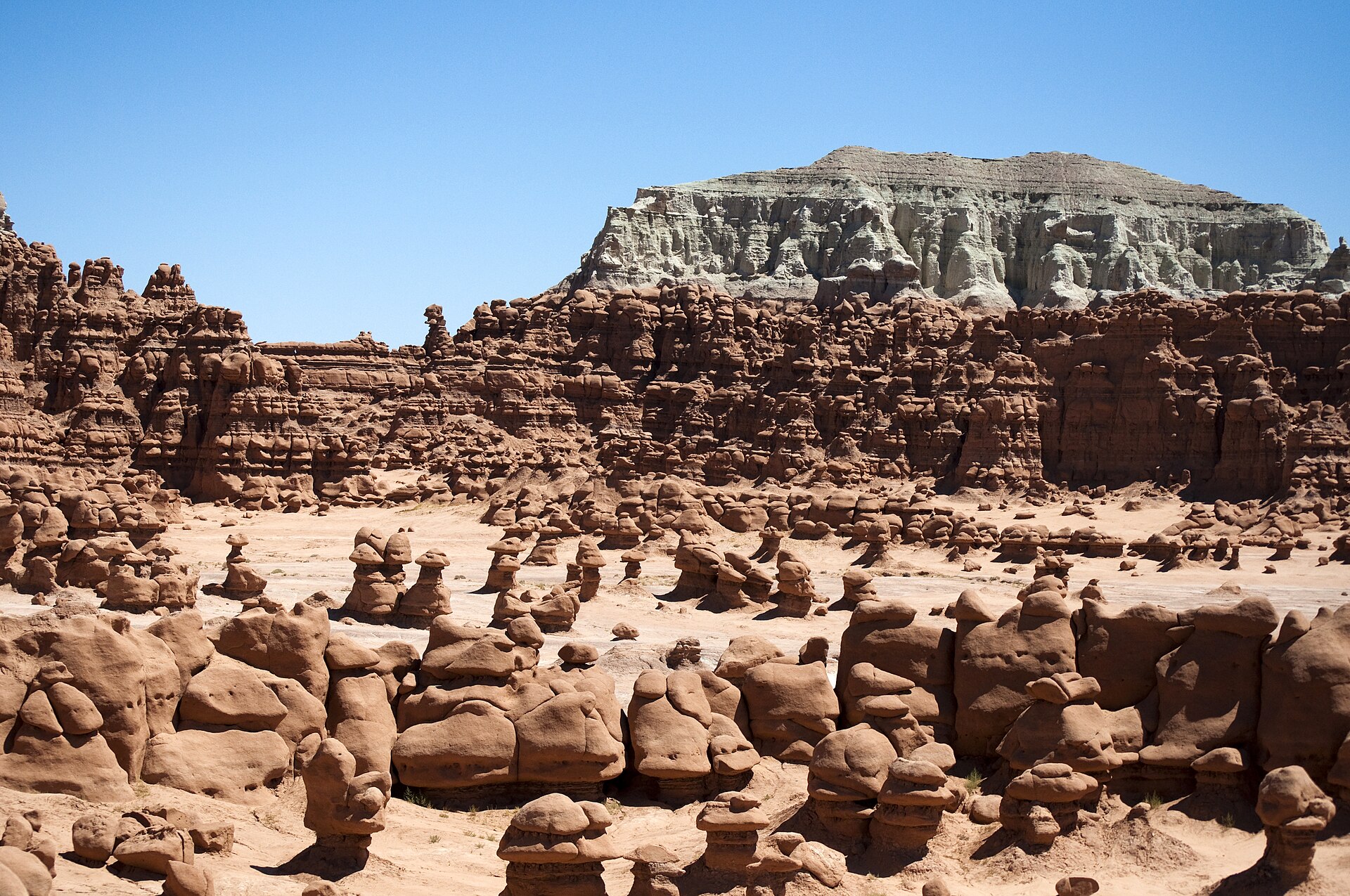
Goblin Valley State Park, about 40 to 45 minutes north of Hanksville, is the top attraction in the area. (Planning a visit? See our Goblin Valley from Hanksville day trip guide.) Thousands of mushroom-shaped sandstone hoodoos, which locals call goblins, fill three valleys. Unlike most parks, there’s no set trail through the main valley. You just walk down from the overlook and wander among them. It’s a playground for kids and adults alike.
There’s an entrance fee per vehicle. Go early or late in the day, when the light is warm and the heat is easier. In summer, the valley floor gets extremely hot by midday.
10. Hike to Goblin’s Lair and Other Park Trails
Beyond the main valley, the park has several marked trails. Carmel Canyon is an easy loop down to the desert floor. The Curtis Bench and Entrada Canyon trails lead through quieter terrain. The most adventurous is Goblin’s Lair, a huge hidden cave-like chamber you reach with some scrambling. Ask at the entrance station about current conditions and rules before you go.
11. Hike Little Wild Horse Canyon
Little Wild Horse Canyon, just west of Goblin Valley, is one of the most popular slot canyons in Utah, and one of the most accessible. The walls narrow until you’re turning sideways to squeeze through. Most people hike in a few miles and turn around. Strong hikers can do the roughly eight-mile loop that connects it with neighboring Bell Canyon.
Never enter a slot canyon if rain is possible anywhere in the area, even miles away. Flash floods are deadly, especially during the July to September monsoon season.
12. Explore Temple Mountain and Wild Horse Window
Near Goblin Valley, the Temple Mountain area holds old uranium mining relics, more slot canyons like Crack Canyon, and Wild Horse Window, a striking natural arch-like cave with an opening in its ceiling, reached by a short hike. Temple Mountain also has a popular campground and plenty of BLM dispersed camping nearby.
13. Sleep in a Yurt at Goblin Valley
Goblin Valley State Park has a small campground and a few yurts, which are some of the most unique places to stay near Hanksville. Staying inside the park lets you watch the goblins glow at sunset and wander out under the stars. Sites and yurts book up months ahead in spring and fall, so reserve early.
Along Highway 95 to Lake Powell
Highway 95 south of Hanksville is one of the emptiest and most scenic roads in Utah. Fill your tank before you go. Services are almost nonexistent for a long way.
14. Visit the Little Egypt Geologic Site
About 20 miles south of town, a short dirt road off Highway 95 leads to Little Egypt, a small field of eroded sandstone formations that look like miniature Goblin Valley hoodoos. It’s free, quiet and almost always empty. Give it 30 minutes to an hour.
15. Scramble Into Leprechaun Canyon
About 30 minutes south of Hanksville, right off Highway 95, Leprechaun Canyon is a short, dramatic slot canyon. A brief walk from the pullout leads into deep, narrow, twisting walls where light filters down from above. The first section is easy for most people, while going deeper requires scrambling and real canyoneering skills. As always, stay out when rain is possible.
16. Find the Rock Art at Hog Springs
Farther south on Highway 95, the Hog Springs picnic area sits in a shady canyon with a small stream. An easy trail follows the water to a little waterfall and pool, and there’s ancient rock art painted on the cliffs nearby. It’s a lovely, easy break on the long drive to Lake Powell.
17. Stand Above Lake Powell at Hite Overlook
About 45 minutes south, Highway 95 crosses the Dirty Devil and Colorado rivers on two bridges in a sweep of red canyon walls. Stop at the Hite Overlook in Glen Canyon National Recreation Area for a big view over the upper end of Lake Powell. Water levels vary greatly from year to year, so the view changes a lot.
18. Go Boating on Lake Powell at Bullfrog
Bullfrog Marina, about an hour and a quarter south via Highway 276, is the closest full-service access to Lake Powell. You can rent boats, kayaks and paddleboards, swim, or just sit by the water. It’s a great escape on a hot summer day. Some outfitters in Hanksville also rent watersports gear.
Capitol Reef National Park
19. Hike Capitol Reef and Eat Pie in Fruita
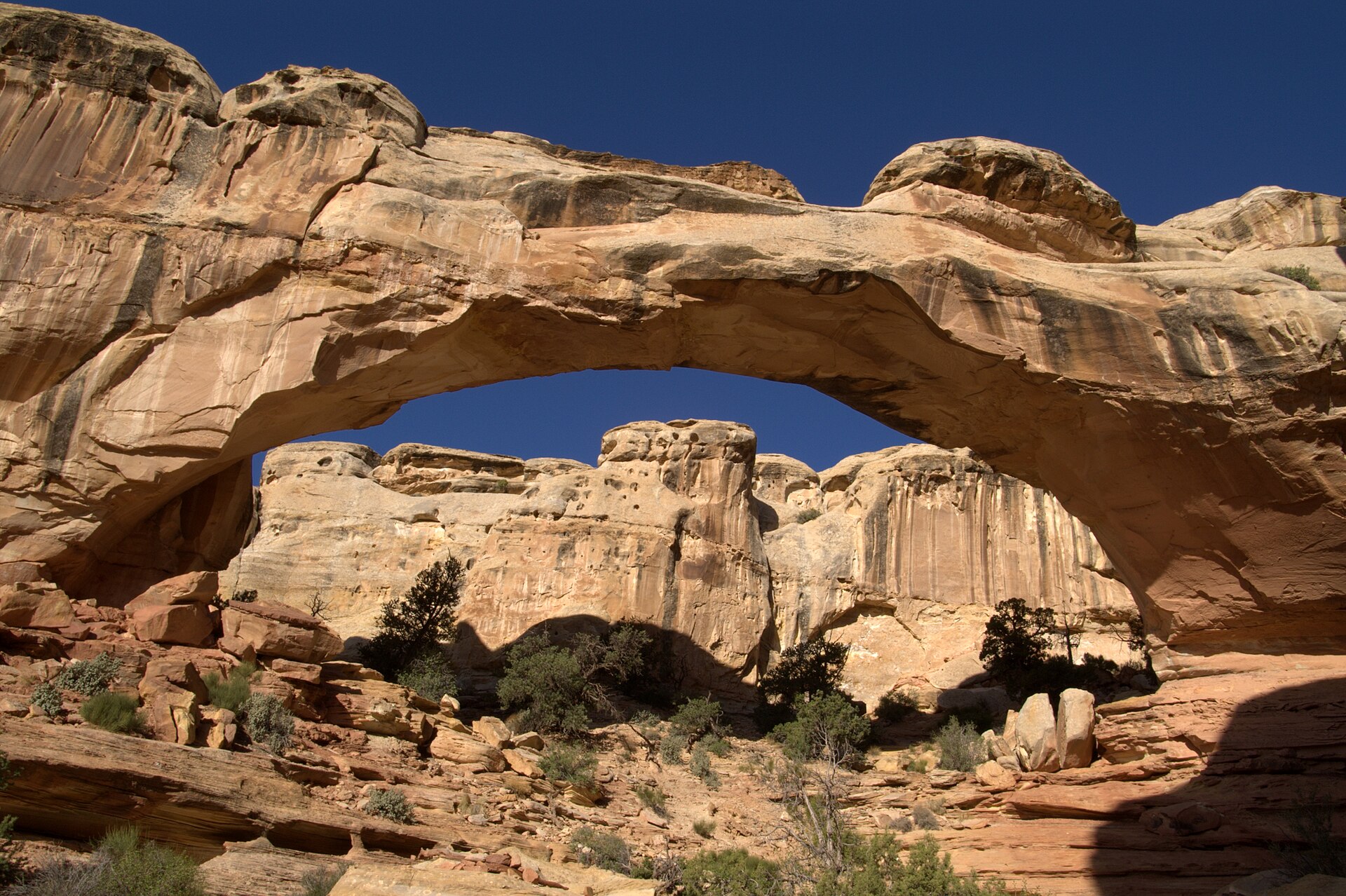
Capitol Reef National Park is about 45 minutes west of Hanksville on Highway 24, and the drive itself follows the Fremont River through the canyon. (Full plan: our Capitol Reef from Hanksville guide.) Stop at the Fremont petroglyph panel along the highway, hike to Hickman Bridge (about two miles round trip), walk through Grand Wash or up to Cassidy Arch, and drive the Scenic Drive to Capitol Gorge. In the historic Fruita orchards, buy a fruit pie at the Gifford Homestead. They often sell out by afternoon.
20. Drive the Cathedral Valley Loop
In the remote northern part of Capitol Reef, Cathedral Valley has giant sandstone monoliths like the Temples of the Sun and Moon rising from the desert floor. The full loop is a long, all-day drive on dirt roads that needs a high-clearance vehicle. The Hartnet Road section includes a ford of the Fremont River. Starting from the Caineville Wash Road near Caineville, you can reach the Temples without the ford. Check conditions with the park first, and don’t attempt it after rain.
21. Drive the Notom-Bullfrog Road
The Notom-Bullfrog Road runs south along the eastern side of Capitol Reef’s Waterpocket Fold, a 100-mile wrinkle in the earth’s crust. It connects to the famous switchbacks of the Burr Trail. Much of it is graded dirt, fine for most cars in dry weather, but conditions change, so check first. It’s a quiet, beautiful way to see the “backside” of the park.
Remote Adventures
22. See the Great Gallery in Horseshoe Canyon
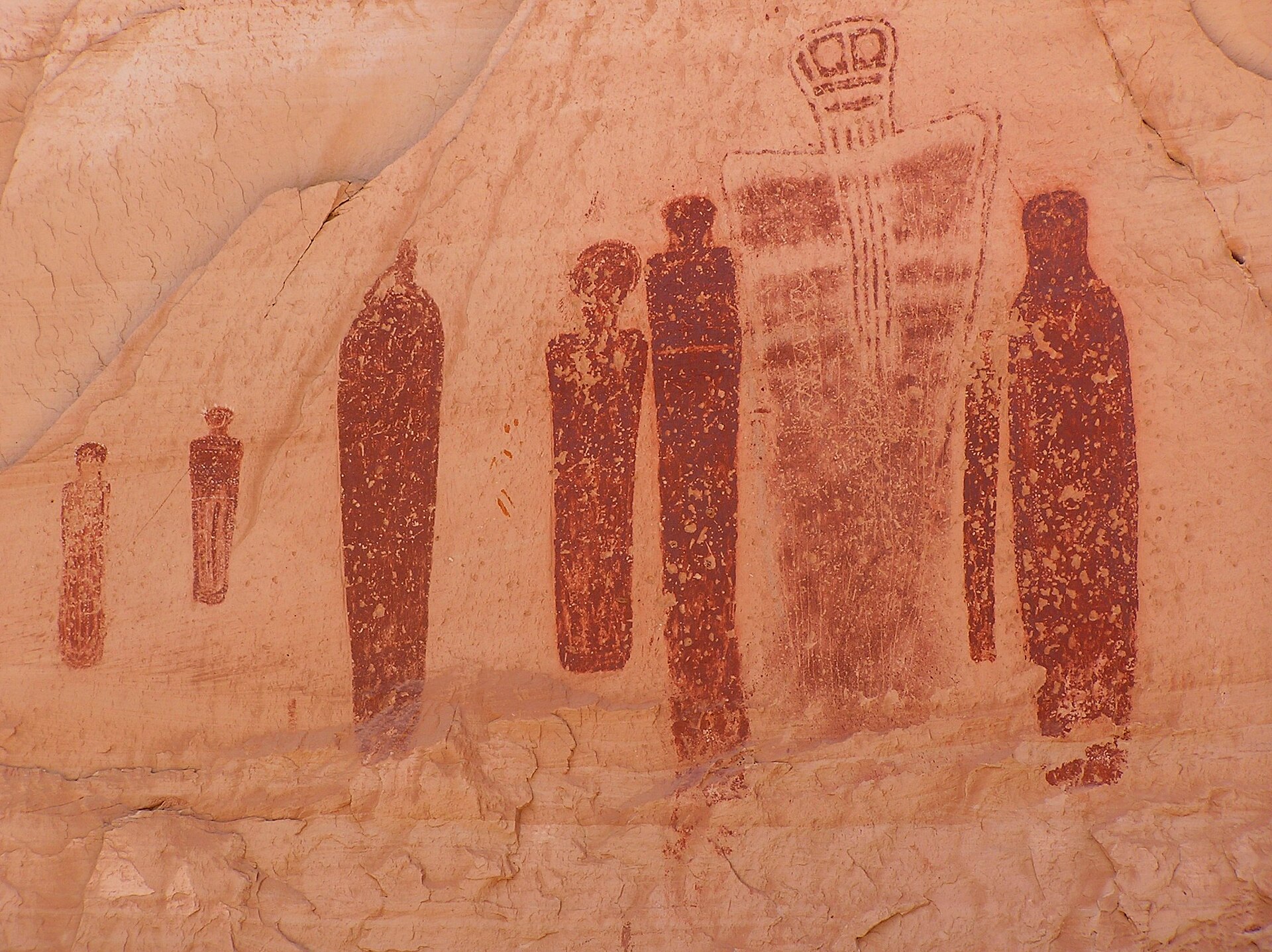
Horseshoe Canyon, a detached unit of Canyonlands National Park, holds the Great Gallery, a panel of life-size, ghostly painted figures that’s one of the most important rock art sites in North America. Reaching it takes effort. You drive about 30 miles of graded dirt road from Highway 24, then hike about 7 miles round trip with a steep 750-foot descent and climb back out. Allow a full day, carry plenty of water, and check for seasonal ranger-led hikes.
The area east of Hanksville is also Robbers Roost country, the remote canyon hideout of Butch Cassidy and his gang in the 1890s.
23. Look for Bison in the Henry Mountains
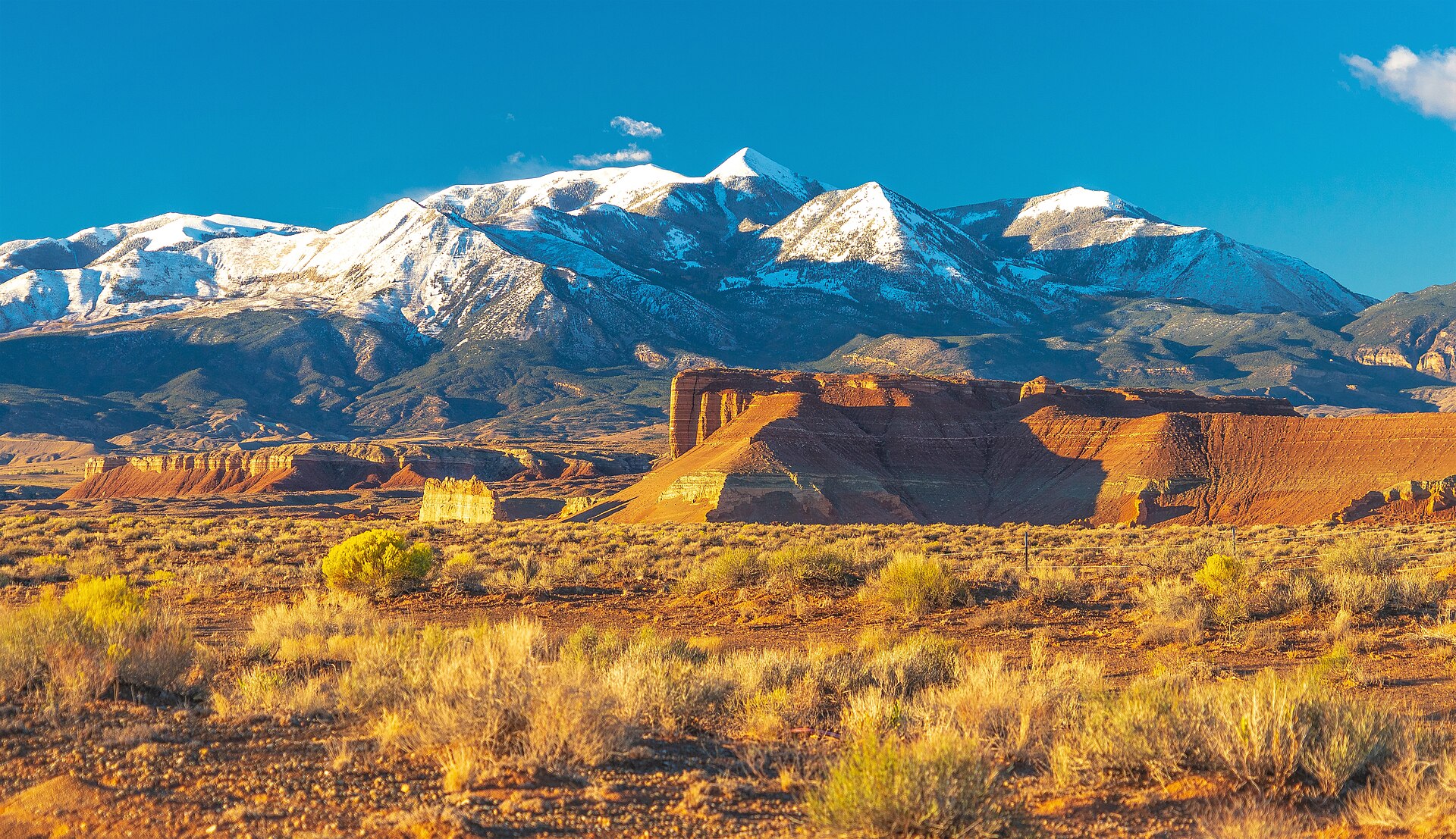
The Henry Mountains rise south of town to over 11,000 feet. They were the last mountain range mapped in the lower 48 states, and they’re home to one of the few free-roaming, wild bison herds in the country. Roads up to Bull Creek Pass and beyond are rough dirt and best for 4WD vehicles, and they’re usually snowed in through late spring. Summer up here is much cooler than the desert below.
24. Go Canyoneering With a Guide
The canyons around Hanksville, Goblin Valley and the San Rafael Swell are a canyoneering paradise, with rappels, narrow slots and potholes. Guided half-day trips from Goblin Valley are a great introduction. Without proper training and gear, stick to non-technical canyons.
After Dark
25. Stargaze Under Some of the Darkest Skies in America
With almost no towns or lights for miles, the night sky around Hanksville is spectacular. Both Goblin Valley State Park and Capitol Reef National Park are certified International Dark Sky Parks. On a moonless night, the Milky Way is bright enough to cast shadows. Pull off at a safe spot away from the highway, turn off your lights, and give your eyes 20 minutes to adjust. Check the moon calendar. A new moon gives the best view.
Best Time to Visit Hanksville
The best time to visit Hanksville is spring (March to May) and fall (September to October), when days are warm but not scorching and nights are cool. These are also the busiest months at Goblin Valley and Capitol Reef. For a month-by-month breakdown, see our guide to the best time to visit Hanksville, Utah.
| Season | Weather | Keep in Mind |
|---|---|---|
| Spring | Mild days, chilly nights, some wind | Best for hiking; book campsites early |
| Summer | Highs often near or above 100°F | Hike at dawn; monsoon flash floods July–Sept |
| Fall | Warm days, cool nights | Great for everything; busy weekends |
| Winter | Cold, especially at night; occasional snow | Quiet; some businesses close or cut hours |
How Many Days Do You Need in Hanksville?
Plan on one to two days. One day covers Goblin Valley, Little Wild Horse Canyon and the badlands viewpoints. Two days lets you add Capitol Reef or Highway 95. With three or more days and a high-clearance vehicle, you can tackle Horseshoe Canyon, Cathedral Valley or the Henry Mountains.
Where to Stay in Hanksville
Hanksville has a handful of simple motels, a hotel, vacation rentals and RV parks, including the Whispering Sands Motel, the Red Sands Hotel and Duke’s Slickrock Campground. Rooms are limited and fill up on spring and fall weekends, so book ahead. Don’t expect luxury. Do expect clean, basic rooms and great access.
Other options include the campground and yurts at Goblin Valley, the Temple Mountain area and BLM dispersed camping on public land (bring all your own water). If you’d rather stay somewhere bigger, Torrey (near Capitol Reef) and Green River are each about an hour away. For a full comparison, see our guide to where to stay in Hanksville, Utah.
Where to Eat in Hanksville
Food choices are few but friendly. Stan’s Burger Shak, next to Hollow Mountain, is the classic stop for burgers, fries and shakes. Outlaws Roost serves fresh Mexican food. Duke’s Slickrock Grill offers hearty Western dinners. Hours change by season, and some places close in winter, so check before you count on dinner. Pack snacks, lunch and lots of water for your day trips, since there’s nothing to buy out in the desert.
Driving and Road Conditions Around Hanksville
Highways 24 and 95 are paved and in good shape, and so is the road into Goblin Valley. Many of the best places, though, are reached by dirt roads. Here’s what to know:
- Clay roads are a no-go when wet. Bentonite and clay roads around Factory Butte, Caineville and Cathedral Valley become impassable after rain, even for 4WD. Wait for them to dry.
- High clearance helps. Many graded roads are fine for regular cars when dry, but washouts and sand are common. A high-clearance vehicle gives you far more options.
- Gas up in town. Fuel is scarce on Highway 95 south and on backroads. Leave Hanksville with a full tank.
- Expect no cell service. Download offline maps before you go, and tell someone your plans.
- Watch for wildlife and cattle on the highways, especially at dawn and dusk.
Safety Tips for Exploring Around Hanksville
Hanksville is one of the most remote places in the lower 48 states, and emergency help can take hours to arrive. A little preparation goes a long way:
- Carry at least a gallon of water per person per day, plus extra in the car.
- Check the weather for the whole region before entering any slot canyon.
- Avoid hiking in the midday summer heat.
- Stay on trails and roads, and avoid the black, crusty cryptobiotic soil, a living crust that takes decades to recover.
- Don’t touch rock art. Oils from your hands damage it.
- Consider a satellite messenger if you’re heading into remote areas.
Hanksville Itineraries
One Day in Hanksville
| Time | Plan |
|---|---|
| Early morning | Sunrise at Factory Butte or the Moonscape Overlook |
| Morning | Goblin Valley State Park before the heat |
| Midday | Little Wild Horse Canyon (if no rain is forecast) |
| Afternoon | Burger at Stan’s, photos at Hollow Mountain, Wolverton Mill |
| Sunset | Bentonite Hills near Caineville |
| Night | Stargazing outside town |
Two Days in Hanksville
Day 1: follow the one-day plan above.
Day 2, choose one:
- Capitol Reef: drive west along the Fremont River, hike Hickman Bridge and Grand Wash, buy pie in Fruita, and return for sunset.
- Highway 95: Little Egypt, Leprechaun Canyon, Hog Springs rock art and the Hite Overlook, with a swim at Lake Powell in summer.
- Adventure: a guided UTV tour in the badlands or a canyoneering trip at Goblin Valley.
Have a third day? Go for the full-day hike to the Great Gallery in Horseshoe Canyon, or drive Cathedral Valley if the roads are dry. For a detailed day-by-day plan, see our Hanksville, Utah itinerary.
Things to Do in Hanksville With Kids
Goblin Valley is pure magic for kids, who can climb and play hide-and-seek among the hoodoos. Families also enjoy the first easy section of Little Wild Horse Canyon, Hollow Mountain, Little Egypt, a guided UTV ride, the Fruita orchards and pie in Capitol Reef, and stargazing. Keep hikes short, start early, and bring more water and snacks than you think you need.
More Ideas for Your Utah Road Trip
For a closer look at each destination near town, with more detail on every stop, see our guide to the best places to visit near Hanksville, Utah. Continuing west through Southern Utah? Read our guides to things to do in Bryce Canyon National Park and things to do in Zion National Park.
Related Guides
Keep planning with these related guides:
FAQ: Things to Do in Hanksville, Utah
What are the best things to do in Hanksville, Utah?
Explore Goblin Valley State Park, hike Little Wild Horse Canyon, see Factory Butte and the Moonscape Overlook, photograph the Bentonite Hills, ride ATVs at Swing Arm City, visit Capitol Reef, hike Leprechaun Canyon and stargaze.
Is Hanksville, Utah worth visiting?
Yes, as a base for exploring. The town is small, but it’s within an hour of Goblin Valley, Capitol Reef, slot canyons, badlands and Lake Powell, with far fewer crowds than Utah’s bigger parks.
How far is Goblin Valley from Hanksville?
About 35 miles north, or 40 to 45 minutes on paved roads.
How far is Hanksville from Capitol Reef and Moab?
Capitol Reef’s Fruita area is about 45 minutes west. Moab is about two hours east.
Can you visit the Mars Desert Research Station?
Not for tours. You can see and photograph it from the road, but please don’t approach the habitat, since crews are working inside.
Do you need 4WD around Hanksville?
Not for the main sights. Goblin Valley, Capitol Reef’s main area, Factory Butte views and Highway 95 are all paved. High clearance or 4WD helps for the Moonscape Overlook, Cathedral Valley, Horseshoe Canyon and the Henry Mountains.
What is the best time to visit Hanksville?
Spring and fall, when temperatures are comfortable for hiking. Summer is very hot, with flash flood risk from July to September.
Is there gas in Hanksville?
Yes, at Hollow Mountain and other stations in town. Fill up before heading out, because fuel is very limited south on Highway 95 and on backroads.
Where should I stay near Hanksville?
In-town motels and RV parks are the most convenient. The Goblin Valley campground and yurts are the most unique option, and Torrey or Green River offer more choices about an hour away.
The Middle of Nowhere, in the Best Way
Hanksville will never win awards for its main street. That’s not why you come. You come for the hoodoos glowing orange at sunset, the hush inside a slot canyon, the grey moonscape at dawn and a night sky so full of stars it looks fake.
Fill the tank, pack more water than you think you need, and give yourself at least a full day. The best things to do in Hanksville, Utah are all just past the edge of town, waiting for the few people who actually stop.