
Angels Landing isn’t Zion’s longest hike, and it isn’t even the park’s highest viewpoint. What makes it famous is the last half mile.
After climbing about 1,000 feet above Zion Canyon to Scout Lookout, the route suddenly narrows into a sandstone fin. Chains are bolted into the rock, the drop-offs fall away on both sides, and in places the path is only a few feet wide. At the top, you’re standing on a summit in the middle of the canyon, with the Virgin River curling far below.
That mix of views, effort and exposure has made Zion National Park’s Angels Landing one of the best-known hikes in America. It also means it deserves real planning. You need a permit for the chains section, the climb is strenuous, and wet or icy rock changes everything. The good news: if you don’t get a permit, or decide the ridge isn’t for you, Scout Lookout still gives you most of the hike and a huge view. This guide covers the trail, the permit lottery, difficulty, safety, timing and the best alternatives.
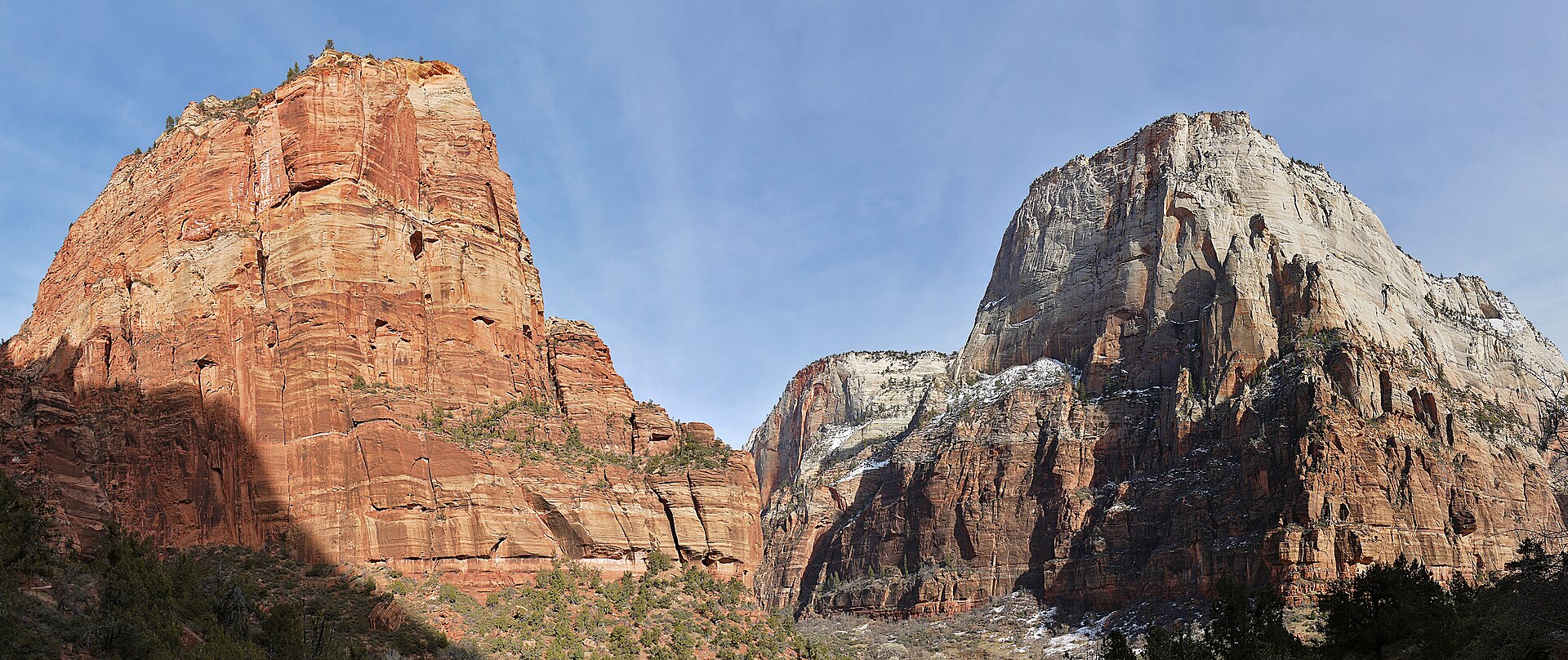
⏰ Permit deadline: The seasonal lottery for winter hikes (December 1, 2026 to February 28, 2027) is open now and closes October 20, 2026. October 2026 park update: Angels Landing, the West Rim Trail and the Zion Canyon shuttle are open as normal. The Zion-Mount Carmel Highway has been closed east of Canyon Junction since a September 30 rockfall, which affects some alternatives listed further down.
Angels Landing at a Glance
Angels Landing is a strenuous 5.4-mile round-trip hike in Zion National Park that gains 1,488 feet from The Grotto (shuttle stop 6). Most hikers take about 4 hours. Everyone going past Scout Lookout onto the final half-mile chains section needs a permit, won through a seasonal lottery or a day-before lottery. You can hike to Scout Lookout without a permit.
| Detail | What to Know |
|---|---|
| Trailhead | The Grotto, Zion Canyon shuttle stop 6 |
| Distance | 5.4 miles round trip |
| Elevation gain | 1,488 feet |
| Time | About 4 hours for most hikers; allow 4 to 5 |
| Difficulty | Strenuous, with extreme exposure on the final ridge |
| Permit | Required past Scout Lookout, every day of the year |
| Scout Lookout | About 4.5 miles round trip, about 1,000 feet of climbing, no permit |
| Chains section | About 0.5 mile each way |
| Water | At The Grotto only |
| Restrooms | The Grotto and Scout Lookout |
| Pets | Not allowed |
| Best seasons | Spring and fall |
| Cell service | Unreliable; download your permit |
In This Guide
- The trail, section by section
- Angels Landing permits and the lottery
- Scout Lookout: the no-permit alternative
- How hard and how dangerous is it?
- Best time to hike, by season and time of day
- What to bring and wear
- Fear of heights, kids, beginners and older hikers
- Alternatives if you don’t get a permit
- FAQs
Is Angels Landing Worth It?
Yes, if you’re fit, comfortable with heights and have a permit. In one hike you get the river crossing at The Grotto, the cool shade of Refrigerator Canyon, the famous switchbacks of Walter’s Wiggles, the big viewpoint at Scout Lookout and then the ridge itself, with a 360-degree view from the summit that’s hard to match anywhere in the park.
But it isn’t worth forcing. If heights make you uneasy, Scout Lookout gives you most of the physical challenge and a fantastic view without the exposure. Plenty of people enjoy that version more.
Where the name comes from: on a visit in 1916, Methodist minister Frederick Vining Fisher is said to have remarked that only an angel could land on top of this rock. The trail was built in the 1920s, and Walter’s Wiggles are named after Walter Ruesch, Zion’s first custodian, who helped design them.
Where Does Angels Landing Start?
The hike starts at The Grotto, shuttle stop 6 on the Zion Canyon Scenic Drive. During shuttle season (March 7 to November 28 in 2026, plus December 26 to January 2), private cars can’t drive the scenic drive, so you’ll ride the free park shuttle from the visitor center. It’s about a 30-minute ride. There’s no shuttle ticket or reservation needed.
If you’re staying at Zion Lodge, you can skip the bus and walk the short Grotto Trail (about half a mile) to the trailhead. Outside shuttle season, you can usually drive to The Grotto yourself, but parking is very limited.
The Grotto has restrooms, water bottle filling and picnic tables. Use the restroom and top up your water before you start, because there’s no water on the trail.
The Angels Landing Trail, Section by Section
| Section | Approx. Distance From The Grotto | What It’s Like |
|---|---|---|
| The Grotto to Refrigerator Canyon | 0 to about 1.2 miles | Bridge over the river, then paved switchbacks up the cliff in full sun |
| Refrigerator Canyon | About 1.2 to 1.7 miles | A cool, shady side canyon; nearly flat |
| Walter’s Wiggles | About 1.7 to 2 miles | 21 tight, steep switchbacks |
| Scout Lookout | About 2.25 miles | Wide saddle with big views, toilets and the permit check |
| Chains section to summit | About 2.25 to 2.7 miles | Narrow, exposed fin with chains; about 500 more feet of climbing |
The Grotto to Refrigerator Canyon
From the shuttle stop, cross the footbridge over the Virgin River and turn right onto the West Rim Trail. The path follows the river briefly, then starts climbing paved switchbacks carved into the cliff. This part gets full sun much of the day, and it’s where many people realize the climb is real. Take it steady.
Refrigerator Canyon
Next, the trail ducks into Refrigerator Canyon, a narrow side canyon that lives up to its name. It’s shaded, nearly flat and often noticeably cooler, a welcome break on a warm day. Don’t let it fool you, though. The exposed rock above can be much hotter.
Walter’s Wiggles
At the end of the canyon you meet Walter’s Wiggles, 21 short, steep switchbacks stacked on top of each other like a zipper in the rock. They aren’t technical, just hard work. Pace yourself, step aside for faster hikers, and enjoy the fact that once you’re at the top, most of the hike’s climbing is done.
Scout Lookout
Scout Lookout is a broad sandstone saddle with sweeping views down Zion Canyon and a close-up look at the Angels Landing ridge. It has vault toilets, and it’s where rangers often check permits. This is your decision point. If you don’t have a permit, if the weather looks wrong or if the ridge ahead makes your stomach turn, this is a great place to finish.
Watch out for the very bold rock squirrels here. Don’t feed them. They bite, and human food makes them sick.
The Chains Section to the Summit
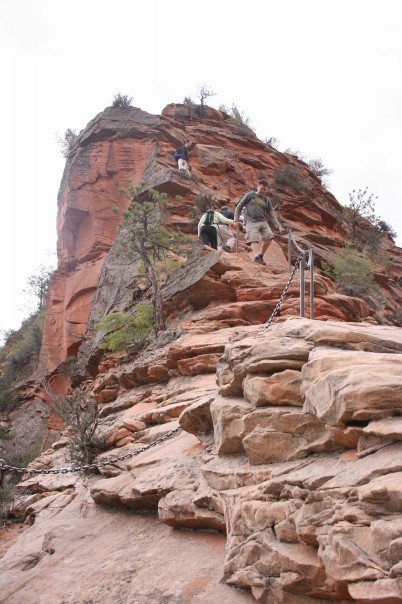
From Scout Lookout, the permitted route climbs about half a mile along the spine to the summit. Heavy chains are anchored into the rock along much of the way to give you something to hold. The path rises steeply over sandstone steps and slabs, squeezes across narrow sections with big drops on both sides, and in places is only wide enough for one person. There are a few spots where it widens enough to rest and let people pass.
It’s two-way traffic, so expect to wait, take turns and talk to the people around you. Keep a hand on the chain where it’s there, and never leave the established route to pass. At the summit, a broad rocky top gives you views up toward the Temple of Sinawava and down the whole canyon toward Springdale. Keep your eyes open for California condors, which sometimes soar past.
Do You Need a Permit for Angels Landing?
Yes. Everyone who goes past Scout Lookout onto the Angels Landing chains section needs a permit, every day of the year and at any time of day or night. You do not need a permit to enter Zion, ride the shuttle, hike the West Rim Trail or go to Scout Lookout.
The permit system started as a pilot program after years of huge crowds and long lines on the chains. It has made the ridge far less congested, and it’s why you can’t just turn up and climb anymore. There are two ways to get one, both through Recreation.gov.
Option 1: The Seasonal Lottery
You apply a few months ahead for a future season, ranking your preferred dates and start times. One application can cover a small group (up to six people).
| Hiking Dates | Application Window (2026) |
|---|---|
| March 1 – May 31 | February 13 – 25 |
| June 1 – August 31 | April 1 – 20 |
| September 1 – November 30 | July 1 – 20 |
| December 1 – February 28, 2027 | October 1 – 20 (open now) |
Option 2: The Day-Before Lottery
You apply the day before you want to hike, between 12:01 a.m. and 3:00 p.m. Mountain Time. Results usually come out shortly after 4 p.m. the same day. Want to hike on Tuesday? Apply on Monday. This is a great option if you’re already in Zion or your plans are flexible, and it’s your second chance if the seasonal lottery didn’t go your way.
How Much Does an Angels Landing Permit Cost?
At the time of writing, there’s a $6 non-refundable application fee for each lottery application, and if you win, a $3 per person permit fee. That’s on top of the park entrance fee. Fees and dates can change from year to year, so check Recreation.gov before you apply.
Tips to Improve Your Chances
- Be flexible. Weekdays and less popular start times are easier to win than weekend mornings.
- Pick quieter seasons. Winter has far less competition than spring or fall.
- Use the day-before lottery every day of your trip if you missed out on a seasonal permit.
- Don’t build your whole trip around one permit. Have Scout Lookout ready as Plan B.
After You Get a Permit
Your Recreation.gov confirmation email is your permit. Download, print or screenshot it before you leave, because most people can’t get a phone signal in Zion Canyon. Bring a photo ID that matches the permit holder. Rangers may check permits anywhere on the trail, most often at The Grotto and Scout Lookout.
Your permit shows a start time. That’s the time you need to be at The Grotto, not when you leave your hotel. Factor in parking, the shuttle line and the ride. Permit rules about who must be present and how changes or cancellations work can change, so read the conditions on your Recreation.gov permit carefully.
Can You Hike Angels Landing With a Guide?
Yes. A small number of commercial guide companies are authorized by the park to lead Angels Landing hikes, and they can arrange permits as part of their trip. It costs more than doing it yourself, but it’s an option if you didn’t win the lottery or want an experienced guide beside you on the chains. The park publishes a list of authorized guides.
Scout Lookout: The Best Angels Landing Alternative
Scout Lookout is about 2.25 miles from The Grotto, roughly 4.5 miles round trip, with about 1,000 feet of climbing. No permit is needed. You still get the river, Refrigerator Canyon, Walter’s Wiggles and big views down Zion Canyon, plus a close-up look at the Angels Landing ridge. You just skip the exposed chains.
| Angels Landing | Scout Lookout | |
|---|---|---|
| Round trip | 5.4 miles | About 4.5 miles |
| Climbing | 1,488 feet | About 1,000 feet |
| Permit | Required past Scout Lookout | Not needed |
| Chains and exposure | Yes, extreme | No |
| Time | About 4 hours | About 3 hours |
| Best for | Confident hikers who love heights | Almost everyone else |
Want more than Scout Lookout without the chains? Keep going north on the West Rim Trail. Beyond the junction it gets much quieter and climbs onto open slickrock with views back down at Angels Landing, which is a view most people never see. Turn around whenever you like.
How Hard Is Angels Landing?
Angels Landing is strenuous. There are really two different challenges:
The climb. You gain nearly 1,500 feet in under 3 miles, mostly on steep paved switchbacks. It’s a solid workout, especially in heat. If you’re reasonably fit and take breaks, it’s very doable.
The exposure. The final ridge is narrow, with drops of up to 1,000 feet on both sides in places. You’ll use your hands, step up on uneven rock and share tight spots with people coming the other way. Fitness doesn’t help much if heights freeze you up.
Being fit enough for the climb and deciding the chains aren’t for you is completely reasonable. Plenty of strong hikers make that call every day.
How Long Does Angels Landing Take?
The park says most people take about 4 hours, and some take longer. Budget 4 to 5 hours plus shuttle time, and don’t plan another big hike straight after. Waiting on the chains, heat, rest breaks, photo stops and winter conditions can all slow you down.
Is Angels Landing Dangerous?
There’s real risk. People have died falling from Angels Landing, and the park says most fatal falls since 1930 have happened on the chains section. Many accidents happen when the rock is wet. That doesn’t mean every hike is a gamble. Thousands of people climb it safely each year. It means mistakes can be serious, so the right mindset matters:
- Move slowly and deliberately, with three points of contact on steep bits.
- Stay on the route and close to the chains.
- Don’t pass in narrow spots; wait for a wider area.
- No selfies or posing near edges.
- Don’t go up if the rock is wet or icy, storms are near, or it will be dark before you’re down.
- Turn around if conditions or your nerves say so.
Rockfall is also possible anywhere under Zion’s cliffs. Don’t linger beneath obvious rockfall zones, and respect any closures.
In an emergency: try calling 911. If you have no signal, which is common, find a park ranger or volunteer on the trail or at the trailhead.
Best Time to Hike Angels Landing
The best months for Angels Landing are April, May, September and October, when the weather is cool and dry enough for a comfortable climb. Start early in the morning in any season. Whatever the month, the actual conditions on the day decide whether the chains are safe, not the calendar.
| Season | What to Expect on Angels Landing |
|---|---|
| Spring (Mar–May) | Great temperatures, but rain, cold mornings and early-season ice are possible. Busy permit season. |
| Summer (Jun–Aug) | Heat over 100°F on the switchbacks; hot chains; afternoon thunderstorms from July. Start at the first shuttle. |
| Fall (Sep–Nov) | Often the best: cooler, clearer and settled. Shorter days later in the season. |
| Winter (Dec–Feb) | Quietest, easiest permits, but ice and snow can coat shaded sections and the chains get very cold. |
Summer and Monsoon Season
Summer heat makes the climb much harder. Start on one of the first shuttles, carry plenty of water, and be off the ridge before the midday sun. From July to September, thunderstorms can build fast in the afternoon. Lightning on an exposed sandstone fin is extremely dangerous, and wet rock is slick. If storm clouds are around, stay off the ridge. Don’t wait for the rain to start.
Winter
Winter permits are easier to get and the trail is quiet, but shaded spots like Walter’s Wiggles and parts of the ridge can hold ice for days. Bring microspikes and gloves (the metal chains get painfully cold). If there’s ice on the exposed ridge, make Scout Lookout your summit.
Best Time of Day
Early morning is best: cooler air, softer light, less pressure on the chains and plenty of daylight to spare. Afternoons can be quieter on the chains in some seasons, but they’re hotter in summer and stormier from July. Whatever time you go, check the last shuttle time and leave a big margin. Don’t plan to be on the chains in the dark.
Can you do it for sunrise? Only if your permit and transport allow. During shuttle season, the first bus is at 7 a.m. for most of 2026, so true sunrise is hard unless you’re staying at Zion Lodge. For month-by-month temperatures and storms, see our Zion National Park weather guide, and for crowds and the shuttle schedule, our guide to the best time to visit Zion National Park.
What to Bring and Wear for Angels Landing
- Your permit, downloaded or printed, and a matching photo ID
- Water: at least 2 to 3 liters per person for the hike, more in summer (the park suggests about a gallon per person per day in hot weather)
- Salty snacks and lunch
- Hiking shoes with good grip
- Sun protection: hat, sunglasses, sunscreen
- A light layer, and warm layers plus gloves in winter
- Headlamp with fresh batteries, just in case
- Park map and a charged phone
- Small first-aid kit
- Microspikes in winter
Footwear matters more than anything else. Sandstone can be grippy when dry and slick as glass when wet or sandy. Wear proper hiking shoes or trail runners with good tread. Avoid sandals, smooth-soled sneakers and fashion shoes. The chains help, but they don’t make up for bad shoes.
Keep your hands free. Use a backpack rather than carrying bottles or a phone, and stow trekking poles before the chains, since you’ll want both hands. Leave big, bulky packs at home.
Is Angels Landing Right for You?
If You’re Afraid of Heights
Probably stop at Scout Lookout. The park itself suggests it as a good stopping point for anyone uncomfortable with heights. The exposure on the chains section is long and continuous, and most people don’t “get used to it” after the first few steps. Scout Lookout is a fantastic destination on its own, and there’s nothing to prove.
Beginners
A fit beginner can usually reach Scout Lookout. The chains section is a different matter. Experience on exposed, rocky terrain matters more than being able to walk five miles. If you’ve never done anything like it, watch the ridge from Scout Lookout before deciding.
Can Kids Hike Angels Landing?
There’s no official minimum age, but this isn’t a family walking trail. Think honestly about your child’s height and reach on the chains, balance, experience, fear of heights and ability to follow instructions instantly, plus the crowds and weather that day. Many families have a better day making Scout Lookout the goal. For easier family hikes, see our guide to the best hikes in Zion National Park.
Older Hikers
Age alone isn’t the deciding factor. Fitness, balance, knee strength for the steep descent and comfort with exposure matter far more. Plenty of hikers in their 60s and 70s climb it happily, and plenty of younger people choose to stop at Scout Lookout.
Chains Etiquette and Safety Tips
- Communicate. Call out to people coming the other way and agree who goes first.
- Pass only where it’s wide. Never step off the route to get around someone.
- Let faster hikers by at safe spots, and don’t feel rushed by people behind you.
- Keep within reach of the chain wherever there is one.
- Go down the way you came up: facing the rock on steep steps if that feels safer.
- Turn around in strong wind. The ridge offers no shelter, and gusts can throw off your balance.
- Remember: a permit gives you permission, not an obligation.
Angels Landing vs Other Zion Hikes
| Angels Landing | The Narrows | Observation Point (East Mesa) | |
|---|---|---|---|
| Type | Steep ridge climb | River hike | Flat mesa-top walk to a high rim |
| Permit | Yes, past Scout Lookout | No (bottom-up) | No |
| Main risk | Heights, heat, wet rock | Flash floods, cold water | Rough access road |
| Views | 360° from the middle of the canyon | From inside the canyon | Looking down on Angels Landing |
| Flexibility | Fixed goal | Turn around anytime | Turn around anytime |
With two days in Zion, do Angels Landing (or Scout Lookout) one day and The Narrows the next. Trying both in one day is possible for very fit hikers but rarely enjoyable. Read our full guide to The Narrows in Zion National Park to plan your second day.
Best Alternatives If You Don’t Get a Permit
Losing the lottery shouldn’t ruin your trip. Here are the best swaps, updated for October 2026:
- Scout Lookout and the West Rim Trail: the closest substitute, starting from the same trailhead.
- The Narrows: completely different and just as memorable, with no permit for the bottom-up hike.
- Emerald Pools via the Kayenta Trail: easier, with waterfalls and canyon views.
- Taylor Creek in Kolob Canyons: a quiet canyon hike away from the crowds.
- Observation Point via East Mesa: an even higher view over Zion Canyon. Access is from the east side on rough roads, so it’s a long drive around while the Zion-Mount Carmel Highway is closed.
- Canyon Overlook: a short hike with a huge view, once the highway reopens.
Fitting Angels Landing Into Your Trip
One day in Zion: take an early shuttle to The Grotto, hike to Scout Lookout and Angels Landing (if permitted and conditions are good) through the morning, then eat and rest at Zion Lodge. In the afternoon, choose something easy like Emerald Pools or the Riverside Walk, and finish on the Pa’rus Trail at sunset. Don’t add The Narrows the same day.
Two days: Angels Landing or Scout Lookout, Emerald Pools and the Pa’rus Trail on day one; The Narrows on day two. For full hour-by-hour plans, see our Zion National Park itinerary.
Where to stay: Zion Lodge is the closest base, a short walk from The Grotto. Springdale has the most hotels and easy shuttle access to the park entrance. See our guide to hotels near Zion National Park.
Common Angels Landing Mistakes
- Thinking the permit means it’s safe today. It doesn’t.
- Ignoring a real fear of heights.
- Wearing shoes with poor grip.
- Starting late on a hot summer day.
- Arriving without an offline copy of the permit.
- Treating the permit start time as hotel departure time.
- Passing others in narrow, unsafe spots.
- Climbing wet, icy or storm-threatened rock.
- Feeling you “have to finish.” You don’t.
Related Guides
Here’s where to go next as you plan the rest of your trip:
- Zion National Park With Kids
- Closest Airport to Zion National Park
- Las Vegas to Zion National Park
- Zion National Park Map
Angels Landing: FAQs
Do you need a permit for Angels Landing?
Yes, to go past Scout Lookout onto the chains section, every day of the year. Scout Lookout itself doesn’t need a permit.
How long is the Angels Landing hike?
5.4 miles round trip from The Grotto, with 1,488 feet of elevation gain.
How long does Angels Landing take?
Most hikers take about 4 hours. Allow 4 to 5 hours plus shuttle time.
How hard is Angels Landing?
Strenuous. It combines nearly 1,500 feet of steep climbing with a narrow, exposed final ridge where you hold onto chains.
How do you get an Angels Landing permit?
Apply on Recreation.gov through the seasonal lottery a few months ahead, or the day-before lottery between 12:01 a.m. and 3 p.m. Mountain Time the day before your hike.
How much is an Angels Landing permit?
At the time of writing, a $6 application fee plus $3 per person if you win. Check Recreation.gov for current fees.
Can you hike to Scout Lookout without a permit?
Yes. It’s about 4.5 miles round trip with about 1,000 feet of climbing and great canyon views.
How many people have died on Angels Landing?
Several people have died in falls over the decades, most on the chains section, often in wet conditions. Thousands climb safely each year, but mistakes there can be fatal, so take it seriously.
Is Angels Landing safe in the rain?
No. Wet sandstone is very slippery, and the park advises against going up when the trail is wet or storms are nearby.
Can you hike Angels Landing in winter?
Yes, with a permit, and permits are easier to get. But ice can coat shaded sections, so bring microspikes and gloves, and stop at Scout Lookout if the ridge is icy.
Is Angels Landing good if you’re afraid of heights?
Usually not past Scout Lookout. The park suggests Scout Lookout as a good stopping point for anyone uncomfortable with heights.
What is the best alternative to Angels Landing?
Scout Lookout. You do most of the climb and get excellent Zion Canyon views without the permit or the chains.
Is Angels Landing the Best Hike in Zion?
For some hikers, absolutely. Few trails anywhere pack in this much effort, exposure and view in such a short distance. But it isn’t the best hike for everyone. The Narrows is more unusual. Observation Point is higher. Canyon Overlook is far easier. And Scout Lookout gives you most of the Angels Landing experience without the chains.
So don’t ask “Can I finish Angels Landing?” Ask “Is it the right hike for me today?” If the answer is yes, get your permit, check the weather, start early and treat the ridge with respect. If not, stop at Scout Lookout, enjoy the view and know you’ve still done one of Zion’s best climbs. For everything else to see and do in the park, start with our guide to the best things to do in Zion National Park.