
Phoenix isn’t the first place most people think of for a garden. But ten minutes from the airport, tucked between the red rock buttes of Papago Park, there’s a place where you can walk among giant saguaros, 30-foot cardon cactus, blooming wildflowers and clouds of butterflies, all on easy paths with a coffee waiting at the end.
The Desert Botanical Garden in Phoenix, Arizona is the best introduction to the Sonoran Desert you’ll find. It’s not a hike, and it’s not a museum. It’s somewhere in between: 140 acres with more than 50,000 plants, five short themed trails and views that turn gold at sunset.
This guide covers everything you need to plan a visit: 2026 ticket prices and the cheaper ways in, opening hours, parking, each trail and what you’ll see on it, the butterfly pavilion, Las Noches de las Luminarias, the best time to go, food, accessibility, a simple route for two or three hours, and what else to do nearby.
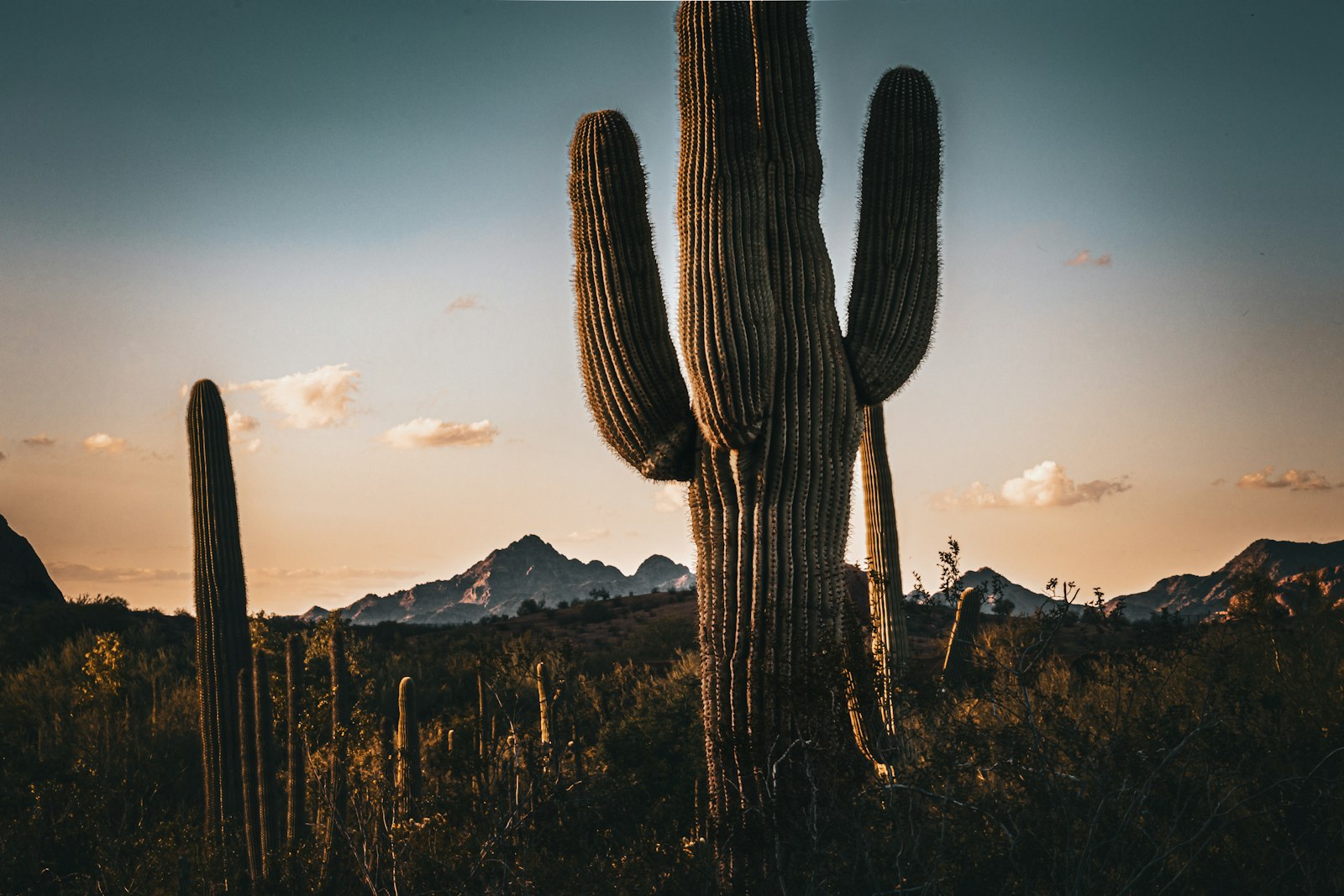
Cover photo: sunset at Desert Botanical Garden, Phoenix. Photo: Brice Cooper / Unsplash
Is Desert Botanical Garden Worth Visiting?
Yes. Desert Botanical Garden in Phoenix, Arizona is one of the top attractions in the city. It has more than 50,000 desert plants on 140 acres in Papago Park, with five easy, mostly paved trails that add up to about 1.3 miles. Adult tickets start at $32.95 and kids (2–17) at $14.95, parking is free, and most people spend 1.5 to 2 hours. From October to December 2026, it’s open 7 a.m. to 10 p.m. daily.
Desert Botanical Garden at a Glance
| Address | 1201 N. Galvin Parkway, Phoenix, AZ 85008 (in Papago Park) |
| Phone | (480) 941-1225 |
| Size | 140 acres, about 55 of them planted |
| Plants | More than 50,000 plants from over 4,000 kinds, including hundreds of rare and endangered species |
| Trails | 5 themed loops, about 1.3 miles in total |
| Hours (Oct.–Dec. 2026) | 7 a.m. to 10 p.m. daily; closed Nov. 26 and Dec. 25 |
| Tickets | Adults from $32.95; kids 2–17 from $14.95; under 2 free |
| Cheapest way in | Community Day, second Tuesday of each month, pay what you can |
| Parking | Free, with EV charging and a rideshare zone |
| Time needed | 1.5 to 2 hours; 3 hours for everything |
| Best time to go | October to April; March and April for blooms |
Prices and hours were checked in late October 2026. The garden sometimes closes early for private events, so check the date you want before you go.
Where Is the Desert Botanical Garden in Phoenix, Arizona?
The garden is at 1201 N. Galvin Parkway in Papago Park, on the east side of Phoenix right where it meets Scottsdale and Tempe. Instead of city buildings, you’re surrounded by the rounded red sandstone of the Papago Buttes. It’s one reason the place feels so much bigger than it is.
| From | Approximate drive |
|---|---|
| Phoenix Sky Harbor Airport | About 10 to 15 minutes |
| Tempe (ASU) | About 10 minutes |
| Old Town Scottsdale | About 15 minutes |
| Downtown Phoenix | About 15 to 20 minutes |
| Mesa | About 20 to 25 minutes |
Because it’s so close to the airport, it’s a great first or last stop on a Phoenix trip. Got a few hours before an evening flight? This is one of the easiest ways to fill them.
Parking and getting there
- Parking is free in the garden’s own lot. Overflow parking opens during busy events.
- EV charging stations are on site.
- Rideshare has its own drop-off and pick-up area, which is handy if you’re coming from the airport.
- Public transit is possible from Tempe and central Phoenix, but routes change, so check Valley Metro before you rely on it. In summer, a long walk from a bus stop isn’t fun.
Desert Botanical Garden Tickets and Prices (2026)
| Ticket | Price |
|---|---|
| Adults (18+) | From $32.95 |
| Children (2–17) | From $14.95 |
| Children under 2 | Free |
| Members | Free |
| Active military (with valid government ID) | Free general admission |
| EBT card holders | $9.95 per person, Sunday–Thursday, up to 4 people per card (in person, with photo ID) |
| Community Day (2nd Tuesday) | Pay what you can |
Prices say “from” because some dates cost more, especially during big seasonal events. General admission doesn’t include specially ticketed events like Las Noches de las Luminarias, concerts or classes.
How to save money
- Community Day: on the second Tuesday of every month, you pay what you can (suggested $5, $10 or $15). The next ones are November 10 and December 8, 2026. It’s busier than usual, so go early.
- Library culture passes: some Phoenix-area public libraries offer free passes to local attractions. Ask at your library before you buy.
- Membership: if you live in the Valley and plan to come back two or three times a year, or for Luminarias, a membership usually pays for itself. Members also get early ticket access to popular events.
- Buy online: tickets are sold on the garden’s official website. Buying ahead saves time at the gate on busy days and guarantees entry for special events.
Desert Botanical Garden Hours
From October 1 to December 31, 2026, the garden is open every day from 7 a.m. to 10 p.m. It’s closed on Thanksgiving (November 26) and Christmas Day (December 25).
Hours change with the seasons, and the garden sometimes closes at 8 p.m. for a private event, with last entry at 6:30 p.m. If you’re planning a sunset or evening visit, check the website on the day.
Best time of day to visit
- Right at opening: cooler air, soft light, fewer people and the most birds. Quail and roadrunners are out early.
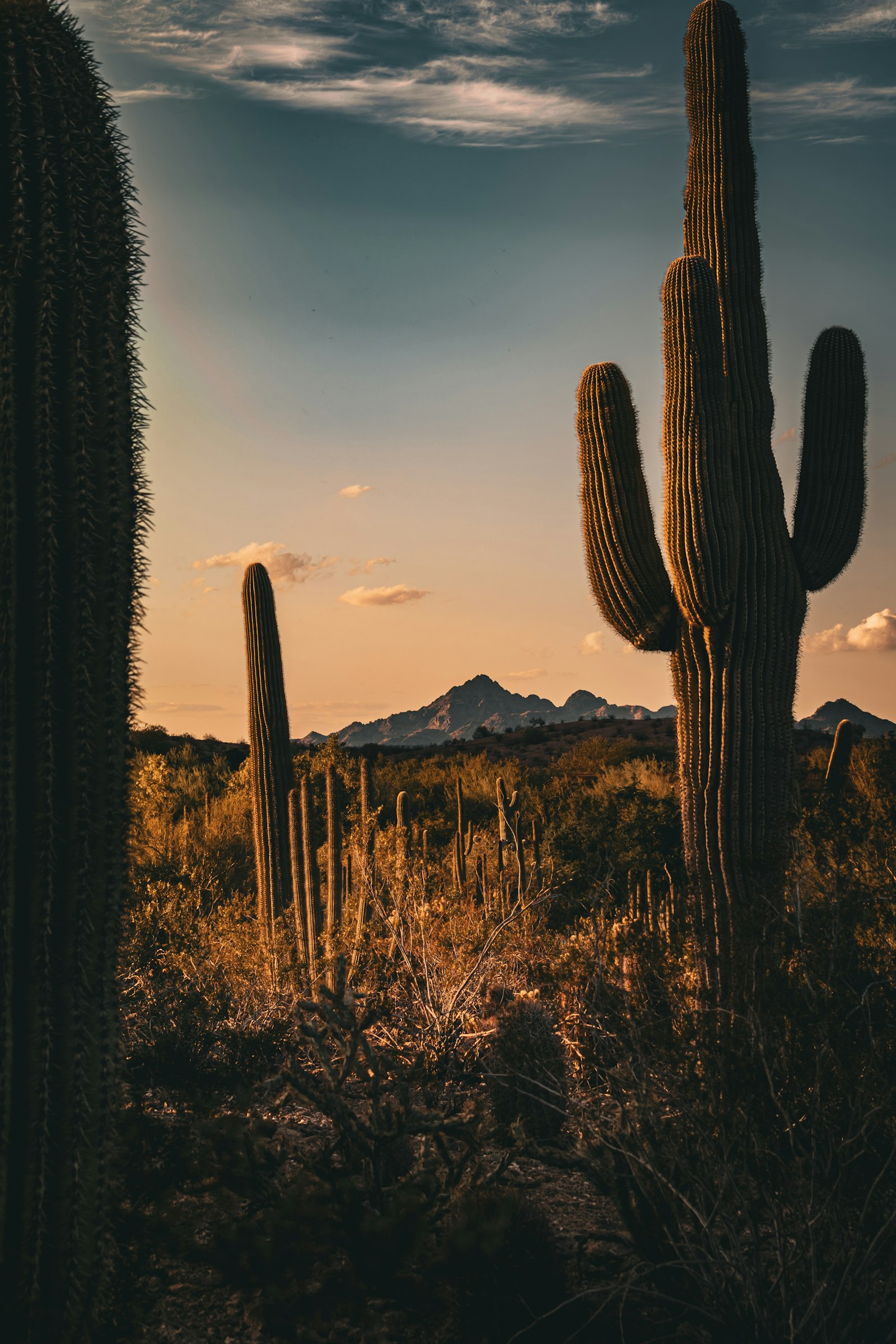
- Late afternoon into sunset: the saguaros glow and the buttes turn red. This is the best time for photos.
- Midday in summer: skip it. Phoenix summer afternoons are often over 105°F, and there’s little shade on the cactus trails.
Sunset tip: Arizona doesn’t use daylight saving time, so sunset stays earlier in summer than you might expect. Look up sunset times for your date and plan to be on the Sonoran Desert Nature Trail about 30 minutes before.
The 5 Trails at Desert Botanical Garden
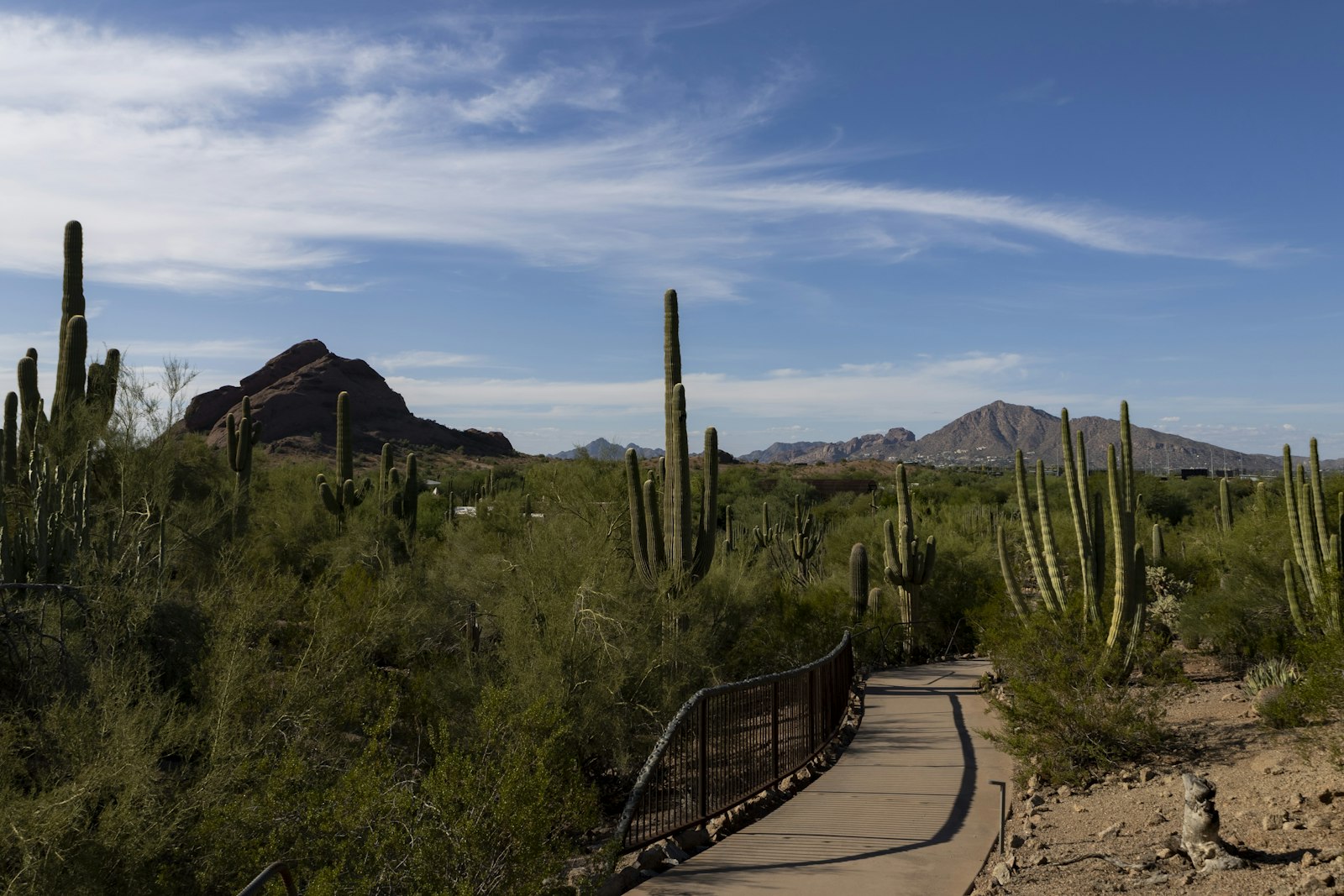
The garden is built around five short loops. They’re easy to walk, connect to each other and add up to about 1.3 miles. You don’t have to do them all, but if you do, you’ll see everything from tall cactus forests to herb gardens and Native American plant uses.
| Trail | Length | Terrain | Best for |
|---|---|---|---|
| 1. Desert Discovery Trail | 0.33 mile | Paved, mostly flat | First-timers, big saguaros |
| 2. Harriet K. Maxwell Desert Wildflower Trail | 0.30 mile | Easy | Flowers, butterflies, hummingbirds |
| 3. Sonoran Desert Nature Trail | 0.20 mile | Short but steep | Views and sunset |
| 4. Plants & People of the Sonoran Desert Trail | 0.35 mile | Longer, more rugged | History, kids |
| 5. Center for Desert Living Trail | 0.13 mile | Easy, quiet | Gardening ideas, herbs |
A good order, suggested by the garden itself: Desert Discovery, then Plants & People, Sonoran Desert Nature, Center for Desert Living, and finish on the Wildflower Trail.
1. Desert Discovery Trail: best for first-time visitors
This is the main loop through the middle of the garden, and if you only walk one trail, make it this one. It’s paved and partly shaded, and it takes you past some of the biggest saguaros, agaves and desert trees in the collection.
Signs along the way explain how desert plants survive with almost no rain, like how a saguaro’s pleats expand to store water. Slow down here. The small details, like spine patterns and flowers tucked into the tops of cactus, are half the fun. Keep an eye out for Gambel’s quail running across the path and roadrunners in the brush.
2. Harriet K. Maxwell Desert Wildflower Trail: best for flowers
If you think the desert is all brown, come here in March or April. This trail fills with color when the wildflowers bloom, and it’s all about the link between flowers and the creatures that pollinate them: butterflies, bees and hummingbirds.
What you see changes month to month. After a wet winter, spring can be spectacular. After a dry one, it’s quieter. Fall brings a smaller second bloom, and hummingbirds are around most of the year.
3. Sonoran Desert Nature Trail: best for views and sunset
This is the garden’s highest path and the closest thing to a real hike here. It’s short, about 0.2 mile, but it climbs steeply to a lookout over the Papago Buttes and the mountains around Phoenix. Along the way you pass a small forest of organ pipe cactus and signs about animal tracks and desert wildlife.
At the top there’s a shaded ramada, and it’s the best sunset spot in the garden. Take your time on the climb, and wear proper shoes, since the surface is rougher than the main paths.
4. Plants & People of the Sonoran Desert Trail: best for history
People have lived in this desert for thousands of years, and this trail shows how. It walks you through different desert habitats, from a desert oasis to semi-desert grassland, and explains how Indigenous communities used plants for food, shelter, fiber and medicine.
Kids usually love the traditional Apache wickiup, a dome-shaped home built from desert plants. At 0.35 mile, it’s the longest of the five trails and a little more rugged underfoot.
5. Center for Desert Living Trail: best for garden ideas
The shortest and quietest loop, and a favorite with locals. It’s all about growing things in a hot, dry climate: seasonal edible garden beds, the Steele Herb Garden with its giant sundial, and the Mary Jean Connell Sensory Garden, where you’re encouraged to smell and touch the plants. If you garden at home, you’ll leave with ideas.
Other Garden Areas You Shouldn’t Miss
- Ottosen Entry Garden: your first look at the collection, with beds of prickly pear, organ pipe and saguaro framed by Papago Butte. Docent-led walks start here at set times.
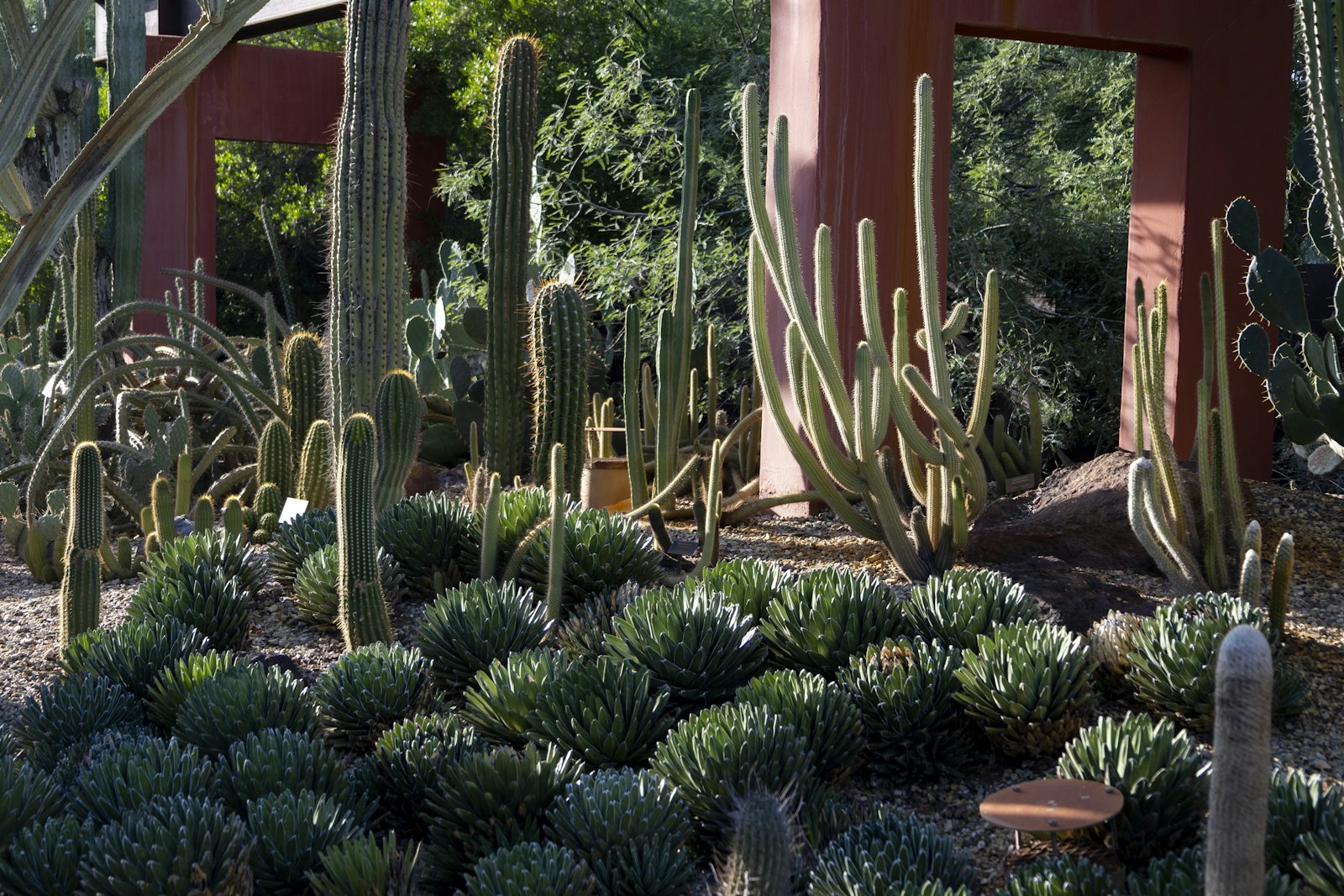
- Sybil B. Harrington Cactus and Succulent Galleries: the place to learn why not every succulent is a cactus. Columns, globes, clusters and strange sculptural shapes, all in one spot.
- Christensen Family Desert Oasis: palms, a color garden and a shady grove of tipu trees with running water. It’s the coolest corner of the garden on a warm day.
- Berlin Agave Yucca Forest: a bridge carries you over agaves and yuccas, with water running over boulders in a desert wash below. Great for photos.
- Kitchell Family Heritage Garden: home to the garden’s very first collection cactus, planted in 1939, and Mexican giant cardons more than 30 feet tall. The Fine Family Contemplation Garden next to it is a nice place to sit.
- The RAF Exhibit Gallery: rotating exhibits on art and research, plus a look at the garden’s behind-the-scenes conservation work.
Butterfly Pavilion
The Cohn Family Butterfly Pavilion is a planted, netted space where you walk among live butterflies. The fall exhibit features more than 1,000 Southwestern butterflies, including monarchs. There’s also a nursery window where you can watch new butterflies come out of their chrysalises, which is a big hit with kids.
It’s seasonal. In fall 2026 it runs through November 15, from 9:30 a.m. to 5 p.m., and it usually returns in spring. Go in the morning on a sunny day, when butterflies are most active.
Seasonal Events: Luminarias and More
Las Noches de las Luminarias
This is the garden’s most famous event and a Phoenix holiday tradition. Thousands of hand-lit paper lanterns (luminarias) line the paths after dark, with live music along the trails. It’s genuinely magical, and it sells out.
- 2026–27 dates: November 27–29; December 4–6, 11–13, 16–23 and 26–31; January 1–3
- Time: 5 to 9:30 p.m.
- Tickets: separate from general admission and timed. Buy as early as you can, especially for weekends.
- Tip: bring a warm layer. December evenings in the desert can drop into the 40s.
Other events this season
- Día de Muertos Festival: November 6–9, 2026.
- Chiles & Chocolate Festival: November 13–15, 2026, 11 a.m. to 5 p.m.
- Music in the Garden: evening concerts on select Fridays in fall (separate ticket).
- Cactus Clubhouse: a hands-on kids’ space, Thursday to Sunday, 9 a.m. to 3 p.m., through May 9, included with admission.
- Dogs in the Garden: on select mornings and evenings, dogs are welcome. These are the only times pets can come.
Best Time of Year to Visit
| Season | What it’s like | Our take |
|---|---|---|
| Spring (March–May) | Wildflowers and cactus blooms; saguaros flower in late April and May. Pleasant days, busiest season. | Best overall |
| Summer (June–September) | Very hot, often over 105°F. Few crowds. Go at opening or in the evening. | Early mornings only |
| Fall (October–November) | Cooling down, butterfly exhibit, festivals and long open hours. | Great for events |
| Winter (December–February) | Mild, sunny days and cool nights. Luminarias in December. | Best for comfortable walking |
Best month to visit: late March or April for wildflowers and cactus blooms, or December for Luminarias. October through April is comfortable for walking.
How Long Do You Need?
Most people spend 90 minutes to 2 hours at Desert Botanical Garden. Allow 3 hours if you want to walk all five trails, see the butterflies and stop for lots of photos, or half a day with a meal.
| If you have | Do this |
|---|---|
| 1 hour | Ottosen Entry Garden, Desert Discovery Trail and the cactus galleries |
| 2 hours | Add the Wildflower Trail and Sonoran Desert Nature Trail lookout |
| 3 hours | All five trails, the butterfly pavilion (in season) and the Desert Oasis |
| Half a day | Everything, plus lunch at Gertrude’s and time in the gift shop and plant shop |
A Simple Route for Your Visit
Two hours
- First 30 minutes: Ottosen Entry Garden, then the Desert Discovery Trail.
- Next 30 minutes: the cactus and succulent galleries and the Kitchell Heritage Garden.
- Next 30 minutes: the Wildflower Trail, plus the butterfly pavilion if it’s open.
- Last 30 minutes: up the Sonoran Desert Nature Trail for the view, then back to the entrance.
Three hours (late afternoon)
Arrive about three hours before sunset. Walk Desert Discovery, Plants & People and the Center for Desert Living first, cool off in the Desert Oasis, then see the Agave Yucca Forest. Save the Sonoran Desert Nature Trail for last and watch the sunset from the ramada at the top. Finish with dinner at Gertrude’s.
Is Desert Botanical Garden Good for Kids?
Yes. The trails are short, most are stroller-friendly, and there’s plenty to keep kids busy: the butterfly pavilion, the Apache wickiup, the Cactus Clubhouse play space, quail running across paths and the giant sundial.
- Teach the rule early: look, don’t touch. Cholla cactus spines in particular latch on and are painful to remove.
- Go in the morning, with hats, sunscreen and water for everyone.
- Ask about the free kids’ activity booklet at the entrance.
- Kids under 2 are free, and children 2–17 pay the lower child price.
Accessibility
The garden says it is fully wheelchair accessible, and most trails are stroller-friendly. The Sonoran Desert Nature Trail is the steepest section, so you may want to skip it or ask staff for the easiest route.
- Mobility scooters: $40 ($35 for members), first come, first served at admissions.
- Sensory-friendly kits: free to borrow at the Visitor Center, first come, first served.
- Service animals: service dogs and miniature horses are welcome. Therapy and emotional support animals are not.
Where to Eat (and Can You Bring Food?)
You can’t bring a picnic into Desert Botanical Garden. Picnic food isn’t allowed, but you should bring water. There are places to eat inside:
- Gertrude’s by Tarbell’s: a sit-down restaurant with a patio facing the garden. Good for brunch, lunch or dinner after sunset. Reservations are a smart idea on weekends and event nights.
- Garden Grab & Go: sandwiches, snacks and drinks for a quick stop.
- Quail House Coffee & Creamery: listed by the garden as coming soon.
Rules Worth Knowing
- No pets, except on special “Dogs in the Garden” days. Service animals are allowed.
- No picnics. Bring water, but buy food inside.
- Shirts and shoes are required.
- No weapons or firearms.
- Stay on the paths and don’t touch the plants. Many are rare, and in Arizona, native plants like saguaros are protected by law.
- Professional photo shoots (engagements, portraits, commercial work) need advance permission from the garden. Casual photos are fine.
What to Wear and Bring
| Bring | Why |
|---|---|
| Refillable water bottle | The desert air dries you out fast, even in winter |
| Hat and sunglasses | Most trails have little shade |
| Sunscreen | The Arizona sun is strong year-round |
| Closed-toe walking shoes | Dusty paths, a steep trail and cactus spines on the ground |
| A light layer | Winter mornings and evenings get chilly |
| Phone or camera | You’ll take more photos than you expect |
Photography Tips
- Golden hour wins. The hour before sunset makes saguaros glow and turns the buttes red.
- Shoot silhouettes of saguaros against the sky from the Sonoran Desert Nature Trail after sunset.
- Get close. Barrel cactus spirals, agave leaf patterns and cactus flowers make great close-ups, even on a phone.
- Best spots: the Ottosen Entry Garden with Papago Butte behind it, the bridge in the Agave Yucca Forest, the cardons in the Heritage Garden and the butterfly pavilion.
- Never step off the path for a better angle. It’s against the rules and an easy way to end up with spines in your leg.
Desert Botanical Garden vs. Hiking in Phoenix
If you came to Phoenix to hike, the garden is still worth an hour or two. Think of it as the warm-up. You’ll learn to tell a saguaro from an organ pipe, a cholla from a prickly pear and a palo verde from a mesquite, and you’ll see far more of the desert’s variety in one place than on any single trail.
Real desert hikes are longer, hotter and rockier, with no café at the end. If you’re new to them, read our hiking for beginners guide first, and for a bigger Arizona adventure, see our guide to the Echo Canyon Loop Trail in Chiricahua National Monument.
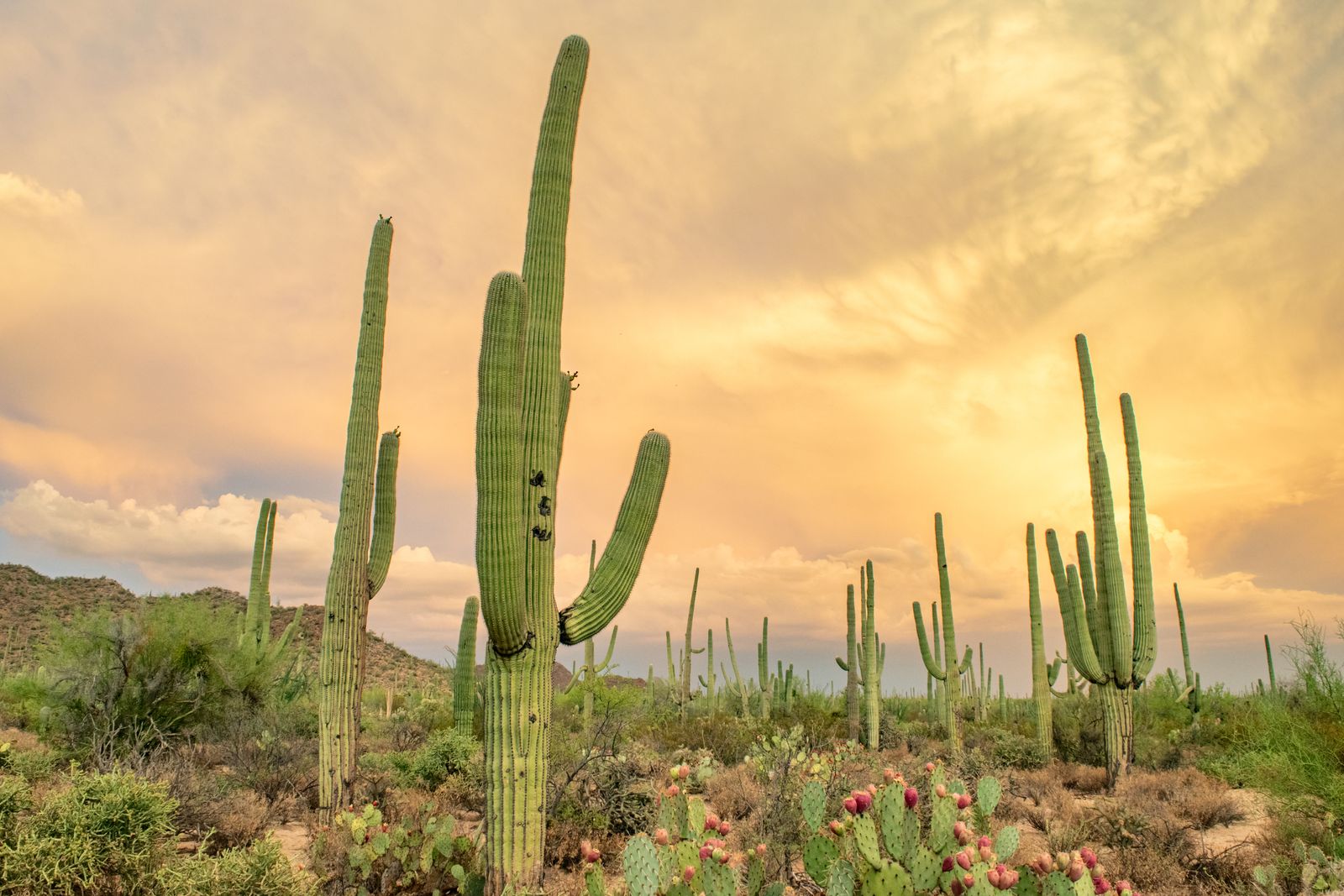
Things to Do Near Desert Botanical Garden
The garden sits inside Papago Park, so you can easily make a half-day or full day of it.
- Hole-in-the-Rock: a short, easy scramble up to a natural opening in the red rock with a view over Phoenix. A favorite sunset spot, just a few minutes away.
- Phoenix Zoo: right next door, good for a full family day.
- Papago Park trails: free, easy loops around the buttes, best early in the morning.
- Tempe Town Lake and Old Town Scottsdale: both about 10 to 15 minutes away for food and an evening stroll.
A Short History of the Garden
The garden started in the 1930s with a simple sign. Swedish botanist Gustaf Starck worried that Phoenix’s growth would destroy the desert, so he put up a “Save the Desert” sign pointing to his house to find people who agreed. One of them was Gertrude Divine Webster, a wealthy local who became the garden’s biggest early supporter. The first collection cactus went into the ground in 1939, and you can still see it in the Heritage Garden today.
Today, it’s a living museum and a research center that works to protect rare and endangered desert plants from around the world, not just a pretty place to walk.
Where to Stay Nearby
- Tempe: the closest area, with many hotels near the airport and Tempe Town Lake. Good value and easy access.
- Old Town Scottsdale: resorts, restaurants and nightlife about 15 minutes away. Best for a couples’ trip.
- Near Sky Harbor Airport: handy for a short stopover or early flight.
- Downtown Phoenix: best if you also want museums, sports and city restaurants.
Desert Botanical Garden FAQs
Where is the Desert Botanical Garden in Phoenix, Arizona?
It’s at 1201 N. Galvin Parkway, Phoenix, AZ 85008, inside Papago Park, about 10 to 15 minutes from Sky Harbor Airport.
How much are tickets to Desert Botanical Garden?
In 2026, adult tickets start at $32.95 and children 2–17 start at $14.95. Kids under 2 and members are free. Special events cost extra.
Is there a free day at Desert Botanical Garden?
Community Day, on the second Tuesday of each month, is pay what you can. Active military get free general admission with ID.
What are the hours?
From October through December 2026, it’s open daily from 7 a.m. to 10 p.m., except Thanksgiving and Christmas Day. Hours change by season.
How long does it take to walk Desert Botanical Garden?
Most visitors spend 1.5 to 2 hours. All five trails total about 1.3 miles, so 3 hours is enough to see everything slowly.
Is parking free?
Yes. Parking is free on site, with overflow parking during busy events and EV charging stations.
Can you bring food or water?
Bring water, but picnic food isn’t allowed. You can eat at Gertrude’s restaurant or Garden Grab & Go inside.
Are dogs allowed at Desert Botanical Garden?
Only service animals, except on special “Dogs in the Garden” days when leashed dogs are welcome.
Is Desert Botanical Garden wheelchair accessible?
Yes. The garden is wheelchair accessible, most trails work with strollers, and mobility scooters can be rented at admissions.
When is the best time to visit?
October to April. Late March and April bring wildflowers and cactus blooms, and December has Las Noches de las Luminarias.
Final Thoughts
Desert Botanical Garden is the easiest way to fall for the Sonoran Desert. In a couple of hours, on easy paths, you’ll see more desert plants than most people see in a lifetime of driving through Arizona.
Go early or late, bring water and a hat, walk the Desert Discovery Trail first and save the hilltop lookout for sunset. And if you’re in town in December, get Luminarias tickets as soon as you can.