
Zion has a way of making your plans feel small.
You show up with a list of hikes saved on your phone. Then you step off the shuttle, look up at 2,000-foot walls of red and cream sandstone, and rushing from trail to trail suddenly doesn’t seem that important. That’s the first thing to know about the things to do in Zion National Park: don’t turn it into a checklist.
Yes, wade up The Narrows if the river is safe. Try for an Angels Landing permit if heights don’t scare you. Walk to Emerald Pools and ride the shuttle deep into the canyon. But leave time to just stand there and look around, too.
This guide covers the famous hikes and the quieter corners of the park, plus the questions that come up once you actually start planning: where Zion is, how the shuttle works, what the weather is really like, whether you need a permit, where to stay and which airport to fly into.
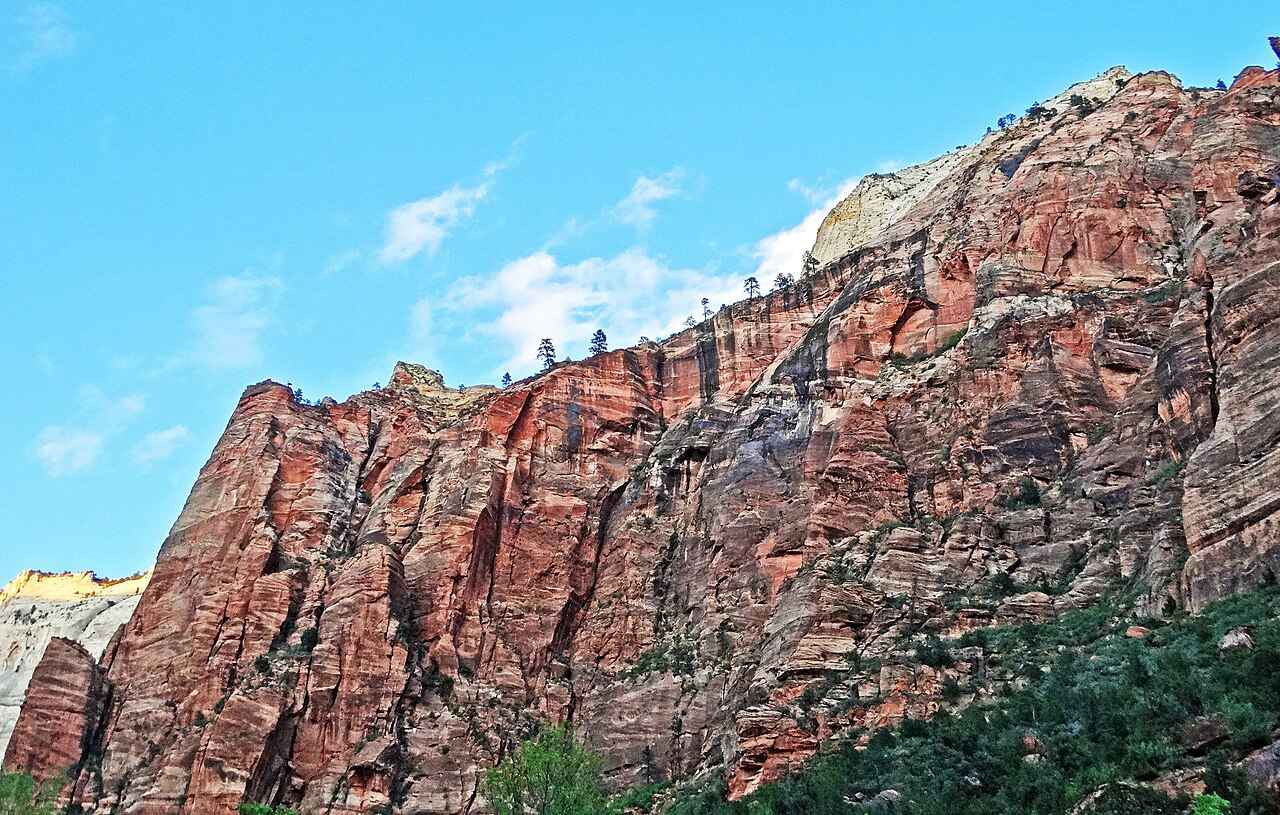
What Are the Best Things to Do in Zion National Park?
The best things to do in Zion National Park are hiking The Narrows, climbing Angels Landing (with a permit) or Scout Lookout, walking to Emerald Pools, taking the shuttle through Zion Canyon, walking the Riverside Walk, hiking Canyon Overlook, biking the Pa’rus Trail, exploring Kolob Canyons and stargazing after dark.
Zion Highlights at a Glance
| Experience | Best For | Difficulty | Time |
|---|---|---|---|
| Zion Canyon shuttle ride | First-time visitors | Easy | 2 to 4 hours with stops |
| The Narrows | Adventure, scenery | Varies with river | 1 to 8 hours |
| Riverside Walk | Families, easy scenery | Easy | About 1.5 hours |
| Angels Landing | Experienced hikers with a permit | Strenuous | 4 to 5 hours |
| Scout Lookout | Big views, no permit | Strenuous | About 3 hours |
| Emerald Pools | Most visitors | Easy to moderate | 1 to 3 hours |
| Canyon Overlook | Big view, short hike | Moderate | About 1 hour |
| Pa’rus Trail | Families, bikes, dogs | Easy | 1 to 2 hours |
| Watchman Trail | Views near the visitor center | Moderate | 1.5 to 2 hours |
| Kolob Canyons | Fewer crowds | Varies | Half to full day |
| Stargazing | Everyone | Easy | Evening |
In This Guide
- Where is Zion National Park?
- 15 best things to do in Zion
- Zion trails by difficulty
- Zion National Park weather by season
- Best time to visit
- How the Zion shuttle works
- Entrance fees and permits
- Zion hotels, lodge and camping
- Closest airport and Las Vegas to Zion
- 1, 2 and 3-day itineraries
- FAQs
Where Is Zion National Park?
Zion National Park is in southwestern Utah, right next to the small town of Springdale. It’s about 2.5 to 3 hours by car from Las Vegas, about an hour from St. George and roughly two hours from Bryce Canyon.
Springdale matters more than you’d think. It’s the main gateway to Zion Canyon, packed with hotels, restaurants and gear shops, and it has its own free shuttle that drops you at the park’s pedestrian entrance. If you stay there, you can often leave your car parked all day.
The park has three main areas. Zion Canyon is the famous one, reached from Springdale. The Zion-Mount Carmel Highway climbs through a long tunnel to the park’s east side. And Kolob Canyons, in the northwest corner, has its own entrance off Interstate 15.
15 Best Things to Do in Zion National Park
1. Ride the Shuttle Through Zion Canyon
Before you pick a big hike, get to know the canyon itself. The Zion Canyon Scenic Drive runs about eight miles up the canyon floor, beneath the cliffs that make this park famous, and ends at the Temple of Sinawava.
For most of the year you can’t drive it yourself. When the shuttle is running (it started March 7 in 2026 and runs into late November), private cars aren’t allowed on the scenic drive. Instead, free shuttles stop at nine spots along the canyon, and a full ride from the visitor center to the end takes about 45 minutes.
Don’t think of this as a hassle. Once you get used to it, it’s actually easier. Hop off at a trailhead, hike, hop back on and keep going, with no hunting for parking.
Tip: The visitor center parking lot fills early all year, and by around 9 a.m. in summer. If it’s full, park in Springdale and ride the town shuttle to the pedestrian entrance.
2. Hike The Narrows
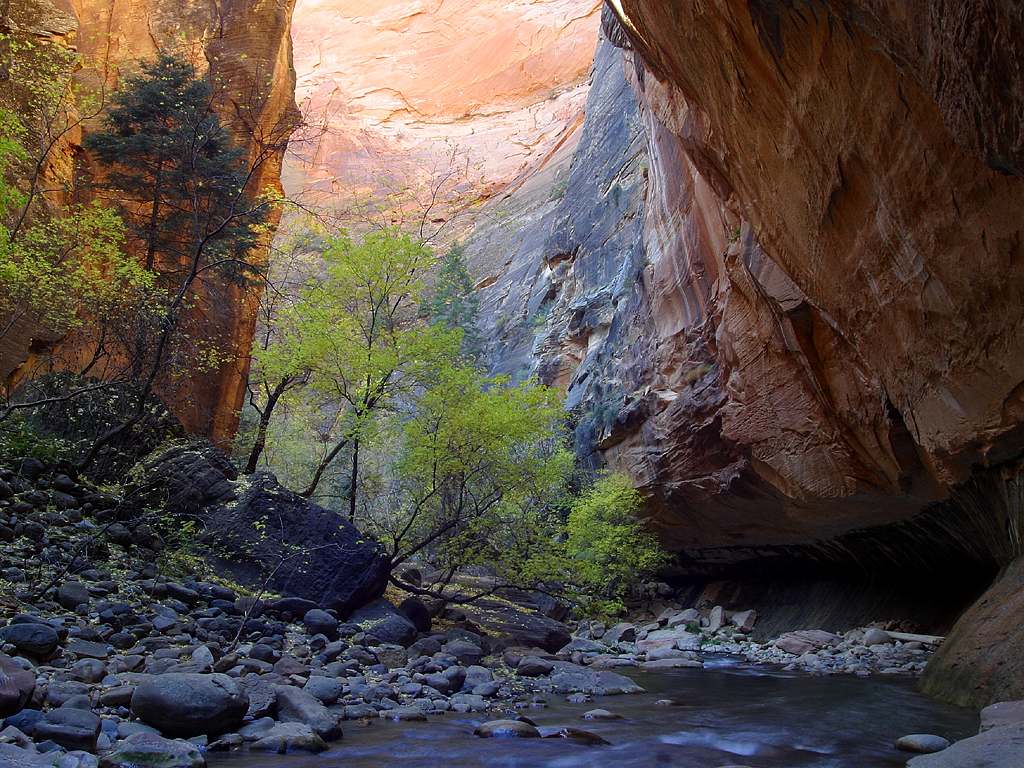
Few hikes in the world are like The Narrows. There’s no normal trail for most of it. The Virgin River is the trail. You walk, and sometimes wade, upstream between canyon walls that rise hundreds of feet and get closer together the farther you go.
You start at the Temple of Sinawava, the last shuttle stop, and follow the paved Riverside Walk for about a mile until the path ends at the water. From there, you just head upstream as far as you like and turn around when you’re ready. You don’t need a permit for this out-and-back hike from the bottom, up to Big Spring. Hiking the full 16 miles from the top down is a different trip and needs a wilderness permit.
Is The Narrows Safe?
The Narrows can be safe on a good day and deadly on a bad one. Before you go, check three things: the weather forecast, the river’s flow, and the flash flood potential posted by the park. The park closes The Narrows when the river flows at 150 cubic feet per second or more, which often happens during spring snowmelt.
From July through September, monsoon storms can build fast in the afternoon. A storm miles upstream can send a flash flood down the canyon even if the sky above you is blue. If the flood risk is “probable” or higher, pick a different hike.
What to wear: Sturdy closed-toe shoes that can get wet, and a walking stick for balance on slippery, round rocks. Shops in Springdale rent canyoneering shoes, neoprene socks, sticks and, in cold months, dry suits. Walking through moving water is much slower and more tiring than hiking the same distance on land, so plan for less distance than you think.
3. Take the Riverside Walk (Even If You Skip The Narrows)
Distance: about 2.2 miles round trip · Difficulty: easy, paved
Not keen on walking through a river? You can still see this part of Zion. The Riverside Walk follows the Virgin River from the Temple of Sinawava to the spot where The Narrows begins. The canyon walls close in, water seeps from hanging gardens of ferns on the rock, and you might spot mule deer along the bank.
For families, older travelers or anyone short on time, this is often a better choice than forcing The Narrows just because it’s famous. The most famous hike isn’t always the best hike for you.
4. Hike Angels Landing, If It’s Right for You
Distance: about 5.4 miles round trip · Elevation gain: about 1,500 feet · Permit: required
Angels Landing is the hike most people picture when they think of Zion. The trail climbs from the Grotto shuttle stop up a set of switchbacks, then through a tight zigzag called Walter’s Wiggles to Scout Lookout. The last half mile follows a narrow rock spine to the summit, with chains bolted into the rock to hold on to and big drop-offs on both sides.
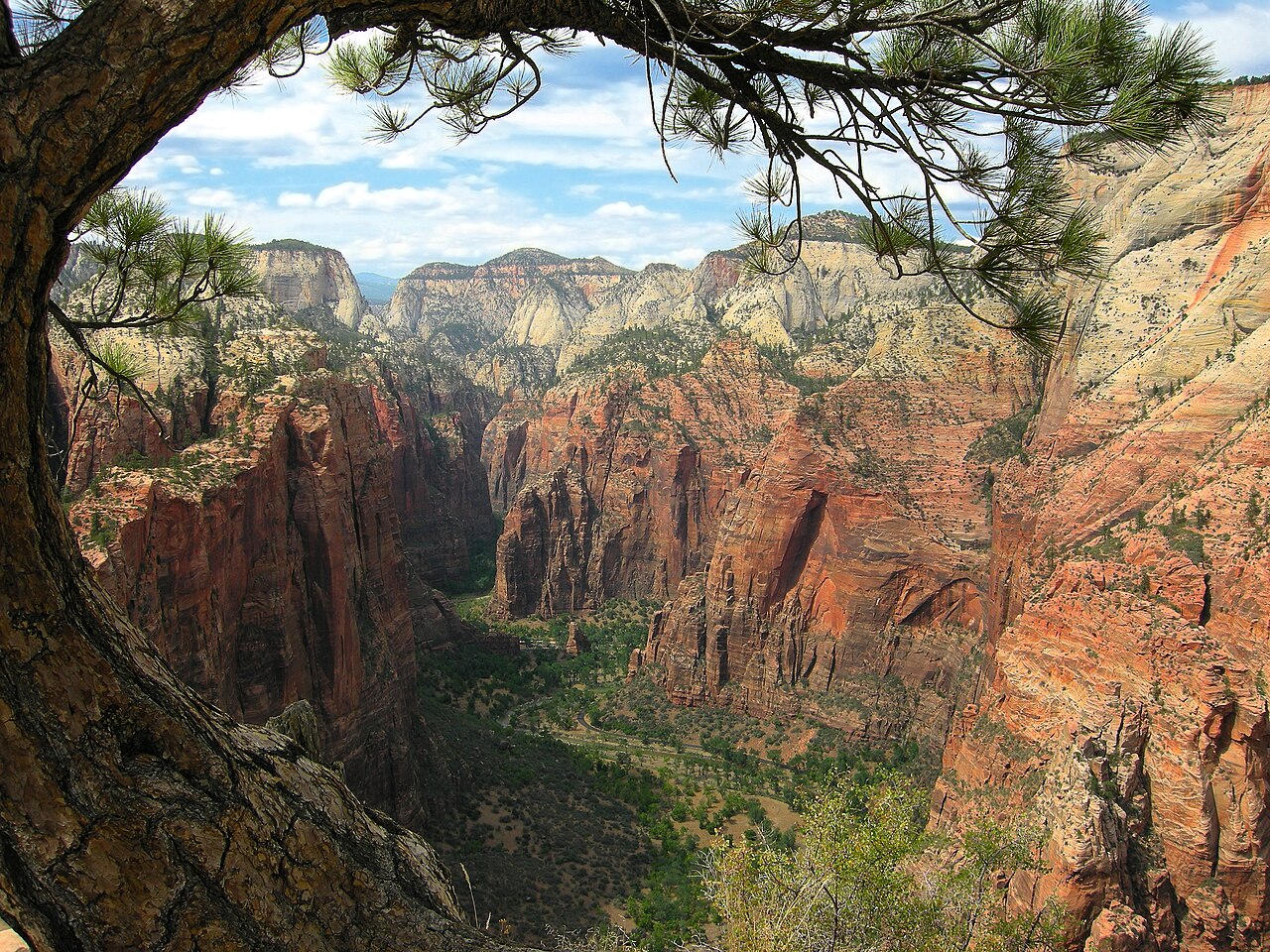
It’s thrilling, but it’s not for everyone. If you’re uneasy with heights, stopping at Scout Lookout isn’t a failure. It’s a smart call.
How to Get an Angels Landing Permit
Everyone hiking the chains section of Angels Landing needs a permit, every day of the year. You apply online through Recreation.gov in one of two lotteries:
- Seasonal lottery: Opens a few months ahead. In 2026, the fall lottery ran in July, and the winter lottery (for hikes from December 1 to February 28) runs October 1 to 20.
- Day-before lottery: Apply between 12:01 a.m. and 3 p.m. Mountain Time the day before you want to hike. Results come out that afternoon.
There’s a small application fee plus a per-person fee if you win. Rangers check permits on the trail, so save a copy on your phone. And a permit doesn’t make bad weather safe. Don’t climb the chains in rain, ice or thunderstorms.
5. Hike to Scout Lookout (No Permit Needed)
Didn’t win the lottery? You can still do most of the Angels Landing hike. The trail up to Scout Lookout, about 4 miles round trip, doesn’t need a permit. It’s still a steep, tough climb, and the views down into Zion Canyon from the top are huge. Strong hikers can also keep going past Scout Lookout on the West Rim Trail for quieter views.
6. Walk to Emerald Pools
The Emerald Pools trails are a good middle ground when you want more than a stroll but not a huge climb. There are three pools, each a bit higher than the last. The Lower Pool is the easiest, a little over a mile round trip from Zion Lodge, where a thin waterfall spills off an overhang. The Middle and Upper Pools take more climbing on rockier trail. The Upper Pool sits at the base of a tall cliff and is often the prettiest.
Don’t expect tropical swimming holes. The pools are small, often more green than emerald, and swimming isn’t allowed. Think sandstone, trickling water and shade, which is plenty on a hot afternoon. You can also start from the Grotto shuttle stop on the Kayenta Trail.
7. Hike Canyon Overlook
Distance: about 1 mile round trip · Elevation gain: about 150 feet · Time: about 1 hour
Canyon Overlook proves you don’t need a five-hour hike for a great Zion view. The trail starts just east of the Zion-Mount Carmel Tunnel, hugs the cliff on ledges and walkways, and ends at a viewpoint looking straight down lower Zion Canyon. For such a short walk, the payoff is huge.
There are drop-offs and a few uneven steps, so keep kids close. The small parking area fills fast, so come early and never park where it isn’t allowed. October 2026 update: the trailhead is on the Zion-Mount Carmel Highway, which has been closed since a large rockfall on September 30, 2026, with no reopening date yet. Check the park’s alerts before planning this hike.
8. Drive the Zion-Mount Carmel Highway
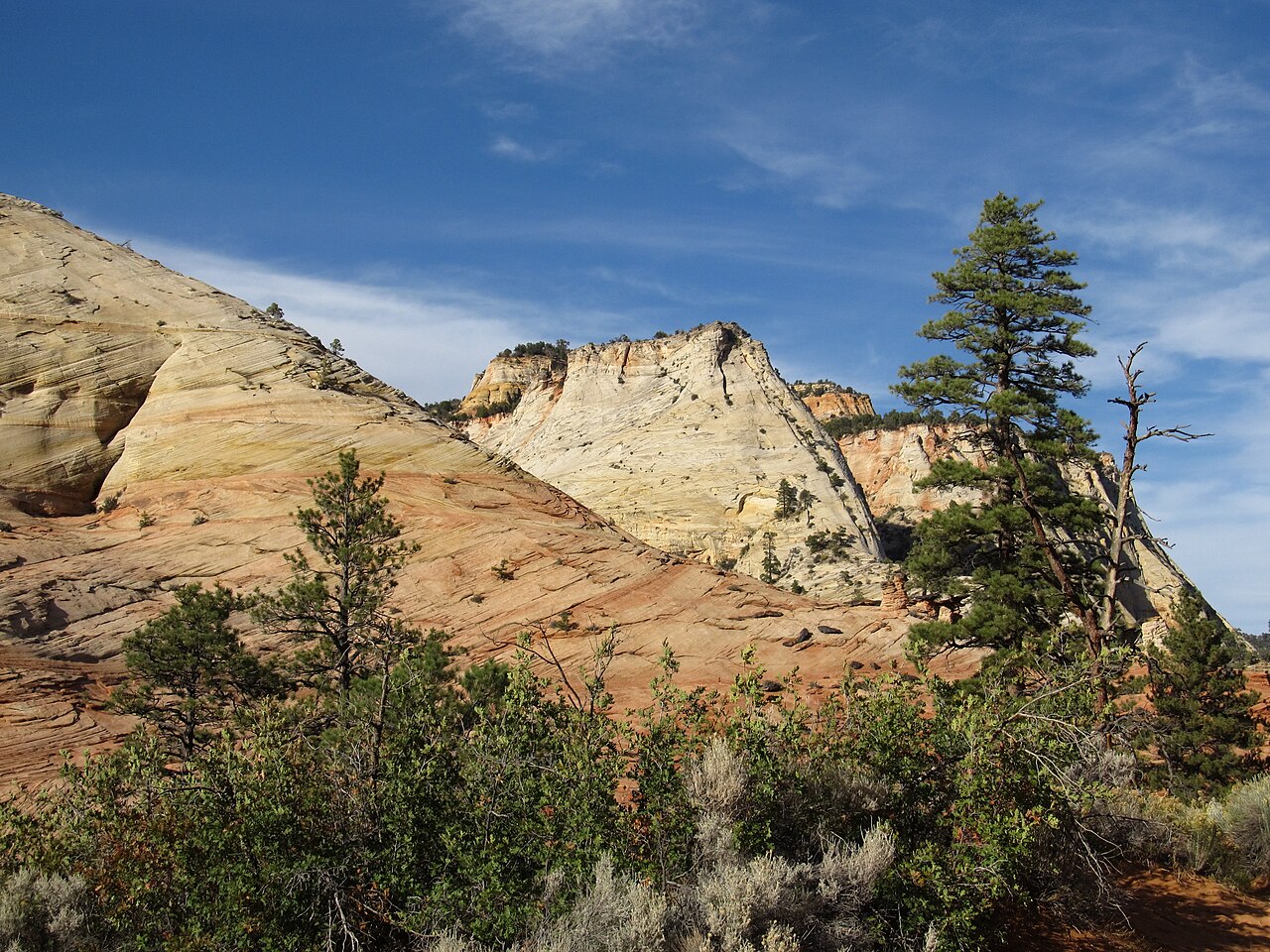
Even during shuttle season, you can normally drive your own car on the Zion-Mount Carmel Highway, and it’s one of the best drives in Utah. (October 2026: the road is currently closed between Canyon Junction and the East Entrance after a September 30 rockfall, with no reopening date. See our Zion to Bryce Canyon guide for the detour.) The road climbs a series of switchbacks and then enters a 1.1-mile tunnel built in the 1920s, with a few window openings cut into the cliff. On the other side, the east part of the park looks completely different: swirling slickrock, checkerboard patterns on the stone, and the occasional herd of bighorn sheep.
RV and trailer drivers: Since June 7, 2026, the old tunnel permit is gone. Vehicles longer than 35 feet 9 inches, wider than 7 feet 10 inches, taller than 11 feet 4 inches or heavier than 50,000 pounds (or truck-and-trailer combinations over 50 feet) are no longer allowed on this highway at all and must take an alternate route. See our Zion to Bryce Canyon road trip guide for the details and the best route.
9. Walk or Bike the Pa’rus Trail
After chains, river crossings and steep climbs, a flat paved path sounds pretty good. The Pa’rus Trail runs about 1.75 miles each way from the visitor center along the Virgin River, with open views of the Watchman and the Towers of the Virgin.
It’s also the only trail in Zion where bikes and leashed dogs are allowed. It’s great for families, for a recovery day after a big hike, and especially around sunset, when the light turns the cliffs orange. Bike rentals are easy to find in Springdale.
10. Hike the Watchman Trail
Distance: about 3 miles round trip · Elevation gain: about 630 feet
The Watchman Trail doesn’t get the attention of Angels Landing or The Narrows, and that’s part of its charm. It starts right by the visitor center, so there’s no shuttle ride, and climbs to a bench with wide views of the lower canyon, the Watchman peak and Springdale. It’s a good first-afternoon hike, and it’s usually much quieter than the trails up canyon. October 2026 update: the Watchman Trail is currently closed pending repairs. Try the Pa’rus Trail or Emerald Pools instead, and see our guide to the best hikes in Zion National Park for every open trail.
11. Explore Kolob Canyons
A lot of people see Zion Canyon and think they’ve seen Zion. They haven’t. Kolob Canyons, in the park’s northwest corner, has deep red “finger canyons,” quiet trails and a fraction of the crowds. It has its own entrance off Interstate 15 (exit 40), about 45 minutes from Springdale.
The five-mile Kolob Canyons Road climbs to a viewpoint at the end. For a short walk, try the Timber Creek Overlook Trail, about a mile round trip. For a longer hike, Taylor Creek is about five miles round trip, passing old homestead cabins on the way to Double Arch Alcove, a huge curved alcove in the cliff. Kolob is perfect if you have more than one day or you’re driving in from the north.
12. Look Up After Dark
Zion doesn’t stop being impressive when the sun goes down. It’s a certified International Dark Sky Park, and on a clear, moonless night the Milky Way stretches right between the canyon walls. Plus, the crowds are gone.
You don’t need special gear. A camp chair, a warm layer and 20 minutes to let your eyes adjust are enough. The Pa’rus Trail and the Canyon Junction bridge are easy spots near the visitor center. If you want night photos, scout your spot in daylight so you’re not stumbling around unfamiliar ground later.
13. Join a Ranger Program
Ranger programs are easy to overlook when everyone’s talking about hikes. Don’t skip them. Rangers explain how the canyon formed, what lives here and who lived here long before it was a park. Kids can also pick up a Junior Ranger booklet at the visitor center, and they often remember a good ranger talk more than another mile on the trail.
14. Try Canyoneering or Climbing With a Guide
Zion is one of the best places in the country for canyoneering, which means rappelling, scrambling and wading through slot canyons. It’s also famous for big-wall rock climbing. If you don’t have the skills or gear, book a guided trip with an outfitter in Springdale. Many guided canyoneering trips take place on public land just outside the park, and most don’t need any experience. Technical canyons inside the park require a wilderness permit.
15. Take Great Zion Photos Without Chasing Every Famous Spot
You don’t have to stand on Angels Landing to come home with great Zion National Park photos. Some of the best shots are easy to reach:
- The Watchman from the Canyon Junction bridge at sunset
- Court of the Patriarchs from its shuttle stop
- The Virgin River along the Pa’rus Trail and Riverside Walk
- The view from Canyon Overlook
- Checkerboard Mesa on the east side
- The finger canyons at Kolob
Early morning and late afternoon give the sandstone much more color and texture than harsh midday light. And never walk backward toward a cliff edge while framing a shot. It sounds obvious until you watch people doing it.
Zion National Park Trails by Difficulty
Choose a trail because it fits your fitness, time and comfort level, not because it has the most photos online. For full details on each trail, permits and current closures, see our guide to the best hikes in Zion National Park.
| Trail | Round Trip | Difficulty | Good to Know |
|---|---|---|---|
| Pa’rus Trail | 3.5 miles | Easy | Paved, bikes and dogs allowed |
| Riverside Walk | 2.2 miles | Easy | Paved, leads to The Narrows |
| Lower Emerald Pool | About 1.2 miles | Easy | Starts at Zion Lodge |
| Timber Creek Overlook | About 1 mile | Easy | Kolob Canyons |
| Canyon Overlook | 1 mile | Moderate | Drop-offs, small parking lot |
| Watchman Trail | About 3 miles | Moderate | Starts at the visitor center |
| Taylor Creek | About 5 miles | Moderate | Kolob, Double Arch Alcove |
| Scout Lookout | About 4 miles | Strenuous | No permit needed |
| Angels Landing | 5.4 miles | Strenuous | Permit required, exposed chains |
| The Narrows (bottom-up) | Up to about 10 miles | Strenuous | River hiking, flash flood risk |
Conditions can change difficulty a lot. A comfortable trail on a dry day can be a very different story after rain, snow or ice.
Zion National Park Weather: What You Really Need to Know
Zion National Park weather isn’t just about what to pack. Here, it decides what you can safely do. Heat affects exposed hikes, snowmelt can close The Narrows, thunderstorms cause flash floods and rain makes Angels Landing dangerous. Check the forecast every morning, not just once before you leave home.
| Season | What It’s Like | Watch Out For |
|---|---|---|
| Spring (Mar–May) | Warming days, wildflowers, green cottonwoods | Big day-night temperature swings, high river, Narrows closures, spring-break crowds |
| Summer (Jun–Aug) | Long days, often above 100°F in the canyon | Heat illness, crowds, monsoon storms and flash floods from July |
| Fall (Sep–Nov) | Cooler hiking weather, fall color in late Oct to early Nov | Flash floods into September, 30°F day-night swings |
| Winter (Dec–Feb) | Quiet, cool days, snow on red rock | Icy trails, cold Narrows water, higher roads may close |
Zion Weather in Spring
March and April bring longer days, wildflowers and new green leaves on the cottonwoods. But spring isn’t just a mild version of summer. Temperatures can swing 30°F or more between day and night, higher areas can still hold snow, and snowmelt often keeps The Narrows closed. March also gets busy with spring break, so don’t expect an empty park. Pack layers, sun protection and a rain shell.
Zion Weather in Summer
Summer is hot. Really hot. Temperatures in the canyon regularly go above 100°F (38°C). Do big hikes at first light, carry more water than you think you’ll need, use the refill stations, and rest in the shade in the middle of the day. From July through September, monsoon thunderstorms can form quickly in the afternoon, bringing lightning and flash floods. For The Narrows and any slot canyon, a clear sky above you doesn’t mean the area upstream is safe.
Zion Weather in Fall
Fall is many people’s favorite time in Zion. Days cool down, the river is often lower, and fall color works its way down from the high country, usually reaching the canyon floor around late October and early November. Nights still get cold, so bring layers.
Zion Weather in Winter
Winter is Zion at a slower pace. Crowds drop, and a dusting of snow on red cliffs is unforgettable. The trade-off is cold mornings, icy trails in shady spots and very cold water in The Narrows (you’ll want a dry suit). Outside the holiday period, you can usually drive the scenic drive in your own car. Check road and trail conditions every morning.
Best Time to Visit Zion National Park
The best time to visit Zion National Park for most hikers is fall, from mid-September to early November, followed by late spring. Temperatures are comfortable and most trails are open. Summer has the longest days but brings extreme heat, big crowds and flash flood risk. Winter is the quietest season but can bring ice and snow.
If The Narrows is the main reason for your trip, don’t choose dates by temperature alone. Early spring often means high water and closures, while late spring, summer mornings and early fall usually give the best chances, as long as there’s no storm in the forecast. For month-by-month temperatures, crowds and shuttle dates, see our full guide to the best time to visit Zion National Park.
How the Zion Shuttle Works
- It’s free and needs no reservation, but you still pay the park entrance fee.
- Two lines: the Zion Canyon Line runs inside the park, and the Springdale Line links town hotels with the pedestrian entrance.
- Nine stops in the canyon, including Zion Lodge, the Grotto (Angels Landing) and the Temple of Sinawava (The Narrows).
- Season: 2026 service started March 7 and runs into late November, with a holiday run in late December.
- Don’t miss the last bus. Check the last departure time from the Temple of Sinawava, or you’ll face a long walk back.
Zion Entrance Fees and Permits
In 2026, Zion’s entrance fee is $35 per private vehicle, good for seven days. People entering on foot or by bike pay $20 each. The America the Beautiful annual pass covers entry to Zion and every other national park, which is worth it if you’re also visiting Bryce Canyon or other Utah parks.
International visitors: since January 1, 2026, non-U.S. residents aged 16 and older pay an extra $100 per person at Zion on top of the regular fee, unless they have the $250 nonresident annual pass. Bryce Canyon charges the same fee, so if you’re visiting both, the pass usually pays for itself.
You don’t need a reservation to enter Zion. You only need permits for Angels Landing, overnight backpacking, top-down Narrows trips and technical canyons.
Where to Stay: Zion National Park Hotels, Lodge and Camping
Zion National Park Lodge
Zion Lodge is the only hotel inside the park, set right in the middle of Zion Canyon near the Emerald Pools trailhead. Its biggest perk isn’t the room. It’s waking up surrounded by cliffs, with the shuttle stop right outside. Rooms and cabins book up months ahead, so reserve early if it matters to you.
Hotels Near Zion National Park
Springdale is the best place to stay near Zion for most visitors. You’re steps from the entrance, you can walk to dinner, and the free town shuttle means you can skip park parking entirely. When comparing hotels near Zion National Park, think about four things: distance to the entrance, parking, shuttle access and whether you can walk to restaurants after a long hike.
For lower prices, look at Rockville and Virgin just west of Springdale, Hurricane or St. George about 30 to 60 minutes away, or Mount Carmel Junction and Kanab on the east side if you’re heading to Bryce next. Cheaper rooms farther out can cost you in time and fuel, so do the math.
Camping in Zion
Zion has two main campgrounds near the south entrance, Watchman and South, both within walking distance of the visitor center. They fill quickly, so book as early as you can. There’s also a small primitive campground at Lava Point in the high country.
Getting to Zion: Closest Airport and Las Vegas to Zion
What Is the Closest Airport to Zion National Park?
St. George Regional Airport is the closest commercial airport to Zion, about an hour’s drive away. Most visitors, though, fly into Las Vegas, which has far more flights and cheaper rental cars. Salt Lake City (about 4.5 hours) works well if Zion is part of a bigger Utah trip.
| Airport | Drive to Zion | Best For |
|---|---|---|
| St. George (SGU) | About 1 hour | Shortest drive |
| Las Vegas (LAS) | About 2.5 to 3 hours | Most flights, cheaper rental cars |
| Salt Lake City (SLC) | About 4.5 hours | Longer Utah road trips |
Don’t pick an airport by distance alone. Compare the flight price, the rental car cost, the drive time and where you’re going after Zion. Sometimes a longer drive makes for an easier trip.
Las Vegas to Zion National Park
The drive from Las Vegas to Zion National Park is about 160 miles, mostly on Interstate 15, and takes 2.5 to 3 hours. One thing catches people out: Utah is always one hour ahead of Las Vegas, so you’ll lose an hour on the way there and gain it back on the way home.
If you’re flying in, don’t plan a big hike the same afternoon. Flight delays, baggage, rental car lines and the drive all add up. Give yourself some breathing room.
How Many Days Do You Need in Zion?
Two to three days is the sweet spot for a first visit to Zion. One day is enough to see why people love it. Two days lets you add a big hike. Three days gives you time for Kolob Canyons, the east side and a spare day in case the weather closes The Narrows or cancels your Angels Landing plans.
Zion National Park Itinerary: 1, 2 or 3 Days
One Day in Zion
Morning: Catch one of the first shuttles. Hike to Scout Lookout (or Angels Landing with a permit), or head to the Temple of Sinawava for the Riverside Walk and a few hours in The Narrows if it’s open.
Midday: Hop off at Zion Lodge for lunch, refill water and walk to the Lower Emerald Pool in the shade.
Evening: Ride back to the visitor center and walk the Pa’rus Trail as the Watchman lights up at sunset. Simple, memorable and not exhausting.
Two Days in Zion
Day 1: Zion Canyon. Pick one big hike: Angels Landing, Scout Lookout or The Narrows. Don’t try to do all three. Spend the rest of the day at a slower pace, then end with the Pa’rus or Watchman Trail.
Day 2: The east side or Kolob. Normally, hike Canyon Overlook early, drive the Zion-Mount Carmel Highway past Checkerboard Mesa, then come back for Emerald Pools or the Riverside Walk in the afternoon. While that highway is closed after the September 30, 2026 rockfall, head to Kolob Canyons for Taylor Creek instead. For hour-by-hour plans, see our full Zion National Park itinerary.
Three Days in Zion
Follow the two-day plan, then spend day three in Kolob Canyons, on a guided canyoneering trip, or on easy trails and photography. Better yet, keep day three flexible. If a storm wipes out your Narrows day, you still have time to try again.
Zion and Bryce Canyon in Four Days
Zion and Bryce Canyon are about two hours apart, and they’re different enough that visiting both never feels repetitive. In Zion you look up at canyon walls. At Bryce you look down on thousands of hoodoos from 8,000 feet. A good plan is two days in Zion, a morning drive through the tunnel on day three, and a full day at Bryce on day four. Pack warmer clothes, since Bryce can be 20 degrees cooler. For the route and the best stops on the way, see our Zion to Bryce Canyon road trip guide. For ideas once you arrive, see our guide to the best things to do in Bryce Canyon National Park.
Things to Do in Zion With Kids
You don’t need Angels Landing to show kids Zion. Great family picks are the Riverside Walk, the Pa’rus Trail (on bikes if they’re old enough), the Lower Emerald Pool, the Junior Ranger program, ranger talks, splashing at the start of The Narrows on a safe day, and a night of stargazing.
Choose hikes based on your own kids, not someone else’s travel blog. A trail that’s easy for an active 12-year-old can be miserable for a four-year-old. And bring more snacks and water than seems reasonable. You’ll use them.
Things to Do in Zion Without Hiking
Zion is famous for hiking, but you don’t have to hike to enjoy it. Ride the shuttle and hop off at viewpoints like Court of the Patriarchs, drive the Zion-Mount Carmel Highway, visit Kolob Canyons by car, bike the Pa’rus Trail, join a ranger program, watch for wildlife, take photos, stargaze and explore Springdale. Not everyone in your group needs to finish the same trail to have a great trip.
Zion National Park Map and Current Conditions
Download a Zion National Park map before you arrive. It helps you see that Zion isn’t one small canyon with ten trails side by side. It shows the visitor center, the shuttle stops, the Grotto, the Temple of Sinawava, Zion Lodge, the tunnel, Kolob Canyons, the campgrounds and the major trailheads. The free NPS app lets you save the park’s maps and info for offline use, which is handy because cell service is patchy in the canyon.
It’s also worth checking the latest Zion National Park news and current conditions right before your trip. Trail closures, rockfalls, flooding, fire restrictions, shuttle schedule changes and road work all happen here. A guide like this one can help you plan. It can’t tell you whether a trail is safe on the morning you arrive.
What to Pack for Zion National Park
A good Zion day kit includes a large refillable water bottle or hydration pack, sun protection (hat, sunglasses, sunscreen), comfortable broken-in hiking shoes with good grip, layers, salty snacks, an offline map, a small first aid kit, a rain shell, a power bank and any permits you need. For The Narrows, add water shoes and a walking stick, and a dry suit in cold months. In winter, pack microspikes for icy trails.
Related Guides
Planning more of this trip? These guides pick up where this one leaves off:
- Closest Airport to Zion National Park
- Things to Do in Great Smoky Mountains National Park
- Las Vegas to Zion National Park
- Zion National Park Map
- Emerald Pool Zion National Park
Zion National Park: FAQs
What are the best things to do in Zion National Park?
The top experiences are The Narrows, Angels Landing or Scout Lookout, Emerald Pools, the Riverside Walk, Canyon Overlook, the Pa’rus and Watchman trails, the Zion-Mount Carmel Highway, Kolob Canyons and stargazing.
Where is Zion National Park?
In southwestern Utah, next to the town of Springdale. It’s about 2.5 to 3 hours from Las Vegas and about 2 hours from Bryce Canyon.
Do you need a permit for Angels Landing?
Yes. Everyone hiking the chains section needs a permit from a seasonal or day-before lottery on Recreation.gov. You don’t need a permit to hike to Scout Lookout.
Do you need a permit for The Narrows?
Not for the popular bottom-up day hike from the Temple of Sinawava. You do need a wilderness permit for the full top-down route.
Is The Narrows dangerous?
It can be. Flash floods, cold water and slippery rocks are real hazards. Always check the weather, river flow and flash flood potential before you go, and turn back if conditions change.
What is the weather like in Zion National Park?
Summers often top 100°F, spring has big temperature swings and high river levels, July to September brings flash flood risk, fall is mild and winter can bring snow and icy trails.
What is the closest airport to Zion National Park?
St. George Regional Airport, about an hour away. Las Vegas is farther but usually has more flights and cheaper rental cars.
Can you drive through Zion National Park?
You can always drive the Zion-Mount Carmel Highway and the Kolob Canyons Road. The Zion Canyon Scenic Drive is closed to private cars when the shuttle runs, roughly March to late November.
Where should I stay near Zion National Park?
Springdale is the most convenient base, with hotels, restaurants and a free shuttle to the park. Zion Lodge is the only hotel inside the park.
Is Zion National Park open year-round?
Yes, 24 hours a day, every day of the year. Some roads, trails, services and the shuttle have seasonal schedules or temporary closures.
A Better Way to Visit Zion
Zion rewards preparation, but it doesn’t reward overplanning. Know which hike matters most to you. Understand the permits. Check the weather every morning, learn how the shuttle works and download your map before you lose signal. And have a backup plan.
You might arrive dreaming of The Narrows and find the river too high. You might miss out on an Angels Landing permit. A storm might change your afternoon. None of that ruins Zion. Walk the Riverside Walk instead. Hike to Scout Lookout. Drive to Kolob. Watch the sunset from the Pa’rus Trail and stay out for the stars. The cliffs don’t get any less impressive because your plans changed.
That’s really the best way to approach all the things to do in Zion National Park: come prepared, pick what fits the conditions and your group, and leave room for the canyon to surprise you.
Building a bigger Utah road trip? Read our guides to things to do in Bryce Canyon National Park and the best places to visit near Hanksville, Utah, or browse all of our travel guides.