
Grand Teton National Park can give you a warm, sunny afternoon and a freezing night on the same trip. That’s normal here.
The park sits high in the mountains of northwestern Wyoming, and the weather changes fast. Summer afternoons reach around 80°F in the valley, while winter nights regularly drop below zero. Snow can hang on high in the mountains long after the valley looks like summer. Plenty of people step out of the car at Jenny Lake in shorts on a July morning and head straight back for a jacket. That’s why it pays to understand Grand Teton National Park weather by month before you pack.
This guide walks through January to December: average temperatures, rain and snow, daylight, trail and road conditions, what to wear, and what the weather actually means for your plans. The figures come from long-term National Park Service records at Moose, Wyoming, near the park headquarters at about 6,470 feet. They’re climate averages, not forecasts, so always check the current weather before you go.
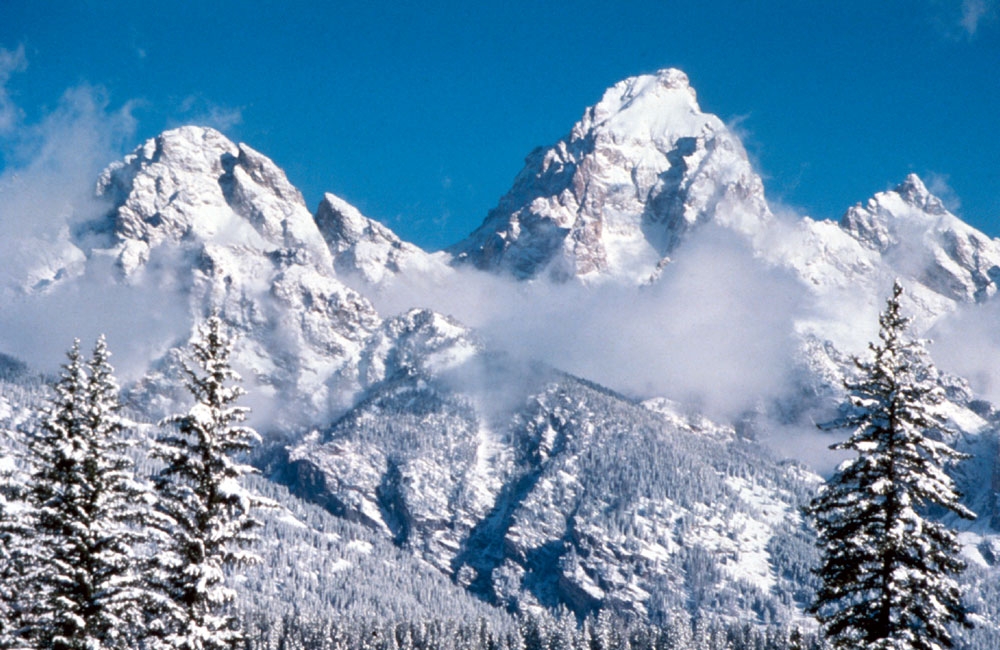
What Is the Weather Like in Grand Teton National Park?
Grand Teton National Park has long, snowy winters, a short and unpredictable spring, warm summer days with cool nights, and a brief fall with rapidly dropping temperatures. July is the warmest month, with an average high of about 81°F at Moose. January is the coldest, averaging a high of 26°F and a low near 1°F. Snow is possible in any month.
The air is dry and thin at this altitude, which explains a lot. Temperatures swing 35 to 40 degrees between afternoon and dawn, the sun feels stronger than you’d expect, and the mountains make their own weather. The Park Service notes that temperatures generally drop about 4°F for every 1,000 feet you climb. So the reading in Jackson or Moose tells you very little about conditions a few thousand feet up a trail.
Grand Teton National Park Weather by Month at a Glance
| Month | Avg. High | Avg. Low | Precipitation | Avg. Snowfall |
|---|---|---|---|---|
| January | 26.1°F | 0.9°F | 2.62 in | 43.1 in |
| February | 31.0°F | 3.2°F | 1.89 in | 28.7 in |
| March | 39.4°F | 12.1°F | 1.61 in | 20.3 in |
| April | 49.3°F | 22.3°F | 1.52 in | 9.5 in |
| May | 60.9°F | 30.8°F | 1.95 in | 2.4 in |
| June | 70.7°F | 37.3°F | 1.74 in | 0.1 in |
| July | 80.6°F | 41.6°F | 1.15 in | 0 |
| August | 79.2°F | 39.7°F | 1.33 in | 0 |
| September | 69.3°F | 32.1°F | 1.40 in | 0.4 in |
| October | 55.7°F | 23.2°F | 1.44 in | 4.7 in |
| November | 38.3°F | 13.6°F | 2.14 in | 23.4 in |
| December | 26.5°F | 1.8°F | 2.55 in | 39.5 in |
Keep in mind these are valley numbers. High in the Teton Range it can be dramatically colder and snowier. You could be perfectly comfortable beside Jenny Lake while a trail a few miles away is still buried in snow.
In This Guide
- Month-by-month weather (January to December)
- Weather by season
- Daylight hours by month
- Valley weather vs mountain weather
- When it snows and when it melts
- Thunderstorms, smoke and other hazards
- What to wear by season
- How to check the forecast
- FAQs
Grand Teton Weather Month by Month
Grand Teton Weather in January
Average high: 26.1°F · Average low: 0.9°F · Snowfall: 43.1 in · Precipitation: 2.62 in
January is proper winter, and statistically the snowiest month. Snow covers the valley and the peaks, temperatures stay below freezing for long stretches and nights often fall below zero. On clear, still nights, cold air sinks and pools on the valley floor, so it can actually be colder at Moose than partway up the mountains. That’s called an inversion, and it’s common here in midwinter.
This is nothing like the summer park of full parking lots and busy trails. It’s quiet. Really quiet. Cross-country skiing and snowshoeing replace hiking, and the snow-covered range makes January a favorite for winter photographers. Just don’t let a blue sky fool you. A sunny day at 10°F still feels like 10°F.
What to pack: insulated waterproof boots, thermal base layers, a warm mid-layer, a down or synthetic parka, a windproof shell, mittens or heavy gloves, a warm hat and a neck gaiter. Teton Park Road is closed to cars in winter, many facilities are shut, and snowstorms can make driving tricky, so allow extra time.
Grand Teton Weather in February
Average high: 31.0°F · Average low: 3.2°F · Snowfall: 28.7 in · Precipitation: 1.89 in
February is still firmly winter. The days are slowly getting longer, but don’t mistake more daylight for spring. Snow keeps piling up, and the average snow depth at Moose peaks this month at around 33 inches, slightly deeper than January. Plan a February trip around snowshoeing, cross-country skiing, winter wildlife and big white landscapes, and bring the same serious cold-weather gear you’d bring in January.
Grand Teton Weather in March
Average high: 39.4°F · Average low: 12.1°F · Snowfall: 20.3 in · Precipitation: 1.61 in
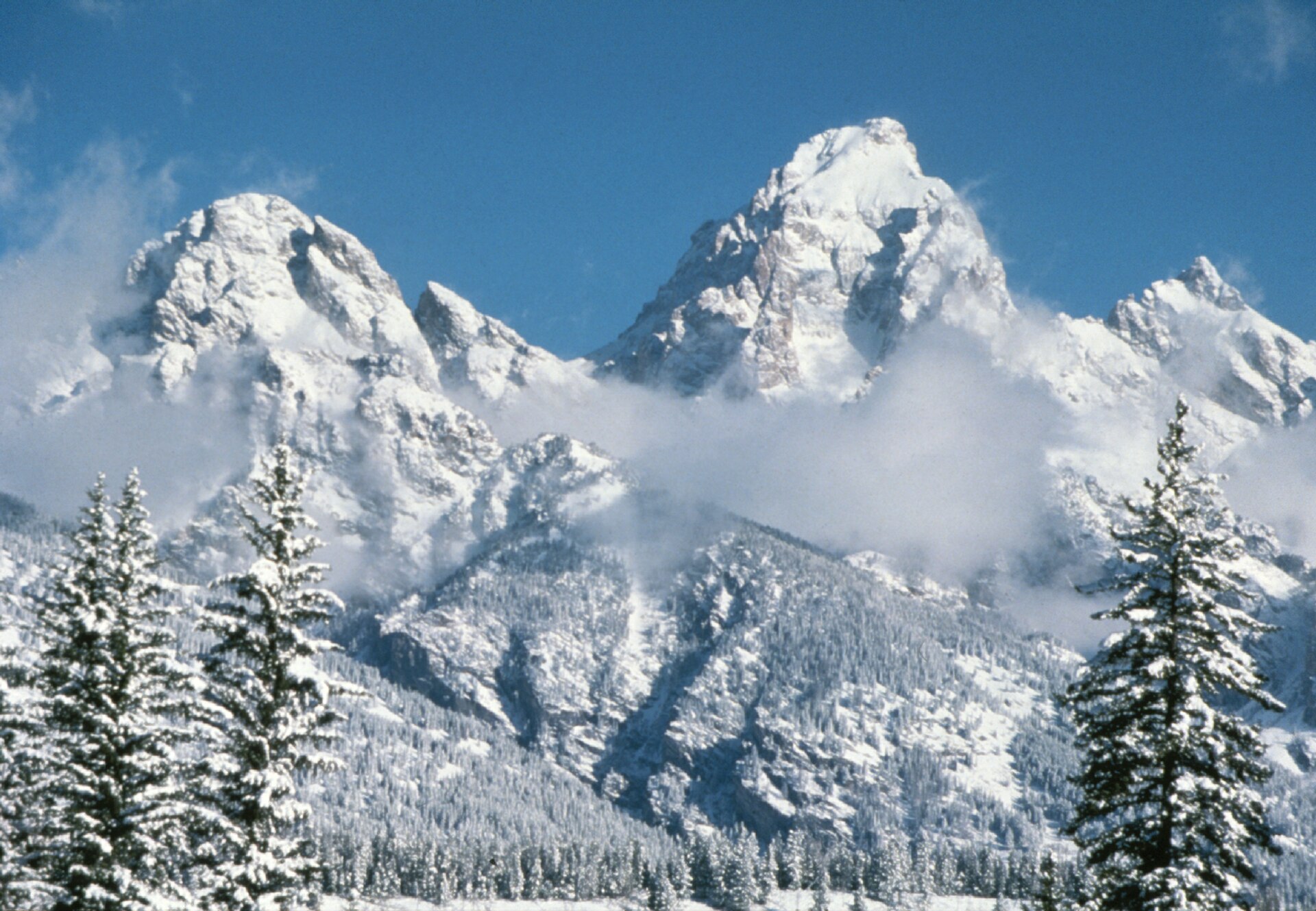
March is when the weather starts playing tricks. An afternoon near 40°F feels surprisingly mild in the strong sun, then night drops you back into the teens. Snow is still a big part of the landscape, averaging over 20 inches for the month. This isn’t spring the way most travelers picture it. Winter recreation continues, and most summer facilities and roads are still closed, so plan March as a winter trip, not an early summer road trip.
Grand Teton Weather in April
Average high: 49.3°F · Average low: 22.3°F · Snowfall: 9.5 in · Precipitation: 1.52 in
April is one of the park’s true transition months. The valley starts waking up, snow melts and afternoons get more comfortable. Then another storm rolls in and reminds you winter hasn’t completely left. The Park Service describes spring here as a mix of mild days, cool nights, rain and snow, and that’s a more honest way to think about April than simply calling it “spring.”
Expect mud, snow, cold mornings, the occasional gorgeous mild afternoon, and far fewer visitors than summer. Trails are still mostly snow-covered. One upside: before Teton Park Road opens to cars on May 1, cleared sections are often open to walkers, runners and cyclists, which is a rare treat.
Grand Teton Weather in May
Average high: 60.9°F · Average low: 30.8°F · Snowfall: 2.4 in · Precipitation: 1.95 in
May is when the park starts feeling much more accessible. Highs average about 61°F, which is pleasant. But look at the average low: about 31°F. That single number tells you how to pack. A warm afternoon doesn’t mean a warm morning. May is also one of the wetter months, with rain showers common and snow still possible.
The Park Service says valley trails are usually snow-covered until about late May, and higher trails take much longer. So May is a month when lower areas feel like spring while the mountains still look very much attached to winter. It’s a beautiful contrast for photos, with a greening valley below bright white peaks.
Grand Teton Weather in June
Average high: 70.7°F · Average low: 37.3°F · Snowfall: 0.1 in · Precipitation: 1.74 in
June is when summer becomes recognizable. Afternoons climb into the low 70s, valley snowfall is almost zero, wildflowers start popping up, more trails open and more seasonal services are running. It’s also when you get the most daylight of the year, with the sun up for roughly 15.5 hours around the solstice.
Here’s the catch: the mountains don’t follow the valley’s calendar. High trails can hold a lot of snow in June, and some mountain routes don’t melt out until well into July. Creeks also run high and cold with snowmelt, so stream crossings can be tricky. Packing tip: bring summer clothes, but don’t leave the fleece and rain jacket at home. At a 37°F sunrise, shorts and a T-shirt feel like a poor life choice.
Grand Teton Weather in July
Average high: 80.6°F · Average low: 41.6°F · Snowfall: 0 · Precipitation: 1.15 in
July is the warmest month and also the driest, with the lowest average precipitation of the year. Afternoons around 80°F are normal and mornings stay cool. High in the mountains, it can still feel like a different season entirely. Wildflowers peak in the canyons and meadows this month.
July is also thunderstorm season. A clear blue morning can turn into a stormy afternoon with lightning, heavy rain, hail and strong gusty wind around the peaks. If you’re doing a long or high hike, start early. That’s not just about beating the crowds. It’s about not being somewhere exposed when the afternoon storm builds.
Does it snow in July? Snowfall at Moose averages zero. But snowfields can remain on high trails and passes well into July, and a cold storm can still dust the summits. Trail conditions matter more than any valley weather table.
Grand Teton Weather in August
Average high: 79.2°F · Average low: 39.7°F · Snowfall: 0 · Precipitation: 1.33 in
On paper, August looks a lot like July: warm days, cool nights, no valley snow and the widest range of outdoor activities. But look at the gap. A high of 79°F and a low of 40°F means nearly a 40-degree swing in one day. Layers make much more sense than one “summer outfit.”
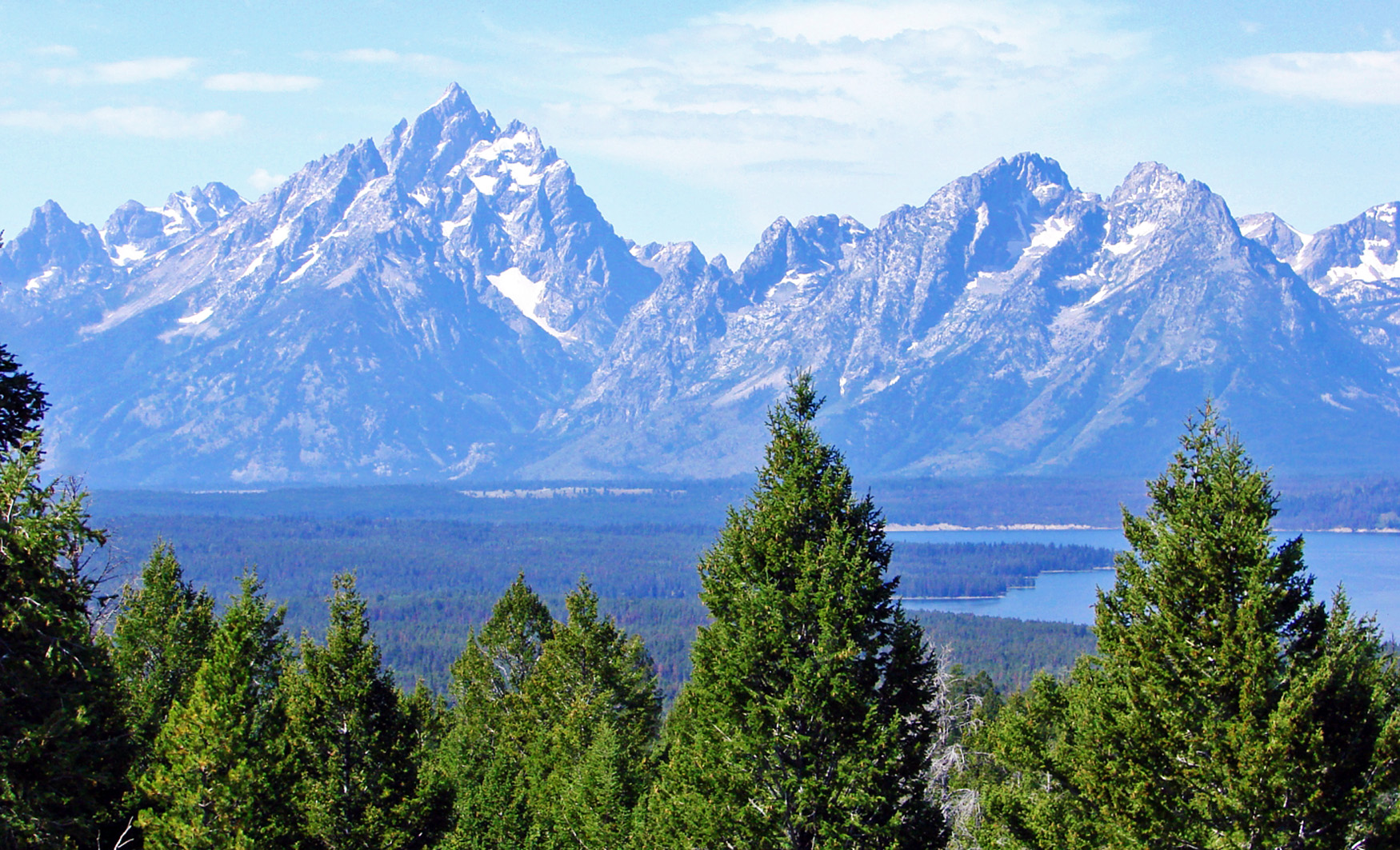
Afternoon thunderstorms are still possible, so plan long hikes for the morning. August is also peak season for wildfire smoke drifting in from fires elsewhere in the West. Smoke can hide the mountains and make strenuous activity unhealthy, even when the fire itself is hundreds of miles away. Check air quality if the sky looks hazy. The upside of August: the high trails have had the most time to melt out, which makes it the best month for alpine hiking.
Grand Teton Weather in September
Average high: 69.3°F · Average low: 32.1°F · Snowfall: 0.4 in · Precipitation: 1.40 in
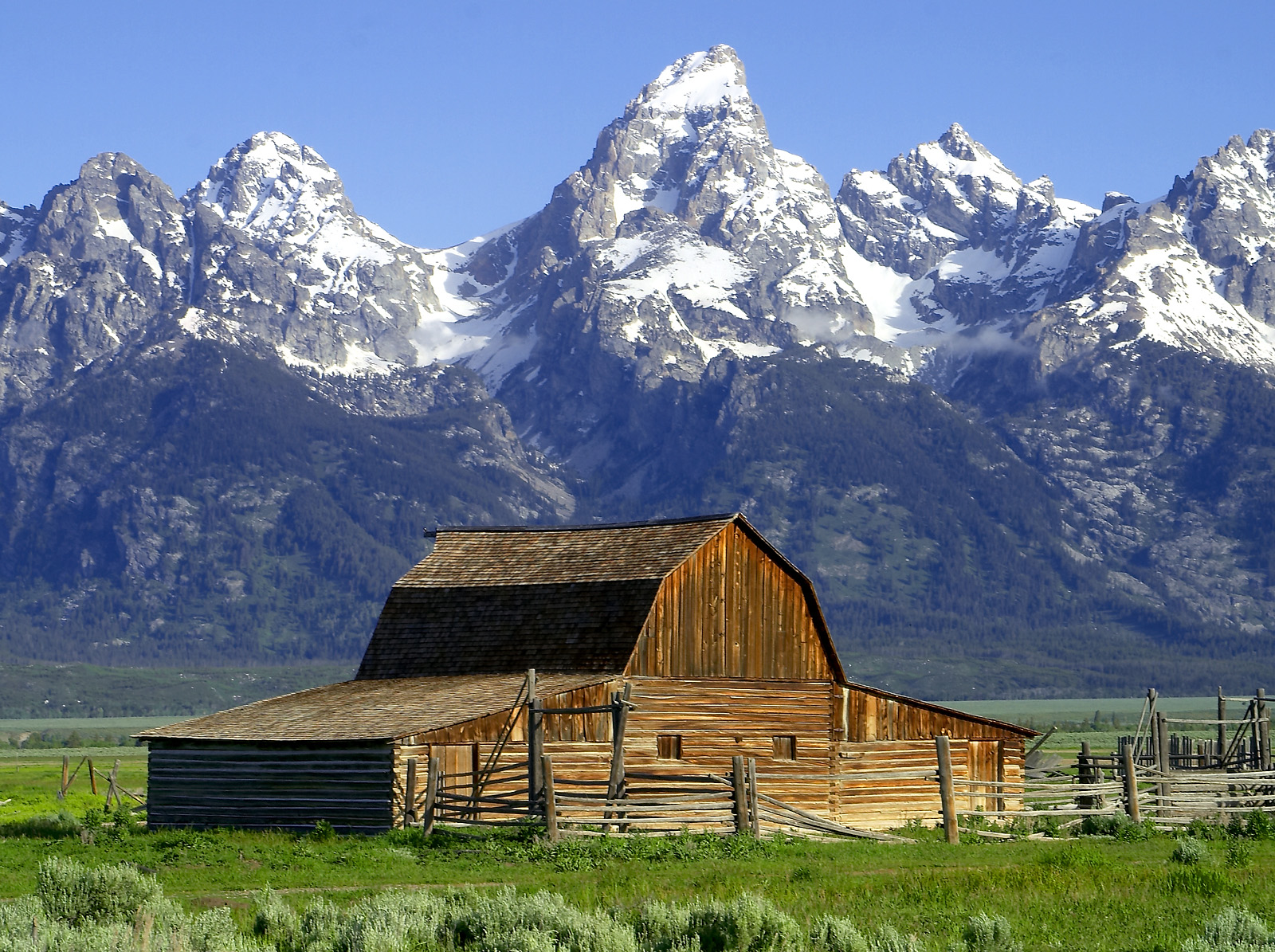
September is when you really feel the season turn. Days can be gorgeous, with highs close to 70°F, but nights drop to around freezing. That changes how the park feels at dawn. A sunrise stop at Mormon Row can call for gloves and a warm jacket, even if you’re in short sleeves by lunch. Frost on the sagebrush is common in the mornings.
Snow becomes possible again, too. The average is small, but a September storm can dust the peaks overnight or briefly whiten high trails. It’s also one of the most settled, pleasant months overall, with fewer thunderstorms than midsummer. The simple version: pack for fall, but keep a little winter in your bag.
Grand Teton Weather in October
Average high: 55.7°F · Average low: 23.2°F · Snowfall: 4.7 in · Precipitation: 1.44 in
October can feel like two seasons in one month. Early October often brings crisp, bright afternoons and the last of the golden aspens. By late in the month, the landscape can look properly wintry. Average lows fall into the low 20s, and snowfall averages almost 5 inches. Many seasonal services shut down this month.
That doesn’t make October a bad month. It just needs a flexible plan. A hike that looks easy from home can be snowy or icy when you arrive, so check trail and road conditions every day instead of assuming yesterday’s still apply.
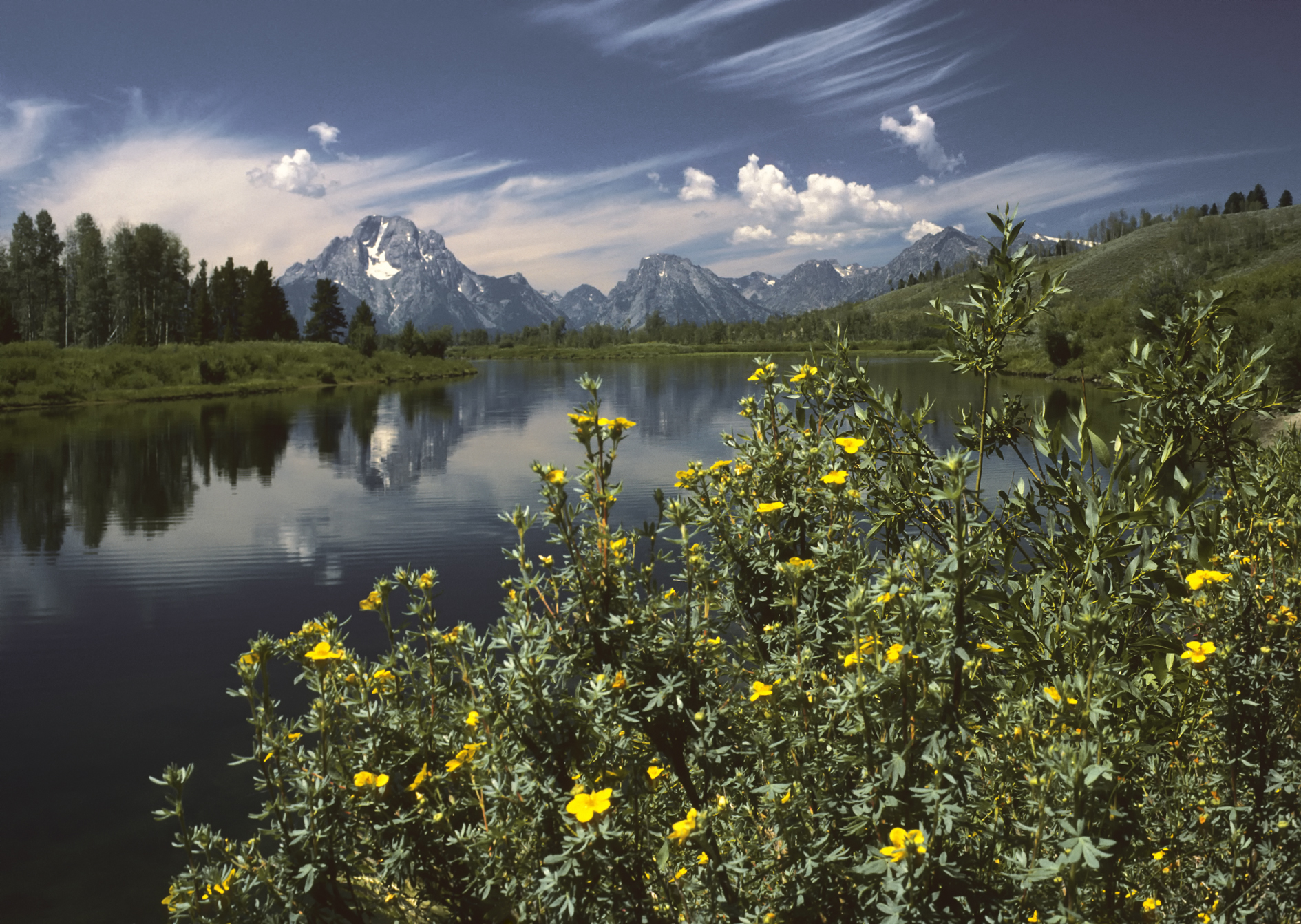
Grand Teton Weather in November
Average high: 38.3°F · Average low: 13.6°F · Snowfall: 23.4 in · Precipitation: 2.14 in
By November, winter is taking over again. The Park Service notes the first heavy snows usually arrive around November 1, and snowfall averages more than 23 inches for the month. Nights drop into the teens. Teton Park Road closes to cars between Taggart Lake Trailhead and Signal Mountain Lodge on November 1, and most facilities are closed or on reduced hours. November isn’t a colder September. Plan it as a winter-leaning trip.
Grand Teton Weather in December
Average high: 26.5°F · Average low: 1.8°F · Snowfall: 39.5 in · Precipitation: 2.55 in
December brings deep winter back. Snow blankets the valley and peaks, the days are the shortest of the year at around 9 hours, and nights are bitterly cold. Snowfall averages close to 40 inches at Moose. Snowshoeing and cross-country skiing take center stage, and for photographers, the snowy Tetons under low winter light are hard to forget. This isn’t a casual cold-weather trip, though. Prepare for temperatures near or below zero, winter roads and limited services.
Grand Teton Weather by Season
| Season | Typical Weather | What It Means for You |
|---|---|---|
| Spring (April–June) | Mild days, cold nights, rain and snow mixed | Muddy and snowy trails, high trails closed by snow, fewer crowds |
| Summer (July–August) | Warm days, cool nights, afternoon thunderstorms | Best trail access, start hikes early, watch for smoke |
| Fall (September–November) | Pleasant days, freezing nights, snow returning | Beautiful but brief, pack warm, check conditions daily |
| Winter (December–March) | Cold, deep snow, frequent subzero nights | Skiing and snowshoeing, road closures, limited services |
Spring is unpredictable: mild sunshine one day, snow the next. Lower areas open up gradually, but high trails stay snowy much longer. Summer brings the warmest weather, with valley days in the upper 70s or low 80s and cool nights, plus thunderstorms. Fall happens fast. September can still feel like summer at noon, October gets cold and snowy, and by November winter is back. Winter is long, snowy and cold, and the trip becomes about skiing, snowshoeing, photography and winter wildlife rather than hiking. For how weather lines up with crowds, wildlife and trail access, see our guide to the best time to visit Grand Teton National Park.
Daylight Hours by Month in Grand Teton
Daylight shapes your day as much as temperature does. In June you can hike, sightsee and still catch sunset after 9 p.m. In December, it’s dark before 5 p.m. These are approximate daylight hours around the middle of each month:
| Month | Approx. Daylight | Month | Approx. Daylight |
|---|---|---|---|
| January | 9 hr 15 min | July | 15 hr 10 min |
| February | 10 hr 30 min | August | 14 hr |
| March | 11 hr 55 min | September | 12 hr 40 min |
| April | 13 hr 20 min | October | 11 hr 10 min |
| May | 14 hr 35 min | November | 9 hr 50 min |
| June | 15 hr 25 min | December | 9 hr 5 min |
Because the Tetons rise to the west, the valley loses direct sun a little earlier in the evening than the official sunset time. Sunrise, when light hits the east-facing peaks first, is the main event for photographers in every season.
Valley Weather vs Mountain Weather
This is one of the most important things to understand before you hike. The forecast for Moose is not the forecast for a mountain pass. Temperature falls about 4°F for every 1,000 feet you climb, and wind, cloud and rain make it feel even colder. Here’s what that means on a typical 75°F July afternoon in the valley:
| Location | Approx. Elevation | Rough Temperature |
|---|---|---|
| Moose / valley floor | 6,470 ft | 75°F |
| Jenny Lake | 6,780 ft | 74°F |
| Lake Solitude | 9,000 ft | 65°F |
| Amphitheater Lake | 9,700 ft | 62°F |
| Paintbrush Divide | 10,700 ft | 58°F, often windy |
| Grand Teton summit | 13,775 ft | Around 45°F, before wind chill |
That’s why hikers should carry layers even when the parking lot feels warm. If you’re choosing a trail, our guide to the best hikes in Grand Teton National Park lists the elevation gain and typical conditions for each one.
Weather at Jenny Lake
Jenny Lake sits low compared to the alpine areas, but conditions still change quickly. Summer mornings are cool, afternoons warm up and thunderstorms can roll in off the peaks. The water stays cold all year, fed by snowmelt, so a swim here is bracing even in August. Shallow String Lake next door warms up more. If Jenny Lake is your starting point for Cascade Canyon or Lake Solitude, remember your destination can have very different weather from the lakeshore. Check the mountain forecast, not just the valley one.
When Does It Snow in Grand Teton National Park?
Snow is possible in any month in Grand Teton National Park. Heavy snow usually starts around November and continues through April. January is the snowiest month at Moose, averaging about 43 inches, and the valley typically gets around 170 inches of snow a year. The mountains get far more.
Monthly snowfall at Moose averages 43.1 inches in January, 28.7 in February, 20.3 in March, 9.5 in April, 2.4 in May and 0.1 in June. July and August average none. Snow returns with 0.4 inches in September, 4.7 in October, 23.4 in November and 39.5 in December. That’s valley data. Snow can stay on high trails long after new snowfall has stopped.
When Does Snow Melt in Grand Teton?
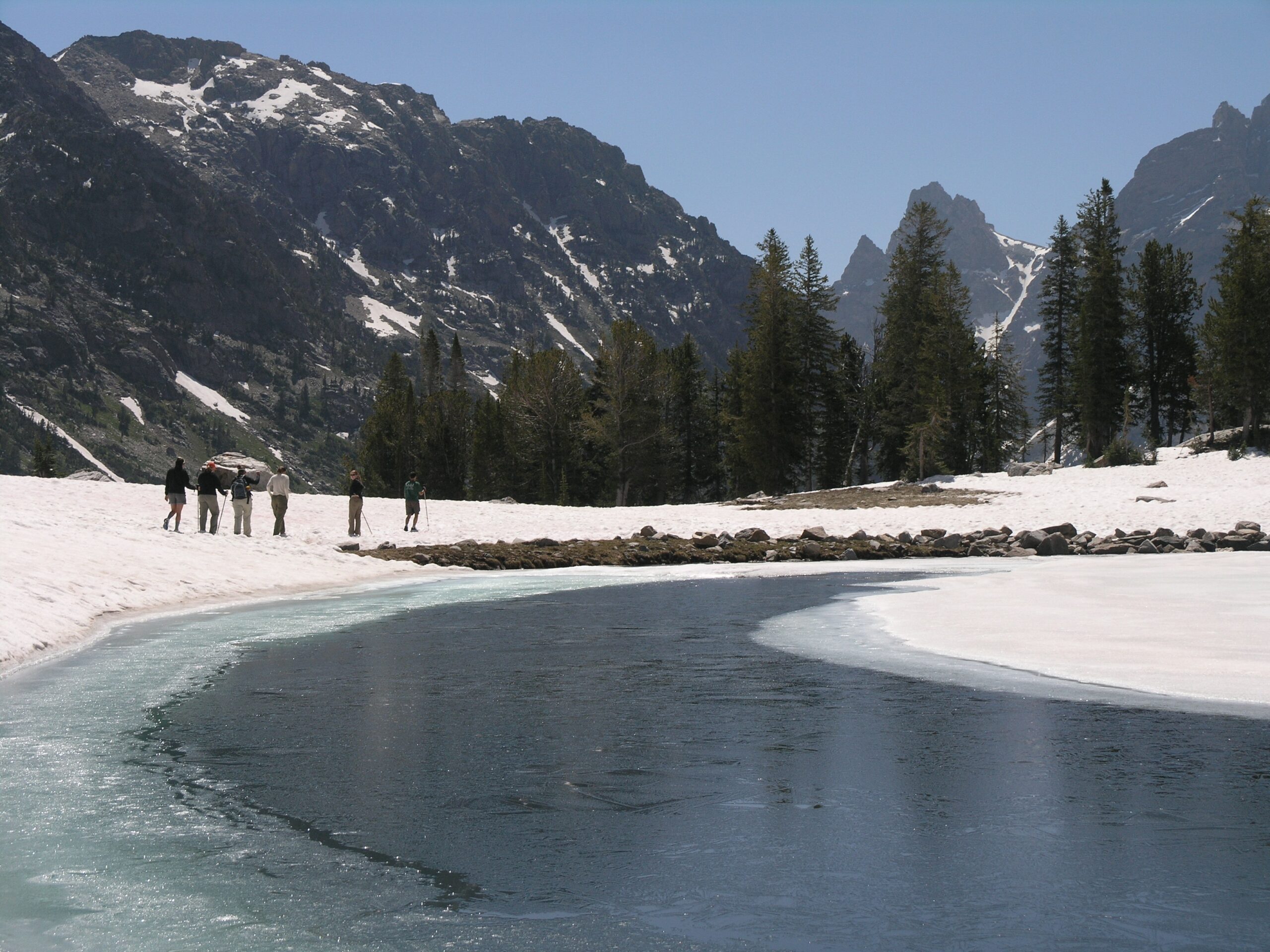
There’s no single date. Lower valley trails clear first. The Park Service says they’re often snow-covered until late May, while high trails and passes can stay snowy into July, and some years into early August. So June can be perfect for a lakeside hike while still being too early for an alpine route like Paintbrush Divide. A big winter or a cool spring pushes everything later. Before any hike, check current trail conditions rather than assuming warm weather means clear trails.
What Is the Warmest Month in Grand Teton?
July, with an average high of about 80.6°F and low of 41.6°F at Moose. August is nearly as warm at 79.2°F. Those are valley numbers, and it’s cooler in the mountains. Truly hot days are uncommon, and thanks to the dry air, even warm afternoons usually cool off quickly after sunset.
What Is the Coldest Month in Grand Teton?
January, with an average high of about 26.1°F and a low of 0.9°F at Moose. December is almost identical at 26.5°F and 1.8°F. Below-zero nights are normal in winter, and cold snaps can push temperatures far lower.
Thunderstorms, Rain, Smoke and Other Weather Hazards
Does It Rain a Lot in Grand Teton?
Not really. The valley gets only about 21 inches of total precipitation a year, and roughly half of that falls between November and March, mostly as snow. Summer is actually the driest time. But rain is possible any month, and in summer it usually arrives in short, sharp afternoon thunderstorms rather than all-day drizzle. Those storms can bring heavy rain, lightning, hail, strong wind and sudden temperature drops.
Lightning Safety on the Trail
If you’re above tree line, storms matter far more than they do from inside a car. Start big hikes early so you’re heading down by early afternoon. Watch for building towers of cloud over the peaks, and if you hear thunder, you’re close enough to be struck. Get off ridges, summits and open slopes, stay away from lone trees and water, and don’t shelter under rock overhangs. Turning around early isn’t failure. It’s how people get home.
Wildfire Smoke
Late July through September is smoke season across the West. Smoke from fires in Idaho, Montana, Oregon or even California can drift into Jackson Hole, softening or completely hiding the Tetons and lowering air quality. You can’t predict it months ahead. If the sky looks hazy, check an air quality index before a strenuous hike, and consider switching to lower, shorter outings on bad days.
Sun, Wind and Altitude
At over 6,000 feet, UV is noticeably stronger and the dry air pulls moisture out of you faster. Sunburn and dehydration sneak up on people even on cool days, so use sunscreen, wear a hat and sunglasses, and drink more water than you think you need. Wind can be strong on ridges, lakes and open flats, especially in spring and fall, and it makes cold temperatures feel much colder. If you’re coming from near sea level, give yourself a day to adjust before a big climb.
What to Wear in Grand Teton National Park
Forget packing one outfit per day. Pack layers you can add and remove as the day swings from cold to warm and back again. That’s the whole strategy.
| Season | What to Pack |
|---|---|
| Summer | T-shirts and light hiking clothes, a fleece or light puffy, rain jacket, comfortable hiking shoes, sun hat, sunglasses, sunscreen |
| Spring and fall | Everything above plus a warmer insulated jacket, gloves, a beanie, waterproof footwear and extra layers. Rain and snow are both possible. |
| Winter | Thermal base layers, insulated parka, waterproof pants and shell, insulated winter boots, mittens or heavy gloves, warm hat, neck gaiter, traction devices for icy paths |
A warm layer may seem silly when the forecast says 80°F. You’ll understand why you packed it standing beside Jenny Lake at 7 a.m. the next morning. The Park Service specifically recommends layered clothing, hats, mittens and cold-weather boots for winter visits.
How Weather Should Shape Your Plans
Hiking
Let the weather choose the hike, not just the calendar. A warm July afternoon is perfect for a short lakeside trail but a poor time to start climbing toward a high pass with storms building. A sunny June day doesn’t mean every high trail is ready. For longer hikes, start early, check the forecast and trail conditions, carry layers and know your turnaround time. The mountain doesn’t care that the hike was on your itinerary.
Your Itinerary
Build in backup options. Say you’ve planned Cascade Canyon for Tuesday, and Tuesday morning comes with afternoon thunderstorms in the forecast. Don’t force it just because Tuesday was labeled “hiking day.” Swap it with a scenic drive, a visit to lower areas or a visitor center, and hike when conditions improve. That’s exactly why a flexible Grand Teton National Park itinerary works better than an hour-by-hour schedule.
Roads and Where You Stay
Weather affects your driving too. Teton Park Road closes to cars from November 1 through April 30 between Taggart Lake Trailhead and Signal Mountain Lodge, and Moose-Wilson Road also closes for winter. Main highways stay open, but snow and ice are common from late fall to spring. In summer, staying inside or near the park makes those storm-dodging early starts easier. In winter, staying in Jackson keeps you close to plowed roads and open services.
How to Check Grand Teton Weather Before and During Your Trip
Averages help you plan. Forecasts keep you safe. In the days before and during your trip, use the National Weather Service point forecast for your actual destination, not just for Jackson. You can click a spot high in the range on their map to see the mountain forecast. The Park Service’s current conditions page covers closures, smoke and trail updates, and its live webcam at the Craig Thomas Discovery and Visitor Center in Moose shows you exactly what the Tetons look like right now. In winter, check the Wyoming road report and the regional avalanche forecast before heading out. And ask a ranger at any visitor center. They know how the trails looked yesterday.
Weather vs the Best Time to Visit
These two questions sound alike but they’re different. Weather by month tells you what conditions are usually like. The best time to visit depends on weather plus crowds, trail access, wildlife, prices and what you want to do. July has the warmest weather and the widest access, but that doesn’t make it right for everyone. Someone chasing fall color, fewer people or snowy photographs might prefer a very different month. Use this guide to pack and plan your days, and our month-by-month best time guide to decide when to go.
Related Guides
Still putting your plans together? You might also find these useful:
- Best Things to Do in Grand Teton National Park
- Grand Teton Fall Colors
- Taggart Lake Trail
- Grand Teton in September
Grand Teton Weather FAQs
What is the weather like in Grand Teton National Park?
Grand Teton has long, cold, snowy winters and short, warm summers with cool nights. Spring and fall are brief transition seasons that can bring both rain and snow. Weather changes quickly, especially in the mountains.
What is the hottest month in Grand Teton?
July, with an average high of about 80.6°F at Moose. It’s also the driest month.
What is the coldest month in Grand Teton?
January, with an average high of about 26.1°F and an average low of about 0.9°F.
Does it snow in Grand Teton National Park?
Yes, a lot. The valley averages around 170 inches of snow a year, and snow or frost is possible in any month. High trails can hold snow well into summer.
Does it snow in Grand Teton in June?
Snowfall at Moose averages only about 0.1 inches in June, but snow can still cover high trails and mountain passes, and a cold storm can dust the peaks.
Does it snow in Grand Teton in September?
It can. September snowfall at Moose averages about 0.4 inches, and freezing nights become common.
What is Grand Teton weather like in July?
Warm days and cool nights, with an average high of about 80.6°F and a low of 41.6°F at Moose. Afternoon thunderstorms are common.
What is Grand Teton weather like in October?
Cool and increasingly wintry, with highs around 55.7°F, lows around 23.2°F and about 4.7 inches of snow on average.
When does snow melt in Grand Teton?
Lower valley trails usually clear around late May or early June. High trails and passes can stay snowy into July, sometimes later after a big winter.
Do I need a jacket in Grand Teton in summer?
Yes. Summer mornings and nights are cool, and it’s colder higher up. A warm layer and a rain jacket are worth packing even in July and August.
Is Grand Teton colder than Jackson?
Moose and the park’s valley floor are a little higher than the town of Jackson, so they tend to run slightly cooler, and the mountains are much colder. On still winter nights, though, cold air can pool on the valley floor everywhere.
How cold is the water in Jenny Lake?
Very cold. It’s fed by snowmelt and stays chilly even in August, so swimming is short and bracing. Shallow String Lake warms up more in late summer.
What Grand Teton Weather Really Means for Your Trip
The easiest mistake is looking at the daytime high and packing around that number. Grand Teton doesn’t work that way. A July trip can include an 80°F afternoon, a 40°F sunrise, a thunderstorm and snow sitting high above the valley. September can feel like summer at lunch and almost winter before dawn. May can give you sunshine, rain, mud and snow in the same few days.
Use the monthly averages as a starting point, not a promise. Check the forecast each morning, look at trail conditions before a hike, and carry layers even when the valley feels warm. If the mountains tell you today’s plan needs to change, change it. That’s just part of traveling here. For more planning help, browse all of our travel guides.