
People often pack for Bryce Canyon like it’s a desert park. Then they step out at Sunrise Point at 6 a.m. in June and find it’s 40 degrees.
Bryce sits high on a plateau in southern Utah, mostly between 8,000 and 9,100 feet. That height changes everything. Summers are mild instead of scorching, winters are properly snowy, spring hangs on to winter much longer than you’d expect, and fall can swing from sunshine to snow in a single week. In July, you might hike in a T-shirt all morning and dodge a thunderstorm by afternoon. In January, those same hoodoos can be buried in fresh snow with temperatures in the teens.
This guide breaks down Bryce Canyon weather by month: average and record temperatures, rain, snow, thunderstorms, daylight hours, trail and road conditions, and exactly what to pack. If you’re still deciding when to go, our guide to the best time to visit Bryce Canyon National Park covers crowds, events and the best months for each type of trip.
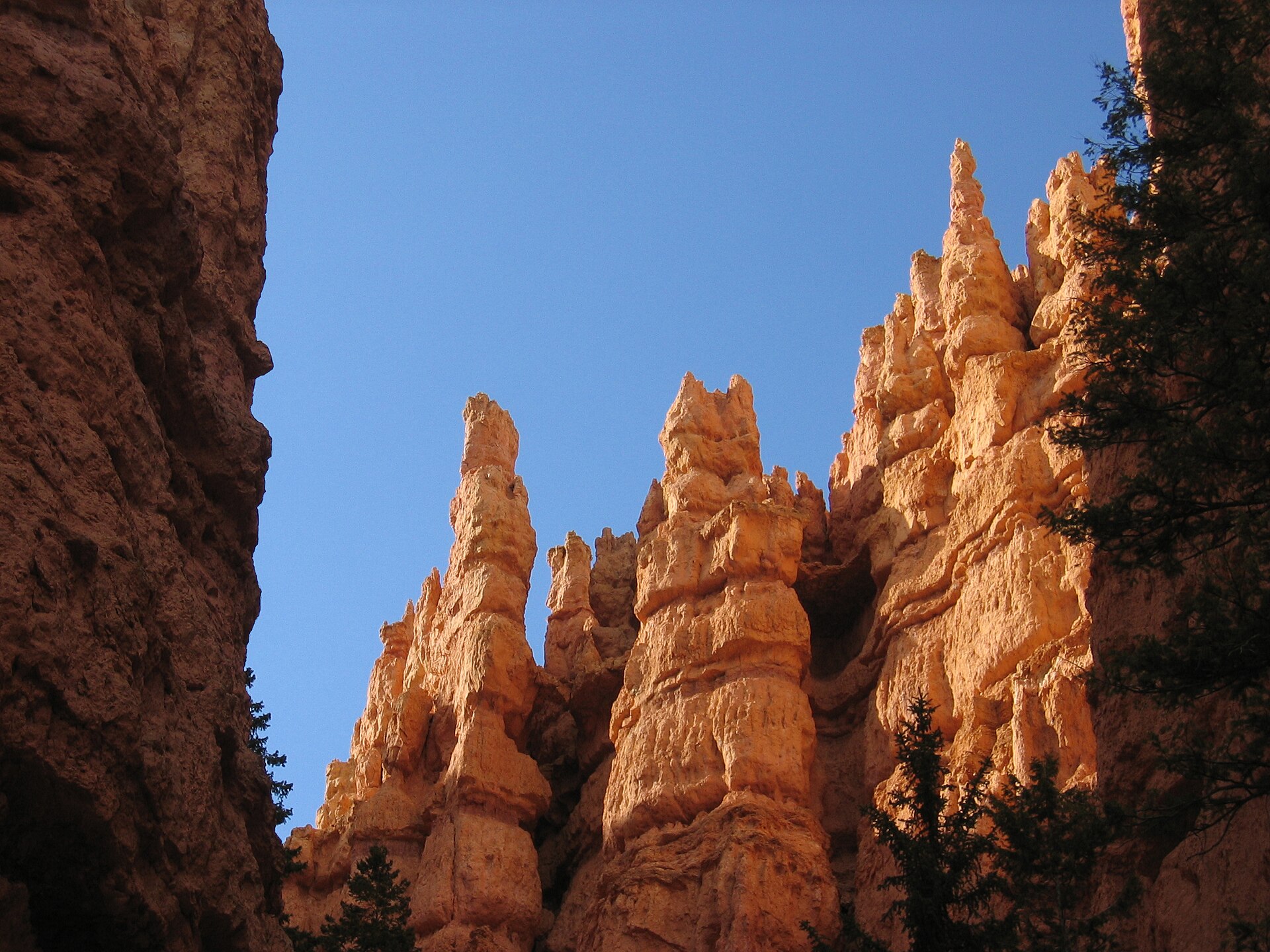
What Is the Weather Like at Bryce Canyon?
Bryce Canyon has cold, snowy winters, changeable springs, mild summers and cool falls. July is the warmest month, averaging about 80°F by day and 53°F at night. December and January are the coldest, with lows around 15°F. February is the snowiest month, at about 18 inches, and July and August bring frequent afternoon thunderstorms. Nights drop below freezing almost every night from October to May.
Bryce Canyon Weather by Month at a Glance
These are the National Park Service’s long-term averages for Bryce Canyon.
| Month | Avg High | Avg Low | Rain | Snow | Storm Days |
|---|---|---|---|---|---|
| January | 37°F | 15°F | 1.8 in | 17 in | 0 |
| February | 38°F | 17°F | 1.4 in | 18 in | 0 |
| March | 45°F | 23°F | 1.5 in | 17 in | 0 |
| April | 54°F | 29°F | 0.8 in | 8 in | 1 |
| May | 64°F | 37°F | 0.8 in | 2 in | 3 |
| June | 75°F | 45°F | 0.6 in | Trace | 2 |
| July | 80°F | 53°F | 1.6 in | 0 | 11 |
| August | 77°F | 50°F | 2.0 in | 0 | 12 |
| September | 70°F | 42°F | 1.8 in | Trace | 4 |
| October | 58°F | 32°F | 2.0 in | 3 in | 1 |
| November | 45°F | 23°F | 1.3 in | 10 in | 0 |
| December | 36°F | 15°F | 1.2 in | 14 in | 0 |
Averages are a planning tool, not a forecast. At this elevation, any given week can be much warmer, colder, wetter or snowier, so always check the forecast for the park itself a few days before you go.
In This Guide
- Why Bryce is so much colder than the rest of southern Utah
- Bryce Canyon weather month by month
- Record highs, record lows and extreme snow
- Sunrise, sunset and daylight by month
- Snow, thunderstorms and lightning and rain
- Weather for hiking, sunrise, stargazing and photos
- What to wear in every season
- Road conditions and weather closures
- FAQs
Why Is Bryce Canyon So Cold?
It comes down to elevation. The rim of Bryce Amphitheater sits around 8,000 feet, and Rainbow Point at the southern end of the park reaches 9,115 feet. Zion Canyon, just two hours away, sits roughly 4,000 feet lower. As a rule of thumb, temperatures drop a few degrees for every 1,000 feet you climb, which is why Bryce is often 15 to 20 degrees cooler than Zion on the same day.
Height also explains the other quirks of Bryce weather. The thin, dry air heats up fast in the sun and cools off fast after dark, so a 30-degree swing between afternoon and night is normal. The sun is stronger at altitude, so you can get sunburned on a cool day. And because the park sits on the edge of a high plateau, storms build quickly over it in summer.
Even inside the park, conditions vary. The southern viewpoints are about 1,000 feet higher than the amphitheater, so expect them to feel cooler and windier, and to hold snow later into spring.
Bryce Canyon Weather Month by Month
Bryce Canyon Weather in January
Average: 37°F high, 15°F low · Snow: about 17 inches · Daylight: about 9 hours 50 minutes
January is deep winter. Sunny days can feel pleasant in the middle of the day, especially out of the wind, but the cold comes back hard as soon as the sun drops. Nights regularly fall into the single digits, and record lows have hit 26 degrees below zero.
It’s also one of the most beautiful times to see the park, with bright white snow piled on orange hoodoos and almost nobody around. Trails like Queen’s Garden pack down into ice, so traction on your boots is essential. After big storms, the park may close the road beyond Mile 3 while plows work south, but the main amphitheater area is cleared first.
Pack: insulated jacket, thermal base layers, warm gloves and hat, waterproof boots and microspikes.
Bryce Canyon Weather in February
Average: 38°F high, 17°F low · Snow: about 18 inches · Daylight: about 10 hours 50 minutes
February is still firmly winter, and on average it’s the snowiest month of the year. Days are a little longer than January, which helps if you’re out snowshoeing or cross-country skiing on the rim. It’s a great month for snow photography and quiet overlooks, and the Bryce Canyon Winter Festival takes place over Presidents’ Day weekend.
If hiking is your main goal, though, February isn’t easy. Expect icy trails even on clear days, and keep your plans flexible around storms.
Pack: the same as January: full winter layers, waterproof boots and traction.
Bryce Canyon Weather in March
Average: 45°F high, 23°F low · Snow: about 17 inches · Daylight: about 12 hours
March sounds like spring, but at Bryce it usually still feels like winter. It averages almost as much snow as January, and the park warns that spring storms in March and April can drop heavy snow and affect travel across the region. You might arrive to dry roads and sunshine, or to a fresh foot of snow. Sometimes you’ll get both on the same trip.
On the plus side, days are getting longer, sunshine has real warmth by midday, and crowds are still light. Treat March as late winter and you won’t be disappointed.
Pack: winter layers, waterproof boots, traction and sunglasses for the glare off the snow.
Bryce Canyon Weather in April
Average: 54°F high, 29°F low · Snow: about 8 inches · Daylight: about 13 hours
April is the most unpredictable month of the year. Afternoons can be mild and sunny, but nights still average below freezing, and one storm can bring snow back for a few days. Trails go through a messy stage of mud, slush and ice, especially on shaded north-facing switchbacks.
If you’re flexible, April is lovely, with fewer people and the first warm hiking days of the year. If your whole trip depends on dry trails, May is the safer bet. A 55-degree afternoon can easily be followed by a 25-degree night.
Pack: warm layers, a waterproof shell, boots that can handle mud and traction just in case.
Bryce Canyon Weather in May
Average: 64°F high, 37°F low · Snow: about 2 inches · Daylight: about 14 hours 10 minutes
May is when Bryce finally feels like hiking season. Days are comfortable, the air is fresh, and most snow and ice have melted off the trails. It’s also one of the driest months, and the summer thunderstorm season hasn’t started yet.
Mornings are still cold, often near freezing at sunrise, and a late snow shower isn’t impossible early in the month. But for most travelers, May is one of the easiest months to plan around.
Pack: light hiking clothes for the day, plus a warm jacket, hat and gloves for mornings and evenings.
Bryce Canyon Weather in June
Average: 75°F high, 45°F low · Rain: about 0.6 inch · Daylight: about 14 hours 45 minutes
June has some of the nicest weather of the year. It’s the driest month in the park’s records, it has the longest days, and daytime temperatures are close to ideal for hiking. Thunderstorms start to appear toward the end of the month, but they’re still uncommon.
The one thing that surprises people is the nights. Even in June, it often drops into the 40s after dark, and sunrise can feel downright cold, especially if there’s a breeze at the rim.
Pack: sun hat, sunscreen, light layers and a fleece or puffy jacket for early starts and stargazing.
Bryce Canyon Weather in July
Average: 80°F high, 53°F low · Storm days: about 11 · Daylight: about 14 hours 30 minutes
July is the warmest month, but it’s mild compared with the rest of southern Utah. While Zion and Moab regularly top 100°F, Bryce usually stays around 80°F, making it a welcome escape from the heat on a summer road trip.
The bigger concern isn’t heat. It’s thunderstorms. The summer monsoon arrives in July, bringing short, intense afternoon storms with heavy rain, hail and frequent lightning. A typical July day starts clear and blue, clouds build over the plateau around midday, and storms roll through in the afternoon before clearing for a pretty evening. Plan your main hike for the morning, and keep afternoons flexible.
Pack: breathable hiking clothes, sun protection, a rain jacket and a warm layer for the evening.
Bryce Canyon Weather in August
Average: 77°F high, 50°F low · Rain: about 2 inches · Storm days: about 12 · Daylight: about 13 hours 35 minutes
August is still warm, but it’s the stormiest and one of the wettest months of the year. The park’s main weather records count about 12 thunderstorm days, and its lightning-safety data counts even more, so expect some kind of afternoon storm on many days.
Heavy monsoon rain can cause flash flooding in drainages, temporary waterfalls over the rim, muddy or washed-out trail sections and rockfall. A blue morning really doesn’t guarantee a blue afternoon. Hike early, watch the sky, and be off exposed trails and viewpoints by early afternoon.
Pack: the same as July, with a rain jacket you actually keep in your daypack.
Bryce Canyon Weather in September
Average: 70°F high, 42°F low · Storm days: about 4 · Daylight: about 12 hours 25 minutes
September has some of the best weather of the year. Afternoons are warm but not hot, mornings are crisp, and thunderstorms drop off sharply from August. Early in the month you may still see a few afternoon storms, but by late September the monsoon is usually fading.
For hiking and sightseeing, it’s very hard to beat. Nights cool off quickly, though, and by the end of the month you may wake up to frost.
Pack: hiking layers, a warm jacket for mornings and evenings, and a light rain shell.
Bryce Canyon Weather in October
Average: 58°F high, 32°F low · Snow: about 3 inches · Daylight: about 11 hours 15 minutes
October is when fall slides toward winter. Many days are sunny, clear and perfect for hiking, but nights average right around freezing, and the park says October snowstorms are not unusual. It’s also, surprisingly, one of the wettest months on record, with about 2 inches of precipitation, often arriving as early storms rather than summer thunderstorms.
Early October is usually easier than late October. By the end of the month, you could find snow on the rim and ice in shaded parts of the trails.
Pack: warm layers, a winter-weight jacket, gloves and hat, and traction if storms are in the forecast.
Bryce Canyon Weather in November
Average: 45°F high, 23°F low · Snow: about 10 inches · Daylight: about 10 hours
November isn’t just a colder October. It’s the start of real winter. Snow becomes common, nights fall well below freezing, and daylight is short, with sunset around 5:15 p.m. The upside is very few visitors and quiet viewpoints. If you don’t mind cold and can be flexible with storms, November can be peaceful and beautiful.
Pack: winter jacket, warm layers, waterproof boots and traction.
Bryce Canyon Weather in December
Average: 36°F high, 15°F low · Snow: about 14 inches · Daylight: about 9 hours 35 minutes
December has the coldest average high of the year and the shortest days. Snow-covered hoodoos are the big reward, and the contrast between orange rock and white snow is never stronger. But you’ll need to plan around icy trails, possible road closures after storms and seasonal services that have shut for the winter. December is best for travelers who actually want a winter Bryce experience.
Pack: full winter gear: insulated jacket, base layers, warm boots, gloves, hat and microspikes.
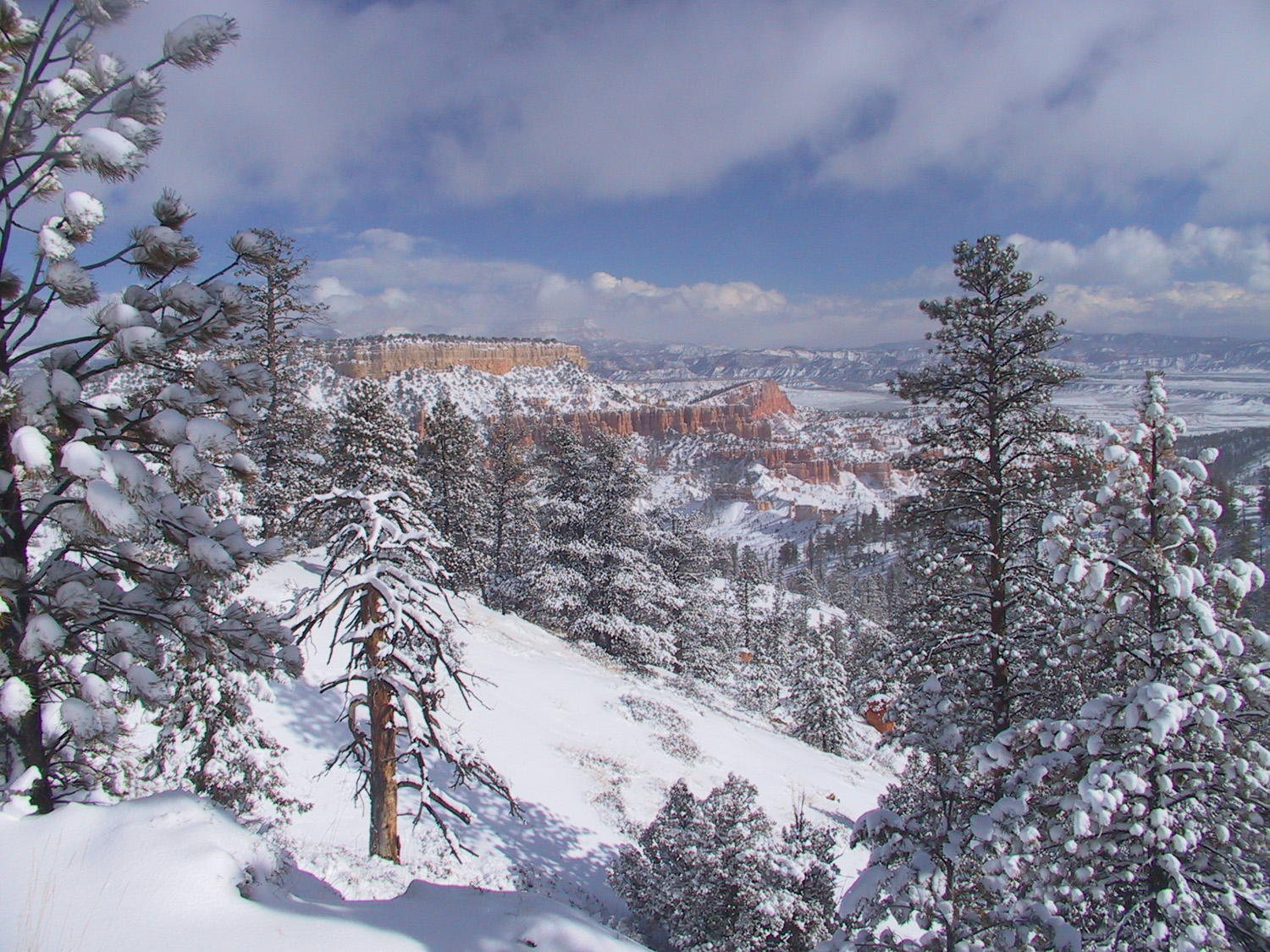
Bryce Canyon Weather by Season
| Season | Typical Weather | What It Means for Your Trip |
|---|---|---|
| Winter (Dec–Feb) | Cold, snowy, highs in the 30s | Icy trails, possible road closures, quiet |
| Spring (Mar–May) | Very changeable, snow still common until April | Mixed trail conditions, flexible plans needed |
| Summer (Jun–Aug) | Mild days, cool nights, afternoon storms in Jul–Aug | Great hiking in the morning, lightning risk later |
| Fall (Sep–Nov) | Pleasant, then cold; early snow possible | Excellent hiking in September, winter by November |
Record Highs, Record Lows and Extreme Snow
Averages tell you what’s normal. Records tell you what’s possible, and at Bryce the range is huge. These are the park’s recorded extremes:
| Month | Record High | Record Low | Most Snow in a Month |
|---|---|---|---|
| January | 59°F | -26°F | 82 in |
| February | 64°F | -26°F | 55 in |
| March | 67°F | -11°F | 48 in |
| April | 75°F | -3°F | 62 in |
| May | 85°F | 13°F | 18 in |
| June | 92°F | 21°F | 2.5 in |
| July | 98°F | 28°F | None |
| August | 90°F | 23°F | None |
| September | 86°F | 16°F | 2 in |
| October | 79°F | 0°F | 16 in |
| November | 68°F | -12°F | 36 in |
| December | 60°F | -23°F | 50 in |
A few of these stand out. Frost has been recorded in every month, even July. April has seen more than 60 inches of snow in a single month. And the hottest day ever recorded, 98°F, is still cooler than an ordinary summer afternoon in Zion. The lesson: pack for the forecast, not the average, and always bring one more warm layer than you think you’ll need.
Bryce Canyon Sunrise, Sunset and Daylight by Month
Daylight shapes your plans as much as temperature does, especially if you want sunrise at the rim or a long hike. These are approximate times for the middle of each month at Bryce, in local Mountain Time (daylight saving time from March to early November).
| Month | Sunrise | Sunset | Daylight |
|---|---|---|---|
| January | 7:42 a.m. | 5:33 p.m. | 9 h 51 m |
| February | 7:18 a.m. | 6:07 p.m. | 10 h 49 m |
| March | 7:39 a.m. | 7:35 p.m. | 11 h 56 m |
| April | 6:53 a.m. | 8:04 p.m. | 13 h 10 m |
| May | 6:19 a.m. | 8:31 p.m. | 14 h 11 m |
| June | 6:06 a.m. | 8:51 p.m. | 14 h 44 m |
| July | 6:19 a.m. | 8:49 p.m. | 14 h 29 m |
| August | 6:44 a.m. | 8:20 p.m. | 13 h 35 m |
| September | 7:10 a.m. | 7:35 p.m. | 12 h 25 m |
| October | 7:37 a.m. | 6:50 p.m. | 11 h 13 m |
| November | 7:08 a.m. | 5:17 p.m. | 10 h 8 m |
| December | 7:36 a.m. | 5:11 p.m. | 9 h 34 m |
In June you get nearly 15 hours of daylight, more than 5 hours more than in December. In winter, sunrise comes at a friendly hour and sunset comes early, so finish any hike below the rim by mid-afternoon. Light at the rim arrives a few minutes after these times, so get to the viewpoint 20 to 30 minutes before sunrise to catch the sky changing color.
When Does It Snow at Bryce Canyon?
Snow usually falls at Bryce Canyon from October through May, with the heaviest snow from December to March. February is the snowiest month on average, with about 18 inches, followed by January and March at about 17 inches each. In total, the park averages close to 90 inches of snow a year.
Snow doesn’t always stick around long. The strong high-altitude sun melts it quickly on south-facing slopes and open viewpoints, while shady trails and north-facing switchbacks can hold ice for weeks. So you might find dry pavement at Sunset Point and solid ice a few hundred yards down the Navajo Loop.
Snow in May happens in some years, and even June and September have recorded a trace. It’s not something to expect, but it’s not something to rule out either.
Bryce Canyon Thunderstorms, Monsoon Season and Lightning
For summer visitors, thunderstorms matter more than temperature. Bryce gets the Southwest’s summer monsoon from about July to early September, when moist air from the south fuels afternoon storms over the high plateau. These storms are usually short but intense, with heavy rain, hail, strong wind and a lot of lightning.
Lightning is the biggest danger. According to the park, Bryce has the highest lightning hazard density in Utah, and the exposed rim and open viewpoints are exactly where you don’t want to be in a storm. Lightning can strike miles ahead of the rain, even under blue sky.
How to Stay Safe in a Bryce Canyon Thunderstorm
- When thunder roars, go indoors. Get to a solid building, like the visitor center, the lodge or a restroom building with electricity and plumbing, or into a hard-topped car.
- Open-sided shelters aren’t safe. A shuttle stop roof keeps off the rain but won’t protect you from lightning. Neither will a tree.
- Wait 30 minutes after the last thunder before heading back out.
- Hike early. Storms usually build after midday, so plan long hikes for the morning.
- Stay out of drainages during heavy rain, when flash floods, mudflows and rockfall can happen fast.
Rain at Bryce Canyon by Month
Bryce is dry overall, with only about 1 to 2 inches of precipitation a month. June is the driest month, at about 0.6 inch, and August and October are the wettest, at about 2 inches each. Summer rain usually comes in short, heavy thunderstorm bursts rather than all-day drizzle. In winter, most precipitation falls as snow, and the “rain” numbers above include melted snow.
The dry air has a side effect: you lose water faster than you notice, even on cool days. Drink more than you think you need, use lip balm, and expect your skin to dry out.
Hottest, Coldest, Driest and Snowiest Months
| Category | Month | Average |
|---|---|---|
| Warmest | July | 80°F high, 53°F low |
| Coldest | December and January | 36–37°F high, 15°F low |
| Snowiest | February | About 18 inches |
| Driest | June | About 0.6 inch |
| Stormiest | August | About 12 thunderstorm days |
| Longest days | June | Nearly 15 hours of daylight |
Bryce Canyon vs Zion Weather
This catches a lot of road-trippers off guard. Zion and Bryce are only about two hours apart, but they feel like different climates. Zion Canyon sits around 4,000 feet, so it’s hot in summer (often 100°F or more in July) and mild in winter. Bryce sits around 8,000 to 9,000 feet, so it’s mild in summer and snowy in winter.
In practice, a hot afternoon in Zion can be followed by a near-freezing sunrise at Bryce the next morning. Pack for both, and don’t assume the clothes that worked in one park will work in the other. Planning both parks? See our guide to things to do in Zion National Park.
How the Weather Affects Your Plans
Weather for Hiking
The easiest hiking weather comes in May, June, September and early October, with comfortable temperatures and mostly dry trails. July and August are fine if you hike early and get off exposed trails before the afternoon storms. In winter, trails like Queen’s Garden and the Navajo Loop turn icy, so you’ll need traction, and the Wall Street side of the Navajo Loop closes for the season because of rockfall risk. For trail-by-trail details, see our guide to the best hikes in Bryce Canyon National Park.
Weather for Sunrise
Sunrise is the coldest part of the day, and you’ll be standing still at an exposed viewpoint. Average lows are about 37°F in May, 45°F in June and 42°F in September, and wind makes it feel colder. Bring a warm jacket, hat and gloves even in summer, and a hot drink if you can.
Weather for Stargazing
Summer nights are the most comfortable for stargazing, but comfortable doesn’t mean warm. Lows average 45°F in June, 53°F in July, 50°F in August and 42°F in September. Thunderstorm clouds often clear by evening in summer, leaving crisp, dark skies. Dress for the overnight low, not the afternoon high, if you plan to stay out late.
Weather for Photography
Every season gives photographers something different. Winter brings snow on orange rock, the most striking contrast of the year. Summer brings huge storm clouds over the hoodoos. September and October bring clear, crisp air and softer light. For easy conditions, September is hard to beat. For drama, go the morning after a fresh winter snow.
Weather for Families
Late May, June and September give families the easiest weather: warm enough days, no ice on the trails, and mornings that aren’t brutally cold. In July and August, plan outdoor time for the morning and have an indoor backup, like the visitor center, for stormy afternoons.
Want to see how the weather fits into a full trip? Our Bryce Canyon itinerary includes summer and winter versions of each day.
What to Wear at Bryce Canyon in Every Season
| Season | What to Wear |
|---|---|
| Winter | Insulated jacket, thermal layers, waterproof boots, gloves, warm hat, microspikes |
| Spring | Warm layers, waterproof shell, boots that handle mud and snow, gloves for mornings |
| Summer | Light hiking clothes, sun hat, rain jacket, fleece or puffy for mornings and nights |
| Fall | Layers, warm jacket, hat and gloves by October, traction late in the season |
Whatever the season, layers are the secret. You can easily see a 30-degree swing in a single day, so wear pieces you can add and remove as you go. And don’t skip sunscreen and sunglasses. The sun is much stronger at 8,000 feet, and snow reflects it right back at you in winter.
Does Weather Close Bryce Canyon?
No. Bryce Canyon National Park is open 24 hours a day, every day of the year, but weather can temporarily close roads, trails and viewpoints. After heavy snow, the park may close the main road beyond Mile 3 while plows clear the Southern Scenic Drive. In winter, the Wall Street side of the Navajo Loop and the Rim Trail between Inspiration Point and Bryce Point close for the season, and Fairyland Point Road and Paria View Road aren’t plowed. Summer storms can also close trails briefly after washouts or rockfall.
Checking the Forecast and Road Conditions
Check the forecast for Bryce Canyon itself, not for nearby towns like Tropic or Panguitch, which sit lower and are often warmer and drier. The National Weather Service has a point forecast for the park, the park’s current conditions page lists closures and alerts, and Utah’s state road service has updates for highways in and out of the area.
In winter and spring, give plows time after a storm, and don’t assume the park road is clear just because your hotel parking lot is dry. Conditions can change completely within a few miles and a few hundred feet of elevation.
Common Bryce Canyon Weather Mistakes
- Packing for a desert. Bryce is a mountain park. Bring warm layers in every season.
- Planning afternoon hikes in July and August. That’s prime thunderstorm time.
- Treating April like spring. It can still snow heavily.
- Assuming October is dry and mild. Early snowstorms are common.
- Hiking in winter without traction. Packed snow turns into slick ice on popular trails.
- Checking the weather for the wrong place. Look up the forecast for the park, not a lower town nearby.
- Skipping sunscreen on cool days. High-altitude sun burns fast.
Related Guides
Here’s where to go next as you plan the rest of your trip:
Bryce Canyon Weather: FAQs
What is the weather like in Bryce Canyon year-round?
Bryce has cold, snowy winters, changeable springs, mild summers with afternoon thunderstorms, and cool falls. Its high elevation keeps it much cooler than most of southern Utah all year.
What is the warmest month at Bryce Canyon?
July, with an average high of about 80°F and an average low of about 53°F. The record high is 98°F.
What is the coldest month at Bryce Canyon?
December and January, with average highs of 36 to 37°F and lows around 15°F. Record lows have reached 26 degrees below zero.
What month gets the most snow at Bryce Canyon?
February, averaging about 18 inches, closely followed by January and March at about 17 inches each.
Does it snow at Bryce Canyon in April and May?
Yes. April averages about 8 inches of snow and May about 2 inches, though it varies a lot from year to year.
Can it snow in October at Bryce Canyon?
Yes. October averages about 3 inches of snow, and the park says October snowstorms are not unusual.
Is Bryce Canyon hot in summer?
Not compared with most of Utah. Summer highs average 75 to 80°F, and nights drop into the 40s and 50s. The strong sun can still make exposed trails feel hot.
When is monsoon season at Bryce Canyon?
Roughly July through early September, with July and August the most active. Storms usually form in the afternoon and bring heavy rain and lightning.
How cold is Bryce Canyon at night?
Colder than most people expect. Nights drop below freezing almost every night from October to May, and even in summer they average in the 40s and 50s.
Is September good weather for Bryce Canyon?
Yes, it’s one of the best months. Days average about 70°F, nights about 42°F, and thunderstorms are far less frequent than in July and August.
The Bottom Line on Bryce Canyon Weather
Once you understand one thing, Bryce Canyon weather gets simple: elevation controls everything. It keeps summers mild, makes winters snowy, drags winter into spring and brings it back early in fall.
For mild days and easy hiking, aim for May, June or September. For snow on the hoodoos, go from December to March. For long summer days, June through August works well, as long as you hike in the morning and respect the afternoon storms. And for crisp air and fewer people, October is lovely if you’re ready for freezing nights.
Whatever month you choose, pack layers, check the forecast for the park itself, and you’ll be ready for whatever the plateau throws at you. For ideas on how to spend your time once you’re there, see our guide to the best things to do in Bryce Canyon National Park.