
Bryce Canyon is one of the easiest national parks to enjoy without hiking at all. Pull into a parking lot, walk a few steps to the rim, and thousands of orange, pink and white hoodoos stretch out below you.
But the viewpoints aren’t all the same. Some put you almost on top of the hoodoos. Some give you the wide, sweeping panorama. A few are best at sunrise, one of the quietest is best at sunset, and the long Southern Scenic Drive shows a completely different side of the park, with high forest, a red rock arch and views that stretch 90 miles on a clear day.
This guide covers all 15 Bryce Canyon viewpoints, which ones are worth your time, how long to spend at each, where to go for sunrise and sunset, and the smartest way to drive the scenic road without stopping at every pullout.
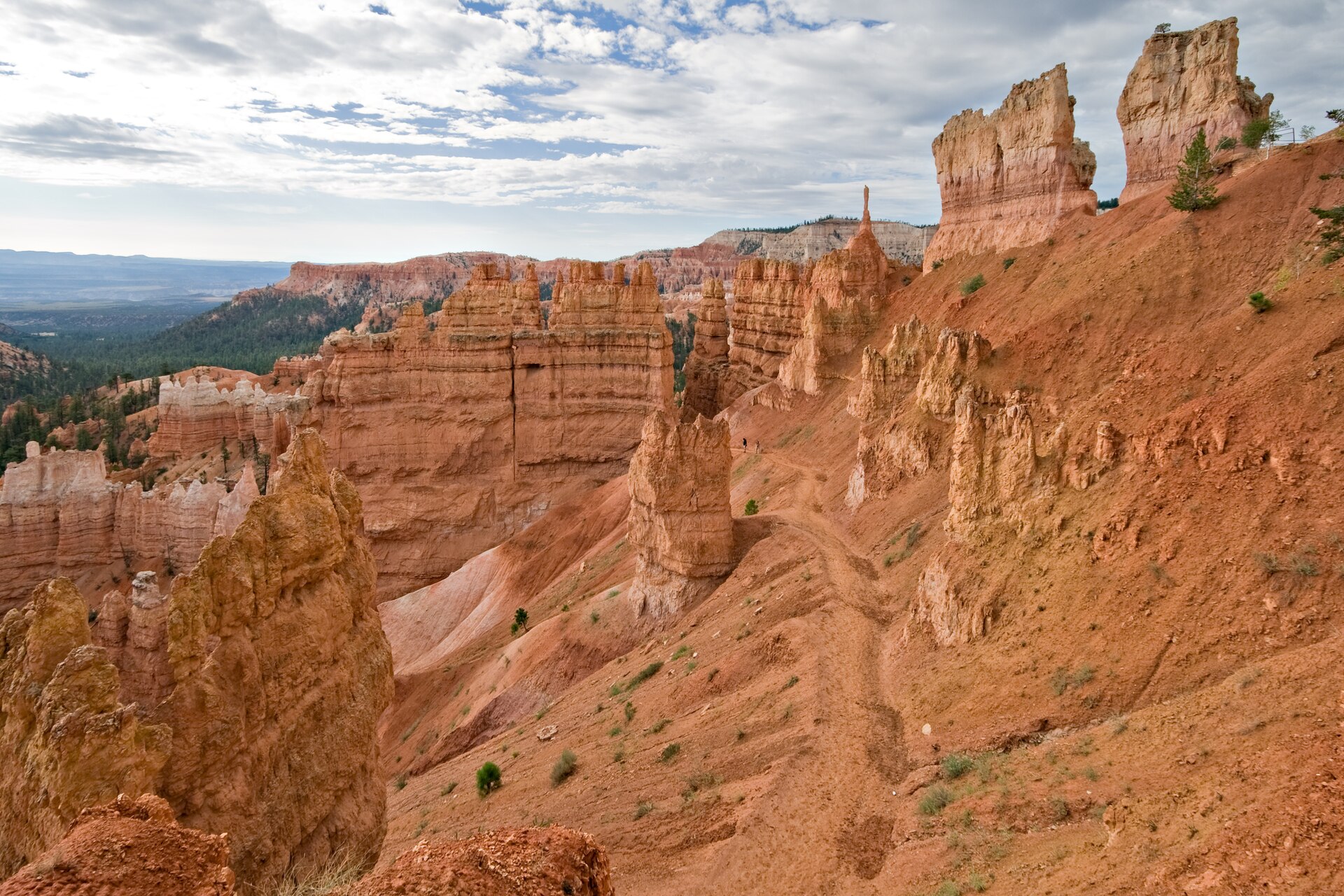
What Are the Best Viewpoints in Bryce Canyon?
The best viewpoints in Bryce Canyon National Park are the four around Bryce Amphitheater: Sunrise Point, Sunset Point, Inspiration Point and Bryce Point. If you have more time, the best stops on the Southern Scenic Drive are Rainbow Point, Yovimpa Point, Natural Bridge and Agua Canyon. For sunset, go to Paria View or Inspiration Point rather than Sunset Point.
Bryce Canyon Viewpoints at a Glance
| Viewpoint | Area | Best For | Time Needed |
|---|---|---|---|
| Bryce Point | Amphitheater | Best overall panorama, sunrise | 20–30 min |
| Inspiration Point | Amphitheater | Bird’s-eye view, late-day light | 20–30 min |
| Sunset Point | Amphitheater | Thor’s Hammer, Navajo Loop | 15–30 min |
| Sunrise Point | Amphitheater | Sunrise, Queen’s Garden | 15–30 min |
| Paria View | Amphitheater area | Sunset, quiet | 15–20 min |
| Fairyland Point | North of entrance | Fewer crowds, Fairyland Loop | 15–20 min |
| Rainbow Point | Scenic Drive | Highest view, Bristlecone Loop | 20–30 min |
| Yovimpa Point | Scenic Drive | Grand Staircase views | 10–15 min |
| Black Birch Canyon | Scenic Drive | Quick roadside view | 5–10 min |
| Ponderosa Canyon | Scenic Drive | Giant pines, cliffs | 10 min |
| Agua Canyon | Scenic Drive | The Hunter and the Rabbit hoodoos | 10–15 min |
| Natural Bridge | Scenic Drive | Red rock arch | 10–15 min |
| Farview Point | Scenic Drive | 90-mile views | 10–15 min |
| Piracy Point | Scenic Drive | Short walk, quiet | 10–15 min |
| Swamp Canyon | Scenic Drive | Where hoodoos return | 10 min |
In This Guide
- How the park road works and the best way to drive it
- The four Bryce Amphitheater viewpoints
- Paria View and Fairyland Point
- Southern Scenic Drive viewpoints
- Best viewpoints for sunrise, sunset and stars
- Half-day and full-day viewpoint plans
- Shuttle, parking, RVs, accessibility and seasons
- FAQs
How the Bryce Canyon Scenic Drive Works
Bryce Canyon has one entrance and one main road, which runs about 18 miles north to south along the edge of the Paunsaugunt Plateau. Think of the viewpoints in two groups:
Bryce Amphitheater (the first 3 miles). The famous part of the park, with the four main viewpoints (Sunrise, Sunset, Inspiration and Bryce Points) all overlooking the same giant bowl packed with hoodoos. They’re close together, linked by the Rim Trail and served by the free shuttle.
The Southern Scenic Drive (the next 15 miles). The road climbs through forest to Rainbow and Yovimpa Points, at 9,115 feet the highest viewpoints in the park. On the way there are nine overlooks with a different feel: fewer hoodoos, more cliffs, an arch and huge views across southern Utah. The shuttle doesn’t go here, so you’ll need a car.
Driving straight to the end of the road takes about 40 minutes without stops. With stops, the Southern Scenic Drive usually takes 2 to 3 hours.
The Best Way to Drive the Scenic Drive
Here’s the trick most first-time visitors miss: as you drive into the park, every viewpoint is on your left. So drive all the way to Rainbow Point first, then stop at the viewpoints on your way back north, when every pullout is on your right. The park recommends this too. You never have to turn across traffic, and the drive feels smooth instead of stop-start.
Your route looks like this: Visitor center → straight to Rainbow and Yovimpa Points → scenic stops heading north → back to the amphitheater.
One more tip: see the amphitheater first. If you only have a few hours, the four amphitheater viewpoints matter far more than the scenic drive. Add the drive when you have half a day or more.
The Four Bryce Amphitheater Viewpoints
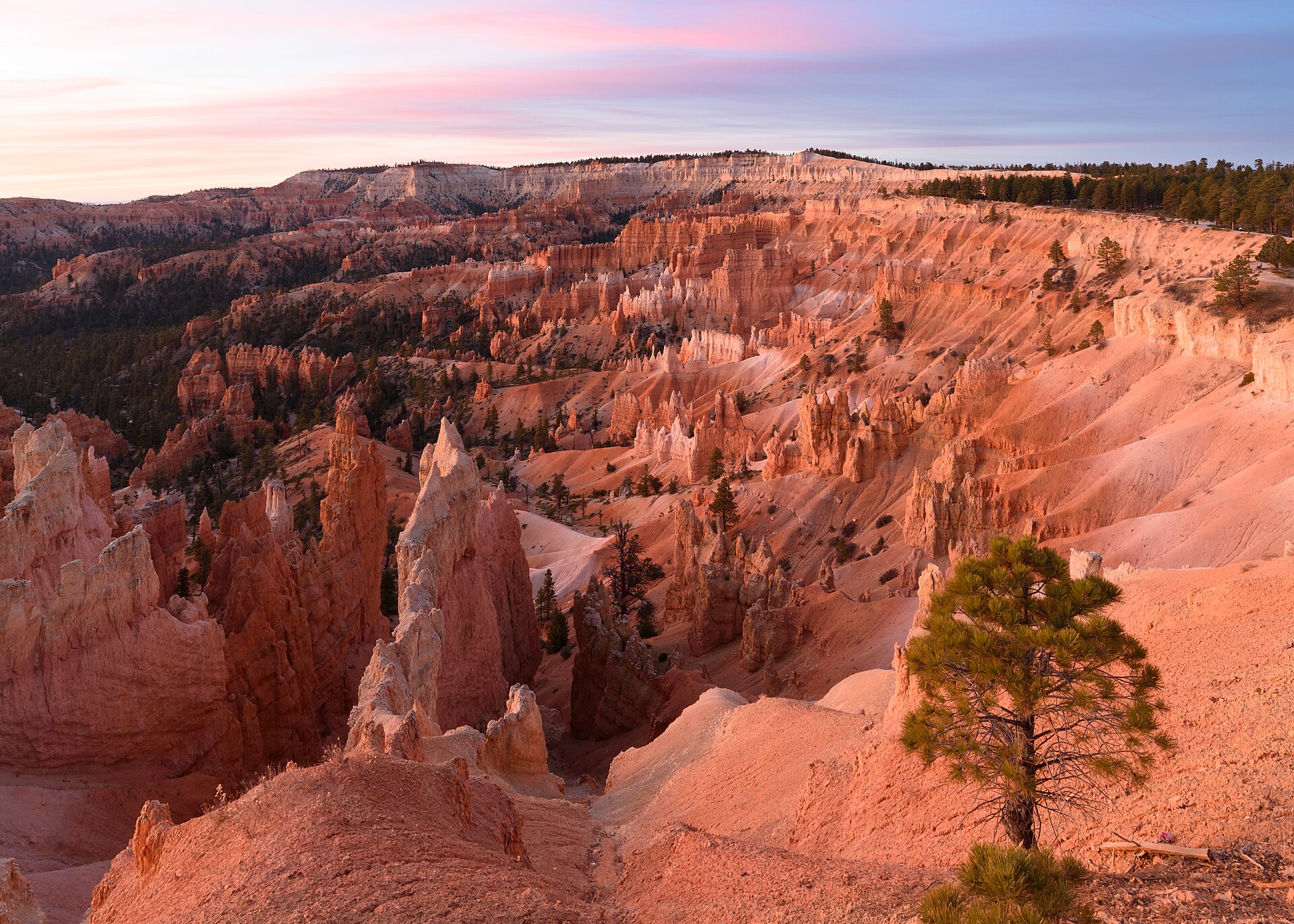
1. Sunrise Point
Best for: sunrise, starting Queen’s Garden · Time: 15 to 30 minutes · Facilities: parking, restrooms, general store nearby
Sunrise Point marks the northern end of Bryce Amphitheater. From the rim you look south and east across rows of hoodoos and fins, past a formation nicknamed the Sinking Ship, toward the distant Aquarius Plateau. Despite its name, the park says the view is just as good at the end of the day as at dawn.
It’s also one of the most practical stops in the park. The Queen’s Garden Trail starts here, the flat, paved Rim Trail links it to Sunset Point, and the general store and lodge are a short walk away. If you’re hiking the classic Queen’s Garden and Navajo Loop, start your day here.
2. Sunset Point
Best for: close hoodoo views, Thor’s Hammer, the Navajo Loop · Time: 15 to 30 minutes · Facilities: parking, restrooms, water, picnic tables
Sunset Point is the busy heart of the park, and for many people it’s the most dramatic first look. The ground drops away steeply right in front of you, the hoodoos of the Silent City crowd the canyon below, and just left of the viewpoint stands Thor’s Hammer, a tall, thin hoodoo with a big block balanced on top, the most photographed rock in the park.
The Navajo Loop starts here, and you can watch hikers zig-zag down the Wall Street switchbacks far below. One catch, despite the name: Sunset Point isn’t the best place for sunset. Like most Bryce viewpoints, it faces east, so the setting sun is behind you. It’s lovely in the late afternoon, but for the actual sunset, see the section below.
3. Inspiration Point
Best for: the bird’s-eye view, photography, late-day light · Time: 20 to 30 minutes
If you want to understand just how many hoodoos are packed into Bryce, go to Inspiration Point. The park describes it as a bird’s-eye view over the world’s largest collection of hoodoos, and the Silent City spreads out directly below you like rows of stone soldiers.
The viewpoint has three levels. The lower one is a few steps from the parking lot, but walk up the short, steep path to Upper Inspiration Point. It’s only a few minutes, and the view gets noticeably wider and better. No trails go down into the canyon from here, but the Rim Trail runs about 0.7 mile north to Sunset Point and 1.5 miles south to Bryce Point.
4. Bryce Point
Best for: the best overall panorama, sunrise · Time: 20 to 30 minutes · Trails: Peekaboo Loop, Hat Shop, Under-the-Rim
If you only visit one viewpoint in Bryce Canyon, make it Bryce Point. The park calls it perhaps the most iconic of the four, and it’s easy to see why. From the end of a narrow point of land, you look north across almost the entire amphitheater, with Inspiration, Sunset and Sunrise Points in the distance, the Silent City below, and the Wall of Windows rising out of the hoodoos.
Bryce Point is named after Ebenezer Bryce, a pioneer who settled below the cliffs in the 1870s and is said to have described the canyon as a terrible place to lose a cow. It’s also a trailhead for some of the park’s best hikes, including the Peekaboo Loop and the Hat Shop.
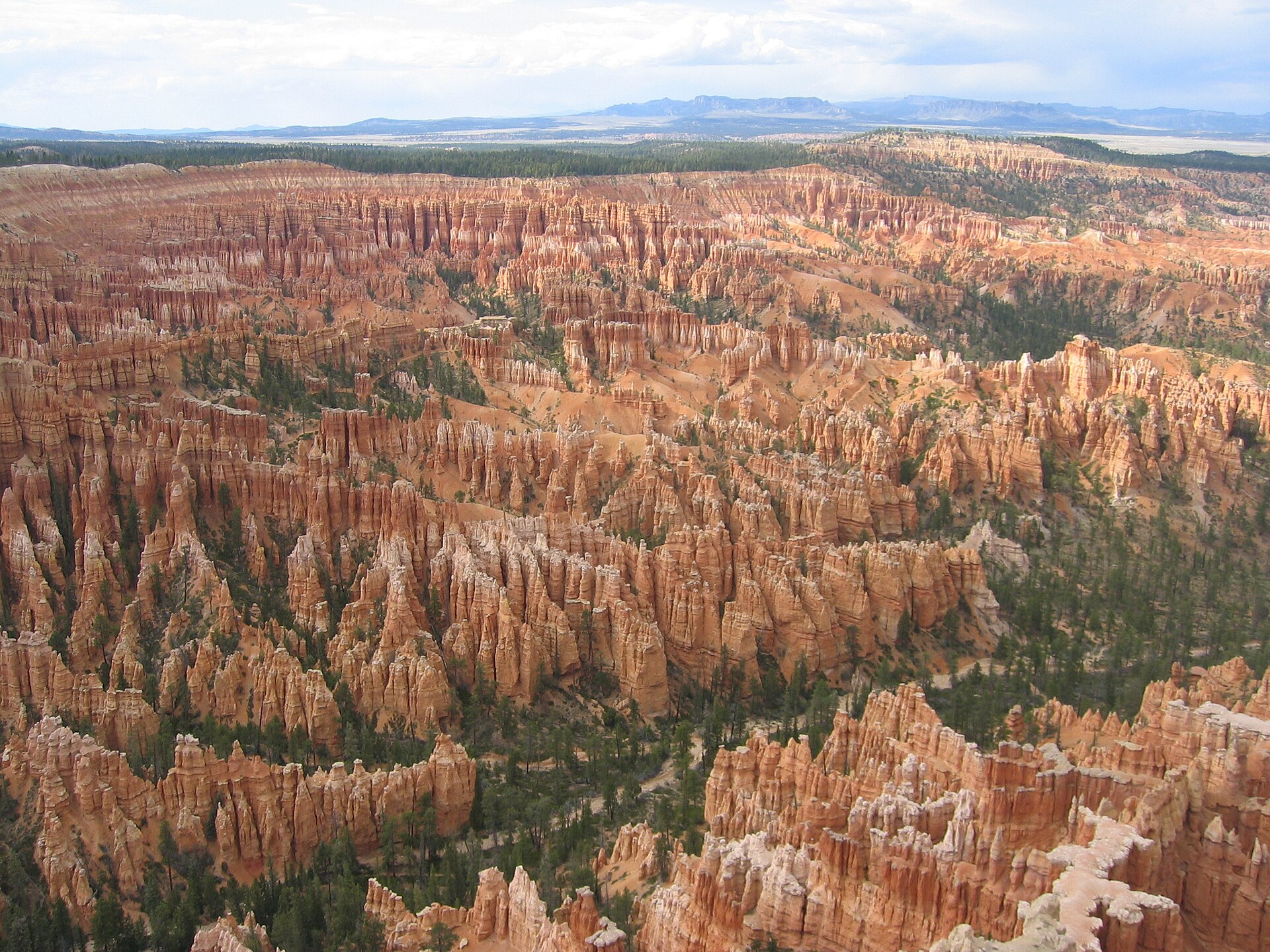
Which Amphitheater Viewpoint Is Best?
| Viewpoint | Best Feature | Best Time |
|---|---|---|
| Bryce Point | Widest panorama of the whole amphitheater | Sunrise |
| Inspiration Point | Looking straight down on the Silent City | Morning or late afternoon |
| Sunset Point | Close hoodoos, Thor’s Hammer | Morning to afternoon |
| Sunrise Point | Easy access, Queen’s Garden trailhead | Sunrise |
Short on time? Prioritize Bryce Point, then Inspiration Point, then Sunset Point. Sunrise Point moves up the list if you’re hiking Queen’s Garden.
Walking Between the Amphitheater Viewpoints
You don’t have to drive between every viewpoint. The Rim Trail links all four along the edge of the amphitheater, and the views between the official stops are just as good. The half mile between Sunrise and Sunset Points is paved, nearly flat and wheelchair accessible, which makes it the easiest walk in the park. South of Sunset Point the trail gets hillier on the way to Inspiration and Bryce Points.
In shuttle season, the smart move is to ride to Bryce Point and walk north, catching the shuttle back from wherever you stop. For more on the Rim Trail and the hikes below these viewpoints, see our guide to the best hikes in Bryce Canyon National Park.
Quieter Viewpoints Near the Amphitheater
5. Paria View
Best for: sunset, solitude · Time: 15 to 20 minutes · Access: short spur road off the road to Bryce Point
Paria View is one of the most overlooked viewpoints in the park and one of the best. It sits at the end of a short side road near Bryce Point and looks into a separate amphitheater more than 500 feet deep, toward the Paria River valley. Most visitors never come here, so it often feels peaceful even in summer.
Its big secret is the direction it faces. Unlike the main viewpoints, Paria View faces west, so it’s one of the few places in Bryce where you can watch the sun actually go down behind the rock formations. It’s also a good dark spot for stargazing. The parking area is small and the road is narrow, so it’s not a good choice for large RVs, and the spur road closes in winter.
6. Fairyland Point
Best for: fewer crowds, the Fairyland Loop · Time: 15 to 20 minutes · Access: short side road just inside the park boundary, before the entrance station
Fairyland Point is the northernmost viewpoint in the park, and many visitors drive right past the turnoff. That’s a shame, because the view across Fairyland Canyon toward Boat Mesa and the tall hoodoo spires below is beautiful and usually much quieter than the main amphitheater.
It’s also the starting point for the Fairyland Loop, one of the park’s best long hikes. The shuttle doesn’t stop here, so you’ll need your car, and the road isn’t plowed in winter, when it becomes a popular snowshoe route instead.
Southern Scenic Drive Viewpoints
Is the Southern Scenic Drive worth it? Yes, if you have at least half a day. The scenery is completely different from the amphitheater: the road climbs about 1,000 feet into cool spruce and fir forest, the hoodoos thin out into cliffs and buttes, and the views open up across the colorful layers of the Grand Staircase. Here are the viewpoints in the order you’ll reach them on your way back north.
7. Rainbow Point
Best for: the highest view in the park, the Bristlecone Loop · Time: 20 to 30 minutes, or about an hour with the hike · Facilities: parking, restrooms, picnic area
At 9,115 feet, Rainbow Point at the end of the road is the highest viewpoint in Bryce. It looks north back along the edge of the plateau, with layers of pink and orange cliffs stretching away into the distance. It feels noticeably cooler up here than at the amphitheater, so bring a layer.
The easy, one-mile Bristlecone Loop starts here and winds through high forest past twisted bristlecone pines, some of them around 1,800 years old. If you have the energy, it’s the best short walk on the whole scenic drive.
8. Yovimpa Point
Best for: huge views south over the Grand Staircase · Time: 10 to 15 minutes
Yovimpa Point shares a parking area with Rainbow Point, just a short walk away, but it faces the other direction. Instead of hoodoos, you look south across the Grand Staircase, the giant steps of colorful cliffs that drop all the way toward the Grand Canyon. On a clear day, the layers seem to go on forever. Treat Rainbow and Yovimpa as one stop and see both.
9. Black Birch Canyon
Best for: a quick roadside look · Time: 5 to 10 minutes
This small pullout gives a close view of steep, eroded cliffs right beside the road. The park jokes that the name is another of Bryce’s misnomers, since the trees here aren’t really black birch. It’s pleasant, but if you’re short on time, it’s the easiest stop to skip.
10. Ponderosa Canyon
Best for: giant pines and colorful cliffs · Time: about 10 minutes
Ponderosa Canyon is named for the huge ponderosa pines growing on the canyon floor below. From the rim you look down on their tops against a backdrop of bright orange cliffs. It’s a nice quick stop and a good spot for a picnic.
11. Agua Canyon
Best for: standout hoodoos, photos · Time: 10 to 15 minutes
Agua Canyon is one of the most memorable stops on the drive because of two big hoodoos standing right in front of the viewpoint. The larger one, wearing a little “hat” of trees, is known as the Hunter, and the smaller one to its right is the Rabbit. It’s a favorite with kids and an easy photo. Don’t skip this one.
12. Natural Bridge
Best for: the most famous sight on the scenic drive · Time: 10 to 15 minutes
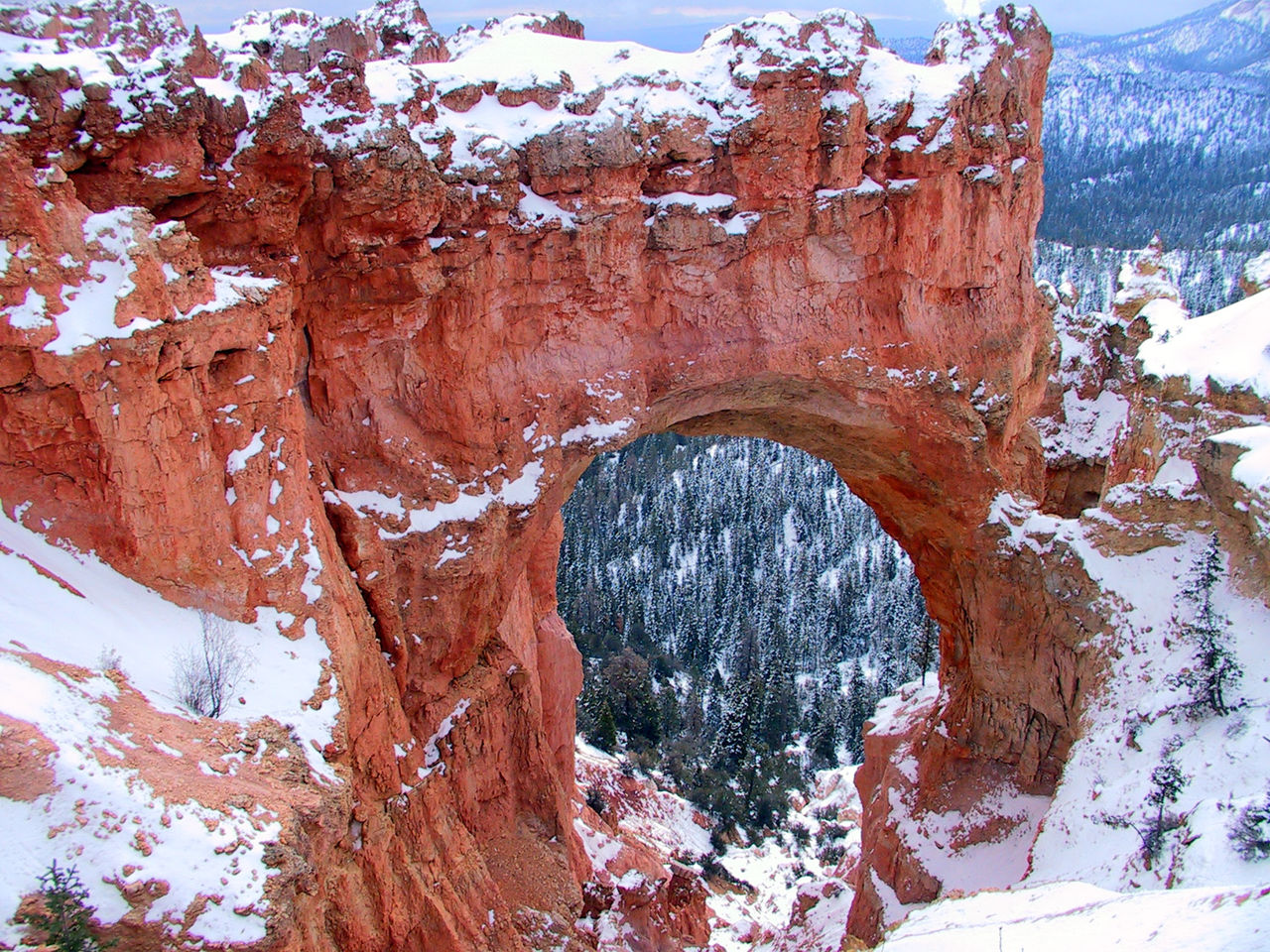
Natural Bridge is the star of the Southern Scenic Drive: a big red-orange arch, about 85 feet tall, with green forest showing through the opening. Strictly speaking it isn’t a bridge at all, since no stream carved it. It’s an arch, formed by ice freezing and expanding in cracks in the rock. Whatever you call it, it’s a short walk from the parking lot and one of the best value-for-time stops in the park.
13. Farview Point
Best for: the longest views in the park · Time: 10 to 15 minutes
Farview lives up to its name. On a clear day you can see across the Grand Staircase all the way to Navajo Mountain, about 90 miles away on the Utah-Arizona border. It’s at its best on crisp, clear days. Haze, smoke or low clouds can cut the view down a lot.
14. Piracy Point
Best for: a short walk and a quiet view · Time: 10 to 15 minutes
From the Farview Point parking area, a short, easy path through the forest leads north to Piracy Point. Few people make the walk, so you’ll often have it to yourself. The name comes from geology: streams on this side of the plateau are slowly “stealing” water from other drainages as the cliffs erode back.
15. Swamp Canyon
Best for: seeing the hoodoos return · Time: about 10 minutes · Trails: Swamp Canyon Loop
Swamp Canyon is where the landscape shifts back from the cliffs and buttes of the scenic drive to the hoodoo country of the amphitheater. It’s a quieter stop, and a small, sheltered canyon below the rim holds a little water and greenery, hence the name. It’s also the start of the peaceful Swamp Canyon Loop hike.
Which Scenic Drive Stops Are Worth It?
If you don’t want to stop everywhere, these are the must-sees: Rainbow and Yovimpa Points, Natural Bridge and Agua Canyon. Add Farview Point on a clear day and Ponderosa Canyon if you have time. Black Birch Canyon is the easiest one to skip.
Allow about 90 minutes for a quick drive with only the top stops, 2 to 3 hours for a relaxed drive, and an extra hour if you walk the Bristlecone Loop.
Best Bryce Canyon Viewpoints for Sunrise, Sunset and Stars
Best Viewpoints for Sunrise
The best places to watch sunrise in Bryce Canyon are Bryce Point and Sunrise Point. Because the main viewpoints face east, morning is when Bryce looks its best, as the first light hits the hoodoos and turns them glowing orange.
- Bryce Point gives the widest view and is often a little less crowded. It’s the photographer’s favorite.
- Sunrise Point is easy to reach and perfect if you’re starting the Queen’s Garden hike right after.
- Inspiration Point is a great third choice, looking straight down on the Silent City.
Arrive 20 to 30 minutes before sunrise, because the colors in the sky before the sun appears are often the best part. And dress warmly: even in summer, it’s often in the 40s at dawn on the rim.
Best Viewpoints for Sunset
The best places for sunset in Bryce Canyon are Paria View and Inspiration Point, not Sunset Point. Most viewpoints face east, so at sunset the sun drops behind you and the hoodoos fall into shadow. Paria View faces west, so you can watch the sun go down over the formations. Inspiration Point catches beautiful warm light on the hoodoos in the hour or so before sunset.
The best light on the rock usually comes 30 to 90 minutes before the sun actually sets, so get there early.
Best Viewpoints for Stargazing and Moonrise
Bryce is an International Dark Sky Park, and on a clear, moonless night the Milky Way stretches right over the hoodoos. Sunrise Point and Paria View are good dark spots that are easy to reach after dark. For something special, come the evening before a full moon and watch it rise over the amphitheater from Sunrise or Inspiration Point while the last sunset color is still on the rocks.
Bryce Canyon Viewpoint Plans
If You Have 2 Hours
Stay in the amphitheater. Visit Bryce Point and Inspiration Point, then park at Sunset Point and walk the paved rim to Sunrise Point and back. Skip the Southern Scenic Drive.
Half-Day Viewpoint Plan (About 4 Hours)
- Bryce Point and Inspiration Point.
- Drive straight to Rainbow and Yovimpa Points.
- On the way back: Agua Canyon, Natural Bridge and Farview Point.
- Finish with the rim walk between Sunset and Sunrise Points.
Full-Day Viewpoint Plan
Sunrise: Bryce Point.
Morning: Inspiration Point, then Sunset Point and the rim walk to Sunrise Point. Add the Queen’s Garden and Navajo Loop if you’re up for a hike.
Midday: Lunch and the visitor center.
Afternoon: Drive to Rainbow Point, walk the Bristlecone Loop, then stop at Yovimpa, Ponderosa Canyon, Agua Canyon, Natural Bridge, Farview and Piracy Points, and Swamp Canyon on the way back.
Evening: Sunset at Paria View or Inspiration Point.
If you also want to hike, don’t spend the whole morning driving between viewpoints. Do the amphitheater and a hike first while you’re fresh, and save the scenic drive for the afternoon. Our Bryce Canyon itinerary lays this out hour by hour for one, two or three days.
How Many Viewpoints Should You Visit?
For most first-time visitors, six to eight is plenty: Bryce Point, Inspiration Point, Sunset Point, Sunrise Point, Rainbow and Yovimpa Points, Natural Bridge and Agua Canyon. Seeing all 15 tends to blur together. A few great stops with time to really look beat a rushed tour of every parking lot.
Practical Tips for Visiting the Viewpoints
Do You Need the Shuttle?
No, you can drive to every viewpoint in your own car. But from spring to fall, parking at the four amphitheater viewpoints fills up by mid-morning. The free shuttle, which runs about every 15 minutes from early April to mid-October, stops at Sunrise, Sunset, Inspiration and Bryce Points, plus the lodge and visitor center. Park once at the shuttle station in Bryce Canyon City or the lot across from the visitor center, and ride from there. The shuttle doesn’t go to Paria View, Fairyland Point or the Southern Scenic Drive, so use your car for those.
Tips for RVs and Trailers
Parking for large vehicles is limited at the amphitheater viewpoints and very tight at smaller pullouts like Paria View. If you’re driving an RV or towing a trailer, consider leaving the trailer at your campground or the visitor center and using the shuttle for the amphitheater. Check the park’s oversized vehicle guidance before you go, since rules can change.
Are the Viewpoints Accessible?
Most viewpoints are a short walk from their parking lots. The paved Rim Trail between Sunrise and Sunset Points is wheelchair accessible and nearly flat, and Rainbow Point has accessible facilities. Upper Inspiration Point involves a short, steep climb. Snow and ice can make paths slippery in winter.
Viewpoints With Kids
Bryce’s viewpoints are great for families because the views are right by the parking lots. The catch is the edges: many overlooks have little or no railing, and the drops are steep. Keep young kids close and hold hands near the rim. Agua Canyon’s Hunter and Rabbit and the arch at Natural Bridge are usually big hits.
Bringing Your Dog
Leashed pets are allowed at paved viewpoints, in parking lots and on the paved rim walk between Sunrise and Sunset Points, but not on unpaved trails or the shuttle. That makes a driving tour of the viewpoints one of the best ways to see Bryce with a dog.
Viewpoints in Each Season
The viewpoints are open all year, but they feel different in every season. Summer brings full access and the biggest crowds, plus afternoon thunderstorms in July and August. If you hear thunder, leave the exposed rim and get into a building or your car, because Bryce has one of the highest lightning risks in Utah. Fall brings crisp air and clear views. Winter brings snow-covered hoodoos and very few people, but after big storms the road beyond Mile 3 may close for a while during plowing, and Paria View and Fairyland Point roads aren’t plowed at all.
For the best months to visit, see our guide to the best time to visit Bryce Canyon National Park, and check Bryce Canyon weather by month before you pack.
Common Scenic Drive Mistakes
- Stopping at every pullout. Pick the best and give them time.
- Stopping on the way south. Drive to the end first, then stop heading north.
- Going to Sunset Point for sunset. It faces east. Try Paria View or Inspiration Point.
- Skipping Bryce Point. It’s arguably the best view in the park.
- Only visiting Lower Inspiration Point. Walk up to the top level.
- Spending so long at viewpoints that there’s no time to hike. Even a short walk below the rim changes how you see the park.
Related Guides
Keep planning with these related guides:
- Queen’s Garden Trail Guide
- Navajo Loop Trail Guide
- Bryce Canyon With Kids
- Zion to Bryce Canyon Road Trip
Bryce Canyon Viewpoints: FAQs
What are the best viewpoints in Bryce Canyon?
Bryce Point, Inspiration Point, Sunset Point and Sunrise Point around Bryce Amphitheater, plus Rainbow Point, Yovimpa Point, Natural Bridge and Agua Canyon on the Southern Scenic Drive.
Which is the single best viewpoint in Bryce Canyon?
Bryce Point. It gives the widest view across the whole amphitheater, and the park calls it perhaps the most iconic of the four main viewpoints.
Where is the best place to watch sunrise in Bryce Canyon?
Bryce Point and Sunrise Point are the two most popular choices. Inspiration Point is also excellent.
Where is the best place to watch sunset in Bryce Canyon?
Paria View, which faces west, or Inspiration Point for warm late light on the hoodoos. Sunset Point faces east, so it isn’t ideal for the sunset itself.
How long is the Bryce Canyon Scenic Drive?
The main road is about 18 miles from the entrance to Rainbow Point. The first 3 miles cover the amphitheater, and the last 15 miles are the Southern Scenic Drive.
How long does the scenic drive take?
About 40 minutes each way without stops, or 2 to 3 hours for the Southern Scenic Drive with viewpoint stops.
Is the Southern Scenic Drive worth it?
Yes, if you have at least half a day. It adds the park’s highest viewpoints, Natural Bridge, ancient bristlecone pines and huge views across the Grand Staircase.
Does the shuttle go to all the viewpoints?
No. It serves the four amphitheater viewpoints, the lodge and visitor center. You’ll need a car for the Southern Scenic Drive, Paria View and Fairyland Point.
Can you see Bryce Canyon without hiking?
Yes. Nearly every viewpoint is a short walk from the parking lot, and a driving tour of the amphitheater and scenic drive shows you most of the park’s best scenery.
Are Bryce Canyon viewpoints open in winter?
Yes, the main viewpoints stay open all year. The road beyond Mile 3 can close temporarily after storms, and the Paria View and Fairyland Point roads aren’t plowed.
See the Amphitheater, Then Drive South
The four amphitheater viewpoints all look into the same giant bowl of hoodoos, yet each one shows it differently: close-up at Sunset Point, straight down at Inspiration Point, end to end at Bryce Point. Then the Southern Scenic Drive changes the whole picture, climbing into forest, past a red rock arch to the highest point in the park, where you can see how Bryce fits into the vast staircase of cliffs across southern Utah.
So don’t just pick one famous overlook and leave. See the amphitheater first, drive to the end of the road, and stop on the way back. And if you can, step off the rim at least once. For more ways to spend your time, read our guide to the best things to do in Bryce Canyon National Park.