
Bryce Canyon changes more with the seasons than most people expect.
Come in July and you might hike in a T-shirt all morning, then watch a thunderstorm roll across the plateau after lunch. Come back in January and the same orange hoodoos could be buried in fresh snow, with icy trails and nights far below freezing. Same park, completely different trip.
So the best time to visit Bryce Canyon National Park really depends on what you want from it: easy hiking, fewer people, snow on the hoodoos, dark skies or a smooth family road trip. This guide walks through every season and every month, using the park’s own weather records, so you can pick the right time for your trip instead of guessing.
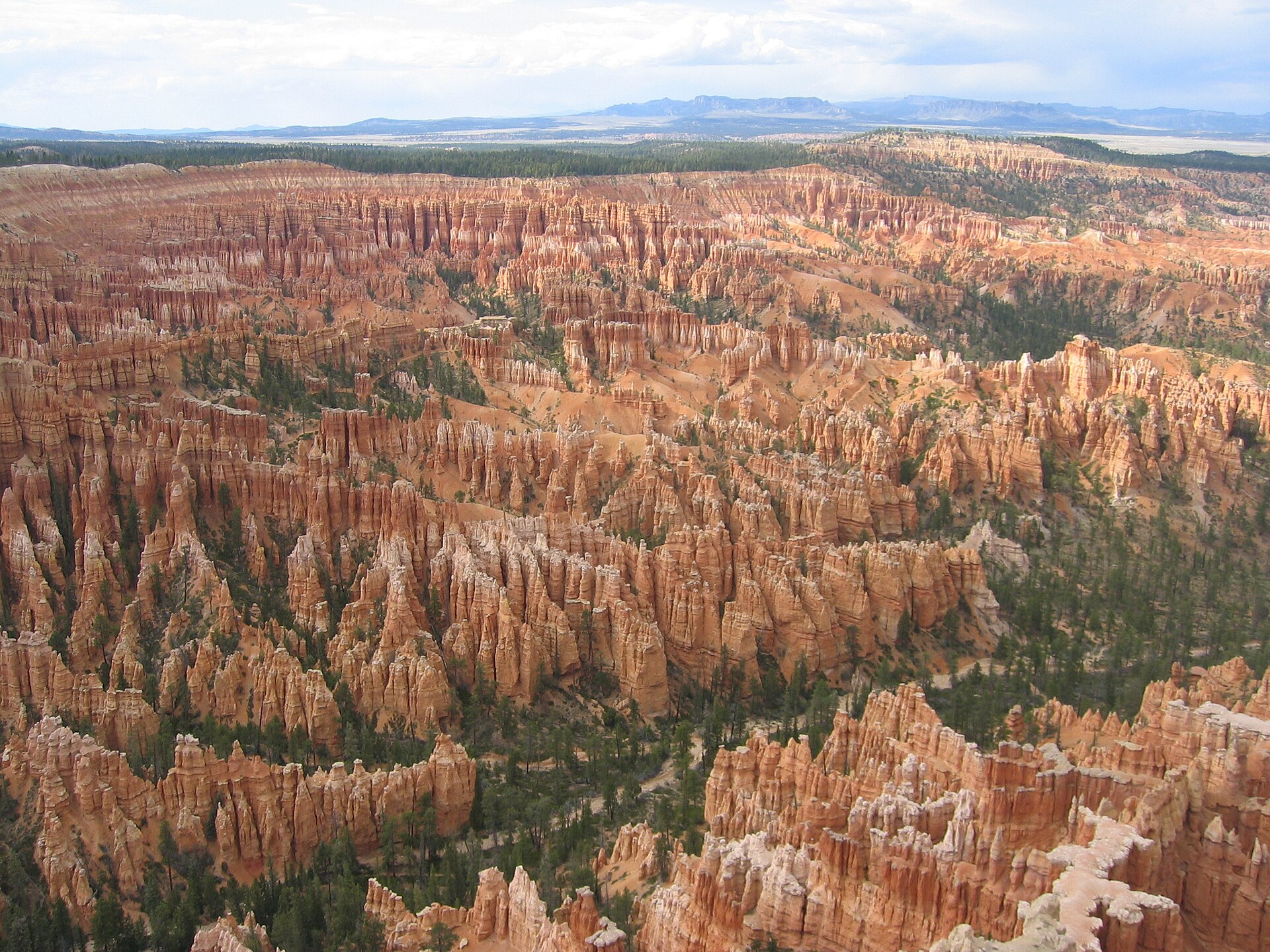
When Is the Best Time to Visit Bryce Canyon National Park?
The best time to visit Bryce Canyon National Park is May through June or September through early October. These months give you comfortable hiking weather, open trails, the free park shuttle and fewer crowds than July and August, without the snow and ice of winter. If you can only pick one month, September is hard to beat.
Summer works well too, especially for families, but it’s the busiest time and July and August bring almost daily afternoon thunderstorms. Winter is quiet and stunning, but it’s a different kind of trip, with snow, icy trails and some closures.
Best Time to Visit Bryce Canyon at a Glance
| Time of Year | Best For | Main Downside |
|---|---|---|
| March | Snow photos, quiet viewpoints | Still winter, icy trails |
| April | Fewer people, snow and sun mixed | Unpredictable trails, mud |
| May | Hiking, first visits, Zion + Bryce trips | Late snow still possible |
| June | Long days, hiking, stargazing | Crowds start building |
| July–August | Families, full services | Biggest crowds, thunderstorms |
| September | Hiking, photography, best all-round month | Still fairly busy early on |
| October | Crisp hiking, lighter crowds | Freezing nights, early snow |
| November–February | Snow on hoodoos, solitude | Cold, ice, road and trail closures |
Quick picks: Best overall: May, June and September. Best balance of weather and crowds: May and September. Best for snow: December to February. Fewest people: November to March.
In This Guide
- Why Bryce weather is different
- Bryce Canyon weather by month
- Spring, summer, fall and winter month by month
- Best time for hiking, photos, stargazing, families and more
- Best time to avoid crowds
- Which month to avoid
- Booking, packing and altitude tips
- FAQs
Why Bryce Canyon’s Weather Is Different From the Rest of Southern Utah
Bryce Canyon sits much higher than most people realize. The rim is around 8,000 feet, and the far southern viewpoints top 9,000 feet. That’s roughly 4,000 feet higher than the floor of Zion Canyon, only about two hours away.
That height changes everything. Summer days are pleasant rather than scorching. Nights are cold all year. From October to May, temperatures drop below freezing almost every night, and it can snow in October or well into April.
So don’t pack for Bryce as if it’s “Utah in summer.” Pack for a mountain park. Layers matter in every season.
Bryce Canyon Weather by Month
These are the park’s long-term averages from National Park Service records. They’re averages, not forecasts, and at this elevation the weather can change fast, so always check the forecast a few days before you go. For record temperatures, rainfall, daylight hours and packing tips for each month, see our full guide to Bryce Canyon weather by month.
| Month | Avg High | Avg Low | Avg Snow | Thunderstorm Days |
|---|---|---|---|---|
| January | 37°F | 15°F | 17 in | 0 |
| February | 38°F | 17°F | 18 in | 0 |
| March | 45°F | 23°F | 17 in | 0 |
| April | 54°F | 29°F | 8 in | 1 |
| May | 64°F | 37°F | 2 in | 3 |
| June | 75°F | 45°F | Trace | 2 |
| July | 80°F | 53°F | 0 | 11 |
| August | 77°F | 50°F | 0 | 12 |
| September | 70°F | 42°F | Trace | 4 |
| October | 58°F | 32°F | 3 in | 1 |
| November | 45°F | 23°F | 10 in | 0 |
| December | 36°F | 15°F | 14 in | 0 |
Two things jump out. First, look at the gap between day and night. Even in July, you can go from about 80°F in the afternoon to the low 50s after dark. Second, look at July and August. That jump in thunderstorm days is the summer monsoon, and it shapes how you should plan a summer visit.
Spring at Bryce Canyon (March to May)
Spring at Bryce doesn’t arrive all at once. March still feels like winter, April flips between snow and sunshine, and by May things finally settle into good hiking weather. Crowds are lighter than summer, and you may catch early wildflowers along the roads and meadows.
Bryce Canyon in March
Think of March as late winter, not spring. Highs average around 45°F, lows around 23°F, and the month still averages about 17 inches of snow, the same as January. Spring storms can dump heavy snow and affect roads across the region.
That said, March can be lovely if you want snow on the hoodoos without the deepest cold of winter. Viewpoints are quiet, and you’ll often have the rim nearly to yourself. It’s a poor fit if you’re counting on dry trails or a tight schedule.
Bryce Canyon in April
April is the real turning point. Highs climb to about 54°F, but nights still average below freezing, and the month averages around 8 inches of snow. On one trip you could get a warm sunny hike, a muddy trail, an icy switchback and a snow shower, sometimes on the same day.
The free park shuttle starts up in early April (April 3 in 2026), which makes getting around easier. April rewards flexible travelers: fewer people, cool hiking when the sun is out, and a decent chance of snow-dusted hoodoos for photos. Just bring traction for your boots and check trail conditions at the visitor center.
Bryce Canyon in May
May is one of the best months to visit Bryce Canyon. Average highs reach about 64°F with lows near 37°F, which is close to perfect hiking weather. Days are long, most winter conditions have cleared, and summer crowds and storms haven’t fully arrived yet.
It’s a great month for first-time visitors, families and anyone pairing Bryce with Zion, which is still comfortable rather than hot in May. Snow isn’t impossible early in the month, so keep a warm jacket handy. A 60-degree afternoon doesn’t mean a warm sunrise.
Summer at Bryce Canyon (June to August)
Summer is the easiest time to visit in terms of access. Every road, trail, campground and ranger program is usually running, the shuttle has its longest hours, and the lodge is open. It’s also when most people come, so expect busy viewpoints and full parking lots by mid-morning.
The upside of the high elevation is that Bryce stays far cooler than the rest of southern Utah. While Zion and Moab bake in the 100s, Bryce usually tops out in the 70s or low 80s.
Bryce Canyon in June
June might be the most comfortable month of the year. Highs average about 75°F, lows about 45°F, and it’s one of the driest months, with only a couple of thunderstorm days on average. You get the longest days of the year, which means more time for hiking and late sunsets on the rim.
June is also a big month for the night sky. The park’s yearly Astronomy Festival usually runs in early summer (it was June 11–13 in 2026), with telescope viewing, evening talks and family activities. Even then, nights are chilly, often in the 40s, so bring a warm layer for stargazing.
Bryce Canyon in July
July is the warmest month, with highs around 80°F and lows around 53°F. Warm is relative here, though, and most days still feel pleasant.
The bigger issue is thunderstorms. July averages about 11 thunderstorm days, usually brief but intense afternoon storms with heavy rain and frequent lightning. The open rim is one of the worst places to be when lightning strikes. The simple plan: hike early, aim to be off exposed trails and overlooks by early afternoon, and if you hear thunder, get inside a building or a hard-topped car.
Bryce Canyon in August
August is still warm, averaging about 77°F by day and 50°F at night, and it has the most thunderstorm days of the year, around 12 on average. It’s also the wettest month for rain.
That doesn’t make August a bad month. It just makes mornings precious. A good August day looks like this: sunrise at the rim, a hike right after, lunch and the visitor center or scenic drive during the stormy hours, then back to a viewpoint for sunset once the clouds clear. Storm clouds over the hoodoos can make for some of the best photos of the year, as long as you watch them from somewhere safe.
The Bryce Canyon Shuttle: When It Runs
The free park shuttle is one of the best reasons to visit between spring and fall. It’s included with your entrance fee, buses come about every 15 minutes, and it links Bryce Canyon City, the visitor center, the lodge and the four main viewpoints of Bryce Amphitheater. It’s optional, but on a busy summer day it saves a lot of circling for parking.
| 2026 Dates | Shuttle Hours |
|---|---|
| April 3 – May 8 | 8 a.m. to 6 p.m. |
| May 9 – September 20 | 8 a.m. to 8 p.m. |
| September 21 – October 18 | 8 a.m. to 6 p.m. |
| Late October – March | No shuttle; drive yourself |
Dates shift a little each year, so check the park’s shuttle page before you travel. Outside shuttle season, driving yourself is usually easy because there are far fewer cars.
Should You Avoid Bryce Canyon in Summer?
No. Summer is popular for good reasons: long days, warm weather, everything open, the shuttle, ranger programs and horseback rides. You just need to start early, use the shuttle, and plan around afternoon storms in July and August. If crowds bother you more than anything else, though, the shoulder months will suit you better.
Fall at Bryce Canyon (September to November)
For a lot of travelers, fall is the sweet spot. September still feels like summer without the storms, October turns crisp and quiet, and November slides into winter. Summer crowds thin out, and patches of golden aspen add color to the forest.
Bryce Canyon in September
September is arguably the best month to visit Bryce Canyon. Highs average about 70°F and lows about 42°F. Thunderstorms drop from 12 days in August to around 4, the shuttle and most services are still running, and crowds start easing after Labor Day.
It’s ideal for longer hikes like the Fairyland Loop or Peekaboo Loop, for sunrise and sunset photography, and for a Zion and Bryce road trip, since Zion finally cools down too. The first half of the month is busier than the second, so late September is the sweet spot if you want both good weather and more space.
Bryce Canyon in October
October can be fantastic. Highs average around 58°F with lows near freezing at 32°F. The air feels clean and sharp, midday hiking is very comfortable, and the park is noticeably quieter. The shuttle usually runs until mid-October.
Just don’t expect guaranteed dry fall weather. The park itself says October snowstorms are not unusual, even though many days are sunny. Bring gloves and a hat for sunrise, a warm jacket, and plans that can bend if a storm blows in. October at Bryce is a very different month from October in Zion.
Bryce Canyon in November
November is when winter really arrives. Highs drop to about 45°F, lows to about 23°F, and the month averages around 10 inches of snow. Visitor numbers fall off sharply, and the park feels peaceful.
Seasonal services start closing, too. The shuttle has stopped, Sunset Campground closes for winter (North Campground stays open year-round, weather permitting), and the lodge closes for the season. November suits flexible travelers better than anyone on a tight road-trip schedule.
Winter at Bryce Canyon (December to February)
Winter turns Bryce into a different park. Snow settles on the orange and white hoodoos, the plateau goes quiet, and snowshoeing and cross-country skiing take over from summer hiking. Bryce Canyon stays open 24 hours a day, every day of the year, so winter isn’t a closed season. It’s a different trip.
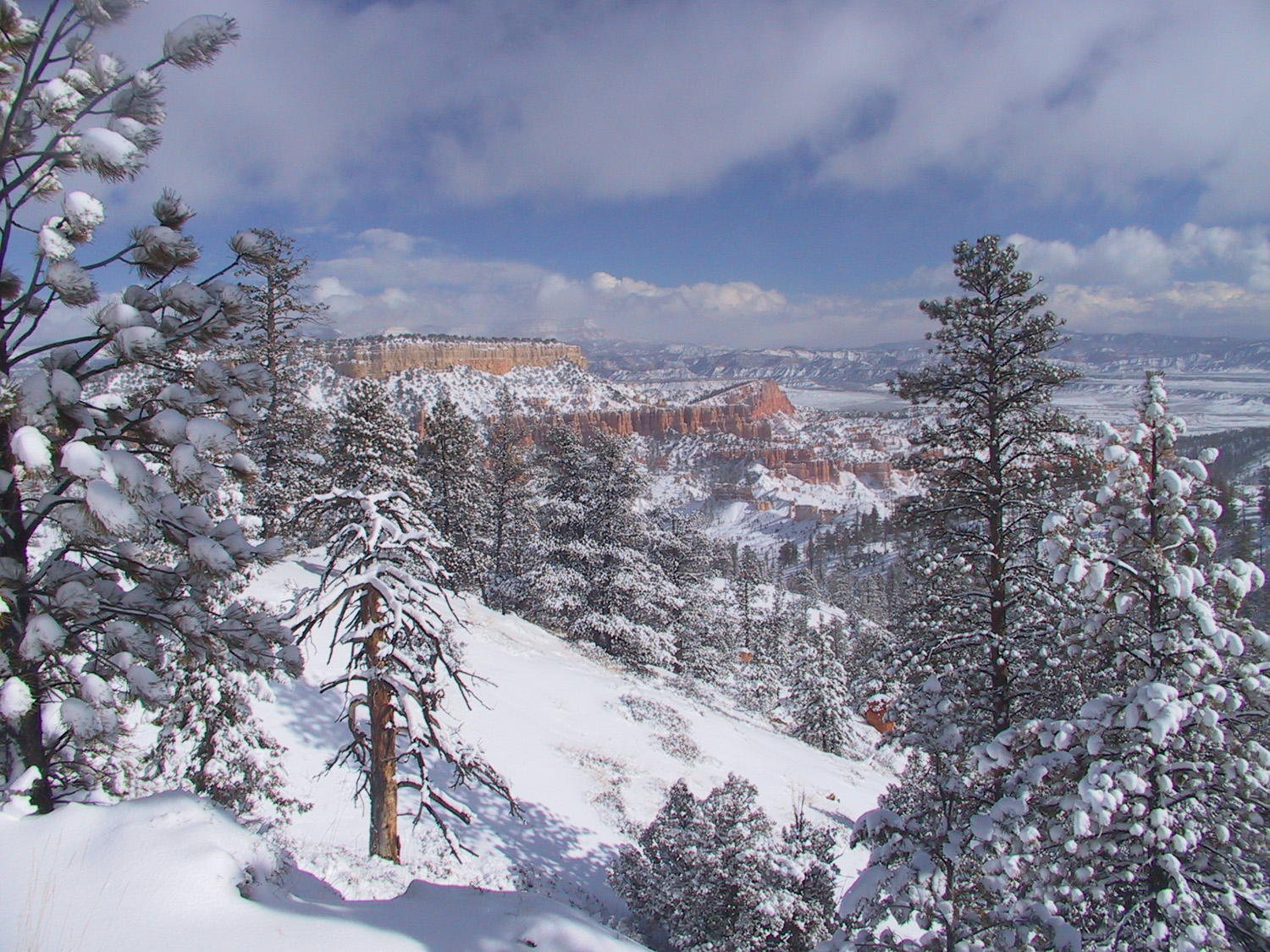
Bryce Canyon in December
December is the coldest month by average high, about 36°F, with lows around 15°F and roughly 14 inches of snow. Daylight is short, so sunrise and sunset come at friendlier hours. The holiday weeks between Christmas and New Year’s are busier than the rest of the month, but still nothing like summer.
Bryce Canyon in January
January is deep winter: highs around 37°F, lows around 15°F and about 17 inches of snow. Record lows here have dropped well below zero. This is also when you’re most likely to see that classic picture of bright white snow against red rock.
After big storms, the park may close the main road beyond Mile 3 while plows clear the rest of the scenic drive. The Bryce Amphitheater area gets cleared first, so the famous viewpoints usually reopen quickly.
Bryce Canyon in February
February is still firmly winter, with highs near 38°F, lows near 17°F and the most snow of any month, around 18 inches on average. It’s a great month for snowshoeing, cross-country skiing on the rim and quiet overlooks.
It also has Bryce’s biggest winter event. The Bryce Canyon Winter Festival takes place every Presidents’ Day weekend in mid-February at Ruby’s Inn, just outside the park. It’s been running for decades and includes guided snowshoe and ski tours, clinics, photography workshops, ski archery and races. If you want winter with some structure and company, this is the weekend to go. Book your room early, because it’s one of the few busy weekends of winter.
Winter Trail and Road Closures
A few things normally close for the whole winter:
- The Wall Street side of the Navajo Loop, because of rockfall danger. The Two Bridges side usually stays open when conditions allow.
- The Rim Trail between Inspiration Point and Bryce Point.
- Fairyland Point Road and Paria View Road, two spur roads that aren’t plowed. They make great snowshoe routes instead.
Popular trails like Queen’s Garden pack down into hard ice in winter. Microspikes or similar traction on your boots make a huge difference, and you can usually rent them nearby. Always check the park’s current conditions page the morning you go.
Is Bryce Canyon Worth Visiting in Winter?
Yes, if snow and solitude matter more to you than easy hiking. You’ll trade some trails and comfort for some of the most striking scenery in Utah and viewpoints with almost nobody on them. If you’re not comfortable driving on snowy roads, or you want long hikes below the rim, pick a warmer month.
Best Time to Visit Bryce Canyon for Your Trip Style
Best Time for Hiking
The best months for hiking in Bryce Canyon are May, June, September and early October. Temperatures are comfortable, the popular trails are usually clear of snow and ice, and you don’t have to race summer thunderstorms every afternoon. July and August still work if you hike early.
For the classic Queen’s Garden and Navajo Loop, those same months are ideal. In winter, remember the Wall Street side of the Navajo Loop is closed, and you’ll want traction on your boots. Whatever the season, start early. The light is better, the trails are cooler and parking is easier. For trail ideas, see our guide to the best hikes in Bryce Canyon National Park, with every major trail compared by distance, difficulty and time.
Best Time for Photography
Bryce photographs well all year, but the season changes the picture. Spring can mix snow with green. Summer brings dramatic storm clouds. Fall gives clear air and softer light. Winter gives the strongest contrast of all, with white snow on orange rock.
For an easy photo trip without winter driving, go in September or October. For the most dramatic shots, go the morning after a fresh winter snow, as long as the roads are safe.
Best Time for Sunrise
Sunrise is worth it in every season, and the hoodoos glow brightest in the first light. The real question is how cold you’re willing to get. Even in July, mornings can be in the 50s, and in spring, fall and winter, sunrise is properly cold. Bring gloves, a hat and a warm jacket, and get to the viewpoint 20 to 30 minutes before the sun comes up. In winter, sunrise comes later, so you don’t need such an early alarm.
Best Time for Stargazing
Bryce Canyon is an International Dark Sky Park and one of the best places in the country to see the stars. Late spring through early fall is the most comfortable time, since you’re not standing outside at 15°F. The Milky Way is most visible in summer, and the yearly Astronomy Festival usually happens in June.
Timing around the moon matters more than the month. Plan your nights around the new moon, when the sky is darkest. Winter skies can be incredibly clear too, if you can handle the cold. Ranger-led astronomy programs run through much of the year, so check the park calendar when you arrive.
Best Time for Families
For families, late May, June and September work best. Trails are open, the shuttle runs, the Junior Ranger program is in full swing, and you avoid both winter ice and the worst of the summer storms. July and August are fine too, especially around school holidays. Just plan outdoor time for the morning.
Best Time for Snow
December through February is the most reliable time for snow, with February averaging the most. March can still be very snowy. For snowshoeing and cross-country skiing, mid-winter after a good storm is ideal, and Presidents’ Day weekend adds the Winter Festival.
Best Time for Fall Colors
Bryce isn’t a famous fall foliage destination, but golden aspen and red shrubs add color to the forest from late September into October. The exact timing changes every year with temperature and elevation, so treat the color as a bonus rather than booking a non-refundable trip around a specific week.
Best Time for Wildflowers
Late spring into early summer is the best time for wildflowers, with yellow blooms appearing along roadsides and meadows. Because the park covers a wide range of elevations, flowers bloom at different times in different places. Lower areas bloom first, and the high southern end catches up later.
Best Time for Horseback Riding and Mossy Cave
Guided horseback rides below the rim run in the warmer months, roughly spring through fall, so plan for May to September if a ride is on your list and book ahead in summer. The small waterfall at Mossy Cave usually flows from about May to October. In winter, the same spot turns into a wall of icicles.
Best Time for a Zion and Bryce Canyon Road Trip
If you’re visiting both parks, aim for May, late September or early October. The tricky part is that the two parks feel like different climates. Zion sits far lower and gets very hot in summer, while Bryce can still be snowy in spring. Shoulder season gives you a good middle ground for both. Our guide to things to do in Zion National Park covers the Zion side of the trip.
Best Time to Visit Bryce Canyon to Avoid Crowds
The quietest time to visit Bryce Canyon is November through March, followed by April and late October. Most visitors come between late spring and early fall, with June, July and August the busiest.
The trade-off is real, though. Fewer people usually means colder weather, fewer services and a chance of snow and closures. Don’t pick February just because it’s quiet if what you really want is easy hiking. For most people, late September or late April to early May gives the best mix of space and comfort.
Best Day and Time of Day to Visit
Weekdays are calmer than weekends in every season. Holiday weekends, like Memorial Day, the Fourth of July, Labor Day and Presidents’ Day, are the busiest days of their seasons. Within any day, the main viewpoints are quietest before about 9 a.m. and after 5 p.m. Midday is when parking at Sunset and Sunrise Points fills up, which is exactly when the shuttle helps most.
Peak Summer vs Shoulder Season
| Peak Summer (June–Aug) | Shoulder (Apr–May, Sep–Oct) | |
|---|---|---|
| Crowds | Busiest | Lighter |
| Weather | Warmest, afternoon storms | Cooler, more changeable |
| Daylight | Longest days | Shorter days |
| Services | Everything open | Most open, some seasonal changes |
| Hiking | Good if you start early | Often the best of the year |
| Best for | Families, convenience | Hikers, photographers |
Neither one is automatically better. If convenience matters most, summer wins. If comfortable temperatures and more breathing room matter most, the shoulder seasons win.
Which Month Should You Avoid?
There’s no month everyone should avoid. It depends on what would ruin your trip:
- Skip July and August if you hate crowds or don’t want to plan your days around thunderstorms.
- Skip December to February if you’re not comfortable driving in snow or you want long, dry hikes.
- Skip March and April if you need predictable trail conditions.
- Skip late October and November if freezing nights or a surprise snowstorm would wreck your plans.
Best Month to Visit Bryce Canyon by Traveler Type
| If You Are… | Go In |
|---|---|
| A first-time visitor | May or September |
| A hiker | May, June, September or early October |
| A photographer | September, October or winter after snow |
| A family | Late May, June or September |
| A stargazer | June to September, around a new moon |
| Avoiding crowds | April, late October or winter |
| A snow lover | December to February |
| Doing Zion + Bryce | May or late September |
| Chasing fall color | Late September to mid-October |
| Chasing wildflowers | Late spring to early summer |
Planning Tips: Booking, Altitude and Packing
Do You Need a Reservation for Bryce Canyon?
No. You don’t need a reservation or timed-entry ticket to enter Bryce Canyon in any season. The park is open 24 hours a day, 365 days a year. You’ll still need to book campsites, the lodge, horseback rides and some special programs separately. Entrance fees and the 2026 nonresident fee are covered in our Bryce Canyon things to do guide.
When to Book Lodging
There’s only one lodge inside the park, and it’s open seasonally, roughly spring through fall. Rooms there and in Bryce Canyon City fill up fast for summer, September and holiday weekends, so book several months ahead for those dates. In-park campsites in summer should be reserved as early as the booking window allows. In winter and early spring you can often book much closer to your trip, and prices are usually lower. Tropic, about 15 minutes away, is a quieter and often cheaper base.
Watch Out for the Altitude
At 8,000 to 9,000 feet, many visitors feel short of breath, get headaches or tire faster than usual, especially if they came straight from sea level. This happens in every season. Drink plenty of water, take the climbs out of the amphitheater slowly, and give yourself an easy first afternoon on the rim before a big hike.
What to Pack by Season
| Season | Don’t Forget |
|---|---|
| Spring | Warm jacket, waterproof boots, boot traction, layers |
| Summer | Sun hat, sunscreen, rain jacket, a warm layer for night |
| Fall | Gloves and hat for sunrise, warm jacket, layers |
| Winter | Insulated jacket, microspikes, snow boots, hand warmers |
In every season, bring good hiking shoes with grip, a refillable water bottle, sunglasses for the strong high-altitude sun, and a headlamp if you plan to stay for the stars.
Common Mistakes When Choosing When to Visit
- Assuming Bryce is hot because it’s in southern Utah. The elevation keeps it much cooler than Zion, Moab or Las Vegas.
- Booking July or August without a storm plan. These are the park’s thunderstorm months, so hike in the morning.
- Packing only summer clothes in June. Nights still drop into the 40s.
- Expecting dry weather in October. Early snowstorms happen.
- Thinking the park closes in winter. It’s open all year. Only some trails and spur roads close.
- Hiking in winter without traction. Popular trails turn into packed ice.
- Looking only at temperature. Crowds, storms, snow, daylight and the shuttle schedule matter just as much.
Related Guides
Keep planning with these related guides:
Best Time to Visit Bryce Canyon: FAQs
What is the best time to visit Bryce Canyon National Park?
For most people, May through June and September through early October. These months offer comfortable hiking weather, open trails, the free shuttle and fewer crowds than midsummer.
What is the best month to visit Bryce Canyon?
September is the best single month for most visitors, with highs around 70°F, far fewer thunderstorms than August and thinning crowds. May is a close second.
Is Bryce Canyon crowded in summer?
Yes. June through August is the busiest time, and parking at the main viewpoints fills by mid-morning. Using the free shuttle and starting early makes a big difference.
Is October a good time to visit Bryce Canyon?
Yes, especially early October. Days average around 58°F and crowds are lighter, but nights are near freezing and snowstorms are possible, so bring warm layers and flexible plans.
When does it snow at Bryce Canyon?
Snow can fall from October through April or even May. December through March is the snowiest stretch, and February averages the most snow, around 18 inches.
What is the hottest month at Bryce Canyon?
July, with an average high of about 80°F. That’s mild compared with the rest of southern Utah because of the park’s high elevation.
What is the coldest month at Bryce Canyon?
December and January are the coldest, with average lows around 15°F and highs in the mid to upper 30s.
When does the Bryce Canyon shuttle run?
From early April to mid-October. In 2026 it ran April 3 to October 18, with the longest hours, 8 a.m. to 8 p.m., from May 9 to September 20.
Is Bryce Canyon open year-round?
Yes. The park is open 24 hours a day, every day. In winter, some trails and spur roads close and the main road can close temporarily after storms while it’s plowed.
Is Bryce Canyon worth visiting in winter?
Yes, for snow on the hoodoos, snowshoeing and quiet viewpoints. Plan for icy trails, cold temperatures and possible road closures after storms.
So, When Should You Go?
If this is your first trip, keep it simple. Pick May for fresh spring hiking, June for long days and starry nights, September for the best all-round balance, or early October if you don’t mind cold mornings. Pick winter if snow-covered hoodoos matter more to you than having every trail open.
There’s no perfect season for everyone. But for most travelers, the best time to visit Bryce Canyon National Park is late spring or early fall, when the weather is kind, the trails are open and you can actually find a quiet spot on the rim.
Once you’ve picked your dates, map out each day with our Bryce Canyon itinerary, and find more ideas in our guide to the 21 best things to do in Bryce Canyon. Heading further east? Don’t miss our guide to things to do in Hanksville, Utah, or browse all of our travel guides.