
The Beehive is only 1.4 miles long, so why does everyone call it one of the hardest hikes in Acadia National Park?
Because you don’t really walk up it. You climb it. The trail goes straight up a 450-foot granite cliff above Sand Beach on iron rungs and ladders bolted into the rock, across narrow ledges, and over a gap on metal bars. There are no railings, and the drop-offs are real.
So the honest answer to “How hard is the Beehive Trail?” is this: it’s short and not very tiring, but it’s strenuous because of the exposure. Your comfort with heights matters far more than your fitness.
This guide breaks down exactly what makes the Beehive hard, what each section feels like, how to get a parking spot, when to go, and which easier hikes nearby give you similar views without the cliffs. By the end, you’ll know whether it’s the right hike for you.
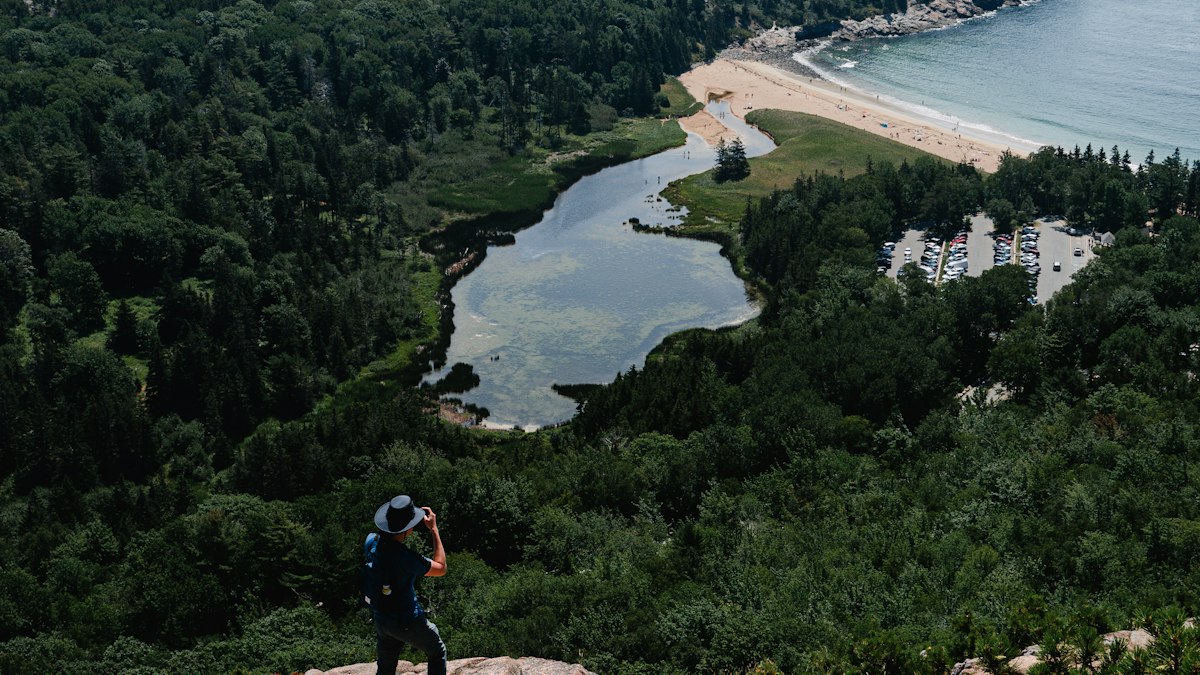
Cover photo: the view of Sand Beach from the Beehive Trail. Photo: Andrew Spencer / Unsplash
Beehive Trail Acadia: Quick Facts
| Detail | Information |
|---|---|
| Location | Acadia National Park, Mount Desert Island, Maine (near Bar Harbor) |
| Trailhead | Bowl Trail, across the Park Loop Road from Sand Beach |
| Distance | 1.4-mile loop (1.2 miles with the Bowl Connector shortcut) |
| Cliff climb | About 450 feet |
| Summit elevation | 520 feet above sea level |
| Difficulty | Strenuous (because of exposure, not distance) |
| Time needed | 1–3 hours |
| Main obstacles | Iron rungs, ladders, metal bars over a gap, exposed ledges |
| Best direction | Climb the rungs, then descend via the Bowl Trail |
| Dogs | Not allowed |
| Permit or reservation | None needed (park entrance pass required) |
| Wheelchair accessible | No |
| Open | Spring, summer, and fall in dry weather |
Distances and times come from the National Park Service’s official Beehive Loop guide.
How Hard Is the Beehive Trail, Really?
The Beehive Trail is rated strenuous, but not for the usual reasons. You won’t be out of breath for hours. Most fit people reach the top in well under an hour. What makes it hard is what’s under your feet and how far down it goes.
Here’s how the difficulty breaks down:
| Challenge | How hard? | What it means for you |
|---|---|---|
| Distance | Easy | Short 1.4-mile loop |
| Cardio effort | Moderate | Steep, but over quickly |
| Rock scrambling | Hard | You’ll need your hands in places |
| Heights and exposure | Very hard | Sheer drop-offs with no railings |
| Iron rungs and ladders | Hard | Good grip and balance needed |
| Descent (via Bowl Trail) | Moderate | Rocky but no ladders |
| Hiking in wet weather | Unsafe | Granite and metal become slippery |
A simple self-test: Picture climbing a steep outdoor ladder, then stepping sideways along a ledge with a long drop beside you. If that makes your stomach flip, skip the Beehive and pick one of the easier hikes below. If it sounds exciting, you’ll probably love it.
The three things that make it hard
1. Exposure and fear of heights. This is the big one. Several sections run along open ledges with steep drops and nothing to hold onto but the rock and the rungs. Plenty of fit hikers freeze up here. Plenty of nervous hikers make it just fine. It’s more about your head than your legs.
2. Iron rungs and ladders. Metal bars are bolted into the granite as handholds and footholds. You’ll reach overhead, pull yourself up, and step onto narrow ledges. Halfway up, you even cross a gap by stepping on iron bars instead of solid rock. Short people may find a few reaches a stretch.
3. Steep, uneven granite. Between the rungs, the trail climbs granite staircases and rock scrambles. When dry, the rock grips well. When wet, it’s slick. The Park Service calls the hike “very dangerous in inclement weather.”
Where Is the Beehive Trail?
The Beehive is a small, rounded granite mountain on the east side of Mount Desert Island in Acadia National Park, Maine. It rises right above Sand Beach, along the one-way Park Loop Road, about a 15-minute drive south of Bar Harbor.
The trail starts on the Bowl Trail, directly across the Park Loop Road from the top of the Sand Beach entrance. There’s a crosswalk, and the trailhead is right next to it.

Beehive Trail Route at a Glance
| Section | Distance | What to expect |
|---|---|---|
| Bowl Trail to Beehive junction | 0.2 mile | Rocky path up a creek bed; watch for loose rock |
| Beehive Trail climb | 0.6 mile | Granite stairs, scrambles, iron rungs, ladders, ledges |
| Cliff top to summit | About 200 feet | Uneven walking to the high point |
| Summit to The Bowl | Short descent | Rocky trail, no rungs or ladders |
| Bowl Trail back to the road | About 0.6 mile | 0.4 mile of dirt trail, then the first 0.2 mile in reverse |
| Bowl Connector shortcut (optional) | Saves 0.2 mile | Skips the pond; total loop about 1.2 miles |
And here’s how hard each part feels:
| Section | Difficulty | Main challenge |
|---|---|---|
| Bowl Trail start | Easy to moderate | Rocks and roots |
| First granite climb | Moderate to hard | Steep stone steps and scrambling |
| Iron rungs and ladders | Hard | Climbing with exposure |
| Narrow ledges | Hard | Heights and balance |
| Walk to the summit | Moderate | Uneven granite |
| Descent past The Bowl | Moderate | Rocky downhill walking |
Hike it counterclockwise: climb the rungs first, then come down the gentle back side. The Park Service specifically advises against going back down the rungs and ladders.
Beehive Trail Step by Step
1. Start on the Bowl Trail
Cross the Park Loop Road from Sand Beach and start up the Bowl Trail. For the first 0.2 mile, you’ll follow a rocky path up a creek bed through the woods. It’s uneven but easy. At the signed junction, follow the sign for the Beehive Trail.
2. The granite staircase
The trail immediately tilts upward. You’ll climb stone steps and scramble over boulders, and within minutes the trees thin out and Sand Beach appears below you.
This is your checkpoint. If you already feel uneasy here, it only gets steeper and more exposed above. Turning back now is easy. Turning back later, with people climbing behind you, is not.
3. The iron rungs and ledges
This is the heart of the hike. Iron rungs and short ladders help you up near-vertical sections. You’ll traverse narrow ledges with open drops beside you, and about halfway up you’ll cross a gap on iron bars instead of solid ground. Higher up, some ladders require you to reach overhead to grab the next rung.
A few tips that make a big difference:
- Keep three points of contact: two hands and a foot, or two feet and a hand.
- Look at the rock in front of you, not the drop.
- Go at your own pace. The rungs are single file, so don’t feel pressured by people behind you. Let faster hikers pass only at wide spots.
- Keep both hands free. Put your phone, water bottle, and poles in your pack.
4. The summit
Once you pull over the top of the cliff, it’s about 200 feet of uneven walking to the 520-foot summit. The view is fantastic for such a small mountain: Sand Beach curling below, Great Head jutting into the ocean, Gorham Mountain to the south, Champlain Mountain behind you, and the open Atlantic stretching to the horizon.
Find a safe spot well back from the edges, especially if it’s windy.
5. Down to The Bowl
Continue past the summit on the trail heading down the back side. There are no rungs or ladders on this part. It’s a regular rocky trail. It leads down to The Bowl, a quiet mountain pond tucked between the Beehive and Champlain Mountain. It’s a peaceful spot to rest after the excitement.
From The Bowl, follow signs for the Bowl Trail. At the junction with the Champlain South Ridge Trail, turn left and walk 0.4 mile down the dirt trail, then 0.2 mile back to the road and Sand Beach.
Shortcut: If you’d rather skip the pond, take the Bowl Connector on the way down. It cuts the loop to about 1.2 miles.
Is the Beehive Trail Scary?
For many people, yes, at least in a few spots. The drops are steep and there are no railings, ropes, or harnesses. The scariest moments are usually the open ledges and the step across the iron bars over the gap.
But “scary” isn’t the same as “too hard.” Thousands of people with a healthy respect for heights climb it every year by moving slowly and focusing on each handhold. The real question is whether you can stay calm when you’re on a ledge with air beside you. If you tend to freeze on ladders or panic at heights, this isn’t the hike to push through it.
Can Beginners Hike the Beehive Trail?
It depends on what kind of beginner you are.
- New to hiking and nervous about heights? Skip it for now. Start with our hiking for beginners guide and some of the easier trails below.
- Active, coordinated, and comfortable on ladders and rocks? You can likely handle it, even without much hiking experience, as long as the rock is dry.
Fitness alone doesn’t predict success here. Confidence on exposed terrain does.
Think twice about the Beehive if:
- You have a strong fear of heights.
- You feel shaky on ladders or steep rock.
- You have limited balance or grip strength.
- You’re with young children who haven’t done any climbing.
- The rock is wet, icy, or the weather is turning.
Can Kids Hike the Beehive Trail?
The Park Service doesn’t recommend it for small children, and most experienced guides agree. Older kids and teens who are coordinated, tall enough to reach the rungs, and not afraid of heights often do great with close adult supervision. Keep in mind that supervision doesn’t remove the drop-offs. If in doubt, take younger kids up the Bowl Trail to the summit instead (see below).
Can You Reach the Beehive Summit Without the Rungs?
Yes. This is a great option many visitors don’t know about. Walk the loop in reverse: go up the Bowl Trail, past The Bowl, and up the back side of the Beehive to the summit. That route has no rungs or ladders. Then come back down the same way.
You’ll get the same summit view of Sand Beach and the coast without the cliff climb. Just don’t head down the rung side by mistake.
Beehive Trail Parking and Getting There
Driving
Head to the Sand Beach parking area on the Park Loop Road. You’ll pass the Sand Beach Entrance Station on the way, where you can show or buy your park pass. The lot has just over 100 spaces, and you can also park in the right-hand lane of the one-way Park Loop Road where it’s allowed.
In summer and early fall, the Park Service warns of heavy congestion from about 9 a.m. to 3 p.m. The lot often fills by mid-morning. Arrive before 8 a.m. for the best chance at a spot, and the bonus is a far less crowded climb.
Season note: The Park Loop Road closes to cars from mid-December to mid-April, so you can’t drive to Sand Beach in winter.
Island Explorer shuttle
The fare-free Island Explorer bus serves Sand Beach on Routes 3 (Sand Beach), 4 (Loop Road), and 10 (Blackwoods). In 2026 it started in late May with limited routes, ran full service from late June, and continued into mid-October. Buses don’t start very early, so if you want a sunrise climb, drive instead. Check the current schedule before you go.

Do You Need a Permit for the Beehive Trail?
No hiking permit or reservation is needed for the Beehive. You do need an Acadia National Park entrance pass:
- Private vehicle: $35, valid 7 days
- Motorcycle: $30, valid 7 days
- Per person (walking or biking in): $20, valid 7 days
- Acadia annual pass: $70
- Nonresident fee: Visitors aged 16+ who aren’t US residents pay an extra $100, unless they have an annual or America the Beautiful pass
The vehicle reservation for Cadillac Summit Road doesn’t apply to Sand Beach or the Beehive, so don’t worry about that one for this hike. Fees and rules can change, so check the official park page before your trip.
Best Time to Hike the Beehive Trail
Best season
The Beehive is a spring, summer, and fall hike. What matters most is that the rock is dry.
| Season | What to expect | Our advice |
|---|---|---|
| Spring (April–May) | Cool, quiet, rock can stay damp | Wait for a dry spell |
| Summer (June–August) | Long days, warm weather, biggest crowds | Go at dawn or early morning |
| Fall (September–October) | Crisp air, fewer people, fall color | One of the best times to go |
| Winter (December–March) | Snow, ice, road closed to cars | Not recommended |
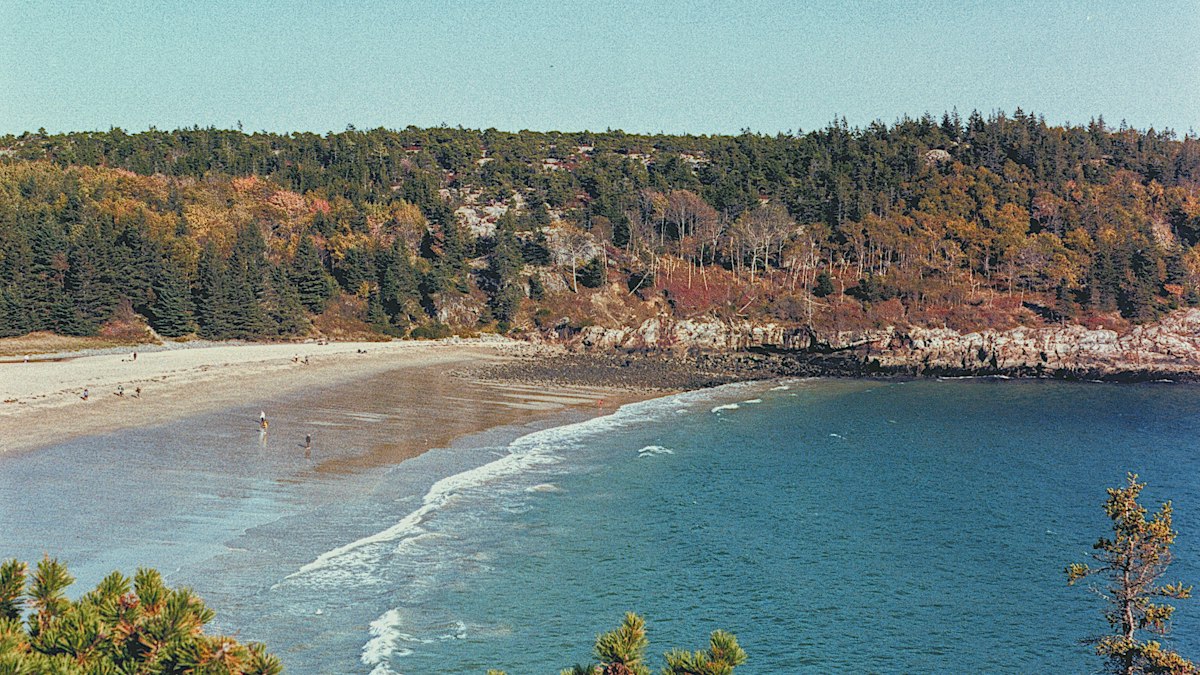
Fall color around the Beehive usually peaks in early to mid October, when the hillsides turn red and gold above the blue ocean.
Best time of day
Early morning, ideally before 8 a.m. You’ll get parking, cooler temperatures, soft light on the ocean, and, most importantly, open rungs. By mid-morning in summer, the climbing sections can turn into a slow single-file line with people above and below you, which makes the exposure feel much worse.
Why dry weather matters so much
Granite and iron rungs get slippery fast when wet. Even after rain stops, shaded parts of the cliff can stay damp for hours, and coastal fog can leave the rock wet. If the rock is wet or rain is coming, choose another trail.
What to Bring on the Beehive Trail
Pack light. You want your hands free and nothing swinging off your body.
- Shoes with good grip. Hiking shoes or trail runners with sticky rubber soles. No sandals or flip-flops.
- Water and a snack.
- A small backpack that sits snug and won’t shift while you climb.
- Sunscreen and a hat. The cliff is fully exposed.
- A light layer or rain jacket for wind on the summit (see our waterproof hiking jacket guide).
- Light gloves (optional) if you’d like a better grip on cold metal rungs in fall.
Leave the trekking poles in the car or strapped to your pack. You’ll need both hands on the rungs.
Common Beehive Trail Mistakes to Avoid
Judging the hike by its distance
“Only 1.4 miles” leads plenty of people to show up in flip-flops. Distance is not the challenge here.
Climbing when the rock is wet
This is the most dangerous mistake. If it rained recently, or it’s foggy and drippy, wait.
Going down the rungs
The descent via the Bowl Trail is much safer. Downclimbing ladders and ledges is harder and holds up people coming up.
Arriving mid-morning in summer
You’ll fight for parking and wait in line on the rungs.
Bringing the dog
Pets aren’t allowed on Acadia’s rung-and-ladder trails, including the Beehive.
Forcing nervous kids or friends up
Once you’re on the ledges, turning around is hard. Decide at the bottom.
Beehive Trail vs. Precipice Trail
Thinking about the bigger climb? Read our full Precipice Trail Acadia guide.
The Beehive and the Precipice are Acadia’s two famous iron-rung trails. Think of the Beehive as the smaller, shorter version.
| Feature | Beehive Trail | Precipice Trail |
|---|---|---|
| Location | Above Sand Beach | East face of Champlain Mountain |
| Climb | About 450 feet | More than 1,000 feet in under a mile |
| Loop length | 1.4 miles | Longer loop |
| Exposure | Significant but brief | More sustained and committing |
| Iron rungs and ladders | Yes | Yes, many more |
| Seasonal closure | No | Usually closed in spring and summer for nesting peregrine falcons |
| Best for | Confident hikers trying their first rung trail | Experienced hikers who loved the Beehive |
Do the Beehive first. It’s the perfect test. If you enjoyed it, the Precipice is your next challenge. If the Beehive felt like plenty, skip the Precipice.
In 2026, the Precipice Trail closed on March 1 to protect nesting peregrine falcons, and it reopens only when park biologists say it’s safe. Always check current trail closures before planning it.
Easier Alternatives to the Beehive Trail
Want the coastal views without the cliffs? These nearby trails start from or near Sand Beach.
| Trail | Why choose it |
|---|---|
| Bowl Trail to the Beehive summit | Same summit view, no rungs (go up and down the back side) |
| Ocean Path | Mostly flat coastal walk past Thunder Hole to Otter Cliff, about 2 miles each way |
| Great Head Trail | Rocky headland loop above Sand Beach with big ocean views, no ladders |
| Gorham Mountain Trail | Moderate climb with coastal views; dogs allowed on a leash (skip the optional Cadillac Cliffs section if you want to avoid rungs) |
These trails still have roots, rocks, and uneven ground, so wear proper shoes.

Safety Tips for the Beehive Trail
- Check the weather and rock before you start. Dry rock only.
- Know your limits. Turn around before the first rungs if you’re unsure.
- Keep three points of contact on every rung and ledge.
- Don’t pass on narrow ledges. Wait for a wide spot.
- Stay well back from cliff edges at the summit, especially in wind.
- Don’t climb after dark. The ledges are hard enough in daylight.
- Use the restrooms at Sand Beach before you start. There are none on the trail.
Is the Beehive Trail Worth It?
If you’re comfortable with heights, absolutely. Few hikes anywhere give you this much adventure and this big a view in just 1.4 miles. The climb is thrilling, the summit view over Sand Beach is iconic, and the quiet descent past The Bowl makes a lovely ending.
If heights scare you, it’s still worth seeing. Just take the Bowl Trail up the back side and enjoy the same summit without the cliff.
Beehive Trail Acadia FAQs
How difficult is the Beehive Trail in Acadia?
It’s rated strenuous. The trail is short, but it climbs a 450-foot cliff using iron rungs, ladders, and exposed ledges with no railings.
How long does it take to hike the Beehive Trail?
The Park Service suggests 1–3 hours. Many hikers reach the summit in under an hour and finish the loop in about 1.5–2 hours, including stops.
How long is the Beehive Trail?
The full loop is 1.4 miles. Using the Bowl Connector shortcut, it’s about 1.2 miles.
Is the Beehive Trail dangerous?
It has real fall hazards, especially on the ledges and in wet weather. In dry conditions, hikers who are careful and comfortable with heights climb it safely every day.
Is the Beehive Trail scary for people afraid of heights?
Yes, for most people with a real fear of heights. There are narrow ledges and steep drop-offs. Take the Bowl Trail to the summit instead.
How many ladders and rungs are on the Beehive?
The climbing section has a series of iron rungs, short ladders, and iron bars across one gap, mixed with granite stairs and scrambles. It isn’t one long ladder but several short sections.
Can you hike the Beehive Trail without the iron rungs?
Yes. Hike up the Bowl Trail and the back side of the Beehive to the summit, then return the same way. This route has no rungs.
Can you go down the Beehive Trail?
It’s strongly discouraged. The Park Service advises against descending the rungs and ladders. Come down via The Bowl instead.
Is the Beehive Trail suitable for children?
Not for young children. Older kids and teens who are confident climbers and not afraid of heights may do well with close supervision.
Are dogs allowed on the Beehive Trail?
No. Pets aren’t allowed on any rung-and-ladder trail in Acadia.
Do you need a reservation for the Beehive Trail?
No. You only need an Acadia National Park entrance pass. The Cadillac Summit Road reservation doesn’t apply.
Where do you park for the Beehive Trail?
At the Sand Beach parking area on the Park Loop Road, or in the right-hand lane where parking is allowed. You can also take the Island Explorer shuttle to Sand Beach in season.
Which is harder, the Beehive or the Precipice?
The Precipice is harder. It’s taller, longer, and more sustained. Many hikers use the Beehive as a test before trying the Precipice.
Should you hike the Beehive clockwise or counterclockwise?
Counterclockwise. Go up the iron-rung side first, then come down past The Bowl. That way you never have to climb down the ladders.
Can you hike the Beehive in the rain?
No. Wet granite and metal rungs are extremely slippery, and the Park Service calls the trail very dangerous in bad weather.
Final Thoughts
The Beehive proves that a hike doesn’t need to be long to be hard. In just 1.4 miles, you’ll climb ladders, cross ledges, and earn one of the best views in Acadia.
Pick a dry day, start early, keep your hands free, and climb at your own pace. And if the cliffs aren’t for you, take the Bowl Trail up the back side and enjoy the same view.