
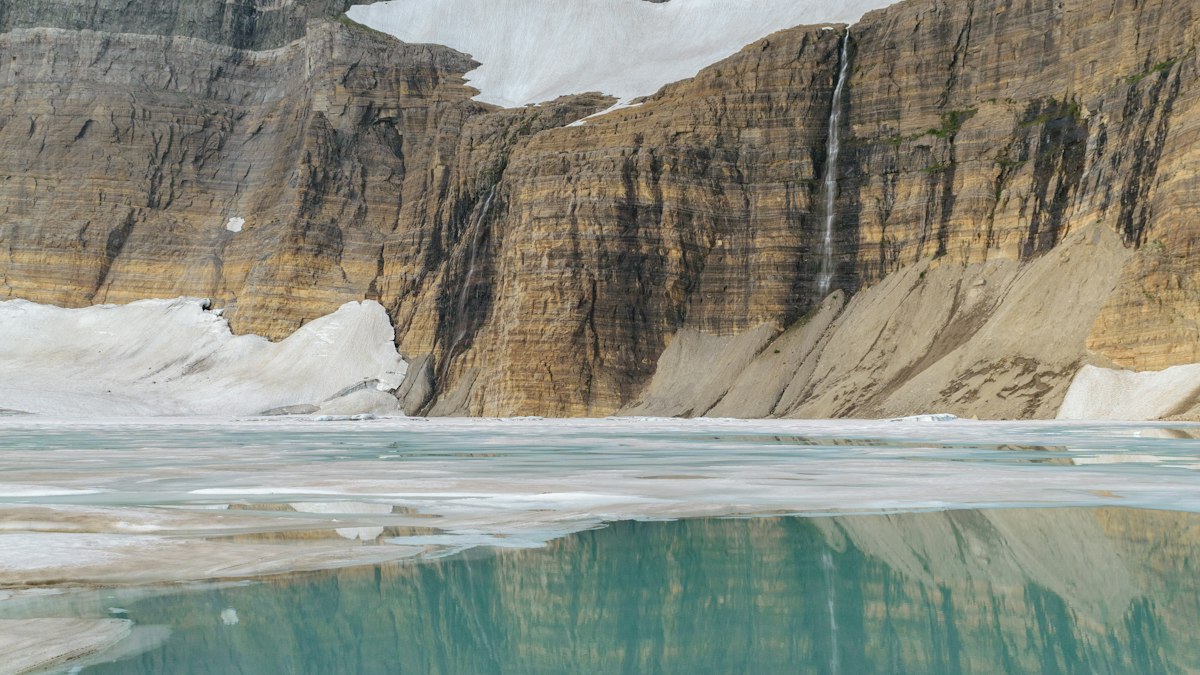
The Grinnell Glacier hike in Glacier National Park is one of the most rewarding day hikes in the American West. It’s also a big day. Expect about 10 miles round trip, roughly 1,600 feet of climbing, a trail that hugs steep mountainsides, and a final push of rock stairs before you reach a lake full of floating ice beneath the glacier.
So how hard is it? The Grinnell Glacier hike is rated strenuous. It isn’t technical. There are no ladders, ropes, or climbing moves. What makes it hard is endurance: hours of steady uphill walking, the sun-exposed upper trail, lingering snow, and the long walk back.
This guide covers what each section feels like, how a boat ride can cut about 3 miles off your day, when the trail is actually open, parking and park entry in 2026, bear safety, and easier options nearby. By the end, you’ll know whether it fits your fitness and experience.
Cover photo: Upper Grinnell Lake and the ice at the end of the trail. Photo: Mick Kirchman / Unsplash
Grinnell Glacier Trail: The Short Answer
The Grinnell Glacier Trail starts in the Many Glacier area of Glacier National Park, Montana. It’s about 10 miles round trip (5.0 miles each way), or about 7.4 miles if you take the two seasonal boats across Swiftcurrent Lake and Lake Josephine. It’s strenuous, with roughly 1,600 feet of net climbing, and takes most people 5–8 hours. The upper trail is usually blocked by snow until mid- to late July, so late July through mid-September is the best time to go.
Grinnell Glacier Hike: Quick Facts
| Detail | Information |
|---|---|
| Location | Many Glacier, Glacier National Park, Montana |
| Trailhead | Grinnell Glacier Trailhead, near Many Glacier Hotel and Swiftcurrent Lake |
| Distance (no boat) | About 10–10.6 miles round trip |
| Distance (with boats) | About 7.2–7.6 miles round trip |
| Net elevation gain | About 1,600 feet |
| Total climbing (with ups and downs) | About 2,600 feet one way, per the park’s trailhead data |
| Difficulty | Strenuous |
| Time needed | 5–8 hours |
| Trail type | Out and back |
| Usually snow-free | Mid-July to mid-September |
| Hardest parts | Long climb, sun exposure, waterfall crossing, rocky final ascent |
| Wildlife | Grizzly bears, black bears, moose, bighorn sheep, mountain goats |
| Dogs | Not allowed on trails |
| Hiking permit | Not needed for a day hike (park entrance pass required) |
Why the numbers vary: The Park Service lists the viewpoint as 5.0 to 5.1 miles one way from the trailhead, and popular guides measure 10.6 miles round trip. The “1,600 feet” figure is the net climb. Counting every little up and down, you’ll climb closer to 2,600 feet on the way in.
How Hard Is the Grinnell Glacier Hike?
It’s hard physically, not technically. The Park Service calls it “a very challenging day hike.” The first couple of miles along the lakes are easy. After Lake Josephine, the trail climbs steadily for about 3 miles with very little shade, and the last section is a steep staircase of rocks and boulders.
Here’s how the difficulty breaks down:
| Challenge | How hard? | What it means for you |
|---|---|---|
| Distance | Hard | A full day out for most people |
| Elevation gain | Moderate to hard | About 1,600 feet net, most of it in the last 3 miles |
| Steepness | Moderate to hard | Long, steady grades, steep at the very end |
| Rock scrambling | Low | No climbing moves in normal summer conditions |
| Exposure and drop-offs | Moderate | Narrow ledge sections above Grinnell Lake |
| Snow and ice | Can be severe | Early-season snowfields can make it unsafe |
| Sun and heat | Moderate | Mostly exposed above the trees |
| Bear safety | Important | Active grizzly country |
A good self-test: If you can comfortably walk 10 miles with a daypack and handle 2–3 hours of uphill hiking, you’re likely ready. If your longest hike so far is 3 or 4 miles, start with Grinnell Lake or the boat-assisted version.
Is the Grinnell Glacier hike scary?
For most people, no. The trail is wide enough to walk comfortably, but a few stretches above Grinnell Lake run along steep slopes with big drops. Hikers who dislike heights may feel uneasy here, especially when passing others. It’s nothing like the iron rungs of Acadia’s Beehive Trail.
Where Is the Grinnell Glacier Trail?
The trail is in the Many Glacier area on the east side of Glacier National Park in northwest Montana. Many Glacier is about a 20-minute drive west of the small town of Babb, on Many Glacier Road.
Most hikers start at the Grinnell Glacier Trailhead, near the Many Glacier Hotel on the shore of Swiftcurrent Lake. You can also pick up the trail from the hotel itself. A seasonal restroom is available at the trailhead.
Grinnell Glacier Trail Map and Route
The route is simple to follow in summer: Grinnell Glacier Trailhead → along Swiftcurrent Lake and Lake Josephine → junction with the boat hikers near the head of Lake Josephine → climb above Grinnell Lake → waterfall and rest area → final moraine climb → Grinnell Glacier Viewpoint and Upper Grinnell Lake. You come back the same way.
There are a few junctions along the lakes, including the turn for Grinnell Lake. Follow the signs for Grinnell Glacier, which always point uphill. The park’s official Many Glacier map shows every junction, and you can pick one up at a ranger station or entrance. Download an offline map too, as cell service in Many Glacier is spotty.
| Starting option | One way to the viewpoint | Total climbing on the way up |
|---|---|---|
| Hike from Grinnell Glacier Trailhead | 5.0 miles | About 2,596 feet (with 1,015 feet of downhill) |
| Boats from Many Glacier Hotel | 3.7 miles | About 2,461 feet (with 871 feet of downhill) |
Those are the park’s current numbers. The trail rolls up and down along the lakes before the big climb, which is why the total climbing is much higher than the 1,600-foot net gain.
Grinnell Glacier Trail Guide: Step by Step
1. Swiftcurrent Lake to Lake Josephine (about 2 miles)
The first stretch is the easy part. The trail rolls through pine forest along the shore of Swiftcurrent Lake and then Lake Josephine, with Mount Gould rising ahead. It’s mostly flat, so enjoy it and keep a steady, relaxed pace. You’ll need your energy later.
Keep your eyes open here. Moose often feed in the shallow water near the lakes, especially early in the morning.

2. The climb begins above Lake Josephine
Past the head of Lake Josephine, the trail turns uphill and the work starts. Hikers who took the boats join the main trail around here. From this point, it’s just over 3 miles to the glacier, and almost all of it climbs.
The forest thins quickly and the views open up. Soon you’ll see the valley stretching out below you, with Lake Josephine and Swiftcurrent Lake strung together like beads.
3. Above Grinnell Lake
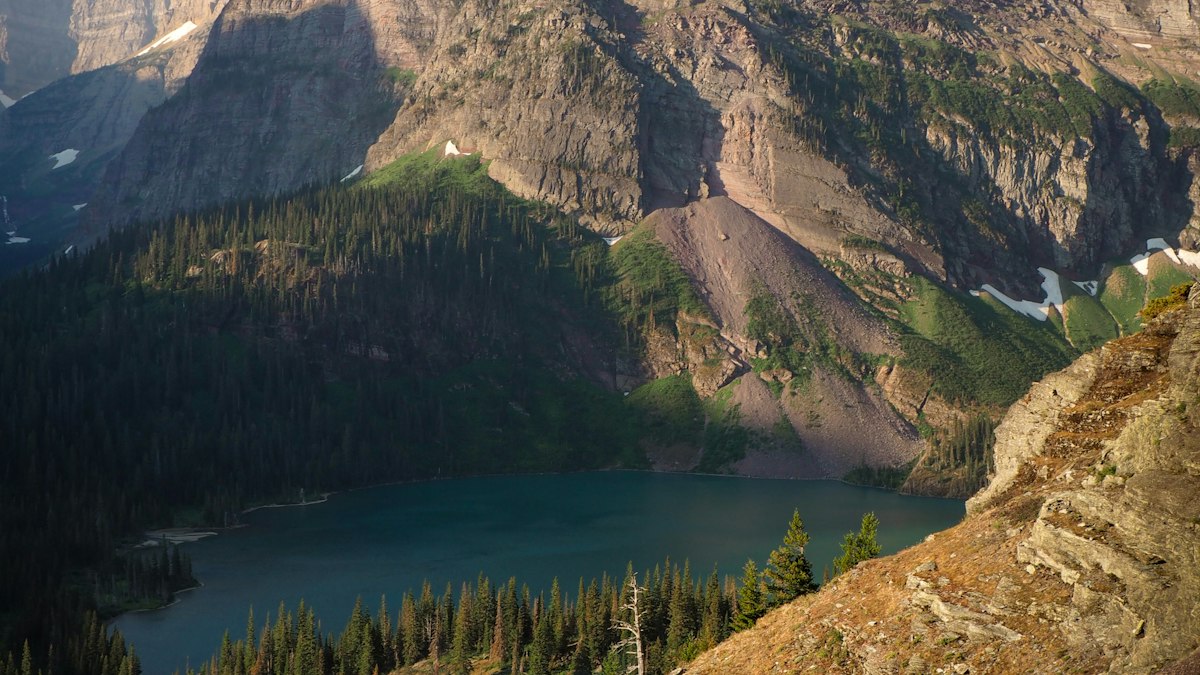
This is one of the most beautiful parts of the hike. The trail traverses a steep mountainside high above Grinnell Lake, whose water glows turquoise from fine “rock flour” ground up by the glacier. A few sections here are narrow with steep drop-offs, so watch your footing and step to the inside when passing people.
There’s almost no shade from here to the top. On a sunny August afternoon, this stretch can feel hot and long.
4. The waterfall section
Partway up, the trail passes beneath a waterfall that spills over a ledge right onto the path. Depending on snowmelt, it may be a light sprinkle or a proper shower. The rock here is wet and slippery, and many hikers find it the trickiest spot of the day, especially on the way down. Slow down, and keep your camera and phone in a waterproof pocket.
5. The rest area and the final climb
Near the top, you’ll reach a small rest area, a good place for a snack and a breather. Then comes the steepest part of the hike: a short but tough climb up rocky steps and boulders over the moraine. It’s only about the last half mile, but after 4+ miles of uphill, your legs will feel it.
Take it slowly. You’re almost there.
6. Upper Grinnell Lake and the glacier
Crest the moraine and suddenly you’re standing above Upper Grinnell Lake, a milky-teal lake dotted with chunks of floating ice. Grinnell Glacier sits at the far side beneath the towering Garden Wall, with the smaller Salamander Glacier perched on a ledge above it. Waterfalls pour down the cliffs all around you.
It’s one of the most dramatic spots in the park. Find a rock out of the wind, eat lunch, and take it all in.
Stay safe up here: Don’t walk onto the glacier or the floating ice, and stay back from the ice edge. Glacier ice is unstable, hides deep cracks, and can collapse without warning. The lake water is near freezing.

7. The return hike
Remember that the viewpoint is only the halfway point. The descent is easier on your lungs but harder on your knees, and the waterfall section is slicker going down. Save some water and energy, and keep an eye on the clock if you’re catching a return boat.
A Shrinking Glacier: Why See It Now
Grinnell Glacier is one of the most-studied glaciers in the park, and it’s shrinking fast. It covers only about 115 acres today and loses roughly 2–3 acres a year. In September 2015, a 10-acre chunk broke off into Upper Grinnell Lake. The lake itself only began forming in the 1930s as the ice melted back.
The Salamander Glacier, now perched above it, was once connected to Grinnell. Today a cliff separates them. Seeing it in person is a powerful reminder of how quickly these mountains are changing.
Can You Shorten the Hike With a Boat?
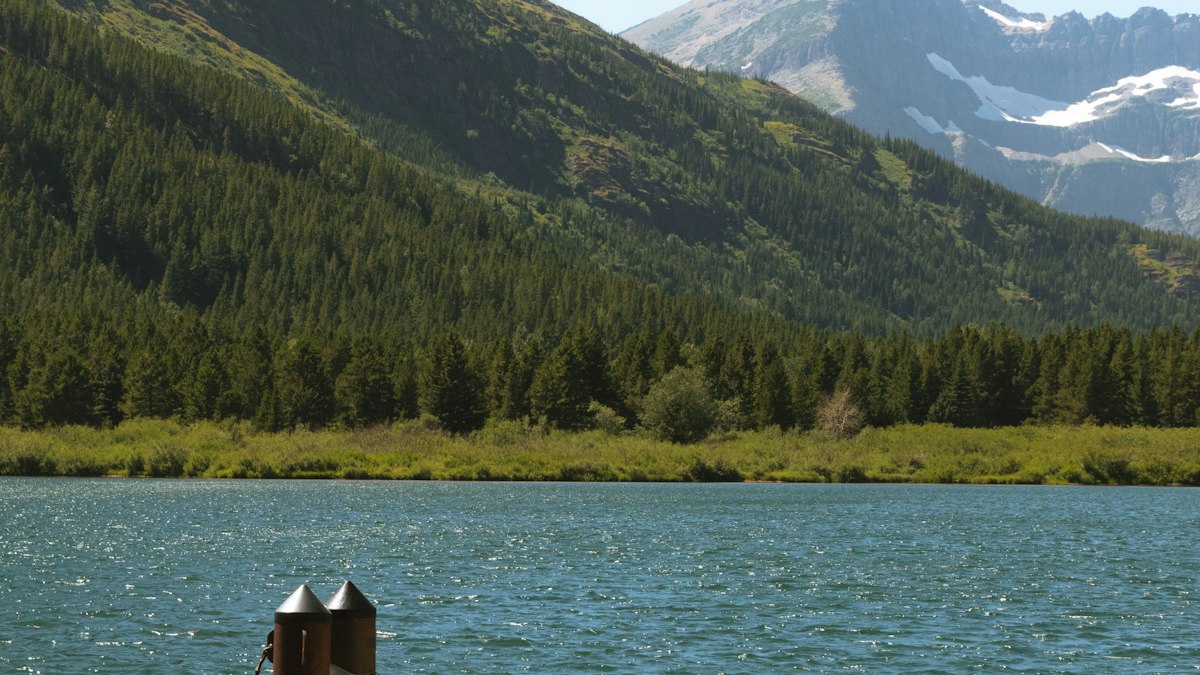
Yes, and many people do. Glacier Park Boat Company runs boats across Swiftcurrent Lake and then Lake Josephine, with a short walk of about 0.2 mile between the two docks. Taking the boats skips the flat first miles along the lakes.
| Route option | Approx. hiking distance | Difficulty |
|---|---|---|
| Full hike, no boat | 10–10.6 miles round trip | Hard |
| Boat one way, hike the other | About 8.5–9 miles round trip | Hard |
| Boats both ways | About 7.2–7.6 miles round trip | Still strenuous |
| Grinnell Lake only (no glacier) | About 6.8 miles round trip without boats | Easy to moderate |
Good to know about the boats:
- The climb stays the same. The boat only skips the flat part. You’ll still climb all 1,600 feet.
- Book ahead. Tickets often sell out in July and August. Reservations are made online with Glacier Park Boat Company or by phone.
- Return boats leave from the head of Lake Josephine several times each afternoon. Know the schedule, and don’t assume there’s a seat on the last boat.
- Prices: Recent seasons have run around $42 for adults and $21 for kids for the round-trip cruise, but prices change.
- Season: The boats usually run from summer into September. The 2026 season is now over, and bookings for 2027 are open.
How the boat ride works, step by step:
- Check in at the boat dock beside Many Glacier Hotel.
- Ride the first boat across Swiftcurrent Lake.
- Walk about 0.2 mile over a low ridge to Lake Josephine.
- Ride the second boat to the far (west) end of Lake Josephine.
- Walk a short connector trail up to the Grinnell Glacier Trail and start climbing.
- On the way back, return to the same dock for a scheduled return boat, or keep walking along the lakes to the trailhead.
Is the boat worth it? If you’re unsure about doing 10 miles, yes. It saves about 2.6 miles of flat walking and takes some pressure off your schedule. If you’re a strong hiker, the lakeshore walk is pretty and free, and a common plan is to hike up and ride a boat back if seats are available.
How Long Does the Grinnell Glacier Hike Take?
Plan on 5–8 hours for the full hike, including breaks and time at the lake. Strong, fast hikers can do it in 5. If you’re taking photos, stopping for wildlife, or waiting out a bear on the trail, it can easily take longer. With the boats both ways, many people finish in 4–6 hours on the trail, plus boat time.
Best Time to Hike Grinnell Glacier
The trail usually has a steep snowfield near the top that blocks access until mid-July, and snow often returns to the upper trail by late September. That leaves a short window.
| Month | Typical conditions | Our take |
|---|---|---|
| June | Snow on the upper trail, possible closures | Usually not open to the glacier |
| Early to mid-July | Snow may linger near the top | Check the trail status first |
| Late July to August | Best access, wildflowers, warm days, crowds | Prime season |
| Early September | Cooler, quieter, glacier ice most visible | Excellent if the weather holds |
| Late September to May | Snow, ice, limited access | Not a normal day hike |
For seeing the most glacier ice, go in late August or early September, after the winter snow has melted off the glacier’s surface.
Start early. Parking at Many Glacier often fills before 7 a.m. in July and August, and an early start gives you cooler temperatures, softer light, more wildlife, and time to finish before afternoon storms.
Is the Grinnell Glacier Trail Open Right Now?
There’s no fixed opening date. Each year, the steep snowfield on the upper trail usually keeps the full route closed until mid- to late July. The lower trail along the lakes often opens weeks earlier, and closures for bear activity can happen any time in summer.
Late October 2026: The boats and Many Glacier lodging are closed for the season. The upper trail can already have snow and ice, days are short, and Many Glacier Road closes to cars for winter once the snow arrives. This is not a normal day hike now unless you have winter skills and gear. Check the park’s trail status and road status pages before you go.
Parking, Park Entry, and Reservations in 2026
Vehicle reservations
Glacier National Park did not require vehicle reservations anywhere in the park in 2026. But the Many Glacier valley can get so busy that rangers temporarily turn cars away when it’s full. Visitors with lodging, campground, boat tour, horseback ride, or guided hike reservations in Many Glacier are still let in during these restrictions, though there may be delays. Rules can change each year, so check the park website before you go.
Parking
Parking at the Grinnell Glacier Trailhead and around Many Glacier Hotel is limited and fills early. Arrive by 7 a.m. at the latest in summer, and earlier is better.
Good news for 2026: The big construction project in the Swiftcurrent area finished in 2025, and the area now has 339 parking spaces, 171 more than before. That helps, but it doesn’t guarantee a spot on a busy July morning. Hotel parking is for hotel guests, so don’t count on it. The park is designing utility work around Many Glacier Hotel that may start in 2027, so check for construction updates before next summer.
Entrance fees
- Private vehicle: $35 in summer (May 1 to Oct 31), $25 in winter, valid 7 days
- Motorcycle: $30 in summer, $20 in winter
- Per person (on foot or bike): $20 in summer, $15 in winter
- Glacier annual pass: $70
- Nonresident fee: Non-US residents 16 and older pay an extra $100, unless they have an annual or America the Beautiful pass
Closures and trail status
Conditions here change fast. In late June 2026, heavy rain and flooding temporarily closed the whole Many Glacier valley and its trails. Trails can also close for bear activity, snow, or storm damage. Always check the official trail status and road reports on the day you hike.
Bear Safety on the Grinnell Glacier Trail
Many Glacier is one of the best places in the lower 48 states to see grizzly bears, and they’re often spotted on the slopes along this trail.
- Carry bear spray where you can grab it in seconds, and know how to use it.
- Make noise, especially near blind corners and loud running water.
- Hike in a group when you can, and skip the headphones.
- Never approach wildlife. Stay at least 100 yards from bears and 25 yards from other animals like moose and bighorn sheep.
- Follow ranger instructions if a bear is on or near the trail. You may have to wait or turn back.
What to Bring
- Sturdy hiking shoes or boots with good grip for wet rock and the final rocky climb
- At least 2–3 liters of water per person and plenty of food
- Bear spray (essential)
- Sun protection: hat, sunglasses, and sunscreen, since the upper trail has almost no shade
- A rain jacket and warm layer (see our waterproof hiking jacket guide); it’s often windy and cold at the glacier
- Trekking poles for the long descent
- Offline map, since cell service is unreliable
- Headlamp and a small first-aid kit, in case the day runs long
- Boat tickets and the return schedule if you’re using the boats
Can Beginners Hike Grinnell Glacier?
The full hike isn’t ideal as a first-ever mountain hike. Fit beginners who walk regularly and are comfortable on uneven ground can often do it, especially using the boats, as long as conditions are good. If you’re new to hiking, read our hiking for beginners guide and build up with shorter Many Glacier trails first.
| Hiker type | Recommendation |
|---|---|
| Complete beginner | Start with Grinnell Lake instead |
| Casual walker | Try the boat-assisted route, or go to Grinnell Lake |
| Fit beginner with some hiking experience | Doable with boats and an early start |
| Intermediate hiker | A great full-day hike in good conditions |
| Experienced hiker | Hike the full route, maybe with a return boat |
| Families with young kids | Grinnell Lake is a better choice |
| Nervous about heights | Usually fine, but the ledges above Grinnell Lake may feel uncomfortable |
Grinnell Glacier vs. Grinnell Lake
These two are often confused, but they’re very different hikes.
| Feature | Grinnell Glacier | Grinnell Lake |
|---|---|---|
| Distance (no boat) | About 10–10.6 miles round trip | About 6.8 miles round trip |
| Elevation gain | About 1,600 feet | About 60 feet |
| Difficulty | Strenuous | Easy to moderate |
| Time | 5–8 hours | 2.5–4 hours |
| Highlight | Glacier, icebergs, and Upper Grinnell Lake | Turquoise lake at the base of the mountains |
| Best for | Strong, prepared hikers | Families and casual hikers |
If you’re short on time or energy, Grinnell Lake gives you a big dose of Many Glacier’s turquoise water with almost no climbing.
Grinnell Glacier vs. the Highline Trail
Both are bucket-list hikes in Glacier. The Highline Trail starts at Logan Pass on the Going-to-the-Sun Road and follows a long, exposed traverse along the Garden Wall, including a famous narrow ledge section near the start. Grinnell Glacier has a more concentrated climb and ends at a glacier and icy lake. The Highline is usually longer and has more exposure. Grinnell has more climbing in a shorter distance. Fit hikers will enjoy both. Short on time at Logan Pass? The Hidden Lake Overlook Trail gives you mountain goats and a big lake view in about 2.8 miles.
Grinnell Glacier Overlook vs. Grinnell Glacier Viewpoint
These names sound alike but they’re two different places, and many articles mix them up.
| Grinnell Glacier Viewpoint | Grinnell Glacier Overlook | |
|---|---|---|
| Start | Many Glacier (this hike) | Logan Pass, via the Highline Trail |
| View | From the lakeshore, up close to Upper Grinnell Lake and the ice | From the top of the Garden Wall, about 1,000 feet above the glacier |
| Distance | About 10 miles round trip (7.4 with boats) | About 15.5 miles round trip |
| The tough part | The long climb above Grinnell Lake | A steep spur of under a mile with 900+ feet of climbing |
If you want to stand beside the icebergs, hike from Many Glacier. If you want the bird’s-eye view down onto the glacier, plan a long Highline Trail day instead (see our Highline Trail guide).
Grinnell Glacier Trail Weather
A warm, calm morning at the trailhead can turn into cold wind at the glacier. Summer afternoons on the exposed climb can feel hot, while the upper basin often stays chilly because of the ice and wind pouring off the Garden Wall. Thunderstorms build quickly in July and August, and the upper trail is no place to be in lightning. Check the National Weather Service forecast for Many Glacier (not just a nearby town) and pack layers either way.
Can You Hike Grinnell Glacier With Kids?
Older kids who already hike long distances can do it, especially with the boats, but the length, drop-offs and possible snow make it a poor choice for young children. For most families, the boat-assisted Grinnell Lake walk is the better pick: a short, nearly flat hike to the same turquoise water. Always plan around the least experienced person in your group.
Photography Tips
- Swiftcurrent Lake and Lake Josephine: calm early-morning reflections of Mount Gould and Grinnell Point.
- Above Grinnell Lake: the classic turquoise lake shot. Stop on a wide part of the trail; never step back toward the edge to frame a photo.
- Upper trail: wildflowers in late July, waterfalls and big views back down the valley.
- Upper Grinnell Lake: floating ice in front of the Garden Wall. Midday light reaches the basin best.
One-Day Plan
- 6:30 a.m.: Park at the trailhead and check the trail status board.
- 7:00–8:00 a.m.: Easy miles along Swiftcurrent Lake and Lake Josephine. Watch for moose.
- 8:00–10:30 a.m.: The climb above Grinnell Lake, the waterfall and the rest area.
- 10:30 a.m.: Final moraine climb to Upper Grinnell Lake. Lunch with a view.
- Noon: Start down before afternoon storms build.
- 2:00–3:00 p.m.: Catch a return boat at Lake Josephine, or walk the lakeshore back to the trailhead.
Where to Stay Near the Grinnell Glacier Trail
- Many Glacier Hotel: the historic lodge on Swiftcurrent Lake, steps from the trail and the boat dock. Book many months ahead.
- Swiftcurrent Motor Inn and Many Glacier Campground: at the end of the road, about a mile from the trailhead. The campground is reservable and fills fast.
- Babb: a tiny town about 20 minutes away, with a handful of cabins and motels outside the park.
- St. Mary: more lodging and food on the east side, about 45 minutes from the trailhead.
Staying in Many Glacier means you skip the early-morning drive and any traffic holds at the entrance. Coming from the west side? Allow around 2.5 to 3 hours from West Glacier.

Grinnell Glacier vs. Avalanche Lake
| Feature | Grinnell Glacier | Avalanche Lake |
|---|---|---|
| Area | Many Glacier (east side) | Lake McDonald area (west side) |
| Distance | About 10 miles round trip | About 4.6 miles round trip |
| Climbing | About 1,600 feet net | 741 feet |
| Difficulty | Strenuous | Moderate |
| Highlight | Glacier, icebergs, turquoise lakes | Old cedars, gorge, waterfalls into a lake |
| Best for | Fit, experienced hikers | Families and newer hikers |
Want a shorter Glacier hike? Read our Avalanche Lake Trail guide.
Common Mistakes to Avoid
Starting too late
You’ll miss parking, hit the hottest hours on the exposed climb, and risk afternoon thunderstorms.
Forgetting bear spray
This is grizzly country. Bear spray is not optional here.
Counting on a return boat seat
Book your return in advance and know the schedule. Otherwise, plan to walk the whole way back.
Not checking trail status
The upper trail is often closed by snow until mid-July, and closures for bears, floods, or storms happen with little notice.
Walking onto the ice
The glacier and lake ice are dangerous. Admire them from the shore.
Grinnell Glacier Hike FAQs
What is the Grinnell Glacier hike difficulty level?
Strenuous. The Park Service calls it a very challenging day hike because of its length (about 10 miles round trip), 1,600 feet of net climbing, sun exposure, and a steep final ascent.
How long is the Grinnell Glacier hike?
About 10 to 10.6 miles round trip from the trailhead, or about 7.2 to 7.6 miles if you take the boats both ways.
How long does it take to hike Grinnell Glacier?
Most hikers need 5–8 hours for the full hike, including breaks.
What is the elevation gain on the Grinnell Glacier hike?
About 1,600 feet of net gain. Including all the small ups and downs, the park measures roughly 2,600 feet of total climbing on the way in.
Can you hike Grinnell Glacier without the boat?
Yes. The full trail can be hiked on foot from the trailhead. The boats are optional and only shorten the flat part.
Is the Grinnell Glacier hike scary?
Not for most people. There are a few narrow sections above Grinnell Lake with steep drop-offs, but no ladders or climbing.
When does the Grinnell Glacier trail open?
A steep snowfield usually blocks the upper trail until about mid-July. Snow often returns by late September. Check the park’s trail status reports before you go.
Do you need a reservation for Grinnell Glacier?
There was no vehicle reservation in 2026, and no permit is needed for a day hike. You do need a park entrance pass, and boat tickets should be booked ahead.
Are there bears on the Grinnell Glacier Trail?
Yes. Grizzly and black bears are common in Many Glacier. Carry bear spray and make noise.
Are dogs allowed on the Grinnell Glacier Trail?
No. Pets aren’t allowed on trails in Glacier National Park.
Is Grinnell Glacier harder than the Highline Trail?
They’re hard in different ways. Grinnell packs more climbing into a shorter distance. The Highline is longer and more exposed.
Is Grinnell Glacier Overlook the same as Grinnell Glacier Viewpoint?
No. The Viewpoint is the end of this hike from Many Glacier. The Overlook is a separate, high viewpoint on the Garden Wall, reached by a steep spur off the Highline Trail from Logan Pass.
Can you take a boat to Grinnell Glacier?
Partway. Boats cross Swiftcurrent Lake and Lake Josephine, cutting the hike to about 3.7 miles each way, but you still have to hike the whole climb to the glacier.
Is the Grinnell Glacier Trail open now?
In late October 2026, the boats are closed and snow and ice are likely on the upper trail. The full trail normally opens around mid- to late July. Always check the park’s trail status first.
Is the Grinnell Glacier hike worth it?
Absolutely, if you’re prepared. Turquoise lakes, waterfalls, wildlife, and a glacier with floating ice make it one of the best day hikes in any national park.
Final Thoughts
The Grinnell Glacier hike is a long, steady climb rather than a technical challenge, and every step is worth it. Start early, carry bear spray, check the trail status, and use the boats if you want a shorter day.
And if the full hike sounds like too much, Grinnell Lake still gives you a taste of what makes Many Glacier so special.