

The Ten Essentials are easier to remember once you think about what each one does for you. A headlamp gets you home when the hike runs late. An emergency bivy keeps you warm and dry if you have to stop and wait. Extra food is the snack still left after lunch when the trail turns out longer than the sign said.
This hiking essentials checklist turns the ten categories into real items you can lay out on the floor and tick off. It’s the safety core of every hike, short or long. For clothing, food, winter gear and overnight equipment, use it alongside the complete hiking checklist.
Quick answer: The Ten Essentials for hiking are 1) navigation, 2) a headlamp, 3) sun protection, 4) first aid, 5) a knife and repair kit, 6) fire, 7) emergency shelter, 8) extra food, 9) extra water and 10) extra clothes. They’re categories, not exact products. You can carry lighter versions on a short, easy trail and fuller versions on long or remote hikes, but every hike should cover all ten.
🧭 The Ten Essentials Checklist
Here’s each essential, what it’s for, and what to actually pack.
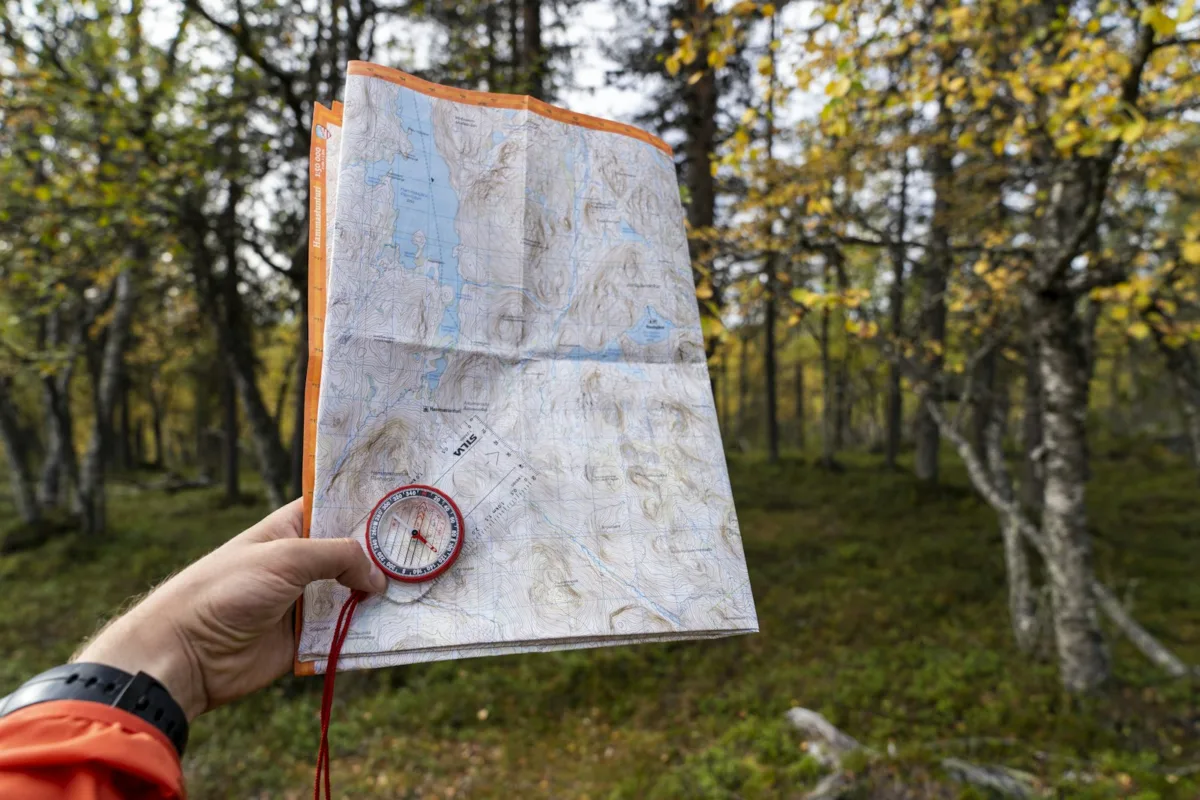
1. Navigation
Helps you stay on route and find your way back if you take a wrong turn.
- Paper map of the area
- Compass, and know how to use it with the map
- Phone with the route downloaded for offline use
- Handheld GPS or GPS hiking watch (optional)
- Satellite messenger or PLB on remote routes
2. Light
Gets you through unexpected darkness, and keeps your hands free.
- Headlamp for every hiker
- Spare batteries or a charged backup light
3. Sun protection
Prevents sunburn, snow blindness and heat exhaustion.
- Sunglasses with UV protection
- Sunscreen, SPF 30 or higher
- SPF lip balm
- Sun hat
- Long-sleeve sun shirt
4. First aid
Treats the small problems before they turn into big ones. Blisters are the most common.
- First-aid kit
- Bandages, gauze and medical tape
- Blister dressings or moleskin
- Disposable gloves
- Personal and prescribed rescue medication
5. Knife and repair kit
Fixes broken gear, cuts tape and cord, and helps in first aid.
- Multi tool or hiking knife
- Repair tape
- Spare cord
- Zip ties and safety pins
6. Fire
Gives you warmth and a signal in an emergency. Always follow local fire rules.
- Lighter
- Waterproof matches in a waterproof case
- Fire starter cubes or a ferro rod
7. Emergency shelter
Protects you from wind, rain and cold if you’re stuck overnight or injured.
- Emergency bivy or space blanket
- Large trash bag as a backup rain cover
8. Extra food
The reserve that’s still in your pack after lunch, in case you’re delayed.
- One extra day’s worth of no-cook food on long trips
- Energy bars, nuts or jerky on day hikes
9. Extra water
Keeps you hydrated if the trip runs long or a spring turns out to be dry.
- Reserve water beyond what you plan to drink
- Water filter or purifier if you’ll refill
- Backup treatment tablets
10. Extra clothes
Layers beyond what you expect to wear, for a cold stop, a storm or a night out.
- Warm insulating layer
- Rain jacket
- Warm hat and gloves
- Dry spare socks
Ten Essentials for Short vs Long Hikes
You always cover all ten categories. What changes is how much of each you carry.
| Essential | Short, easy hike | Long or remote hike |
|---|---|---|
| Navigation | Offline phone map and trail map | Paper map, compass, GPS, satellite messenger |
| Light | Small headlamp | Headlamp plus spare batteries or a backup light |
| Sun | Sunscreen, sunglasses, hat | Add a sun shirt and more sunscreen |
| First aid | Small kit with blister care | Fuller kit with more dressings and a splint |
| Repair | Small knife, tape | Multi tool, tape, cord, zip ties, spare parts |
| Fire | Lighter | Lighter, waterproof matches, fire starter |
| Shelter | Space blanket | Emergency bivy |
| Extra food | One or two extra snacks | A full extra day of food |
| Extra water | An extra half liter | Extra water plus a filter and backup tablets |
| Extra clothes | Light jacket | Insulated jacket, rain gear, hat, gloves, socks |
🎒 Keep the Essentials Easy to Reach
Gear you can’t find quickly doesn’t help much. A few minutes setting up your pack makes a real difference when it’s dark, cold or raining.
- Keep your headlamp in a pocket you can find by feel in the dark
- Keep water and snacks reachable while you walk
- Seal your map, spare layers and fire starters in waterproof bags
- Pack your rain jacket near the top of the bag
- Tell your group where the first-aid kit and emergency shelter are
Easy-to-Forget Items
These small things don’t count as essentials, but hikers often wish they’d packed them.
- Whistle (three blasts means “help”)
- Toilet paper, trowel and a pack-out bag
- Insect repellent
- Power bank and charging cable
- Emergency contact card
- ID and car keys clipped inside the pack
✅ Final Trailhead Check
- Your kit covers all ten categories
- Your headlamp turns on, and the spare power is packed
- Your offline map opens, and the paper map is in the pack
- Water, reserve food, medication and weather layers are packed
- Someone at home knows your route and when you’ll be back
📋 Print the full list
The free hiking checklist PDF puts the Ten Essentials on page one, followed by every other section.
Hiking Essentials FAQs
What are the 10 essentials for hiking?
Navigation, a headlamp, sun protection, first aid, a knife and repair kit, fire, emergency shelter, extra food, extra water and extra clothes.
Do the Ten Essentials include the backpack?
No. The backpack carries the essentials. Choose one that fits your kit and feels comfortable when it’s loaded.
Can a phone be my only map?
It’s risky. Phones die, break and lose signal. Carry a paper map and compass as a backup and learn how to use them.
Is extra food different from lunch?
Yes. Extra food is what’s still in your pack after you’ve eaten lunch, in case the hike runs longer than planned.
Do I need the Ten Essentials on a short hike?
Yes, in a lighter form. Short hikes still go wrong: a twisted ankle or wrong turn can keep you out much longer than planned.
Can my group share emergency gear?
Some of it, like a first-aid kit or water filter. Agree on who carries what before you start. Every hiker should still carry their own light, water, layers and medication.
How often should I check the kit?
Every time you pack. Replace anything you used, charge your electronics and adjust your layers to the forecast.
What counts as emergency shelter?
A lightweight emergency bivy or space blanket is enough for most day hikes. It gives you protection from wind and rain if you have to stop unexpectedly.
More Hiking Checklists
🥾Day Hiking ChecklistShort loops to full-day trails.Open checklist →
❄️Winter Hiking ChecklistLayers, traction and dry spares for snow and ice.Open checklist →
⛺Overnight Hiking ChecklistShelter, sleep and kitchen for one night out.Open checklist →
🏔️3-Day Hiking ChecklistMeals, fuel and power for two nights.Open checklist →
🛠️Hiking Gear ChecklistEquipment to own, fit and test.Open checklist →
🎒Hiking Pack ChecklistWhat goes where in your backpack.Open checklist →
🥜Hiking Supplies ChecklistFood, water and refills to restock.Open checklist →
🩹First-Aid Kit ChecklistWhat to carry and restock.Open checklist →