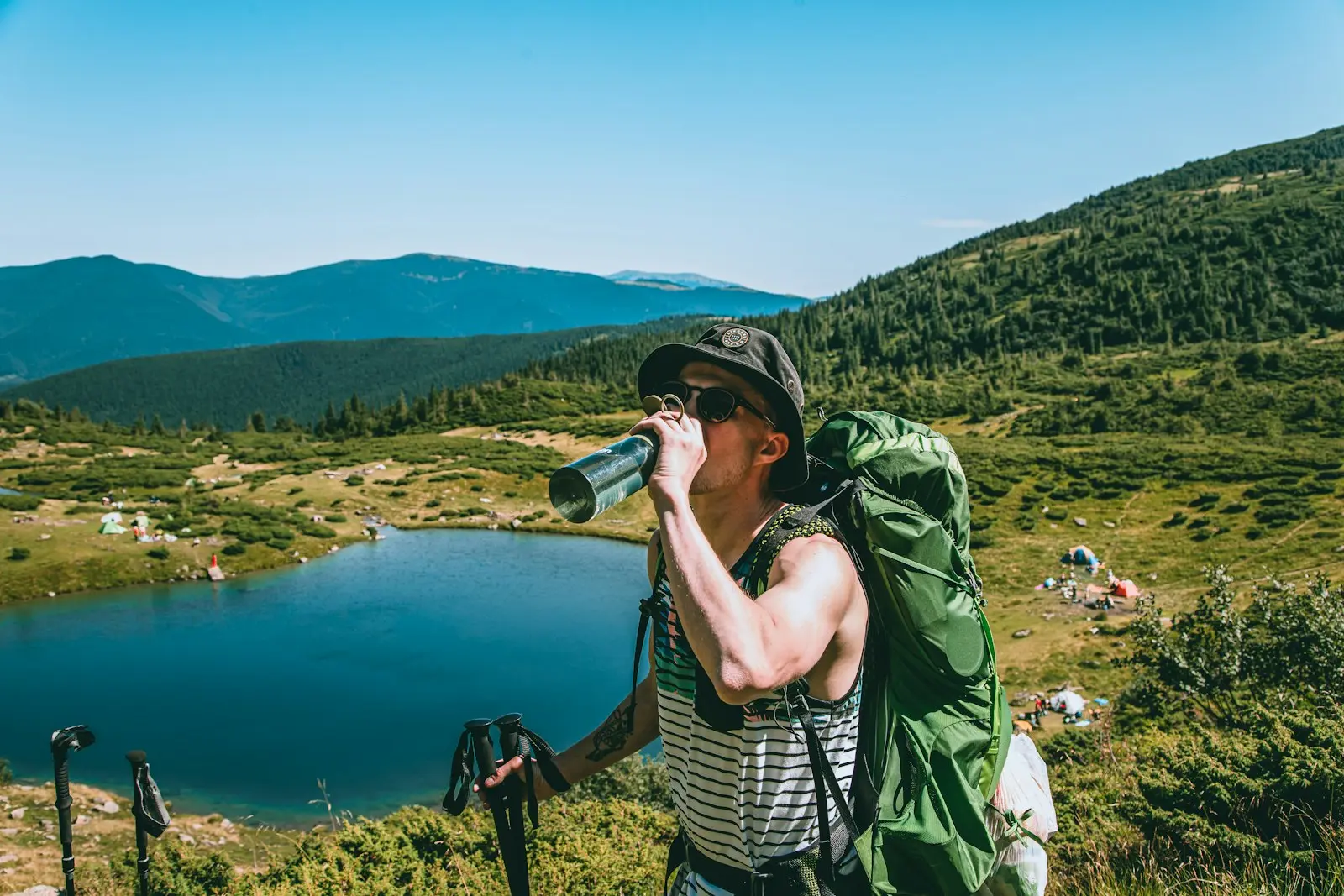
The creek looks perfect. Cold, fast, so clear you can see every pebble on the bottom. It’s tempting to just dip your bottle and drink. But clear water can still carry Giardia, Cryptosporidium and bacteria like E. coli, and nobody wants to spend the drive home (or the next week) dealing with that.
A good camping water filter fixes the problem in seconds. The hard part is picking one. Some are built for one hiker and a single bottle. Others make four liters at a time for the whole campsite. A few go a step further and remove viruses too, which matters a lot more when you travel abroad than on most US trails.
We compared the 14 best camping water filters on Amazon, from the cheap and famous LifeStraw and the backpacker favorite Sawyer Squeeze to premium purifiers like the MSR Guardian and GRAYL GeoPress, plus pumps, a gravity system for families, an electric filter, and an RV hose filter. You’ll also learn the difference between a filter and a purifier, how to use one safely, and exactly which type fits your kind of camping.
Affiliate disclosure: As an Amazon Associate, JoinHikes earns from qualifying purchases. If you buy through Amazon links in this article, we may earn a commission at no extra cost to you.
Our review approach: We used manufacturer specs from Sawyer, Katadyn, Platypus, MSR, GRAYL, LifeStraw, BKLES and Camco, Amazon listing details, thousands of owner reviews, and CDC water treatment guidance. We haven’t run our own lab tests, and we never invent test results. Prices and ratings below were checked on November 6, 2026 and change often.
Quick Answer: What Is the Best Camping Water Filter?
For most campsites, especially families and groups, the Platypus GravityWorks 4L is the best camping water filter. Fill the dirty bag, hang it from a branch, and about 4 liters of clean water is ready in roughly two and a half minutes while you set up the tent.
If you want the highest level of protection, including viruses, the MSR Guardian pump is the best premium choice, and the GRAYL GeoPress is the easiest purifier for travel. On a budget or backpacking solo, the Sawyer Squeeze is still the best value filter you can buy.
Quick rule: on US and Canadian trails, a 0.1–0.2 micron filter handles the main risks (bacteria and protozoa). For international travel, or water near people and livestock, choose a purifier that removes viruses.
Quick Comparison: Best Camping Water Filters 2026
On a phone, swipe the table sideways. Tap a photo or button to see the current price on Amazon.
| Product | Type | Viruses? | Speed | Weight | Filter life | Price* | Shop |
|---|---|---|---|---|---|---|---|
| Best overall for camping Platypus GravityWorks 4L | Gravity filter | No | 4 L in about 2.5 min | 11.5 oz | 1,500 L | ~$135 | 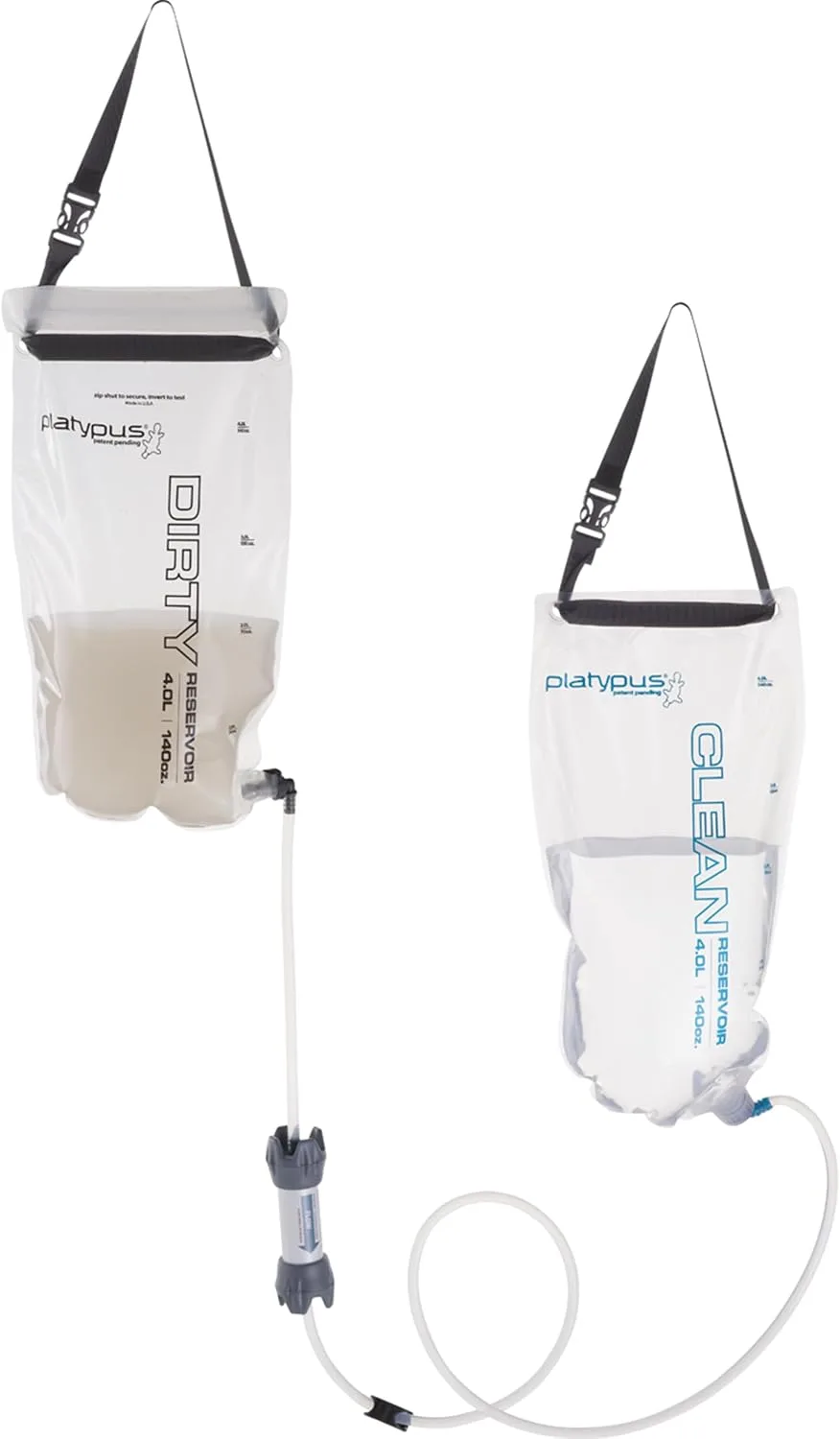 Check Price |
| Best premium purifier MSR Guardian Purifier | Pump purifier | Yes | 2.5 L/min | 17.3 oz | 10,000 L | ~$117 | 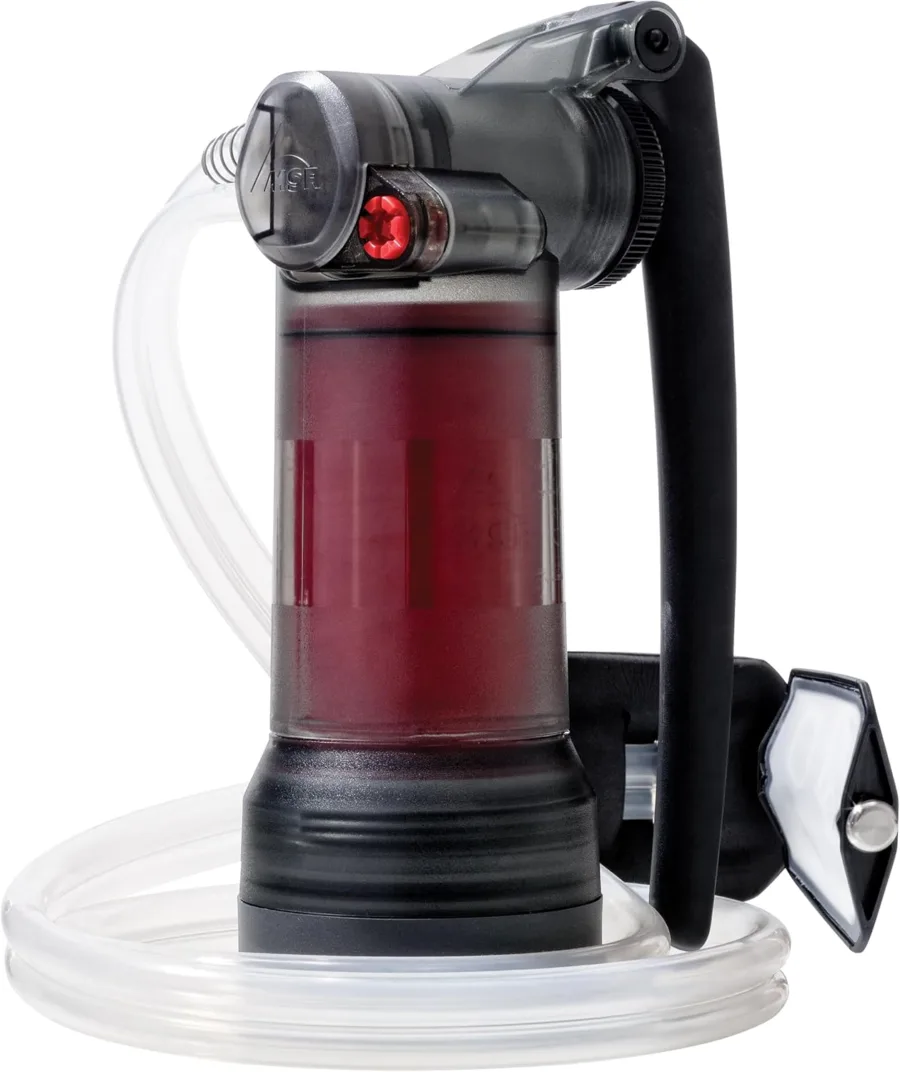 Check Price |
| Best purifier bottle GRAYL GeoPress 24 oz | Press purifier bottle | Yes | 24 oz in ~8 sec | 15.9 oz | 250 L (65 gal) | ~$100 | 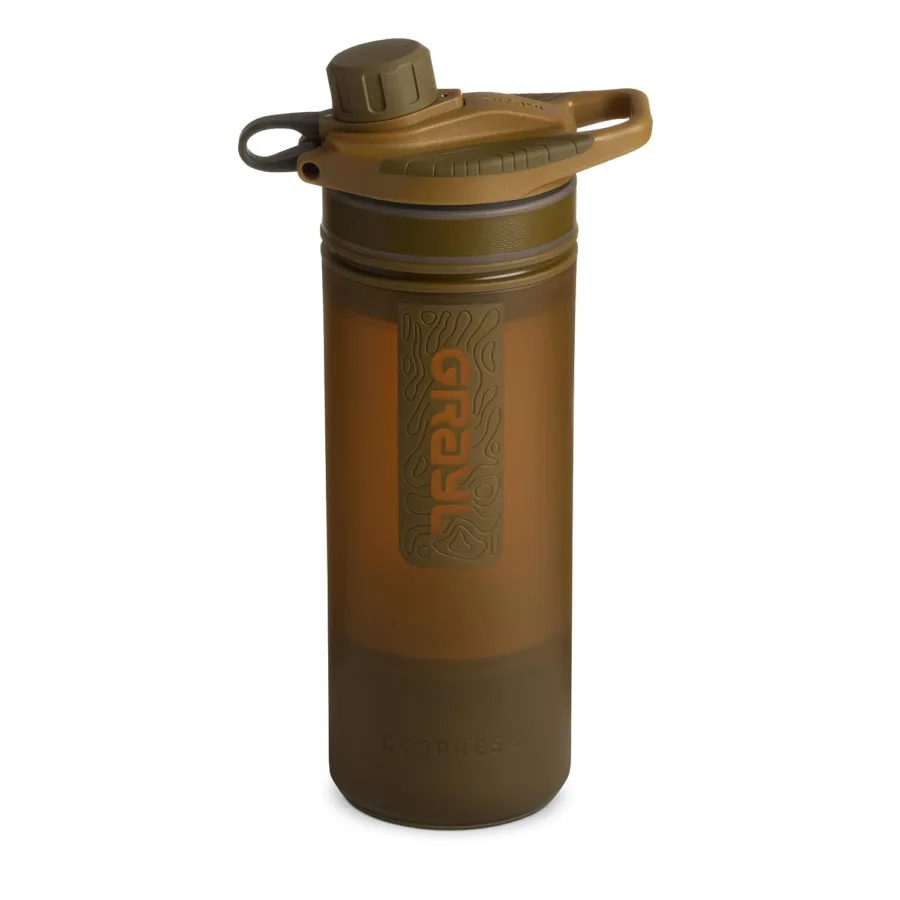 Check Price |
| Best value Sawyer Squeeze | Squeeze filter | No | Fast (squeeze) | ~3 oz filter | Rated up to 100,000 gal | ~$46 | 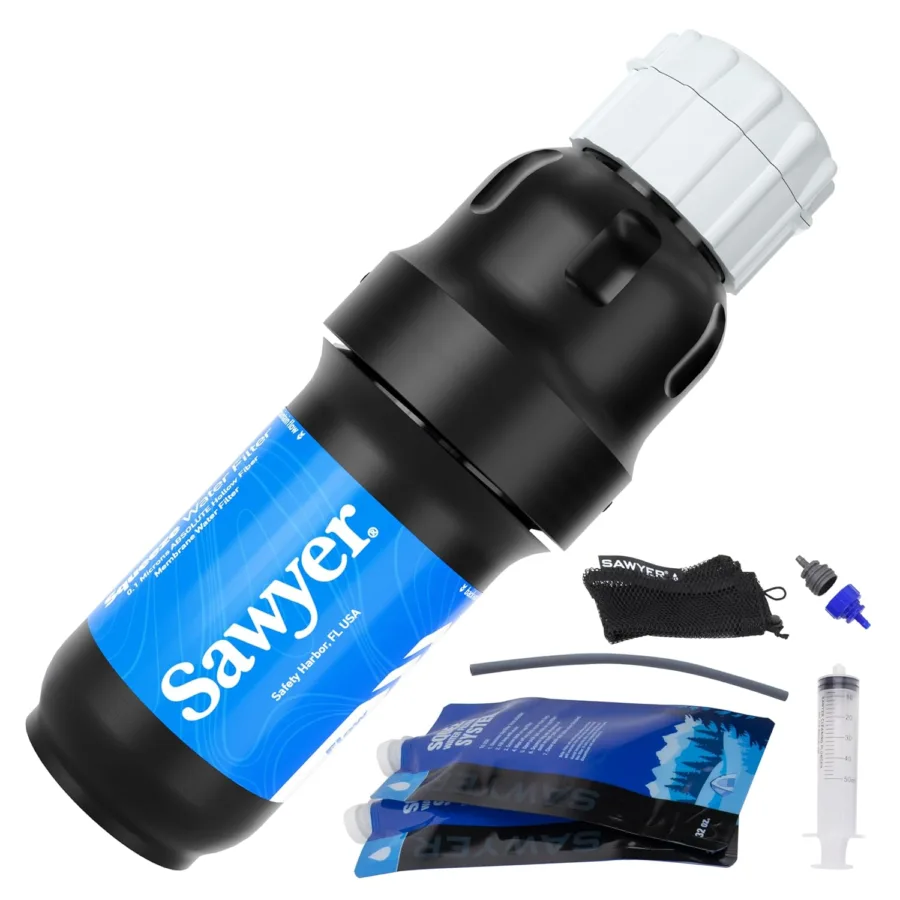 Check Price |
| Best ultralight Katadyn BeFree AC 1.0L | Soft filter bottle | No | Up to 2 L/min | ~2.5 oz | 1,000 L | ~$45 | 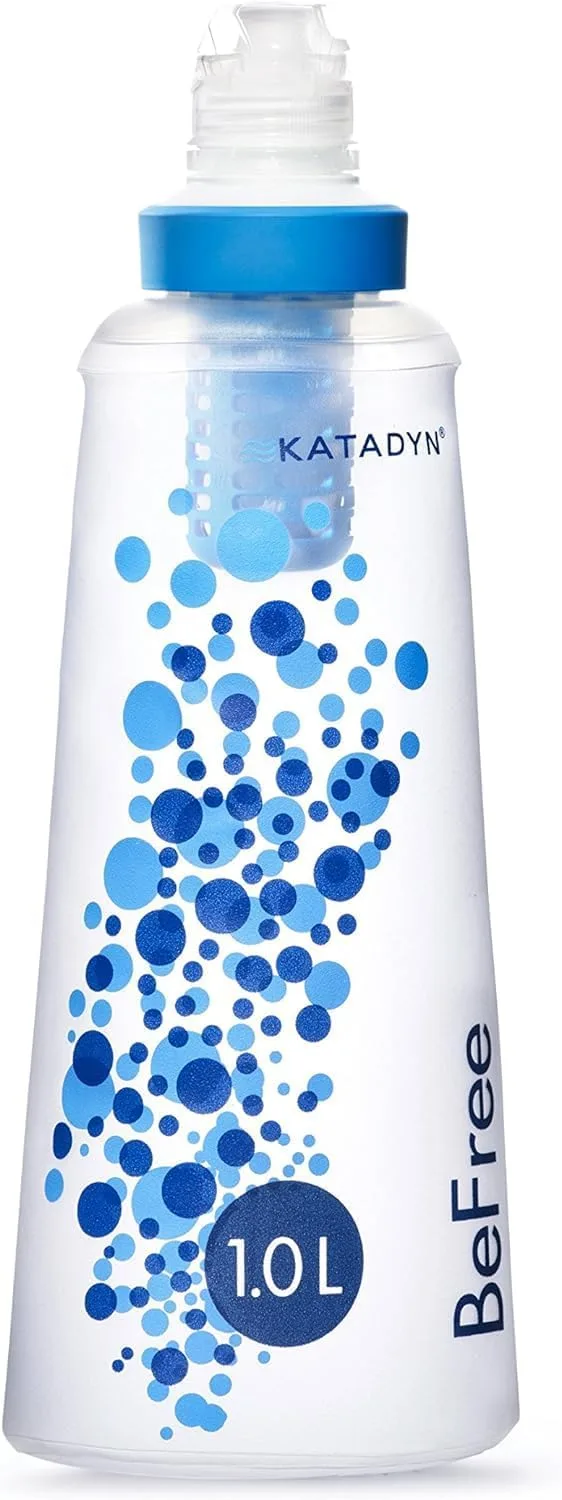 Check Price |
| Best for longevity Katadyn Pocket | Ceramic pump filter | No | About 1 L/min | ~20 oz | Up to 13,000 gal | ~$350 | 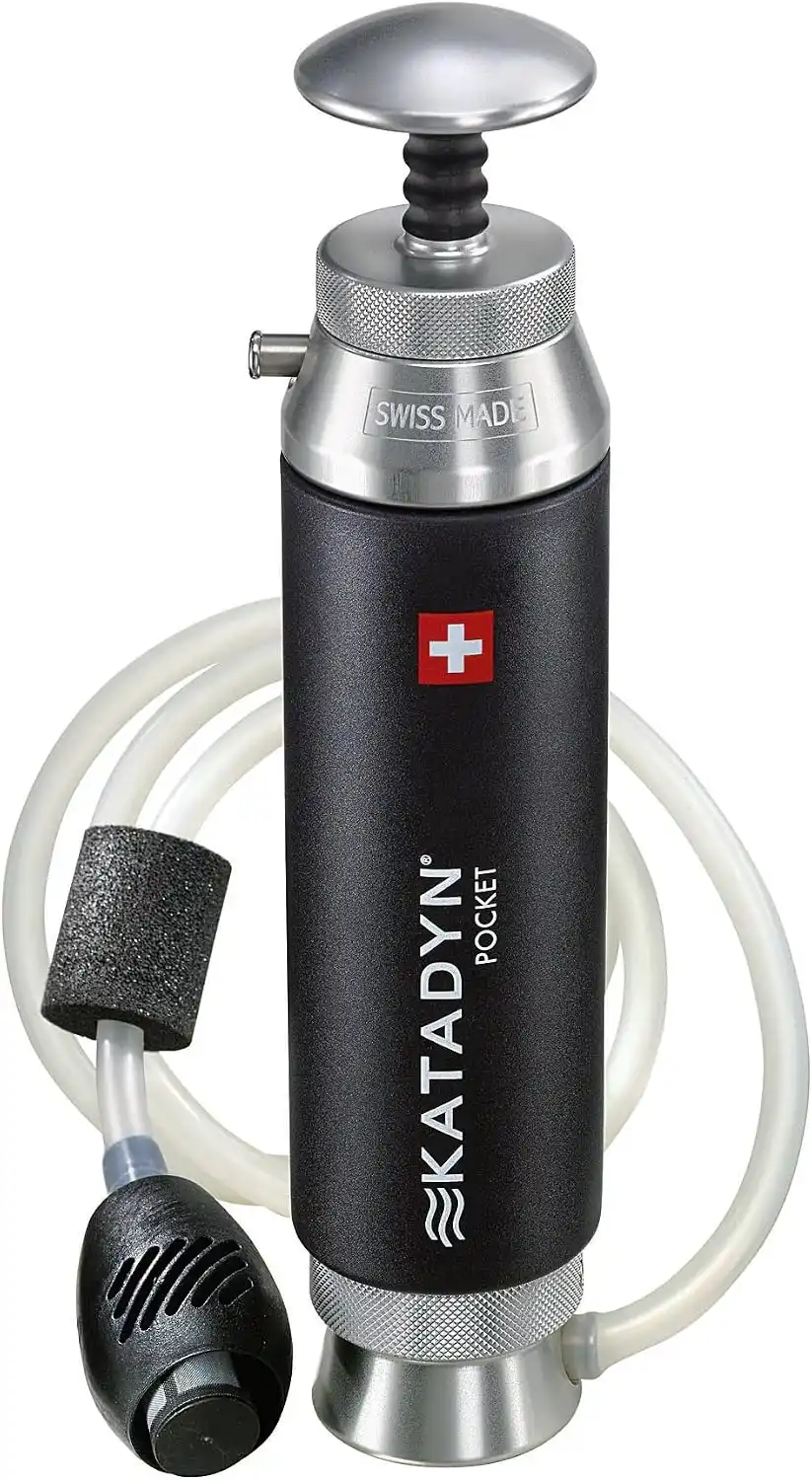 Check Price |
| Best pump for groups Katadyn Vario | Dual-mode pump filter | No | Up to 2 L/min | 15 oz | ~2,000 L (530 gal) | ~$125 | 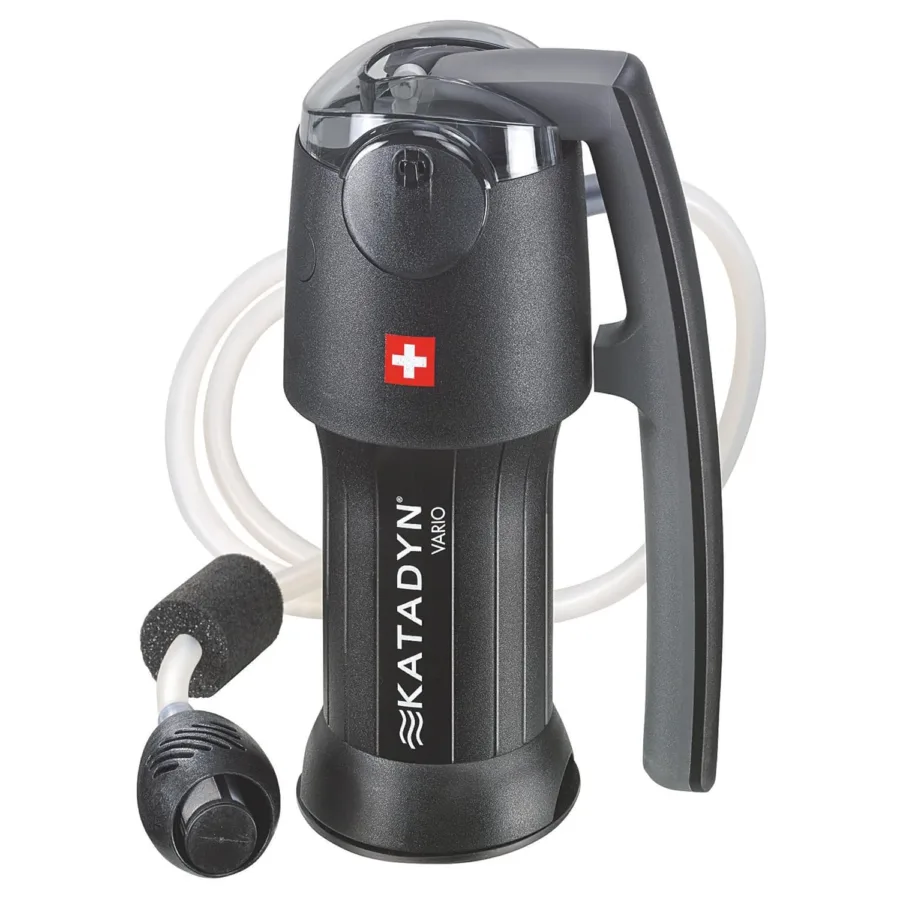 Check Price |
| Best mid-price pump Katadyn Hiker | Pump filter | No | About 1 L/min | 11 oz | 750 L | ~$80 | 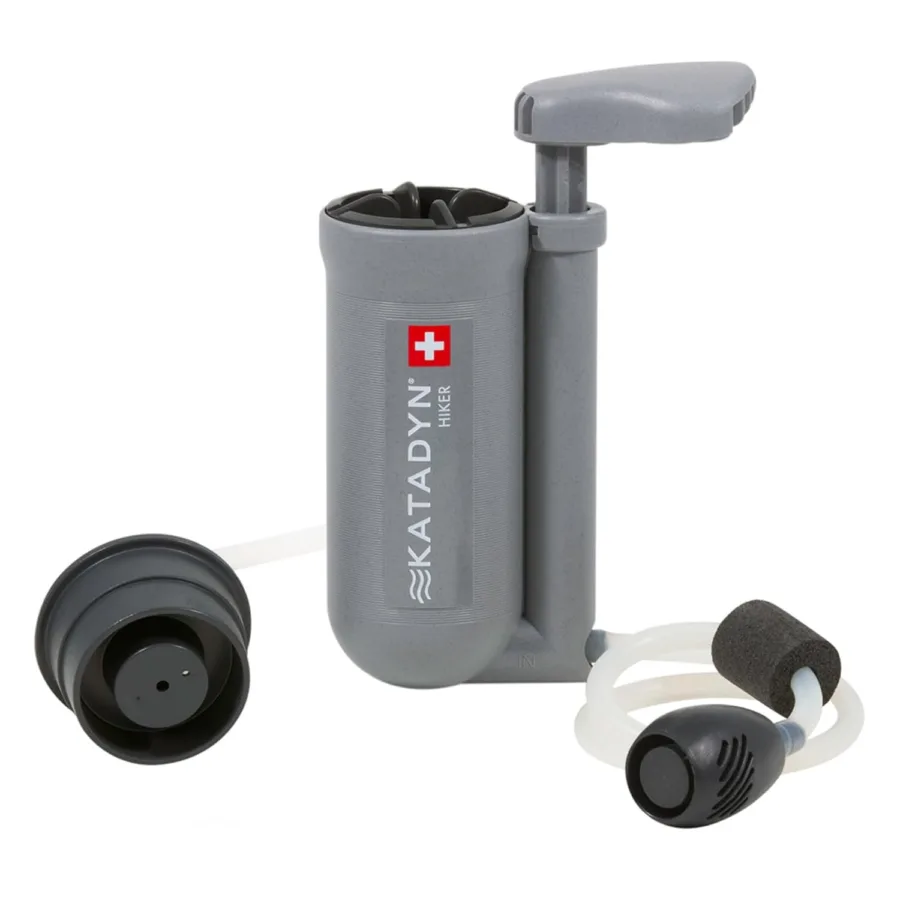 Check Price |
| Best budget squeeze LifeStraw Peak Solo | Inline/squeeze filter | No | Up to 3 L/min | 1.7 oz | 2,000 L | ~$18 | 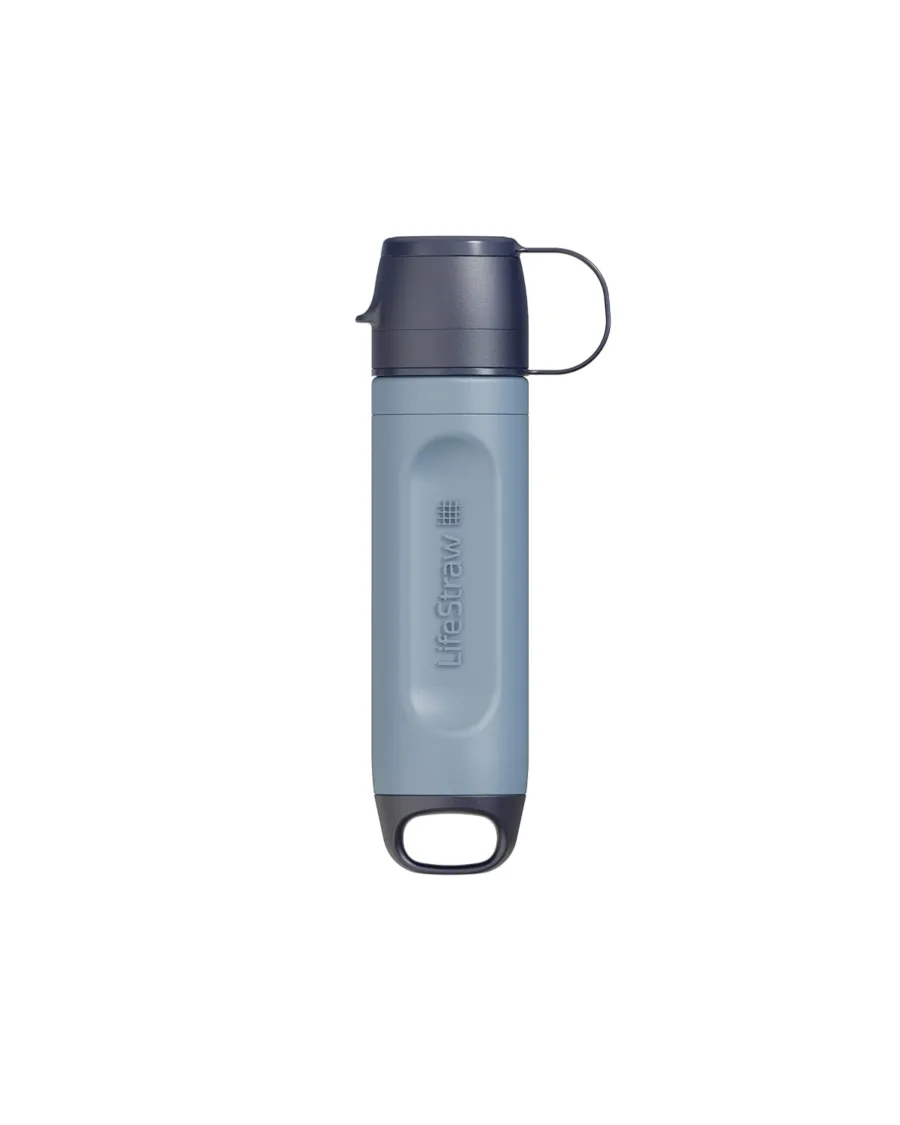 Check Price |
| Most compact Sawyer Micro Squeeze | Squeeze filter | No | Slower than Squeeze | 2 oz | Rated up to 100,000 gal | ~$34 | 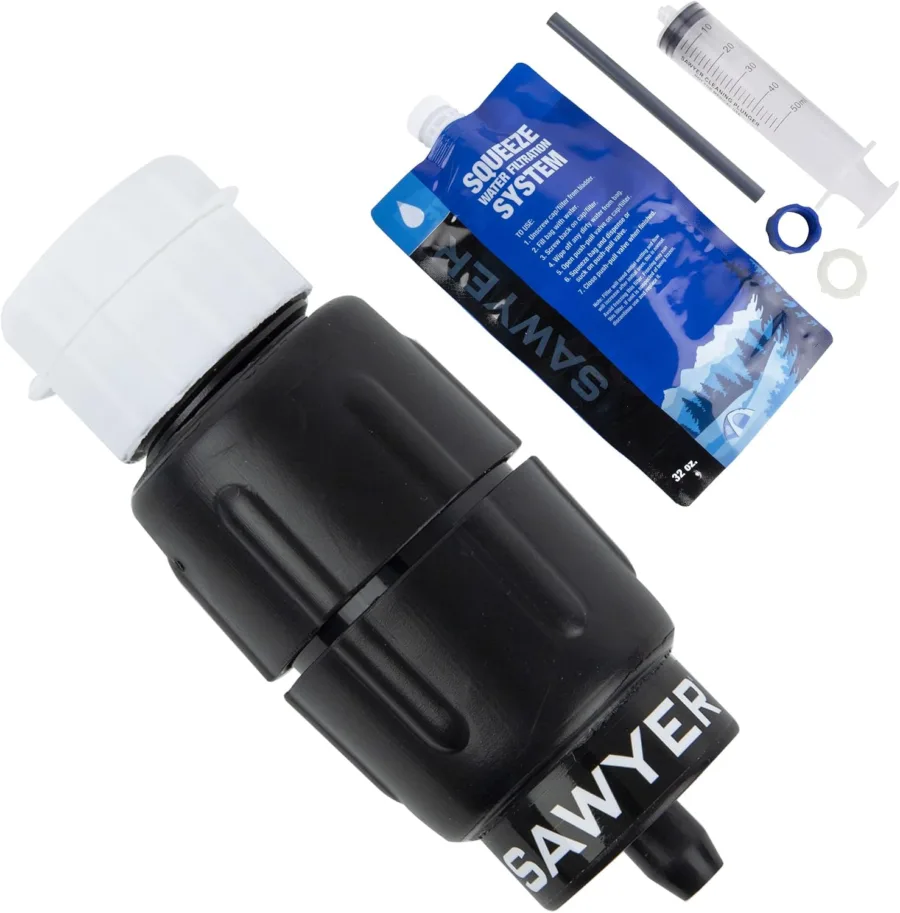 Check Price |
| Best tough straw LifeStraw Peak Straw | Straw filter | No | Drink-through | ~3.5 oz | 4,000 L | ~$25 |  Check Price |
| Best for emergency kits LifeStraw Personal | Straw filter | No | Drink-through | 2 oz | 4,000 L | ~$18 | 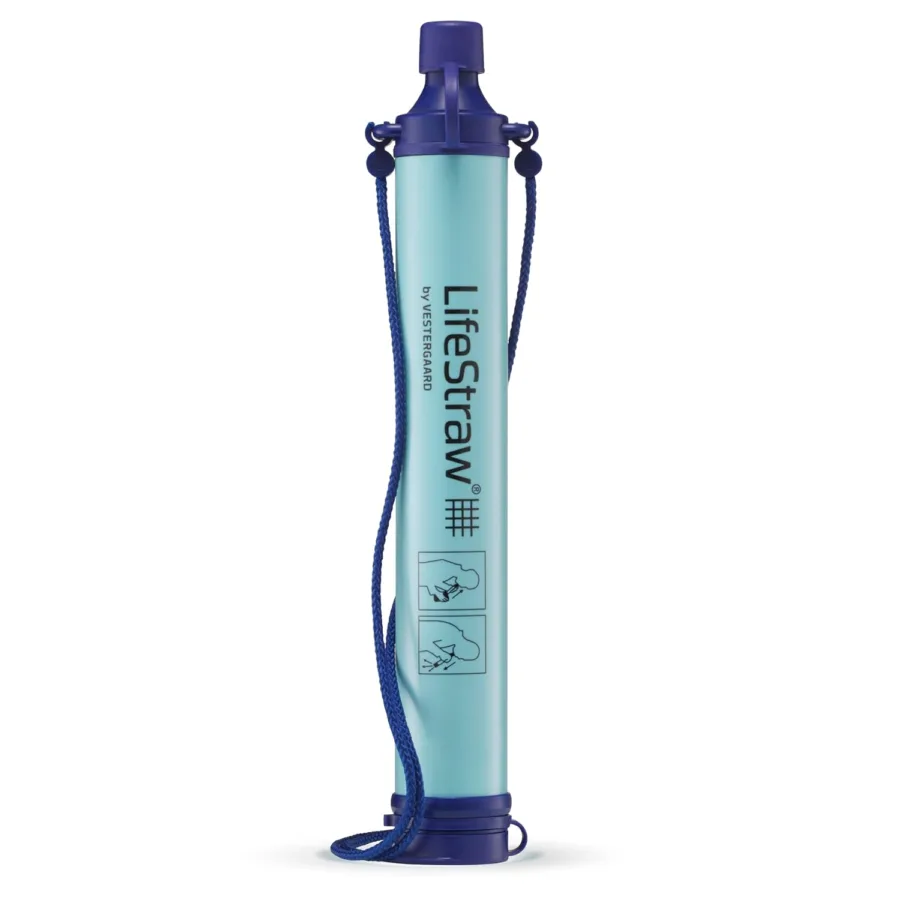 Check Price |
| Best electric (no pumping) BKLES BK2000 Electric | Electric pump filter | Claimed | 700 ml/min | Heavier | Per listing | ~$58 | 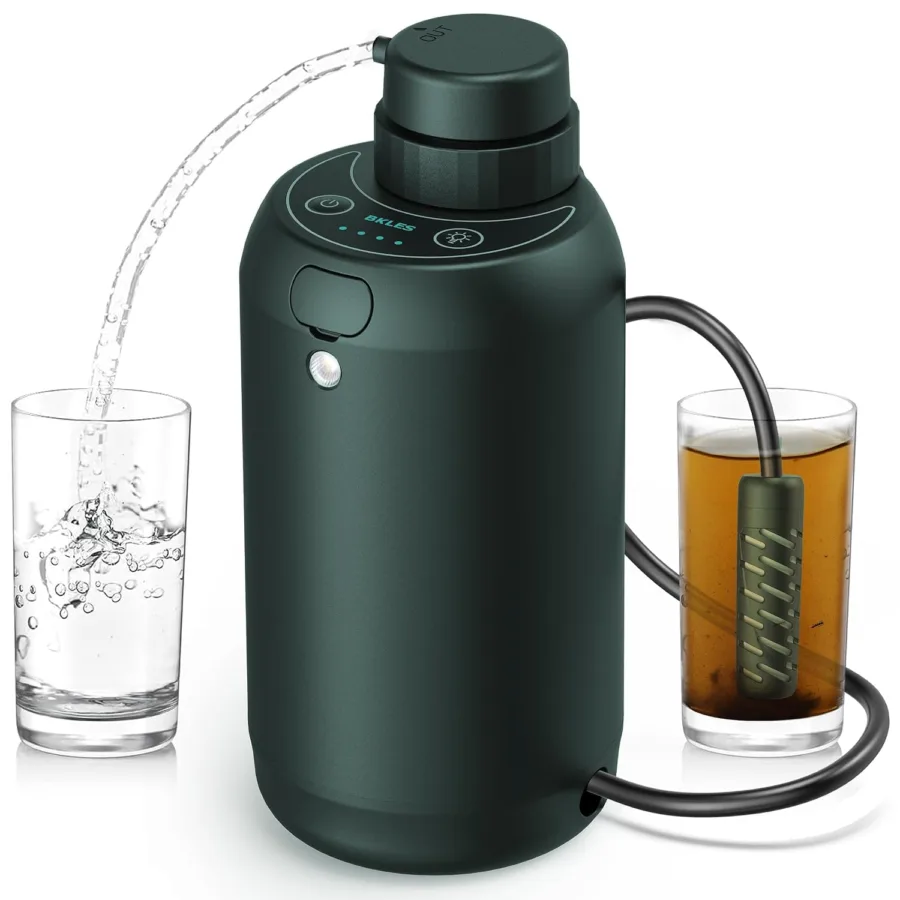 Check Price |
| Best for RV & campground taps Camco TastePURE | Inline hose filter | No | Hose flow | n/a | ~3 months use | ~$21 | 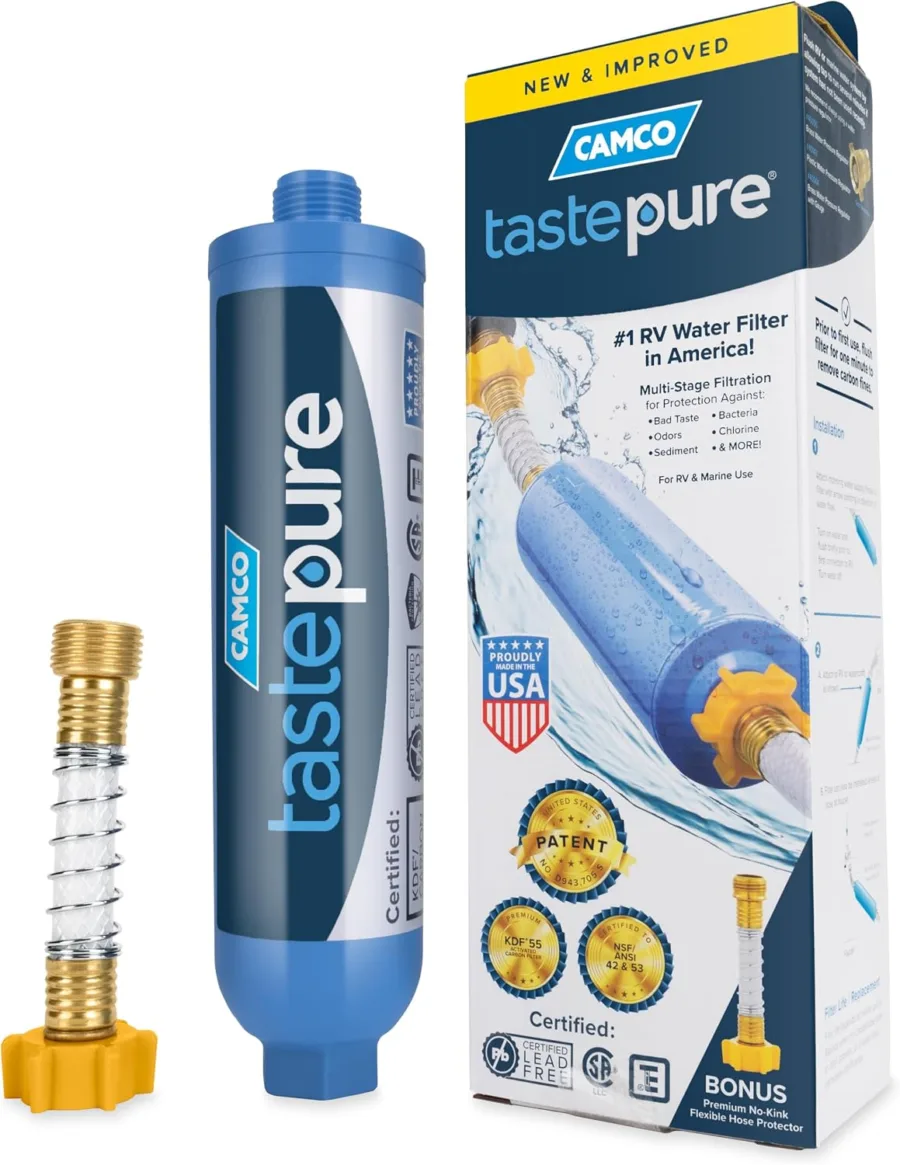 Check Price |
*Approximate Amazon prices on November 6, 2026. Speeds, weights and filter life are manufacturer figures; real flow drops as a filter clogs. “Claimed” means the brand claims it, but we found no independent certification listed.
How We Chose These Camping Water Filters
Real protection
We checked what each filter actually removes (bacteria, protozoa, viruses, microplastics) and the pore size or test standard behind the claim.
Fit for camping
Car campers, families and groups need volume. Backpackers need low weight. We picked the best tool for each style instead of one “winner” for everyone.
Speed and effort
Flow rate, how hard it is to squeeze or pump, and how the speed holds up as the filter gets dirty.
Long-term value
Filter life, field cleaning, replacement cartridge cost, and owner reviews about leaks, clogging and broken parts.
Water Filter vs Water Purifier: What’s the Difference?
This is the single most important thing to understand before you buy. The words sound the same, but they mean different levels of protection.
Water filter
Pushes water through tiny pores (usually 0.1–0.2 micron) that trap protozoa like Giardia and Cryptosporidium and bacteria like E. coli and Salmonella. Most filters do not stop viruses, which are far smaller. Examples: Sawyer Squeeze, BeFree, GravityWorks, LifeStraw.
Water purifier
Also removes or kills viruses such as norovirus, rotavirus and hepatitis A. It does this with an ultra-fine membrane (MSR Guardian, about 0.02 micron), an electro-adsorptive cartridge (GRAYL), chemicals, UV light or boiling. Best for international travel and water near people or livestock.
| Threat | Size | 0.1–0.2 micron filter | Purifier | Boiling |
|---|---|---|---|---|
| Protozoa (Giardia, Crypto) | ~1–15 micron | Removed | Removed | Killed |
| Bacteria (E. coli, Salmonella) | ~0.2–2 micron | Removed | Removed | Killed |
| Viruses (norovirus, hepatitis A) | ~0.02–0.3 micron | Not reliably | Removed or killed | Killed |
| Microplastics & sediment | Varies | Mostly removed | Removed | Not removed |
| Chemicals, pesticides, heavy metals | Dissolved | Not removed (carbon helps a little) | Some models reduce them | Not removed |
Sizes are typical ranges. The CDC recommends filters with an absolute pore size of 1 micron or smaller (or NSF Standard 53/58 cyst reduction) for parasites, and notes that boiling is the most reliable way to kill germs.
Plain-English takeaway: camping in a US national park or national forest? A good filter is usually enough. Heading to Central America, Asia or anywhere with questionable sanitation, or drinking from a river below a town or a cattle field? Get a purifier, or filter first and then add chemical tablets.
The 14 Best Camping Water Filters, Reviewed
1. Platypus GravityWorks 4.0L Filter System
Best for: Families, groups, base camps and anyone who hates pumping.
Gravity filters are the secret weapon of experienced campers, and the GravityWorks is the one most people end up loving. You scoop up water in the 4-liter “dirty” bag, hang it from a branch or your car’s roof rack, and let gravity push it through a 0.2 micron hollow-fiber filter into the clean bag below. No pumping. No squeezing. You can set up the tent or start dinner while it works.
Platypus says the system delivers about 4 liters in roughly 2.5 minutes, and it meets EPA/NSF guidelines for removing 99.9999% of bacteria and 99.9% of protozoa, including Giardia and Cryptosporidium. The whole kit weighs about 11.5 ounces, which is light enough to carry on a group backpacking trip, not just to the car campsite.
The clean bag doubles as a camp water tank for cooking and washing dishes. And because the dirty bag has a wide zip-top opening, it’s much easier to fill from a slow stream than a narrow squeeze pouch.
The catch: it’s a filter, not a purifier, so it won’t stop viruses. You need something to hang it from (a tree, a car or a person holding it up). And at around $135, it costs about three Sawyer Squeezes. For two or more people camping together, we think it’s worth it.
- Treats 4 liters with zero effort.
- Clean bag works as a camp water tank.
- Wide opening is easy to fill.
- Light enough for group backpacking.
- Field-cleanable by backflushing.
- Doesn’t remove viruses.
- Needs a place to hang it.
- Pricier than squeeze filters.
- Dirty bag can be awkward in very shallow water.
Who should buy it?
Families, couples, scout troops and anyone car camping or base camping with two or more people.
Who should skip it?
Solo ultralight hikers. A Sawyer Squeeze or BeFree does the same job for less weight and money.
2. MSR Guardian Water Purifier
Best for: Serious backcountry trips, international travel, murky or questionable water, and anyone who wants the most protection.
If you want one water treatment device that handles nearly everything, this is it. The MSR Guardian is a pump purifier, which means it removes viruses as well as bacteria, protozoa and particulates. MSR says it meets the NSF Protocol P248 standard used by the U.S. military, which is about as tough a standard as you’ll find on a camping product.
It pumps at about 2.5 liters per minute and is rated for up to 10,000 liters. The clever part is the self-cleaning design: every stroke sends a little water backward through the fibers, so it doesn’t slowly clog the way most filters do. That’s why outdoor testers often call it the best choice for silty, murky water.
MSR also says the Guardian withstands freezing, drops and heavy use. That’s a big deal, because a frozen hollow-fiber filter (like a Sawyer or BeFree) can be ruined without you knowing it.
The catch: it weighs about 17 ounces and costs a lot more than a simple filter. It’s overkill for a weekend in a US state park. But if you travel abroad, guide groups, or simply want peace of mind, it’s the best premium water treatment for camping.
- Removes viruses, bacteria and protozoa.
- Fast pumping for its protection level.
- Self-cleans while you pump.
- Handles freezing and rough use.
- Great in murky water.
- Expensive.
- Heavy for ultralight hikers.
- Pumping is more work than gravity.
- Replacement cartridges aren’t cheap.
Who should buy it?
International travelers, expedition campers, winter campers, group leaders, and preppers who want military-grade protection.
Who should skip it?
Casual summer campers on clear US mountain streams. A filter does the job for a fraction of the cost.
3. GRAYL GeoPress 24 oz Purifier Bottle
Best for: Travelers, day hikers and campers who want purified water with zero setup.
The GeoPress works like a French press for water. Fill the outer cup, push the inner press down, and in about 8 seconds you have 24 ounces (710 ml) of purified water. GRAYL says it removes viruses, bacteria and protozoa, and its carbon cartridge also reduces some chemicals, heavy metals and microplastics.
That makes it a favorite for international trips and road trips where you’re refilling from taps, hotel sinks and campground spigots you’re not sure about. It’s also a fantastic first filter for beginners, because there are no hoses, pouches or valves to figure out.
The catch: the cartridge is rated for about 65 gallons (250 liters), much less than a hollow-fiber filter, and replacements add up. At about 16 ounces it’s heavy for backpacking, and it only treats one bottle at a time, so it’s slow for a whole family. Pressing also takes some arm strength, especially as the cartridge ages.
- Purifies, including viruses.
- Fastest single-bottle treatment.
- Dead simple to use.
- Reduces some chemicals and odors.
- Short cartridge life.
- Heavy for long hikes.
- One bottle at a time.
- Takes muscle to press.
Who should buy it?
International travelers, road trippers, day hikers and car campers who want purified water instantly.
Who should skip it?
Long-distance backpackers and big groups. The weight and cartridge cost don’t make sense there.
4. Sawyer Squeeze Water Filtration System (SP129)
Best for: Backpackers, thru-hikers, solo campers and anyone on a budget who still wants a filter that lasts.
Walk any long trail in America and you’ll see this little blue-and-white filter everywhere. The Sawyer Squeeze uses a 0.1 micron absolute hollow-fiber membrane, removes bacteria, protozoa and, according to Sawyer, 100% of microplastics. Each unit is tested three times before it ships.
It’s incredibly flexible. Squeeze water from the included 32-ounce pouches into a bottle. Screw it onto a standard 28 mm soda or Smartwater bottle and drink through it. Splice it inline in a hydration hose. Or hang a pouch and use it as a mini gravity filter. Sawyer rates the filter for up to 100,000 gallons when you backflush it regularly with the included syringe.
This listing includes two pouches, a drinking straw, a hydration pack adapter and a cleaning plunger, so you have everything for both solo and pair trips.
The catch: the pouches are the weak link and can split after a lot of hard squeezing (many hikers swap to a CNOC or Evernew bag). Flow drops if you skip backflushing. It doesn’t stop viruses, and it must never freeze.
- Proven, trusted design.
- Very light for what it does.
- Works squeeze, inline or gravity.
- Huge rated lifespan.
- Great price.
- Pouches can wear out.
- Squeezing gets tiring for groups.
- Flow slows without backflushing.
- Ruined if frozen.
Who should buy it?
Solo campers and backpackers, thru-hikers, and anyone who wants one reliable filter for years.
Who should skip it?
Large families (gravity is easier) and international travelers who need virus protection.
5. Katadyn BeFree AC 1.0L Filter Bottle
Best for: Ultralight hikers, trail runners, and anyone who just wants to fill up and drink.
The BeFree is the fastest way to go from stream to sip. It’s a soft, collapsible 1-liter flask with a 0.1 micron hollow-fiber filter built into the cap. Dunk it, screw the cap on, and drink. Katadyn rates the flow at up to 2 liters per minute with a life of about 1,000 liters.
This AC version adds a modular activated-carbon stage that improves the taste and smell of water, which helps a lot with tannin-heavy or slightly swampy sources. Empty, the flask rolls up small enough for a running vest or hip-belt pocket.
Cleaning is easy too: you just shake or swish it. No syringe needed.
The catch: soft flasks can develop leaks over time, the filter life is far shorter than a Sawyer, and flow slows noticeably in silty water. It’s a filter, not a purifier, and like all hollow fiber, it hates freezing.
- Fill-and-drink simplicity.
- Very fast flow when clean.
- Carbon improves taste.
- Packs flat and light.
- Shake-to-clean.
- Flask can wear out.
- Shorter filter life.
- Clogs in silty water.
- No virus protection.
Who should buy it?
Day hikers, fastpackers, trail runners and minimalist backpackers.
Who should skip it?
Groups that need lots of water at once, and anyone camping in silty desert sources.
6. Katadyn Pocket Ceramic Pump Filter
Best for: Expedition campers, overlanders, preppers and anyone who wants a filter that lasts decades.
The Katadyn Pocket is the opposite of disposable gear. It has a heavy-duty metal body and a silver-impregnated ceramic element that you clean by scrubbing the surface. Katadyn rates it for up to 13,000 gallons and backs it with a 20-year guarantee.
Ceramic has a real advantage in rough conditions: when it clogs with silt, you scrub it and keep going. It’s a favorite of expedition teams, aid workers and serious preppers for exactly that reason. The pump also pulls water from shallow puddles and seeps where you can’t dip a bottle.
The catch: it’s the most expensive filter here (about $350), weighs around 20 ounces, and pumps at roughly 1 liter per minute. It filters but doesn’t remove viruses. For a normal summer of camping, it’s more filter than you need. For decades of hard use, it may be the best long-term value of all.
- Built to last for decades.
- Ceramic is field-cleanable.
- Pulls from shallow sources.
- Huge capacity.
- Very expensive.
- Heavy.
- Slow pumping.
- No virus protection.
Who should buy it?
Overlanders, expedition groups, preppers and campers who want buy-it-for-life gear.
Who should skip it?
Weekend campers and ultralight backpackers.
7. Katadyn Vario Dual-Mode Pump Filter
Best for: Groups of 2–4 who want pump reliability with more speed.
The Vario is a clever pump with two modes. In fast mode it pumps up to about 2 liters per minute, great when everyone is thirsty at once. Switch to long-life mode in dirty water to protect the cartridge. Katadyn lists it at about 15 ounces.
It uses a ceramic pre-filter, a glass-fiber filter and activated carbon, so it also helps with taste. You can pump straight into a bottle or a pot, which is handy at a shared camp kitchen.
The catch: it’s bulky, has more parts to keep track of than a squeeze filter, and it’s a filter only, not a purifier.
- Fast for a pump.
- Long-life mode for murky water.
- Pumps into bottles or pots.
- Better taste with carbon.
- Bulky.
- More parts to maintain.
- No virus protection.
Who should buy it?
Small groups and families who prefer pumping to hanging a gravity bag.
Who should skip it?
Solo hikers watching every ounce.
8. Katadyn Hiker Pump Filter
Best for: Campers who want an easy, affordable pump for shallow or hard-to-reach water.
The Hiker is Katadyn’s classic, no-fuss pump. It weighs about 11 ounces, has a pleated glass-fiber filter with an activated-carbon core, and is rated for around 750 liters. Drop the intake hose into a shallow pool, pump, and clean water flows into your bottle.
Pumps shine where squeeze bottles struggle: low-flow trickles, puddles between rocks, and lake edges where you don’t want to wade in. The carbon core also improves taste.
The catch: the cartridge life is modest, so factor in replacements. Pumping a big pot takes a while, and like the others in this middle group, it doesn’t remove viruses.
- Works in shallow water.
- Light for a pump.
- Better taste.
- Simple to use.
- Short cartridge life.
- Slower than gravity.
- No virus protection.
Who should buy it?
Car campers and backpackers who camp near lakes, seeps and slow creeks.
Who should skip it?
Big groups (choose gravity) and travelers who need purification.
9. LifeStraw Peak Series Solo
Best for: Budget backpackers and anyone who wants a tiny filter that fits normal bottles.
LifeStraw’s Peak Solo is its answer to the Sawyer Squeeze. It weighs just 1.7 ounces, screws onto standard 28 mm bottles, and LifeStraw rates the flow at up to 3 liters per minute with an enhanced membrane designed to resist clogging from sand and silt.
It removes 99.999999% of bacteria, 99.999% of parasites and 99.999% of microplastics, according to LifeStraw, and lasts up to 2,000 liters. For under $20, that’s a lot of filter.
The catch: the rated life is lower than a Sawyer Squeeze, it doesn’t come with pouches in this listing, and it doesn’t remove viruses.
- Very light and cheap.
- Fast flow.
- Fits common bottles.
- Resists clogging.
- Shorter life than Sawyer.
- Needs your own bottle or bag.
- No virus protection.
Who should buy it?
Budget backpackers, day hikers and first-time campers.
Who should skip it?
Groups that need lots of water.
10. Sawyer Micro Squeeze (SP2129)
Best for: Minimalists who want the Sawyer design in a smaller package.
The Micro Squeeze is a shrunk-down Sawyer Squeeze with the same 0.1 micron absolute membrane. It weighs about 2 ounces and fits in a pocket, and Sawyer rates it up to 100,000 gallons with backflushing.
It works the same ways as its big brother: squeeze, inline, on a bottle or as gravity.
The catch: the smaller membrane means slower flow, so it’s best for one person. Like every hollow-fiber filter, it must not freeze and it doesn’t stop viruses.
- Tiny and light.
- Same trusted membrane.
- Long rated life.
- Slower than full Squeeze.
- One-person use.
- No virus protection.
Who should buy it?
Ultralight solo hikers and runners.
Who should skip it?
Anyone sharing water with a partner. Get the full-size Squeeze.
11. LifeStraw Peak Series Personal Straw
Best for: Emergency kits, day packs and rough use.
This is a tougher, upgraded version of the classic LifeStraw. You can drink straight from a stream or attach it to a water bottle. LifeStraw says it’s built from durable, leak-proof materials to handle drops and pressure, and rates it for up to 4,000 liters.
Like the Peak Solo, it removes bacteria, parasites and microplastics.
The catch: drinking through a straw on your belly next to a creek isn’t practical for cooking or for groups. Think of it as a backup and day-hike filter.
- Durable.
- Long life.
- No batteries or chemicals.
- You can’t store treated water easily.
- No virus protection.
Who should buy it?
Day hikers, emergency kits, kids’ packs.
Who should skip it?
Main filter for multi-day camping.
12. LifeStraw Personal Water Filter (Original)
Best for: Emergency kits, car glove boxes and kids.
With well over 100,000 Amazon ratings, the original LifeStraw is probably the most famous water filter in the world. It’s a simple 0.2 micron straw that weighs about 2 ounces, needs no batteries or chemicals, and is rated for about 4,000 liters.
It’s perfect for emergency bags, the car, kids’ day packs, and as a backup if your main filter fails.
The catch: you can only drink directly through it, so you can’t easily fill bottles or a cooking pot. That makes it a poor main filter for camping. It doesn’t remove viruses.
- Cheap and proven.
- Super light.
- Great backup.
- Drink-through only.
- Not for cooking water.
- No virus protection.
Who should buy it?
Emergency preparedness and backup use.
Who should skip it?
Your only filter on a camping trip.
13. BKLES BK2000 Portable Electric Water Filter
Best for: Car campers and preppers who want filtered water without squeezing or pumping by hand.
The BKLES BK2000 does the pumping for you. A battery-powered micro pump pulls water through a 6-stage system that, according to the listing, includes 0.01 micron ultrafiltration membranes, PP cotton, KDF and activated carbon. BKLES lists a flow of about 700 ml per minute and up to 168 liters per charge. It even has a built-in light.
It’s genuinely handy at a car campsite or during a power outage: drop in the hose, press a button, and fill jugs while you do something else.
Be careful with the claims: BKLES is a small brand, and we couldn’t find independent certification (like NSF P231 or P248) for its virus-removal claims. Treat it as a filter, and boil or add tablets when viruses are a real risk. It also needs charging (a power bank helps) and is heavier than a squeeze filter.
- No hand pumping.
- Fills jugs on its own.
- Multi-stage filtering.
- Useful in emergencies.
- Needs charging.
- Claims not independently certified.
- Heavier and bulkier.
Who should buy it?
Car campers, RV owners and home emergency kits.
Who should skip it?
Backpackers, and anyone who needs certified virus protection.
14. Camco TastePURE RV Inline Water Filter
Best for: RV, trailer and van campers using campground taps.
This one is different from everything else on the list, and it’s important to understand why. The Camco TastePURE screws onto a drinking-water hose between the campground spigot and your RV or trailer. It uses granular activated carbon and KDF media to reduce chlorine taste, odors and sediment, and Camco says it’s tested and listed to NSF/ANSI 42 and 53 and is lead-free.
It’s a great buy for anyone who fills up at campground hookups and hates that “pool water” taste.
Important: it is not designed to make lake, river or stream water safe. It’s meant for water that’s already treated. For untreated water, use one of the filters or purifiers above.
- Better-tasting tap water.
- Cheap and easy.
- Huge owner base.
- Not for untreated water.
- Needs regular replacement.
Who should buy it?
RV, camper van and trailer owners.
Who should skip it?
Tent campers and backpackers drinking from streams.
Which Camping Water Filter Should You Buy?
Match the filter to how you camp. This table is the quickest way to decide.
| If you… | Choose | Why |
|---|---|---|
| Car camp with family or friends | Platypus GravityWorks 4L | 4 liters at a time with no effort |
| Want maximum protection, including viruses | MSR Guardian Purifier | Military-standard purifier, self-cleaning |
| Travel abroad or refill from sketchy taps | GRAYL GeoPress 24 oz | Purifies a bottle in seconds |
| Backpack solo on a budget | Sawyer Squeeze | Light, flexible, lasts for years |
| Hike fast and light | Katadyn BeFree AC 1.0L | Fill and drink, packs flat |
| Want gear that lasts decades | Katadyn Pocket | Cleanable ceramic, 20-year guarantee |
| Camp near shallow, low-flow water | Katadyn Hiker or Katadyn Vario | Pumps pull from puddles and seeps |
| Spend as little as possible | LifeStraw Peak Solo | Under $20, 1.7 oz |
| Build an emergency kit | LifeStraw Personal | Cheap, no batteries, long shelf life |
| Hate hand pumping | BKLES BK2000 Electric | Battery pump does the work |
| Fill an RV from campground taps | Camco TastePURE | Removes chlorine taste; not for stream water |

Head-to-Head Comparisons
Sawyer Squeeze VS Katadyn BeFree VS LifeStraw Peak Solo
| Feature | Sawyer Squeeze | BeFree AC 1.0L | Peak Solo |
|---|---|---|---|
| Photo | | | |
| Pore size | 0.1 micron | 0.1 micron | Membrane microfilter |
| Flow | Fast | Up to 2 L/min | Up to 3 L/min Fastest |
| Filter life | Up to 100,000 gal Longest | 1,000 L | 2,000 L |
| Comes with | 2 pouches, straw, adapter Most | 1L soft flask | Filter only |
| Price | ~$46 | ~$45 | ~$18 Cheapest |
| Shop | Check Price | Check Price | Check Price |
Platypus GravityWorks VS MSR Guardian
| Feature | Platypus GravityWorks 4L | MSR Guardian Purifier |
|---|---|---|
| Photo | | |
| Type | Gravity filter | Pump purifier |
| Viruses | No | Yes Safer |
| Effort | None Easier | Pumping |
| Speed | 4 L in ~2.5 min | 2.5 L/min |
| Weight | ~11.5 oz Lighter | ~17.3 oz |
| Freezing | Avoid | Withstands Tougher |
| Price | ~$135 | ~$117 |
| Shop | Check Price | Check Price |
GRAYL GeoPress VS LifeStraw Personal
| Feature | GRAYL GeoPress 24 oz | LifeStraw Personal |
|---|---|---|
| Photo | | |
| Protection | Purifier (viruses) Better | Filter |
| Stores water | Yes, 24 oz bottle Better | No |
| Life | 250 L | 4,000 L Longer |
| Weight | 15.9 oz | ~2 oz Lighter |
| Price | ~$100 | ~$18 Cheaper |
| Shop | Check Price | Check Price |
Katadyn Pocket VS Vario VS Hiker
| Feature | Vario | Hiker | |
|---|---|---|---|
| Photo | | | |
| Element | Ceramic | Ceramic pre-filter + glass fiber + carbon | Glass fiber + carbon |
| Flow | ~1 L/min | Up to 2 L/min Fastest | ~1 L/min |
| Life | Up to 13,000 gal Longest | ~2,000 L | 750 L |
| Weight | ~20 oz | 15 oz | 11 oz Lightest |
| Price | ~$350 | ~$125 | ~$80 Cheapest |
| Shop | Check Price | Check Price | Check Price |
Types of Camping Water Filters (Pros and Cons)
Every filter on this list fits one of these designs. Each one makes sense for a different kind of trip.
Gravity filters
Hang a bag and let gravity do the work. Best for groups and car camping. Example: Platypus GravityWorks 4L.
Squeeze filters
Small filters you squeeze a pouch through or screw onto a bottle. Best for backpackers. Examples: Sawyer Squeeze, LifeStraw Peak Solo, Sawyer Micro Squeeze.
Filter bottles
A bottle with the filter built in. Fill and drink. Examples: Katadyn BeFree AC 1.0L; purifier version GRAYL GeoPress 24 oz.
Pump filters & purifiers
Pull water from shallow or low-flow sources. More work, very versatile. Examples: MSR Guardian Purifier, Katadyn Pocket, Katadyn Vario, Katadyn Hiker.
Straw filters
Drink straight from the source. Great backups, poor main filters. Examples: LifeStraw Personal, LifeStraw Peak Straw.
Electric filters
Battery pump does the effort. Heavier, needs charging. Example: BKLES BK2000 Electric.
Inline hose filters
For RV and campground taps only, to improve taste. Example: Camco TastePURE.
Chemical tablets & drops
Chlorine dioxide tablets kill viruses and bacteria and weigh almost nothing, but need 30 minutes to 4 hours and leave a slight taste. Great backup.
UV purifiers
A UV pen kills germs in clear water in about a minute but needs batteries and doesn’t work well in cloudy water.
Boiling
The most reliable method. Bring water to a rolling boil for 1 minute (3 minutes above 6,500 feet), per the CDC. Costs fuel and time. A light backpacking stove and titanium pot make it easy.
Buying Guide: How to Choose a Camping Water Filter
1. Know what’s in your water
Clear mountain streams in the US mainly carry protozoa and bacteria, so a filter works. Water near towns, farms, campgrounds or abroad can carry viruses, so pick a purifier. No camping filter reliably removes chemical runoff, so avoid sources near mines, farms or roads.
2. Count your people
One person: squeeze filter or filter bottle. Two to four: gravity filter or fast pump. Big groups or base camps: gravity, plus a collapsible water container to store clean water.
3. Check the flow rate
Fast flow matters when you need water for cooking and a whole group. But every filter slows as it clogs, so cleanability matters as much as the number on the box.
4. Weigh it against your trip
Car camping? Weight barely matters. Backpacking? Every ounce counts. See our ultralight backpacking gear list for how the filter fits your whole kit.
5. Look at filter life and cartridge cost
Hollow-fiber filters like Sawyer last a very long time. Cartridge purifiers (GRAYL, Guardian) need replacements. Ceramic (Katadyn Pocket) lasts the longest of all.
6. Check standards and pore size
Look for 0.2 micron or smaller, “absolute” ratings, and NSF/ANSI P231 or P248 for purifiers. Be cautious with big claims from brands that show no testing standard.
7. Think about cold weather
Hollow-fiber filters can crack if water freezes inside them, and you can’t see the damage. In winter, sleep with the filter in your bag or choose a freeze-tolerant model like the MSR Guardian Purifier.
8. Bottle compatibility
Many squeeze filters screw onto standard 28 mm bottles (Smartwater, soda bottles). That’s a cheap, light setup that’s easy to replace.
Budget vs mid-range vs premium: is a premium filter worth it?
| Tier | Price | What you get | Our picks |
|---|---|---|---|
| Budget | Under $35 | Light filters for bacteria and protozoa; fine for most US trips | LifeStraw Peak Solo, LifeStraw Personal, Sawyer Micro Squeeze |
| Mid-range | $35–$90 | Longer life, more ways to use, better speed or convenience | Sawyer Squeeze, Katadyn BeFree AC 1.0L, Katadyn Hiker, BKLES BK2000 Electric |
| Premium | $100+ | Virus protection, group volume, self-cleaning, freeze tolerance or decades of life | Platypus GravityWorks 4L, MSR Guardian Purifier, GRAYL GeoPress 24 oz, Katadyn Vario, Katadyn Pocket |
A premium filter is worth it when it solves a real problem: you camp with a group (gravity), you travel abroad (purifier), you camp in freezing weather (Guardian), or you want gear for life (Pocket). If you mostly do solo summer trips in the US, a mid-range filter like the Sawyer Squeeze is all you need.
How to Use a Camping Water Filter Safely
Step by step
- Pick the best source. Choose flowing water over still ponds, and clear water over cloudy. Avoid water below campsites, cattle, mines or towns.
- Collect without stirring up mud. Scoop from just below the surface. If the water is silty, let it settle in a pot or pour it through a bandana first. This saves your filter.
- Keep dirty and clean sides apart. Never let dirty water drip onto the clean outlet, your clean bottle threads or your mouthpiece. Mark your dirty bag so nobody mixes them up.
- Filter into a clean container. Squeeze, pump, press or let gravity work.
- Add a second step when needed. If viruses are a risk and you’re using a filter, add chlorine dioxide tablets or boil the water.
- Store clean water separately in a clean bottle or container.
How to set up a gravity filter at camp
- Fill the dirty bag at the stream and close the top.
- Hang it from a branch, tent pole or car at shoulder height or higher. Higher means faster flow.
- Connect the hose and filter to the clean bag and open the clamp.
- Go set up camp. Come back to clean water.
How to backflush a Sawyer Squeeze
- Fill the included syringe (or cleaning coupling) with clean, filtered water.
- Push it backward through the clean side of the filter with force.
- Repeat a few times until the water runs clear, then shake out excess water.
Leave No Trace tip: camp and wash dishes at least 200 feet (about 70 big steps) from lakes and streams, and scatter strained dishwater well away from water. See the Leave No Trace principles.

Maintenance, Storage and Freezing
Clean it often
Backflush hollow-fiber filters (Sawyer, GravityWorks) after every trip and whenever flow slows. Shake or swish BeFree. Scrub ceramic (Katadyn Pocket) when it clogs.
Dry before storage
Let pouches and bags air-dry so mold doesn’t grow. Some brands suggest a few drops of bleach in the cleaning water before long storage, so check your manual.
Never let it freeze
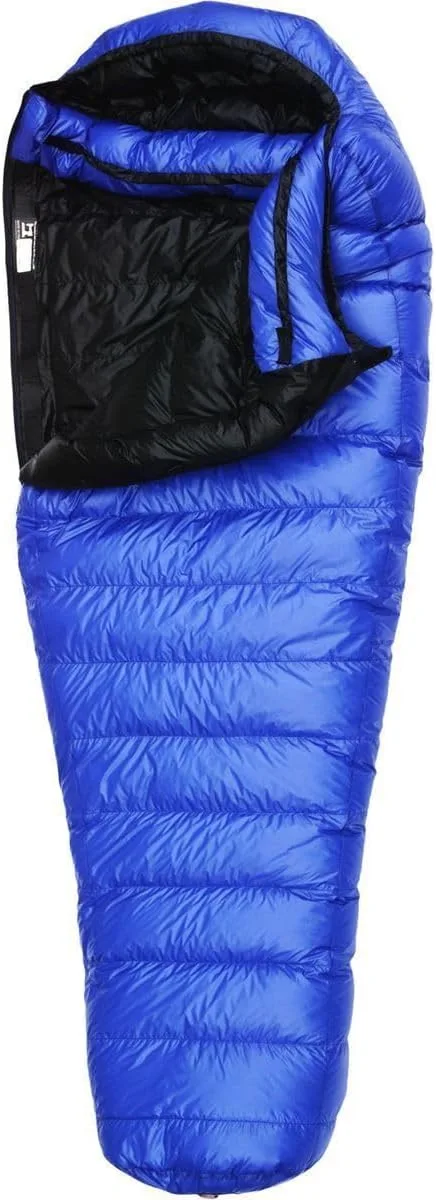
Ice can crack hollow fibers invisibly. On cold nights, keep the filter in a zip bag inside your sleeping bag (here are our warmest ultralight sleeping bags).
Know when to replace it
Replace it when it hits its rated life, flow stays slow after cleaning, it has frozen, or it was dropped hard on rock and you’re unsure it’s intact.
Can You Use a Camping Water Filter for Emergencies?
Yes, and it’s one of the smartest things to keep at home. After floods, hurricanes or boil-water notices, a filter turns stored rainwater or creek water into drinkable water without power. A Platypus GravityWorks 4L handles a whole household, a LifeStraw Personal fits every go-bag, and a purifier like the MSR Guardian Purifier or GRAYL GeoPress 24 oz adds virus protection, which matters more in flood water. Pair your filter with a NOAA emergency radio and a way to boil water.
Where Water Filters Matter Most on US Trips
Backcountry trips in places like Grand Teton National Park, the Olympic rainforest on the Hoh River Trail, or the desert pools of Zion National Park all rely on natural water sources. In the desert, sources can be silty and warm, so a pump or gravity filter with a pre-filter works best. Browse more trips on our hiking guides page, and if you’re new, start with hiking for beginners.
Frequently Asked Questions
What is the best camping water filter?
For most campers and families, the Platypus GravityWorks 4L is the best camping water filter because it treats 4 liters at a time with no effort. For the most protection, including viruses, choose the MSR Guardian. On a budget or backpacking, the Sawyer Squeeze is the best value.
Can you drink water directly from a mountain stream?
It’s not a good idea. Even clear, cold streams can carry Giardia, Cryptosporidium and bacteria from animals. Always filter, purify or boil it first.
What’s the difference between a water filter and a water purifier?
A filter removes protozoa and bacteria. A purifier also removes or kills viruses. In most of the US and Canada, a filter is enough; for international travel or water near people and livestock, use a purifier.
Do camping water filters remove viruses?
Most don’t. Standard 0.1–0.2 micron filters like Sawyer, BeFree and LifeStraw aren’t designed to remove viruses. Purifiers like the MSR Guardian and GRAYL GeoPress are. You can also add chemical tablets or boil the water.
How long does a camping water filter last?
It ranges widely: about 250 liters for a GRAYL cartridge, 1,000 liters for a BeFree, 1,500 liters for the GravityWorks, 10,000 liters for the MSR Guardian, and up to 100,000 gallons (rated) for a regularly backflushed Sawyer Squeeze.
Are gravity water filters better than squeeze filters?
For groups, yes. Gravity filters treat a lot of water with no effort. For solo hikers, squeeze filters are lighter, cheaper and just as effective.
How often should I clean my camping water filter?
Backflush or rinse it after every trip and whenever the flow slows down. In silty water, you may need to clean it every day.
Can a camping water filter freeze?
Most hollow-fiber filters can be damaged by freezing, and you can’t see the damage. Keep them warm in cold weather or choose a freeze-tolerant model like the MSR Guardian. If yours froze, replace it to be safe.
Does a water filter remove chemicals or heavy metals?
Not reliably. Activated carbon helps with taste, odor and some chemicals, and the GRAYL GeoPress reduces some heavy metals, but no camping filter makes chemically polluted water safe. Choose a cleaner source.
Is a LifeStraw good for camping?
It’s great as a backup or emergency filter, but not as your main camping filter, because you can only drink straight through it. For cooking and filling bottles, choose a squeeze, gravity or pump filter.
Can I use a camping water filter at home in an emergency?
Yes. Filters work without power, which makes them ideal for floods, storms and boil-water notices. Add a purifier step if viruses could be present.
Should I boil water even after filtering it?
On most US trails, a good filter is enough. Boil (or add tablets) if viruses are a concern, if your filter might have frozen, or if you’re unsure it’s working properly.
How much water does a person need per day while camping?
Plan on about 2 to 4 liters per person per day for drinking, plus extra for cooking and washing, and more in hot weather or at high altitude.
Is a more expensive water filter always better?
No. Expensive filters add features like virus protection, volume or durability. If you don’t need those, a $45 Sawyer Squeeze works just as well on US trails.
Shop All 14 Camping Water Filters: Tap Any Photo
Every filter and purifier from this guide in one place. Tap a photo or button to check the current price on Amazon.
Final Verdict: Best Camping Water Filter
For camping with family or friends, the Platypus GravityWorks 4L is our top pick. It makes clean water for the whole campsite while you do something else.
If you want the best protection money can buy, including viruses and freezing weather, the MSR Guardian is worth the premium price. Travelers will love the GRAYL GeoPress. And if you’re backpacking solo or on a budget, the Sawyer Squeeze is still the best value filter around. Whatever you pick, keep a cheap LifeStraw in your car or emergency kit as a backup.
Our winner: Check the Platypus GravityWorks on AmazonComplete Your Camping Kit: Readers’ Favorite Picks From Our Other Gear Guides
Clean water sorted? These are the top-rated picks from our other buying guides, one from each gear category. Tap a photo to see it on Amazon.
More Camping & Backpacking Gear Guides
Editorial disclosure: This guide is based on manufacturer specifications from Sawyer, Katadyn, Platypus, MSR, GRAYL, LifeStraw, BKLES and Camco, Amazon listing details, owner reviews and CDC guidance. No lab test is claimed. Prices, versions and stock change, so check the listing before you buy. This guide is general information, not medical advice.
1 thought on “14 Best Camping Water Filters (2026): Gravity, Squeeze, Pump & Purifier Picks Compared”