

A jacket that feels perfect on the climb can feel paper-thin the moment you stop for lunch. A dry trailhead can lead to sheet ice on the first shaded bend. Winter hiking isn’t harder because the gear is complicated. It’s harder because small mistakes, like wet gloves, a dead battery or a late start, matter much more in the cold.
This winter hiking checklist starts with recent trail conditions, the wind forecast and how much daylight you’ll have. Pack the core items from the complete hiking checklist first, then add the winter hiking gear below.
Quick answer: For a winter hike, add these to your normal day-hike kit: thermal base layers, a fleece midlayer, an insulated jacket, a waterproof shell, warm boots with gaiters, wool socks and spares, liner gloves plus insulated gloves or mittens with a dry spare pair, a warm hat and face cover, goggles or dark sunglasses, traction like microspikes or snowshoes for the conditions, an insulated water bottle, a hot drink, hand warmers, a headlamp with spare batteries, and an emergency shelter.
How to Layer for Winter Hiking
Layering lets you stay warm without sweating. Take a layer off before you start to overheat on a climb, and put one on the moment you stop.
| Layer | What it does | Examples |
|---|---|---|
| Base layer | Moves sweat off your skin | Merino or synthetic thermal top and bottoms |
| Midlayer | Holds warmth while you move | Fleece jacket or grid fleece |
| Insulation | Keeps you warm when you stop | Down or synthetic puffy jacket |
| Shell | Blocks wind, snow and rain | Waterproof jacket and shell pants |
🧥 Winter Clothing From Head to Toe
- Moisture-wicking thermal top and bottoms
- Fleece or other insulating midlayer
- Insulated jacket you can reach quickly at stops
- Windproof or waterproof hiking jacket
- Softshell or insulated winter pants
- Waterproof shell pants for wet snow
- Insulated, waterproof winter boots
- Thick wool hiking socks
- Dry spare socks in a waterproof bag
- Snow gaiters
- Liner gloves
- Insulated gloves or mittens
- Dry spare gloves
- Warm hat or beanie
- Balaclava, neck gaiter or face covering
- Goggles or dark sunglasses for glare and wind
- Sunscreen and SPF lip balm (snow reflects sunlight)
Cotton is the enemy in winter. Cotton socks or a cotton hoodie soak up sweat, stay wet and pull heat from your body. Stick to wool and synthetics, from your socks up.
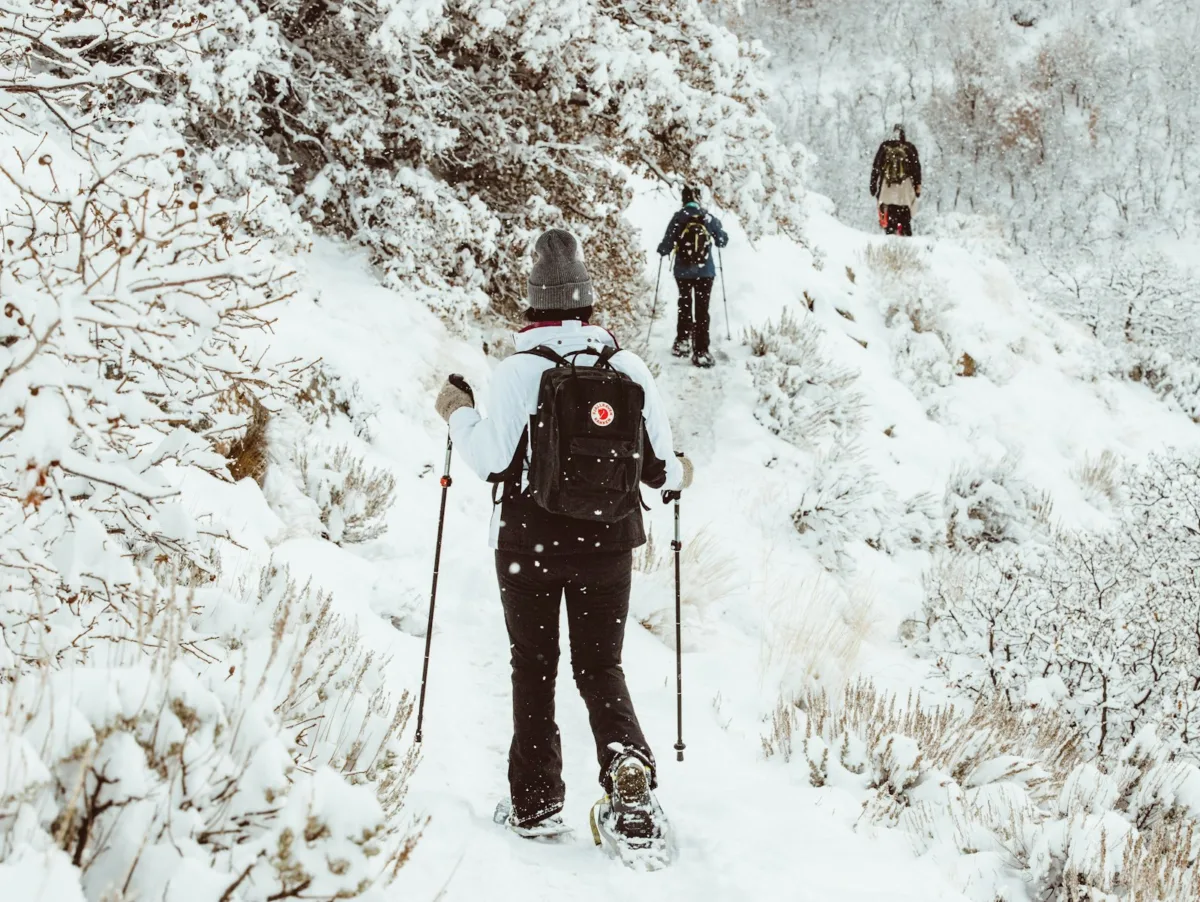
🥾 Traction: Microspikes, Snowshoes or Crampons?
Choose traction for the surface you’ll actually hike on, not just the season. Check recent trail reports before you go.
| Trail conditions | Traction to bring |
|---|---|
| Packed snow and icy patches on moderate trails | Microspikes or trail crampons |
| Deep, soft snow | Snowshoes, plus poles with snow baskets |
| Mixed snow, slush and ice | Microspikes, with snowshoes ready in case snow is deep higher up |
| Steep, hard snow or ice | Mountaineering crampons and an ice axe, only with proper training |
- Microspikes or other traction for the conditions
- Snowshoes for deep snow
- Trekking poles with snow baskets (budget poles)
- Traction that fits the boots you’re wearing

☕ Water and Food in the Cold
You still sweat in winter, and cold air dries you out. But it’s harder to drink when your water is freezing. Keep bottles insulated, and drink before you feel thirsty.
- Insulated water bottle or bottle sleeve
- Thermos with a hot drink or soup
- Bottles stored upside down, so the lid freezes last
- Hydration hose insulated and blown back after sips (or skip the reservoir)
- Food that stays soft in the cold, like nuts, chocolate, cheese and jerky
- Extra reserve food, because you burn more energy in the cold
- Hand and toe warmers
🔦 Light, Power, Navigation and Safety
Winter days are short and cold drains batteries fast. Plan to finish well before sunset and carry light anyway.
- Headlamp with spare batteries
- Batteries and phone kept warm in an inside pocket
- Power bank and cable
- Paper map, compass and offline phone map
- GPS for snow-covered trails where markers are hidden
- Satellite messenger or PLB
- Emergency bivy (not just a thin blanket)
- Sit pad to insulate you from snow at breaks
- Whistle, first-aid kit and medication
- Lighter and fire starter
- Waterproof bag for dry spare layers
- Weather radio on longer trips
⚠️ Steep Snow and Avalanche Terrain
Pick terrain that matches your group’s training and gear. On steep or technical routes, mountaineering crampons and an ice axe are only useful if you’ve been trained to use them. In avalanche terrain, every person needs a transceiver, shovel and probe, plus avalanche training and practice. Check the local avalanche forecast, and plan a lower-risk route you can switch to.
- Avalanche forecast checked
- Avalanche transceiver, shovel and probe for each person
- Ice axe and crampons (trained users only)
- Helmet on technical routes
- A lower-risk backup route
⛺ Winter Overnight Add-Ons
Camping in snow takes a warmer sleep system and more fuel for melting snow. Use the overnight hiking checklist, then add:
- Four-season or sturdy tent with snow stakes
- Sleeping bag rated below the expected low
- Two sleeping pads, or one with a high R-value
- Extra fuel for melting snow
- Warm camp booties and a dry sleep layer
- Snow shovel for leveling your tent site
More tips: how to keep a tent warm and how to stop condensation in a tent.
✅ Winter Trailhead Check
- Check snow, ice, wind, visibility and daylight
- Make sure your traction fits the boots you’re wearing
- Put dry gloves, your insulated jacket and headlamp where you can reach them
- Set a turnaround time that leaves room for delays
- Check the local avalanche forecast, where it applies
- Choose a different route if conditions are beyond your gear or experience
- Tell someone your route and when you’ll be back
📋 Free printable checklist
The hiking checklist PDF includes the full winter add-on section, so you can tick it off before you leave.
Looking for somewhere to go? See our best winter hiking trails.
Winter Hiking Checklist FAQs
What do I need for winter hiking?
Everything on a normal day-hike list, plus warmer layers, insulated boots, gloves with spares, a warm hat, traction for snow and ice, an insulated bottle, extra batteries and a headlamp, because the days are short.
When should I bring snowshoes?
When the snow is deep and soft enough that you sink in, and the terrain is suitable for snowshoeing. On packed trails, microspikes usually work better.
Are microspikes good for steep, hard ice?
Not really. Steep, hard ice can need mountaineering crampons, an ice axe and the training to use them. Choose traction for the actual surface and slope.
Do I need sunscreen in winter?
Yes. Snow reflects sunlight, so you can burn quickly, especially on open snow or at altitude. Pack sunglasses or goggles too.
How do I keep my water from freezing?
Use an insulated bottle or sleeve and store it upside down. Keep it somewhere you can reach without unpacking, and carry a thermos of something hot.
What should I wear during breaks?
Put on your insulated jacket and dry gloves as soon as you stop, before you start to feel cold. Sit on a foam pad, not the snow.
What if I can’t find a recent trail report?
Choose a route where an unexpected change in conditions is easy to handle, or postpone the hike.
More Hiking Checklists
🥾Day Hiking ChecklistShort loops to full-day trails.Open checklist →
⛺Overnight Hiking ChecklistShelter, sleep and kitchen for one night out.Open checklist →
🏔️3-Day Hiking ChecklistMeals, fuel and power for two nights.Open checklist →
🧭Ten Essentials ChecklistThe safety gear that goes on every hike.Open checklist →
🛠️Hiking Gear ChecklistEquipment to own, fit and test.Open checklist →
🎒Hiking Pack ChecklistWhat goes where in your backpack.Open checklist →
🥜Hiking Supplies ChecklistFood, water and refills to restock.Open checklist →
🩹First-Aid Kit ChecklistWhat to carry and restock.Open checklist →
2 thoughts on “Winter Hiking Checklist: Gear for Cold, Snow and Ice”