
Your sleeping bag is one of the “big three” items in your pack, along with your tent and backpack. That makes it one of the easiest places to save weight. Swap a heavy, cheap bag for the best ultralight sleeping bag you can afford, and you can easily drop one to two pounds from your back.
But a light bag that leaves you shivering at 3 a.m. isn’t a good deal. The real goal is the most warmth for the least weight, in a shape you can actually sleep in. A bag that’s perfect for a side sleeper in Colorado in September is a poor pick for a thru-hiker on the Appalachian Trail in July.
In this guide we compare ten of the best ultralight sleeping bags and quilts for 2026. They range from premium down bags like the Western Mountaineering UltraLite and the roomy TerraLite to budget bags under $100 and $200. Then we explain the things that really decide whether you sleep warm: temperature ratings, fill power, shape, your sleeping pad, and whether a quilt or a liner makes sense for you.
Affiliate disclosure: As an Amazon Associate, JoinHikes earns from qualifying purchases. If you buy through Amazon links in this article, we may earn a commission at no extra cost to you.
Our review approach: We compared brand specifications, Amazon listings and published reviews from other testers. We haven’t run our own lab or field tests, and we don’t invent prices, ratings or temperature numbers. Specs below are for the regular or 6-foot size unless we say otherwise. Prices change often, so check the listing before you buy.
Quick Answer: What Is the Best Ultralight Sleeping Bag?
For most backpackers, the Western Mountaineering UltraLite 20 is the best ultralight sleeping bag. It weighs about 1 lb 13 oz, uses 850+ fill-power goose down, has a full draft collar, and is warm enough for most three-season trips in the mountains.
If you sleep on your side, get the roomier Western Mountaineering TerraLite. If your trips dip well below freezing, step up to the VersaLite 10 or the Mountain Hardwear Phantom 0. If you want the lightest setup, an Enlightened Equipment Enigma 20 quilt saves even more weight.
On a budget? The Kelty Cosmic Down 20 is the best down bag under $200, and the TETON Sports TrailHead 20 is a light, cheap synthetic bag under $100 for summer trips.

Best Ultralight Sleeping Bags Compared (2026)
On a phone, swipe the table sideways. Weights are for the regular or 6-foot size.
| Sleeping bag | Rating | Weight | Insulation | Shape | Shop |
|---|---|---|---|---|---|
| Best overall WM UltraLite 20 | 20°F | 1 lb 13 oz | 850+ down | Slim mummy | Check price |
| Side sleepers WM TerraLite | 25°F (28°F ISO comfort) | 1 lb 13.6 oz | 850 down | Roomy semi-rectangular | Check price |
| Cold weather WM VersaLite 10 | 10°F | About 2 lb (32 oz) | 850+ down | Mummy, 62″ shoulders | Check price |
| Roomy all-rounder WM AlpinLite 20 | 20°F | About 2 lb | 850+ down | Wider mummy | Check price |
| Winter Mountain Hardwear Phantom 0 | 0°F (13°F comfort) | 2 lb 10.6 oz | 850 down | Mummy | Check price |
| Lightest mummy Sea to Summit Spark 15 | 15°F (29°F comfort) | 1 lb 9.7 oz | 850 down | Mummy | Brand site & outdoor stores |
| Best quilt EE Enigma 20 | 20°F | 1 lb 5.6 oz | 850 down | Quilt | Brand site |
| Under $200 Kelty Cosmic Down 20 | 20°F (31°F ISO comfort) | 2 lb 7.7 oz | 550 down | Mummy | Amazon & outdoor stores |
| Comfort pick NEMO Disco 15 | 15°F (25°F comfort) | 2 lb 11 oz | 650 down | Spoon | Amazon & outdoor stores |
| Under $100 TETON Sports TrailHead 20 | 20°F (about 40–50°F comfort) | 2 lb 12.3 oz | Synthetic | Narrow mummy | Check price |
Ratings in brackets are comfort ratings reported by testers or the brand. The comfort rating is the temperature where an average cold sleeper stays comfortable. The bag’s name (20°F, 15°F, etc.) is usually closer to the limit rating. More on this in temperature ratings explained.
How We Chose These Ultralight Sleeping Bags
There’s no single “lightest bag wins” rule here. We looked at the things that decide whether a bag is worth carrying:
Warmth for the weight
How much down (and how good it is) you get per ounce. This is the heart of any ultralight bag.
Honest temperature ratings
We favored bags with ISO comfort ratings or tester data, and we point out when a name like “15°F” is optimistic.
Fit and shape
Shoulder and hip room matter a lot for side sleepers and bigger hikers. We note where a bag runs narrow.
Draft protection
Draft collars, draft tubes and good hoods stop warm air from escaping when you move.
Packed size
A light bag that eats half your pack isn’t really ultralight. High fill power packs smaller.
Value for the money
We include premium bags that are worth it, and budget bags under $100 and $200 that are honest about their trade-offs.
The Best Ultralight Sleeping Bags, Reviewed
1. Western Mountaineering UltraLite 20
Best for: Three-season backpackers and thru-hikers who want a proper mummy bag that weighs less than two pounds.
The UltraLite has been a favorite of long-distance hikers for years, and it’s easy to see why. The 6-foot version weighs about 1 lb 13 oz, and roughly 16 oz of that is 850+ fill-power goose down. That’s a lot of warmth for very little weight.
Western Mountaineering builds it in San Jose, California, with continuous baffles (so you can shift down toward your top on warm nights), a thick down-filled draft collar around your neck, and a full-length draft tube behind the zipper. The 12-denier nylon shell is light and soft but surprisingly tough for its weight.
What does this bag look like? A classic tapered mummy: snug at the shoulders, narrow at the feet, with a hood that cinches around your face. The catch is that fit. It’s on the slim side, so broad-shouldered hikers and side sleepers may feel boxed in. For them, the AlpinLite or TerraLite below is a better match.
- Excellent warmth-to-weight ratio.
- Very light for a full mummy bag.
- Great draft collar and draft tube.
- Snag-resistant zipper.
- Lasts many seasons with care.
- Expensive (around $640–$680 list).
- Narrow cut.
- Not a winter bag.
Who should buy it?
Back and side-to-back sleepers of average build who backpack often in the mountains, from late spring to early fall.
Who should skip it?
Broad-shouldered hikers, true side sleepers, and anyone on a tight budget.
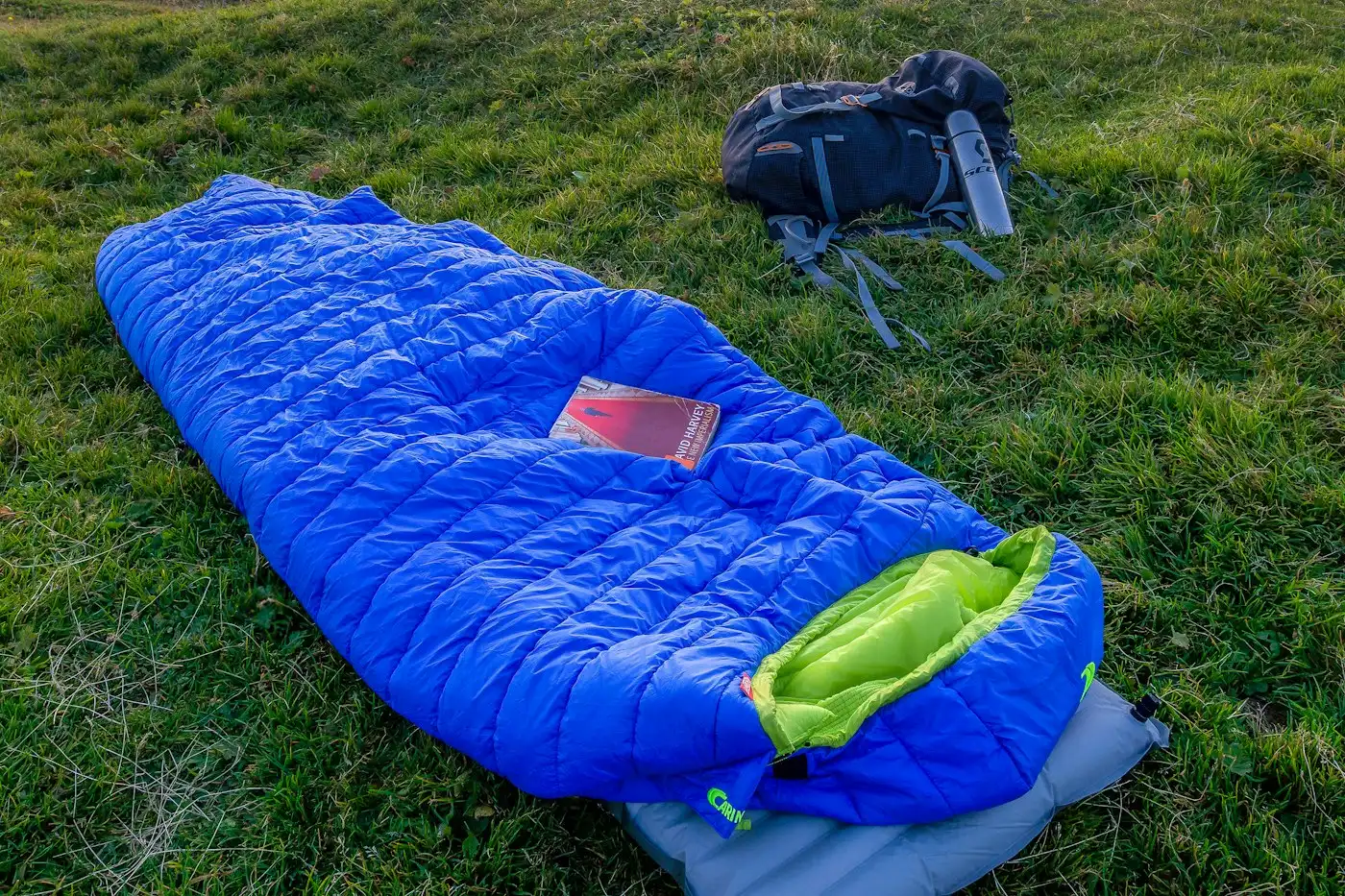
2. Western Mountaineering TerraLite
Best for: Side sleepers, stomach sleepers, restless sleepers and bigger hikers who hate tight mummy bags.
Most ultralight bags save weight by cutting space. The TerraLite goes the other way. It has a semi-rectangular shape with about 65 inches of shoulder room and 68 inches at the hips, which is a lot more than a typical mummy. You can bend your knees, roll onto your side, and the bag rolls with you instead of twisting around you.
And it still only weighs about 1 lb 13.6 oz, almost the same as the UltraLite. It’s rated to 25°F, and testers report an ISO comfort rating of about 28°F, with around 18 oz of 850-fill down.
The extra room does cost a little warmth, because your body has more air to heat. On cold nights, wear a puffy jacket or add a liner to fill the space. On warm nights, the extra room is a bonus: you can open the zipper and use it almost like a blanket.
- Very roomy for an ultralight bag.
- Great for side and restless sleepers.
- Light and packs small.
- Hood cinches down nicely.
- Pricey (around $625 list).
- Extra space is a bit less warm.
- Dark interior.
Who should buy it?
Anyone who wakes up fighting a narrow mummy bag. This is the best ultralight sleeping bag for side sleepers on our list.
Who should skip it?
Cold sleepers heading out below freezing, and gram counters who want the slimmest, warmest bag for the weight.
3. Western Mountaineering VersaLite 10
Best for: Cold sleepers, high-altitude trips, and shoulder-season backpacking from early spring to late fall.
The VersaLite is the bag you pick when you want winter-ish warmth without a winter-bag weight. It’s rated to 10°F, has about 20 oz of 850+ fill down, and the brand lists it at about 32 oz (around 2 lb). For a bag this warm, that’s impressively light.
It’s a mummy bag, but with a 62-inch shoulder girth, which sits nicely between the slim UltraLite and the roomy AlpinLite. Reviewers praise its deep hood and the full-length draft tube, and the two-way zipper lets you vent your feet on milder nights.
Who really needs it? If you camp above treeline, hike in the Rockies or Sierra in October, or just always sleep cold, this bag gives you a big safety margin. For warm summer trips, though, it’s more bag than you need.
- Very warm for its weight.
- Comfortable, not-too-tight cut.
- Deep, cozy hood.
- Great for cold sleepers.
- High price (about $780 on Amazon when we checked in November 2026).
- Too warm for summer.
- Hood closure Velcro is weak.
Who should buy it?
Shoulder-season and high-country backpackers, and anyone who’s tired of being cold in a 20°F bag.
Who should skip it?
Summer hikers in warm climates. A 30°F–40°F bag or quilt is a better fit.
4. Western Mountaineering AlpinLite 20
Best for: Hikers who love the UltraLite’s warmth but need a little more room at the shoulders.
Think of the AlpinLite as the UltraLite’s roomier sibling. It uses the same 850+ fill down, the same 20°F rating and the same quality build, but the cut is wider. The 6-foot version weighs about 2 lb, so you pay only a few extra ounces for the extra space.
OutdoorGearLab’s testers found its 20°F rating conservative (in a good way) and measured about 5 inches of loft, which is a lot. They also liked the no-snag zippers. Their main complaint was a weak Velcro tab on the draft collar.
It’s a nice middle ground: more room than a slim mummy, but warmer than the very roomy TerraLite. If you sleep partly on your side but still want a “real” mummy bag, start here.
- More room than the UltraLite.
- Warm, generous loft.
- No-snag zippers.
- Still light for its warmth.
- Expensive (around $685–$730 list).
- Too warm for midsummer.
- Draft-collar Velcro is weak.
Who should buy it?
Broad-shouldered hikers and combination sleepers who want a warm three-season mummy.
Who should skip it?
Hikers who already fit a slim bag. The UltraLite saves weight for the same warmth.
5. Mountain Hardwear Phantom 0
Best for: Winter camping, mountaineering approaches and very cold shoulder-season nights.
Most “ultralight” bags stop being useful once the temperature drops into the teens. The Phantom 0 keeps going. It packs about 29.6 oz of 850-fill down into a bag that weighs 2 lb 10.6 oz, which is light for a true winter bag. Testers report a comfort rating of about 13°F, so think of the “0” as the limit, not the comfort zone.
It has a generous down collar, a full-length draft tube and a snag-free zipper, and the down is RDS certified (Responsible Down Standard). Reviewers do note a narrow fit and footbox, and that the zipper can slide down a little overnight.
Is it overkill for most people? Yes. CleverHiker’s reviewer found it too warm for regular camping at 40°F and above. But if you camp in snow or above 10,000 feet in late fall, this is the kind of bag you want.
- Very warm for the weight.
- Great draft collar and draft tube.
- Snag-free zipper.
- Compression sack included.
- Expensive (around $780 list).
- Narrow fit and footbox.
- Far too warm above freezing.
Who should buy it?
Winter campers and cold sleepers who want the lightest bag that’s truly safe below freezing.
Who should skip it?
Three-season and summer backpackers. A 20°F bag is lighter and more comfortable.
6. Sea to Summit Spark 15
Best for: Thru-hikers and gram counters who want a fully enclosed bag, not a quilt.
The Spark is one of the lightest full sleeping bags you can buy. The 15°F version weighs about 1 lb 9.7 oz in its smaller size, with 850-fill down and a compression sack in the box. It packs down impressively small.
Be careful with the name, though. Sea to Summit lists a comfort rating of about 29°F. So for most people, this is a just-below-freezing bag, not a 15°F bag. The shell fabric is very thin, and some testers say the zipper can snag.
There’s also a women’s version with a different cut and a bit more insulation, which makes this a strong pick in the best ultralight sleeping bag for women category, too.
- Extremely light and packable.
- Full hood and enclosure.
- Compression sack included.
- Women’s version available.
- Expensive (around $549 list).
- Thin, delicate fabric.
- Zipper can snag.
7. Enlightened Equipment Enigma 20
Best for: Experienced ultralight hikers and thru-hikers who want the lightest warm setup for the money.
A quilt is like a sleeping bag without a back or a hood. When you lie in a sleeping bag, the down under you gets crushed flat and does almost nothing, so a quilt simply leaves it out. Your sleeping pad keeps your back warm instead.
The Enigma 20 is one of the most popular quilts on long trails. It weighs about 1 lb 5.6 oz with 850-fill down, and it costs about $320, much less than the premium bags above. The footbox is sewn closed, and straps clip it to your pad so drafts don’t sneak in.
There’s a learning curve. You’ll need a warm hat or hooded jacket since there’s no hood, and on cold, windy nights you have to tuck the edges in carefully. Once you get used to it, many hikers never go back to a bag.
- Very light and packable.
- Roomy, great for side sleepers.
- Much cheaper than premium bags.
- Easy to vent on warm nights.
- Drafts if not strapped well.
- No hood.
- Takes a few nights to learn.
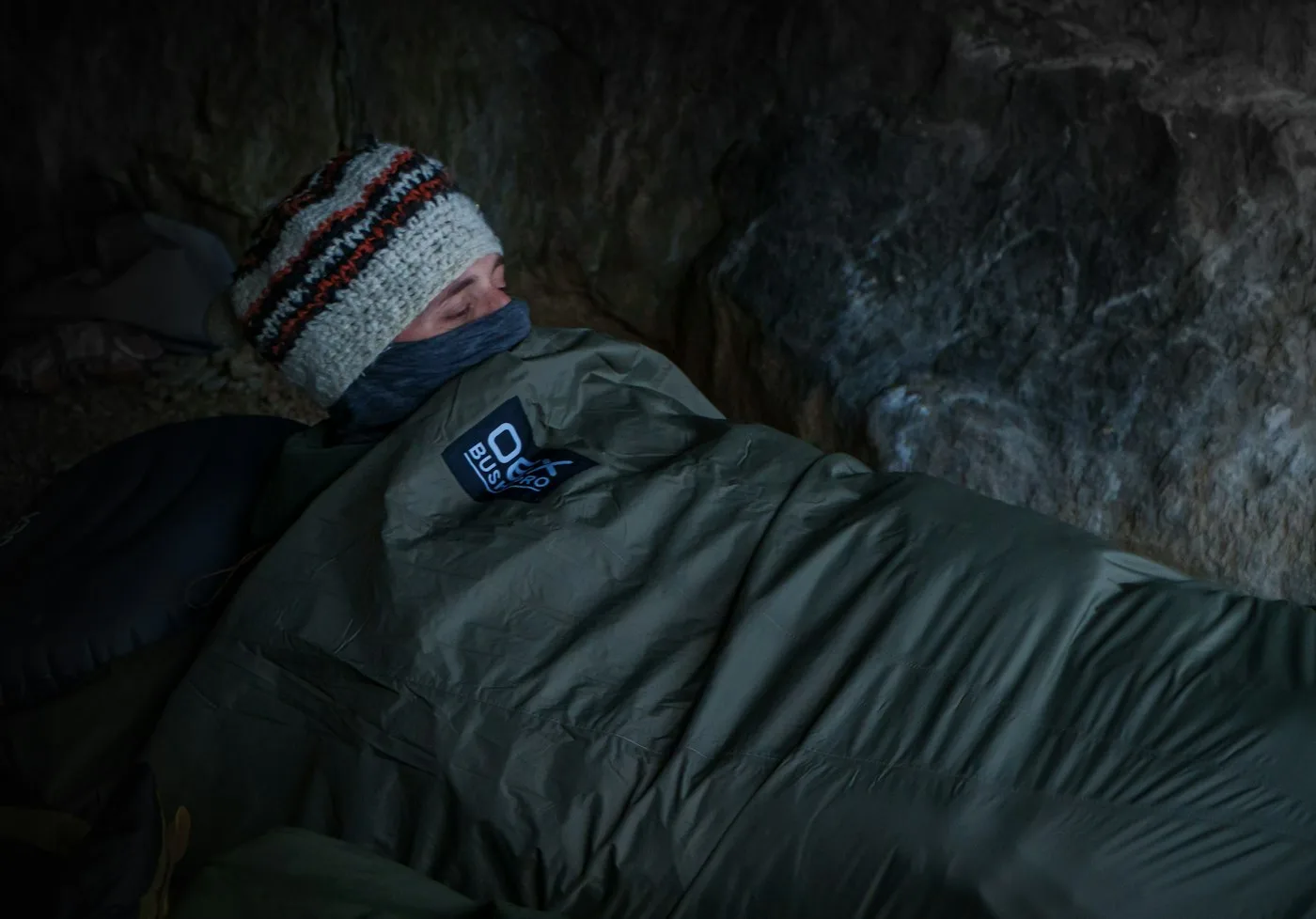
8. Kelty Cosmic Down 20
Best for: New backpackers who want real down without spending $500.
Let’s be honest: the Cosmic Down 20 isn’t truly ultralight. At about 2 lb 7.7 oz, it’s around 10 ounces heavier than the UltraLite. But it costs about $180–$190, roughly a third of the price, and it’s still a warm, compressible down bag.
It uses 550-fill down (lower quality than 850, so you need more of it), has a full hood and draft collar, and has an ISO comfort rating of about 31°F. Kelty also uses recycled fabrics and a PFAS-free water-repellent finish.
For a first backpacking bag, this is the one we’d point most people to. You can always upgrade later and keep this one for car camping.
- Very good value.
- Warm with a full hood.
- Real down at a budget price.
- Easy to find on Amazon and in stores.
- Heavier and bulkier than premium bags.
- Lower fill power.
- Zipper can snag.
9. NEMO Disco 15 Endless Promise
Best for: Side and stomach sleepers who care more about sleep than about saving every ounce.
The Disco has NEMO’s “spoon” shape: wider at the elbows and knees, like a mummy bag that lets you bend your knees and curl up. It’s one of the most comfortable bags you can sleep in on your side.
The trade-off is weight. At about 2 lb 11 oz with 650-fill down, it’s not truly ultralight, and it’s bulkier in your pack. It has a comfort rating of about 25°F and costs around $300. There are men’s and women’s versions, and NEMO’s “Endless Promise” program covers repairs and helps find the bag a new home when you’re done with it.
- Roomy at the knees and elbows.
- Great for side sleepers.
- Women’s version available.
- Lots of comfort features.
- Heavy for ultralight trips.
- Bulky packed size.
- Not for long-distance hiking.
10. TETON Sports TrailHead 20
Best for: Summer backpacking, beginners and anyone testing out backpacking on a tight budget.
Most good backpacking bags cost several hundred dollars. The TrailHead costs about $65 on Amazon, which makes it one of the most popular cheap backpacking bags. It uses synthetic insulation, weighs about 2 lb 12.3 oz, and packs into a small stuff sack.
Here’s the honest part: the “20°F” name is a survival-style limit. CleverHiker’s reviewer puts its real comfort range at about 40–50°F. Amazon reviewers also mention that it runs small for bigger people and that the zipper isn’t the toughest. So use it for warm summer nights, not frosty mountain trips.
Synthetic fill has one big upside on a budget: it still keeps some warmth if it gets damp, and it’s easy to wash.
- Very cheap.
- Light for a budget bag.
- Synthetic fill handles damp.
- Packs smaller than most cheap bags.
- Only warm enough for mild nights.
- Snug fit.
- Zipper durability complaints.
Who should buy it?
Summer campers and first-time backpackers who want a light bag under $100.
Who should skip it?
Anyone camping below about 40°F or in the mountains in spring and fall.
Prefer a different color or size? See other TETON TrailHead options on Amazon.
Also Worth a Look
Zpacks Classic 20
About 1 lb 2.8 oz with 900-fill down. Incredibly light, but it has no hood and isn’t meant for sub-freezing trips. A favorite of thru-hikers who wear a down hood at night.
Feathered Friends Swallow UL 20
About 1 lb 10.6 oz with 950+ fill down. A premium, very compressible mummy bag. Pricey (around $659) and without an ISO rating.
Best Ultralight Sleeping Bag by Need
Short on time? Find your situation below.
| If you want… | Our pick | Why |
|---|---|---|
| Best ultralight sleeping bag for backpacking | WM UltraLite 20 | Light, warm and proven on long trails |
| Best ultralight sleeping bag for side sleepers | WM TerraLite | 65″ shoulders, room to bend your knees |
| Best ultralight sleeping bag for cold weather | WM VersaLite 10 | 10°F warmth at about 2 lb |
| Best for real winter | Mountain Hardwear Phantom 0 | About 13°F comfort |
| Best ultralight sleeping bag quilt | EE Enigma 20 | Very light and great value |
| Best ultralight sleeping bag for women | Sea to Summit Spark (women’s) | Women’s cut with extra insulation |
| Best ultralight sleeping bag under $200 | Kelty Cosmic Down 20 | Real down for about $180–$190 |
| Best ultralight sleeping bag under $100 | TETON TrailHead 20 | About $65, for summer trips |
| Best ultralight sleeping bag on a budget | Kelty Cosmic Down 20 or Enigma 20 | Big savings without a cheap feel |
| Best for minimum weight (“backpacking light”) | Zpacks Classic 20 or Enigma 20 | Under 1.5 lb |
Sleeping Bag vs. Quilt: Which Is Better for Ultralight Backpacking?
This is the biggest choice you’ll make, so it’s worth a minute.
A sleeping bag wraps all the way around you and usually has a hood. It’s simple, it seals out drafts, and it’s the safer choice for cold nights and for people new to backpacking.
A quilt skips the back and the hood. That saves weight (often 4–8 ounces for the same warmth) and gives you lots of room to move. But you need a good sleeping pad, because the pad is now the only thing under your back, and you need to strap the quilt down so cold air doesn’t sneak in.
| Sleeping bag | Quilt | |
|---|---|---|
| Weight for the same warmth | Heavier | Lighter |
| Drafts | Very few | Can be drafty if not strapped |
| Hood | Yes (usually) | No, wear a hat or hood |
| Room to move | Less (except roomy cuts) | Lots |
| Best for | Cold nights, beginners, back sleepers | Thru-hikers, warm sleepers, side sleepers |
Our advice: If you’re new to backpacking or camp in cold places, get a bag. If you hike long miles in three-season weather and already own a warm sleeping pad, try a quilt.

Sleeping Bag Temperature Ratings Explained
This is where most people get burned (or frozen). The number in a bag’s name is usually not the temperature you’ll be comfortable at.
Many brands now test bags to the ISO 23537 standard (it replaced the older EN 13537 test). It gives a few numbers:
Comfort rating
The temperature where a typical cold sleeper, lying relaxed, stays comfortable. Use this number to choose.
Limit rating
The temperature where a typical warm sleeper can sleep curled up for about 8 hours without being cold. Many bags are named after this.
Extreme rating
A survival number only. You’d be very cold and at risk. Never plan around it.
Simple rule: pick a bag whose comfort rating is about 10°F lower than the coldest night you expect. Cold sleepers should add even more margin. Some brands, especially small cottage makers, don’t use ISO testing at all. Their ratings are often close to a limit rating, so treat them the same way.
Buying Guide: How to Choose the Best Ultralight Sleeping Bag
1. Fill power and fill weight
Fill power tells you how fluffy the down is. Higher numbers (800, 850, 900+) mean the down traps more warmth for its weight and packs smaller. Fill weight tells you how much down is in the bag. You need both numbers: a bag with 16 oz of 850-fill down is much warmer than a bag with 10 oz of 900-fill.
2. Down vs. synthetic insulation
Down is lighter, warmer for its weight, packs smaller and lasts many years. It loses warmth when wet, although many bags now use water-resistant (“hydrophobic”) down. Synthetic fill is cheaper, keeps some warmth when damp and is easy to wash, but it’s heavier, bulkier and wears out sooner. For true ultralight backpacking, down is almost always the answer.
3. Shape and fit
The tighter the bag, the less air you have to warm, so slim mummies are the warmest for their weight. But if you can’t sleep, that doesn’t matter. Check the shoulder girth: around 58–60 inches is slim, about 62 inches is in the middle, and 64 inches or more is roomy. Also pick the right length. Too long means cold dead space at your feet; too short squashes the down.
4. Draft collar, draft tube and hood
A draft collar is a puffy tube around your neck that stops warm air from “pumping” out when you move. A draft tube runs along the zipper. On cold nights, these features matter as much as the amount of down.
5. Weight targets
As a rough guide for a 20°F three-season bag: under 2 lb is ultralight, 2–2.5 lb is lightweight, and over 3 lb is heavy for backpacking. Quilts can get close to 1 lb.
6. Your sleeping pad (R-value)
The ground steals heat fast, and your bag’s insulation underneath you is crushed flat. Your pad’s R-value is what stops that. For three-season trips, aim for an R-value of about 3–4; for freezing nights, 4–5 or higher. See our guide to the best ultralight sleeping pad to match your bag.
7. Shell fabric and water resistance
Ultralight shells are often 7–15 denier, which is light but delicate. Keep them away from sharp sticks and Velcro. A water-repellent finish helps with tent condensation, but it doesn’t make the bag waterproof.
Best Ultralight Sleeping Bag Liner: Is One Worth Carrying?
A liner is a thin sack you sleep in inside your bag. It does two jobs: it keeps sweat and body oils off your expensive down, and it can add a bit of warmth.
Silk liners
The lightest (often around 4–5 oz). Great for keeping your bag clean, but they add only a little warmth.
Synthetic (stretch) liners
Soft and stretchy, so they move with you. Good for side sleepers and warm nights on their own.
Thermal / fleece-style liners
Add the most warmth but weigh more. Useful to stretch a three-season bag into colder nights.
Our take: Treat warmth claims on liners carefully. “Adds 25°F” is a marketing number; real-world gains are usually much smaller. If you’re cold in your bag, a warm hat, dry socks and a puffy jacket usually do more. A liner is most worth it on long trips, when keeping your bag clean means it stays lofty and warm for longer.
Best Ultralight Sleeping Bag for Women
Women’s sleeping bags aren’t just smaller. They’re usually shorter, narrower at the shoulders and wider at the hips, and many have extra insulation in the torso and footbox, because many women sleep colder than men.
- Sea to Summit Spark (women’s): the lightest women’s-specific mummy bag on our list.
- NEMO Disco (women’s): roomy spoon shape, great for women who sleep on their side.
- Western Mountaineering bags come in shorter lengths (such as 5’6″), which save weight and remove cold dead space for shorter hikers.
Don’t feel limited to “women’s” models. Pick the fit that matches your body and your sleep position, and choose by the comfort rating, not the name.
Best Ultralight Sleeping Bag on a Budget: What Your Money Buys
| Budget | What to expect | Our pick |
|---|---|---|
| Under $100 | Synthetic fill, 2.5–3 lb, warm-weather use. Truly ultralight bags don’t exist at this price. | TETON TrailHead 20 |
| Under $200 | Real down (550–650 fill), about 2.5 lb, honest three-season warmth. | Kelty Cosmic Down 20 |
| $200–$400 | High-fill down quilts and lighter bags, around 1.3–2 lb. | EE Enigma 20 |
| $400 and up | 850+ down, top fabrics, the best warmth for the weight, years of use. | WM UltraLite 20 |
Is a premium bag worth it? If you backpack several times a year, often yes. A well-cared-for down bag can last a decade or more, so the cost per night ends up low. If you go once a year in summer, a budget bag makes more sense.
Best Ultralight Sleeping Bag in the UK
Several of our picks, including Western Mountaineering, Sea to Summit and Mountain Hardwear, are sold through UK outdoor shops, though prices in pounds and stock vary. Three tips for UK buyers: compare ISO comfort ratings in °C (a comfort rating around 0°C to -2°C suits most UK spring-to-autumn trips), think about damp weather (hydrophobic down or a synthetic bag helps), and check the exact model name, since some brands sell slightly different versions in Europe.
How Ultralight Sleeping Bags Have Changed Since Older “Best Of” Lists
If you’ve been reading older lists for the best ultralight sleeping bag of 2017, 2021, 2023 or 2025, a few things have changed:
- Honest ratings are more common. More brands now publish ISO comfort ratings, so it’s easier to compare bags fairly.
- Quilts went mainstream. Once a niche thru-hiker item, quilts are now one of the most popular ultralight choices.
- Greener materials. Recycled fabrics, certified responsible down and PFAS-free water-repellent finishes are now common, as on the Kelty Cosmic.
- Some classics are still on top. The Western Mountaineering UltraLite has stayed on “best of” lists for years, which tells you something about how well it’s made.
How to Sleep Warmer in an Ultralight Sleeping Bag
- Eat a snack before bed. Your body makes heat digesting food.
- Change into dry clothes. Damp hiking clothes chill you all night.
- Wear a hat and dry socks. Cheap, light and very effective.
- Fluff your bag early. Take it out of the stuff sack when you set up camp so the down can loft.
- Use a warm water bottle. Fill a sealed bottle with hot water and keep it at your feet or core.
- Pick a sheltered spot. Avoid valley bottoms, where cold air sinks at night.
- Don’t breathe into the bag. Your breath adds moisture, which makes down less warm.
How to Care for Your Down Sleeping Bag
- Store it loose, in a big cotton or mesh sack, never squashed in its stuff sack at home.
- Air it out after every trip so moisture can escape.
- Wash it rarely (once a season or less), with a down-specific soap, in a front-loading machine.
- Dry it slowly on low heat with a few clean tennis balls to break up clumps. It can take hours.
- Use a liner on long trips to keep body oils off the down.
Frequently Asked Questions
What is the best ultralight sleeping bag in 2026?
For most backpackers, the Western Mountaineering UltraLite 20 is the best ultralight sleeping bag in 2026. It weighs about 1 lb 13 oz, uses 850+ fill down and has excellent draft protection. Side sleepers should look at the TerraLite, and cold sleepers at the VersaLite 10.
What is the best ultralight sleeping bag for backpacking on a budget?
The Kelty Cosmic Down 20 is the best budget down bag, at about $180–$190. For the lowest weight on a budget, the Enlightened Equipment Enigma 20 quilt costs about $320 and weighs about 1 lb 5.6 oz.
What is the best ultralight sleeping bag under $100?
The TETON Sports TrailHead 20 costs about $65 and weighs about 2 lb 12 oz. It’s best for warm summer nights, since testers put its real comfort range around 40–50°F.
What is the best ultralight sleeping bag for side sleepers?
The Western Mountaineering TerraLite, with about 65 inches of shoulder room. A quilt like the Enigma 20, or the roomy NEMO Disco, are also good options.
What is the best ultralight sleeping bag for cold weather?
The Western Mountaineering VersaLite 10 for cold three-season trips, and the Mountain Hardwear Phantom 0 (about 13°F comfort) for winter camping.
Is a quilt better than a sleeping bag?
A quilt is lighter and roomier, but it can be drafty and needs a good pad. A sleeping bag is warmer and simpler. Quilts suit experienced three-season hikers; bags suit beginners and cold nights.
Is an ultralight sleeping bag worth it?
If you backpack often, yes. Saving one to two pounds makes every mile easier, and a good down bag lasts for many years. If you only camp once or twice a year in summer, a cheaper bag is fine.
How much should an ultralight sleeping bag weigh?
For a 20°F three-season bag, under 2 lb is ultralight. Quilts can weigh under 1.5 lb, and summer bags under 1 lb.
What temperature rating do I need?
Pick a bag with a comfort rating about 10°F lower than the coldest night you expect. For most US three-season backpacking, a bag with a comfort rating around 25–30°F works well.
Is a sleeping bag liner worth carrying?
It’s worth it on long trips to keep your bag clean. It adds a little warmth, but not as much as the packaging often claims.
Down or synthetic: which is better for ultralight?
Down. It’s lighter, warmer for its weight and packs smaller. Synthetic is cheaper and handles damp better, but it’s heavier.
Do I need a women’s sleeping bag?
Not always. Women’s bags are shorter, shaped differently and often have extra insulation. Choose by fit and comfort rating. The Sea to Summit Spark and NEMO Disco both come in women’s versions.
Final Verdict: Best Ultralight Sleeping Bag
The Western Mountaineering UltraLite 20 is our top pick. It’s light, warm, beautifully made and built to last for years of backpacking.
Side sleepers should go for the roomy TerraLite, and cold sleepers or shoulder-season hikers for the VersaLite 10. On a budget, the Kelty Cosmic Down 20 (under $200) and TETON TrailHead 20 (under $100) get you out the door. Whichever bag you choose, pair it with a warm enough sleeping pad.
Our winner: Check the WM UltraLite 20 on AmazonBuild Your Ultralight Sleep System
Editorial disclosure: This guide is based on brand specifications from Western Mountaineering, Mountain Hardwear, Sea to Summit, Enlightened Equipment, Kelty, NEMO and TETON Sports, Amazon listing details, and published third-party reviews (including CleverHiker, OutdoorGearLab and Section Hiker). No lab test is claimed. Prices, versions and stock change, so check the listing before you buy.