
The trip ended in rain, so the tent went into its stuff sack wet. You meant to open it when you got home. Then the bag sat in the garage until the next trip. Now there’s a musty smell the moment you unzip it, and a cluster of dark spots where the floor folds against the wall.
Don’t throw it out yet, and don’t reach for the strongest cleaner under the sink either. Take the tent outside and look closely. A few spots on otherwise healthy fabric is a very different problem from a rainfly that feels sticky, seam tape peeling off in strips, or a smell that comes back every time the tent gets humid. The first usually cleans up well. The others need a closer look before you trust the tent on another wet trip. This guide walks you through exactly how to clean a moldy tent, get rid of the mildew smell, and store it so it never happens again. (For the rest of your kit, see our guide on how to store camping gear.)

Mold vs Mildew on a Tent: What’s the Difference?
People use the words interchangeably, and for tent care the fix is almost the same. Both are fungi that grow when fabric stays damp, warm and dark, which is exactly what happens inside a wet stuff sack.
| Mildew | Mold | |
|---|---|---|
| How it usually looks | Flat, powdery, gray or white patches | Fuzzy or slimy spots, often black, green or dark brown |
| How deep it goes | Mostly on the surface | Can work deeper into coatings, seams and canvas |
| Smell | Musty, damp | Musty, sometimes stronger and earthier |
| Cleanup | Usually responds well to gentle spot cleaning | Clean carefully; check the fabric and coating afterward |
Color alone won’t tell you what you’re dealing with. A black mark can be old staining, transferred dirt, or growth. Look at the location, surface texture and how it looks after cleaning and drying together.
Before You Wash Anything, Figure Out What You’re Looking At
Pitch the tent or spread the parts out in a shaded spot outdoors. Separate the rainfly, inner tent, footprint and storage bag. You can usually tell which piece needs attention without putting your face right up to the fabric.
Check the places that take longest to dry: floor corners, the bottom of the zippers, pole sleeves, guyline attachment points and the underside of the fly. If the outside looks clean but the inside smells, check the stuff sack and footprint too. A damp accessory can sit folded against clean fabric for weeks.
| What you find | What it may mean | Where to start |
|---|---|---|
| Musty smell with a few speckled patches | Localized mold or mildew | Inspect the fabric and gently spot-clean if the material is sound |
| Brown smears where the tent touched the ground | Mud or organic debris | Wipe gently with water using the maker’s approved method |
| Fine droplets across the inner wall after a night out | Condensation | Dry the tent and improve ventilation before treating for mold |
| Clear or cloudy strips lifting along a seam | Failing seam tape | Ask the manufacturer which seam repair suits that seam |
| Sticky, gummy or flaking material on the fly or floor | Waterproof coating breakdown | Stop scrubbing and ask about repair or a replacement part |
| Dark marks that remain after cleaning and drying | Leftover staining or an ongoing problem | Watch whether they spread or return with odor |
| Widespread growth, weak fabric or a smell that keeps returning | A problem beyond spot cleaning | Stop using it and ask the maker or a repair service |
Mold, condensation and leaks can show up on the same tent
Wake up after a humid night to droplets scattered across the ceiling? That usually points to condensation. A wet patch that forms right under one seam every time it rains? Look for a leak. A tent that smells musty straight out of storage tells you it spent time folded up damp.
The fix is different for each. With condensation, improve airflow and stop the wet fly touching the inner (see how to stop condensation in a tent). With a leak, check the exact seam or coating. With mildew, clean and dry the fabric and fix whatever kept it damp. Spraying the whole tent with waterproofing won’t solve all three.
When to Clean a Moldy Tent Yourself
A small, easy-to-reach patch on sturdy fabric is the perfect candidate for home cleaning. Start gently. Find your model’s care instructions and check whether the brand allows spot cleaning, soaking or odor treatments. A coated backpacking fly, a cotton canvas wall and a rooftop tent mattress can each need a different approach.
If mold covers several panels, has reached a mattress or thick padding you can’t fully dry, or comes back after careful cleaning and dry storage, stop using that gear and get advice. Send the manufacturer photos of both sides of the affected panels and ask whether the part can be cleaned, repaired or replaced on its own.
What You’ll Need
- Your tent’s care instructions, found on the label, in the manual or on the brand’s website. Instructions can change between versions.
- A tent-safe cleaner approved for your fabric. A fabric cleaner and an odor treatment may be separate products.
- A soft cloth or non-scratch sponge that’s gentle around mesh, seam tape and coated fabric.
- Clean water and a large tub or basin, if the instructions allow soaking.
- A drying space set up first: a shaded pitch, a drying rack or a supported line under cover.
- Protection: gloves, eye protection and an N95 respirator for visible mold.

How to Clean a Moldy Tent: Step by Step
Go slowly. These steps fit most nylon and polyester camping tents, but your manufacturer’s instructions always come first.
- Set up your drying space first. You’ll need room to dry each part fully before anything goes back in a bag. A shaded spot with a breeze is ideal.
- Take the tent outdoors and separate every part. Remove the poles and stakes, and keep the rainfly, inner tent, footprint and stuff sack apart. Shake out loose dirt, leaves and grit.
- Put on your protective gear if you can see mold: gloves, eye protection and an N95.
- Brush off dry debris gently. Use a soft brush or cloth. Avoid hard scraping on coated fabric, seam tape and mesh.
- Spot-clean the affected areas. Mix your tent-safe cleaner as the label directs and work it into the marks with a soft sponge using light, small circles. Patience beats pressure here.
- Soak only if the instructions allow it. Some gear cleaners and odor eliminators are designed for a soak in a tub of lukewarm water. Follow the dilution and timing on the bottle.
- Rinse thoroughly with clean water if the product says to, so no residue stays in the fabric.
- Air-dry every part completely in the shade (more on this below). Check corners, seams and zipper tracks by touch.
- Inspect again once it’s dry. Look for remaining marks, smell, sticky coating or lifting seam tape. Only then decide on odor treatment or waterproofing.
How to Get the Mildew Smell Out of a Tent
Here’s the part most guides skip: a tent can look clean and still smell musty. The odor lives in the fibers, the coating and the seams. Deal with it in this order:
- Clean first. Odor products work best on fabric that’s already free of dirt and visible growth.
- Dry completely. A tent that’s still slightly damp will keep smelling, and the smell will get worse.
- Air it out. Pitch the tent with every door and vent open for a few hours in a breezy, shaded spot. Often that alone clears a mild smell.
- Use a tent-safe odor eliminator if it lingers. Enzyme or microbe-based products made for outdoor gear (for example GEAR AID Revivex Odor Eliminator) are designed for tents and won’t harm coatings when used as directed. Check your tent maker approves it.
- Don’t forget the accessories. The stuff sack, footprint and any gear loft can hold the smell and re-infect a clean tent. Clean and dry them too.

If the smell comes back after drying
| What you notice after drying | What to check | Next step |
|---|---|---|
| Faint musty smell, no visible marks | Seams, corners, stuff sack and footprint | Air it out longer, then use a tent-safe odor treatment |
| Smell returns in humid weather | Hidden damp areas or growth inside seams | Repeat cleaning on those spots and dry fully |
| Strong smell plus sticky or flaking coating | Coating breakdown (hydrolysis) | Contact the manufacturer about repair or replacement parts |
| Spots and smell return after careful cleaning and storage | Deep growth in the fabric or padding | Stop using it and get advice from the maker or a repair service |
Vinegar, Bleach, Lemon and Household Sprays: What’s Safe?
| Cleaner or method | What to do |
|---|---|
| Tent-specific gear cleaner | Your best first choice. Made for coated nylon and polyester. |
| Enzyme odor eliminator for gear | Good for lingering smells once the tent is clean. Follow the label. |
| Mild non-detergent soap | Many brands allow it for spot cleaning. Rinse well. |
| White vinegar | Popular online, but not every brand approves it and it can affect some coatings. Check your care instructions and test a hidden spot first. |
| Lemon juice and salt | An old folk remedy, mostly for canvas. Skip it on coated synthetic tents unless the maker allows it. |
| Bleach | Avoid. It weakens fabric, discolors it and attacks waterproof coatings and seam tape. |
| Household mold sprays, degreasers, laundry detergent | Avoid unless the tent maker approves. Harsh chemicals and residue can damage the coating and repel water poorly afterward. |
The honest answer to “will vinegar kill mold on my tent?” is: it might help, but the question that matters more is whether your tent’s coating can handle it. When in doubt, use a product made for tents.
Cleaning Different Tent Materials
How to clean mold off a canvas tent
Canvas is tough but slow to dry, which is why bell tents and wall tents are more prone to mildew than nylon ones. Brush off dry growth outdoors with a soft brush. Treat the spots with a cleaner sold for canvas tents, working it in gently. Rinse if the product says to, then let the tent dry for at least a full day in the sun and breeze, longer in humid weather. Sunlight helps canvas, but check the maker’s guidance for long UV exposure.
Some stains on canvas won’t fully lift even when the growth is gone. That’s cosmetic. What matters is whether the canvas still feels strong, sheds water and stays odor-free once dry. Many canvas tents need re-proofing after a deep clean (see the next section).
Footprints, ground sheets and stuff sacks
Footprints sit on wet ground and often get packed away dirty and damp, so they’re a common source of mildew. Rinse off mud, spot-clean the same way as the tent and dry both sides. If yours is past saving, our guide to the best tent footprints can help you find a replacement. Wash the stuff sack too, and let it dry fully before you use it again.
Do You Need to Re-Waterproof After Cleaning?
Not always. Once the tent is fully dry, pitch it and sprinkle or spray some water on the fly. If water beads and rolls off, you’re good. If the fabric darkens and soaks it up, the water-repellent finish needs refreshing.
- Fabric soaks up water: apply a tent-safe DWR spray.
- Seams leak: reseal them with the sealer your maker recommends.
- Coating is sticky or flaking: waterproofing spray won’t fix it. Ask the manufacturer about repair.
Our step-by-step guide on how to waterproof a tent covers sprays, seam sealing and coating repairs. If you find small tears or weak spots during cleaning, a good tent repair kit can fix them before your next trip.
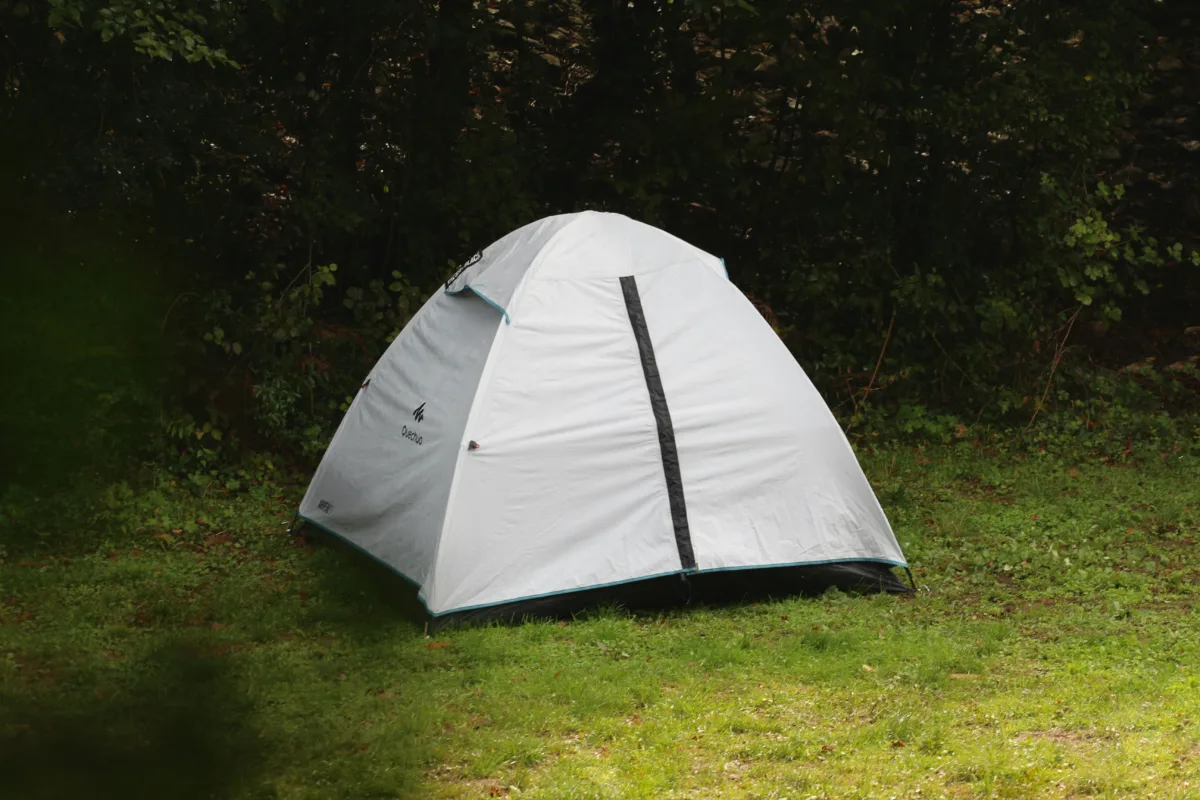
How to Dry a Tent After Camping and Store It Dry
Almost every moldy tent has the same backstory: it was packed wet and stored before it dried. Getting this part right is what stops mildew coming back.
How to dry a tent after camping
- Dry it as soon as you get home, ideally the same day. Mildew can start within a day or two in a warm, damp bag.
- Pitch it in the shade with all doors and vents open, or hang the fly and inner separately over a line, a railing or the backs of chairs.
- Turn it. Flip the footprint and floor so the underside dries too, and unzip pockets.
- Check the slow spots by hand: floor corners, seams, zipper tracks, pole sleeves and the folds around guyline points.
- No dryer, no heater blasting at it, no hours in harsh sun. Heat and UV can damage coatings and fabric over time.
- Drying indoors? A spare room, garage or bathtub with good airflow works. Run a fan if the air is humid.
How to store a tent dry
- Store it loose, not tightly packed. A large breathable cotton or mesh storage bag is better than the tight stuff sack for long-term storage.
- Pick a cool, dry, dark place. A closet or shelf indoors beats a damp basement, a hot attic or a car trunk.
- Keep it off concrete floors where moisture can wick up.
- Store poles and stakes separately so they don’t rub holes in the fabric.
- Check it every few months. Open the bag, sniff and look. Air it out before a long season of storage ends.
Packed up wet on the trail? Here’s what to do
Sometimes it rains on the last morning and you have no choice. That’s fine. Shake off as much water as you can, pack the wet fly separately from the inner if possible, and keep it in an outer pocket or loosely in a bag rather than crushed at the bottom of your pack. When you get home or reach a dry campsite, unpack it and dry it the same day. For more wet-weather habits, see our guide to camping in the rain.

How to Prevent Mold and Mildew in Your Tent
- Never store a tent damp, even for a night if you can avoid it.
- Ventilate while camping. Open vents and crack doors to cut condensation inside.
- Keep the fly taut so it doesn’t touch the inner tent and transfer moisture.
- Use a footprint to keep the floor off wet ground, and tuck it under so rain doesn’t pool on it.
- Wipe off mud and food spills before they sit. Organic dirt feeds mildew.
- Don’t leave wet clothes, towels or sleeping bags inside a packed tent. (Here’s how to wash a sleeping bag if yours picked up the smell too.)
- Air the tent out after every trip, even ones where it stayed dry. Body moisture and breath dampen the fabric overnight.
Cold-weather camping brings extra condensation, so venting matters even more in winter. Our guides on how to keep a tent warm and the best 4-season tents for extreme weather cover how to stay warm without trapping moisture.
Clean, Repair or Replace? A Quick Decision Guide
| Tent condition | Best next decision |
|---|---|
| A few spots, fabric strong, smell fades after cleaning | Clean, dry and keep using it |
| Clean and dry, but water soaks in | Refresh the DWR and reseal seams |
| Seam tape peeling in a few places | Repair the seams with the maker’s recommended products |
| Fly or floor sticky, peeling or flaking | Ask the maker about a replacement fly or floor |
| Mold across many panels, weak fabric, smell keeps returning | Retire the tent. If you’re shopping, see our best waterproof camping tents |
Quick Checklist: How to Clean a Moldy Tent
✅ Read your tent’s care instructions
✅ Work outdoors with gloves, eye protection and an N95
✅ Separate the fly, inner, footprint and stuff sack
✅ Brush off dry debris gently
✅ Spot-clean with a tent-safe cleaner and a soft sponge
✅ Rinse as directed
✅ Air-dry every part completely in the shade
✅ Treat any lingering smell with a tent-safe odor eliminator
✅ Test water repellency and reseal seams if needed
✅ Store loosely in a cool, dry, dark place
Frequently Asked Questions
Can you get mold out of a tent?
Usually, yes. Small patches on healthy fabric often clean up well with a tent-safe cleaner, gentle scrubbing and full drying. Some dark staining may remain even after the growth is gone. If mold covers large areas, the fabric feels weak or the coating is sticky, the tent may not be worth saving.
Is it safe to sleep in a tent that had mold?
Once it’s properly cleaned, fully dry and no longer smells musty, many campers use their tents again without issue. If visible growth or a musty smell remains, don’t sleep in it. People with asthma, allergies or a weakened immune system should be especially cautious.
Can I put my tent in the washing machine?
No. Almost every tent manufacturer warns against it. The agitation can tear mesh, damage seam tape and strip the waterproof coating. Hand-clean it in a tub or on the ground instead.
Does vinegar kill mold on a tent?
Vinegar is a common home remedy, but not every tent maker approves it, and it may affect some coatings. Check your care instructions, test a small hidden area first, or use a cleaner made for tents.
Can I use bleach on a moldy tent?
Avoid bleach. It can weaken and discolor tent fabric and damage the waterproof coating and seam tape.
How do I get the mildew smell out of a tent?
Clean the tent, let it dry completely, then air it out with all doors and vents open. If the smell lingers, use an odor eliminator made for outdoor gear. Clean the stuff sack and footprint too, since they often hold the smell.
How long does it take to dry a tent?
A nylon or polyester tent in a breezy, dry spot can dry in a few hours. Canvas tents, humid weather or a tent with lots of folds can take a full day or more. Always check seams and corners by hand before packing it.
How fast can mildew grow on a wet tent?
It can start within a day or two in a warm, damp, packed bag. That’s why drying the tent as soon as you get home matters so much.
Will sunlight kill mildew on a tent?
Sun and fresh air help dry the tent and reduce odor, but long hours of strong UV can weaken nylon and polyester. Dry synthetic tents in shade or partial sun, and use sun more freely on canvas.
Why does my tent smell musty even when it’s clean?
Usually because something is still slightly damp (often seams, corners or the stuff sack), or because the odor is trapped in the fabric or coating. Dry it longer, air it out and use a tent-safe odor eliminator. A smell paired with a sticky coating can mean the coating is breaking down.
Can I store my tent in the garage?
Only if the garage stays dry and doesn’t swing between hot and cold. Many garages are damp, which encourages mildew. An indoor closet is usually safer.
Final Thoughts
A moldy tent is rarely the end of the road. Take it outside, look closely, clean gently with the right products, and then give it the one thing mold hates most: a full, slow dry. After that, store it loose in a cool, dry place and air it out after every trip. Do that, and the next time you unzip your tent, the only smell will be fresh air and the campsite you’re heading to.
1 thought on “How to Clean a Moldy Tent and Get Rid of the Mildew Smell (Step-by-Step Guide)”