
Bryce Canyon is one of the few national parks where the best scenery starts right at the parking lot. Walk to the rim at Sunset Point and you’re already looking down at thousands of orange and white hoodoos.
But the view from the top is only half the story. Drop below the rim and those spires that looked like tiny models suddenly tower over your head. Trails squeeze between tall rock walls, pass through windows in the stone and wind under ancient pines. That’s when Bryce really starts to make sense.
This guide covers the best hikes in Bryce Canyon National Park, from easy rim walks and short family trails to big half-day loops and quiet backcountry routes. For each one you’ll find the distance, time, climb, where it starts and who it suits, so you can pick the right trail for your fitness and your schedule.
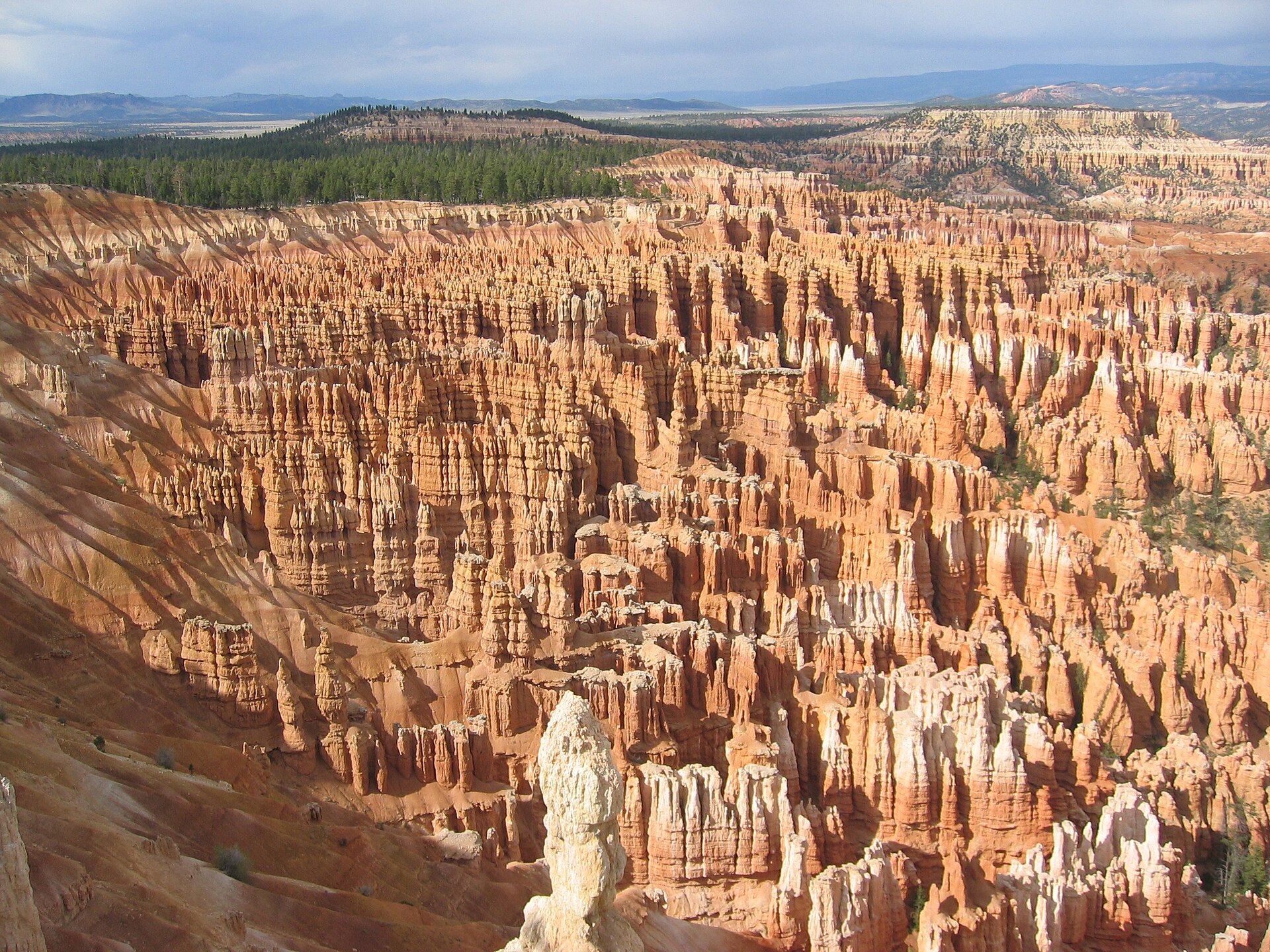
What Are the Best Hikes in Bryce Canyon National Park?
The best hike in Bryce Canyon National Park is the Queen’s Garden and Navajo Loop, a 2.9-mile loop that takes 2 to 3 hours and is the one the park recommends for first-time visitors. Other top hikes are the Navajo Loop, Peekaboo Loop, Figure-8 Combination, Fairyland Loop, the Rim Trail, Tower Bridge and Hat Shop, plus easy walks like the Bristlecone Loop and Mossy Cave.
Bryce Canyon Hikes at a Glance
| Trail | Distance | Difficulty | Time | Best For |
|---|---|---|---|---|
| Queen’s Garden + Navajo Loop | 2.9 mi loop | Moderate | 2–3 hrs | First visit, best overall |
| Navajo Loop | 1.3 mi loop | Moderate | 1–2 hrs | Wall Street, Thor’s Hammer |
| Queen’s Garden | 1.8 mi round trip | Moderate | 1–2 hrs | Easiest way below the rim |
| Sunset to Sunrise Point | 1 mi round trip | Easy (paved) | 20–60 min | Views, accessibility, dogs |
| Rim Trail | Up to 5.5 mi one way | Easy–Moderate | 1–7 hrs | Views without a big climb |
| Peekaboo Loop | 5.5 mi loop | Strenuous | 3–4 hrs | Deep hoodoo scenery |
| Figure-8 Combination | 6.4 mi loop | Strenuous | 4–5 hrs | The ultimate amphitheater hike |
| Navajo + Peekaboo | 4.9 mi loop | Strenuous | 3–4 hrs | A shorter Figure-8 |
| Bryce Amphitheater Traverse | One way | Strenuous | 3–4 hrs | Shuttle users |
| Fairyland Loop | 8 mi loop | Strenuous | 4–5 hrs | Fewer crowds, long day |
| Tower Bridge | 3 mi round trip | Moderate | 2–3 hrs | A taste of Fairyland |
| Hat Shop | 4 mi round trip | Strenuous | 3–4 hrs | Odd balanced-rock hoodoos |
| Mossy Cave | 0.8 mi round trip | Easy | 30–60 min | Kids, a small waterfall |
| Bristlecone Loop | 1 mi loop | Easy | 30–60 min | Ancient trees, highest point |
| Swamp Canyon Loop | 4 mi loop | Moderate | 3–4 hrs | Quiet forest and solitude |
In This Guide
- Three things to know before you hike
- The 15 best hikes in Bryce Canyon
- Backcountry trails for longer trips
- Which hike should you choose?
- Hikes for kids, dogs and no steep climbs
- Winter hiking and best time to hike
- Shuttle, parking and trailheads
- Safety tips and what to bring
- 1-day and 2-day hiking plans
- FAQs
Three Things to Know Before You Hike Bryce Canyon
The trails start at the top. Unlike most canyons, you begin on the rim and hike down. That means the easy part comes first and the climb comes last, when you’re already tired. Every trail below the rim ends with an uphill walk back out.
The altitude is real. The park sits between about 8,000 and 9,100 feet. Even a short, moderate trail can leave you breathless, especially on your first day if you came from near sea level. A 3-mile hike here can feel like 5 miles at home.
Distance isn’t the full picture. Elevation change matters more than mileage at Bryce. A 1.3-mile trail with 500 feet of climbing can be harder than a flat 4-mile walk. Look at both numbers before you pick a hike.
The 15 Best Hikes in Bryce Canyon National Park
1. Queen’s Garden and Navajo Loop: Best Hike for First-Time Visitors
Distance: 2.9 miles · Climb: about 625 feet · Time: 2 to 3 hours · Difficulty: moderate · Start: Sunrise Point
If you only do one hike in Bryce, make it this one. It’s the most popular trail in the park and the hike rangers recommend most to first-time visitors, and once you’re on it, it’s easy to see why. In under three hours you get open hoodoo views, a walk across the amphitheater floor, narrow canyon walls and the park’s most famous switchbacks.
The best way to hike it: go clockwise. Start at Sunrise Point and walk down Queen’s Garden, which has the gentler slope. Cross the canyon floor, then climb out on the Navajo Loop to Sunset Point. From there, a flat half-mile walk along the Rim Trail takes you back to Sunrise Point. Going this way means you walk down the gentle side and up the steep side, which is easier on your knees and puts the views in front of you on the way down.
Along the way, look for the hoodoo that gave Queen’s Garden its name, said to look like Queen Victoria on her throne, at the end of a short spur. On the Navajo side you’ll pass either Wall Street or Two Bridges, depending on the season and which side is open.
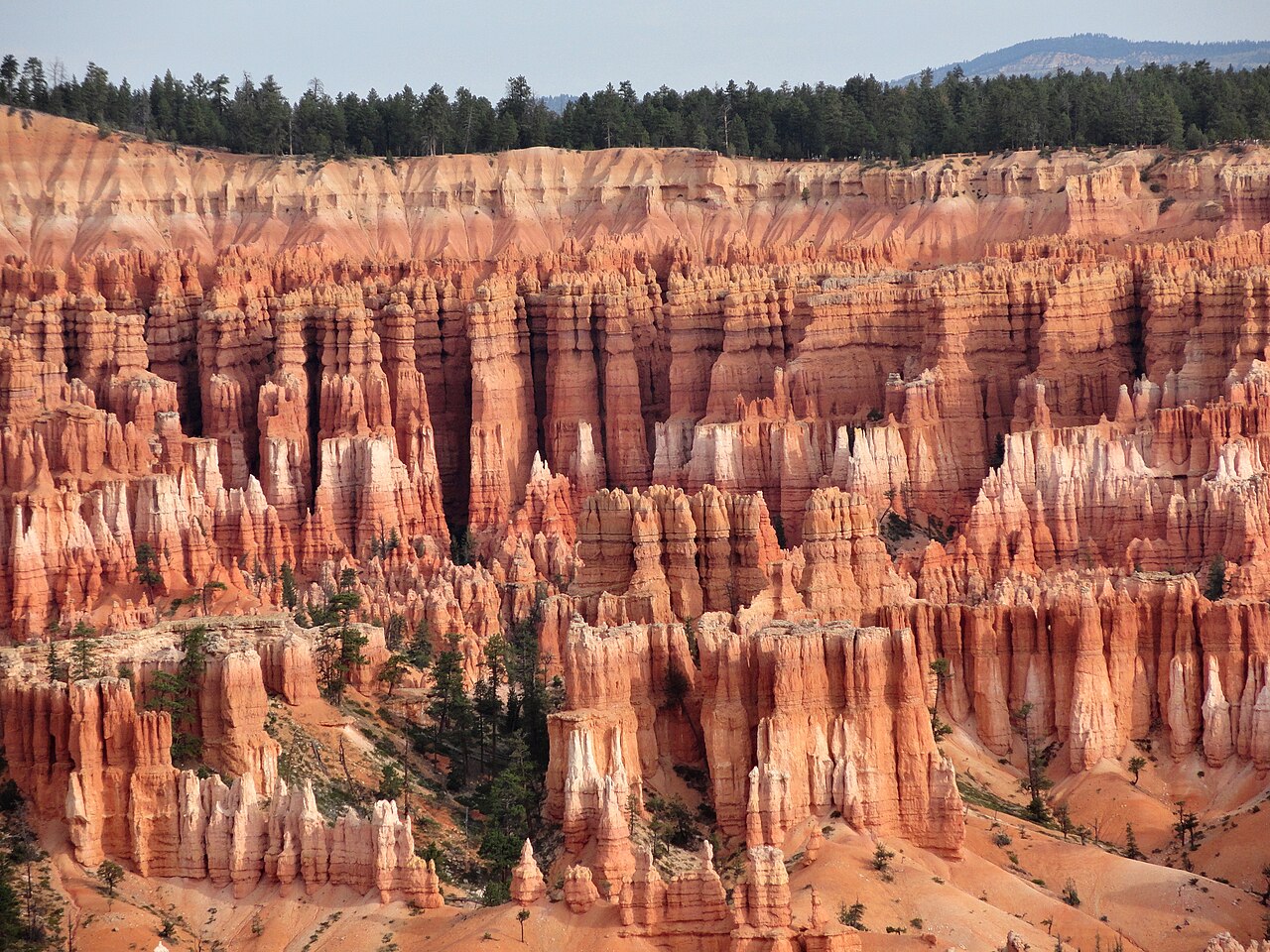
2. Navajo Loop: Best Short Iconic Hike
Distance: 1.3 miles · Climb: about 515 feet · Time: 1 to 2 hours · Difficulty: moderate · Start: Sunset Point
The Navajo Loop is short, but it packs in some of the most recognizable scenery in Bryce. It drops steeply from Sunset Point through narrow walls of colorful limestone, past Thor’s Hammer, the park’s most famous hoodoo, and towering Douglas-fir trees reaching for the light.
The loop has two sides. Wall Street is the one you’ve probably seen in photos, a tight stack of switchbacks between tall canyon walls. Two Bridges passes a pair of small natural bridges. Two Bridges is open year-round, but Wall Street closes in winter and sometimes after rockfall, so check conditions before you go.
Don’t let the short distance fool you. You lose and regain more than 500 feet in just over a mile, so the climb back up is steep. Take it slow and stop to catch your breath. Everyone does. For the full route, which direction to hike and winter closures, see our complete Navajo Loop Trail guide.
3. Queen’s Garden Trail: Easiest Hike Below the Rim
Distance: 1.8 miles round trip · Climb: about 450 feet · Time: 1 to 2 hours · Difficulty: moderate · Start: Sunrise Point
Queen’s Garden is the least difficult trail that goes down into Bryce Amphitheater, which makes it the best choice if you want to walk among the hoodoos without a big workout. The path winds gently past colorful spires and through a few small tunnels in the rock, ending at a short spur to the Queen Victoria hoodoo.
It’s an out-and-back trail, so you return the way you came. If you feel good at the bottom, keep going and connect to the Navajo Loop. That turns it into the 2.9-mile combination loop above, which is only about a mile longer and a lot more varied. Our full Queen’s Garden Trail guide walks through the route step by step.
4. Sunset Point to Sunrise Point: Easiest Walk in the Park
Distance: 1 mile round trip · Climb: minimal · Time: 20 to 60 minutes · Difficulty: easy, paved · Start: Sunset Point or Sunrise Point
This half-mile stretch of the Rim Trail between Sunset and Sunrise Points is the only paved section of the trail and the easiest walk in the park. It’s nearly flat, it’s the park’s most accessible trail, and leashed dogs are allowed on it.
Easy doesn’t mean boring. Some of the best views in Bryce are right along this path, looking straight down into the heart of the amphitheater. It’s perfect at sunrise, for families with small kids, for anyone adjusting to the altitude, or as a cool-down after a hike below the rim.
5. Rim Trail: Best Hike for Views Without a Steep Climb
Distance: up to 5.5 miles one way · Time: 1 to 7 hours depending on how much you do · Difficulty: easy to moderate · Start: Bryce Point, Inspiration Point, Sunset Point, Sunrise Point or Fairyland Point
The full Rim Trail runs 5.5 miles along the edge of the amphitheater, from Bryce Point in the south to Fairyland Point in the north, linking all the major viewpoints. You never drop into the canyon, but the view changes every few hundred yards. A hoodoo that looks small from one spot suddenly fills the frame from the next.
You don’t have to do the whole thing. The smartest way to hike it is one way with the shuttle: ride to Bryce Point, walk north past Inspiration and Sunset Points, and hop back on the bus wherever your legs give out. The section between Bryce Point and Inspiration Point has some ups and downs and closes in winter, while the stretch from Sunset to Sunrise is flat and paved. Note that the shuttle doesn’t stop at Fairyland Point.
6. Peekaboo Loop: Best for Serious Hoodoo Scenery
Distance: 5.5 miles · Climb: about 1,560 feet total · Time: 3 to 4 hours · Difficulty: strenuous · Start: Bryce Point
Peekaboo is where Bryce stops feeling like a viewpoint stop and starts feeling like a real hiking park. The loop drops about 670 feet from Bryce Point into one of the densest parts of the amphitheater, then climbs and dips over and over through hoodoos, past the Wall of Windows and through tunnels cut into the rock.
The park recommends hiking it clockwise. In summer you’ll share the trail with horses and mules on guided rides, so step to the side and let them pass, and expect a bit of what horses leave behind. All those short climbs add up, so carry more water than the mileage suggests and give yourself the full four hours.
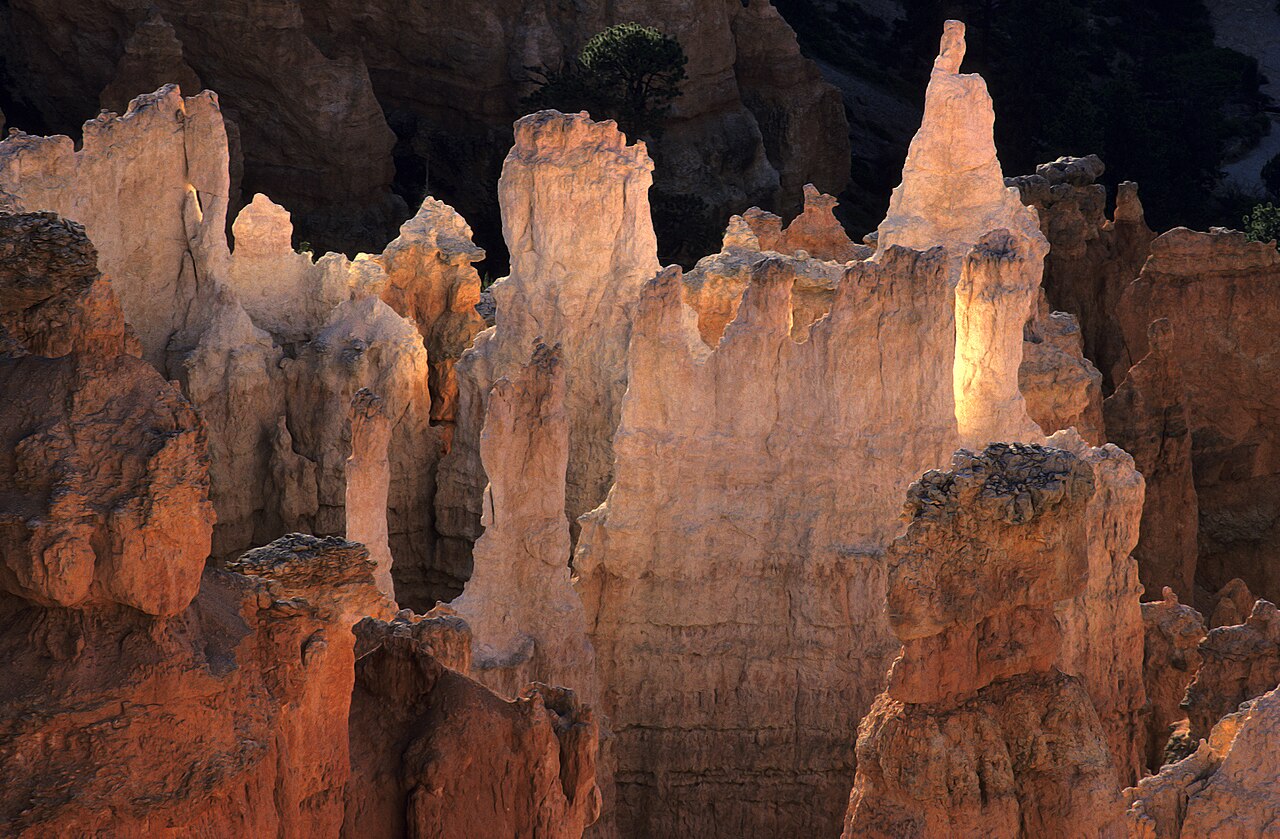
7. Figure-8 Combination: The Ultimate Bryce Canyon Hike
Distance: 6.4 miles · Climb: about 1,575 feet · Time: 4 to 5 hours · Difficulty: strenuous · Start: Sunrise Point
If the Queen’s Garden and Navajo Loop is the highlights reel, the Figure-8 is the full movie. It links three of the park’s best trails, Queen’s Garden, Peekaboo and Navajo, into one big loop through the whole amphitheater.
Head down Queen’s Garden from Sunrise Point, connect to the Peekaboo Loop and hike it clockwise, then climb out on either side of the Navajo Loop (Two Bridges in winter) to Sunset Point and walk the rim back to your start. For strong hikers with half a day to spare, this is the most complete hiking experience in Bryce. Start early, because you don’t want to be on the last climb during a summer afternoon storm.
8. Navajo and Peekaboo Combination: A Shorter Figure-8
Distance: 4.9 miles · Climb: about 1,475 feet · Time: 3 to 4 hours · Difficulty: strenuous · Start: Sunset Point
Want Peekaboo without the full Figure-8? Start at Sunset Point, go down either side of the Navajo Loop (Two Bridges in winter), hike the Peekaboo Loop clockwise and climb Navajo back to Sunset Point. You get Wall Street, Thor’s Hammer and the Wall of Windows in under five miles. It’s still a tough hike, but it’s a good middle ground if you have a morning rather than a whole day.
9. Bryce Amphitheater Traverse: Best One-Way Hike With the Shuttle
Distance: one way, Bryce Point to Sunrise Point · Time: 3 to 4 hours · Difficulty: strenuous · Start: Bryce Point
Few visitors know about this one, and it’s a clever use of the shuttle. Ride the bus to Bryce Point, hike down to the Peekaboo Loop, follow it clockwise, then connect to Queen’s Garden and climb out at Sunrise Point. You cross nearly the whole amphitheater from south to north without retracing your steps, then catch the shuttle back to your car. It’s a great pick if you want something big but different from the classic loops.
10. Fairyland Loop: Best Long Hike Away From the Crowds
Distance: 8 miles · Climb: about 1,900 feet · Time: 4 to 5 hours · Difficulty: strenuous · Start: Fairyland Point or the Tower Bridge trailhead north of Sunrise Point
When the amphitheater trails are busy, Fairyland is the answer. This long loop combines a walk along the rim near Boat Mesa with a hike down in the canyon, passing formations like the Chinese Wall and Tower Bridge, with long views back toward the main amphitheater. You’ll see far fewer people than on Navajo or Queen’s Garden.
The park recommends going counter-clockwise. There’s no shuttle stop at Fairyland Point, so either drive there or start from the Tower Bridge trailhead near Sunrise Point, which is on the shuttle route. With nearly 1,900 feet of climbing, sun exposure and the altitude, this is a full morning’s effort even for fit hikers. Start early and pack plenty of water and snacks.
11. Tower Bridge: A Shorter Taste of Fairyland
Distance: 3 miles round trip · Climb: about 760 feet · Time: 2 to 3 hours · Difficulty: moderate · Start: Tower Bridge trailhead, north of Sunrise Point
Don’t have time for all eight miles of Fairyland? Hike its southern section to Tower Bridge instead. The trail descends past bristlecone pines and views of the Chinese Wall to a shady quarter-mile spur that ends at Tower Bridge, a hoodoo with an opening that really does look like a bridge between two towers. Turn around there, or keep going for the full Fairyland Loop if you feel strong. It’s a great second hike if you’ve already done the classic amphitheater trails.
12. Hat Shop: Best Hike for Unusual Hoodoos
Distance: 4 miles round trip · Climb: about 1,380 feet · Time: 3 to 4 hours · Difficulty: strenuous · Start: Bryce Point
The Hat Shop is one of the most unusual sights in the park. Following the start of the Under-the-Rim Trail from Bryce Point, you descend about 1,380 feet over two miles to a cluster of narrow orange pillars, each balancing a big gray boulder on top like a hat. Along the way you get wide views of the colorful cliffs of the Grand Staircase.
The catch is the return. It’s all downhill on the way out and all uphill on the way back, with little shade. Save some energy and water for the climb, and avoid starting in the heat of a summer afternoon.
13. Mossy Cave Trail: Best Easy Hike for Kids
Distance: 0.8 mile round trip · Time: 30 to 60 minutes · Difficulty: easy · Start: Mossy Cave parking area on Highway 12
Mossy Cave sits outside the main part of the park, along Highway 12 toward the town of Tropic. It’s one of the lowest hikes in the park and one of the only ones that starts with a climb and ends with a descent. A short trail follows a stream into Water Canyon, where a small waterfall usually flows from about May to October, and to a shady overhang that’s covered in moss in summer and hung with icicles in winter.
Kids love it. The downside is the tiny parking lot, which fills fast in the middle of the day. Come early or late, and don’t park outside marked spaces. Pets aren’t allowed on this trail.
14. Bristlecone Loop: Best Easy Hike at the Highest Point
Distance: 1 mile · Time: 30 to 60 minutes · Difficulty: easy · Start: Rainbow Point, at the end of the scenic drive
At the far southern end of the park, the Bristlecone Loop wanders through forest above 9,100 feet, the highest part of Bryce. It’s named for the twisted bristlecone pines along the edge of the plateau, some of them around 1,800 years old. On clear days the views stretch out toward the Four Corners region.
It’s an easy, flat-ish walk and a perfect leg-stretcher after driving the Southern Scenic Drive. Just remember you’re over 9,000 feet, so you’ll breathe harder than usual. Deep snow can make it hard to reach in winter.
15. Swamp Canyon Loop: Best Quiet Moderate Hike
Distance: 4 miles · Climb: about 800 feet · Time: 3 to 4 hours · Difficulty: moderate · Start: Swamp Canyon Overlook
Swamp Canyon gets a fraction of the visitors that Queen’s Garden and Navajo do, and that’s the point. From the overlook along the scenic drive, the loop drops into a smaller, more sheltered canyon and through forest that feels much more like backcountry than the busy amphitheater.
It’s more rugged than the amphitheater trails and has fewer signs, so carry a map and pay attention at junctions. Choose it once you’ve seen the main amphitheater, or when you just want some quiet time on the trail.
Backcountry Trails for Longer Trips
Bryce’s backcountry trails trade crowded hoodoo views for forests, meadows, distant cliffs and real solitude. You’ll see fewer hoodoos out here, but you may not see another person for hours.
Riggs Spring Loop: A loop of about 9 miles that starts and ends near Yovimpa Point at the southern end of the park. It passes through spruce, fir and bristlecone forest with big views of distant cliffs, and the western side is steeper. You can do it as a long day hike without a permit, but any overnight stay needs a backcountry permit.
Under-the-Rim Trail: About 23 miles one way from Bryce Point to Rainbow Point, running below the plateau through the park’s wilder side. It’s best done as a two- or three-day backpacking trip, with a backcountry permit and careful planning for water. You can also hike short sections of it as day hikes, like the Hat Shop.
Which Bryce Canyon Hike Should You Choose?
| Your Situation | Best Hike |
|---|---|
| First visit, one hike only | Queen’s Garden + Navajo Loop |
| Only an hour or two | Navajo Loop or the Sunset–Sunrise rim walk |
| Want to go below the rim, gently | Queen’s Garden |
| Don’t want a steep climb | Rim Trail, Bristlecone Loop, Mossy Cave |
| Strong hiker with half a day | Figure-8 or Peekaboo Loop |
| Want fewer people | Fairyland Loop or Swamp Canyon |
| Using the shuttle, no car | Bryce Amphitheater Traverse or Rim Trail one way |
| Hiking with young kids | Mossy Cave, rim walk, Queen’s Garden |
| Hiking with a dog | Paved rim walk, Sunset to Sunrise Point |
| Want something unusual | Hat Shop |
Queen’s Garden vs Navajo Loop: Which Is Better?
Queen’s Garden is gentler and more open, with wide hoodoo views. Navajo is steeper and more dramatic, with narrow canyon walls, switchbacks and Thor’s Hammer. If you can only manage a short, easier trail, choose Queen’s Garden. If you want the most iconic scenery in the least distance, choose Navajo. Best of all, combine them. Together they make a 2.9-mile loop, and walking down Queen’s and up Navajo is easier than doing either one out and back.
Best Hikes for Kids, Dogs and Beginners
Best Hikes With Kids
Mossy Cave, the paved Sunset to Sunrise rim walk and the Bristlecone Loop are the easiest family picks. Older kids who are steady on their feet usually love Queen’s Garden, and many manage the full Queen’s Garden and Navajo Loop if you go slowly. Pick up a Junior Ranger booklet at the visitor center to keep them interested (see our guide to Bryce Canyon with kids), and hold small hands near the rim, since most of the Rim Trail has no railings.
Dog-Friendly Hikes
Dogs are only allowed on paved surfaces in Bryce, including the paved rim walk between Sunset and Sunrise Points, the paved shared-use path, viewpoints, parking areas and campgrounds. They aren’t allowed on any unpaved trail or on the shuttle, so plan for that if your dog is coming along.
Best Hikes for Beginners
Start with the rim walk to get used to the altitude, then try Queen’s Garden. If that feels fine, the Queen’s Garden and Navajo Loop is very doable for most beginners who take breaks on the climb out. Leave Peekaboo, Fairyland, Hat Shop and the Figure-8 for a later visit.
Best Hikes for Sunrise and for Avoiding Crowds
For sunrise, watch the light from Sunrise Point, Inspiration Point or Bryce Point, then walk straight down Queen’s Garden while the hoodoos are still glowing. Early starts also mean cooler air, quieter trails and easy parking.
For fewer crowds, choose Fairyland Loop, Swamp Canyon, Hat Shop or the Bristlecone Loop. On the popular amphitheater trails, start before 8 a.m. or after about 4 p.m. in summer, and the trails feel completely different.
Hiking Bryce Canyon in Winter
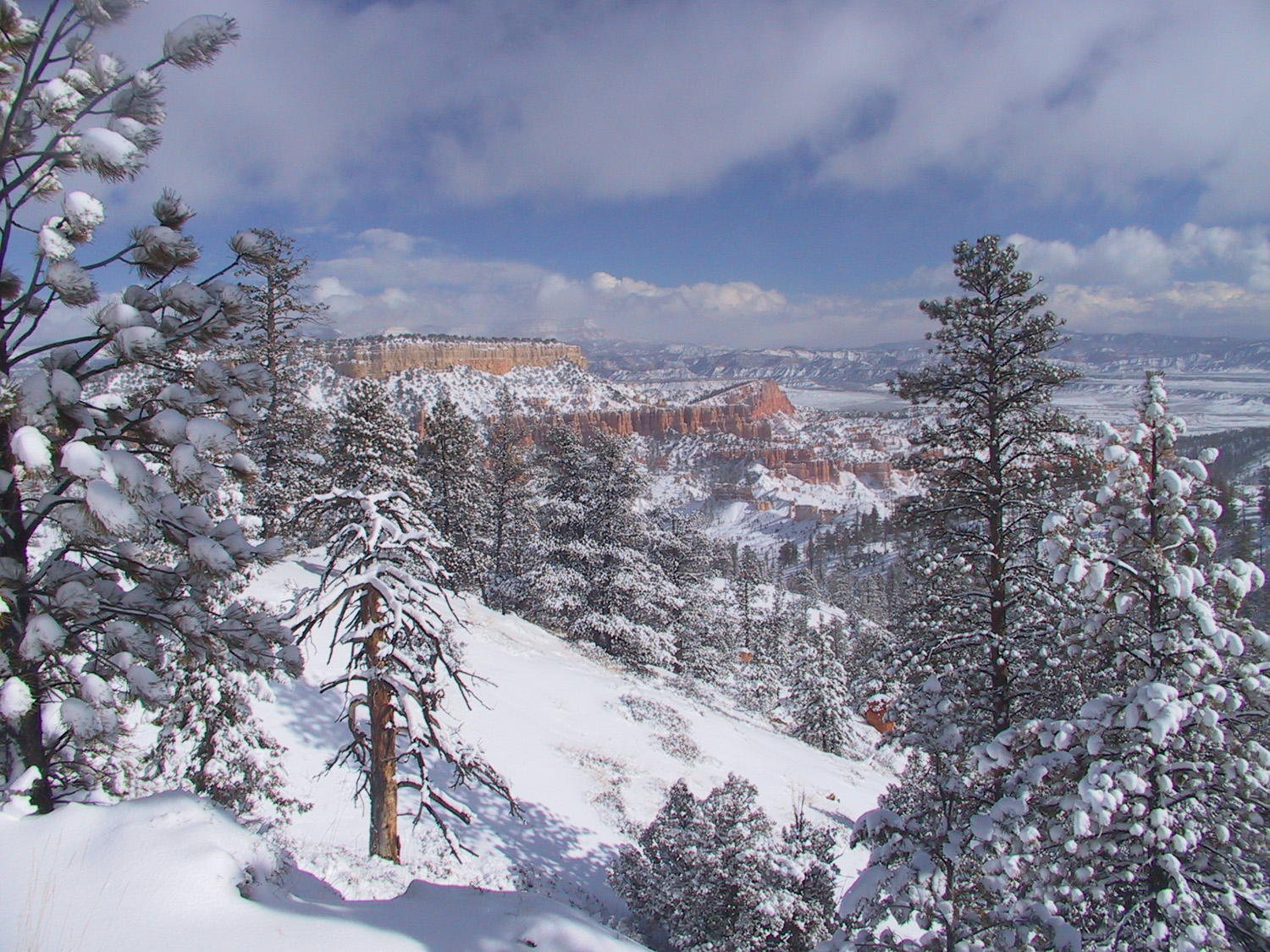
Yes, you can hike Bryce Canyon in winter, and snow on the orange hoodoos is one of the most beautiful sights in Utah. But the trails change completely. Popular routes like Queen’s Garden and Navajo get packed down into hard ice, and microspikes or similar traction on your boots go from helpful to essential.
- Wall Street closes in winter. Use the Two Bridges side of the Navajo Loop instead, either out and back or combined with Queen’s Garden.
- The Rim Trail between Inspiration Point and Bryce Point closes for the season.
- Fairyland Point Road and Paria View Road aren’t plowed, and they make great snowshoe routes.
- Snowshoeing and cross-country skiing on the rim are possible when there’s enough snow.
Days are short and temperatures often drop well below freezing, so start late morning when it’s warmest and finish before dark.
Best Time to Hike in Bryce Canyon
The best months for hiking in Bryce Canyon are May, June, September and early October. Days are mild, most trails are clear of snow and ice, and you avoid the almost daily afternoon thunderstorms of July and August. Summer still works well if you hike in the morning and get off exposed trails by early afternoon. Spring and late fall can bring mud, ice or snow below the rim. For month-by-month weather, crowds and snow, see our guide to the best time to visit Bryce Canyon National Park.
Shuttle, Parking and Trailheads
Almost every popular hike starts from one of the four big amphitheater viewpoints: Sunrise, Sunset, Inspiration and Bryce Points. In summer, these parking lots fill by mid-morning. The biggest cause, according to the park, is hikers leaving their cars at overlooks for hours.
The free park shuttle solves this. It runs from early April to mid-October (April 3 to October 18 in 2026), with buses about every 15 minutes, and it stops at every major trailhead in the amphitheater. Park at the shuttle station in Bryce Canyon City and ride in. It also makes one-way hikes like the Rim Trail and the Amphitheater Traverse easy.
2026 note: A construction project on the shared-use path along Bryce Point Road runs on weekdays through the 2026 season, which can mean short delays on that road. The trails from Bryce Point, including Peekaboo and the Under-the-Rim Trail, stay open, and the park recommends using the shuttle to reach Bryce and Inspiration Points. Check current conditions before you go.
Safety Tips for Hiking Bryce Canyon
- Respect the altitude. Headaches, nausea and shortness of breath are common. Go slower than usual, rest often, and turn back if you feel unwell.
- Watch for lightning. July and August bring frequent afternoon thunderstorms. The rim and open ridges are dangerous during lightning. If you hear thunder, get to a building or a hard-topped car.
- Carry plenty of water. The air is dry and cool, so it’s easy to underestimate how much you’re losing. There’s no water on most trails.
- Save energy for the climb out. Most rescues happen on the way back up, not on the way down.
- Stay on the trail. The soft rock crumbles easily, and cutting switchbacks damages the hoodoos.
- Give horses the right of way on Peekaboo and other shared trails.
- Check conditions at the visitor center or the park’s current conditions page, especially for Wall Street, which can close after rockfall.
What to Bring Hiking in Bryce Canyon
You don’t need expedition gear for the main trails, but a few things make a big difference:
- Shoes with good grip. The trails are sandy, steep and slippery in places.
- At least 1 liter of water per person for short hikes, and 2 to 3 liters for long ones.
- Sunscreen, sunglasses and a hat. The high-altitude sun is strong even on cool days.
- Layers, including a warm jacket for early starts.
- Salty snacks and a small daypack.
- A downloaded trail map, since cell service is patchy.
- Trekking poles, which really help on the steep climbs out.
- Microspikes or other traction from late fall to spring.
Bryce Canyon Hiking Plans for 1 or 2 Days
One Day of Hiking in Bryce Canyon
Build the day around one great hike instead of rushing through several.
Sunrise: Watch the light from Sunrise Point.
Morning: Hike the Queen’s Garden and Navajo Loop while it’s cool.
Midday: Lunch and a rest at the lodge or a picnic area.
Afternoon: Drive the scenic road to Rainbow Point and walk the Bristlecone Loop.
Evening: Catch sunset light at Inspiration Point or Bryce Point.
Two Days of Hiking in Bryce Canyon
Day 1: Queen’s Garden and Navajo Loop in the morning, the scenic drive and Bristlecone Loop in the afternoon, then the rim at sunset.
Day 2: Pick a bigger hike based on your energy. Choose the Figure-8 or Peekaboo for the best hoodoos, Fairyland for solitude, or Tower Bridge and Mossy Cave for an easier day. This mix gives you much more variety than repeating short trails in the same corner of the amphitheater. For full hour-by-hour plans that combine hikes, viewpoints and the scenic drive, see our Bryce Canyon itinerary.
For viewpoints, stargazing, horseback riding and more ways to spend your time, see our guide to the best things to do in Bryce Canyon National Park.
Related Guides
Planning more of this trip? These guides pick up where this one leaves off:
Hiking in Bryce Canyon: FAQs
What is the best hike in Bryce Canyon National Park?
The Queen’s Garden and Navajo Loop. It’s 2.9 miles, takes 2 to 3 hours, and is the park’s most popular hike and its top recommendation for first-time visitors.
What is the easiest hike in Bryce Canyon?
The paved Rim Trail between Sunset Point and Sunrise Point, about 1 mile round trip and nearly flat. If you want to go below the rim, Queen’s Garden is the easiest trail into the amphitheater.
What is the hardest hike in Bryce Canyon?
Among day hikes, the Fairyland Loop (8 miles, about 1,900 feet of climbing) and the Figure-8 Combination (6.4 miles) are the toughest. The Under-the-Rim Trail is the longest, at about 23 miles.
How long is the Navajo Loop Trail?
About 1.3 miles with roughly 515 feet of elevation change. Most people take 1 to 2 hours.
Which direction should you hike Queen’s Garden and Navajo Loop?
Clockwise. Start at Sunrise Point, walk down Queen’s Garden, climb out on the Navajo Loop to Sunset Point, then take the Rim Trail back. The descent is gentler and the steep section is uphill.
Is Peekaboo Loop hard?
Yes. It’s rated strenuous, with about 1,560 feet of climbing over 5.5 miles and lots of short ups and downs. Allow 3 to 4 hours and hike it clockwise.
Can beginners hike in Bryce Canyon?
Yes. The Rim Trail, Bristlecone Loop and Mossy Cave are easy, and most beginners can handle Queen’s Garden or the Queen’s Garden and Navajo Loop if they take breaks on the climb out.
Do you need hiking boots in Bryce Canyon?
Not for every trail. Sturdy trail shoes with good grip work fine on dry trails, but boots with good tread are better on steep, sandy sections. In winter, add microspikes.
Do you need a permit to hike in Bryce Canyon?
No permit is needed for day hikes. You only need a backcountry permit if you plan to camp overnight, such as on the Riggs Spring Loop or Under-the-Rim Trail.
How many days do you need to hike Bryce Canyon?
One full day is enough for the Queen’s Garden and Navajo Loop plus the viewpoints. Two days lets you add a bigger hike like Peekaboo, the Figure-8 or Fairyland without rushing.
Final Thoughts: Get Below the Rim at Least Once
You can enjoy Bryce from the rim alone, and plenty of people do. But the park feels completely different once you’re standing among the hoodoos, looking up instead of down. Even one short hike below the rim changes how you see the whole place.
Start with the Queen’s Garden and Navajo Loop. If you have more time and energy, add Peekaboo, the Figure-8 or Fairyland. And if steep climbs aren’t for you, the Rim Trail still gives you some of the best views in the American West. Go early, carry water, take the climbs slowly, and Bryce will reward every step.
Planning a bigger Utah trip? Pair Bryce with our guide to things to do in Zion National Park, about two hours away, or browse all of our travel guides.