
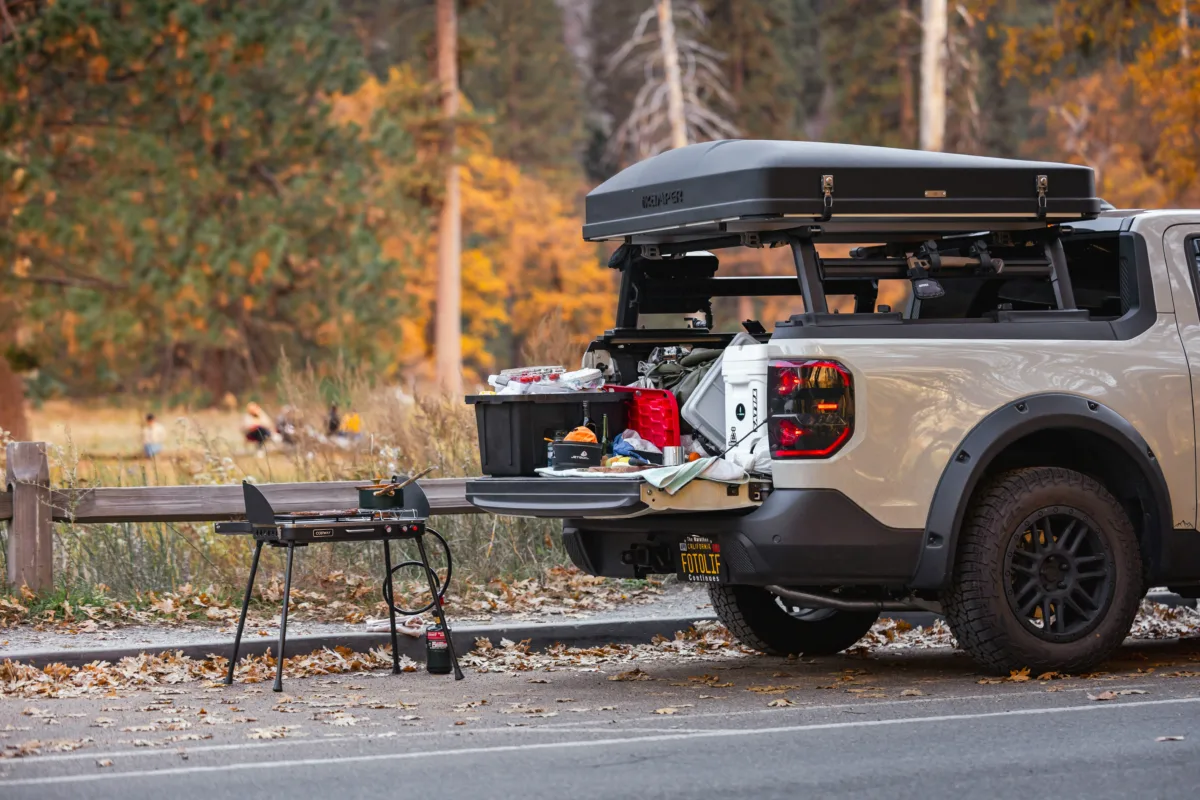
Affiliate disclosure: As an Amazon Associate, JoinHikes earns from qualifying purchases. If you buy through our links, we may earn a small commission at no extra cost to you. It never changes how we rank products, but we tried to share the best portable power stations for camping. Ratings below are what Amazon showed when we checked in November 2026, and prices change often, so tap any button to see today’s price.
On Friday night, your camping power needs look simple. A couple of phones need charging, the lantern needs a top-up, and the fridge is still cold from the drive. By Saturday evening, the fridge has been humming all day, the kids want the fan on in the tent, someone needs a laptop for an hour, and everyone is reaching for the same charging cable at once.
That is the moment a good portable power station earns its place in your car. It is basically a big, quiet, rechargeable battery with real wall-style outlets, USB ports and a 12V car socket. No fumes, no noise, no pulling a starter cord at 6 a.m. while your campsite neighbours glare at you.
The tricky part is choosing the right size. Buy too small and your fridge dies by Sunday breakfast. Buy too big and you are hauling 45 pounds of battery to charge two phones. So we compared 20 power stations from tiny 88Wh chargers to 2,000Wh+ basecamp batteries, and sorted them by the kind of camping you actually do.
Quick answer: For most car campers bringing a 12V fridge and a few devices, the Anker SOLIX C1000 Gen 2 is the best portable power station for camping: 1,024Wh, 2,000W of AC output and a listed 24.9 lb. If you only charge phones, lights and a fan, the Jackery Explorer 300 is light and easy to carry. For long stays and groups, the EcoFlow DELTA 3 Max gives you 2,048Wh and 2,400W.
Our Top 3 Best Portable Camping Power Stations at a Glance

1,024Wh · 2,000W AC · 24.9 lb
⭐ 4.6/5 (1,795 ratings)
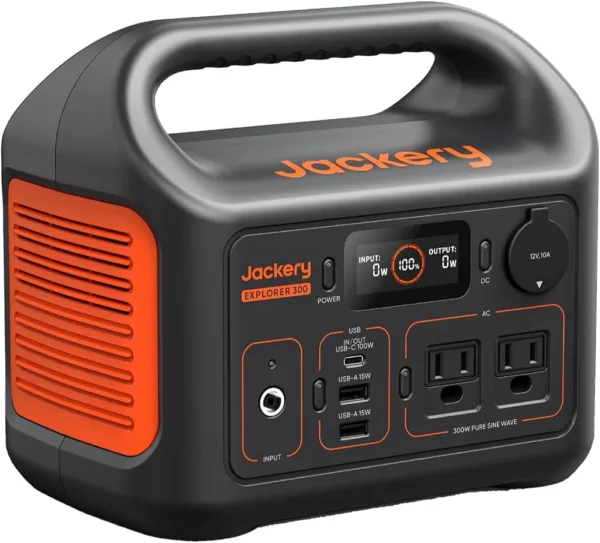
292Wh · 300W AC · about 7 lb
⭐ 4.6/5 (11,391 ratings)
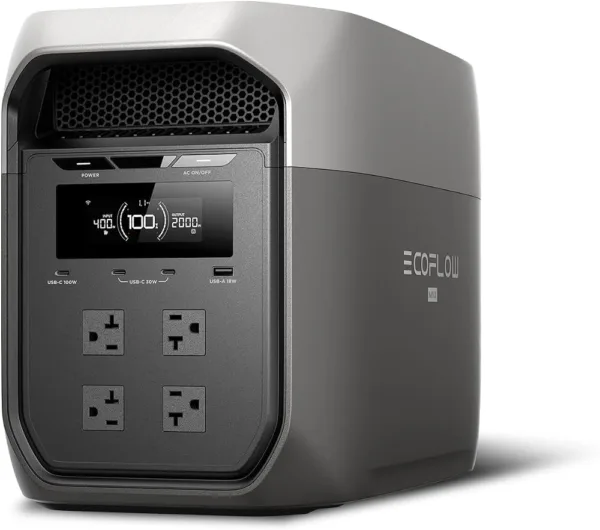
2,048Wh · 2,400W AC · 44.8 lb
⭐ 4.7/5 (665 ratings)

Best Portable Power Stations for Camping: Comparison Table
All 20 power stations side by side, grouped by size. Capacity (Wh) tells you how long things run. AC output (W) tells you what you can plug in. Tap any picture or button to see today’s price.
| Power station | Best for | Capacity | AC output | Listed weight | Price |
|---|---|---|---|---|---|
| Car camping (about 750 to 1,150Wh) | |||||
| Anker SOLIX C1000 Gen 2 | Best overall for car camping | 1,024Wh | 2,000W | 24.9 lb | Check Price |
| BLUETTI AC180 | A bit more battery | 1,152Wh | 1,800W | 37.4 lb | 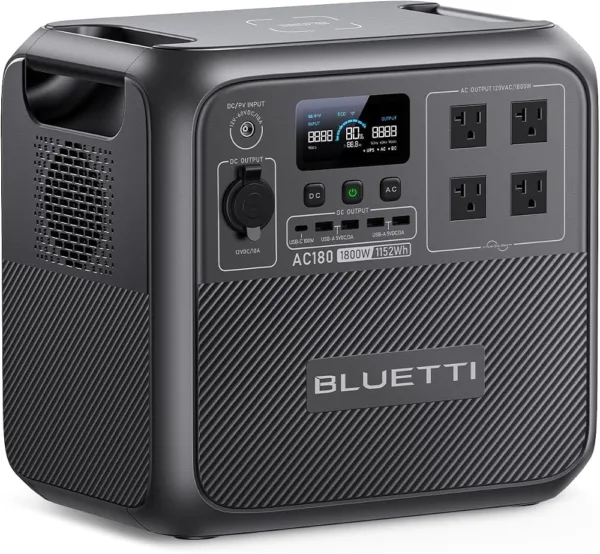 Check Price |
| EcoFlow DELTA 3 | Expandable 1 kWh pick | 1,024Wh | 1,800W | 27.5 lb | 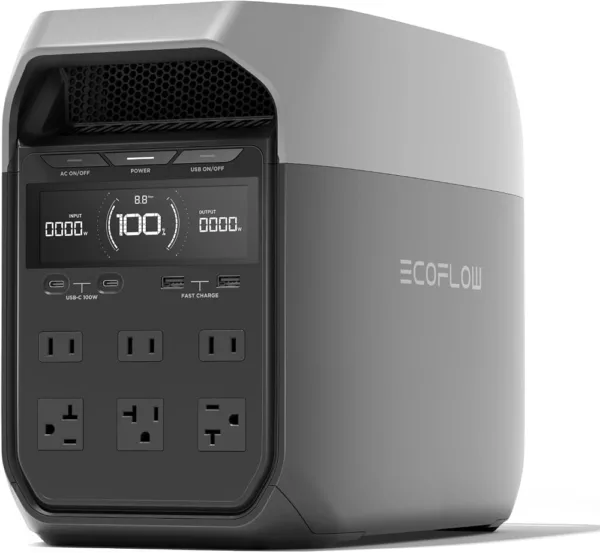 Check Price |
| BLUETTI Elite 100 V2 | Big solar setups, USB-C laptops | 1,024Wh | 1,800W | 25 lb |  Check Price |
| EcoFlow RIVER 2 Pro | Middle ground for weekends | 768Wh | 800W | 18.15 lb | 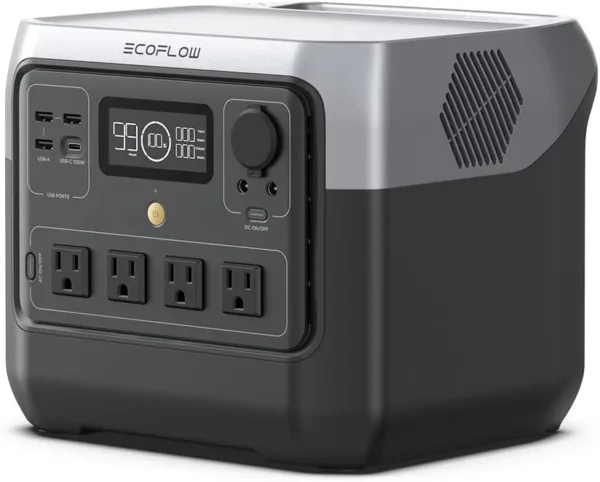 Check Price |
| Extended stays and basecamp (about 2,000Wh) | |||||
| EcoFlow DELTA 3 Max | Best premium pick | 2,048Wh | 2,400W | 44.8 lb | Check Price |
| Jackery Explorer 2000 v2 | Lightest 2 kWh option here | 2,042Wh | 2,200W | 39.5 lb | 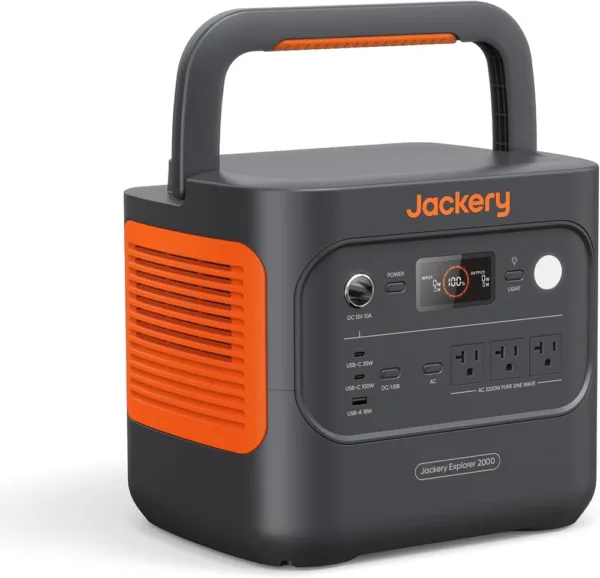 Check Price |
| BLUETTI Elite 200 V2 | Most AC power and battery | 2,080Wh | 2,600W | 44.5 lb |  Check Price |
| Dabbsson DBS 2000L | Groups with many AC plugs | 2,048Wh | 2,200W | 41 lb | 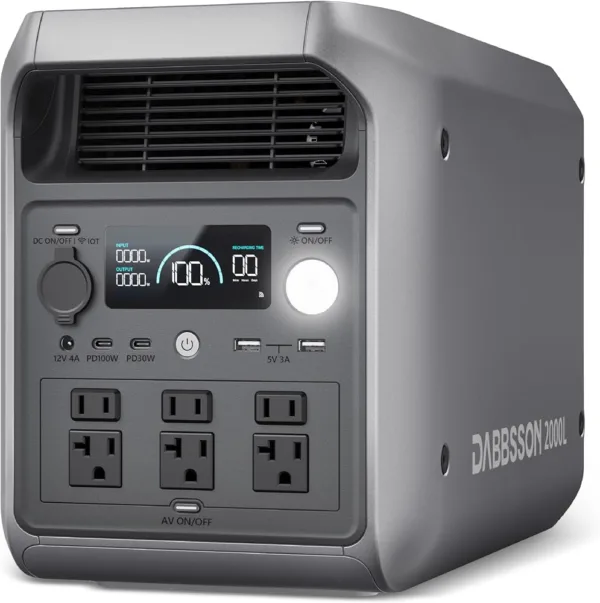 Check Price |
| Compact weekend stations (about 230 to 300Wh) | |||||
| Jackery Explorer 300 | Best lightweight pick | 292Wh | 300W | 7.1 lb | Check Price |
| BLUETTI Elite 30 V2 | More AC power in a small box | 288Wh | 600W | 9.5 lb |  Check Price |
| Anker SOLIX C300 DC | USB-C gear (no AC outlet) | 288Wh | None (300W DC/USB) | 6.16 lb |  Check Price |
| EnginStar 296Wh | Budget Explorer 300 rival | 296Wh | 300W | 7.92 lb |  Check Price |
| MARBERO 296Wh | Lightest 300Wh-class unit | 296Wh | 350W peak | 5.7 lb | 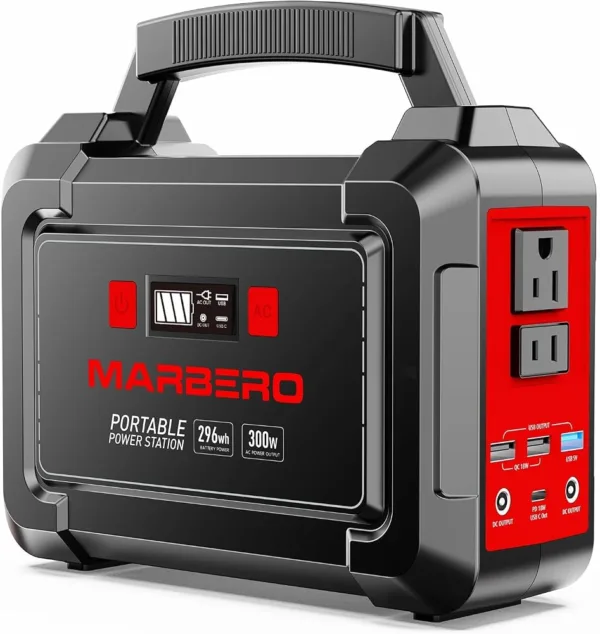 Check Price |
| GRECELL 230.88Wh | Value pick with 330W AC | 230.88Wh | 330W | 7.3 lb | 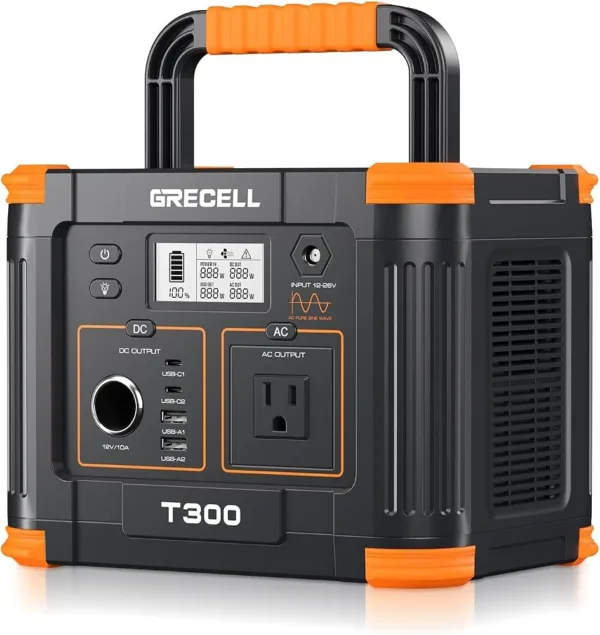 Check Price |
| Mini stations for phones and lights (under 160Wh) | |||||
| FlashFish 151Wh | Light overnight use | 151Wh | 200W | 4.07 lb | 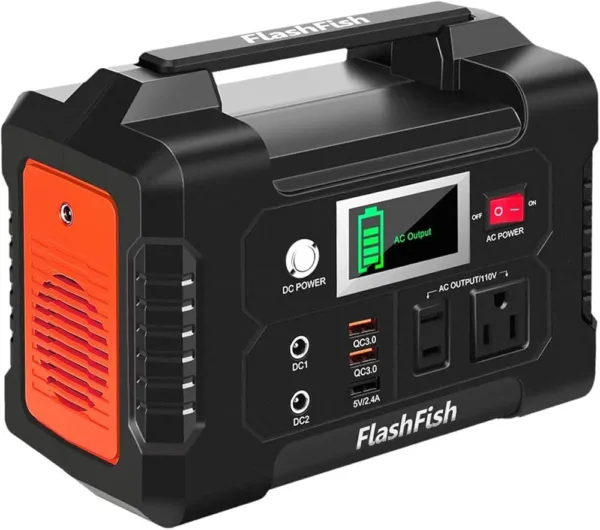 Check Price |
| ENOFLO 97.68Wh | Lightest mini (2 lb) | 97.68Wh | 120W | 2 lb | 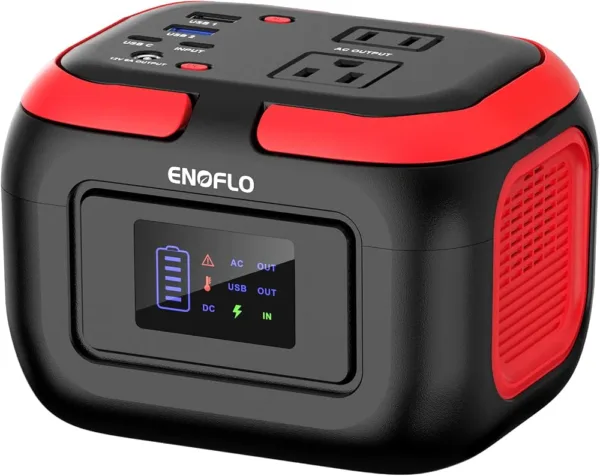 Check Price |
| ZeroKor 97.6Wh | Two AC outlets in a mini | 97.6Wh | 120W | 2.2 lb | 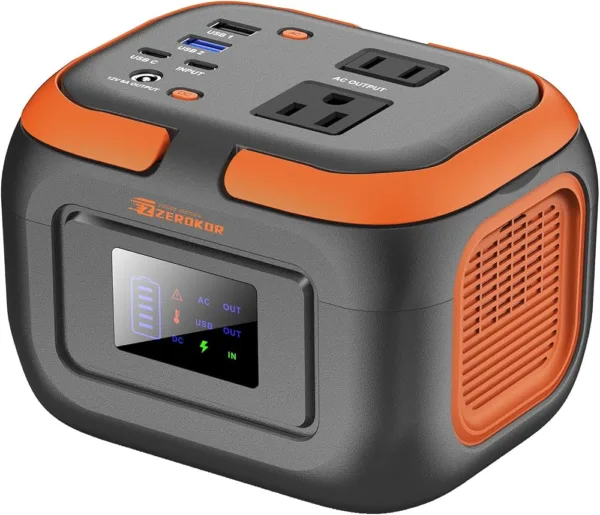 Check Price |
| Daran 89.6Wh LiFePO4 | Long-life battery in a mini | 89.6Wh | 100W | 3.12 lb |  Check Price |
| HOWEASY 88Wh | Built-in light, short trips | 88Wh | 120W | 2.3 lb | 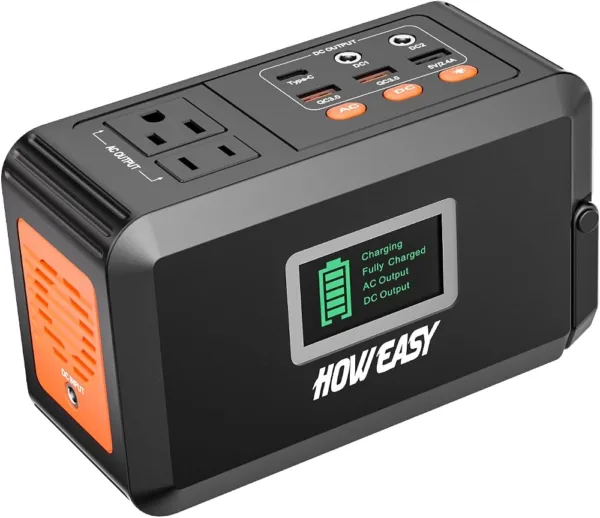 Check Price |
How We Picked These Power Stations
To be upfront: JoinHikes did not do hands-on lab testing for this guide. We compared the specs each brand publishes on its Amazon listing and official pages, read through buyer ratings, and matched each station to a real camping setup. The things we weighed most were:
- Capacity (Wh) against common camping loads like a 12V fridge, lights, fans and phones.
- Continuous AC output (W), which decides what you can plug in at all.
- Weight, because you will lift this thing in and out of the car every trip.
- Battery type. LiFePO4 (also called LFP) batteries usually last for thousands of charge cycles.
- Recharging options: wall, car and solar.
- Buyer feedback, giving more weight to thousands of ratings than to a handful.
Watts vs Watt-Hours: The 30-Second Explanation
This is the single thing that confuses most people, so let’s clear it up with a water tank example.
- Watt-hours (Wh) are the size of the tank. More Wh means things run longer.
- Watts (W) are how wide the tap opens. More W means you can run hungrier devices like a kettle or a heater.
So a 10W fan for 10 hours uses about 100Wh. A 1,000W kettle for 6 minutes also uses about 100Wh, but it needs a station that can deliver 1,000W at once. A small 300W station could run the fan all night but could never start the kettle.
Part 1: Best Power Stations for Car Camping (About 1 kWh)
This is the sweet spot for most families. Big enough to keep a 12V fridge going for a weekend and charge everyone’s gear, but still light enough for one person to lift into the trunk.
1. Anker SOLIX C1000 Gen 2: Best Portable Power Station for Camping Overall
- Capacity: 1,024Wh
- AC output: 2,000W continuous (3,000W peak)
- Ports: 10
- Listed weight: 24.9 lb
- Recharge: Full wall recharge in about 49 minutes (listed); up to 600W solar input
- Lifespan: Anker advertises 10 years of use
⭐ 4.6/5 from 1,795 Amazon ratings when we checked (November 2026)
If we could only recommend one power station for car camping, this would be it. The C1000 Gen 2 hits a really practical balance: about 1 kWh of battery, which is enough for a 12V fridge plus everyone’s phones over a typical weekend, and a big 2,000W AC rating, so you can run a compatible coffee maker or electric kettle for a few minutes in the morning.
At a listed 24.9 lb, it is noticeably lighter than the BLUETTI AC180, and the fast wall recharge means you can top it up in under an hour at home before you leave. If you love a hot brew at camp, our guide on how to make coffee while camping shows which methods sip power and which ones guzzle it.
👍 Pros
- Big 2,000W AC output for its size
- Lighter than most 1 kWh rivals
- Very fast wall recharging
- High solar input for faster sun charging
👎 Cons
- A high-watt appliance drains 1,024Wh quickly
- Overkill if you only charge phones and lights
Buy it if: you bring a fridge, charge gear for a family and want occasional appliance power. Size up if: your measured use gets close to 1,000Wh between recharges.
2. BLUETTI AC180: Extra Capacity for Fridge Campers
- Capacity: 1,152Wh LiFePO4
- AC output: 1,800W continuous
- Outlets: 8
- Solar input: Up to 500W
- Listed weight: 37.4 lb
- Extra: Can work as a UPS backup at home
⭐ 4.5/5 from 2,662 Amazon ratings when we checked (November 2026)
The AC180 stores 128Wh more than the Anker. That might not sound like much, but it is roughly an extra half-day of a typical 12V fridge. If running time matters more to you than having the very highest AC rating, this is a smart pick, and it uses a long-life LiFePO4 battery.
The trade-off is weight. At a listed 37.4 lb, it is a lot heavier to lift than the Anker. Fine if it lives in the car, less fun if you carry it to a walk-in site.
👍 Pros
- More battery than other 1 kWh picks
- LiFePO4 cells
- Fast charging, UPS function at home
👎 Cons
- Heaviest station in this group
- Lower AC rating than the Anker
Buy it if: your fridge is the main load and you want the most runtime in the 1 kWh class.
3. EcoFlow DELTA 3: A 1 kWh Station That Can Grow With You
- Capacity: 1,024Wh LiFePO4, expandable up to 5kWh with extra batteries
- AC output: 1,800W continuous
- Recharge: Full charge in about 56 minutes (listed)
- Devices at once: Up to 13
- Listed weight: 27.5 lb
⭐ 4.7/5 from 1,403 Amazon ratings when we checked (November 2026)
The DELTA 3 has the highest rating of the 1 kWh group, and its big selling point is expansion. Start with 1,024Wh for weekend trips, and if you later get into longer van trips or want home backup, you can add EcoFlow extra batteries instead of buying a whole new station.
If you already own EcoFlow gear, double-check that your accessories work with this exact DELTA 3 version before you buy.
👍 Pros
- Top-rated in its class
- Can expand later
- Powers 13 devices at once
👎 Cons
- Extra batteries cost more
- Lower AC rating than the Anker
Buy it if: you want room to grow, or you already like EcoFlow’s app and gear.
4. BLUETTI Elite 100 V2: Built for Big Solar and USB-C Laptops
- Capacity: 1,024Wh
- AC output: 1,800W continuous
- Solar/DC input: Up to 1,000W (with a compatible setup)
- USB-C: 140W and 100W ports
- Recharge: About 45 minutes on AC (listed)
- Listed weight: 25 lb
⭐ 4.5/5 from 1,846 Amazon ratings when we checked (November 2026)
Same battery size as the Anker and DELTA 3, but the Elite 100 V2 is aimed at people who take solar seriously. A 1,000W solar limit means a big panel array can refill it fast on a sunny day. The 140W USB-C port is a nice touch too: it can charge many laptops directly, without wasting energy through the AC inverter.
One honest caution: that high solar limit only helps if you actually carry big panels. A small folding panel will still charge it slowly.
👍 Pros
- Very high solar input
- Powerful USB-C ports
- Light for 1 kWh (25 lb)
👎 Cons
- Solar benefit needs big panels
- 200W less AC than the Anker
Buy it if: you camp off-grid for days and plan to recharge with solar.
5. EcoFlow RIVER 2 Pro: Between Small and Big
- Capacity: 768Wh LFP
- AC output: 800W (up to 1,600W with EcoFlow’s boost mode for some appliances)
- Solar input: Up to 220W
- Listed weight: 18.15 lb
⭐ 4.5/5 from 1,844 Amazon ratings when we checked (November 2026)
Not everyone needs a full kilowatt-hour. The RIVER 2 Pro fills the gap between a small 300Wh unit and the big 1 kWh stations. If your camp uses around 300Wh a day, a two-night trip needs about 600Wh, and this leaves you a bit of margin. At just over 18 lb, it is also much easier to carry than the AC180.
👍 Pros
- Lighter than 1 kWh stations
- LFP long-life cells
- Fast recharging
👎 Cons
- 800W limits bigger appliances
- Tight for a fridge on hot multi-day trips
Buy it if: you want more than a compact unit without the weight of a 1 kWh station.

Part 2: Premium 2 kWh Stations for Long Stays and Groups
These are big, heavy batteries (about 40 to 45 lb). They make sense when you stay in one spot for several days, share power with a group, or can’t count on recharging. If you move camp every day, look at Part 1 instead.
6. EcoFlow DELTA 3 Max: Best Premium Power Station for Extended Camping
- Capacity: 2,048Wh LFP
- AC output: 2,400W continuous (3,400W X-Boost for some appliances)
- Recharge: 0 to 80% in about 1.13 hours (listed)
- Listed weight: 44.8 lb
- Note: This link is the standalone station, no solar panel included
⭐ 4.7/5 from 665 Amazon ratings when we checked (November 2026)
Twice the battery of our top pick, and a strong 4.7 rating. The DELTA 3 Max is the station we would choose for a week at one campsite, a family reunion trip, or a van setup with a fridge running day and night. If your group uses around 500Wh a day, three days adds up to 1,500Wh, and this is the kind of trip where moving up from 1 kWh really matters.
It is also quiet and fast to recharge. Just remember it is close to 45 lb, so it is a two-hands, close-to-the-car battery.
👍 Pros
- Huge 2,048Wh battery
- 2,400W AC handles most camp appliances
- Top rating in its class
👎 Cons
- Heavy (44.8 lb)
- Costs much more than 1 kWh options
Buy it if: you camp for several days, share power with a group, or run a fridge non-stop.
7. Jackery Explorer 2000 v2: Big Battery, Less Weight
- Capacity: 2,042Wh
- AC output: 2,200W (3 AC outlets)
- Listed weight: 39.5 lb
- Lifespan: Jackery advertises 10 years of use
⭐ 4.4/5 from 907 Amazon ratings when we checked (November 2026)
Jackery calls this one of the smallest and lightest 2 kWh stations, and at a listed 39.5 lb it is about 5 lb lighter than the DELTA 3 Max and Elite 200 V2. That difference is noticeable every time you lift it. You get roughly 890Wh more than the AC180, which means more days between recharges when the whole family shares one battery.
If you plan to recharge with solar, check exactly what comes in the box, since many listings sell the station without panels.
👍 Pros
- Lightest 2 kWh station here
- Trusted camping brand
- Plenty of battery for groups
👎 Cons
- Only 3 AC outlets
- Little benefit if you only charge small gear
Buy it if: you want 2 kWh without the heaviest box.
8. BLUETTI Elite 200 V2: The Powerhouse of This List
- Capacity: 2,080Wh LiFePO4
- AC output: 2,600W continuous (3,900W power lifting)
- Battery life: 6,000 cycles; BLUETTI advertises a 17-year lifespan
- Charging: Three charging modes, including a quiet mode
- Listed weight: 44.5 lb
⭐ 4.7/5 from 966 Amazon ratings when we checked (November 2026)
This is the biggest battery and the highest AC rating in the whole guide. 2,600W is enough for most camp appliances, and BLUETTI’s 6,000-cycle rating means this battery is built to be used hard for many years, at camp and as home backup during outages. The quiet charging mode is a nice detail if you charge it inside a van or near the tent at night.
👍 Pros
- Most AC power here
- Largest battery (2,080Wh)
- Very long cycle life
👎 Cons
- Heavy at 44.5 lb
- More power than most campers need
Buy it if: you want one station for big camping trips and home backup.
9. Dabbsson DBS 2000L: Six AC Outlets for Group Camps
- Capacity: 2,048Wh semi-solid LiFePO4
- AC output: 2,200W continuous (3,300W boost)
- AC outlets: 6
- Listed weight: 41 lb
⭐ 4.4/5 from 275 Amazon ratings when we checked (November 2026)
The Dabbsson stands out for its six AC outlets, which makes life easier at a big group camp where several people want to plug in at once (as long as the total load stays under 2,200W). It uses semi-solid LiFePO4 cells that the brand markets for safety and a 10+ year life. It has fewer ratings than the big brands, so compare warranty terms before you decide.
👍 Pros
- Six AC outlets
- 2 kWh capacity
- Semi-solid LiFePO4 cells
👎 Cons
- Fewer ratings than rivals
- Lesser-known brand
Buy it if: your group runs several AC devices at once.
Part 3: Compact Power Stations for Weekend Trips (About 230 to 300Wh)
These are the “grab and go” stations. They weigh roughly 6 to 10 lb and are perfect for phones, lanterns, headlamps, a small fan and a camera. They are usually not big enough to run a 12V fridge for a whole weekend, so pair them with a good cooler (for short walks from the car, our best soft coolers under $100 are a great fit). Our guide on how to keep food cold while camping shows how to stretch your ice for days.
10. Jackery Explorer 300: The Easy Weekend Charger
- Capacity: 292Wh LiFePO4
- AC output: 300W, 2 AC outlets
- Ports: 100W USB-C PD, 2 USB-A, 12V car port (6 devices total)
- Battery life: 4,000+ cycles to 70%
- Listed weight: 7.1 lb (some listing text says 7.5 lb)
- Solar: About 2.8 hours to 80% with a 100W panel (listed)
⭐ 4.6/5 from 11,391 Amazon ratings when we checked (November 2026)
With over 11,000 ratings, the Explorer 300 is one of the most trusted small camping power stations out there. It is light enough to carry with one hand from the car to your picnic table, and 292Wh covers a weekend where everyone wants charged phones, the lantern needs a top-up and a small fan keeps the tent comfortable.
The 100W USB-C port is great for laptops, and the updated LiFePO4 battery is rated for 4,000+ cycles. The 300W limit rules out kettles, hair dryers and most heaters. Pair it with one of our best rechargeable hiking lanterns and you have a simple, quiet camp light setup.
👍 Pros
- Light and easy to carry
- Huge number of good ratings
- LiFePO4, 4,000+ cycles
- 100W USB-C
👎 Cons
- 300W rules out high-watt appliances
- Too small for a fridge all weekend
Buy it if: you use a cooler with ice and mostly charge small electronics.
11. BLUETTI Elite 30 V2: Small Box, Twice the AC Power
- Capacity: 288Wh LFP
- AC output: 600W continuous (1,500W surge)
- Recharge: 380W fast wall charging, 8 charging modes
- Listed weight: 9.5 lb
⭐ 4.5/5 from 1,327 Amazon ratings when we checked (November 2026)
The Elite 30 V2 stores almost exactly the same energy as the Explorer 300, but its AC rating is twice as high: 600W instead of 300W. That matters if you have one specific device that needs more than 300W, like a small blender or a CPAP with a heated humidifier. Just remember the battery is still small, so a hungry device will empty it fast.
👍 Pros
- 600W AC in a compact unit
- Fast wall charging
- LFP cells
👎 Cons
- Small battery for high-watt use
- Heavier than the Explorer 300
Buy it if: you can name a device that needs more than 300W for short periods.
12. Anker SOLIX C300 DC: A Giant Power Bank Without AC
- Capacity: 288Wh LiFePO4
- Output: 300W total, no AC outlet
- Ports: 2× 140W USB-C, 1× 100W USB-C, 1× 15W USB-C, 120W car socket and more (7 ports)
- Listed weight: 6.16 lb
- Warranty: 3-year guarantee (listed)
⭐ 4.5/5 from 1,799 Amazon ratings when we checked (November 2026)
This one is different, so read carefully: the C300 DC has no wall-style AC outlet. Instead, it is packed with powerful USB-C ports and a 120W car socket. If all your camp gear charges by USB-C (phones, laptops, cameras, many fans and lanterns), skipping the AC inverter wastes less energy and keeps the unit light at 6.16 lb.
Anker notes that the first time you use it, you need to activate it by charging with an 18W or higher USB-C wall charger. If you need to plug in anything with a normal plug, choose the Explorer 300 instead.
👍 Pros
- Lightest 288Wh unit here
- Very strong USB-C ports
- LiFePO4 battery
👎 Cons
- No AC outlet at all
- Needs USB-C activation first
Buy it if: everything you own charges by USB-C or 12V.
13. EnginStar 296Wh: A Low-Cost Weekend Alternative
- Capacity: 296Wh
- AC output: 300W, two 110V pure sine wave outlets
- Safety: ETL certified (listed)
- Recharge: Wall, car or solar
- Listed weight: 7.92 lb
⭐ 4.2/5 from 1,949 Amazon ratings when we checked (November 2026)
On paper, the EnginStar is very close to the Explorer 300: almost the same capacity and the same 300W output, with two pure sine wave AC outlets (that means clean power that is safe for laptops and sensitive electronics). It is a little heavier and has a lower rating, so it makes the most sense if it is clearly cheaper than the Jackery on the day you shop.
👍 Pros
- Pure sine wave AC
- ETL certified
- Three ways to recharge
👎 Cons
- Lower rating than the Jackery
- Slightly heavier
14. MARBERO 296Wh: Light and Simple
- Capacity: 296Wh
- AC output: 350W peak (continuous rating: check the manual)
- Charging: Supports Qualcomm Quick Charge
- Listed weight: 5.7 lb
⭐ 4.3/5 from 1,494 Amazon ratings when we checked (November 2026)
At 5.7 lb, the MARBERO is the lightest station with roughly 300Wh of capacity in this guide (the AC-free Anker C300 DC aside). It is a good fit for topping up phones and lanterns. The listing advertises a 350W peak, which is a short burst, so check the continuous AC rating in the manual before relying on it for a specific appliance.
👍 Pros
- Very light for 296Wh
- Quick Charge support
👎 Cons
- Continuous AC rating not clear
- Listing doesn’t mention LiFePO4 cells
15. GRECELL 230.88Wh: A Popular Budget Option
- Capacity: 230.88Wh
- AC output: 330W pure sine wave (600W surge)
- USB: 60W USB-C PD, 18W USB-A Quick Charge
- Devices at once: 6
- Listed weight: 7.3 lb
⭐ 4.3/5 from 3,173 Amazon ratings when we checked (November 2026)
The GRECELL has a smaller battery than the 300Wh-class units, but its 330W pure sine wave output and 60W USB-C port make it a capable little camp charger. With over 3,000 ratings, plenty of campers use it. It fits a one or two-night trip with phones, lights and a laptop top-up.
👍 Pros
- 330W pure sine wave AC
- 60W USB-C
- Well reviewed
👎 Cons
- Smaller battery than 300Wh rivals
- Listing doesn’t mention LiFePO4 cells
Part 4: Mini Power Stations for Phones, Lights and Short Trips (Under 160Wh)
These little units weigh 2 to 4 lb and are really “power banks with an AC outlet”. They are fine for an overnight trip with a phone, a lantern and a rechargeable headlamp. If you only need USB charging and want something you can actually hike with, a compact power bank is lighter and cheaper.
16. FlashFish 151Wh: The Most Battery in a Mini
- Capacity: 151Wh (40,800mAh)
- AC output: 200W
- Listed weight: 4.07 lb
⭐ 4.2/5 from 6,144 Amazon ratings when we checked (November 2026)
The FlashFish sits between the tiny 90 to 100Wh units and the 300Wh class. Here is a quick example: a 10W fan for eight hours plus a 5W lantern for four hours uses about 100Wh, which leaves some room for a phone top-up. It is a nice size for a solo overnight car camp, and over 6,000 ratings show it has a big following.
👍 Pros
- More capacity than other minis
- 200W AC outlet
- Very popular
👎 Cons
- Too small for two nights of fan use
- Heavier than the 2 lb minis
17. ENOFLO 97.68Wh: A 2 lb Station for Phones and Lights
- Capacity: 97.68Wh
- AC output: 120W (110V)
- Ports: 6 outputs
- Listed weight: 2 lb
⭐ 4.1/5 from 1,244 Amazon ratings when we checked (November 2026)
At a listed 2 lb, this is the lightest station in our guide. It is best for topping up phones, a headlamp or a lantern on a short outing. The capacity difference from the HOWEASY is small, so let port layout and the price on the day decide between them.
👍 Pros
- Lightest here (2 lb)
- AC + USB outputs
👎 Cons
- Small battery
- Lower rating
18. ZeroKor 97.6Wh 120W: Mini With Two AC Outlets
- Capacity: 97.6Wh
- AC output: 2× 120W max AC outlets
- Charging: Three ways to recharge, with screen display
- Safety: Built-in battery management system
- Listed weight: 2.2 lb
⭐ 4.0/5 from 963 Amazon ratings when we checked (November 2026)
Two AC outlets are rare on a mini, so the ZeroKor is handy if you want to plug in two small things with normal plugs, like a string light and a phone charger brick. The 120W limit and 97.6Wh battery keep it in “small loads only” territory, and its 4.0 rating is the lowest here, so treat it as a budget backup.
👍 Pros
- Two AC outlets
- Screen shows battery level
- Light (2.2 lb)
👎 Cons
- Lowest rating in this guide
- Small battery
19. Daran 89.6Wh LiFePO4: Small, Silent and Built to Last
- Capacity: 89.6Wh LiFePO4
- AC output: 100W (200W peak)
- Design: Slim, fanless and quiet (listed)
- Listed weight: 3.12 lb
⭐ 4.3/5 from 1,007 Amazon ratings when we checked (November 2026)
Most minis use standard lithium cells. The Daran uses LiFePO4, the same long-life chemistry as the big Jackery, EcoFlow and BLUETTI units. It is also fanless, so it stays silent inside the tent at night. The trade-off is a modest 100W AC output.
👍 Pros
- LiFePO4 in a mini
- Silent, fanless
👎 Cons
- Only 100W AC
- Smallest battery here with HOWEASY
20. HOWEASY 88Wh 120W: A Tiny Charger With a Camp Light
- Capacity: 88Wh
- AC output: 120W (240W peak)
- Ports: 8 outputs
- Extras: Built-in LED light with 3 modes
- Size and weight: 6.6 × 4 × 3 in, 2.3 lb
⭐ 4.3/5 from 2,256 Amazon ratings when we checked (November 2026)
The HOWEASY is about the size of a hardback book and has a built-in LED light, which is handy when you are digging through the car at night. Just be realistic: a 10W fan running for eight hours uses 80Wh, which is nearly the whole battery. It is a top-up charger, not an all-night power source.
👍 Pros
- Tiny and light
- Built-in light
- 8 outputs
👎 Cons
- Smallest battery here
- Can’t run a fan all night plus charge phones
How Much Battery Capacity Do You Need for Camping?
Here is the easy way to work it out. For each device, multiply its watts by the hours you’ll use it. Add everything up for one day, then multiply by the number of days.
| Camp device | Example use | Energy per day |
|---|---|---|
| LED lantern | 5W for 5 hours | 25Wh |
| Small tent fan | 10W for 8 hours | 80Wh |
| 4 phone charges | About 15Wh each | 60Wh |
| Laptop | 60W for 1 hour | 60Wh |
| 12V compressor fridge | Measured 350Wh over 24 hours | 350Wh |
| Coffee maker | 1,200W for 5 minutes | 100Wh |
| Small electric heater | 400W for 1 hour | 400Wh |
Say your family runs the lantern, fan, phones, laptop and fridge. That is about 575Wh a day, or 1,150Wh for a two-night weekend, before losses. A 1,024Wh station would come up a little short without a recharge, while the 1,152Wh AC180 would be right on the edge. That is exactly why it pays to do this math before you buy.
Rule of thumb: You never get 100% of the rated Wh out of a power station, especially through the AC outlets. Plan as if you’ll get roughly 80 to 90%, and keep a reserve. Using the USB or 12V ports directly usually wastes less energy than the AC inverter.
A word on heaters: electric heaters are very power-hungry, so even a big station only runs one for a few hours. If cold nights are your problem, our guide to the best tent heaters for camping compares electric picks that work with power stations against propane and butane options.
Quick size guide
- Under 160Wh: phones, headlamps and a lantern for one night.
- 230 to 300Wh: a weekend of small electronics and a fan, with a cooler on ice.
- 750 to 1,150Wh: a 12V fridge plus family charging for a weekend.
- 2,000Wh+: long stays, groups, van life and home backup.
Not sure what you’ll bring yet? Run through our car camping essentials checklist first, then size your battery to what is actually on the list.
Is a Solar Generator Worth It for Camping?
A “solar generator” is just a power station sold with a solar panel. Whether it is worth it depends on how much energy you need to put back each day. Rough example: if a 160W panel averages about 100W over four good sunny hours, it puts back around 400Wh before losses. That could cover a modest day of use. At a shady, tree-covered campsite, you will collect much less.
- Short trips (1 to 2 nights): charge at home and leave the panel behind.
- Longer trips or heavy use: a panel helps a lot if you can set it up in direct sun.
- Before buying a panel separately: check voltage, current, connector and polarity against your station’s manual.
Our guide to the best portable solar panels for hiking explains which panels are made for phones and power banks and which can charge a power station. Choosing a sunny spot helps too. Our tips on how to choose a campsite cover that.
Features That Matter (Explained Simply)
- LiFePO4 (LFP) battery: lasts thousands of cycles and is known for good safety. Most big stations here use it.
- Pure sine wave AC: clean power, like a wall outlet. Safer for laptops, CPAP machines and electronics.
- 12V car socket: the best way to run a 12V fridge. Check the socket’s amp limit against your fridge.
- Fast recharging: a station that recharges in an hour lets you top up at a campground outlet or at home quickly.
- Weight: under 10 lb is easy to carry; 25 lb is manageable; 40+ lb should stay near the car.
- Noise: fans can spin up under heavy load or fast charging. Keep it a few feet from the tent door at night.
Power Station Safety Tips at Camp
- Keep it dry. These are not waterproof. When it rains, put it under a tarp or inside the car. Our camping in the rain tips show how to set up a dry zone.
- Don’t leave it baking in a hot car or direct sun all day. Heat is bad for batteries.
- Don’t cover the vents with sleeping bags or clothes.
- Check the total watts before plugging several things in at once.
- Charge it fully before the trip, and check that your 12V fridge cable fits.
- On remote trips, keep a small separate battery for your phone or satellite communicator, so safety gear never depends on one big battery.
Frequently Asked Questions
What is the best portable power station for camping?
For most car campers, the Anker SOLIX C1000 Gen 2. It has 1,024Wh of capacity, 2,000W of AC output and a listed weight of 24.9 lb. For phones and lights only, the Jackery Explorer 300 is lighter. For long stays, the EcoFlow DELTA 3 Max gives you 2,048Wh.
What size power station do I need for camping?
Add up watts × hours for each device per day, then multiply by days. Small electronics usually need 200 to 300Wh for a weekend. A 12V fridge pushes most families into the 750 to 1,150Wh range.
Can a power station run a camping fridge?
Yes. Most 12V compressor fridges run well from a power station’s car socket. Check the fridge’s daily energy use (many use a few hundred Wh a day) and pick a battery with room to spare. Small 300Wh units usually can’t keep a fridge going all weekend.
Is 300Wh enough for a weekend of camping?
For small electronics, often yes. A 5W lantern for five hours and a 10W fan for eight hours each night use about 210Wh over two nights. That leaves a little room for phone charging, but not for a fridge.
Is 1,000Wh enough for a weekend?
It depends on your fridge. A 300Wh-a-day setup needs 600Wh for two days, which fits. A 550Wh-a-day setup needs 1,100Wh, which doesn’t, unless you recharge.
Can a portable power station run a coffee maker?
Only if its continuous AC output is higher than the coffee maker’s watts. A 1,200W coffee maker needs a station like the Anker C1000 Gen 2, BLUETTI AC180 or a 2 kWh unit. It uses about 100Wh per 5-minute brew.
Can I run an electric heater from a power station?
Yes, but not for long. A 400W heater uses 400Wh every hour, so even a 1 kWh station only lasts a couple of hours. Insulation and a warm sleep system go further.
What is the difference between watts and watt-hours?
Watts are how much power a device needs at one moment. Watt-hours are how much energy the battery stores. You need enough watts to run a device and enough watt-hours to keep it running.
Can I charge a power station from my car?
Most stations can charge from a car’s 12V socket while you drive, but it is slow. It is a good way to top up between campsites.
Can I use a power station inside my tent?
Yes. Unlike gas generators, they make no fumes. Keep the vents clear, keep it dry and don’t charge it under bedding.
What is the lightest power station in this guide?
The ENOFLO 97.68Wh at a listed 2 lb. In the 300Wh class, the AC-free Anker SOLIX C300 DC (6.16 lb) and MARBERO 296Wh (5.7 lb) are the lightest.
Should I buy a power station or a power bank?
If you only charge phones and headlamps and you might carry it on a trail, a power bank is lighter and cheaper. If you need AC outlets, a fridge or a fan for the car campsite, get a power station.
Final Verdict: Which Camping Power Station Should You Buy?
Keep it simple. If you car camp with a fridge and a few devices, the Anker SOLIX C1000 Gen 2 is the one to start with. If you want a bit more battery and don’t mind extra weight, go for the BLUETTI AC180. If your gear is mostly phones, lights and a fan, the Jackery Explorer 300 is easy to carry and hugely popular. And for long stays or groups, the EcoFlow DELTA 3 Max gives you the power to stay out for days.
Fridge + family charging
1,024Wh · 2,000W
5 thoughts on “20 Best Portable Power Stations for Camping (2026): Car Camping, Weekend & Basecamp Picks Compared”