
If you are shopping for a tent heater because you woke up shivering last trip, think for a second about where you felt the cold. Cold through your hips and back usually means the ground is stealing heat through your sleeping pad. Cold everywhere as the night drops usually means the whole sleep system is under-rated for the forecast. A heater can make the evening and the morning far more pleasant, but it is your bag and pad that keep you warm after the heater is switched off.
That said, a good heater changes cold-weather camping. Warm hands while you cook, a comfortable hour of reading before bed, and a tent that is not frosty inside when you crawl out at dawn. In this guide we compare the best tent heaters for camping across propane, electric and butane, with honest notes on where each one actually belongs.
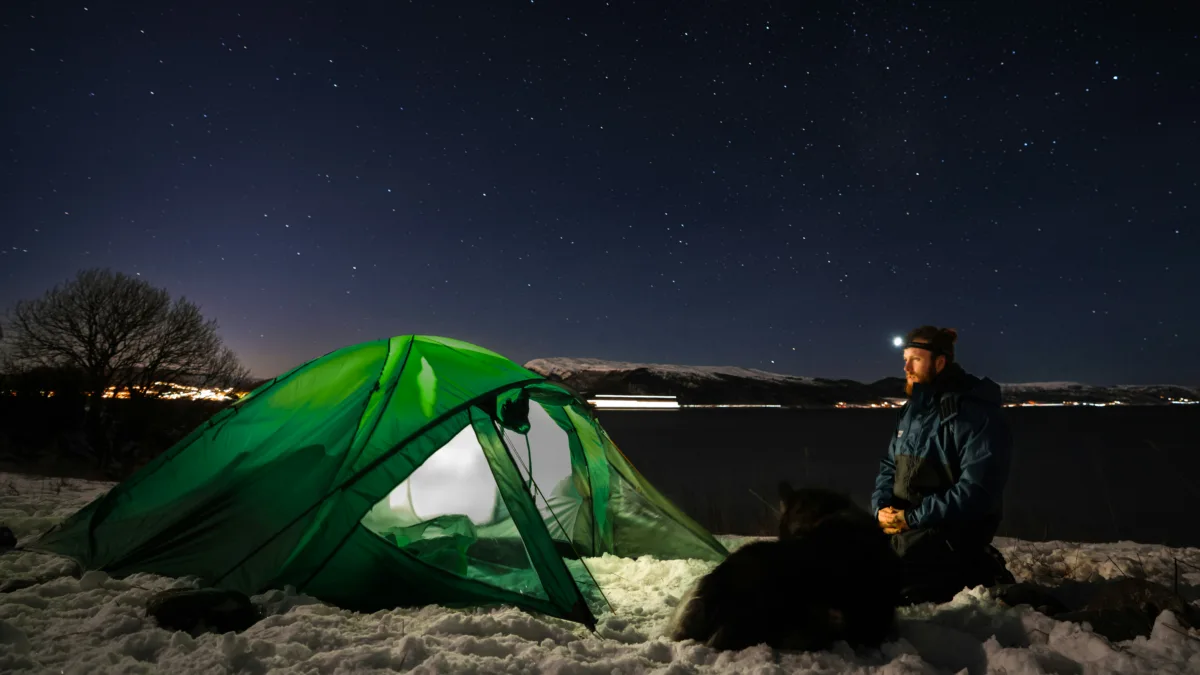
JoinHikes is reader-supported. As an Amazon Associate we earn from qualifying purchases, at no extra cost to you. Ratings and review counts below were checked on Amazon in November 2026 and can change.
Author’s Recommendation: Our Top 3 Tent Heaters
 Mr. Heater Portable Buddy (9,000 BTU)
Approved for indoor and outdoor use, low-oxygen shutoff, two heat settings and nearly 30,000 Amazon reviews. The one most campers should buy.
 Mr. Heater Little Buddy (3,800 BTU)
Gentle heat for 1–2 person tents and small spaces, tip-over and low-oxygen shutoff, and it sits on a tiny 8-inch footprint.
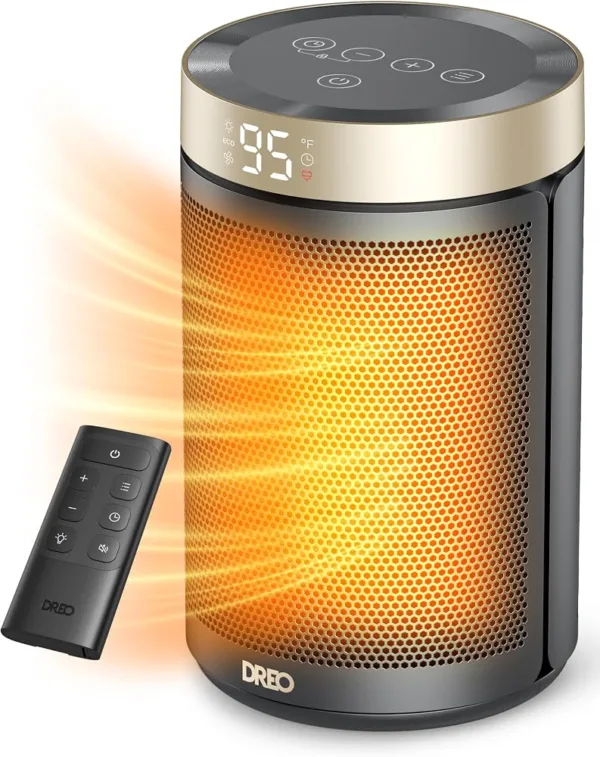 DREO 1500W Ceramic Heater
No flame and no fumes. A precise thermostat, tip-over protection and a 34 dB quiet mode make it the pick for campsites with a power hookup.
Quick Comparison: Best Tent Heaters for Camping
| Heater | Type | Heat output | Best for | Amazon rating |
|---|---|---|---|---|
| Mr. Heater Portable Buddy | Propane, indoor-approved | 4,000 / 9,000 BTU | Most car campers | 4.7 (29,000+) |
| Buddy Midnight Series | Propane, indoor-approved | 4,000 / 9,000 BTU | Buddy fans who want a 20 lb tank option | 4.7 (29,000+) |
| Buddy (Green) | Propane, indoor-approved | 4,000 / 9,000 BTU | Same Buddy, earthy color | 4.4 (44) |
| Mr. Heater Little Buddy | Propane, indoor-approved | 3,800 BTU | Small tents, budget | 4.5 (8,800+) |
| Little Buddy Midnight | Propane, indoor-approved | 3,800 BTU | Small tents, longer runtime | 4.5 (8,800+) |
| Mr. Heater Buddy FLEX | Propane, indoor-approved | 8,000–11,000 BTU | Large family tents | 4.4 (1,200+) |
| Mr. Heater Hunting Buddy | Propane | 6,000 / 12,000 BTU | Blinds, hunting camps | 4.6 (1,100+) |
| Big Buddy Midnight | Propane, indoor-approved | 4,000 / 9,000 / 18,000 BTU | Cabin tents, big groups | 4.6 (3,500+) |
| DREO 1500W | Electric ceramic | 1,500 W | Powered campsites | 4.6 (21,000+) |
| DAHTEC 1500W | Electric ceramic | 1,500 / 750 W | Budget electric | 4.4 (54) |
| 400W Mini Heater | Electric | 400 W | Personal heat, power stations | 4.0 (92) |
| Naturehike 3-in-1 | Butane | 3,750 BTU | Camp table warmth | 4.6 (164) |
| THE BOSS 6,000 BTU | Propane | Up to 6,000 BTU | Patio and camp seating | 4.4 (200) |
| Pasamic 2-in-1 | Propane heater + stove | 9,000 BTU | Outdoor heat that also cooks | 4.5 (32) |
| Lixada Gas Heater | Gas canister | Adjustable | Ultra-cheap outdoor warmth | 3.9 (87) |
| Tellingyou Tank-Top | Propane (1 lb) | Not listed | Golf carts, sidelines | New, no rating yet |
| Buyplus 30,000 BTU | Propane tank-top | Up to 30,000 BTU | Big open-air gatherings | 4.5 (102) |
How We Picked These Heaters
We started with the heaters campers actually buy, then sorted them by the question that matters most: is this heater approved for use inside a shelter, or is it an outdoor heater? After that we compared heat output in BTU or watts, runtime on a standard fuel cylinder, safety features (low-oxygen shutoff, tip-over shutoff, overheat protection), how easy it is to pack, and what thousands of real owners say in their reviews. Specs below come from each product’s Amazon listing. We did not invent numbers a manufacturer does not publish, so where a spec is missing, we say so.
If you are new to cold-weather camping, it also helps to read why sleeping bags feel colder at 3 AM and our guide to sleeping pad R-value. Fixing those two things often matters more than the heater.
Best Propane Tent Heaters: The Mr. Heater Buddy Family
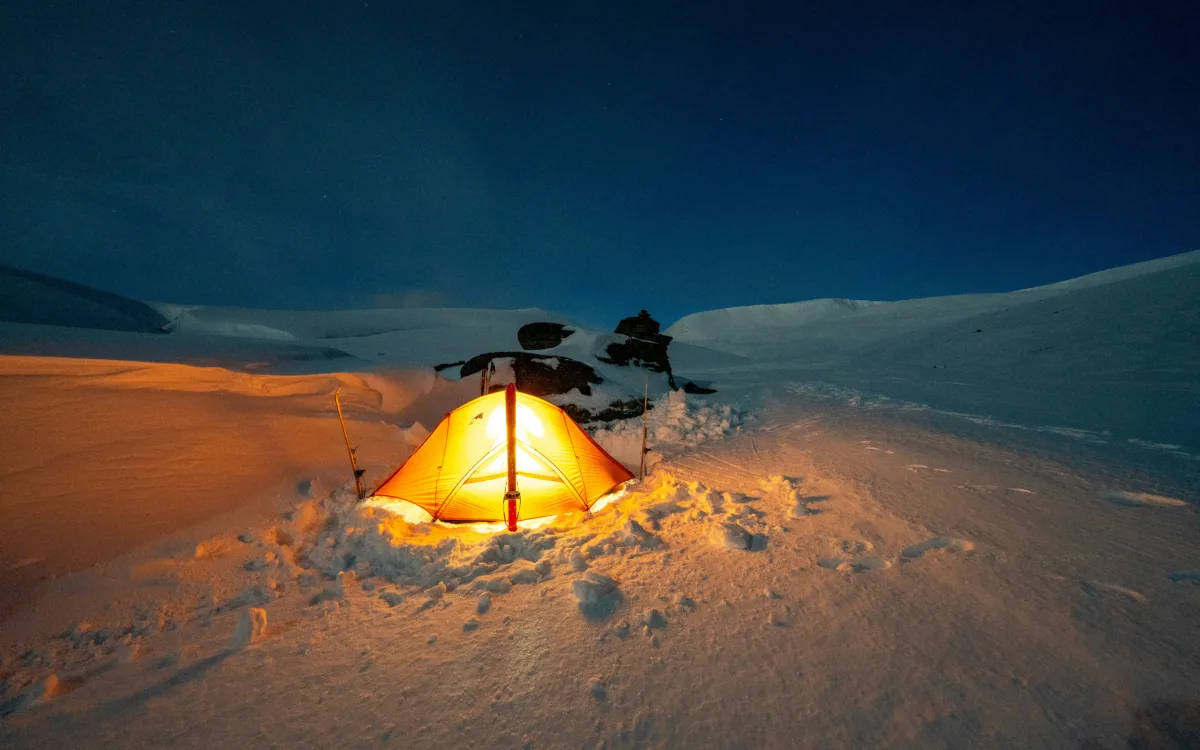
When campers talk about a “tent heater”, they usually mean a Mr. Heater Buddy. These radiant heaters run on the same green 1 lb propane cylinders you use for a camp stove, they need no electricity, and most models in this family are listed as designed and approved for indoor and outdoor use with a low-oxygen shutoff and tip-over protection. (Mr. Heater notes indoor use is not approved in Canada or Massachusetts.) Radiant heat warms you and the objects in front of the heater rather than trying to heat all the air, which suits a drafty tent well.
1. Mr. Heater Portable Buddy 9,000 BTU Radiant Propane Heater
- Heat output: 4,000 or 9,000 BTU/hr
- Heats: up to about 225 sq ft
- Runtime (1 lb cylinder): 5.4 hrs on low, 2.4 hrs on high
- Safety: low-oxygen shutoff, self-extinguishing materials
- Use: designed and approved for indoor and outdoor use
- Amazon rating: 4.7 stars from 29,000+ reviews
There is a reason this is the heater you see at nearly every cold campground. It lights with a push of a knob, it has only two settings so there is nothing to fiddle with, and on low it will happily take the bite out of a four-person tent while you change clothes and get into your bag. High is for warming up fast in the morning or heating a bigger space like a screen room.
Why you should buy it: it is the most proven indoor-approved propane heater for camping, it runs on fuel you probably already carry, and its huge review count means few surprises. If you only buy one heater for car camping, make it this one.
- Approved for indoor and outdoor use
- Low-oxygen safety shutoff
- Simple two-setting control
- No electricity needed
- Huge, trusted owner base
- Only 2.4 hours on high per 1 lb cylinder
- Front grill gets very hot
- Low-oxygen sensors can shut off at high elevation
Skip it if: you mostly camp at sites with power, where an electric heater has no combustion risk at all.
2. Mr. Heater Portable Buddy Midnight Series 9,000 BTU

- Heat output: 4,000 or 9,000 BTU
- Heats: up to 225 sq ft
- Runtime: up to 5.4 hrs on a 1 lb tank; up to 108 hrs on a 20 lb cylinder (with optional Buddy hose and fuel filter)
- Safety: self-extinguishing protection, low-oxygen shutoff, tip-over shutdown, flame-retardant materials
- Use: approved for indoor and outdoor use (not indoors in Canada or Massachusetts)
- Amazon rating: 4.7 stars from 29,000+ reviews
This is the Buddy in a sleek black finish, and the listing spells out the full Life Safety System, including tip-over shutdown. The headline is fuel flexibility: hook it to a 20 lb tank with the Buddy hose and filter and you stop juggling little green cylinders on a long weekend.
Why you should buy it: same trusted heater, a cleaner look, and the clearest spec sheet of the Buddy range. Great for base camps where you leave a big tank outside the tent.
- Full safety suite listed
- Up to 108 hours on a 20 lb tank
- Directional radiant tiles
- Sturdy wire guard and handle
- Hose and fuel filter sold separately
- Black finish shows dust and scratches
3. Mr. Heater Buddy 4,000–9,000 BTU Indoor-Safe Heater (Green)

- Heat output: 4,000 or 9,000 BTU/hr
- Heats: about 225 sq ft
- Runtime (1 lb cylinder): 5.4 hrs low, 2.4 hrs high
- Safety: low-oxygen shutoff, self-extinguishing materials
- Amazon rating: 4.4 stars (44 reviews on this color listing)
Same specs as the classic red Buddy, in a green that blends in at camp and in a hunting blind. The listing has fewer reviews only because it is a separate color page; the heater inside is the familiar Buddy design.
Why you should buy it: you want the Buddy, and you prefer a muted color, or this version is cheaper on the day you shop.
- Proven Buddy design
- Indoor and outdoor approved
- Low-key color for blinds and camp
- Short runtime on high
- Price can swing more than the red version
4. Mr. Heater Little Buddy 3,800 BTU Portable Propane Heater
- Heat output: 3,800 BTU/hr
- Heats: up to 95 sq ft
- Fuel: screws straight onto one 1 lb propane cylinder
- Safety: tip-over shutoff, automatic low-oxygen shutoff
- Footprint: 8-inch round stand
- Amazon rating: 4.5 stars from 8,800+ reviews
The Little Buddy is the right size for a two-person dome or a small hunting blind. With one setting, it is less of a blast furnace than the big Buddy, which is exactly what you want in a small space where you are sitting close to it. It is quiet and odor-free once lit, and the cylinder becomes the handle and the base.
Why you should buy it: it is the most affordable way to get an indoor-approved, safety-shutoff propane heater, and it packs into the corner of a car bin.
- Small, light and cheap
- Tip-over and low-oxygen shutoff
- Gentle heat for small tents
- One-button ignition
- Single heat setting
- Too small for family tents
- Tall shape needs flat, stable ground
5. Mr. Heater Little Buddy Midnight Edition 3,800 BTU
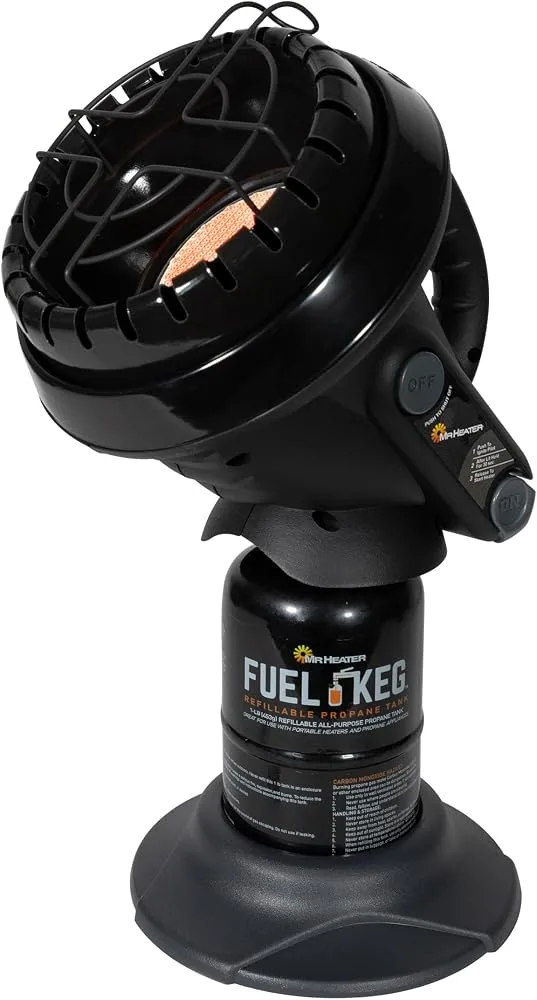
- Heat output: 3,800 BTU, warms up to 95 sq ft
- Runtime: up to 5.6 hrs on one 1 lb tank
- Heating angle: 45° to aim heat at you
- Base: stable 8-inch tank base
- Safety: self-extinguishing protection, low-oxygen shutoff, tip-over shutdown
- Amazon rating: 4.5 stars from 8,800+ reviews
The Midnight version of the Little Buddy lists a slightly longer 5.6-hour runtime and a 45° heating angle, so the warmth is pointed at your legs instead of the tent ceiling. It is a smart choice for solo campers, ice anglers and anyone who sits in one spot.
Why you should buy it: you want the smallest Buddy with the clearest safety spec and the longest listed runtime.
- Up to 5.6 hours per cylinder
- Angled, directional heat
- Full Life Safety System
- One heat level only
- Small coverage area
6. Mr. Heater Buddy FLEX 11,000 BTU Radiant Heater

- Heat output: 8,000–11,000 BTU/hr
- Heats: up to about 275 sq ft
- Runtime: up to 3.5 hrs low, 2 hrs high
- Burner: omni-directional fiber mesh for even heat
- Use: designed and approved for indoor and outdoor use
- Amazon rating: 4.4 stars from 1,200+ reviews
The FLEX throws heat in more directions than the flat-faced Buddy, so it suits big cabin tents and screen rooms where people sit in a circle. The trade-off is fuel: you will go through a 1 lb cylinder in about two hours on high, so plan on a bigger tank for anything longer than an evening.
Why you should buy it: you camp as a family in a 6- to 10-person tent and the regular Buddy feels like it only warms one side of the room.
- More heat than the standard Buddy
- Even, all-around warmth
- Indoor and outdoor approved
- Burns through small cylinders fast
- Bulkier to pack
7. Mr. Heater Hunting Buddy 12,000 BTU (Camo)

- Heat output: 6,000 or 12,000 BTU/hr
- Heats: up to 300 sq ft
- Fuel: propane
- Controls: single control start knob
- Amazon rating: 4.6 stars from 1,100+ reviews
Built for hunting blinds and ice shacks, the Hunting Buddy has more punch than the standard Buddy and a camo finish that does not glow in the treeline. Its Amazon listing is thinner on details than the other Buddy pages, so read the manual for its approved settings and ventilation before you use it inside any shelter.
Why you should buy it: you want serious output for a hunting camp or a large open-sided shelter, and you like gear that blends in.
- Up to 12,000 BTU
- Covers about 300 sq ft
- Low-profile camo finish
- Listing gives fewer safety details
- Overkill for small tents
8. Mr. Heater Big Buddy Midnight Series 18,000 BTU
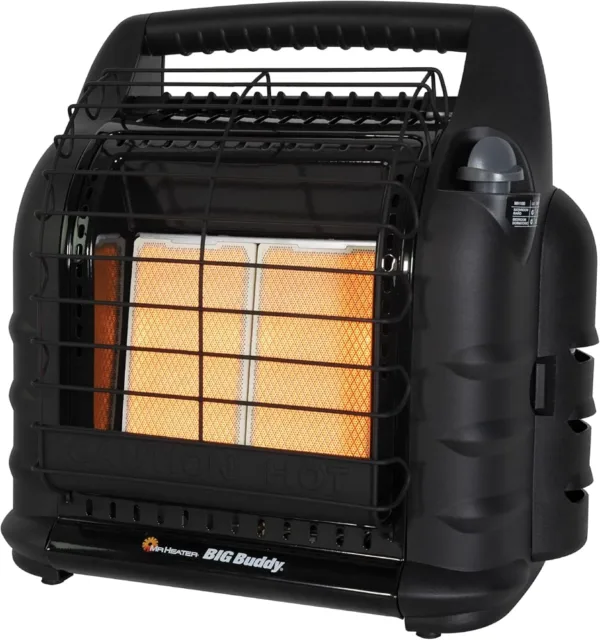
- Heat output: 4,000, 9,000 or 18,000 BTU
- Heats: up to 450 sq ft
- Fan: built-in fan circulates warm air
- Ignition: push-button electronic
- Fuel: two 1 lb cylinders, or a 20 lb tank with optional hose and filter (up to 96 hrs on low)
- Amazon rating: 4.6 stars from 3,500+ reviews
The Big Buddy is the base-camp heater. Three settings let you idle it on 4,000 BTU or blast 18,000 to thaw out a big cabin tent, and the fan moves heat into the corners that a radiant-only heater misses. It is bulky, so this lives in the truck, not the backpack.
Why you should buy it: large family tents, hunting camps or canvas cabin tents where the small Buddies simply can’t keep up.
- Three heat levels up to 18,000 BTU
- Fan spreads heat evenly
- Long runtime on a 20 lb tank
- Electronic ignition
- Large and heavy
- Overkill for small tents
- Hose sold separately
Best Electric Tent Heaters for Camping
Electric heaters burn no fuel, so they remove the carbon monoxide worry that comes with propane. That makes them the calmest choice when your campsite has a power hookup. They are not risk-free, though. Fire and shock are the concerns around sleeping bags, damp tent floors and nylon walls. CPSC advises keeping space heaters at least three feet from anything that can burn and plugging them straight into a wall outlet rather than an extension cord or power strip, so check what your site’s pedestal and your heater’s manual allow before you rely on one.

9. DREO 1500W Portable Electric Space Heater with Thermostat
- Power: 1,500 W PTC ceramic
- Thermostat: 41–95°F in 1°F steps
- Noise: as low as 34 dB
- Safety: tilt-detection tip-over protection, overheat protection, V0 flame-retardant materials, safety plug, ETL certified
- Extras: remote, 12-hr timer, 5 modes, child lock, memory
- Amazon rating: 4.6 stars from 21,000+ reviews
This is the heater we would plug into an electric campsite pedestal. The thermostat is genuinely useful in a tent: set it to a comfortable 60-something and it cycles on and off instead of cooking you. It is quiet enough that you won’t hear it over the wind, and the remote means you can turn it on from your sleeping bag in the morning without getting out.
Why you should buy it: you camp at powered sites, you want warmth with zero fumes, and you like the idea of a heater with a long list of safety certifications. Remember to switch it off, not just down, before you sleep.
- No combustion, no carbon monoxide
- Precise thermostat
- Very quiet
- Remote and timer
- Strong safety certifications
- Needs a proper outlet; useless off-grid
- 1,500 W is too much for most power stations
- Built for indoor rooms, so keep it dry
10. DAHTEC 1500W Portable Ceramic Heater
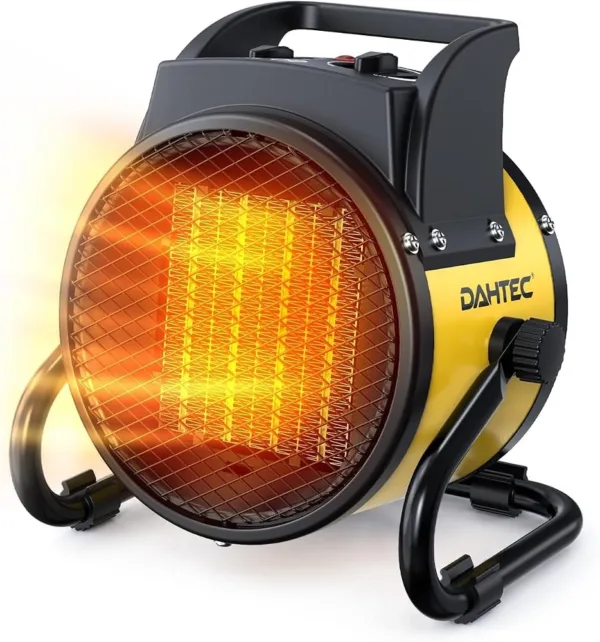
- Power: 1,500 W high, 750 W low, 20 W fan only
- Heats: small to medium spaces up to 200 sq ft
- Aim: 15° adjustable tilt
- Controls: simple knobs with thermostat
- Safety: ETL certified
- Amazon rating: 4.4 stars (54 reviews)
A no-fuss alternative to the DREO. Knobs instead of buttons are handy when you are wearing gloves, and the 750 W low setting is kinder to a campground circuit that may trip if a neighbor is running a coffee maker. The tilt lets you aim warmth at your feet under the camp table.
Why you should buy it: you want a simple, budget electric heater with a low setting for campgrounds with modest power.
- 750 W low mode
- Glove-friendly knobs
- Adjustable tilt
- Few reviews so far
- No remote or timer
11. 400W Mini Portable Space Heater

- Power: 400 W on 110 V
- Warm-up: warm air in about 2 seconds
- Safety: tip-over protection, overheat shutoff, flame-retardant materials, safety plug
- Weight: lightweight desk-size unit
- Amazon rating: 4.0 stars (92 reviews)
Think of this as a personal heater, not a tent heater. At 400 W it won’t warm a family tent, but it will keep your hands and lap comfortable while you sit at the table, and it is one of the few heaters a portable power station can actually run for a while. Quick math: a 500 Wh station could run it for a bit over an hour in theory, less once you allow for conversion losses.
Why you should buy it: you already own a power station or camp at a powered site, and you just want toasty hands and feet without propane.
- Low wattage for batteries and weak circuits
- Small and light
- Tip-over and overheat protection
- Personal heat only
- Lower rating than the big brands
What about battery-powered tent heaters?
Before buying any battery tent heater for camping, do the runtime math. Heaters are power-hungry. A 500 Wh power station running a 500 W heater has a theoretical runtime of about one hour, and real-world losses cut that further. A heater can also exceed a station’s maximum output even when the battery looks big enough. That is why we only recommend low-wattage personal heaters like the 400 W mini above for battery use. If you are buying a battery and a heater mainly to stay warm in bed, your money goes further on a warmer sleeping bag and an insulated sleeping pad.
Best Butane & Outdoor Camping Heaters
These heaters are great around the camp table, at the tailgate, on an ice-fishing hole or beside a pop-up shelter with the walls open. Some listings call them “tent heaters”, but most don’t show the indoor approval the Mr. Heater Buddies carry. Our honest advice: use these outside the tent, follow each manual, and keep them clear of fabric.
12. Naturehike Portable 3-in-1 Butane Camping Heater (3,750 BTU)

- Heat output: 3,750 BTU
- Heats: about 54–108 sq ft
- Fuel: 8 oz butane canister
- Runtime: up to 240 min (180 min on max)
- Safety: magnetic canister connection, automatic gas shutoff for overpressure
- Extras: detachable warming shelf, carry handle
- Amazon rating: 4.6 stars (164 reviews)
Naturehike’s heater is the most thoughtfully designed of the compact gas units. The little shelf on top keeps a mug or a can of soup warm, the magnetic canister connection is quick in cold fingers, and the overpressure shutoff adds peace of mind. Butane canisters are cheap and easy to find in camping aisles.
Why you should buy it: you want a neat, packable heater for the camp table that also keeps your drink warm. One honest note: standard butane struggles in real freezing temperatures, so this is better for chilly autumn evenings than deep winter. Our propane vs butane guide explains why.
- Warming shelf is genuinely useful
- Up to 4 hours per canister
- Overpressure gas shutoff
- Compact, well-built
- Butane weakens in freezing cold
- Small heat output
- Treat as an outdoor heater
13. THE BOSS 6,000 BTU Portable Propane Heater

- Heat output: 3 heat levels, up to 6,000 BTU
- Ignition: simple twist ignition
- Light: built-in LED glow (batteries required)
- Safety: CSA certification, automatic tip-over shutoff, low-oxygen detection
- Amazon rating: 4.4 stars (200 reviews)
THE BOSS sits nicely between the Little Buddy and the full Buddy in output, with three levels instead of two. The soft LED light is a nice touch at night, doubling as a low lantern on the table. The listing names it an outdoor heater, and it carries tip-over and low-oxygen shutoffs.
Why you should buy it: a mid-size propane heater for the patio or camp seating area, with a built-in light and three heat settings.
- Three heat settings
- Built-in LED light
- Tip-over and low-oxygen shutoff
- CSA certified
- Marketed for outdoor use
- LED needs separate batteries
14. Pasamic 2-in-1 Portable Propane Heater & Camping Stove (9,000 BTU)

- Heat output: adjustable up to 9,000 BTU
- Function: heater that doubles as a cooking stove
- Fuel: 110 g or 230 g screw-on canisters inside the unit, or a larger tank via the included hose
- Controls: adjustable flame and vents
- Build: protective nano-coated surface
- Amazon rating: 4.5 stars (32 reviews)
The appeal here is one less thing to pack. Boil water for coffee, then turn the same unit into a heater while you eat. It is popular with ice anglers and hunters for that reason. Because it is both a stove and an open-flame heater, keep it outside the tent, in the open air.
Why you should buy it: you like multi-use gear and want one compact unit for cooking and outdoor warmth. Pair it with our tips on making coffee while camping.
- Cooks and heats
- Hose for big tanks included
- Compact and rugged
- Outdoor use only
- Few reviews so far
- No listed oxygen sensor
15. Lixada Portable Gas Camping Heater

- Build: stainless steel heating mesh, rust-resistant
- Safety: front protective cover against burns
- Controls: adjustable safety valve and side fire damper
- Extras: comes with a blanket and 4 clips
- Heat output: not listed by the seller
- Amazon rating: 3.9 stars (87 reviews)
The Lixada is a very simple screw-on gas heater: a stainless mesh that glows and radiates warmth from the canister. It is cheap and tiny. The seller does not publish a BTU rating, and its reviews are the weakest on this list, so we see it as a backup for cold hands at the table, not a primary heater.
Why you should buy it: you want the cheapest, smallest outdoor warmer for a daypack or fishing kit and you accept its limits.
- Very small and cheap
- Stainless steel build
- Blanket and clips included
- No published BTU rating
- No listed oxygen or tip-over sensor
- Lowest rating here
16. Tellingyou Portable Propane Tank-Top Heater with Base

- In the box: heater head, foldable 1 lb cylinder base, propane cup holder
- Fuel: 1 lb (16 oz) propane cylinders (not included)
- Build: stainless steel, aluminum and ABS
- Heat: radiates in all directions; BTU not listed
- Amazon rating: new listing, no rating yet
This kit bundles a simple tank-top radiant head with a folding base that keeps a 1 lb cylinder upright, plus a cup holder (the seller pitches it for golf carts too). The base is the clever part, as tall propane cylinders tip easily on uneven ground. It is a brand-new listing with no reviews, so you are an early buyer.
Why you should buy it: you want a stable tank-top warmer for the sidelines, golf cart or camp chairs, and like that the base is included.
- Stabilizing base included
- Uses common 1 lb cylinders
- Light and simple
- No reviews yet
- BTU not published
- Outdoor use only
17. Buyplus 30,000 BTU Double Tank-Top Propane Heater

- Heat output: up to 30,000 BTU, 3 modes
- Heats: seller claims up to 800 sq ft outdoors
- Design: two heads that rotate 30°
- Safety: tip-over switch shuts off gas; safety mesh guards
- Build: heavy-duty steel
- Amazon rating: 4.5 stars (102 reviews)
This is a different animal. It mounts on top of a large propane tank and throws a huge amount of heat from two angled heads. That makes it perfect for a group around the camp kitchen, an ice-fishing setup in the open, or a cold tailgate. It is not something to put inside a tent, whatever the product title says. At this output, keep plenty of space around it.
Why you should buy it: you host big group camps or hunting camps and want serious open-air heat for the whole circle.
- Huge heat output
- Two adjustable heads
- Tip-over gas shutoff
- Open-air use only
- Needs a large tank
- Uses a lot of fuel
What about Coleman tent heaters?
Many campers still search for Coleman tent heaters, especially secondhand. If you find one, start with the model number. A brand name or a seller’s description doesn’t tell you the approved setting, the correct fuel, or whether that unit has been recalled. Look up the exact manual and search the CPSC recall database. If the model label is missing or you can’t find the instructions, pass on it and buy one of the current heaters above.
Tent Heater Buying Guide: How to Choose the Right One

The best tent heater for camping depends on where you camp and what you are trying to warm. Start here:
| Your camping setup | What to buy | Check first |
|---|---|---|
| Backpacking, no hookup | Spend on a warmer bag, pad and dry layers instead of a heater | Forecast low, bag comfort rating, pad R-value |
| Car camping, no power | An indoor-approved propane heater like the Mr. Heater Buddy | Ventilation openings in the manual, CO alarm, flat ground |
| Car camping with shore power | An electric ceramic heater like the DREO | Outlet type, site rules, 3 ft clearance from fabric |
| A cold evening outdoors | A butane or outdoor propane heater | Fuel type, wind, campground fire rules |
| Power station camping | A low-wattage personal heater only | Heater watts vs. battery Wh and max output |
| Hot tent | A tent and wood stove made to work together | Stove jack, manufacturer instructions, fire bans |
Types of tent heaters, explained simply
- Propane radiant heaters (Mr. Heater Buddy family): the go-to for car camping without power. Pick a model whose listing and manual say indoor-approved, with low-oxygen and tip-over shutoff.
- Electric ceramic heaters (DREO, DAHTEC): no fumes, thermostats, quiet. Only practical at powered sites.
- Battery or power-station heat: realistic only for small personal heaters, because heating eats watt-hours fast.
- Butane heaters (Naturehike): compact and clean-burning, but butane loses pressure in freezing weather.
- Open-flame tank-top heaters (Buyplus, Tellingyou, Lixada, Pasamic): strong, cheap outdoor heat. Keep them in the open air.
- Wood-burning stoves: only for purpose-built hot tents with a stove jack. Never try to convert an ordinary nylon tent.
How Many BTU Do You Need for a Tent?
Manufacturers rate heaters by the area they can warm. As a rough rule, match your tent’s floor area to the heater’s listed coverage, then run it on low with a little ventilation. Tents leak heat through thin walls, so a bit of extra capacity helps on windy nights.
| Tent size | Approx. floor area | Good match |
|---|---|---|
| 1–2 person | 30–40 sq ft | Little Buddy (3,800 BTU) or Naturehike outside the door |
| 4 person | 55–65 sq ft | Little Buddy, or Buddy on low (4,000 BTU) |
| 6 person | 80–100 sq ft | Mr. Heater Buddy (4,000/9,000 BTU) |
| 8–10 person / cabin tent | 120–170 sq ft | Buddy FLEX or Big Buddy on low or medium |
| Large canvas / group shelter | 200+ sq ft | Big Buddy (up to 18,000 BTU, 450 sq ft) |
Floor areas are typical ranges; check your own tent’s spec sheet. Coverage figures come from each heater’s listing.
Runtime and fuel: plan before you go
A 1 lb propane cylinder runs the Buddy for about 5.4 hours on low or 2.4 hours on high. For a weekend, that means several cylinders, or a 20 lb tank with the Buddy hose and fuel filter (up to 108 hours on the Midnight Buddy). Bring spares, store them outside the tent, and keep them out of direct sun in the car. In serious cold, propane holds pressure far better than butane. See propane vs butane for the details.
Tent Heater Safety Checklist
- Read the manual before you buy. Look for the approved setting (indoor or outdoor), required clearances and ventilation.
- Carry a battery-powered CO alarm whenever a fuel-burning heater is anywhere near your shelter.
- Ventilate. Indoor-approved propane heaters still need the fresh-air openings their manual specifies. Opening vents also cuts tent condensation.
- Keep 3 feet of clearance from sleeping bags, clothing and tent walls. Measure with your gear inside.
- Use firm, level ground. A tent footprint or a flat board under the heater helps on soft ground.
- Never leave a heater running while you sleep or when you leave the tent.
- Check the altitude. Low-oxygen sensors can shut heaters off at high elevation; check your manual’s limits.
- Ask the campground. Electric hookups, propane appliances and wood stoves can each have separate rules.
- Know the warning signs. Headache, dizziness, nausea, weakness or confusion can mean carbon monoxide. Get everyone into fresh air and call 911.
How to Stay Warm in a Tent Without a Heater

The heater warms the evening. These keep you warm all night (for the full list, see our guide on how to keep a tent warm without electricity):
- Insulate from the ground. Most cold comes up from below. Choose a pad with the right R-value, or get off the ground entirely with a camping cot plus a pad.
- Rate your bag for the forecast low, using its comfort rating, not the limit rating.
- Add a liner. A sleeping bag liner adds a few degrees for very little weight.
- Change into dry sleep clothes and a warm hat before bed.
- Eat a snack and drink something warm before you climb in; your body is the furnace.
- Fill a bottle with hot water and tuck it in the footbox.
- Keep the tent dry. Wet gear steals heat. See our tips on camping in the rain and waterproofing a tent.
Still waking up cold in the early hours? That pattern has a clear cause, and we break it down in why sleeping bags feel colder at 3 AM.
Complete Your Camp
A heater works best as part of a warm, dry setup. These JoinHikes guides cover the rest:
Frequently Asked Questions
What is the best tent heater for camping?
For most car campers, the Mr. Heater Portable Buddy (9,000 BTU). It runs on 1 lb propane cylinders, is listed as designed and approved for indoor and outdoor use, and has a low-oxygen shutoff. If your site has power, an electric heater like the DREO 1500W avoids combustion entirely.
What are the safest tent heaters for camping?
Electric heaters at a powered site are the lowest-risk because they burn no fuel. For off-grid camping, choose a propane heater whose listing and manual say it is approved for indoor use, with low-oxygen and tip-over shutoff, and always run it with ventilation and a CO alarm.
Can I leave a tent heater on all night?
No. Switch every portable heater off before you sleep, electric included. If the tent gets too cold once it is off, upgrade your sleeping bag, pad or liner instead.
Is it safe to use a Mr. Heater Buddy in a tent?
The Buddy heaters are listed as designed and approved for indoor and outdoor use (not indoors in Canada or Massachusetts). Follow the manual’s ventilation requirements, keep it clear of fabric, use a CO alarm, and turn it off before sleeping.
Can I use a propane heater if I unzip the tent door?
Only if the heater is approved for indoor use, and then only with the ventilation its manual requires. A cracked door on its own is not a safety plan for an outdoor-only heater. Keep those outside.
Do battery-operated tent heaters work?
Only for short bursts of personal heat. A 500 W heater uses roughly 500 Wh per hour, so even a mid-size power station runs out quickly. Low-wattage heaters like the 400 W mini are the realistic option.
Does an electric tent heater produce carbon monoxide?
No. A resistance or ceramic heater burns no fuel. The risks are fire, shock and hot surfaces, so keep it dry and well away from bedding and tent walls.
Can I run an electric tent heater from an extension cord?
CPSC-aligned guidance says to plug space heaters directly into a wall outlet and avoid power strips and extension cords. If your campsite setup can’t meet the heater’s power requirements, skip the electric heater for that trip.
How many BTU do I need to heat a tent?
Roughly 3,800 BTU suits a 1–2 person tent, 4,000–9,000 BTU a 4–6 person tent, and 11,000–18,000 BTU large cabin tents. Match the heater’s listed coverage to your tent’s floor area and run it on low.
Propane or butane: which is better for cold-weather camping?
Propane. It keeps working in freezing temperatures, while standard butane loses pressure as it gets cold. Butane is fine for mild, chilly evenings.
Can I use a camping stove to warm my tent?
No. Cooking stoves are a carbon monoxide and fire hazard inside a tent. Cook outside, away from tent fabric and doors.
What is a hot tent?
A hot tent is a canvas or fire-resistant shelter with a built-in stove jack, designed to work with a matching wood stove. It is a separate system; never put a stove in an ordinary camping tent.
What is the best way to stay warm in a tent without electricity?
Match your bag’s comfort rating and your pad’s R-value to the forecast low, change into dry layers, and use a hot water bottle. An indoor-approved propane heater can warm the tent before bed.
Is the advice different for campers in the UK?
UK fire and rescue services advise keeping fuel-burning heaters and stoves out of tents. For electric heat, use equipment and connections that your campsite and the manufacturer allow.
What should I do if someone feels sick after using a heater?
Get everyone into fresh air immediately and call 911 in the US if you suspect carbon monoxide poisoning. Headache, dizziness, nausea, weakness and confusion are common signs.
Final Verdict: Which Tent Heater Should You Buy?
For most people, the Mr. Heater Portable Buddy is the best tent heater for camping: proven, indoor-approved, and simple. Go for the Little Buddy if you camp in a small tent or on a budget, the Big Buddy for big family or canvas tents, and the DREO 1500W if you always camp with power. For warmth around the camp table, the Naturehike butane heater and the Buyplus 30,000 BTU are great outdoor picks. Whatever you choose, run it with ventilation and a CO alarm, switch it off before you sleep, and let a good bag and pad carry you through the night.
Planning a cold-weather trip? Browse our best winter hiking trails in the US for where to go next.
2 thoughts on “17 Best Tent Heaters for Camping (2026): Propane, Electric & Butane Picks Reviewed”