
Three days in Washington, DC is the sweet spot for a first visit. It’s enough time to stand at the top of the Lincoln Memorial steps, walk under the Capitol dome, lose an afternoon in a Smithsonian museum and still wander a neighborhood where people actually live, without turning the trip into a race.
The trick is geography. DC looks compact on a map, but the National Mall alone is about two miles long, and zigzagging across town eats hours. This Washington DC 3 day itinerary groups nearby sights together. Day 1 covers the National Mall and monuments, Day 2 covers Capitol Hill and the Smithsonian, and Day 3 takes you to Georgetown, Dupont Circle and beyond, with easy swaps depending on what you love.
Along the way you’ll find what to book ahead, walking distances, Metro tips, where to stay and eat, and the 2026 changes (closures, construction and ticket rules) that most older guides miss.
Washington DC 3-Day Itinerary at a Glance
| Day | Main Area | Highlights | Walking |
|---|---|---|---|
| Day 1 | National Mall and Tidal Basin | White House, Washington Monument, WWII, Lincoln, Korean and Vietnam memorials, MLK, FDR, Jefferson | About 5–6 miles |
| Day 2 | Capitol Hill and Smithsonian | U.S. Capitol, Library of Congress, Supreme Court, one or two Smithsonian museums, National Archives | About 3–5 miles |
| Day 3 | Beyond the Mall | Georgetown, C&O Canal, waterfront, Dupont Circle, Embassy Row (or Arlington, or more museums) | About 4–5 miles |
| Trip Detail | Quick Answer |
|---|---|
| Best for | First-time visitors and long weekends |
| Car needed? | No. Walk, take Metro, and use rideshare occasionally |
| Cost of sights | Most major attractions are free |
| Book ahead | Washington Monument, Capitol tour, Air and Space Museum, NMAAHC, White House tour |
| Best base | Downtown, Penn Quarter, Dupont Circle or Capitol Hill |
| Best months | April–May and late September–October |
| Must-pack item | Comfortable, broken-in walking shoes |
Planning a trip in late 2026? The Tidal Basin reopened in April with a rebuilt seawall and wider walkways. The Lincoln Memorial Reflecting Pool has been through a troubled resurfacing and was drained again for repairs in July, so check whether it’s full before counting on that reflection photo. White House public tours have been on and off since ballroom construction began in 2025. Federal funding runs through December 11, 2026. If the government shuts down after that, some federal sites, like the Smithsonian and National Archives, can close, while outdoor memorials usually stay open.
In This Guide
- Is 3 days enough?
- What to book before you go
- Day 1: National Mall and monuments
- Day 2: Capitol Hill and Smithsonian
- Day 3: Georgetown, Dupont Circle and beyond
- Where to stay
- Getting around
- Best time to visit
- Tips, mistakes and budget
- FAQs
Is 3 Days Enough for Washington DC?
Yes. Three days is enough for a first visit to Washington, DC. You can see the National Mall and major monuments, tour the Capitol, spend real time in one or two Smithsonian museums and explore at least one neighborhood, as long as you group sights by area.
You won’t see every Smithsonian museum or every historic neighborhood, and you don’t need to. With 4–5 days you could slow down, add more museums and take a day trip to Mount Vernon or Alexandria. For a long weekend, though, three days in Washington DC works very well.
Plan your days around the calendar. The Capitol Visitor Center is closed Sundays, and the Library of Congress is typically closed Sundays and Mondays. Schedule Day 2 for a Tuesday through Saturday, and put the flexible Day 3 on a Sunday or Monday.
What to Book Before Your Trip
Book the limited-entry attractions first and build the rest of your itinerary around them. “Free” in DC doesn’t always mean “walk in whenever you want.”
| Attraction | Cost | How to Get In |
|---|---|---|
| Washington Monument (elevator to the top) | Free ($1 online reservation fee) | Recreation.gov, released 30 days ahead at 10 a.m., plus a smaller release the day before; same-day tickets from 8:45 a.m. at the Washington Monument Lodge |
| U.S. Capitol tour | Free | Reserve online through the Capitol Visitor Center or your representative’s office; limited same-day passes |
| National Air and Space Museum | Free | Free timed-entry pass required for everyone, including kids |
| National Museum of African American History and Culture | Free | Free timed-entry pass; limited same-day passes released online |
| White House tour | Free | Request through your Member of Congress (or your embassy if you’re not a U.S. citizen); check whether tours are currently running |
| U.S. Holocaust Memorial Museum | Free | Timed passes needed in the busy spring and summer season |
| Lincoln Memorial, WWII, Vietnam, MLK, Jefferson, FDR | Free | Walk in, open 24 hours |
| Natural History and American History museums | Free | Walk in, no pass needed |
Washington Monument tickets often vanish within minutes of release in spring, summer and fall. Create your Recreation.gov account ahead of time and be logged in right at 10 a.m. Eastern.
Day 1: National Mall, White House and Monuments
Day 1 is the Washington you’ve seen in photos: the White House, the Washington Monument, the Reflecting Pool, the war memorials and the Tidal Basin. It’s your biggest walking day, roughly 5–6 miles, so wear shoes you trust. The nearest Metro stations are McPherson Square or Federal Triangle for the start and Smithsonian for the middle of the Mall.
Morning: The White House
Start at Lafayette Square for the classic north view of the White House, then walk around to the Ellipse for the south view. Unless you’ve secured a tour, treat this as an outside stop. Twenty to thirty minutes is plenty. If you want more, the White House Visitor Center on Pennsylvania Avenue has free exhibits on the building’s history, rooms and first families.
White House tours in 2026: tours have been suspended and resumed more than once since the East Wing was demolished for a new ballroom in 2025, and the route no longer includes the East Wing rooms. When they’re running, U.S. citizens request them through their Member of Congress, usually several weeks to three months ahead. Check your representative’s website for the latest.
The Washington Monument
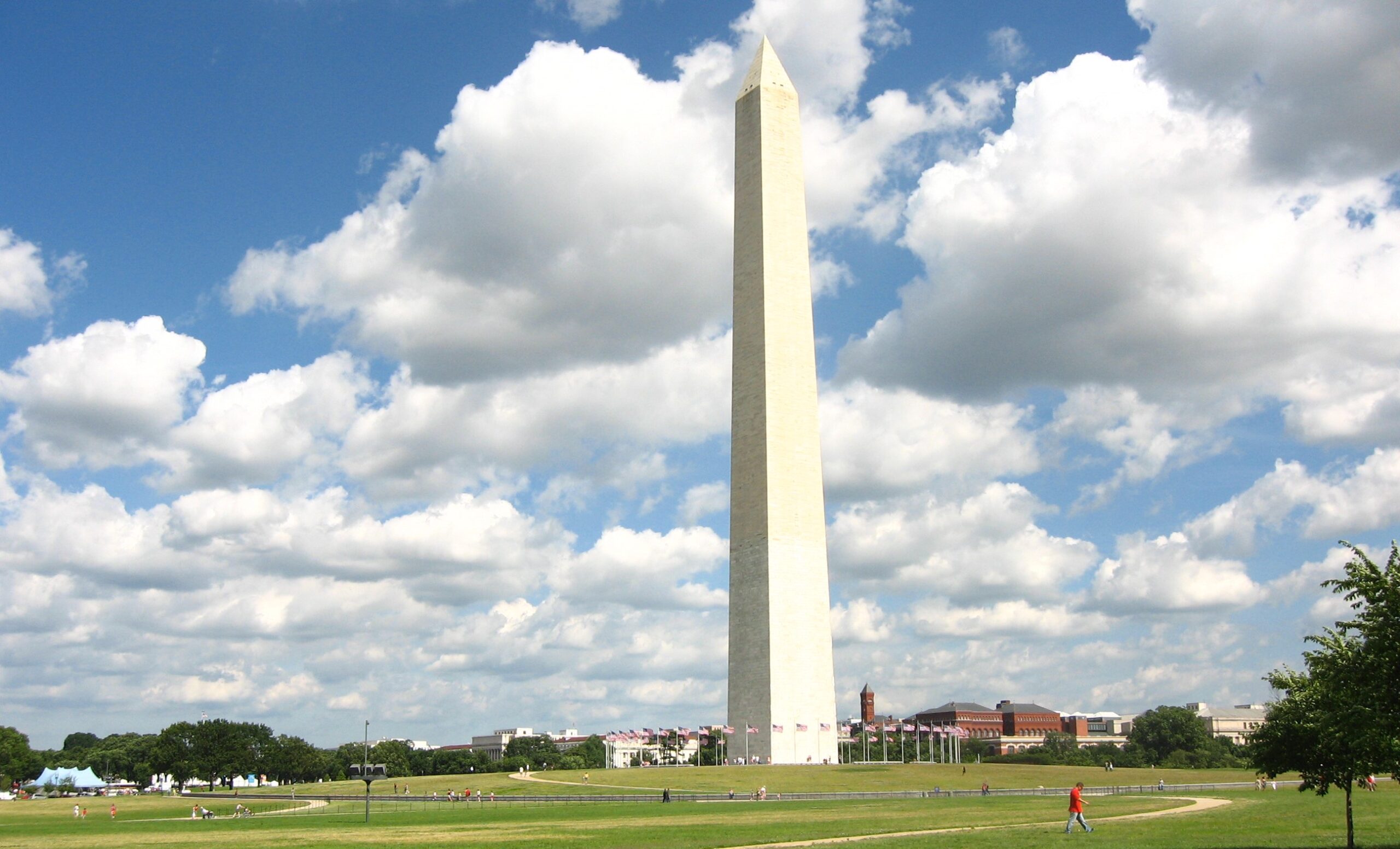
Walk south to the 555-foot obelisk at the center of the Mall. The grounds are free and open anytime. To ride the elevator to the observation level at about 500 feet, you need a timed ticket (see above). The visit takes about 45 minutes to an hour, and the views of the Capitol, White House, Lincoln and Jefferson memorials and Arlington are worth the effort. There are no restrooms or water fountains inside, so use the ones at the Monument Lodge first, and don’t bring food, drinks or large bags. If you get an afternoon ticket, just flip this stop to later in the day.
World War II Memorial and the Reflecting Pool
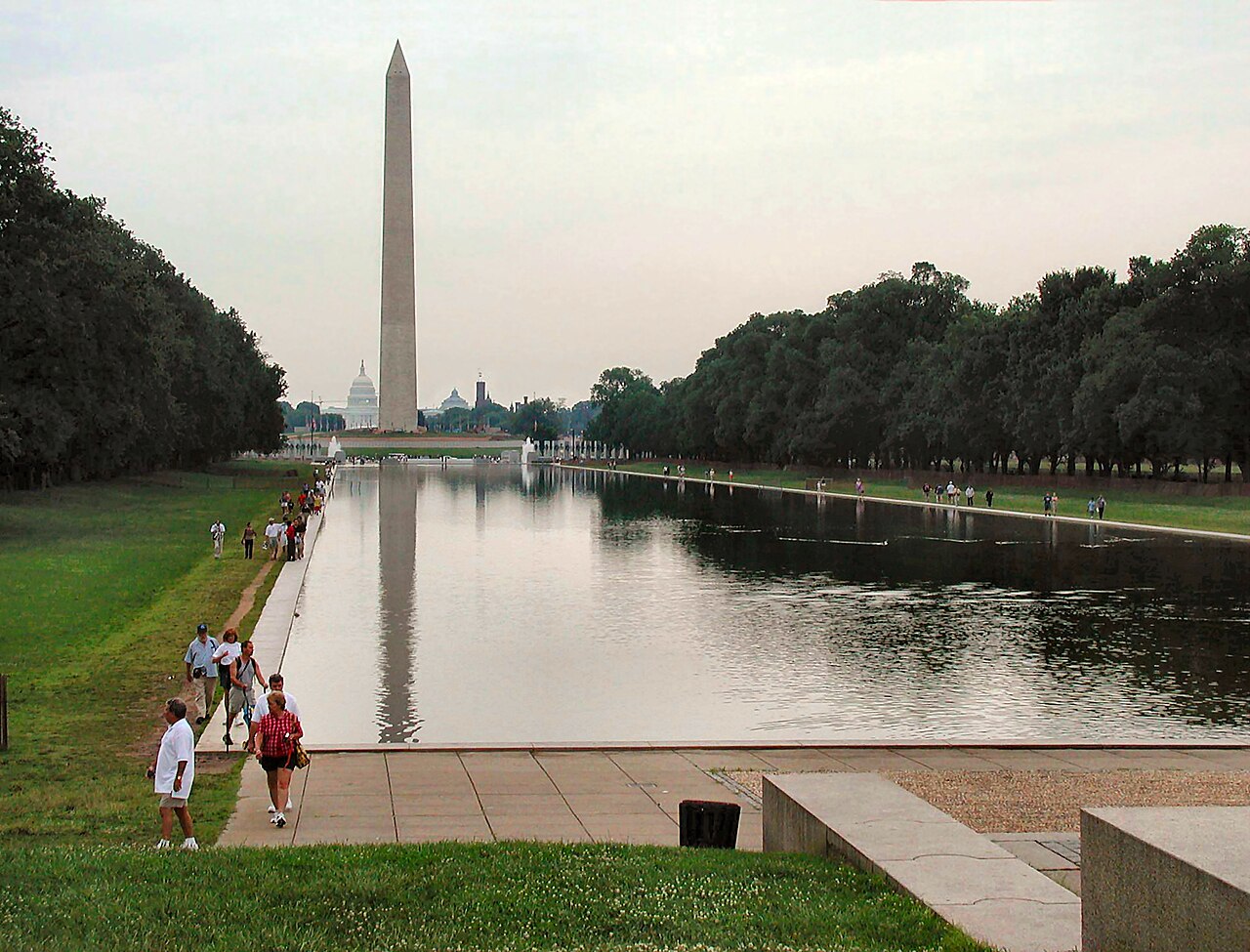
A few minutes west, the World War II Memorial honors the 16 million Americans who served, with pillars for every state and territory and a wall of 4,048 gold stars, one for every hundred Americans who died. Walk through it rather than just photographing it from the edge. Then follow the Reflecting Pool toward the Lincoln Memorial, which grows larger with every step. The shady elm-lined paths along either side are nicer than the open center in summer.
The Lincoln Memorial
Don’t rush this one. Climb the steps, stand before the 19-foot statue of Abraham Lincoln, and read the Gettysburg Address and his Second Inaugural carved into the walls. Look for the marker on the 18th step where Martin Luther King Jr. delivered “I Have a Dream” in 1963. Then turn around for one of the defining views in America: the Reflecting Pool, the Washington Monument and the Capitol lined up in the distance. The memorial is open 24 hours.
Korean War and Vietnam Veterans Memorials
Just southeast of Lincoln, the Korean War Veterans Memorial’s 19 stainless-steel soldiers seem to move through the brush, and they’re especially haunting in rain or low light. The newer Wall of Remembrance lists the names of more than 36,000 Americans killed in the war. On the other side of Lincoln, the black granite Vietnam Veterans Memorial carries the names of more than 58,000 Americans who died or went missing. Visitors often leave letters and flowers here. Take a quiet moment at both.
Afternoon: MLK, FDR and the Tidal Basin
Walk south to the Tidal Basin, about 15 minutes. The Martin Luther King Jr. Memorial features the “Stone of Hope” carved from a mountain of granite, facing across the water toward Jefferson. Next door, the Franklin Delano Roosevelt Memorial is bigger than most people expect, with four outdoor “rooms” of waterfalls, quotes and sculptures, one for each of his terms, including a statue of Eleanor Roosevelt.
Finish at the domed Thomas Jefferson Memorial across the basin if your legs allow. The shoreline along this stretch reopened in spring 2026 after a seawall rebuild, with new, wider walkways and hundreds of young replacement trees, including about 270 new cherry trees. Walking the whole Tidal Basin loop is about 2 miles.
Evening: The Monuments After Dark
After dinner, head back out. The memorials are lit up at night, crowds thin, and the Lincoln and Jefferson memorials in particular feel completely different. You don’t need to repeat the whole route. Pick one or two favorites. If your feet are done, a guided evening trolley or bus tour of the monuments is an easy way to see them without walking.
Day 2: U.S. Capitol, Library of Congress and the Smithsonian
Day 2 mixes American government with world-class museums. The challenge isn’t distance. It’s resisting the urge to visit six museums. Remember to schedule this day Tuesday through Saturday. Nearest Metro: Capitol South or Union Station. Capitol South has had construction work since August 2026, so check Metro alerts.
Morning: Tour the U.S. Capitol
Start at the Capitol Visitor Center, open Monday–Saturday, 8:30 a.m.–4:30 p.m. The free guided tour takes about an hour and includes a short film, the Crypt, the Rotunda under the great dome and National Statuary Hall. Reserve ahead. Same-day passes exist but are limited. Arrive 30–45 minutes early for security, and check the prohibited-items list (no food or liquids).
The standard tour doesn’t include the House and Senate galleries. To watch Congress in session, request gallery passes from your representative or senators. International visitors can ask at the House and Senate appointment desks in the Visitor Center.
Library of Congress and the Supreme Court
A tunnel from the Capitol Visitor Center leads straight into the Library of Congress Thomas Jefferson Building, so you can skip a second security line. Even non-library people are stunned by the Great Hall’s marble, mosaics and painted ceilings. Look down into the Main Reading Room from the overlook and see Thomas Jefferson’s reconstructed personal library. It’s free. Check the Library’s website for current hours and whether passes are needed.

Across the street, the Supreme Court building is usually open to visitors on weekdays, with exhibits, a short film and courtroom lectures on days the Court isn’t sitting. It’s a quick, worthwhile add-on if the timing works.
Afternoon: Pick Your Smithsonian Museum
Walk west along the Mall and choose one museum to explore properly, then maybe a second, shorter visit. Most Smithsonian museums are open 10 a.m.–5:30 p.m. and every one has security screening.
| Museum | Best For | Time Needed | Pass Needed? |
|---|---|---|---|
| National Air and Space Museum | Aviation, space, kids | 2–3 hours | Yes, free timed pass |
| National Museum of Natural History | Dinosaurs, the Hope Diamond, ocean hall, families | 2–3 hours | No |
| National Museum of American History | The Star-Spangled Banner, first ladies’ gowns, pop culture | 2–3 hours | No |
| National Museum of African American History and Culture | American history, deeply moving galleries | 3–4 hours | Yes, free timed pass |
| National Gallery of Art | Art lovers; the only Leonardo da Vinci painting in the Americas | 1.5–3 hours | No |
| National Museum of the American Indian | Native cultures, a great café | 1.5–2 hours | No |
National Air and Space Museum: its multi-year renovation is nearly done. Five more galleries opened on July 1, 2026, the museum’s 50th anniversary, and the final two are due in October 2026. You’ll see the 1903 Wright Flyer, the Spirit of St. Louis, a touchable moon rock and more. Everyone needs a free timed-entry pass, and one person can reserve up to nine.
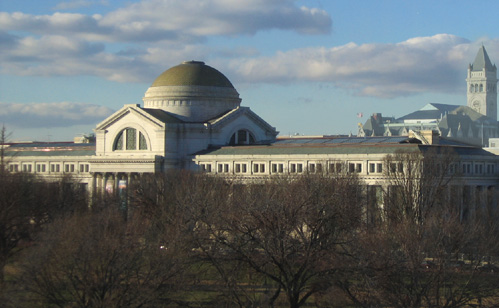
National Museum of Natural History: no pass needed, which makes it the easiest to fit in. Don’t miss the Hope Diamond and the fossil hall.
National Museum of African American History and Culture: give it several hours. The History Galleries alone take about two hours and around a mile of walking, starting deep underground and rising through time. If it’s a priority, make it your main museum for the day rather than squeezing it into a gap.
How Many Smithsonian Museums Can You See in a Day?
One or two is realistic. Spend two to four hours in the museum you care about most, then add a shorter second visit if you still have energy. You could technically dash through five museums for 30 minutes each, but you’d remember almost nothing, and after yesterday’s walk your feet will have opinions. For the full list, see our guide to free things to do in DC.
Late Afternoon: National Archives
History fans shouldn’t miss the National Archives Museum, where the original Declaration of Independence, Constitution and Bill of Rights are displayed in the dim Rotunda for the Charters of Freedom. It’s free and usually open until 5:30 p.m. Reservations are optional but help you skip the line in busy seasons.
Evening: Penn Quarter or Capitol Hill
After a big museum day, stay close. Penn Quarter and Chinatown are packed with restaurants and sit on several Metro lines. Or head back toward Capitol Hill for dinner along Barracks Row. On a weekend, Eastern Market’s food hall and outdoor stalls are fun during the day. Tonight is a good night to sit down, eat and add nothing else.
Day 3: Georgetown, Dupont Circle and Washington Beyond the Mall
By now you’ve seen the monumental, museum-heavy side of DC. Day 3 shows you the city where people live, shop and eat. For a first visit, Georgetown and Dupont Circle make an easy pair. If neighborhoods aren’t your thing, see the alternatives below.
Morning: Georgetown
Georgetown is older than the city of Washington itself, with Federal-style row houses, brick sidewalks, cobblestone lanes, boutiques and cafés. Georgetown has no Metro station. The closest is Foggy Bottom–GWU, about a 15–20 minute walk. The old DC Circulator buses that many guides still recommend stopped running at the end of 2024, so walk, take a Metrobus or grab a rideshare.
Get off M Street and wander the residential blocks north of it. Worth a stop: the Old Stone House, the oldest standing building in DC; the steep “Exorcist Steps”; Dumbarton Oaks’ gardens if you have time; and the Georgetown University campus.
The C&O Canal and Georgetown Waterfront
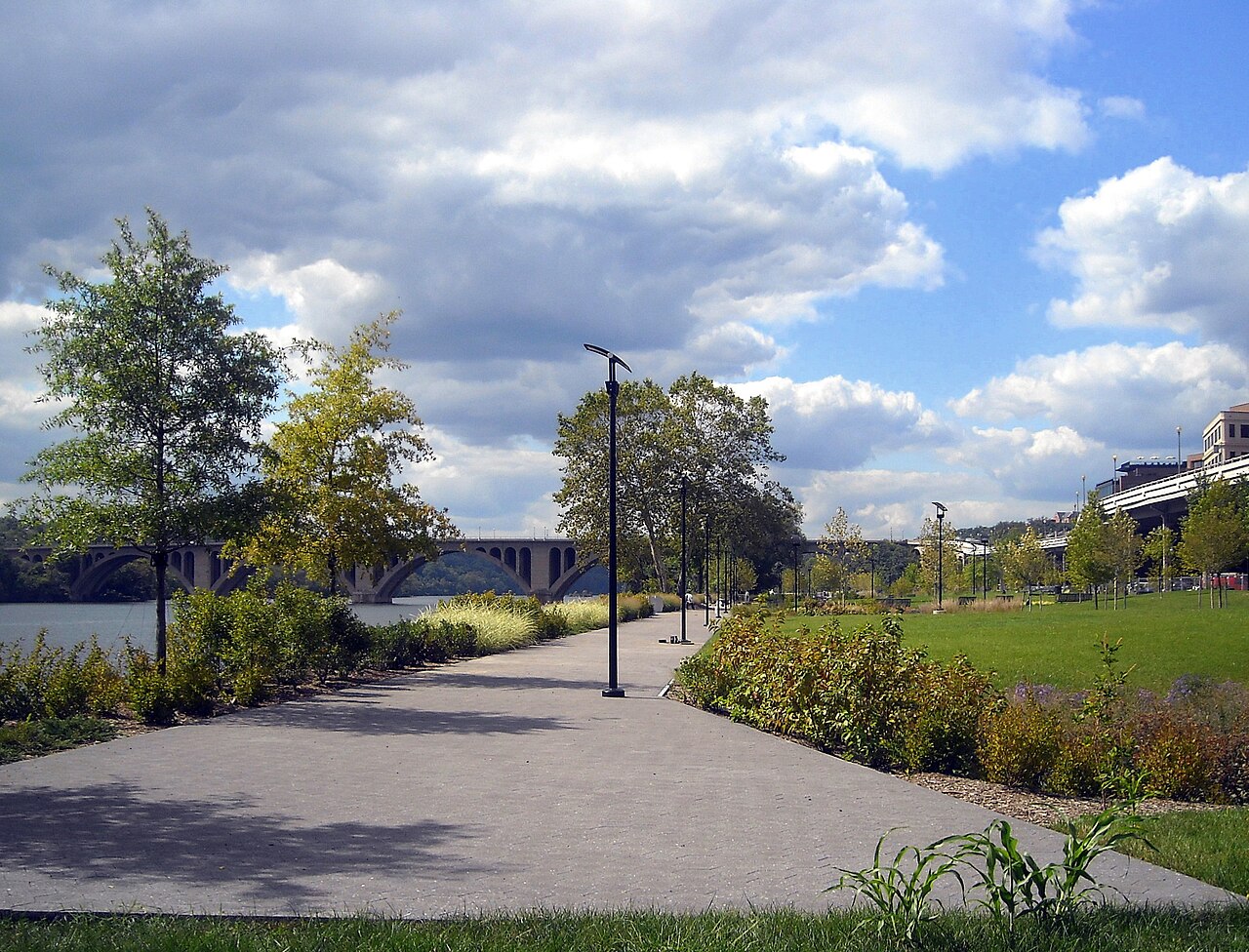
The Chesapeake and Ohio Canal runs right through Georgetown, and a short walk along the towpath past old locks and stone buildings is a peaceful break from the federal core. Then head down to Georgetown Waterfront Park on the Potomac for river views, the Kennedy Center downstream and a coffee or lunch outside. In warm weather you can rent a kayak or paddleboard here.
Afternoon: Dupont Circle and Embassy Row
From Georgetown it’s about a 20–25 minute walk or a short ride to Dupont Circle, a lively neighborhood of grand townhouses, bookstores and restaurants, with a fountain at its center and a Red Line Metro station. On Sunday mornings, the Dupont Circle farmers market is one of the best in town.
Art lovers should stop at The Phillips Collection, America’s first museum of modern art, known for Renoir’s Luncheon of the Boating Party and an intimate Rothko Room. It charges admission, unlike the Smithsonian. Then stroll northwest along Massachusetts Avenue, known as Embassy Row, past dozens of embassies in historic mansions, flags flying out front.
Evening: U Street, The Wharf or 14th Street
For your last night, try 14th Street or U Street for restaurants and live music, or The Wharf on the Southwest waterfront for river views and dinner by the water. Our guide to the best places to go out in Washington DC has more ideas.
Alternative Day 3: Arlington National Cemetery
If military history matters more to you than neighborhoods, spend the morning at Arlington National Cemetery, a short Metro ride away on the Blue Line (Arlington Cemetery station). See the Tomb of the Unknown Soldier and the Changing of the Guard, which happens every half hour from April to September and every hour from October to March. Also visit the John F. Kennedy gravesite and eternal flame, and Arlington House, with its view back over the city. The cemetery opens at 8 a.m. daily, until 7 p.m. in spring and summer and 5 p.m. the rest of the year. Allow 3–4 hours. It’s large and hilly, and a paid tram tour helps. Nearby, the Marine Corps War Memorial (Iwo Jima) and the Pentagon Memorial are easy add-ons.
Alternative Day 3: More Museums
Came for the museums? Spend Day 3 on the ones you missed: the National Gallery of Art, the National Portrait Gallery and Smithsonian American Art Museum (they share one building with a beautiful glass-roofed courtyard), the Hirshhorn’s modern art, the U.S. Holocaust Memorial Museum, or free Planet Word, a museum of language. Check entry rules one by one, since not every free museum works the same way.
Have a Fourth Day?
Take a half-day trip to George Washington’s Mount Vernon estate, or wander the historic brick streets of Old Town Alexandria, reachable by Metro, water taxi or bike along the Potomac. The Smithsonian’s National Zoo (free, with its giant pandas back in residence) and the huge Udvar-Hazy Center near Dulles Airport, home to the Space Shuttle Discovery, are other great choices.
The Whole Trip at a Glance
| Time | Day 1 | Day 2 | Day 3 |
|---|---|---|---|
| Morning | White House and Washington Monument | U.S. Capitol tour | Georgetown |
| Late morning | WWII Memorial and Reflecting Pool | Library of Congress and Supreme Court | C&O Canal and waterfront |
| Afternoon | Lincoln, Korean and Vietnam memorials | Main Smithsonian museum | Dupont Circle and Phillips Collection |
| Late afternoon | MLK, FDR and Jefferson memorials | National Archives or second museum | Embassy Row |
| Evening | Monuments at night | Penn Quarter or Capitol Hill dinner | 14th Street, U Street or The Wharf |
| Swap option | Washington Monument at your ticket time | NMAAHC as the main museum | Arlington Cemetery or more museums |
Where to Stay for 3 Days in Washington DC
For first-time visitors, Downtown or Penn Quarter is the most convenient base: walkable to the White House and National Mall and close to several Metro lines. Dupont Circle and Capitol Hill are great alternatives with more neighborhood feel.
| Neighborhood | Why Stay Here | Keep in Mind |
|---|---|---|
| Downtown / near the White House | Walk to the Mall and White House | Quiet at night on weekends |
| Penn Quarter / Chinatown | Museums, restaurants, several Metro lines | Busy on event nights |
| Capitol Hill | Near the Capitol and Library of Congress, historic streets | Fewer big hotels |
| Dupont Circle | Restaurants, local vibe, Red Line | Walk or Metro to the Mall |
| The Wharf / Navy Yard | Waterfront dining, newer hotels | A bit farther from the monuments |
| Georgetown | Charm and history | No Metro station |
| Arlington, VA (Rosslyn, Crystal City) | Often cheaper, on Metro | Commute into the city each day |
A hotel near a Metro station matters more than one right beside a monument. If you’re after something special, see our picks for the best luxury hotels in Washington DC.
Getting Around Washington DC Without a Car
You don’t need a car for this itinerary. Parking is scarce and expensive, and traffic is slow. Walking, Metro and the occasional rideshare work best.
- Metrorail: fares run about $2.25–$6.75 one way depending on distance and time. You can tap a contactless credit or debit card at the faregate, or use a SmarTrip card on your phone’s wallet. Unlimited-ride passes are also available.
- Metrobus: $2.25 per ride, useful for Georgetown. Routes were renamed in the 2025 bus network redesign, so use a current app rather than an old map.
- Capital Bikeshare and scooters: handy for hopping along the Mall, especially the e-bikes.
- Rideshare and taxis: worth it for Georgetown, late nights or tired feet.
- Walking: often faster than Metro for short hops. Many “nearby” stations are a 10–15 minute walk from the sights.
Arriving: From Reagan National (DCA), the Blue and Yellow lines reach downtown in about 15–20 minutes. From Dulles (IAD), the Silver Line runs into the city in about 50–60 minutes. From BWI, take a MARC or Amtrak train to Union Station. Amtrak travelers arrive at Union Station, a short walk from the Capitol.
How Much Walking Should You Expect?
A lot. Plan on about 5–6 miles on Day 1 and 3–5 miles on the other days, even using Metro. Museum floors add up faster than you’d think. Wear shoes you’ve already broken in. This isn’t the week to test new ones. Carry water, since shade is limited on the Mall, and know that benches and restrooms are clustered near the memorials and inside museums.
Best Time to Visit Washington DC
April–May and late September–October are the best times for a 3-day DC trip, with comfortable walking weather. Spring brings cherry blossoms and big crowds, while fall is milder and a bit quieter.
| Season | Weather | What to Know |
|---|---|---|
| Spring (March–May) | Mild, 55–75°F | Cherry blossoms (late March–early April), school groups, high hotel prices |
| Summer (June–August) | Hot and humid, often 85–95°F | Long days, Fourth of July crowds; use museums midday |
| Fall (September–November) | Pleasant, 55–75°F | Great walking weather, fall color, good hotel deals |
| Winter (December–February) | Cold, 30s–40s°F | Fewest crowds and lowest prices, holiday lights; museums make it easy |
Weekdays are quieter at monuments but busier at government buildings when Congress is in session. For a month-by-month breakdown, see our guide to the best time of year to visit Washington DC.
3 Days in DC During Cherry Blossom Season
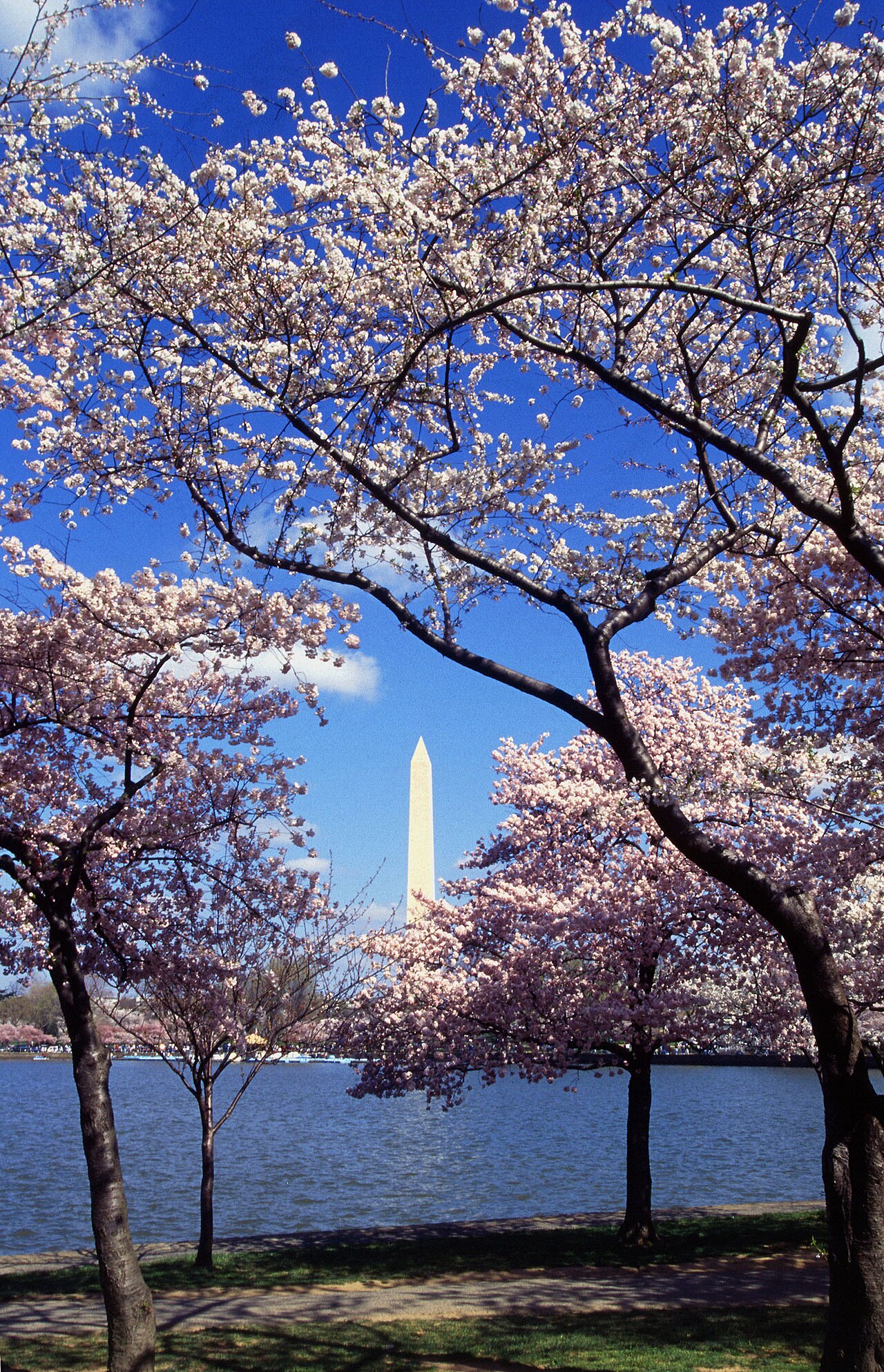
If you visit during the blossoms (peak bloom was March 26 in 2026), shift Day 1 to start at the Tidal Basin at sunrise before the crowds, then do the Mall afterward. Peak bloom moves every year, so follow the Park Service’s forecast instead of booking around an old date. Note that the Tidal Basin’s newly planted trees are still young, so some stretches will look sparser for a few years. East Potomac Park and the U.S. National Arboretum are quieter blossom spots.
Washington DC 3-Day Itinerary With Kids
The same plan works for families. Just cut a few memorials and add breaks. Kids usually love the Air and Space Museum, the dinosaurs and Hope Diamond at Natural History, the top of the Washington Monument, the Lincoln Memorial steps, and the free National Zoo. The carousel on the Mall and the Enid A. Haupt Garden are nice resets between museums. Avoid two big museums back to back, and remember that three good stops beat seven tired ones. Ask about Junior Ranger programs at the National Mall memorials.
Washington DC 3-Day Itinerary on a Budget
DC is one of the best-value cities in the U.S. for sightseeing, because nearly every headline attraction is free. Your main costs are accommodation, food and getting to the city. To save money, stay near a Metro stop rather than beside the Mall, visit in winter or midweek, eat lunch at museum cafés or food halls rather than beside the monuments, and carry a refillable water bottle. A rough daily budget for a mid-range traveler, before the hotel, is about $60–$120 for food and transit.
Where to Eat on This Itinerary
Don’t cross the city for a restaurant. Eat where you already are.
- Day 1: near the White House and Downtown for lunch, then Penn Quarter or The Wharf for dinner. The historic Old Ebbitt Grill is a classic near the White House.
- Day 2: the Capitol Visitor Center café, Union Station or Eastern Market for lunch; Barracks Row, Penn Quarter or Chinatown for dinner. The Mitsitam Café at the National Museum of the American Indian is a favorite museum lunch.
- Day 3: Georgetown’s M Street and waterfront, then Dupont Circle, 14th Street or U Street, home of the famous Ben’s Chili Bowl.
Washington DC Travel Tips for First-Time Visitors
- Book timed attractions first. Everything else fits around them.
- Arrive early for security. Government buildings and museums all screen visitors. Arrive 20–30 minutes before your timed entry, travel light, and leave pocketknives, aerosols and large bags at the hotel.
- Check days and hours. The Capitol is closed Sundays, and the Library of Congress is typically closed Sundays and Mondays.
- Carry water and sunscreen. The Mall has little shade, especially in summer.
- Use Metro for longer hops. Walk the short ones.
- Watch the news. Big events, protests, state visits and motorcades can close streets or parts of the Mall without much warning.
- Have a rainy-day plan. Swap outdoor memorials for museums and save the monuments for the next dry evening.
- Use normal city awareness. Keep an eye on belongings in crowds and on Metro, and use well-lit routes at night.
Tours and Passes Worth Considering
Since most sights are free, spend your money on the extras that save time or add context: a guided evening monuments tour by trolley or bus, a hop-on hop-off bus if walking is hard, a Potomac River cruise or water taxi to Alexandria, a Capital Bikeshare day pass, and an Arlington Cemetery tram tour.
Common Washington DC Itinerary Mistakes
- Trying to see every Smithsonian museum. There are too many. Pick your favorites.
- Underestimating the National Mall. It’s about 2 miles end to end, plus the Tidal Basin loop.
- Forgetting reservations. Several famous free sights still need tickets.
- Putting the Capitol on a Sunday. It’s closed.
- Driving everywhere. A car is usually more trouble than help downtown.
- Bouncing to Georgetown mid-day. It isn’t next to the Mall. Keep it for Day 3.
- Relying on old guides. The Circulator bus is gone, and some ticket rules and tour routes have changed.
- Skipping the monuments at night. They’re at their best after dark.
Is Washington DC Worth Visiting for 3 Days?
Yes. Few cities pack this many landmarks and world-class museums into such a walkable area, and nearly all of them are free. You can stand where Lincoln looks out over the Mall one morning, see the actual Constitution the next afternoon, tour the Capitol and finish on the brick streets of Georgetown. The key is accepting you won’t see everything. Your first three days should leave you wanting to come back, not exhausted from trying to finish the city.
Visiting in spring? Swap a museum for an early-morning walk around the Tidal Basin. Our Washington DC cherry blossoms guide shows how to fit peak bloom into these three days.
Things to Do in Washington DC That Didn’t Fit Into 3 Days
Three days covers the essentials, but there’s plenty more. Save these for a fourth day or your next trip:
- The National Zoo: free, with giant pandas back in residence.
- The Udvar-Hazy Center: the Space Shuttle Discovery and SR-71 Blackbird near Dulles Airport.
- Mount Vernon and Old Town Alexandria: George Washington’s home and a historic waterfront town.
- The U.S. Holocaust Memorial Museum: powerful and free, with timed passes in busy months.
- A Nationals game or a show at Ford’s Theatre: an easy evening out.
For the complete list, grouped by area, see our guide to the 30 best things to do in Washington DC.
Related Guides
Keep planning with these related guides:
- Best Hikes in Shenandoah National Park
- Janes Island State Park Guide
- Smith Island, Maryland
- Best Restaurants in Washington DC
- Things to Do in Georgetown Washington DC
- National Mall Guide
Washington DC 3-Day Itinerary FAQs
Is 3 days enough in Washington DC?
Yes. Three days covers the National Mall and major monuments, the Capitol, one or two Smithsonian museums and at least one neighborhood outside the federal core.
What should I see on my first trip to Washington DC?
Prioritize the Lincoln Memorial, Washington Monument, the White House exterior, the U.S. Capitol, the Library of Congress, the National Archives and one or two Smithsonian museums.
Do I need a car for 3 days in Washington DC?
No. Walking, Metro, buses and the occasional rideshare are easier and cheaper than driving and parking.
Are Smithsonian museums free?
Yes. The National Air and Space Museum and the National Museum of African American History and Culture need free timed-entry passes, while most others are walk-in.
Do I need tickets for the Washington Monument?
Only to go inside. Reserve on Recreation.gov 30 days ahead ($1 fee), try the day-before release, or line up for free same-day tickets at the Monument Lodge from 8:45 a.m.
Is the U.S. Capitol tour free?
Yes. It’s free, Monday–Saturday, and advance reservations are strongly recommended.
Can you tour the White House?
Sometimes. Tours have paused and resumed during construction since 2025. When available, U.S. citizens request them through their Member of Congress, and international visitors go through their embassy.
What’s the best area to stay in DC for first-time visitors?
Downtown and Penn Quarter are the most convenient. Dupont Circle and Capitol Hill are great for more neighborhood character.
How much walking will I do in Washington DC?
Expect about 5–6 miles on your National Mall day and 3–5 miles on other days.
What is the best month to visit Washington DC?
April, May, late September and October offer the best weather. Spring has cherry blossoms but bigger crowds.
What happens to DC attractions during a government shutdown?
Outdoor memorials on the Mall usually stay open, but federally funded sites like the Smithsonian, National Archives and National Zoo can close once their reserve funds run out. Private museums, restaurants and neighborhoods aren’t affected.
Can I see Washington DC on a budget?
Yes. Most major monuments, museums and government buildings are free, so your main costs are lodging and food.
Final Thoughts on Spending 3 Days in Washington DC
A good Washington DC 3 day itinerary isn’t about checking off every monument and museum. Day 1 gives you the city from the photographs: the White House, the Washington Monument, Lincoln gazing across the Reflecting Pool and the memorials ringing the Tidal Basin. Day 2 takes you inside the story, through the Capitol, the Library of Congress and the Smithsonian.
Then Day 3 changes the pace. Walk Georgetown’s brick sidewalks, follow the canal, sit by the Potomac and wander Dupont Circle, or spend those final hours in the museum that brought you here. Three days won’t finish Washington, but they’ll give you a great introduction and a reason to come back. For more ideas, browse all of our travel guides.