
A lot of Washington, DC feels like a checklist. See the White House. Walk the National Mall. Do a Smithsonian. Get the photo at the Lincoln Memorial. Georgetown is where you put the checklist away.
Here, a good day looks more like this: coffee on a brick sidewalk, a wander down the old C&O Canal, a detour up a hill of 18th-century row houses, a long lunch, and then sitting on the steps by the Potomac while the sun drops behind Key Bridge. Maybe live jazz after dinner. Georgetown was a busy tobacco port in 1751, decades before Washington even existed, and it still feels like its own little town.
This guide covers the best things to do in Georgetown Washington DC: the waterfront, canal, historic houses and gardens, hidden parks, shopping, food, nightlife, ideas for couples and families, how to get there without a Metro station, and easy half-day and full-day plans.
Georgetown Washington DC at a Glance
| Planning Detail | What to Know |
|---|---|
| Best for | Walking, food, shopping, history, couples, waterfront |
| Main streets | M Street NW and Wisconsin Avenue NW |
| Founded | 1751, as a Maryland port town |
| Time needed | Half a day to a full day |
| Metro station | None in Georgetown |
| Nearest Metro | Foggy Bottom-GWU, Rosslyn, or Dupont Circle for north Georgetown |
| Cost | Most of the best things are free |
| Best seasons | Spring and fall |
| Best time of day | Morning for quiet streets, late afternoon to sunset for the waterfront |
| Nightlife style | Restaurants, bars, jazz, waterfront drinks (not big clubs) |
| Heads-up | Hills, brick sidewalks and cobblestones; wear good shoes |
Is Georgetown Washington DC Worth Visiting?
Yes. Georgetown is worth visiting for its historic architecture, Potomac waterfront, C&O Canal, gardens, shopping and restaurants. It gives you a completely different side of Washington from the monuments and museums of the National Mall.
You don’t have to choose between the two. Spend part of your trip learning about the country in the museums and memorials, then come to Georgetown and simply enjoy the city. For most first-time visitors, half a day covers the highlights, while a full day gives you time for a historic house or garden, the waterfront and dinner without rushing.
What Are the Best Things to Do in Georgetown Washington DC?
The best things to do in Georgetown Washington DC are walking M Street and Wisconsin Avenue, relaxing at Georgetown Waterfront Park, strolling the C&O Canal towpath, exploring the historic residential streets, visiting Dumbarton Oaks and the Old Stone House, kayaking on the Potomac, and having dinner on the waterfront.
You won’t do all 25 ideas below in one visit, and you shouldn’t try. The best Georgetown days mix a little history, a lot of walking, good food and plenty of time by the water.
The Waterfront and the Canal
1. Relax at Georgetown Waterfront Park
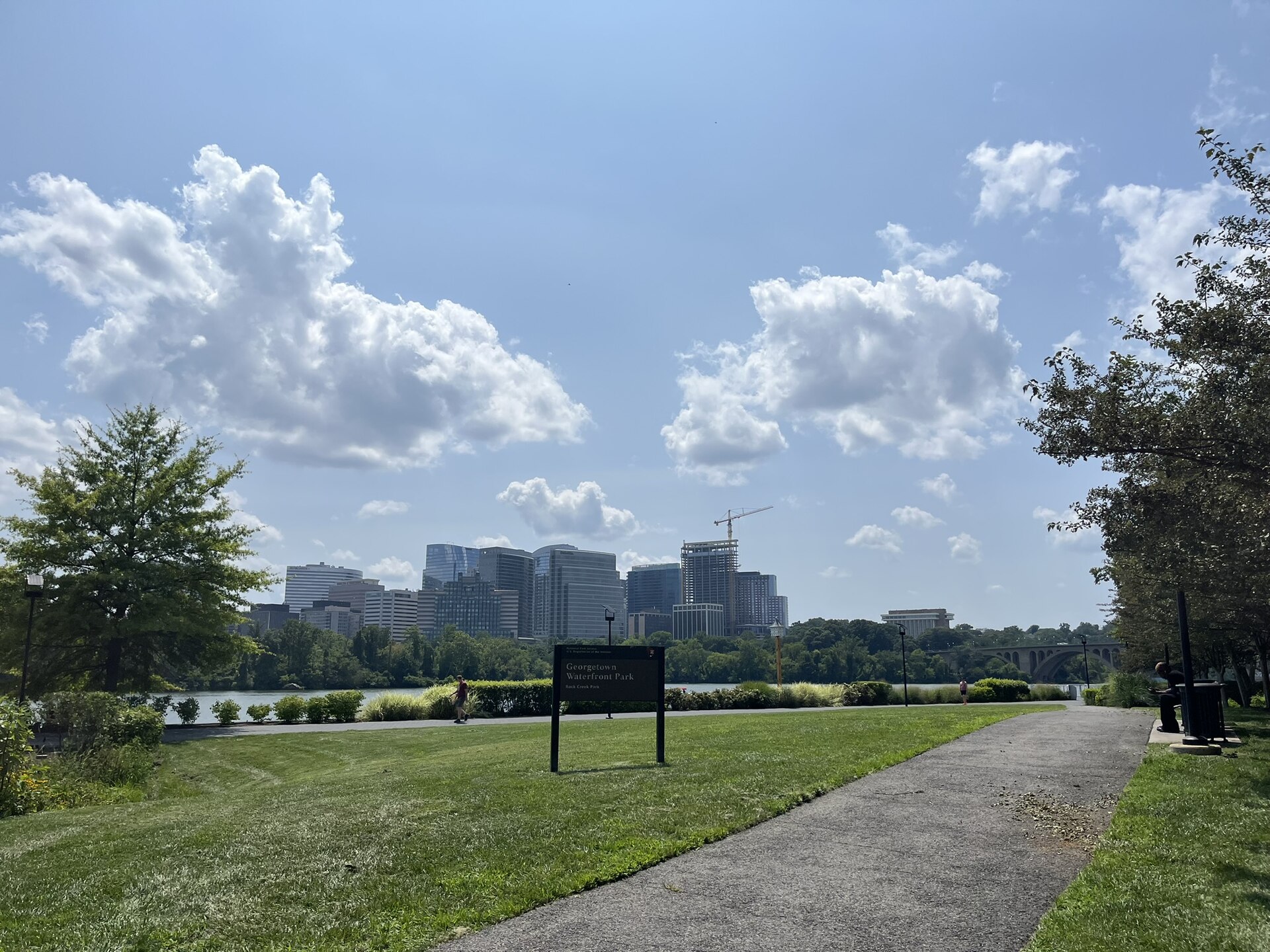
Head downhill from M Street and the traffic noise fades as the neighborhood opens onto the Potomac. Georgetown Waterfront Park runs along the river from 31st Street NW to Key Bridge, with wide paths, shady lawns, rain gardens, a stone labyrinth and wide steps leading down to the water.
You don’t really need a plan here. Walk, grab a bench, watch rowing crews and kayakers glide past, and look across the river to Theodore Roosevelt Island and the Virginia shore. The centerpiece is the big interactive fountain at the foot of Wisconsin Avenue, where kids splash around on summer days. The park is free, open year-round, and takes anywhere from 30 minutes to a lazy couple of hours.
2. Walk the C&O Canal Towpath
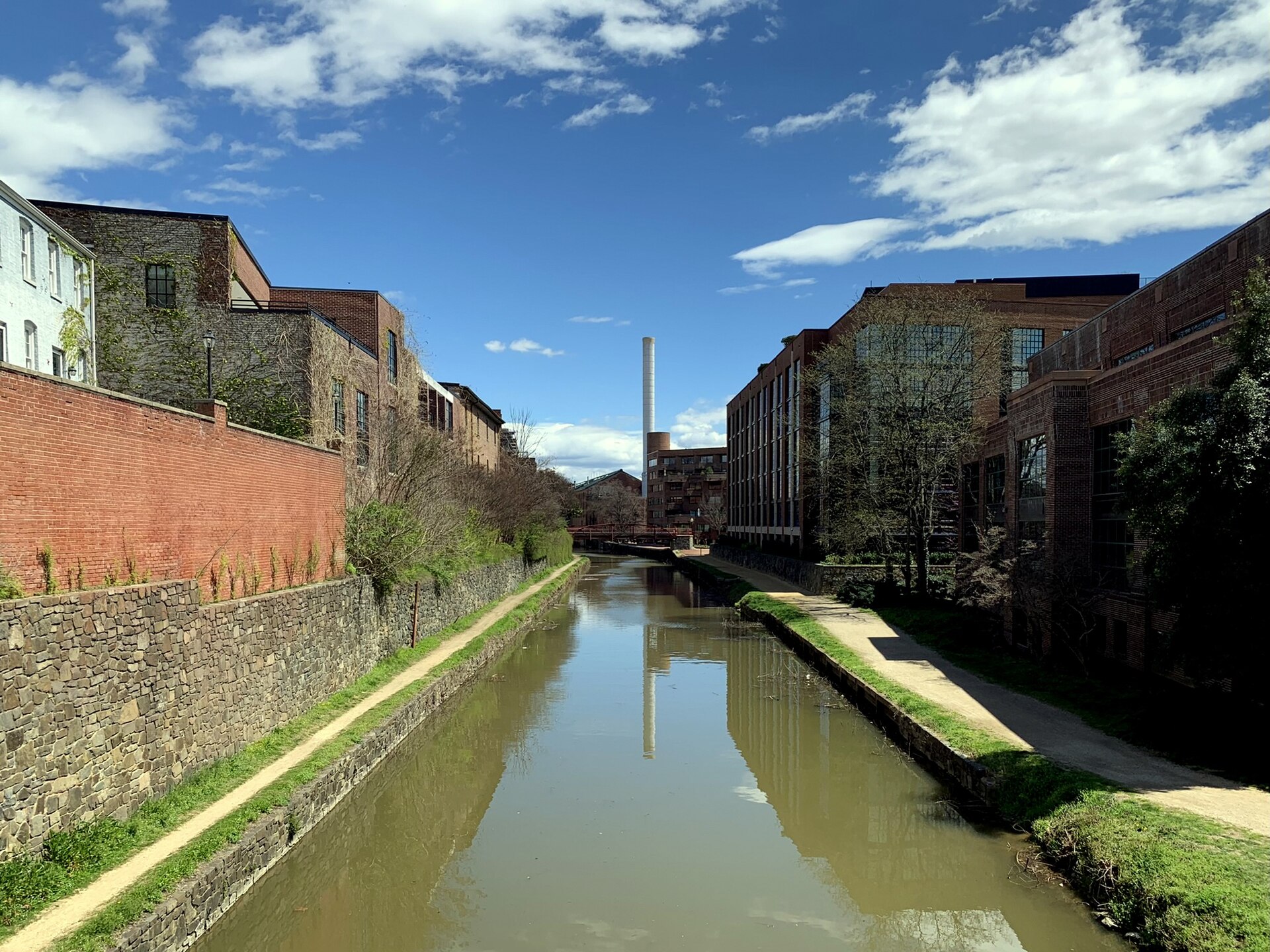
One block can completely change Georgetown. M Street is busy and commercial. Step down to the canal and things go quiet: still water, old brick warehouses, stone locks and the clip of runners on the towpath.
The Chesapeake & Ohio Canal starts in Georgetown and runs 184.5 miles to Cumberland, Maryland. It was built in the 1800s to carry coal, lumber and grain by mule-drawn boat, and today its towpath is a national historical park loved by walkers, runners and cyclists. You don’t need to go far. Even a half-mile stroll between Thomas Jefferson Street and Wisconsin Avenue shows you Georgetown’s industrial past. Look for Mile Marker 0 near the mouth of Rock Creek, where the whole 184-mile canal begins.
Can You Still Take a C&O Canal Boat Ride?
Don’t plan your Georgetown day around a canal boat ride. The mule-drawn replica boat rides have been paused while the National Park Service carries out restoration work on the Georgetown section of the canal, and Georgetown’s visitor organization expects boat rides to return in 2027. The towpath itself stays open for walking. Many older guides still recommend the boat, so check the current status with the C&O Canal park before you go.
3. Kayak or Paddleboard on the Potomac
Seeing Washington from the water is one of the best things you can do here, and it’s easy to arrange. From spring through fall, boathouses on the Georgetown waterfront rent kayaks, canoes and stand-up paddleboards. Thompson Boat Center, at the eastern end near Rock Creek, and Key Bridge Boathouse, just under Key Bridge, are the two main spots.
Paddle upriver for calm water and wooded banks, or downriver for views of the Kennedy Center and the Watergate. A short paddle across to Theodore Roosevelt Island is a favorite. Rentals are seasonal and weather-dependent, so check hours before you go, and go early on summer weekends when lines build.
4. Walk, Run or Bike the Trails
Georgetown sits where several of the region’s best trails meet. The C&O Canal Towpath heads northwest along the river toward Great Falls. The Capital Crescent Trail, a paved former railroad line, starts near the waterfront and runs up to Bethesda, Maryland, with lovely river views in its first few miles. And across Key Bridge, the Mount Vernon Trail follows the Virginia shore south past the monuments. Rent a Capital Bikeshare bike and even an hour on any of them is a great break from museum days.
5. Hop Over to Theodore Roosevelt Island
Walk across Key Bridge into Rosslyn and you can reach this 88-acre wooded island in the Potomac by footbridge. It’s a memorial to President Theodore Roosevelt, with an easy loop trail through forest and marsh boardwalks, and it feels a world away from the city. It’s a great add-on if you’ve kayaked past it and want to see it up close. Allow about an hour.
History, Houses and Gardens
6. Get Off M Street and Wander the Residential Streets
This is one of the easiest Georgetown experiences to overlook, and one of the best. Turn north off M Street and keep walking uphill. Within a block or two the shops disappear and you’re surrounded by brick sidewalks, Federal-style row houses, shady trees, tiny front gardens and old iron gates. Some of these homes date back to the 1700s.
You don’t need a fixed route. Wander the streets between N Street and R Street, roughly between 28th and 35th streets. N Street is especially lovely, and history fans can look for 3307 N Street, where John F. Kennedy lived as a senator before moving to the White House. This is where Georgetown stops feeling like an attraction and starts feeling like a real neighborhood. Please keep your voice down and stay off private steps; people live here.
7. Visit the Old Stone House
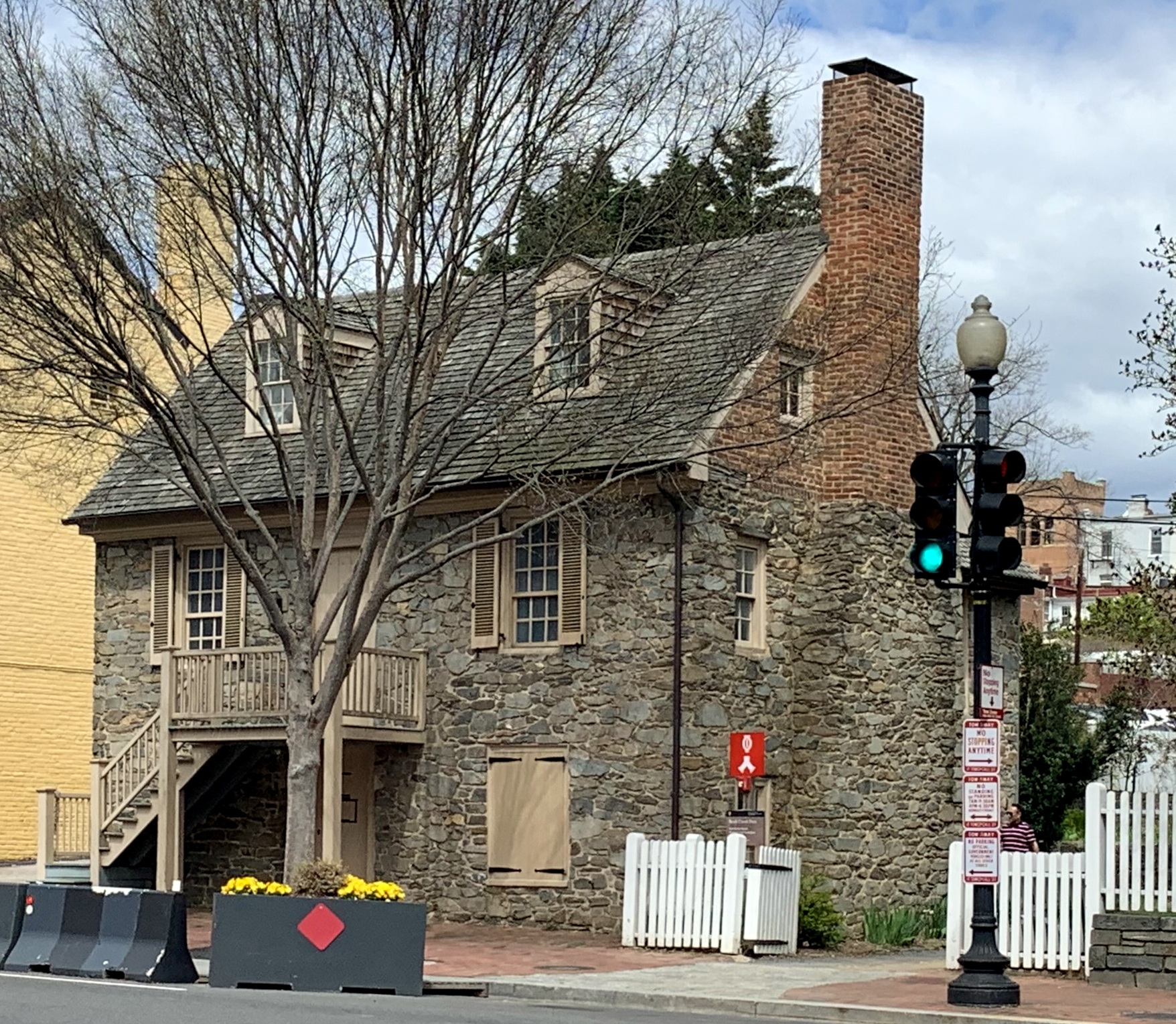
Right in the middle of M Street’s shops sits a small stone house from 1765, the oldest structure on its original foundation in Washington, DC. It survived the city’s growth partly thanks to a happy mix-up: locals believed for years that George Washington and Pierre L’Enfant had planned the capital there. They hadn’t, but the legend saved the house.
Today it’s a free National Park Service site. The garden out back, a hidden green oasis right off M Street, is open daily from sunrise to sunset. Inside, the old kitchen has exhibits on the house’s history and the front room is a small shop, though the upper floors have been closed to visitors. It’s a 15- to 30-minute stop that fits perfectly into a shopping walk.
8. Explore the Gardens and Museum at Dumbarton Oaks
If you want to slow the day right down, head up the hill to Dumbarton Oaks. Its ten acres of terraced gardens, designed by Beatrix Farrand with owner Mildred Bliss over nearly 30 years, are among the most beautiful in the country, with an orangery, rose garden, fountains, orchards and the famous pebble garden. The free museum holds a remarkable collection of Byzantine and Pre-Columbian art.
Know before you go: from March through October, garden entry needs a timed ticket bought online in advance, and no tickets are sold at the gate. In the winter season, the gardens are free with no ticket needed. The museum is always free but has shorter hours and is closed Mondays. There’s no visitor parking, so walk up from M Street or take the Metro to Dupont Circle and walk about 20 minutes west. In spring, the slope known as Cherry Hill fills with blossoms. If you’re visiting then, our guide to the Washington DC cherry blossoms has more ideas.
9. Tour Tudor Place
Completed in 1816, Tudor Place was home to six generations of Martha Washington’s descendants, and the house is still filled with their belongings, including pieces that came from Mount Vernon. The 5.5 acres of gardens are a calm, pretty place to walk. Entry to the house is by guided tour, with a fee. Since it’s just a few blocks from Dumbarton Oaks, combine the two into one relaxed morning.
10. Walk Through Dumbarton Oaks Park and Montrose Park
Here’s a local secret. Below the formal gardens of Dumbarton Oaks is Dumbarton Oaks Park, a free, wilder woodland garden also designed by Beatrix Farrand, with a stream, old stone bridges and meadows full of wildflowers in spring. You reach it by walking down Lovers’ Lane, a cobbled path between Dumbarton Oaks and Montrose Park, which has lawns, tennis courts and a playground. Together they’re one of the most peaceful walks in the city, and almost no tourists know about them.
11. Wander Oak Hill Cemetery
Next to Montrose Park, this 1849 garden cemetery tumbles down a steep, wooded hillside toward Rock Creek. Winding paths, old monuments and a small Gothic Revival chapel by James Renwick, who also designed the Smithsonian Castle, make it a beautiful, contemplative walk. Check the cemetery’s posted visiting hours before you go, and be respectful.
12. Climb the Exorcist Steps
Even people who’ve never seen The Exorcist end up here. The steep stone staircase connecting Prospect Street to M Street became famous as the scene of the 1973 horror film’s dramatic ending. There are 75 steps, and they were officially named a DC landmark in 2015. It’s a quick stop, not a big attraction: movie fans will love it, and everyone else gets a quirky photo and a good leg workout.
13. Stroll Georgetown University’s Campus
Founded in 1789, Georgetown University is the oldest Catholic and Jesuit university in the country. Its spired Healy Hall looks like it was lifted straight from an old European town, and the main lawn is a pleasant place to sit. You don’t need a formal tour. Instead, combine the campus with the Exorcist Steps and the western waterfront for an easy loop on the west side of the neighborhood.
14. Visit Dumbarton House
Not to be confused with Dumbarton Oaks, Dumbarton House on Q Street is a Federal-era home from around 1800 that now serves as a museum of early American life. It’s small, quiet and a good pick for history lovers who want something less busy than the bigger estates. Check the current hours before you visit.
Shopping in Georgetown
15. Shop and Stroll M Street
For most first-timers, M Street is where Georgetown begins. It’s busy, sometimes very busy, but it gives you an instant feel for the place: historic buildings with national brands, local boutiques, cafés and bakeries tucked inside. Together with Wisconsin Avenue, it’s one of the region’s biggest outdoor shopping areas.
The most important M Street tip? Don’t spend your whole visit on it. Georgetown gets much more interesting the moment you turn off the main road.
16. Browse Book Hill on Upper Wisconsin Avenue
If M Street is Georgetown’s busy center, Book Hill feels more local. Keep walking north up Wisconsin Avenue to the 1600 block and you’ll find independent boutiques, antique shops, art galleries and cafés, plus little Book Hill Park behind the Georgetown Library, with a view down over the rooftops. In spring, the area hosts the popular Georgetown French Market, a weekend street fair of local shops and food.
17. Explore Cady’s Alley and the Design District
Tucked between M Street and the canal, Cady’s Alley is a cobbled lane of converted 19th-century warehouses filled with design showrooms and high-end home stores. It’s the heart of the Georgetown Design District. Even if you’re not shopping for furniture, the architecture and quiet walkways make it a worthwhile five-minute detour.
18. Hunt for Treasures at the Georgetown Flea Market
On Sundays, the Georgetown Flea Market sets up on Wisconsin Avenue near the corner of S Street, with antiques, vintage clothes, jewelry, furniture and odd little finds. It’s been a local tradition for decades. Go in the morning for the best selection, and check its schedule first since it can change with the seasons and weather.
Food, Drink and Nightlife
19. Eat Your Way Through the Bakeries
Georgetown has a sweet tooth. Georgetown Cupcake is the famous one, thanks to its TV show, and the line can wrap down the block. Just a short walk away, Baked & Wired is the local favorite for cupcakes, cakes and serious coffee. There are plenty more bakeries, gelato spots and cafés around too. A simple rule: walk first, dessert later. It makes the line feel a lot more worth it.
20. Have a Drink With History at Martin’s Tavern
Open since 1933 on Wisconsin Avenue, Martin’s Tavern has served every president from Truman to George W. Bush. It’s famous for the wooden booth where John F. Kennedy is said to have proposed to Jacqueline Bouvier in 1953. Order comfort food, ask about the “proposal booth” and soak up the old-Washington atmosphere. Book ahead for weekend brunch.
21. Dine on the Waterfront
As afternoon turns to evening, head back down to the Potomac. Washington Harbour and the surrounding waterfront are lined with restaurants, many with outdoor seating in warm weather and views of Key Bridge and the river. You pay a little extra for the location, but if you only have one evening in Georgetown, eating beside the water beats picking whatever restaurant happens to be closest.
22. Catch Live Jazz at Blues Alley
Tucked down an actual alley off Wisconsin Avenue, Blues Alley has been one of the country’s best-known jazz supper clubs since 1965, with legends like Dizzy Gillespie and Sarah Vaughan on its stage over the years. It’s intimate and candlelit. Check the performance calendar and reserve ahead for a show you really want to see. Dinner followed by jazz is one of the best date nights in DC.
23. Go Out on M Street and Wisconsin Avenue
Georgetown isn’t DC’s big nightclub district, and that’s useful to know. Its nights are better suited to cocktails, pubs, wine bars, waterfront drinks and long dinners, with a lively student crowd on weekends. Start with dinner, walk M Street afterward and pick a bar, or book a show at Blues Alley. For a bigger, club-focused night, head to U Street or 14th Street. See our guide to the best places to go out in Washington DC for ideas.
Seasonal Things to Do in Georgetown
24. Skate at Washington Harbour in Winter
From late fall through early spring, the fountain plaza at Washington Harbour has traditionally turned into an outdoor ice rink with the Potomac right beside it. Skate rentals are available, and it’s a fun, festive way to spend an hour on a cold evening. Grab a hot chocolate afterward.
25. See Georgetown GLOW and the Seasonal Events
In the darker winter months, Georgetown GLOW fills the neighborhood with free outdoor light-art installations you can walk between in the evening. Other events through the year include the spring French Market on Book Hill, rowing regattas on the Potomac in spring and fall, and lively Halloween crowds. Check the Georgetown events calendar for your dates.
Free Things to Do in Georgetown Washington DC
You can spend a whole happy day in Georgetown without paying for a single attraction. Free options include:
- Georgetown Waterfront Park and its fountain
- The C&O Canal towpath
- The Old Stone House and its garden
- The Dumbarton Oaks museum (and the gardens in winter)
- Dumbarton Oaks Park, Montrose Park and Book Hill Park
- The historic residential streets and JFK’s old N Street home (from outside)
- The Exorcist Steps
- Georgetown University’s campus
- Theodore Roosevelt Island, across Key Bridge
- Georgetown GLOW in winter
- Sunset on the river steps
For more ideas across the city, see our list of free things to do in DC.
Things to Do in Georgetown for Couples
Georgetown might be the easiest neighborhood in Washington for a date, and you don’t need an elaborate plan. Start with a walk through the residential streets and the gardens at Dumbarton Oaks, then follow Lovers’ Lane down into Dumbarton Oaks Park. Stop for coffee on Wisconsin Avenue, wander the canal, and head to the river before sunset. Finish with a waterfront dinner, a drink in the “proposal booth” at Martin’s Tavern, or jazz at Blues Alley.
For more romantic ideas around the city, read our guide to Washington DC for couples.
Things to Do in Georgetown With Kids
Georgetown works surprisingly well for families, as long as you don’t build the day around historic houses. The waterfront gives kids space to run after museum days, and the big fountain is a summer hit, so pack a towel. Mix in the canal, a bike ride, the Montrose Park playground, kayaking for older kids, cupcakes as the reward, and simply watching the rowing crews and boats on the Potomac. The Exorcist Steps are a fun stair challenge for energetic kids (just skip the movie backstory with little ones). See our Washington DC with kids guide for more family plans.
How to Get to Georgetown Washington DC
There is no Metro station in Georgetown. The closest are Foggy Bottom-GWU, about a 15- to 20-minute walk to M Street, and Rosslyn in Virginia, a walk across Key Bridge. For the northern part of Georgetown, including Dumbarton Oaks, Dupont Circle station is just as handy.
| Option | Details |
|---|---|
| Foggy Bottom-GWU (Blue, Orange, Silver) | 15 to 20 minutes on foot to M Street and the waterfront |
| Rosslyn (Blue, Orange, Silver) | Walk across Key Bridge to the west end of M Street |
| Dupont Circle (Red) | About 20 minutes to Dumbarton Oaks and upper Georgetown |
| Metrobus | Several routes run along M Street and Wisconsin Avenue |
| Water taxi | Seasonal service links the Georgetown waterfront with The Wharf and Old Town Alexandria |
| Bike | Capital Bikeshare docks throughout the neighborhood |
| Car | Paid garages near M Street and the waterfront; street parking is tough |
One more heads-up: the DC Circulator bus, which many older guides recommend for reaching Georgetown, no longer runs. Plan on Metro plus a walk, a bus, or a rideshare instead.
Can You Walk From the National Mall to Georgetown?
Yes, especially from the western end. From the Lincoln Memorial it’s roughly 2 miles, or 40 to 45 minutes, to the Georgetown waterfront. The nicest route goes past the Kennedy Center and along the riverside path by Thompson Boat Center. From the museums farther east, take the Metro or a rideshare instead. Planning to do both on the same day? Our National Mall guide helps you finish your Mall day near Lincoln so Georgetown is an easy evening walk.
How Much Time Do You Need in Georgetown?
Allow at least half a day (3 to 5 hours) for M Street, the canal, the waterfront and a meal. A full day lets you add Dumbarton Oaks or Tudor Place, kayaking, the university and dinner without rushing. If you’re staying in Georgetown, you don’t need to cram it into one block of time; you can enjoy it a little each evening around your other plans.
Georgetown Itineraries
Half-Day Georgetown Itinerary
- Start on M Street: browse for 30 to 45 minutes.
- Old Stone House: a quick history stop and a peek at the garden.
- C&O Canal: walk a stretch of the towpath.
- Waterfront Park: head down to the Potomac.
- Lunch or coffee: take a proper break.
- Residential streets: finish wandering north toward N Street and Wisconsin Avenue.
One-Day Georgetown Itinerary
| Time | Plan |
|---|---|
| Morning | Coffee on Wisconsin Avenue, then the residential streets and N Street while they’re quiet |
| Late morning | Dumbarton Oaks gardens (ticket booked) or Tudor Place, then Lovers’ Lane and Dumbarton Oaks Park |
| Lunch | Book Hill or Martin’s Tavern |
| Early afternoon | Walk down Wisconsin Avenue to M Street; Old Stone House and Cady’s Alley |
| Mid-afternoon | C&O Canal towpath, then the Exorcist Steps and the university |
| Late afternoon | Kayak from the waterfront, or relax in Waterfront Park |
| Sunset | On the river steps |
| Evening | Waterfront dinner, then drinks or jazz at Blues Alley |
That’s plenty. Don’t turn a good neighborhood day into another Washington checklist. If you’re planning your whole trip, our Washington DC 3-day itinerary shows how Georgetown fits around the monuments.
Where to Eat in Georgetown Washington DC
Georgetown has well over 100 restaurants, so naming one “best” isn’t very useful. (For the city-wide picture, see our guide to the best restaurants in Washington DC.) Instead, pick by the kind of meal you want:
- For views: the waterfront at Washington Harbour.
- For history: Martin’s Tavern or one of the old pubs on M Street.
- For a romantic dinner: the quieter dining rooms on the side streets and around Book Hill, away from the busiest stretch of M Street.
- For something quick: the casual spots along M Street and near the canal.
- For brunch: Wisconsin Avenue and the waterfront, but book ahead on weekends.
- For dessert: the bakeries and gelato shops.
Where to Stay in Georgetown Washington DC
Georgetown is a lovely base if you care more about atmosphere and evenings than about having a Metro station outside your door. Hotels range from luxury riverfront properties to small boutique inns. The real advantage is what happens after sightseeing: you come back to a neighborhood where you can walk to dinner, browse shops or sit by the river, rather than a quiet business district.
The trade-off is transport. With no Metro station, daily trips to the Mall take a little longer. If your plans involve lots of Metro rides, staying near a station may suit you better. Compare neighborhoods in our guide to where to stay in Washington DC, or see the best luxury hotels in Washington DC, which include Georgetown options.
Best Time to Visit Georgetown
| Season | Why Go | Keep in Mind |
|---|---|---|
| Spring | Gardens in bloom, French Market, outdoor dining returns | Busy around cherry blossom season |
| Summer | Kayaking, fountain, long evenings by the river | Hot and humid; do shops and lunch midday |
| Fall | Best walking weather, autumn trees, regattas | Weekends get busy with students |
| Winter | Ice rink, GLOW, free Dumbarton Oaks gardens, fewer crowds | Cold, and boat rentals are closed |
Within any day, weekday mornings are the quietest for walking, and late afternoon into sunset is the waterfront’s best moment. For more detail, see our guides to the best time to visit Washington DC and Washington DC weather by month.
Practical Tips: Safety, Accessibility and Restrooms
- Safety: Georgetown is one of DC’s busiest and best-kept neighborhoods. Use normal city sense, keep an eye on bags on crowded M Street, and stick to lit streets late at night.
- Accessibility: the waterfront paths and much of M Street are fairly flat, but the residential streets are steep, with old brick and uneven sidewalks. Parts of the canal towpath are gravel.
- Restrooms: there are few public restrooms, so plan on cafés, restaurants and the shopping centers. Thompson Boat Center also has facilities.
- Flooding: the waterfront occasionally floods after heavy rain or very high tides, and Washington Harbour has flood gates. If the river is high, some paths may close.
Georgetown vs. the National Mall: Which Should You Visit?
On a first trip, the National Mall comes first for the monuments, memorials and Smithsonian museums. But that doesn’t make Georgetown optional if you have the time, because the two complement each other perfectly. The Mall is where you learn about the country. Georgetown is where you slow down, eat well and enjoy the city. With three or more days in Washington, make room for both.
Tours and Bookings Worth Considering
A few paid options can add a lot: a guided Georgetown history or ghost walking tour, a food tour through the neighborhood’s bakeries and restaurants, a kayak or paddleboard rental (or a guided paddle), a sightseeing cruise from the waterfront, and timed tickets for Dumbarton Oaks or a Tudor Place house tour. In peak season, book these a few days ahead.
Common Georgetown Mistakes to Avoid
- Staying only on M Street. You’ll miss most of what makes Georgetown special.
- Expecting a Metro station. There isn’t one, so plan the last stretch.
- Planning around a canal boat ride. Rides have been paused for restoration work.
- Showing up at Dumbarton Oaks without a ticket between March and October.
- Driving without a parking plan. Use a garage, or better, skip the car.
- Leaving before sunset. The waterfront is at its best in the evening.
- Wearing the wrong shoes. Hills and cobblestones are hard on bad footwear.
More Things to Do in Washington DC After Georgetown
Georgetown pairs naturally with the rest of the city. Dupont Circle and Embassy Row are about a 20-minute walk northeast, and the Lincoln Memorial and the National Mall are about 30 minutes on foot along the river. Across Key Bridge, Arlington National Cemetery and the Marine Corps War Memorial are a short ride away. For the full list of monuments, museums, neighborhoods and day trips, see our guide to the 30 best things to do in Washington DC.
Related Guides
Keep planning with these related guides:
FAQ: Things to Do in Georgetown Washington DC
What is Georgetown Washington DC known for?
Georgetown is known for its historic brick streets and row houses, M Street shopping, the Potomac waterfront, the C&O Canal, Georgetown University, Dumbarton Oaks and its restaurants. It was founded in 1751, decades before Washington, DC.
What are the best things to do in Georgetown Washington DC?
Walk M Street and the residential streets, relax at Georgetown Waterfront Park, stroll the C&O Canal, visit Dumbarton Oaks and the Old Stone House, kayak on the Potomac, and have dinner on the waterfront or see jazz at Blues Alley.
Is Georgetown worth visiting?
Yes. It offers a relaxed, historic, walkable side of Washington that’s very different from the monuments and museums, with great food, shopping and river views.
Does Georgetown have a Metro station?
No. The nearest stations are Foggy Bottom-GWU (15 to 20 minutes on foot), Rosslyn (across Key Bridge) and Dupont Circle for the northern part of Georgetown.
How much time should I spend in Georgetown?
At least half a day. A full day is better if you want to add Dumbarton Oaks, kayaking and dinner on the waterfront.
Is Georgetown walkable?
Very, but expect steep hills, brick sidewalks and some cobblestones, especially north of M Street. Comfortable shoes make a big difference.
Are there free things to do in Georgetown?
Yes. The waterfront park, canal towpath, Old Stone House, historic streets, Exorcist Steps, Georgetown University, Dumbarton Oaks museum and several small parks are all free.
Can you take a boat ride on the C&O Canal in Georgetown?
Not right now. Canal boat rides have been paused during restoration work and are expected back in 2027. You can still walk the towpath.
Do you need tickets for Dumbarton Oaks?
For the gardens from March through October, yes: buy timed tickets online in advance, as none are sold at the gate. The gardens are free in winter, and the museum is always free.
What can couples do in Georgetown?
Explore Dumbarton Oaks and Lovers’ Lane, walk the historic streets and canal, watch sunset on the river, have dinner on the waterfront and finish with jazz at Blues Alley.
Is Georgetown good at night?
Yes, for dinner, cocktails, pubs, live jazz and waterfront walks. It’s not a big nightclub area; for that, head to U Street or 14th Street.
Can you walk from Georgetown to the National Mall?
Yes. It’s about 2 miles, or 40 to 45 minutes, from the Georgetown waterfront to the Lincoln Memorial, passing the Kennedy Center along the river.
Georgetown Is Better When You Leave the Main Street
M Street will probably be the first Georgetown you see, and that’s fine. Walk it, browse the shops, get your bearings. Then turn off it.
Follow the canal. Climb up to the quiet streets and the gardens. Find a café. Head down to the Potomac and sit by the river as the light changes. That’s when Georgetown starts to make sense. The best things to do in Georgetown Washington DC aren’t really separate attractions. They’re the pieces of a neighborhood you connect together over a slow, happy day.