
For a couple of weeks every spring, Washington, DC softens. The marble memorials stay the same, but the trees around them burst into clouds of pale pink and white, petals drift across the water, and the whole city seems to slow down and look up.
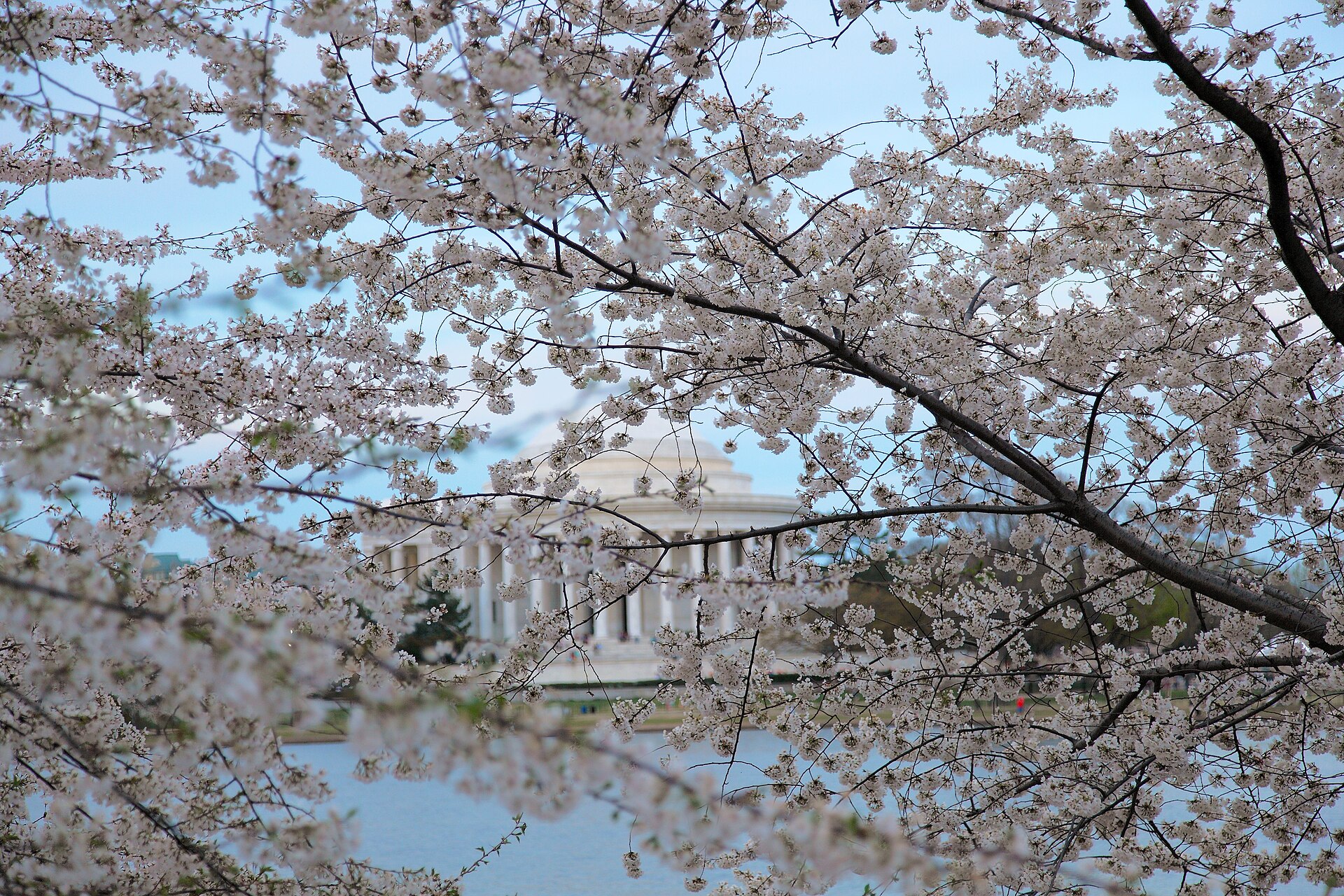
Most people come for one scene: Yoshino cherry trees arching over the Tidal Basin, with the Jefferson Memorial on one side and the Washington Monument rising behind. It really is that beautiful. It’s also very, very busy.
Seeing the Washington DC cherry blossoms at their best takes a bit of planning. Peak bloom moves every year, sunrise beats midday by a mile, driving is a headache, and the Tidal Basin isn’t the only place the trees put on a show. This guide walks you through all of it: when the blossoms bloom, what “peak bloom” really means, where to see them (including quieter spots locals use), how to get there, photo tips, festival dates and simple itineraries.
Washington DC Cherry Blossoms at a Glance
| Question | Quick Answer |
|---|---|
| Typical bloom period | Late March to early April |
| 2026 peak bloom | March 26 |
| 2027 festival dates | March 20 to April 11 |
| Most famous spot | Tidal Basin |
| Main tree variety | Yoshino (about 70% of the trees) |
| Number of cherry trees | Roughly 3,800 in the national park area |
| Peak bloom means | 70% of Tidal Basin Yoshino blossoms open |
| Cost | Free |
| Best time of day | Sunrise or early morning |
| Best way to get there | Metro, walking or bike |
| Later-blooming backup | Kwanzan cherries, about two weeks later |
| Quieter alternatives | Hains Point, National Arboretum, Stanton Park |
When Do the Cherry Blossoms Bloom in Washington DC?
Washington DC cherry blossoms usually reach peak bloom between the last week of March and the first week of April. The exact date changes every year and depends almost entirely on the weather in the weeks before.
That last part is the one people skip. A warm February can push the trees forward by a week or more. A cold snap in March can hold them back. Frost, heavy rain and wind can all change how the season plays out, which is why booking a flight for one specific day six months out is a gamble.
The National Park Service (NPS), which looks after the trees, says it’s very hard to predict peak bloom accurately more than about 10 days ahead. Its first forecast usually comes out in early March, and it gets more reliable as the buds develop.
When Was Peak Bloom in 2026?
The National Park Service declared peak bloom on March 26, 2026. In early March, it had forecast March 29 to April 1, so the trees arrived a few days early. In 2025, peak bloom came on March 28.
That small miss is a good lesson for anyone planning ahead: treat early forecasts as a planning window, not a promise.
How Much Does Peak Bloom Vary?
A lot. According to NPS records, the earliest peak bloom was March 15 (in 1990) and the latest was April 18 (in 1958). That’s more than a month of swing. In most years, though, the date lands somewhere around the turn of March into April.
Washington DC Cherry Blossoms 2027: What to Expect
Nobody knows the 2027 peak bloom date yet, and you should be wary of any site that claims to. The NPS will publish its forecast in early March 2027. What we do know is that the 2027 National Cherry Blossom Festival runs March 20 to April 11, so the bloom will almost certainly fall somewhere inside it.
If seeing peak bloom matters a lot to you, book refundable hotels and flexible flights for the last week of March and first week of April, then lock things in once the forecast firms up. For a broader look at spring timing, prices and crowds, see our guide to the best time to visit Washington DC.
What Does Peak Bloom Mean?
The National Park Service declares peak bloom when 70% of the Yoshino cherry blossoms around the Tidal Basin are open.
Peak bloom isn’t the end of the show. It’s more like the moment the show reaches full volume. The flowers don’t vanish the next morning; in cool, calm weather they can look great for several days, and the NPS says the display can last up to about 10 days in ideal conditions. A warm, windy or rainy week will shorten that quickly.
The 6 Stages of Bloom
The NPS tracks the Yoshino buds through six stages on its Bloom Watch. Knowing them helps you read the forecasts like a local:
| Stage | What You’ll See |
|---|---|
| 1. Green bud | Tiny hints of green on the buds |
| 2. Florets visible | Small flower clusters poke out of the buds |
| 3. Extension of florets | The clusters push further out |
| 4. Peduncle elongation | The little stems holding each flower stretch |
| 5. Puffy white | Buds swell and turn white, just before opening |
| 6. Peak bloom | 70% of the blossoms are open |
Once the trees hit “puffy white,” peak bloom is usually only a few days away. That stage is also underrated for photos. The trees already look full and pale, and the crowds haven’t fully arrived.
How Long Do Washington DC Cherry Blossoms Last?
There’s no fixed number, but you’ll usually get a good few days around peak bloom, and sometimes a week or more. Before peak, the trees build through puffy white and early bloom. After peak, petals start to fall, and the water fills with floating pink “snow,” which has its own charm.
So if you arrive a day or two after peak, you haven’t missed it. You’ll likely still see plenty of flowers. And if you’re later than that, the Kwanzan cherries (more on them below) give you a second chance.
The Story Behind DC’s Cherry Trees
The trees started as a gift. In 1912, the Mayor of Tokyo, Yukio Ozaki, sent 3,020 cherry trees to Washington as a symbol of friendship between Japan and the United States. On March 27, 1912, First Lady Helen Taft and Viscountess Chinda, the wife of the Japanese ambassador, planted the first two Yoshino trees on the north bank of the Tidal Basin. Those two trees are still standing near the John Paul Jones statue, close to the end of 17th Street.
It almost didn’t happen. An earlier shipment of about 2,000 trees arrived in 1910 infested with insects and disease, and it had to be destroyed. Japan simply tried again with healthier stock. The writer Eliza Scidmore had been pushing for Japanese cherry trees along the Potomac since the 1880s, so the idea was decades in the making.
The gift kept growing. Japan sent thousands more trees in 1965, and in 2026 it gave another 250 trees to mark America’s 250th anniversary. Cherry trees don’t live forever, so the NPS regularly propagates cuttings from the original 1912 trees to keep that genetic line alive.
What Happened to “Stumpy” and the Tidal Basin Seawall?
For years, parts of the Tidal Basin walkway flooded twice a day at high tide. The old seawall, built in the late 1800s and early 1900s, had sunk by more than five feet in places. In 2024, the NPS removed around 300 trees, including the famously scraggly fan favorite nicknamed Stumpy, to rebuild it. Cuttings from Stumpy are being grown on so its line continues.
The new seawall is higher, with a wider, more accessible walkway. In spring 2026, the NPS began planting 426 new trees, including 269 cherry trees, around the Tidal Basin and along the Potomac. The south side was kept closed through the 2026 festival so the young trees could settle in. Expect those new cherries to look small for a few years. The classic big, old canopy is mostly on the north and west sides of the basin for now. Check the NPS cherry blossom page before your visit for any remaining path closures.
Where Is the Best Place to See Cherry Blossoms in Washington DC?
The Tidal Basin is the best and most famous place to see Washington DC cherry blossoms. Thousands of Yoshino trees ring the water around the Jefferson, Martin Luther King Jr. and Franklin Delano Roosevelt memorials, with the Washington Monument in view. For fewer crowds, head to Hains Point in East Potomac Park or the U.S. National Arboretum.
Here’s how the main spots compare, then a closer look at each one.
| Location | Best For | Crowds | Cost |
|---|---|---|---|
| Tidal Basin | Classic views, first visit | Very high | Free |
| Hains Point / East Potomac Park | Cycling, walks, Kwanzans | Moderate | Free |
| U.S. National Arboretum | Variety, photos | Moderate | Free |
| Washington Monument grounds | Combining with sightseeing | High | Free |
| Stanton Park | Quick neighborhood stop | Low | Free |
| Anacostia Park | Space, few tourists | Low | Free |
| Kenilworth Aquatic Gardens | Ponds and nature | Low | Free |
| Congressional Cemetery | Quiet, historic setting | Low | Free |
| Dumbarton Oaks | Formal gardens | Moderate | Paid admission |
| Washington National Cathedral | Gothic architecture | Moderate | Grounds free |
| Kenwood (Bethesda, MD) | Tree-lined streets | High on weekends | Free |
1. The Tidal Basin
If it’s your first time, start here. The Tidal Basin sits in West Potomac Park, just south of the National Mall, and a paved loop of about 2 miles circles the water. Along the way you pass the Jefferson Memorial, the FDR Memorial, the MLK Memorial and the small George Mason Memorial, with the Washington Monument popping into view again and again.
What makes it special is the combination: blossoms, water and some of the most recognizable buildings in America, all in one frame. The trade-off is people. On a sunny peak-bloom weekend afternoon, the busiest stretches move at a shuffle.
A few things to look for while you walk:
- The first two trees from 1912, near the John Paul Jones statue at the end of 17th Street.
- The Japanese Stone Lantern, a 17th-century lantern gifted in 1954. It’s ceremonially lit during the festival.
- The Japanese Pagoda, a stone gift from the city of Yokohama in 1957.
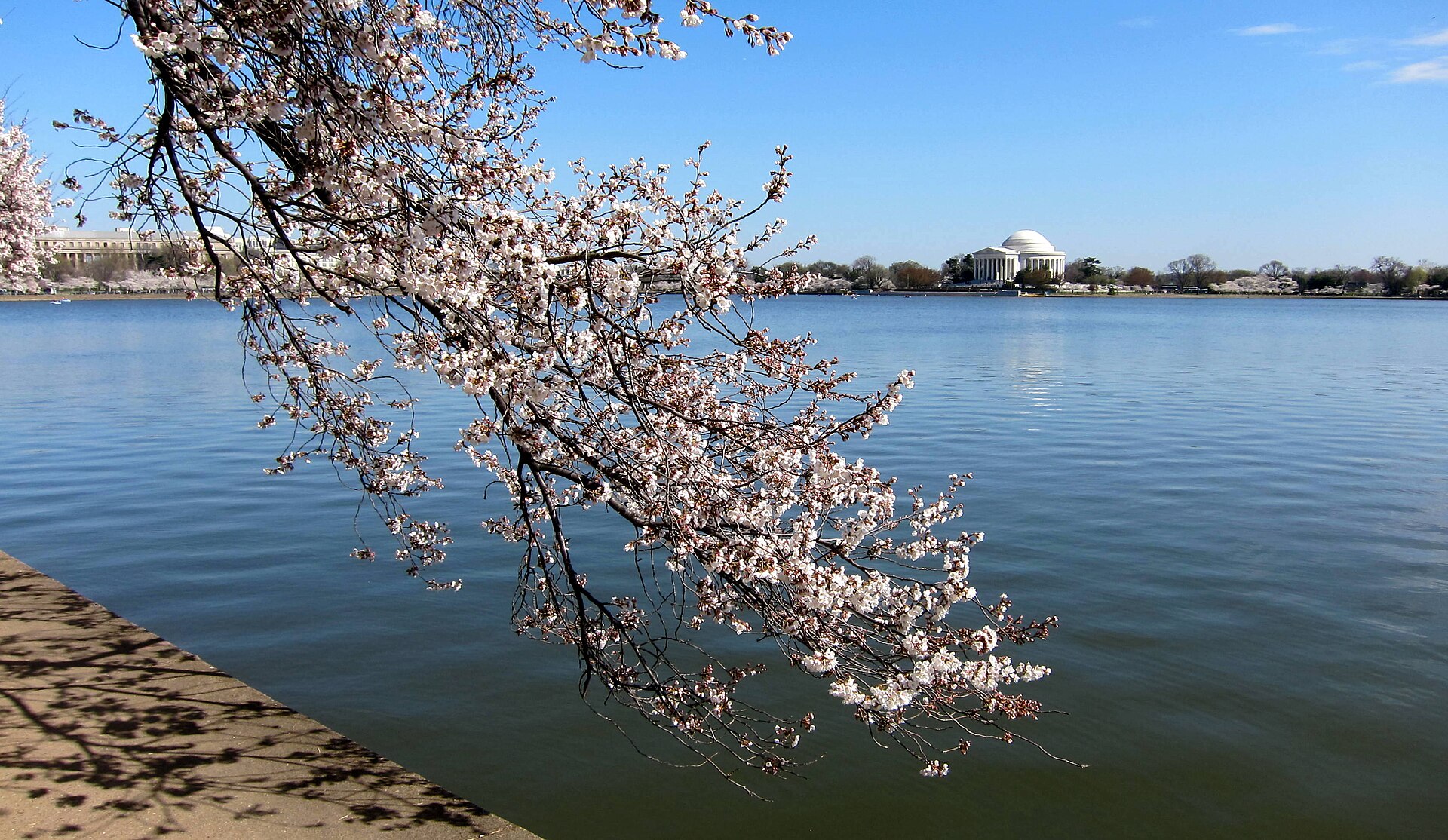
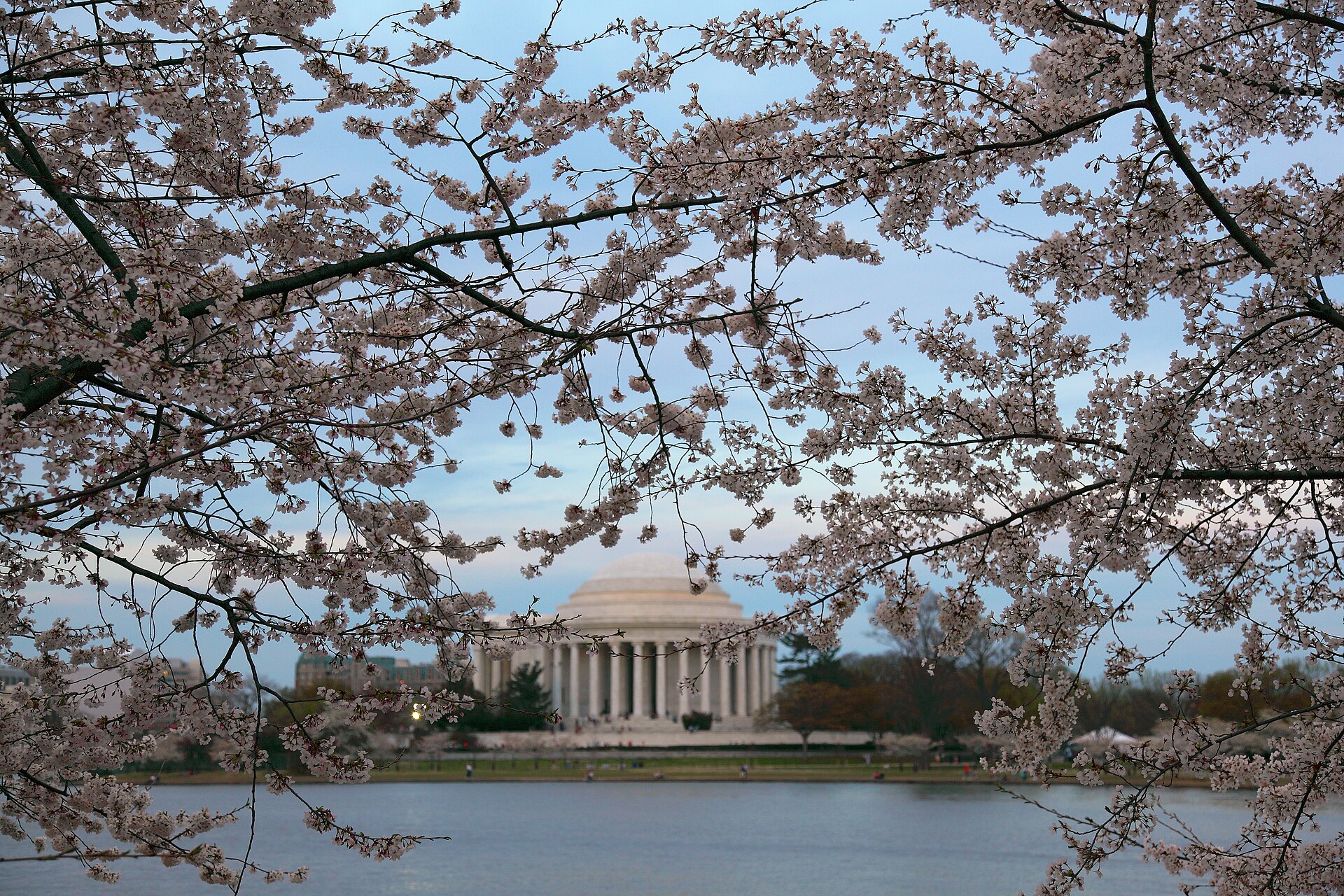
- The view of the Jefferson Memorial from across the water, the shot almost everyone came for.
Don’t stop at the first crowded viewpoint. Some of the nicest views show up when you keep moving and step slightly away from the obvious photo spots.
2. East Potomac Park and Hains Point
Keep walking south from the Tidal Basin and you reach East Potomac Park, a long peninsula between the Potomac River and the Washington Channel. The loop around Hains Point at its tip runs roughly 4 miles and is lined with cherry trees of several varieties, including the park’s biggest groves of Kwanzans.
It feels much more spread out than the Tidal Basin, which makes it great for cycling, longer walks, families who want room to roam and anyone who’d rather not fight for a photo spot. There’s also street parking along Ohio Drive, though it fills on peak weekends. Hains Point really shines a couple of weeks after the Yoshino peak, when the Kwanzans open.
3. U.S. National Arboretum
The National Arboretum in Northeast DC covers 446 acres and is one of the best alternatives to the Tidal Basin. It has many different cherry varieties spread across the grounds, so its bloom doesn’t line up exactly with the Tidal Basin. Some trees open earlier and some later. If you miss the Yoshino peak downtown, it’s worth checking what’s flowering here.
Don’t miss the National Capitol Columns, 22 sandstone columns that once stood on the U.S. Capitol. Blossoms in front of them make one of the prettiest photos in the city. Admission is free, and because the Arboretum is away from the Metro core, it’s one of the few blossom spots where driving actually makes sense.
4. The National Mall and Washington Monument Grounds
Smaller groups of cherry trees grow around the Washington Monument grounds and near the Lincoln Memorial. They’re not a substitute for the Tidal Basin, but they’re handy if you’re already sightseeing on the Mall. You can catch blossoms with the monument behind them without making a separate trip. Our National Mall guide shows how to fit the memorials and museums around your blossom walk.
5. Stanton Park
Stanton Park is a small square on Capitol Hill, roughly a 10-minute walk from Union Station. Cherry trees surround the statue of General Nathanael Greene in the middle. You won’t get the grand Tidal Basin scene, but you’ll get blossoms in a calm, leafy neighborhood without the crowds. Pair it with the U.S. Capitol, the Library of Congress and Eastern Market.
6. Anacostia Park
This big riverside park along the Anacostia River has flowering cherry trees and gets a fraction of the tourist traffic. It’s a good pick if you want open space and room to spread out a blanket. The Anacostia Metro station is the closest, with some walking from there.
7. Kenilworth Park and Aquatic Gardens
Tucked away in Northeast DC, this little-known national park mixes cherry blossoms with ponds, marsh boardwalks and birdlife. It’s peaceful in spring, and it’s a nice change of pace if you’re more nature lover than monument chaser. In summer, the same ponds fill with water lilies and lotus.
8. Congressional Cemetery
It might sound like an odd choice, but historic Congressional Cemetery near the Anacostia River has blossoming trees along its quiet paths. It’s calm and reflective, and you’ll see a different side of DC history among the old headstones. Please be respectful, as it’s still an active cemetery.
9. Dumbarton Oaks
The formal gardens at Dumbarton Oaks in Georgetown have a slope known as Cherry Hill that’s lovely in bloom. It’s a favorite with photographers and couples who prefer terraces and garden rooms to crowds. Unlike the Tidal Basin, the gardens have set hours and charge admission in season, so check the current schedule before you go. Then wander down into Georgetown for lunch.
10. Washington National Cathedral
The cathedral grounds, including the Bishop’s Garden, give you blossoms against Gothic stone instead of white marble. Bloom timing here depends on the variety and spot, so don’t assume it matches the Tidal Basin on the same day.
11. Kenwood, Maryland
Just over the line in Bethesda, the residential neighborhood of Kenwood has more than a thousand Yoshino trees planted along its streets. When they bloom, the roads turn into pink tunnels. It’s a real neighborhood, so be considerate: walk, keep the noise down and don’t block driveways. Parking is tight, and some streets close to traffic on peak weekends.
Yoshino vs Kwanzan: The Two Trees You’ll Hear About
DC has around a dozen cherry varieties, but two do most of the work. Yoshinos make up roughly 70% of the trees and create the famous pale, cloud-like Tidal Basin scene. Kwanzans are the second most common, at around 13%, and they bloom later with heavier, deeper pink double flowers.
| Feature | Yoshino | Kwanzan |
|---|---|---|
| Color | Pale pink to white | Deep pink |
| Flowers | Single, delicate clusters | Full, ruffled doubles |
| Where | Tidal Basin, Washington Monument | East Potomac Park, Hains Point |
| Timing | Earlier (sets peak bloom) | About two weeks later |
| Share of trees | About 70% | About 13% |
You’ll also spot early pink Akebono cherries mixed in with the Yoshinos, graceful weeping cherries, and a handful of autumn-flowering cherries that bloom a little in fall and again in spring.
What If You Miss Peak Bloom?
Don’t cancel the trip. First, check current conditions on the NPS Bloom Watch or the live BloomCam. There may still be plenty of blossoms on the trees for days after the official peak.
Second, go looking for Kwanzan cherries. They usually open about two weeks after the Yoshinos and can stretch Washington’s season well into April. The best places to find them are Hains Point and East Potomac Park, the area around the FDR and George Mason memorials, the National Arboretum and the Capitol grounds.
And if you’re early? Look for the Okame and Akebono cherries, which tend to bloom ahead of the Yoshinos, and enjoy the “puffy white” stage before the crowds.
Best Time of Day to See the Cherry Blossoms
Sunrise is the best time to see the Tidal Basin cherry blossoms. You get soft light, cooler air, a calmer atmosphere and a real chance of taking a photo without dozens of strangers in it. By late morning the crowds build, and peak-bloom weekend afternoons are the busiest of all.
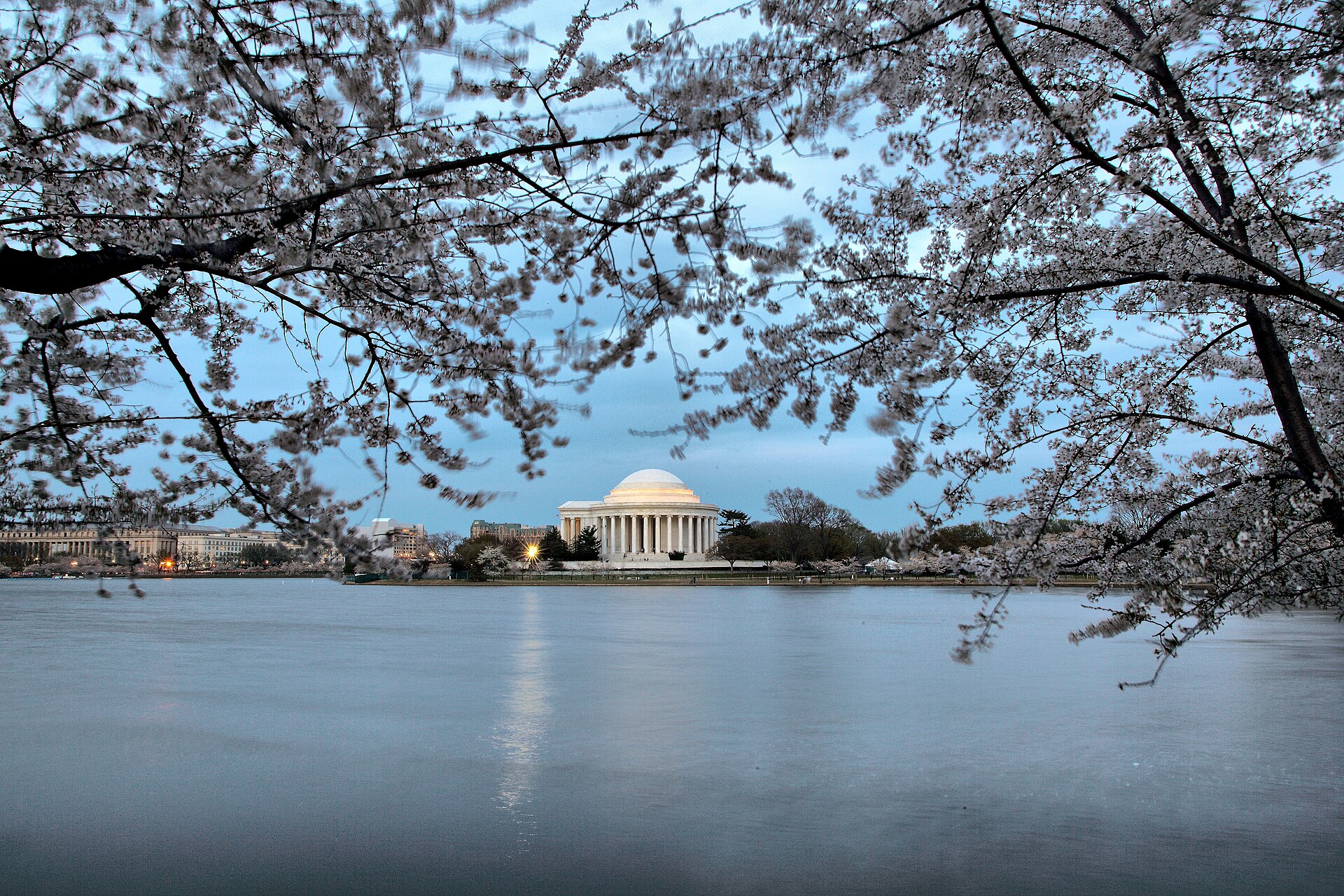
Sunset has its fans too: warm light on the Jefferson Memorial, then blue hour as the memorials light up. The catch is that everyone else likes sunset as well. If photos are your priority, set the alarm.
| Time | Crowds | Good For |
|---|---|---|
| Sunrise | Lowest | Photos, calm walks |
| Early morning (7 to 9 a.m.) | Building | Families, easy walking |
| Late morning to afternoon | Highest | Festival events |
| Sunset | High | Warm light, memorials |
| After dark | Moderate | Lit monuments |
Seeing the Cherry Blossoms at Night
The trees don’t go anywhere after dark, and the memorials are open 24 hours. Start near the Tidal Basin around sunset, watch the Jefferson Memorial light up across the water, then continue to the MLK, World War II and Lincoln memorials. You’ll lose some of the soft pink detail, but you’ll gain glowing marble and a completely different mood. For more evening ideas, see our list of things to do in Washington DC at night.
Best Places to Photograph Washington DC Cherry Blossoms
You don’t need a fancy camera. A phone does a great job, especially in soft morning light. These are the compositions that work best:
- Jefferson Memorial across the Tidal Basin: the classic. Put branches in the foreground and the dome across the water.
- Washington Monument through the branches: look for a gap in the canopy that frames the obelisk.
- MLK Memorial: the Stone of Hope with blossoms around it gives strong, simple shots.
- Hains Point: wide waterfront scenes and deep pink Kwanzans, with fewer people.
- National Arboretum: blossoms in front of the National Capitol Columns.
- Dumbarton Oaks and the National Cathedral: intimate garden and architecture shots.
Cherry Blossom Photography Tips
- Go early, when the light is soft and the paths are empty.
- Use branches as a natural frame and include a landmark so the photo says “Washington.”
- Shoot across the water, and look for reflections when the basin is calm.
- Mix it up: get close to a single flower, then step back for a wide scene. Try both portrait and landscape.
- On overcast days, white blossoms against a gray sky can look flat. Shoot blossoms against water or dark trunks instead.
- Leave the drone at home. Washington, DC is a no-drone zone, and that includes the Tidal Basin.
Most importantly, never climb the trees or pull branches toward your camera. These are living, historic trees, and broken limbs and trampled roots do real damage. The NPS also asks visitors not to pick blossoms and to stay off the exposed roots.
How to Get to the Tidal Basin Cherry Blossoms
The easiest way to reach the Tidal Basin is by Metro to Smithsonian station (Blue, Orange and Silver lines), then a walk of about 15 to 20 minutes. Parking near the basin is very limited during bloom season, and traffic around the Mall gets heavy, so driving is usually the slowest option.
By Metro
Smithsonian station is the classic choice. L’Enfant Plaza, served by five lines, is another good option and a similar walk. Expect packed trains on peak weekends, and allow extra time for the walk because the paths fill up. Check WMATA for weekend track work before you go.
By Bike
Capital Bikeshare stations sit around the Mall and Tidal Basin, and cycling is the best way to see Hains Point. Around the busiest parts of the Tidal Basin, though, you’ll need to dock or lock the bike and walk, because the path gets too crowded to ride safely.
On Foot
If you’re already on the National Mall, just walk. The Tidal Basin pairs naturally with the Washington Monument, the WWII Memorial and the Lincoln Memorial.
Should You Drive to the Cherry Blossoms?
Not to the Tidal Basin at peak bloom. Parking is scarce, and you’ll spend more time circling than looking at trees. A taxi or rideshare dropping you nearby is less stressful. Driving does make sense for the National Arboretum, Kenilworth Aquatic Gardens and other spots outside the downtown core.
How Long Does It Take to Walk Around the Tidal Basin?
The loop around the Tidal Basin is about 2 miles, but allow at least 90 minutes to two hours during cherry blossom season.
You won’t walk it in a straight line. You’ll stop for photos, wait for people to move out of your shot, step into the memorials, and sometimes just stand there looking. Photographers can easily spend longer, and if you want to explore the FDR and MLK memorials properly, add another hour.
Practical Visitor Info: Restrooms, Food, Accessibility and More
These are the small things that make a big difference on the day.
- Restrooms: there are public restrooms near the Jefferson Memorial and the FDR Memorial. Lines get long at peak times, so plan ahead.
- Food: options right at the basin are limited to snack kiosks and festival vendors. For a proper meal, head to The Wharf, Penn Quarter or L’Enfant Plaza.
- Accessibility: the main paths are paved and mostly flat, and the rebuilt seawall section has a wider walkway. Crowds are the biggest obstacle for wheelchairs and strollers, so early morning is easiest.
- Pedal boats: Tidal Basin pedal boats let you see the blossoms from the water. They’re seasonal, so check availability and expect lines on nice days.
- Picnics: you’re welcome to picnic on the grass, but keep blankets off the tree roots.
- Pets: leashed dogs are allowed, but the crowds can be overwhelming for them at peak.
- Ranger programs: NPS rangers often run walks and talks about the trees during bloom season. Check the schedule when you arrive.
The National Cherry Blossom Festival
The National Cherry Blossom Festival is Washington’s big spring celebration of the trees and the friendship between the U.S. and Japan. It runs for several weeks and goes far beyond flower viewing, with cultural performances, art, food, family activities and large public events.
The 2027 National Cherry Blossom Festival is scheduled for March 20 to April 11, 2027. Keep in mind that festival dates and peak bloom are two different things. The festival is planned months ahead; the trees bloom whenever the weather tells them to. Peak bloom could happen near the start, middle or end of the festival.
Popular Festival Events
The lineup changes from year to year, but these events usually anchor the festival:
- Opening Ceremony: Japanese and American performances to kick things off.
- Blossom Kite Festival: kites of every shape fill the sky over the Washington Monument grounds.
- Petalpalooza: a day of live music and activities, traditionally ending with fireworks over the water.
- National Cherry Blossom Festival Parade: giant balloons, floats and marching bands along Constitution Avenue.
- Sakura Matsuri Japanese Street Festival: one of the largest Japanese cultural festivals in the country, with food, music and pop culture.
- Japanese Stone Lantern Lighting: a quiet ceremony at the 1954 lantern by the Tidal Basin.
Some events are free, and some need tickets. Always check the official festival schedule for your year rather than relying on old dates.
Are the Washington DC Cherry Blossoms Free?
Yes. Seeing the cherry blossoms at the Tidal Basin, the National Mall, Hains Point, the National Arboretum and most public parks is completely free.
Things that can cost money include pedal boats, river cruises, guided tours, private photo sessions, garden admission at places like Dumbarton Oaks, some ticketed festival events and, of course, parking. You can still have a wonderful blossom day without spending a cent. For more ideas, see our list of free things to do in DC.
How to Avoid Cherry Blossom Crowds
You can’t escape crowds at the Tidal Basin during peak bloom, but you can make them a lot easier to handle:
- Go at sunrise. This is the single biggest difference you can make.
- Choose a weekday. They’re still busy, but weekends are on another level.
- Skip the middle of the day. Late morning to late afternoon is the hardest stretch.
- Keep walking. Crowds cluster at the obvious viewpoints, and quieter stretches are often just around the bend.
- Go beyond the Tidal Basin. Hains Point, the Arboretum and neighborhood parks have far more breathing room.
- Don’t drive. Traffic and parking add stress you don’t need.
Cherry Blossom Weather and What to Pack
Spring weather in DC swings fast. You might get a warm, sunny 70°F afternoon, a chilly rainy morning, or both in the same trip. Layers are your friend. Pack:
- Comfortable walking shoes
- A light jacket and an extra layer
- A compact umbrella
- Water and a snack
- Sunscreen
- A portable phone charger (you’ll take more photos than you think)
For temperatures and rainfall, check our Washington DC weather by month guide.
What Happens If It Rains?
Light rain isn’t a disaster. Wet petals, gray skies and reflections on the paths can actually make moody, beautiful photos, and the crowds thin out. Heavy rain and strong wind are a different story because they knock petals off the trees. If the forecast looks rough, go during the best window you’ve got rather than waiting for a perfect day that might not come. When it really pours, duck into a Smithsonian museum and head back out when it clears.
Cherry Blossoms for Families, Couples and Solo Travelers
With Kids
Cherry blossom season works well with kids, as long as you plan around the crowds. Strollers are fine on the Tidal Basin path, but peak-bloom crowds make it slow going, so go early. Bring snacks and water, and don’t try to squeeze the full loop, three museums and the Zoo into one day. Kids usually love the Blossom Kite Festival and the pedal boats. For a full family plan, see our guide to Washington DC with kids.
For Couples
Blossom season is made for slow, romantic days. Try a sunrise Tidal Basin walk followed by a long breakfast; Dumbarton Oaks, then Georgetown and a waterfront sunset; or the Tidal Basin at golden hour and the lit-up monuments after dark. More ideas are in our guide to Washington DC for couples.
Solo Travelers
Going alone is a great way to do sunrise properly, since there’s nobody to drag out of bed. Join a ranger walk for some company and stories, or rent a bike and loop Hains Point at your own pace.
Washington DC Cherry Blossom Itineraries
Half-Day Itinerary
- Sunrise: arrive at the Tidal Basin and walk toward the Jefferson Memorial, photographing as you go.
- Early morning: continue around the basin past the FDR and MLK memorials.
- Mid-morning: walk up to the Washington Monument grounds.
- Late morning: grab breakfast or an early lunch, then head into a Smithsonian museum as the crowds outside build.
One-Day Itinerary
- Sunrise: Tidal Basin.
- Morning: Jefferson Memorial, FDR Memorial, MLK Memorial.
- Late morning: Washington Monument grounds and the WWII Memorial.
- Lunch: near the Mall or at The Wharf.
- Afternoon: one Smithsonian museum, not three.
- Late afternoon: Georgetown, with Dumbarton Oaks if it’s open.
- Evening: dinner on the Georgetown waterfront, or back to the monuments after dark.
Two-Day Itinerary
If the blossoms are a big reason for your trip, split them across two different settings.
Day 1, Classic Washington: Tidal Basin at sunrise, the memorials, the National Mall, one Smithsonian museum, and the monuments at night.
Day 2, Beyond the Tidal Basin: either the National Arboretum or a bike loop around Hains Point and East Potomac Park, then the rest of the day in Georgetown or Capitol Hill, with a stop at Stanton Park.
That gives you different varieties, different scenery and a better chance of catching good bloom if the timing is a little off. If you’re staying longer, our Washington DC 3-day itinerary fits the blossoms around the city’s other highlights.
Where to Stay for the Cherry Blossoms
You don’t need a hotel right on the Tidal Basin. What matters most is a short walk or easy Metro ride to the Mall, especially if you’re planning a sunrise visit.
| Area | Why It Works |
|---|---|
| Downtown | Walkable to the Mall, good for first-timers |
| Penn Quarter | Great Metro access and plenty of restaurants |
| The Wharf / Southwest Waterfront | Closest neighborhood to the Tidal Basin, waterfront evenings |
| Foggy Bottom | Easy access to the west end of the Mall and Georgetown |
| Dupont Circle | Lively, good food, quick Metro ride |
Hotels fill up and prices rise during the festival, so book early and choose refundable rates if you can. For a full neighborhood breakdown, see where to stay in Washington DC, or treat yourself with one of the best luxury hotels in Washington DC.
Where to Eat Near the Cherry Blossoms
There isn’t much sit-down food right at the Tidal Basin, so plan your meals around it. The Wharf is the closest neighborhood with lots of choice and water views. L’Enfant Plaza and the area around the Smithsonian have quick, casual options. Penn Quarter and Chinatown are a short Metro ride away and full of restaurants. During the festival, many local restaurants run cherry blossom menus and pink cocktails, which are fun to look out for.
Tours, Cruises and Bookings Worth Considering
You don’t need a tour to enjoy the blossoms, but a few paid options can make the day easier or more memorable: a guided bike tour of the Tidal Basin and Hains Point, a cherry blossom river cruise on the Potomac, a trolley or hop-on hop-off tour if walking is hard for your group, or a professional photo session at sunrise. Book these early, because the good time slots disappear quickly in bloom season.
Common Cherry Blossom Mistakes to Avoid
- Locking in one exact peak date months ahead. Nobody knows it that far out.
- Arriving at noon on a peak weekend and expecting peaceful views.
- Driving to the Tidal Basin. Parking is a real headache.
- Only visiting the Tidal Basin. The trees are all over the city.
- Forgetting the Kwanzans. They can rescue a late trip.
- Touching, climbing or picking from the trees. Please don’t.
- Spending the whole visit chasing one photo. Take the shot, then put the phone away for a while. The real view is better.
Related Guides
Still putting your plans together? You might also find these useful:
- Best Things to Do in Washington DC
- Free Museums in Washington DC
- Best Restaurants in Washington DC
- Things to Do in Georgetown Washington DC
FAQ: Washington DC Cherry Blossoms
When do cherry blossoms bloom in Washington DC?
Peak bloom usually happens between the last week of March and the first week of April. The exact date depends on the weather and changes every year.
When was peak bloom in 2026?
The National Park Service declared peak bloom on March 26, 2026, a few days earlier than its forecast of March 29 to April 1.
When will the cherry blossoms bloom in 2027?
The 2027 peak bloom date won’t be forecast until early March 2027. Plan around the last week of March and first week of April, and follow the NPS Bloom Watch as your trip gets closer.
What is peak bloom?
Peak bloom is the day 70% of the Yoshino cherry blossoms around the Tidal Basin are open, as declared by the National Park Service.
Where is the best place to see cherry blossoms in DC?
The Tidal Basin is the classic spot, with blossoms around the Jefferson, FDR and MLK memorials. For fewer crowds, try Hains Point, the National Arboretum or Stanton Park.
How many cherry trees are in Washington DC?
There are roughly 3,800 cherry trees in the national park areas around the Tidal Basin, East Potomac Park and the Washington Monument grounds, plus many more in neighborhoods across the city.
How long do the cherry blossoms last?
Usually several days around peak bloom, and up to about 10 days in cool, calm weather. Wind, heavy rain or heat can shorten the season.
Are the cherry blossoms free to see?
Yes. Viewing the blossoms at the Tidal Basin, the National Mall, Hains Point, the National Arboretum and most public parks is free.
What is the best time of day to see the cherry blossoms?
Sunrise or early morning, for the softest light and the smallest crowds.
What should I do if I miss peak bloom?
Check current conditions first, since blossoms often stay for days after peak. Then look for the later-blooming Kwanzan cherries at Hains Point, East Potomac Park and the National Arboretum.
Can I drive to the Tidal Basin?
You can, but parking is very limited at peak bloom. Metro to Smithsonian or L’Enfant Plaza, walking or biking is much easier.
When is the 2027 National Cherry Blossom Festival?
The festival is scheduled for March 20 to April 11, 2027. Peak bloom will be forecast separately, closer to spring.
Don’t Chase One Perfect Day
The easiest mistake with the Washington DC cherry blossoms is getting fixated on hitting one exact date. Peak bloom matters, but it isn’t the whole experience.
Get to the Tidal Basin early. Walk slowly. Look at the Jefferson Memorial through the branches, and keep going instead of stopping at the first crowded viewpoint. Then go somewhere else: cycle Hains Point, look for different varieties at the National Arboretum, or pair Dumbarton Oaks with an afternoon in Georgetown.
And if your dates miss the Yoshino peak by a little, check on the Kwanzans before you decide you’ve missed the season. Spring in Washington gives you more than one chance to see the city in bloom.