
On a map, the National Mall looks simple. The Capitol sits at one end, the Lincoln Memorial at the other, the Washington Monument stands in the middle, and museums line up neatly along the sides. Easy, right?
Then you get there and start walking toward the Lincoln Memorial, and it just doesn’t seem to get any closer. That’s the first lesson almost every visitor learns: the National Mall is a lot bigger than it looks on a screen.
You can spend an hour here, snap a photo of the Washington Monument and move on. Or you can spend two full days in museums and memorials and still leave things unseen. This National Mall guide helps you land somewhere sensible in between. It covers the monuments and memorials worth your time, the best Smithsonian museums, what’s free and what needs a ticket, which Metro stop to use, how much walking to expect, where to eat, and realistic half-day, one-day and two-day plans. Just as important, it’ll help you decide what not to cram into the same day.
National Mall at a Glance
| Planning Detail | What to Know |
|---|---|
| Location | Central Washington, DC |
| Admission | Free |
| Outdoor memorials | Open 24 hours |
| Smithsonian museums | Free; most open 10 a.m. to 5:30 p.m. |
| Timed passes needed | Washington Monument, Air and Space Museum, African American History and Culture Museum |
| Length | About 2 miles from the Capitol to the Lincoln Memorial |
| Time needed | Half a day to 2+ days |
| Best way around | Metro plus walking |
| Best seasons | Spring and fall |
| Best time for memorials | Early morning or evening |
| Parking | Very limited |
| Best for | History, museums, families, photography |
What Is the National Mall?
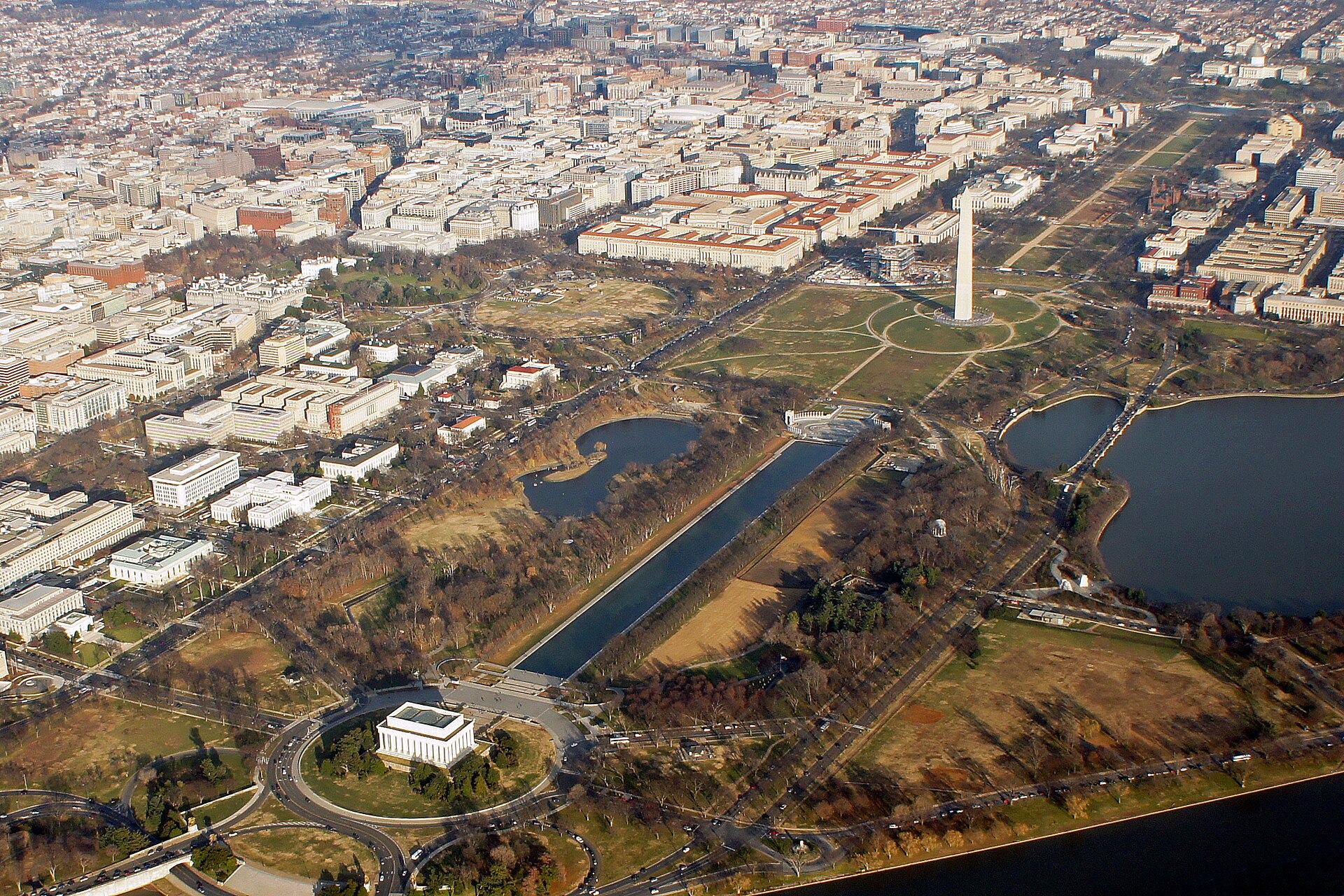
The National Mall is a long, open public park in the center of Washington, DC, lined with many of the country’s most famous monuments, memorials and museums. It runs roughly two miles from the U.S. Capitol in the east to the Lincoln Memorial in the west, and it’s managed by the National Park Service as part of National Mall and Memorial Parks, which covers more than 1,000 acres in total.
And no, it isn’t a shopping mall. There’s not a single store behind the Washington Monument. Think of it as America’s front yard: a giant lawn where people protest, picnic, play frisbee, watch fireworks and wander between world-class museums.
The Three Zones of the National Mall
Planning gets much easier once you picture the Mall in three parts, with the Washington Monument as your compass:
| Zone | Where | What’s There |
|---|---|---|
| East: the museum mile | Capitol to the Washington Monument | Most Smithsonian museums, National Gallery of Art, Botanic Garden, Capitol |
| West: the memorials | Washington Monument to the Lincoln Memorial | World War II, Vietnam, Korean War and Lincoln memorials, Reflecting Pool |
| South: the Tidal Basin | Below the Washington Monument | MLK, FDR and Jefferson memorials, cherry trees |
Museums mostly sit east, memorials mostly sit west and south. Keep that in your head and you’ll stop zigzagging across the grass all day.
Is the National Mall Free?
Yes. Visiting the National Mall and all of its outdoor monuments and memorials is free, and so are the Smithsonian museums and the National Gallery of Art. A few places need a free timed-entry pass, and the Washington Monument charges a $1 booking fee if you reserve online.
That makes it one of the best-value sightseeing days anywhere in the U.S. You can climb the Lincoln Memorial steps, walk the World War II Memorial, see the Hope Diamond and stand under a real space capsule without buying a single admission ticket. For more ways to save, see our full list of free things to do in DC.
What Are the Best Things to See on the National Mall?
The best things to see on the National Mall are the Lincoln Memorial, the Washington Monument, the World War II Memorial, the Vietnam Veterans Memorial and one or two Smithsonian museums, such as Natural History or Air and Space. If you have more time, add the Korean War, MLK, FDR and Jefferson memorials and the National Museum of African American History and Culture.
Here’s a quick first-timer shortlist:
- Lincoln Memorial
- Washington Monument
- World War II Memorial
- Vietnam Veterans Memorial
- Korean War Veterans Memorial
- National Museum of Natural History
- National Air and Space Museum
- National Museum of American History
- National Museum of African American History and Culture
- U.S. Capitol
- Martin Luther King, Jr. Memorial
- Thomas Jefferson Memorial
Please don’t try to do all twelve in one day. That’s the fastest way to turn a fascinating day into a sweaty race across Washington.
National Mall Monuments and Memorials
1. Lincoln Memorial
If you only see one thing on the Mall, make it this. Climb the steps and you’re face to face with the giant seated Abraham Lincoln, with the words of the Gettysburg Address and his Second Inaugural Address carved into the walls on either side.
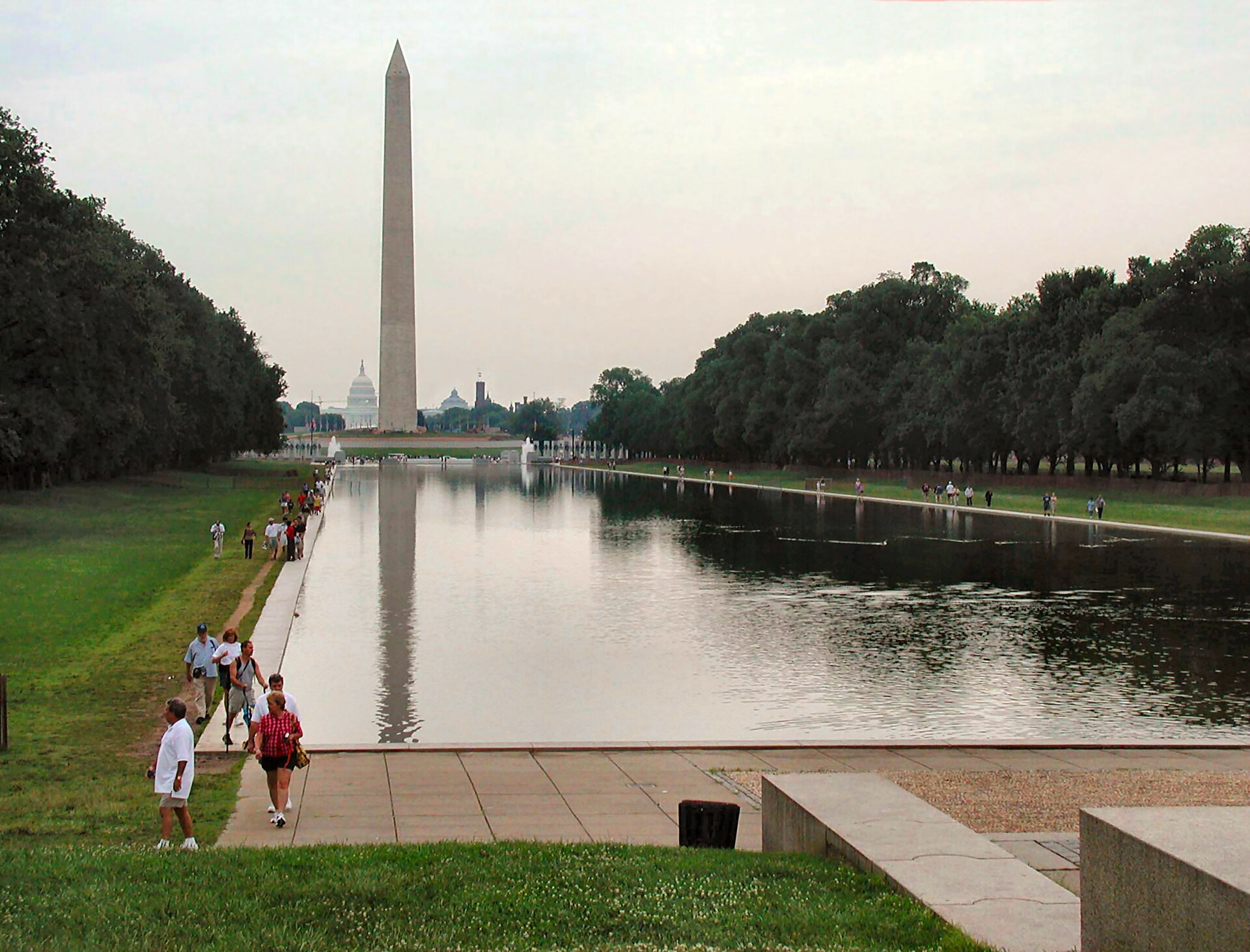
Then turn around. The view back down the Reflecting Pool to the Washington Monument, with the Capitol dome beyond, is one of the great views in America. Martin Luther King Jr. gave his “I Have a Dream” speech from these steps in 1963, and a marker on the landing shows exactly where he stood. Look for it on your way down. There’s also a small exhibit on the lower level that most people walk right past.
Best time: early morning for quiet, sunset for atmosphere, and after dark for the most memorable version of all.
2. Washington Monument
At 555 feet, the Washington Monument is your landmark for the whole day. If you get turned around, just look for it. Walking around the base is free and needs no reservation. Notice the slight change in the color of the marble about a third of the way up: construction stopped for years before and during the Civil War, and the later stone came from a different quarry.
Going up is a different story. An elevator takes you to an observation level at about 500 feet, with views across the whole city. Everyone aged 2 and up needs a timed ticket. You can get them two ways:
- Online: released on Recreation.gov 30 days ahead at 10 a.m., with a smaller batch released the day before. There’s a $1 non-refundable fee per ticket, and they often sell out the same day they’re released.
- Walk-up: free same-day tickets at the Washington Monument Lodge on 15th Street, first come, first served. The window usually opens around 8:45 a.m., and in busy seasons they go fast.
Interior hours are generally 9 a.m. to 5 p.m. The monument closes one day during the first week of every month for maintenance, plus July 4 and Christmas Day. There are no restrooms or water fountains inside, so use the ones at the Lodge first.
3. World War II Memorial
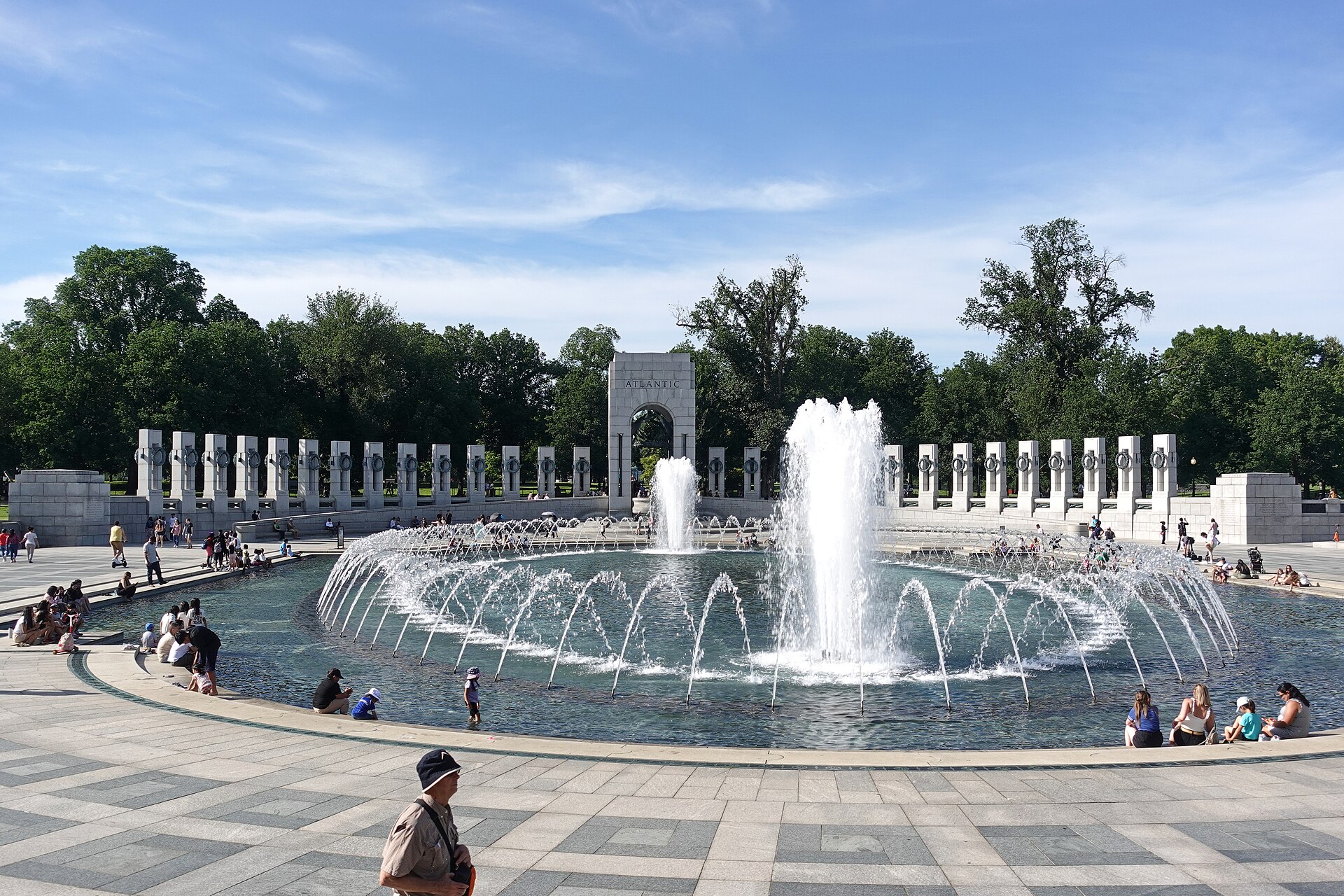
Walk west from the Washington Monument and you’ll reach the World War II Memorial at the eastern end of the Reflecting Pool. It honors the 16 million Americans who served and the more than 400,000 who died. Fifty-six granite pillars, one for each state and territory of the era, circle a large fountain, with Atlantic and Pacific arches on either side.
Don’t just photograph it from one side. Walk the full circle, find the pillar for your home state, and stop at the Freedom Wall, where 4,048 gold stars each represent about 100 Americans who died in the war. In 2026 the National Park Service began a modernization project here to upgrade the aging fountains, lighting and electrical systems, so you may find sections fenced off or the fountain switched off during your visit.
4. Vietnam Veterans Memorial
The mood changes completely here. A long black granite wall sinks into the ground, carrying the names of more than 58,000 Americans who died or went missing in the Vietnam War. As you walk along it, the wall rises above you and your own reflection appears among the names.
People come to find a specific name, make rubbings with paper and pencil, and leave flowers, letters and photos. Directory stands at each end help you locate a name, and volunteers are often on hand to help. Nearby are the Three Servicemen statue and the Vietnam Women’s Memorial. This isn’t a place to rush through just because your itinerary gives it eight minutes.
5. Korean War Veterans Memorial
Across the Reflecting Pool from Vietnam, 19 stainless-steel soldiers in rain ponchos move through a field of juniper, as if on patrol. Their reflections in the polished granite wall beside them make it look like there are many more. In 2022 a Wall of Remembrance was added, listing the names of more than 36,000 Americans who died in the war, along with Korean augmentees who served with U.S. forces.
It’s powerful in daylight and even more striking after dark, when the lighting makes the soldiers look almost alive.
6. Martin Luther King, Jr. Memorial
Head south toward the Tidal Basin and you’ll walk through a “Mountain of Despair” split in two, with Dr. King carved into the “Stone of Hope” beyond it. A wall of quotations from his speeches and writings curves around the site. The setting matters too: the Jefferson Memorial sits directly across the water.
7. Franklin Delano Roosevelt Memorial
Many people skip the FDR Memorial because you can’t see one big structure from across the Mall. That’s exactly what makes it special. It unfolds as four outdoor “rooms,” one for each of Roosevelt’s terms, with waterfalls, quotations and sculptures covering the Great Depression and World War II. Look for the breadline sculpture, the statue of Eleanor Roosevelt and Fala, FDR’s dog. It’s one of the most accessible memorials in the city and rewards a slow walk.
8. Thomas Jefferson Memorial
The domed Jefferson Memorial, with its 19-foot bronze statue inside, sits on the south side of the Tidal Basin. It’s one of the most photogenic spots in Washington, especially across the water at sunrise. It’s famous in spring, when the cherry trees bloom all around it, but it’s lovely year-round and usually much quieter than the memorials along the Reflecting Pool. If you’re visiting in late March or early April, read our guide to the Washington DC cherry blossoms before you go.
Smaller Memorials Worth a Detour
If you have time, look for the round, columned District of Columbia War Memorial, honoring DC residents who served in World War I, tucked in the trees near the Korean War Memorial. Constitution Gardens, with its small lake and an island memorial to the signers of the Declaration of Independence, is a peaceful break just north of the Reflecting Pool. Both are easy to miss and nearly always quiet.
Best Museums on the National Mall
Here’s where planning gets tricky. The monuments are only half the story. Some of the most visited museums in the world are sitting right next to you, and nearly all of them are free.
The big mistake is trying to do four or five in one day. You’ll end up skimming all of them and remembering none. Pick one or two that match your interests and give them real time. (For the full list, including museums away from the Mall, see our guide to the free museums in Washington DC.)
| Museum | Best For | Pass Needed? | Time to Allow |
|---|---|---|---|
| Natural History | Families, dinosaurs, Hope Diamond | No | 2 to 3 hours |
| Air and Space | Aviation, space, kids | Yes, free timed pass | 2 to 3 hours |
| American History | Pop culture, U.S. history | No | 2 hours |
| African American History and Culture | In-depth history and culture | Yes, free timed pass | 3+ hours |
| National Gallery of Art | Art lovers | No | 2 to 4 hours |
| American Indian | Native cultures | No | 1 to 2 hours |
| Hirshhorn | Modern and contemporary art | No | 1 to 2 hours |
| U.S. Holocaust Memorial Museum | History (ages 11+ recommended) | Free timed pass in peak season | 2 to 3 hours |
National Museum of Natural History
Dinosaurs, the Hope Diamond, a giant African elephant in the rotunda, mummies, a live insect zoo, an ocean hall with a life-size whale model. There’s a reason this is the go-to museum for first-time visitors and families. It’s broad enough that everyone in your group can wander off to something different and still find something they love. It’s open daily from 10 a.m. to 5:30 p.m. (closed December 25), admission is free, and you don’t need a pass. For families, it’s the easiest first pick.
National Air and Space Museum
The Wright brothers’ 1903 Flyer, the Spirit of St. Louis, the Apollo 11 command module and a moon rock you can touch. Even people who aren’t into aviation tend to love it. After a long renovation, the museum’s galleries have been reopening in stages, and there’s also a planetarium and IMAX theater (those can have separate tickets).
You’ll need a free timed-entry pass for the DC museum. Passes are released on a rolling schedule a couple of months ahead, and one person can reserve several for a group. Book as soon as your dates are set, especially for weekends and school holidays. Fun fact: the museum’s huge planes, including the space shuttle Discovery, are at its second site, the Udvar-Hazy Center near Dulles Airport.
National Museum of American History
After a morning of statues and marble, this museum brings history down to human scale. You’ll see the original Star-Spangled Banner, Dorothy’s ruby slippers, Julia Child’s kitchen and First Ladies’ gowns, along with exhibits on everyday life, technology, money and politics. It’s free, open 10 a.m. to 5:30 p.m., and needs no pass. It’s also home to the Molina Family Latino Gallery.
National Museum of African American History and Culture
This bronze-latticed building near the Washington Monument is one of the most moving museums in the country. Most visitors start at the bottom, in the history galleries, which trace slavery, Reconstruction, segregation and the civil rights movement, then rise into lighter floors on music, sports, the military and community life. Don’t squeeze it into a 45-minute gap. Plan at least three hours.
Admission is free, but timed-entry passes are typically required and popular times go quickly, so reserve ahead on the Smithsonian website. Its Sweet Home Café is one of the best places to eat on the Mall.
National Gallery of Art
Art changes the rhythm of a Mall day completely. The West Building has the only painting by Leonardo da Vinci in the Americas, plus Rembrandt, Vermeer, Monet and Van Gogh. The East Building focuses on modern art, and the Sculpture Garden next door is a lovely place to rest. The National Gallery isn’t part of the Smithsonian, but it’s free too. Art lovers can easily spend half a day here.
More Museums on and Around the Mall
- National Museum of the American Indian: a curving, honey-colored building near the Capitol focusing on Native cultures across the Americas.
- Hirshhorn Museum and Sculpture Garden: a round building full of modern and contemporary art, often with bold temporary shows.
- National Museum of Asian Art and National Museum of African Art: calmer, less crowded galleries on the south side of the Mall.
- U.S. Holocaust Memorial Museum: just off the Mall on 14th Street. Free, but timed passes are needed for the permanent exhibition in the busy spring and summer months. Recommended for ages 11 and up.
- National Archives: a short walk north on Constitution Avenue, home to the original Declaration of Independence, Constitution and Bill of Rights. Free, with optional reservations that let you skip the line.
- United States Botanic Garden: free, right at the foot of the Capitol, with a jungle room that’s a lifesaver on a cold or rainy day.
One heads-up: the red-brick Smithsonian Castle, the Institution’s original building, is closed for a multi-year renovation, so you can admire it from outside only. The Enid A. Haupt Garden behind it is a pretty shortcut, though parts may be affected by the work.
The U.S. Capitol and Library of Congress
At the east end of the Mall, the Capitol is free to tour through the Capitol Visitor Center. Book a guided tour in advance online, or ask your representative’s or senator’s office about a staff-led tour. Across the street, the Library of Congress’s Thomas Jefferson Building has one of the most beautiful interiors in Washington. It’s free too, but you’ll need a timed-entry pass.
Do You Need Tickets for the National Mall?
No. There’s no general ticket for the National Mall, and the outdoor memorials are open to everyone, any time. But a few individual attractions need free timed passes, so book those before your trip.
| Attraction | Ticket Required? | How to Get It |
|---|---|---|
| Outdoor memorials | No | Just show up |
| Washington Monument (inside) | Yes | Recreation.gov ($1 fee) or free same-day at the Lodge |
| Air and Space Museum | Yes, free | Smithsonian website, released months ahead |
| African American History and Culture | Yes, free | Smithsonian website |
| Holocaust Museum | Free pass in peak season | Museum website |
| U.S. Capitol tour | Yes, free | Capitol Visitor Center or your member of Congress |
| Library of Congress | Yes, free | Library of Congress website |
| Natural History, American History, National Gallery | No | Walk in |
Rules change from time to time, so double-check each official site a week or two before you go.
Museums vs. Monuments: How to Split Your Day
This is where most first-time plans go wrong. People bounce back and forth: museum, memorial, another museum, a mile-long walk, another memorial, back to a museum. It’s tiring and it wastes hours.
Instead, work with geography and opening hours. Do museums in the morning and early afternoon on the east side, then drift west to the Washington Monument and finish at the memorials in the late afternoon and evening. Museums close around 5:30 p.m. The outdoor memorials never do. Using the daylight for the indoor stuff and saving the memorials for golden hour is the single best trick for a great Mall day.
How Much Walking Is There on the National Mall?
A lot more than most visitors expect. The Mall is about 2 miles from the Capitol to the Lincoln Memorial, and the Tidal Basin loop adds roughly another 2. A full sightseeing day usually means 5 to 8 miles on your feet, once you count museum floors and walks to and from the Metro.
The tricky part is that everything looks close. You see the Lincoln Memorial, start walking toward it, and twenty minutes later it still looks about the same size. Wear your most comfortable shoes, not your most stylish ones, and build in a sit-down every couple of hours.
Can You Walk the Entire National Mall?
Yes, and walking is the best way to experience it. If you’re simply moving end to end without stopping, it takes about 45 minutes to an hour. But walking the Mall and actually seeing the Mall are two different things. Once you start going into museums, reading inscriptions, taking photos, stopping for food and circling the Tidal Basin, the same stretch easily fills a whole day, or two.
Getting To and Around the National Mall
The easiest way to explore the National Mall is Metro plus walking. Driving between attractions causes more trouble than it solves: parking is scarce and heavily restricted, traffic is slow, and once you’ve found a spot you’ll be walking anyway.
Which Metro Station Is Best for the National Mall?
There’s no single best station because the Mall is so long. Pick the one closest to where you want to start:
| Station | Lines | Closest To |
|---|---|---|
| Smithsonian | Blue, Orange, Silver | Center of the Mall, Washington Monument, most museums |
| Federal Triangle | Blue, Orange, Silver | Natural History, American History |
| Archives–Navy Memorial–Penn Quarter | Green, Yellow | National Archives, National Gallery |
| L’Enfant Plaza | Blue, Orange, Silver, Green, Yellow | Air and Space, south-side museums, Tidal Basin |
| Capitol South | Blue, Orange, Silver | U.S. Capitol, Library of Congress |
| Foggy Bottom–GWU | Blue, Orange, Silver | Lincoln Memorial area (about a 15-minute walk) |
A smart trick: enter at one station and leave from another. There’s no reason to walk all the way back to where you started. Start at Capitol South, for example, and finish near Foggy Bottom after sunset at Lincoln.
Other Ways to Get Around
- Capital Bikeshare and e-scooters: docks and scooters are all around the Mall and great for hopping between the far ends.
- Hop-on, hop-off and trolley tours: a good option if walking long distances is hard for someone in your group.
- Metrobus: fills some gaps. Note that the old DC Circulator, including its National Mall route, no longer runs, so ignore older guides that recommend it.
- Rideshare and taxis: handy for getting to Lincoln or the Jefferson Memorial when your legs are done.
Where Should You Start at the National Mall?
For a full first-time day, start at the eastern end near the Capitol or the museums and work your way west, finishing at the Lincoln Memorial around sunset. That way you visit the museums while they’re open and reach the memorials as the light gets beautiful.
A practical flow looks like this: Capitol area → Smithsonian museum(s) → Washington Monument → World War II Memorial → Vietnam and Korean War memorials → Lincoln Memorial.
If you’re only doing monuments, flip it. Start at Lincoln at sunrise, when it’s nearly empty, and work east.
National Mall Itineraries
Half-Day Itinerary (4 to 5 Hours)
Only have a morning or afternoon? Don’t try to conquer everything. Focus on the memorials, which give you the classic Washington experience in a manageable loop:
- Washington Monument: walk the grounds, or go up if you’ve got a ticket (add about an hour).
- World War II Memorial: walk the full circle.
- Vietnam Veterans Memorial: slow down here.
- Lincoln Memorial: finish on the steps.
- Korean War Veterans Memorial: an easy add-on on the way out.
One-Day National Mall Itinerary
| Time | Plan |
|---|---|
| 9:00 a.m. | Start near the Capitol and the Botanic Garden |
| 10:00 a.m. | One big museum: Natural History, Air and Space (with a pass) or American History |
| 12:30 p.m. | Proper lunch break, sitting down |
| 1:30 p.m. | Washington Monument grounds or your timed ticket |
| 2:30 p.m. | World War II Memorial |
| 3:15 p.m. | Vietnam Veterans Memorial |
| 4:00 p.m. | Lincoln Memorial and the Reflecting Pool |
| 5:00 p.m. on | Korean War Memorial, then stay for sunset and the lights |
This plan deliberately leaves things out. That’s the point. A good National Mall day beats an exhausting National Mall checklist.
Two-Day National Mall Itinerary
Two days changes everything, because you can actually go inside places instead of walking past them.
Day 1, Museums and the central Mall: start around the Capitol, choose two museums (one in the morning, one after lunch), visit the Washington Monument, walk through the World War II Memorial and finish at Lincoln for sunset.
Day 2, Memorials and the Tidal Basin: start at Lincoln in the morning, see the Vietnam and Korean War memorials, walk to the MLK Memorial, then loop the Tidal Basin through the FDR Memorial to the Jefferson Memorial. If you still have energy, add the National Archives, the National Gallery or the African American History museum in the afternoon.
Staying longer? Our Washington DC 3-day itinerary fits the Mall around Georgetown, the White House and the city’s neighborhoods.
Free Things to Do on the National Mall
Almost everything here is free. You can:
- Visit every memorial, from Lincoln to Jefferson, day or night.
- Go up the Washington Monument with a free same-day ticket.
- Explore the Smithsonian museums and the National Gallery of Art.
- See the Declaration of Independence at the National Archives.
- Tour the Capitol and the Library of Congress.
- Wander the Botanic Garden and the Sculpture Garden.
- Join a free ranger talk at the memorials.
- Picnic on the lawns and watch the sunset from the Lincoln steps.
The few things that cost money are the Smithsonian carousel, IMAX and planetarium shows, pedal boats on the Tidal Basin, guided tours, and food.
Events on the National Mall Through the Year
The Mall is also the city’s stage, so it’s worth checking what’s on during your dates:
- Spring: the National Cherry Blossom Festival, including the Blossom Kite Festival on the Washington Monument grounds.
- Late June to early July: the Smithsonian Folklife Festival, with music, food and crafts from around the world.
- July 4: the Independence Day parade and fireworks over the Mall. Expect huge crowds, security screening and road closures.
- Summer Fridays: jazz concerts in the National Gallery Sculpture Garden have long been a local favorite (check the current schedule).
- Fall: the National Book Festival and plenty of marches and rallies.
- Winter: the National Christmas Tree near the White House, just north of the Mall, and seasonal ice skating at the Sculpture Garden when it’s running.
Large demonstrations and events can close lawns and memorials at short notice, so check the National Park Service alerts on the morning you go.
National Mall With Kids
The biggest mistake with kids is expecting them to care equally about every memorial. They won’t. Mix it up: a museum in the morning, run-around time on the grass, lunch, one memorial, maybe ice cream or a ride on the old carousel near the Smithsonian Castle, then one more landmark.
Natural History and Air and Space are the easiest museums to build a family day around. Ask any ranger for a free Junior Ranger booklet, which turns the memorials into a scavenger hunt. And don’t underestimate the distances. What feels like a short walk to you can feel endless to a six-year-old by mid-afternoon, so bring a stroller or carrier for younger kids even if they’re “too big” for it at home. Our Washington DC with kids guide has more family ideas.
The National Mall for Adults: Build Your Own Day
You don’t have to follow the school-trip version of Washington. Build the day around what you actually enjoy:
- History buffs: American History, African American History and Culture, the National Archives, Lincoln and Vietnam.
- Art lovers: a long morning at the National Gallery, then the Hirshhorn and the Sculpture Garden.
- Photographers: arrive at sunrise and stay through blue hour.
- Monument lovers: skip most museums and walk a long loop through the western Mall and around the Tidal Basin.
- Couples: a museum, a slow lunch, and the memorials at dusk. More ideas in our guide to Washington DC for couples.
The National Mall at Night
Even if you’ve seen the memorials in daylight, come back after dark. The monuments are lit up, the tour groups disappear, and summer evenings are far cooler than the afternoons. The outdoor memorials are open 24 hours, and rangers are often on duty at the major ones into the late evening.
Lincoln, the World War II Memorial and the Korean War Memorial are especially striking at night, and the Jefferson Memorial glows across the Tidal Basin. Tripods are generally fine for personal photography at the outdoor memorials, but not inside the memorial chambers. For a full evening plan, see our list of things to do in Washington DC at night.
Where to Eat Near the National Mall
Honestly, food is the Mall’s weak spot. Your options right on it are museum cafés, a few kiosks and the food trucks that line up along the streets near the museums on weekdays. They’re convenient, not exciting.
- Best on the Mall: the Sweet Home Café at the African American History and Culture museum, with Southern, Creole and regional dishes.
- Quick and easy: the cafés in Natural History, American History and the National Gallery, plus food trucks along 7th, 12th and 14th streets.
- A real meal: walk 10 to 15 minutes north to Penn Quarter and Chinatown, east to Capitol Hill, or south to The Wharf, depending on where you finish.
The real trick is timing (and for dinner ideas beyond the Mall, see our guide to the best restaurants in Washington DC). Don’t wait until everyone’s exhausted and hungry. Plan lunch into the day, and pack snacks and a refillable water bottle.
Restrooms, Accessibility and Security
Restrooms and Water
Public restrooms are available at several memorials, including the Lincoln, World War II, Jefferson and FDR memorials and the Washington Monument Lodge, and inside every museum during opening hours. They’re not every few hundred feet, though, so use them when you can, especially with kids. Some outdoor restrooms close in the evening even though the memorials stay open. Water bottle filling stations are scattered around, and they’re a big help in summer.
Accessibility
The major memorials are wheelchair accessible, with elevators at the Lincoln and Jefferson memorials, and the Washington Monument elevator is fully accessible. The Park Service lends a limited number of wheelchairs at several memorials on a first-come, first-served basis. The Smithsonian museums are accessible too. The real challenge is distance. Someone who handles one memorial comfortably may not want to cover several miles, so consider a trolley tour, rideshare drop-offs, or focusing on one zone per day.
Security Screening
Every Smithsonian museum, the National Gallery, the Archives, the Capitol and the Washington Monument screen bags at the door. Lines can be long at peak times, so carry a small bag and keep your timed passes ready on your phone. Large bags and some items, like sharp objects, aren’t allowed, and food and drinks can’t be taken into the Capitol.
Best Time to Visit the National Mall
The best time to visit the National Mall is spring (April to May) or fall (September to November), when the weather is comfortable for long walks. Within any day, early morning and evening are best for the memorials, and weekday mornings are quietest in the museums.
| Season | Pros | Cons |
|---|---|---|
| Spring | Cherry blossoms, mild weather | Peak crowds and school groups |
| Summer | Long days, festivals, July 4 | Heat, humidity, afternoon storms |
| Fall | Great walking weather, fewer crowds | Shorter days later in the season |
| Winter | Fewest visitors, easy museum entry | Cold wind across the open Mall, early sunsets |
In summer, do the museums in the hottest part of the day and the memorials in the evening. In winter, the open Mall can be bitterly windy, so dress warmer than you think. Check our Washington DC weather by month guide and our month-by-month look at the best time to visit Washington DC for more detail.
During Cherry Blossom Season
In late March and early April, the Tidal Basin becomes the busiest part of the city, and the Jefferson, FDR and MLK memorials get packed. If the blossoms matter to you, go at sunrise. It’s not excessive during peak bloom. It’s the difference between a peaceful walk and a shuffle.
What to Bring to the National Mall
- Comfortable, broken-in walking shoes
- A refillable water bottle
- Layers for changing weather
- Sunscreen, sunglasses and a hat (there’s little shade between memorials)
- A small umbrella or rain jacket
- A phone charger or power bank
- Your timed-entry passes, saved offline
- A small day bag, to get through security faster
Where to Stay Near the National Mall
If the Mall is your main focus, stay within walking distance or near a Metro line that reaches it directly. Penn Quarter and Downtown put you a few blocks from the museums. Capitol Hill is quieter and close to the east end. The Wharf and Southwest Waterfront are a short walk from the Tidal Basin, and Foggy Bottom is handy for the Lincoln Memorial and Georgetown. (If you have a spare afternoon, our guide to things to do in Georgetown Washington DC makes a great follow-up to a Mall day.) For a full breakdown, see where to stay in Washington DC.
Tours Worth Considering
You don’t need a tour, but a few options make sense for some travelers: a guided night monuments tour if you want stories and transport after dark, a bike or e-bike tour to cover the whole Mall and Tidal Basin in a few hours, a hop-on hop-off bus for anyone who can’t walk long distances, and a private museum tour if you want an expert to take you straight to the highlights.
Common National Mall Mistakes
- Trying to see everything. The Mall punishes ambitious checklists with sore feet.
- Bad shoes. You’ll walk miles, not blocks.
- Driving from monument to monument. Parking will eat your day.
- Forgetting timed passes for the Washington Monument, Air and Space or the African American History museum.
- Spending four hours in the first museum and running out of time for everything else.
- Skipping water in summer. The heat and humidity sneak up on you.
- Assuming everything closes at 5 p.m. The memorials don’t, and evening is when they’re at their best.
More Things to Do in Washington DC Beyond the Mall
The National Mall is the heart of any trip, but it’s only part of the city. Once you’ve seen the monuments and a museum or two, walk behind the Capitol to the Library of Congress and Eastern Market, spend an afternoon on the brick streets of Georgetown, have dinner at The Wharf, catch live music on U Street, or cross the river to Arlington National Cemetery. The pandas at the free National Zoo are a hit with kids. For the full list, grouped by area, see our guide to the 30 best things to do in Washington DC.
Related Guides
Here’s where to go next as you plan the rest of your trip:
National Mall FAQ
Is the National Mall free?
Yes. All the outdoor monuments and memorials are free, and so are the Smithsonian museums and the National Gallery of Art. A few places need free timed passes, and online Washington Monument tickets carry a $1 fee.
How long does it take to see the National Mall?
Allow at least half a day for the main memorials and a full day for one museum plus the key memorials. Two days is ideal if you want several museums and the Tidal Basin.
How long is the National Mall?
About 2 miles from the U.S. Capitol to the Lincoln Memorial. Walking straight through takes roughly 45 minutes to an hour without stops.
Can you walk the entire National Mall?
Yes, it’s very walkable, but the attractions are farther apart than they look. Expect 5 to 8 miles of walking on a full sightseeing day.
What should I see first on the National Mall?
For a first visit, prioritize the Lincoln Memorial, the Washington Monument, the World War II and Vietnam memorials, and one or two Smithsonian museums.
What is the best museum on the National Mall?
It depends on you. Natural History is best for families, Air and Space for aviation and space fans, American History for broad U.S. history and pop culture, and the African American History and Culture museum for the most in-depth, moving visit.
Do I need tickets for the National Mall?
No general ticket is needed. Timed passes are required for the Washington Monument interior, the Air and Space Museum and the African American History and Culture museum, plus Capitol and Library of Congress tours.
Is the National Mall open at night?
Yes. The outdoor memorials are open 24 hours a day. Museums and indoor facilities have their own hours, usually closing around 5:30 p.m.
Which Metro stop is closest to the National Mall?
Smithsonian station (Blue, Orange and Silver lines) opens right onto the middle of the Mall. L’Enfant Plaza, Federal Triangle, Archives and Capitol South work well for other sections.
Is the National Mall good for kids?
Yes. Pair a family-friendly museum like Natural History or Air and Space with open lawn time and one or two memorials, and take plenty of breaks.
Can you see the National Mall in one day?
Yes, if you focus on highlights. One museum, the Washington Monument and the western memorials make a realistic and rewarding first day.
Don’t Treat the National Mall Like a Checklist
It’s tempting to start counting in Washington. Lincoln, done. Washington Monument, done. Natural History, done. But the National Mall doesn’t work well that way.
Stand on the Lincoln Memorial steps for a while. Read a few of the names on the Vietnam wall instead of just walking past it. Give a museum two hours instead of twenty-five minutes. Sit beside the Tidal Basin. Then, as the daylight fades, wander back toward the monuments and watch them light up.
The National Mall isn’t hard to visit. The hard part is accepting that you don’t need to see all of it at once.