Affiliate disclosure: As an Amazon Associate, JoinHikes earns from qualifying purchases. If you buy through our links, we may earn a small commission at no extra cost to you. It never changes how we rank products. Prices and ratings are what Amazon showed when we checked in November 2026, and they can change.
Most bad nights at camp have nothing to do with the tent. They happen at 3 a.m., when the air outside drops 15 degrees, your sleeping bag turns out to be a “summer” bag with a winter label, and you’re lying there in your jacket waiting for the sun.
The right bag fixes that. But the best sleeping bags for camping aren’t the same as the best backpacking bags. When your car is parked 20 feet away, you can pick room, soft flannel and real warmth over saving a few ounces. You just need to read the temperature rating the right way and match the bag to the coldest night you’ll actually sleep through.
We compared 11 sleeping bags you can order on Amazon in the USA, from a $22 summer bag to 600-fill down bags over $100. We looked at temperature ratings, size, fill, shape, weight and what thousands of buyers say about them. Below you’ll find our top picks, a side-by-side comparison, full reviews and a simple buying guide for cold-weather camping.
Quick answer: For most car campers, the Coleman Heritage Big & Tall 10°F is the best sleeping bag for camping. It’s huge (84 × 40 in), flannel-lined, machine washable and has a 4.7-star average from nearly 3,900 buyers, for about $67. For colder trips, the TETON Celsius 0°F is a proven cold-weather pick. If you want one bag for camping and backpacking, the QEZER 600-Fill Down Mummy packs down to about 15 × 7.5 inches. On a tight budget, the Atarashi 3-Season costs about $36.
Author’s Recommendation: Top 3 Sleeping Bags for Camping
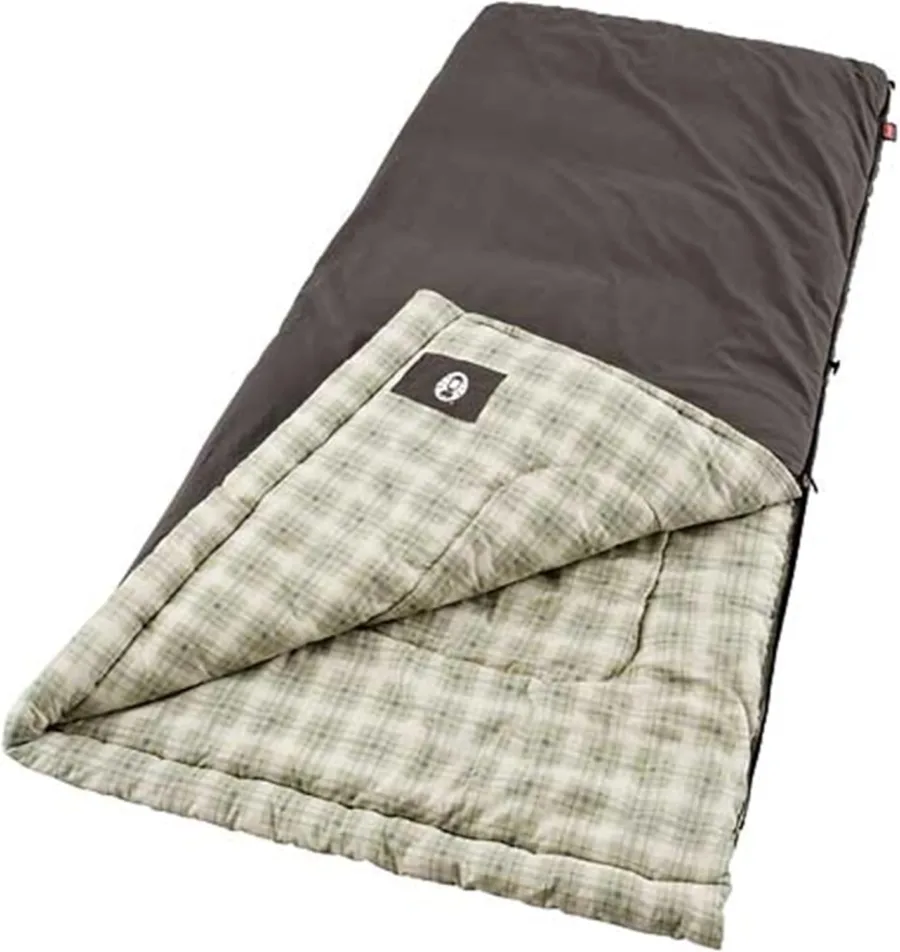
84 × 40 in · flannel lining · washable
⭐ 4.7/5 · about $67

0°F label · hood · lifetime warranty
⭐ 4.5/5 · about $85
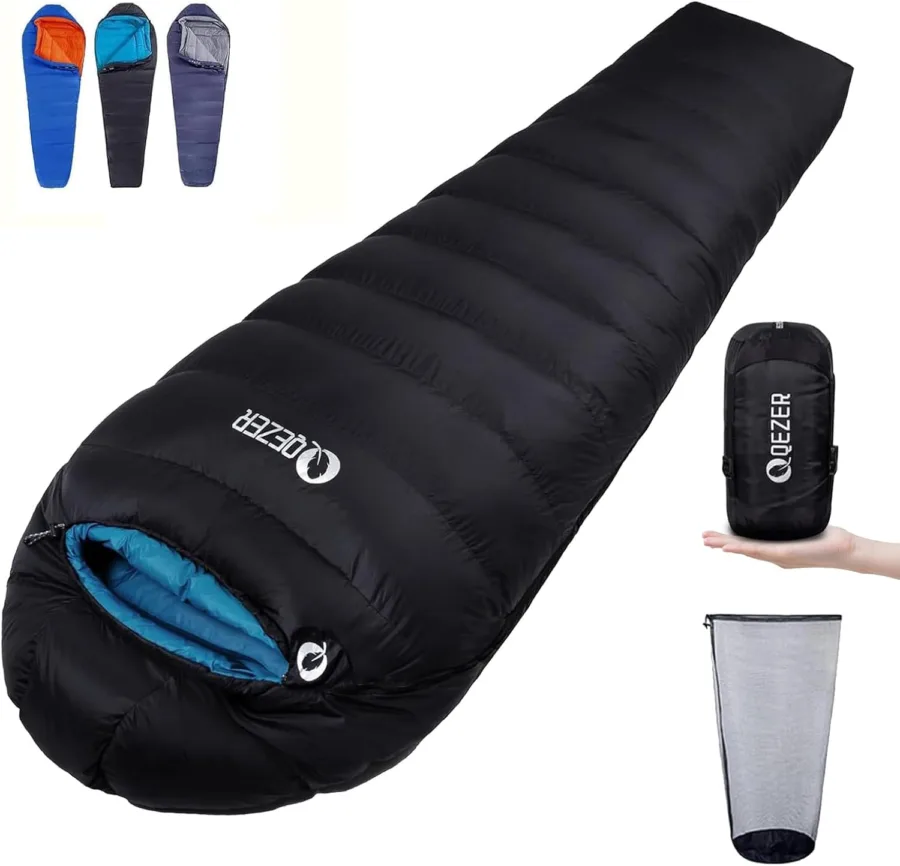
Real down · packs small · camp or hike
⭐ 4.5/5 · about $112
Quick Picks
- Best overall for car camping: Coleman Heritage Big & Tall 10°F
- Best for cold-weather camping: TETON Celsius Regular 0°F
- Best premium choice (down): QEZER 600-Fill Down Mummy
- Best for tall and big campers: HiZYNICE XXL Cotton Flannel
- Best roomy down bag: QEZER 600-Fill Down Envelope
- Best for camping and backpacking on a budget: TETON TrailHead 20
- Coziest budget bag: FARLAND Fleece-Lined
- Best value 3-season bag: Atarashi 3-Season
- Best budget bag with a pillow: BISINNA with Pillow
- Widest budget bag: KANYAK 32°F
- Best cheap summer bag: MalloMe Lightweight

Sleeping Bag Comparison Table
All 11 bags side by side. Temperatures, sizes and weights are what each Amazon listing states. Brands rate warmth in different ways, so read the temperature rating section before you compare numbers. Tap any photo to see today’s price.
| Sleeping bag | Listed temp | Shape & size | Fill | Listed weight | Price checked | Shop |
|---|---|---|---|---|---|---|
| Coleman Heritage Big & Tall | 10°F | Rectangular, 84 × 40 in | Synthetic (Holofill 808), flannel liner | 9.2 lb | About $67 | Check Price |
| TETON Celsius Regular | 0°F | Rectangular with hood, 80 × 33 in | Synthetic, poly-flannel lining | 5 lb | About $85 | Check Price |
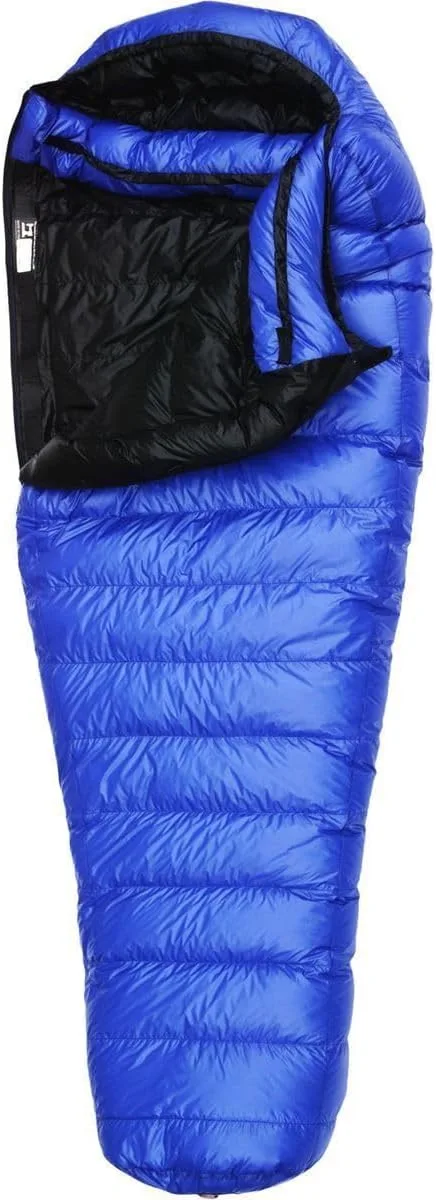
| QEZER Down Mummy | 10°F to 32°F range (0°F to 20°F versions) | Mummy, 84.6 × 31.9 in | 600-fill duck down | 3.6 lb | About $112 | Check Price |
| HiZYNICE XXL | 30°F comfort, 15°F limit, 0°F extreme | Rectangular, 90 × 39 in | Synthetic, 100% cotton flannel lining | Not listed | About $72 | 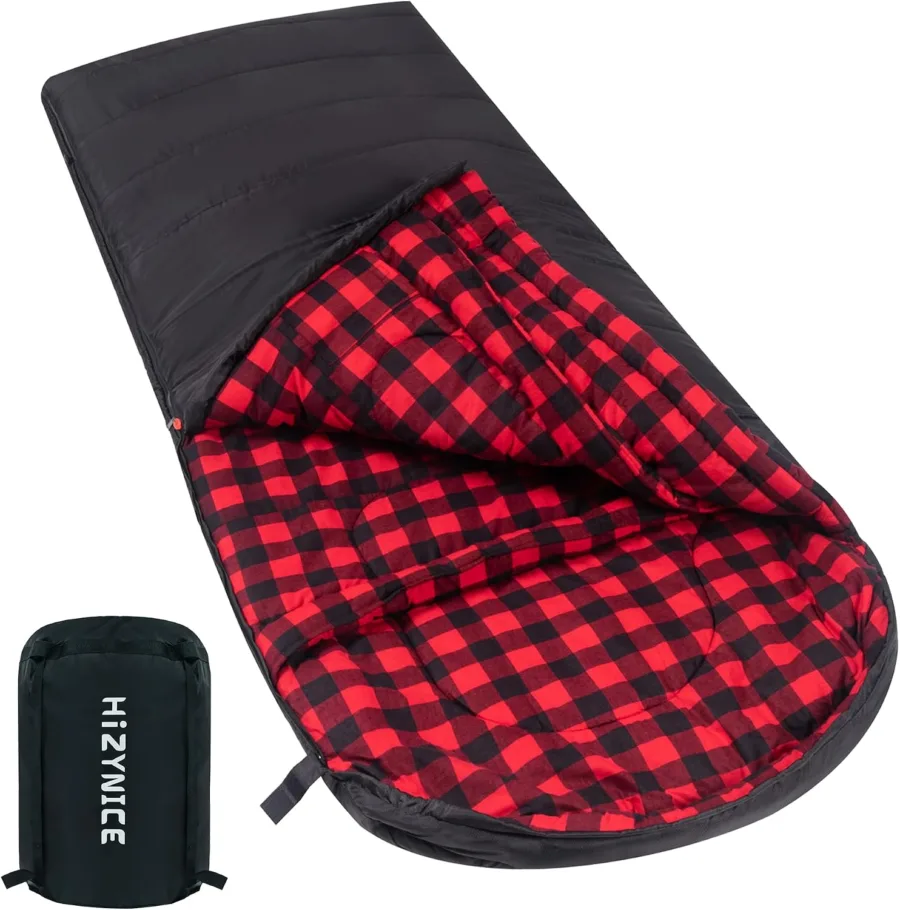 Check Price |
| QEZER Down Envelope | About 28°F to 45°F comfort, 17.6°F limit | Semi-rectangular, 88.6 × 31.5 in | 600-fill duck down | 3.2 lb | About $104 |  Check Price |
| TETON TrailHead 20 | 20°F survival (comfort 20–30° higher, per TETON) | Mummy, 87 × 32 in | Synthetic microfiber | 2.9 lb | About $70 |  Check Price |
| FARLAND Fleece-Lined | 10°F to 50°F range | Rectangular, 87 × 33 in | 400 g synthetic, plush lining | 6.2 lb | About $53 | 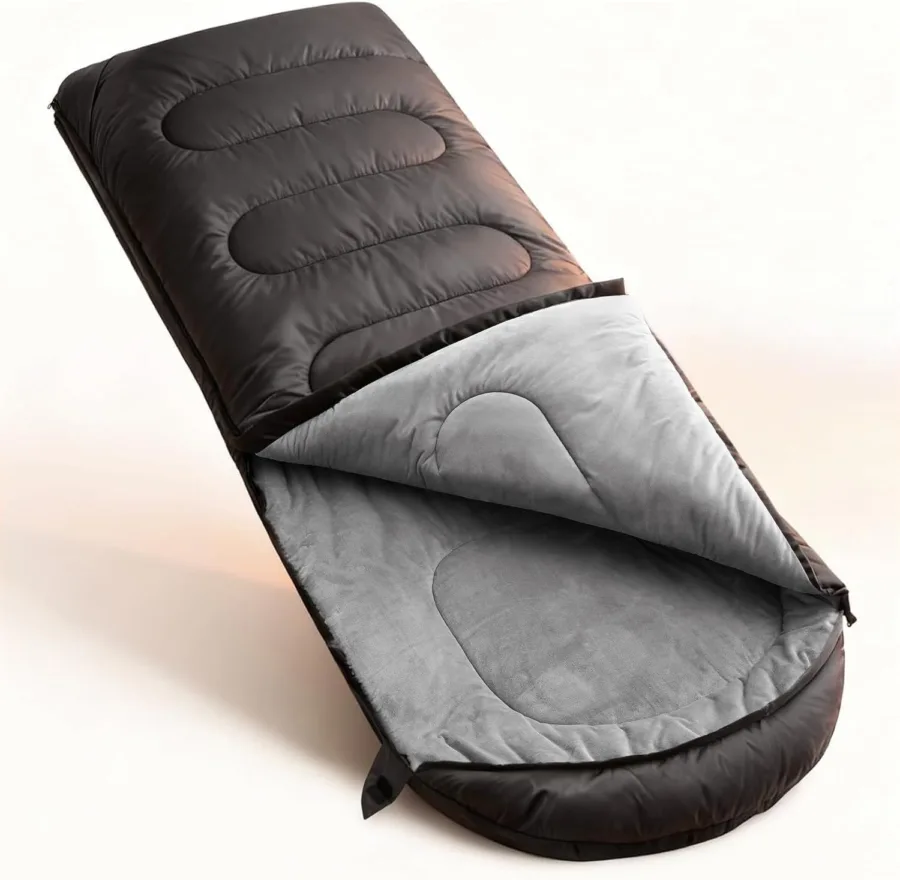 Check Price |
| Atarashi 3-Season | 40°F comfort, 32°F limit | Semi-rectangular, 87 × 33 in | Synthetic, 290T DWR shell | 4.2 to 4.4 lb | About $36 to $45 | 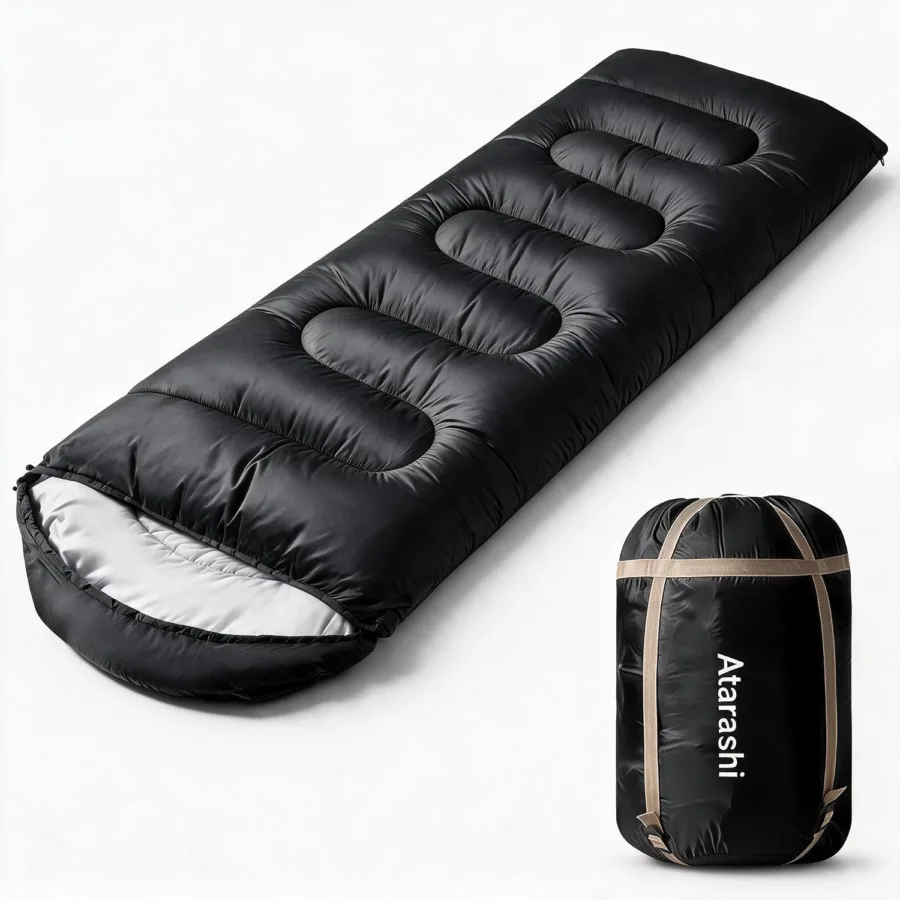 Check Price |
| BISINNA with Pillow | Not clearly stated (sold as 4-season) | Semi-rectangular, 86.6 × 31.5 in | Hollow cotton (synthetic) | 4.2 lb | About $34 |  Check Price |
| KANYAK 32°F | 32°F (single number) | Semi-rectangular, 86.6 × 42.5 in | Polyester | 4.2 lb | About $41 | 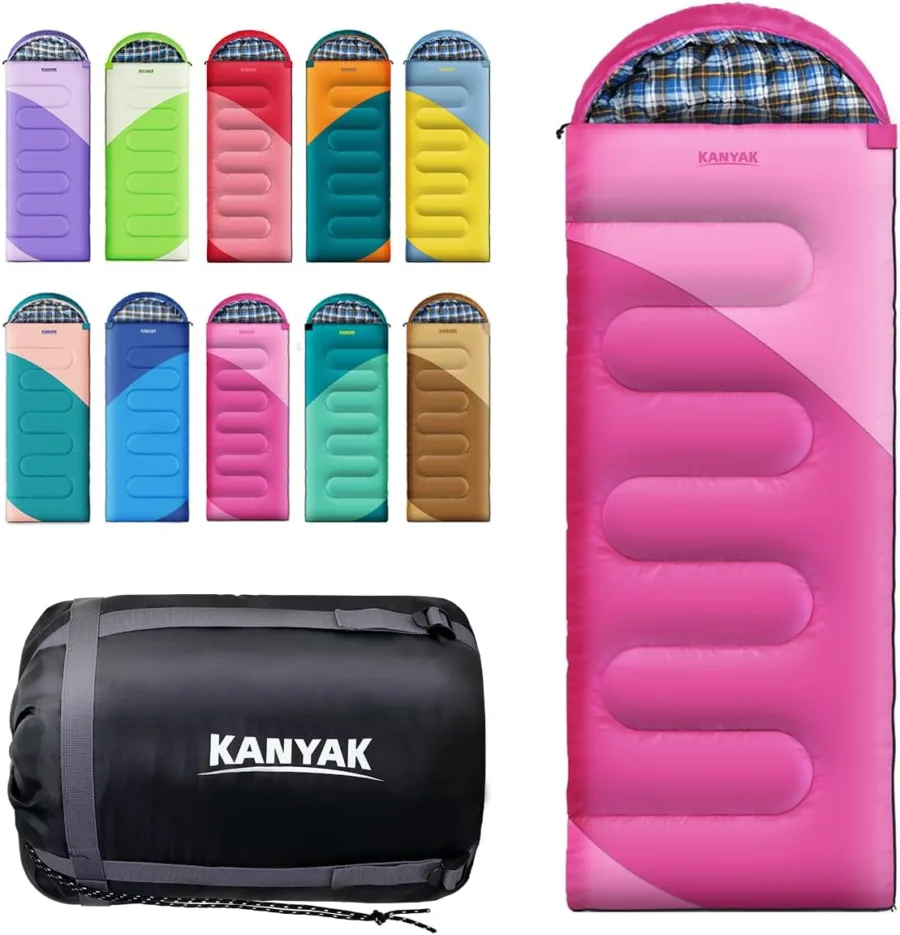 Check Price |
| MalloMe Lightweight | 50°F to 77°F | Rectangular, fits up to 6 ft | Polyester | About 3 lb | About $22 |  Check Price |
How We Chose
A quick honesty note: JoinHikes did not hands-on test these sleeping bags for this guide. We compared each Amazon listing’s published specs (temperature rating, size, fill, shell fabric, zippers and weight), read through buyer ratings and reviews, and checked how each brand describes its temperature numbers. Then we ranked the bags by real-world value for US campers: will it keep you warm on the nights you actually camp, does it fit your body, and will it hold up for more than one season? Bags with a long track record (thousands of ratings) scored higher than newer listings with only a few reviews. Where a listing’s numbers didn’t add up, we say so in the review.
Camping Sleeping Bag Reviews
1. Coleman Heritage Big & Tall 10°F Flannel Sleeping Bag: Best Sleeping Bag for Camping
- Rating: 10°F (Coleman says it holds heat at 10°F)
- Size: 84 × 40 in rectangular, for campers up to about 6’5″ (the title says 6’7″)
- Fill: 5 lb of Holofill 808 synthetic, cotton cover, flannel liner
- Extras: No-snag zipper, Wrap ‘N’ Roll storage, machine washable · 9.2 lb
⭐ 4.7/5 from 3,885 Amazon ratings · about $67 when we checked (November 2026)
This is the bag that feels most like your bed at home. It’s 40 inches wide, which is about 7 inches wider than a standard rectangular bag, so you can sleep on your side, bend your knees and roll over without fighting the zipper. The flannel lining is soft and warm the moment you get in, and the heavy cotton outer shell doesn’t feel slippery or crinkly like cheaper nylon bags.
The trade-off is size and weight. At over 9 pounds, it’s strictly a car camping, cabin or truck-bed bag. It won’t fit in a backpack. The cotton shell also soaks up water, so keep it off a wet tent floor. As for the 10°F label, think of it as a cold-weather rating, not a comfort promise. Most campers will be cozy in the 25°F to 35°F range with a good insulated pad underneath.
👍 Pros
- Very roomy at 84 × 40 in
- Soft flannel lining
- Highest rating in this guide (4.7 stars)
- Machine washable
👎 Cons
- Heavy and bulky at 9.2 lb
- Cotton shell doesn’t like moisture
Buy it if: you camp near your car, you like room to move, and you want one warm bag for spring, fall and cool summer nights.
2. TETON Sports Celsius Regular 0°F: Best Sleeping Bag for Cold-Weather Camping
- Rating: 0°F label
- Size: 80 × 33 in rectangular with a half-circle mummy-style hood
- Fill: Synthetic fiber fill, double-layer build, draft tubes, poly-flannel lining
- Extras: Stuff sack, limited lifetime warranty · 5 lb
⭐ 4.5/5 from 3,803 Amazon ratings · about $85 when we checked (November 2026)
If you camp in late fall, early spring or at high elevation, this is the bag we’d look at first. The Celsius mixes a rectangular body with a hood, which is a smart combo for cold-weather car camping. You get room for your legs, but you can still cinch warmth around your head, where you lose a lot of heat. Double-layer insulation and draft tubes along the zipper help stop cold spots.
Be realistic about “0°F,” though. On its TrailHead bag, TETON says its number is a survival rating and comfort sits 20 to 30 degrees higher. Plan the same way here: this is a solid bag for nights around 20°F to 30°F, not a true zero-degree bag. At 80 inches long, it suits average heights. If you’re over 6 feet, look at the Coleman or HiZYNICE below.
👍 Pros
- Hood keeps your head warm
- Draft tubes along the zipper
- Lifetime warranty from a known brand
- Lighter than the Coleman (5 lb)
👎 Cons
- 0°F is optimistic for comfort
- 80-inch length is short for tall campers
Buy it if: you want a warmer, hooded car camping bag for shoulder-season trips and cold mountain nights.
3. QEZER 600-Fill Down Mummy Sleeping Bag: Best Premium Bag for Camping and Backpacking
- Rating: Listed range 10°F to 32°F; sold in 0°F, 10°F, 15°F and 20°F versions
- Size: 84.6 × 31.9 in mummy with a wide trapezoid footbox
- Fill: 600+ fill-power duck down, nylon shell
- Packed: 15 × 7.5 in · 3.6 lb (per the listing)
⭐ 4.5/5 from 115 Amazon ratings · about $112 when we checked (November 2026)
This is the upgrade pick, and it’s worth the extra money if you want one bag that works at the campground and on the trail. Real down gives you far more warmth for its weight than synthetic fill, and it squishes down to about half the size of a polyester bag. That’s a big deal when your trunk is already full of coolers and chairs, and it means you can actually carry it on an overnight hike.
The mummy shape traps heat better than a rectangle, and QEZER made the foot area wider so it doesn’t feel as tight as a racing-style mummy. You can also zip a left and right version together. Two things to watch: pick the temperature version carefully, because they’re sold on the same page, and keep down dry. It loses warmth when it gets wet. With only 115 ratings, it also has a shorter track record than the Coleman or TETON bags.
👍 Pros
- Real 600-fill down
- Packs small for car or trail
- Several temperature versions
- Can zip two together
👎 Cons
- Down needs to stay dry
- Fewer ratings than our top two
- Mummy fit isn’t for everyone
Buy it if: you car camp now but plan to start backpacking, or you just want the warmest bag for the least space.
4. HiZYNICE XXL Cotton Flannel Sleeping Bag: Best for Big and Tall Sleepers
- Rating: 30°F comfort, 15°F limit, 0°F extreme
- Size: 90 × 39 in rectangular, fits up to 6’7″
- Lining: 100% cotton flannel, draft tube along the zipper
- Extras: Two-way zipper, zips to a second bag, machine washable, compression sack
⭐ 4.6/5 from 1,689 Amazon ratings · about $72 when we checked (November 2026)
At 90 inches long, this is the longest bag in our guide. If you’re tall, your feet won’t press against the end and squash the insulation (a common reason tall people sleep cold). It’s also one of the few budget bags that gives you three temperature numbers instead of one, which makes it easier to plan. The 30°F comfort rating is the one to trust for a good night’s sleep.
The cotton flannel lining feels like home bedding, and the zipper opens from the top or bottom, so you can vent your feet on warmer nights. Like the Coleman, it’s a big bag meant for car camping, cabins, RV trips or guests. It’s not something you’ll carry far.
👍 Pros
- Longest bag here (90 in)
- Clear comfort, limit and extreme ratings
- Soft cotton flannel
- Zip-together option
👎 Cons
- Bulky to pack and store
- Weight not listed
Buy it if: you’re over 6 feet, a broad-shouldered side sleeper, or just hate feeling boxed in.
5. QEZER 600-Fill Down Envelope Sleeping Bag
- Rating: Comfort about 28°F to 45°F, limit 17.6°F (other versions sold on the same page)
- Size: 88.6 × 31.5 in semi-rectangular with a foot vent zipper
- Fill: 600-fill RDS-certified duck down, 400T nylon shell
- Packed: 13.8 × 7.5 in · 3.2 lb
⭐ 4.2/5 from 191 Amazon ratings · about $104 when we checked (November 2026)
Want down without the snug mummy fit? This is the one. Its envelope-style shape keeps your hips and knees free, and at 88.6 inches it’s long enough for most tall campers. It weighs just over 3 pounds and packs smaller than a loaf of bread, so it’s easy to keep in the car all season.
We like that QEZER publishes a comfort range and a limit number, plus the down is RDS certified (a standard for how the birds are treated). The listed comfort range runs roughly 28°F to 45°F, so it’s a great 3-season bag, not a winter one. Its rating is a bit lower than the mummy version, and like any down bag, it needs to stay dry.
👍 Pros
- Roomy shape with down warmth
- Small packed size
- Published comfort and limit
- RDS-certified down
👎 Cons
- No hood
- Lower average rating (4.2)
Buy it if: you want a light, packable 3-season bag but hate how tight mummy bags feel.
6. TETON Sports TrailHead 20 Mummy Sleeping Bag
- Rating: +20°F survival rating; TETON says comfort is 20 to 30 degrees higher
- Size: 87 × 32 in mummy with a vaulted footbox
- Fill: Synthetic microfiber, double-brushed liner, zipper draft tube
- Extras: Compression sack, lifetime warranty · 2.9 lb
⭐ 4.4/5 from 7,171 Amazon ratings · about $70 when we checked (November 2026)
The TrailHead is the most popular bag here by number of ratings, and it’s easy to see why. It’s the lightest bag in our guide at 2.9 pounds, it compresses well, and it costs less than half what a down bag does. That makes it a good first bag for someone who camps at campgrounds but wants the option to do an overnight hike.
We also respect TETON for being upfront. The listing says 20°F is a survival rating and you’ll be comfortable 20 to 30 degrees warmer. So think of it as a 40°F to 50°F comfort bag: perfect for summer and early fall, not for frosty nights. Synthetic fill also keeps working when it gets damp, which helps in humid or rainy places.
👍 Pros
- Lightest bag here (2.9 lb)
- Honest temperature info
- 7,000+ ratings
- Warm when damp
👎 Cons
- Comfort is closer to 40–50°F
- Snug mummy fit
Buy it if: you want an affordable, light bag for summer camping and the occasional backpacking trip.
7. FARLAND Fleece-Lined Sleeping Bag
- Rating: Listed range 10°F to 50°F (3-season)
- Size: 87 × 33 in rectangular, for campers up to 6 ft
- Fill: 400 g synthetic fill with a microplush lining on every side
- Extras: Two-way snag-resistant zipper, compression sack · 6.2 lb
⭐ 4.4/5 from 988 Amazon ratings · about $53 when we checked (November 2026)
If you always feel cold when you first climb into a sleeping bag, the FARLAND is built for you. The whole inside is lined with soft microplush, including the bottom and the foot area, so it doesn’t have that icy, slick feel of cheap polyester. It’s a simple rectangular bag with a two-way zipper that opens from either end.
The temperature range on the listing (10°F to 50°F) is very wide, and the 10°F end isn’t something we’d plan around. Treat it as a cozy bag for nights in the 40s and 50s, and add a liner or blanket for colder trips. At 6.2 pounds, it’s heavier than most budget bags, but that doesn’t matter much for car camping.
👍 Pros
- Plush lining feels warm right away
- Two-way zipper
- Good mid-range price
👎 Cons
- Temperature range is vague
- Heavy for its warmth
Buy it if: comfort and softness matter more to you than packed size, and you camp mostly in spring, summer and early fall.
8. Atarashi 3-Season Camping Sleeping Bag
- Rating: 40°F comfort, 32°F limit (sold as “0 degree,” see below)
- Size: 87 × 33 in semi-rectangular, for campers up to 5’11”
- Shell: 290T polyester taffeta with a water-repellent (DWR) finish
- Extras: Three zippers, zips to a second bag, unzips flat into a blanket · 4.2 to 4.4 lb
⭐ 4.5/5 from 1,487 Amazon ratings · about $36 to $45 when we checked (November 2026)
For around $36, the Atarashi gets a lot right. Its shell fabric is denser than the 210T fabric used on most cheap bags, so it should handle a damp tent wall and some wear a bit better. The semi-rectangular cut gives your elbows and knees room for side sleeping, and you can unzip it fully to use as a quilt on warm nights.
Don’t let the “0 degree” in the product title fool you. Further down, the listing gives a 40°F comfort rating and a 32°F limit, and those are the numbers to use. It’s a true 3-season bag. Also note the length: it’s meant for people up to 5’11”. There are two versions with different prices, so compare both.
👍 Pros
- Great price for the build
- Clear comfort and limit numbers
- Opens into a blanket
- Zip-together option
👎 Cons
- Title says “0 degree” (it isn’t)
- Shorter fit, up to 5’11”
Buy it if: you camp from late spring to early fall and want a reliable bag that won’t stretch your budget.
9. BISINNA Sleeping Bag with Pillow
- Rating: Sold as “4-season,” no clear temperature number
- Size: 86.6 × 31.5 in semi-rectangular with a drawstring hood
- Fill: Hollow cotton (synthetic) with a 210T polyester shell
- Extras: Matching pillow, separate foot zipper, left/right zip-together · 4.2 lb
⭐ 4.5/5 from 1,075 Amazon ratings · about $34 when we checked (November 2026)
The BISINNA is a nice starter bag because it comes with a pillow, which most campers forget until the first night. It has a drawstring hood, and a separate zipper at the bottom lets you stick your feet out on warm nights. Buy one left-zip and one right-zip bag, and you can zip them together into a double for two people.
Our main complaint is that the listing never gives a clear temperature rating. It just says “4-season.” With a lighter shell and fill, we’d treat this as a warm-weather to mild 3-season bag. Plan for nights in the 50s, not freezing temps. Kids and teens will find it plenty roomy.
👍 Pros
- Pillow included
- Hood and foot vent
- Easy to pair for couples
- Low price
👎 Cons
- No real temperature rating
- Thinner 210T shell
Buy it if: you need an affordable summer bag (or two for a couple) and like having a pillow in the kit.
10. KANYAK 32°F Camping Sleeping Bag
- Rating: 32°F (one number, no comfort or limit split)
- Size: 86.6 × 42.5 in semi-rectangular
- Fill: Polyester, pongee lining
- Extras: Separate side and bottom zippers · 4.2 lb
⭐ 4.5/5 from 1,134 Amazon ratings · about $41 when we checked (November 2026)
At 42.5 inches across, the KANYAK is the widest bag in this guide, even wider than the Coleman. That’s great for broad-shouldered campers, restless sleepers, or a kid who likes to sprawl. It’s still light enough at 4.2 pounds to toss in the trunk without thinking about it.
The listing only gives a single 32°F number, and a lot of extra width means more air for your body to heat. We’d use it for nights in the 45°F to 60°F range, or bring a liner for cooler trips.
👍 Pros
- Very wide (42.5 in)
- Light for its size
- Side and foot zippers for venting
👎 Cons
- Only one temperature number
- Extra room means less warmth on cold nights
Buy it if: you hate feeling squeezed and mostly camp in mild weather.
11. MalloMe Lightweight Camping Sleeping Bag
- Rating: 50°F to 77°F
- Size: Rectangular, fits a 6 ft adult; single and double versions
- Shell: Water-resistant polyester, wipe-clean or machine wash
- Extras: Double-sided zippers, compression sack with straps · about 3 lb
⭐ 4.5/5 from 17,754 Amazon ratings · about $22 when we checked (November 2026)
With more than 17,000 ratings, the MalloMe is one of the best-selling sleeping bags on Amazon. And at about $22, it’s easy to buy one for every kid in the family. It’s light, it packs small, and it wipes clean, which matters when it’s going to end up on a dusty tent floor or at a sleepover.
Just respect the rating. MalloMe lists it for 50°F to 77°F, and we’d believe it. This is a warm-weather bag for summer camping, festivals, sleepovers and guest beds. Bring something warmer for spring or fall nights.
👍 Pros
- Very cheap
- 17,000+ ratings
- Light and easy to pack
- Honest summer rating
👎 Cons
- Summer use only
- Thin compared with the others
Buy it if: you camp in summer, need several bags for a family, or want a spare for guests.
Sleeping Bag Temperature Ratings, Explained Simply
This is the single most important thing to get right, and it’s where most cheap bags confuse people. Many good sleeping bags are lab-tested under a standard called ISO 23537 (it replaced the older EN 13537). That test gives you three numbers:
- Comfort: the lowest temperature at which a cold sleeper, lying relaxed, should feel fine. This is the number to plan around.
- Limit: the lowest temperature at which a warm sleeper, curled up, can sleep through the night. You’ll be chilly but OK.
- Extreme: an emergency survival number. You’d be shivering. Never plan a trip around it.
Here’s the catch: lots of budget bags on Amazon print just one number in the title, and it’s usually closer to the limit or extreme rating. That’s why a “0 degree” bag can feel cold at 30°F. Of the bags in this guide, the HiZYNICE, Atarashi and QEZER Envelope give you comfort and limit numbers, and TETON tells you its numbers are survival ratings. For the others, a safe rule is to add 15 to 20 degrees to the number on the label. Rab’s guide to sleeping bag temperature ratings explains the lab test in more detail.
What temperature rating do you need?
| When you camp | Typical night lows | Look for a comfort rating of | Bags from this guide |
|---|---|---|---|
| Summer | 50°F and up | 45°F to 55°F | MalloMe, BISINNA, KANYAK, TETON TrailHead |
| Spring and fall (3-season) | 32°F to 50°F | 30°F to 40°F | Atarashi, FARLAND, QEZER Envelope, HiZYNICE |
| Late fall, early spring, mountains | 15°F to 32°F | 15°F to 30°F | Coleman Heritage, TETON Celsius, QEZER Mummy (0°F or 10°F version) |
| Winter | Below 15°F | 0°F to 10°F, from a dedicated winter bag | None of these on their own; add a liner, a high R-value pad and a warm tent setup |
Tip: Check the forecast low for your exact campsite, not the nearest town. Campgrounds in valleys and at elevation often run 5 to 15 degrees colder. Our post on why sleeping bags feel colder at 3 a.m. explains why the coldest part of the night catches so many campers off guard.
Best Sleeping Bags for Cold-Weather Camping: What to Look For

If you’re shopping for the best sleeping bags for camping in cold weather, look past the number in the title and check these features:
- A hood. You lose a lot of heat through your head. The TETON Celsius, TETON TrailHead, QEZER Mummy and BISINNA all have one. For the others, wear a warm hat.
- A draft tube. This is a padded strip behind the zipper that stops cold air from leaking in. The Coleman, HiZYNICE, TETON bags and QEZER Mummy mention one.
- A snug enough fit. The more empty space inside, the more air your body has to warm up. For deep cold, a mummy or semi-rectangular bag is warmer than an extra-wide rectangle.
- A published comfort rating. It’s the only number you can plan around. If a listing gives just one number, add 15 to 20 degrees.
- A warm pad underneath. This one surprises people. Your body squashes the insulation under you, so the pad does most of the work against the cold ground.
For true cold-weather camping, the TETON Celsius and Coleman Heritage are our top car camping picks, and the QEZER Down Mummy in its 0°F or 10°F version is the best choice if you also want to carry it. Pair any of them with a pad rated R-4 or higher for freezing nights. Not sure what that means? Our guide to sleeping pad R-values breaks it down, and our best insulated sleeping pads list has options. Camping in real snow? Read our tips to keep a tent warm without electricity too, and look at our 4-season tents.
Rectangular vs Mummy vs Semi-Rectangular: Which Shape Is Best for Camping?
| Shape | Best for | Pros | Cons | Examples here |
|---|---|---|---|---|
| Rectangular | Car camping, side sleepers, cabins | Most room, feels like a bed, often unzips into a blanket | Heavier, bulkier, more air to heat | Coleman, HiZYNICE, FARLAND, TETON Celsius, MalloMe |
| Semi-rectangular | 3-season camping, campers who move around | Good balance of room and warmth | Not as warm as a mummy | Atarashi, BISINNA, KANYAK, QEZER Envelope |
| Mummy | Cold nights, backpacking | Warmest for its weight, packs smallest, has a hood | Snug, harder to sleep on your side | QEZER Mummy, TETON TrailHead |
| Double | Couples, parents with a small child | Share body heat, more room | One person’s tossing wakes the other | Zip two compatible bags together (see below) |
For most people camping near the car, a rectangular or semi-rectangular bag will give the best night’s sleep. Choose a mummy if you sleep cold, camp in freezing weather, or need to carry the bag.
Down vs Synthetic vs Flannel: Which Fill Is Best?
Down (like both QEZER bags) gives the most warmth for its weight and packs very small. It also lasts many years if you care for it. But it costs more and loses warmth when wet. Synthetic fill (every other bag here) is cheaper, easier to wash and keeps insulating when damp, which is why it’s the usual pick for car camping and humid places. It’s bulkier and heavier for the same warmth.
Flannel or fleece linings (Coleman, HiZYNICE, TETON Celsius, FARLAND) aren’t a type of fill. They’re the fabric against your skin. They feel warm and cozy right away, but they add weight. If you love flannel but your bag is nylon inside, a fleece sleeping bag liner gets you the same feel and adds a few degrees of warmth.

Size and Fit: How Long and Wide Should Your Sleeping Bag Be?
A bag that’s too short squashes the insulation at your feet and head, and that’s where you’ll get cold. A bag that’s way too long leaves extra space your body has to heat. Aim for a bag that’s about 6 to 10 inches longer than your height.
| Your height | Good bag length | Bags from this guide that fit |
|---|---|---|
| Up to 5’10” | About 76 to 80 in | All of them, including the TETON Celsius Regular (80 in) |
| 5’11” to 6’1″ | About 84 to 87 in | Coleman, TETON TrailHead, FARLAND, Atarashi (up to 5’11”), BISINNA, KANYAK, QEZER bags, MalloMe (up to 6 ft) |
| 6’2″ and taller | 88 in or more | HiZYNICE XXL (90 in, up to 6’7″), Coleman Big & Tall, QEZER Envelope (88.6 in) |
Width matters too. Standard bags are 30 to 33 inches wide. If you’re broad, a side sleeper or a restless sleeper, look at the Coleman (40 in), HiZYNICE (39 in) or KANYAK (42.5 in). Make sure your tent can fit the bag as well. Our guide on what size tent you need helps there, and tall campers should see our best tents for tall people.
Features That Actually Matter
- Two-way zipper: lets you open the bottom to cool your feet without letting cold air in at your chest.
- Left or right zipper: needed if you want to zip two bags together (one left, one right, from the same brand).
- Anti-snag zipper: saves you from fighting the zipper in the dark. Coleman, HiZYNICE and FARLAND all mention it.
- Foot vent: great for warm nights or people with hot feet (BISINNA, KANYAK, QEZER Envelope).
- Compression or stuff sack: makes the bag easier to carry. Store it loose at home, though (more on that below).
- Machine washable: a big plus for family and car camping bags. Most synthetic bags here can go in a front-loader.
- Water-repellent shell: helps when your bag touches a damp tent wall. The Atarashi and MalloMe mention it.
Sleeping Bags for Couples and Kids
For couples: the easiest option is to buy two matching bags, one with a left zipper and one with a right zipper, and zip them together. The Atarashi, BISINNA, HiZYNICE and QEZER bags all support this. You share body heat, and each of you can unzip your side if you get warm. Measure your tent floor first, since two bags joined together can be 60 inches or more wide.
For kids: an adult bag works fine for teens, but small children get cold in a bag that’s much too long. The extra space at their feet never warms up. You can tie off the bottom with a strap or fold it under. Budget bags like the MalloMe and BISINNA are popular family picks because they’re cheap enough to buy several and they wash easily after a muddy weekend.
How Much Should You Spend on a Camping Sleeping Bag?
- Under $40: good summer and mild 3-season bags (MalloMe, BISINNA, Atarashi). Fine for warm nights, kids and occasional trips.
- $40 to $90: the sweet spot for most car campers. You get real cold-weather warmth, better zippers and more room (Coleman, TETON Celsius, HiZYNICE, FARLAND, TETON TrailHead, KANYAK).
- $100 and up: down bags that pack small and work for backpacking too (both QEZER bags). Worth it if you camp often, camp cold, or want one bag for everything.
Our honest advice: spend more on warmth than on extras. A $67 bag that keeps you warm at 30°F is better value than a $35 bag you have to replace after one cold night.
How to Stay Warm in Your Sleeping Bag
- Insulate from the ground. Use a sleeping pad or cot. An air mattress on its own can feel freezing on cold nights because the air inside cools down.
- Wear dry base layers, a hat and socks. Change out of the clothes you hiked or sat by the fire in. Damp clothes make you cold.
- Eat a snack and drink water before bed. Your body needs fuel to make heat.
- Fluff your bag. Take it out of its sack an hour before bed so the insulation lofts up.
- Add a liner. A fleece liner can add a few degrees of warmth and keeps your bag cleaner.
- Use a hot water bottle. Fill a sturdy bottle with hot water, close it tight, and put it near your core or feet.
- Don’t breathe into the bag. The moisture from your breath makes insulation damp. Keep your mouth and nose outside the hood.
Want more? See our full list of tips on how to sleep comfortably while camping.
How to Wash and Store a Sleeping Bag
Wash your bag only when it’s really dirty or smells. Too much washing wears out the insulation. Use a front-loading machine (a top-loader with an agitator can tear the inner fabric), cold or warm water and a gentle soap. Dry on low heat with a few clean tennis balls to break up clumps. Our step-by-step guide on how to wash a sleeping bag covers down and synthetic bags.
At home, never store your bag in its compression sack. Keeping it squashed for months breaks down the insulation and makes it less warm. Hang it in a closet or keep it in a large cotton or mesh storage bag in a dry place. See how to store camping gear for more ideas.
Frequently Asked Questions
What are the best sleeping bags for camping?
For most car campers, the best sleeping bag for camping is the Coleman Heritage Big & Tall 10°F. It’s roomy, warm, flannel-lined and very well rated. For cold trips, pick the TETON Celsius 0°F. For one bag that works for camping and backpacking, get the QEZER 600-Fill Down Mummy. On a budget, the Atarashi 3-Season is the best value.
What are the best sleeping bags for camping in cold weather?
Look for a bag with a hood, a draft tube along the zipper and a comfort rating at or below your expected low. From this guide, the TETON Celsius 0°F, the Coleman Heritage 10°F and the QEZER Down Mummy (0°F or 10°F version) are the best choices for cold weather. Always use an insulated pad (R-4 or higher for freezing nights).
What are the best sleeping bags for camping in the USA in 2026?
All 11 bags in this guide are sold on Amazon US and ship across the United States. US buyers have favored the Coleman Heritage Big & Tall, TETON TrailHead 20 and MalloMe, which each have thousands of ratings. Check the listing for the exact temperature version and size before you order, since many pages sell several versions.
Is a 20-degree sleeping bag warm enough at 20 degrees?
Usually not. If 20°F is the limit or survival rating, you’ll be cold at 20°F. Look for the comfort rating. If the bag doesn’t list one, add 15 to 20 degrees to the label to estimate a comfortable temperature. TETON, for example, says its TrailHead 20 is comfortable 20 to 30 degrees warmer than its rating.
Is a 0-degree sleeping bag too hot for summer?
Often, yes. On a 65°F night, you’ll probably sweat. A two-way zipper or a bag that unzips into a blanket helps, but if you camp mostly in summer, a 40°F to 50°F bag will be more comfortable.
Are cheap sleeping bags on Amazon any good?
Many are fine for summer and mild weather, and some have tens of thousands of good ratings. The problem is the temperature labels, which are often too hopeful. Buy a cheap bag for warm nights, and spend a bit more on a well-rated bag with a clear comfort rating for cold trips.
Is a mummy bag warmer than a rectangular bag?
Yes, with the same fill. A mummy bag has less empty air inside and usually has a hood, so it holds heat better. Rectangular bags are more comfortable for side sleepers and people who move a lot.
Is down or synthetic better for camping?
Synthetic is better for most car camping: it’s cheaper, washes easily and stays warm when damp. Down is better if you want a light bag that packs small or you plan to backpack too.
Can you zip two sleeping bags together?
Yes, if you buy one bag with a left zipper and one with a right zipper, usually from the same brand and model. The Atarashi, BISINNA, HiZYNICE and QEZER bags in this guide offer this.
Do I need a sleeping pad with a warm sleeping bag?
Yes. The insulation under you gets squashed flat by your body weight, so it doesn’t keep out the cold ground. A pad with a good R-value is what keeps the cold away from your back.
How long should a sleeping bag be for my height?
Pick a bag about 6 to 10 inches longer than you are. If you’re over 6 feet, look for an 88 to 90-inch bag like the HiZYNICE XXL or the Coleman Big & Tall.
Can I use a camping sleeping bag for backpacking?
Only if it’s light and packs small. Most car camping bags weigh 4 to 9 pounds. Of the bags here, the TETON TrailHead (2.9 lb) and the two QEZER down bags (about 3.2 to 3.6 lb) are realistic for backpacking. Our best ultralight sleeping bags guide covers lighter options.
How long does a sleeping bag last?
A synthetic bag usually lasts several years of regular use before it loses noticeable warmth. A good down bag can last 10 years or more if you keep it clean, dry and stored loose.
Final Verdict: The Best Sleeping Bags for Camping
If you camp near your car and want the best all-around bag, get the Coleman Heritage Big & Tall 10°F. It’s roomy, soft, warm and backed by thousands of happy buyers. For colder trips and mountain campgrounds, step up to the TETON Celsius 0°F. If you want a premium bag that packs small enough to carry on the trail, the QEZER 600-Fill Down Mummy is worth the extra money.
Whatever you choose, plan around the comfort rating (not the big number in the title), check the bag’s length against your height, and put a good pad underneath. Do those three things and you’ll sleep warm.
Complete Your Sleep Kit: Readers’ Favorite Picks From Our Other Gear Guides
One top pick from each of our other buying guides. Tap a photo to see it on Amazon.