

On a map, Mount Storm King looks like a quick outing: about 4 miles round trip from the shore of Lake Crescent. Then you start climbing. The trail gains more than 2,000 feet in under 2 miles, almost all of it on steep switchbacks, and the famous summit view at the top is reached by a rocky scramble with ropes that hikers left there, not the park.
So how hard is the Mount Storm King hike? The honest answer is that it’s two hikes in one:
- The maintained trail is short but hard, with relentless uphill climbing through the forest.
- The rope section above it is an unmaintained, exposed scramble that’s much riskier, especially when wet.
The good news is that you don’t have to do the ropes to see Lake Crescent. This guide explains each section, where to turn around, how to stay safe, when to go, parking, and easier hikes nearby, so you can decide how far is right for you.
Cover photo: Lake Crescent on a calm day in Olympic National Park. Photo: sarah b / Unsplash
Mount Storm King Hike: Quick Facts
| Detail | Information |
|---|---|
| Location | Lake Crescent, Olympic National Park, Washington |
| Trailhead | Storm King Ranger Station (Marymere Falls trailhead), off US Highway 101 |
| Distance | About 4–4.6 miles round trip |
| Elevation gain | About 2,000–2,100 feet |
| Starting elevation | About 600–700 feet |
| Viewpoint elevation | About 2,600–2,700 feet |
| Difficulty | Hard (rope section: very hard and risky) |
| Time needed | 2.5–5 hours |
| Trail type | Out and back |
| End of maintained trail | Roughly 1.3–1.8 miles in, depending on the source |
| Rope section | Unmaintained, visitor-installed ropes; use at your own risk |
| Best months | July through September |
| Dogs | Not allowed |
| Camping | Not allowed on this trail |
Why the numbers vary: Washington Trails Association lists 4 miles round trip, 2,065 feet of gain, and a high point of 2,600 feet. Other GPS tracks that go all the way to the top of the rope section measure up to 4.6 miles and about 2,100 feet. Either way, you’re climbing roughly 1,000 feet per mile, which is very steep.
How Hard Is Mount Storm King?
Mount Storm King is rated hard. The distance is short, but the climbing is steep and almost nonstop. Then comes a decision point at the End of Maintained Trail sign, where the hike becomes a scramble.
| Section | Difficulty | Main challenge |
|---|---|---|
| Forest walk to the junction (0.5 mile) | Easy | Wide, gentle path |
| Switchbacks up the mountain | Hard | Steep, sustained climbing |
| Lower viewpoints | Moderate to hard | Fatigue, roots, loose dirt |
| End of maintained trail | Hard | Narrower, rockier, dustier tread |
| Rope section | Very hard | Steep, loose, exposed scrambling with unofficial ropes |
| The descent | Hard | Steep downhill on tired legs; ropes are harder going down |
A simple self-test: Can you comfortably climb about 200 flights of stairs in an hour or so, then come back down? If not, plan to stop at a lower viewpoint or try nearby Marymere Falls instead.
The difficulty here is both physical and mental. Plenty of fit hikers reach the end of the maintained trail and decide the ropes aren’t for them, and that’s a perfectly smart choice.
Where Is Mount Storm King?
Mount Storm King rises above the southeast shore of Lake Crescent on the north side of Olympic National Park in Washington. The trailhead is at the Storm King Ranger Station, about 20 miles west of Port Angeles on US Highway 101.
One thing that surprises people: the “summit” viewpoint most hikers reach isn’t the true top of the mountain. Mount Storm King’s actual peak is much higher, at around 4,500 feet, and isn’t reached by this trail. The viewpoint at the top of the ropes is a rocky knob at about 2,600–2,700 feet, perched almost directly above the lake.

About Lake Crescent: This glacier-carved lake is about 624 feet deep, and it’s famously clear because low nitrogen levels limit the algae that cloud most lakes. From above, its color ranges from deep blue to bright turquoise.
Mount Storm King Trail Guide: Step by Step
1. Storm King Ranger Station to the junction (0.5 mile)
Start on the wide, easy Marymere Falls Nature Trail. It passes through a tunnel under Highway 101 and winds through tall old forest of fir, cedar, and hemlock.
After about half a mile, a big boulder and a sign mark the turnoff for Mount Storm King. The trail makes a sharp turn uphill here. If you reach the bridges over Barnes Creek, you’ve gone too far toward the falls.
2. The switchbacks
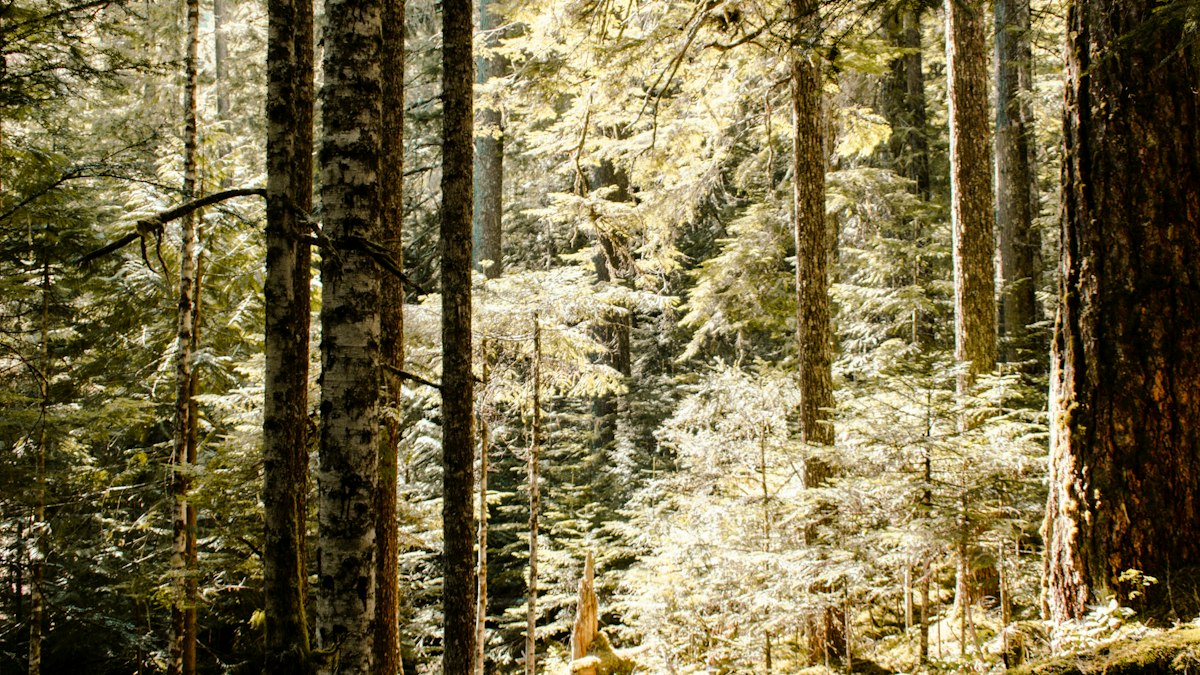
This is where the work starts. The trail climbs steeply through the forest in switchback after switchback, with very few flat spots to catch your breath. The ground is mostly dirt and roots, and it can be dusty in summer and slick after rain.
Take it slow and steady. Short breaks are better than burning out halfway. Higher up, you’ll start to see madrona trees with peeling red bark and the first glimpses of the lake through gaps in the trees.
3. The lower viewpoints
As you near the top of the maintained trail, rocky outcrops open up views of Lake Crescent and the Barnes Creek valley. Many hikers make one of these spots their goal. If you’re tired, the weather’s turning, or the idea of ropes makes you nervous, this is a great place to have lunch and head back down.
4. End of Maintained Trail
Next you’ll reach a sign marking the end of the maintained trail. Past here, the park no longer builds or repairs the path. It gets narrower, rockier, and steeper, with loose dirt and gravel underfoot and drop-offs to the side.
This is your big decision point. Ask yourself:
- Is the ground dry?
- Do I still have plenty of energy for the climb and the descent?
- Am I comfortable on steep, exposed rock without relying on the ropes?
If the answer to any of these is no, turn around here. You’ve already done the hard part of the hike.
5. The rope section
The last stretch to the viewpoint climbs a steep, rocky ridge using a series of ropes tied to trees and rocks by other hikers. It usually takes around 30 minutes up and down. Rocks shift underfoot, the dust is slippery even when dry, and there’s real exposure beside the route.
Important things to know:
- The ropes are not installed, inspected, or maintained by the park. They could be worn, frayed, or badly anchored.
- Don’t put your full weight on a rope. Use it for balance and keep your feet and hands on the rock.
- Going down is harder than going up. Face the slope and move slowly.
- Wear gloves to protect your hands from rope burn. Hikers sometimes leave spare gloves at the base.
- Wait your turn. Only one or two people should be on a rope at a time, and passing on the narrow sections is dangerous.
- Never climb it in rain, snow, or ice.
6. The viewpoint
At the top, you’re rewarded with one of the most famous views in Olympic National Park. Lake Crescent stretches out almost straight below you, framed by steep green mountains, with its water glowing deep blue on a clear day.
Stay well back from the edges, especially if it’s windy or crowded. The area is small and the drops are big.
7. The descent
Remember that you still have to come back down every step of that climb. The rope section is slower going down, and the steep dirt switchbacks are hard on the knees. Trekking poles help a lot below the rope section.
Are the Mount Storm King Ropes Safe?
There’s no way to know. The ropes were put there by hikers, not the National Park Service, and nobody inspects them. A rope can look fine and still be worn out, frayed, or tied to a loose anchor.
That’s why the rope section shouldn’t be treated like a ropes course or a guided climbing route. Only go up if you have scrambling experience, the rock is dry, and you’d feel able to move safely even if a rope failed. For everyone else, the lower viewpoints are the right place to stop.
Can You Hike Mount Storm King Without the Ropes?
Yes. The maintained trail and the viewpoints below the End of Maintained Trail sign give you good views of Lake Crescent without any rope climbing. Many hikers stop there, and it’s still a great workout with a big reward.
Is Mount Storm King Scary?
The forest switchbacks aren’t scary, just tiring. The rope section is a different story. It’s steep, loose, and exposed, and people who are nervous about heights often find it frightening, especially coming back down.
If you’re unsure, go up to the end of the maintained trail, watch others on the first rope, and decide then. There’s no shame in turning around.
Can Beginners Hike Mount Storm King?
The maintained trail is steep enough to challenge anyone who isn’t used to sustained uphill hiking, and the rope section is not a good place for a first scramble.
| Hiker type | Recommendation |
|---|---|
| Complete beginner | Start with Marymere Falls instead |
| Casual walker | The switchbacks will likely be too steep |
| Fit beginner | Try the maintained trail to a lower viewpoint |
| Intermediate hiker | The maintained trail is a great challenge |
| Experienced scrambler | Consider the ropes only in dry conditions |
| Afraid of heights | Skip the rope section |
| Families with young kids | Choose Marymere Falls |
If you’re new to hiking, our hiking for beginners guide will help you build up to climbs like this one.
How Long Does the Mount Storm King Hike Take?
Most hikers need 2.5 to 5 hours round trip, depending on fitness, how long you spend at the top, and whether you do the rope section. The rope section alone can take around 30 minutes, more if there’s a line. Add about 45 minutes to an hour if you include Marymere Falls.
Best Time to Hike Mount Storm King
The Olympic Peninsula is one of the wettest places in the country, so timing matters.
| Season | Typical conditions | Our advice |
|---|---|---|
| Spring (April–June) | Rain and mud are common | Fine for the lower trail on dry days; skip the ropes when wet |
| Summer (July–September) | Driest weather and clearest views | Best time to go; start early to beat crowds and heat |
| Fall (October–November) | Rain returns, shorter days | Check the forecast; avoid the ropes after rain |
| Winter (December–March) | Rain, possible snow and ice, short days | Not recommended for the upper trail |
Pick a clear day. If clouds are sitting on the lake, you’ll climb 2,000 feet to a view of gray mist.

Mount Storm King Parking and Directions
From Port Angeles, drive about 20 miles west on US Highway 101. Near milepost 228, turn right into the large lot signed for Lake Crescent and Marymere Falls, then continue about 0.2 mile to the paved lot by the Storm King Ranger Station. There are restrooms and a boat launch here.
Keep driving west on Highway 101 for about 1.5 to 2 hours and you’ll reach the Hoh Rain Forest and the Hoh River Trail, another Olympic National Park favorite.
The lot fills fast on summer weekends because it serves both Mount Storm King and the very popular Marymere Falls. Arrive before 9 a.m. in July and August, or come later in the afternoon. Cell service can be spotty, so save the directions before you leave town.

Do You Need a Permit or Pass?
No hiking permit is needed for a day hike. Camping isn’t allowed on the Mount Storm King trail.
There’s no entrance booth at Lake Crescent because Highway 101 runs right through this part of the park, but Washington Trails Association lists a national parks pass for this trailhead, so bring one. Olympic National Park’s current fees are $30 per vehicle (7 days), $25 per motorcycle, $15 per person on foot or bike, and $55 for an Olympic annual pass. The America the Beautiful pass also works. Check the park website for any changes before you go.
Mount Storm King vs. Marymere Falls
Both hikes start from the same parking lot and share the first half mile, but they’re very different.
| Feature | Mount Storm King | Marymere Falls |
|---|---|---|
| Distance | About 4–4.6 miles round trip | About 1.8 miles round trip |
| Elevation gain | About 2,000+ feet | Small, with some stairs near the falls |
| Difficulty | Hard | Easy |
| Main attraction | View over Lake Crescent | A tall, graceful forest waterfall |
| Ropes | Optional, unmaintained | None |
| Good for beginners? | Not really | Yes |
| Time | Half a day | About an hour |
Want both? Do Storm King first, then add Marymere Falls on the way back. The combo is about 6 miles with roughly 2,300 feet of gain.
What to Bring
- Hiking shoes or boots with grippy soles. The dirt is loose and slippery.
- At least 2 liters of water and snacks.
- Gloves if you plan to use the ropes.
- Trekking poles for the steep descent (stow them for the rope section). See our budget trekking poles guide.
- A rain jacket or fleece; it can be breezy and cool at the top (see our waterproof hiking jacket guide).
- Offline map and fully charged phone.
- Small first-aid kit and headlamp in case you’re slower than expected.
Safety Tips
- Treat the End of Maintained Trail sign seriously. Past it, you’re on your own.
- Don’t trust the ropes with your full weight.
- Skip the rope section when anything is wet.
- Keep your hands free on the scramble. Put phones and poles away.
- Watch for falling rocks from people above you, and don’t kick rocks down onto others.
- Stay back from the edges at the viewpoint.
- Check current trail conditions with Olympic National Park before you go.
Common Mistakes to Avoid
Thinking 4 miles means easy
This trail climbs about 1,000 feet per mile. It feels much longer than it looks.
Treating the ropes as safety equipment
They aren’t official, aren’t inspected, and could fail.
Going up the ropes without thinking about coming down
Descending loose, steep rock is harder and scarier than climbing it.
Hiking on a cloudy day
The view is the whole reward. Check the forecast and pick a clear day.
Arriving late on a summer weekend
You’ll struggle to park and share the narrow top with crowds.
Mount Storm King FAQs
What is the Mount Storm King hike difficulty rating?
It’s rated hard. The trail climbs about 2,000 feet in roughly 2 miles, and the optional rope section at the top is an unmaintained, exposed scramble.
How long is the Mount Storm King hike?
About 4 miles round trip according to Washington Trails Association. GPS tracks to the very top of the rope section can show up to 4.6 miles.
How much elevation gain is on Mount Storm King?
About 2,065 feet according to Washington Trails Association, and around 2,100 feet on some GPS tracks.
How long does it take to hike Mount Storm King?
Plan on 2.5 to 5 hours round trip, depending on your pace and whether you do the rope section.
How hard is the Mount Storm King rope section?
It’s steep, loose, and exposed. It’s the riskiest part of the hike, especially on the way down or when the ground is wet.
Are the ropes on Mount Storm King safe?
Nobody can guarantee it. The ropes were left by visitors and aren’t installed, inspected, or maintained by the National Park Service.
Can you hike Mount Storm King without the ropes?
Yes. The maintained trail and lower viewpoints give good views of Lake Crescent without any rope climbing.
Is Mount Storm King good for beginners?
Not really. The steady climb is tough for beginners, and the rope section isn’t a good first scramble. Beginners should try Marymere Falls.
Can you hike Mount Storm King in the rain?
The lower trail is doable but slippery. Avoid the rope section completely when it’s wet.
Are dogs allowed on Mount Storm King?
No. Dogs aren’t allowed on this trail in Olympic National Park.
Do you need a permit for Mount Storm King?
No permit is needed for a day hike. Bring a national parks pass, and note that camping isn’t allowed on the trail.
Is Mount Storm King worth it?
Yes, if you enjoy a hard climb. The view of Lake Crescent from above is one of the best in Olympic National Park, and you can enjoy much of it without the ropes.
Final Thoughts
Mount Storm King proves that a short hike can be a seriously hard one. The switchbacks will test your legs, and the rope section will test your judgment.
Go on a clear, dry day, start early, and decide calmly at the End of Maintained Trail sign. Whether you stop at a lower viewpoint or make it to the top, the view of Lake Crescent is worth every step, and the best hike is the one you come home from safely.
1 thought on “Mount Storm King Hike Difficulty: How Hard Is the Trail and Rope Section? (2026)”