
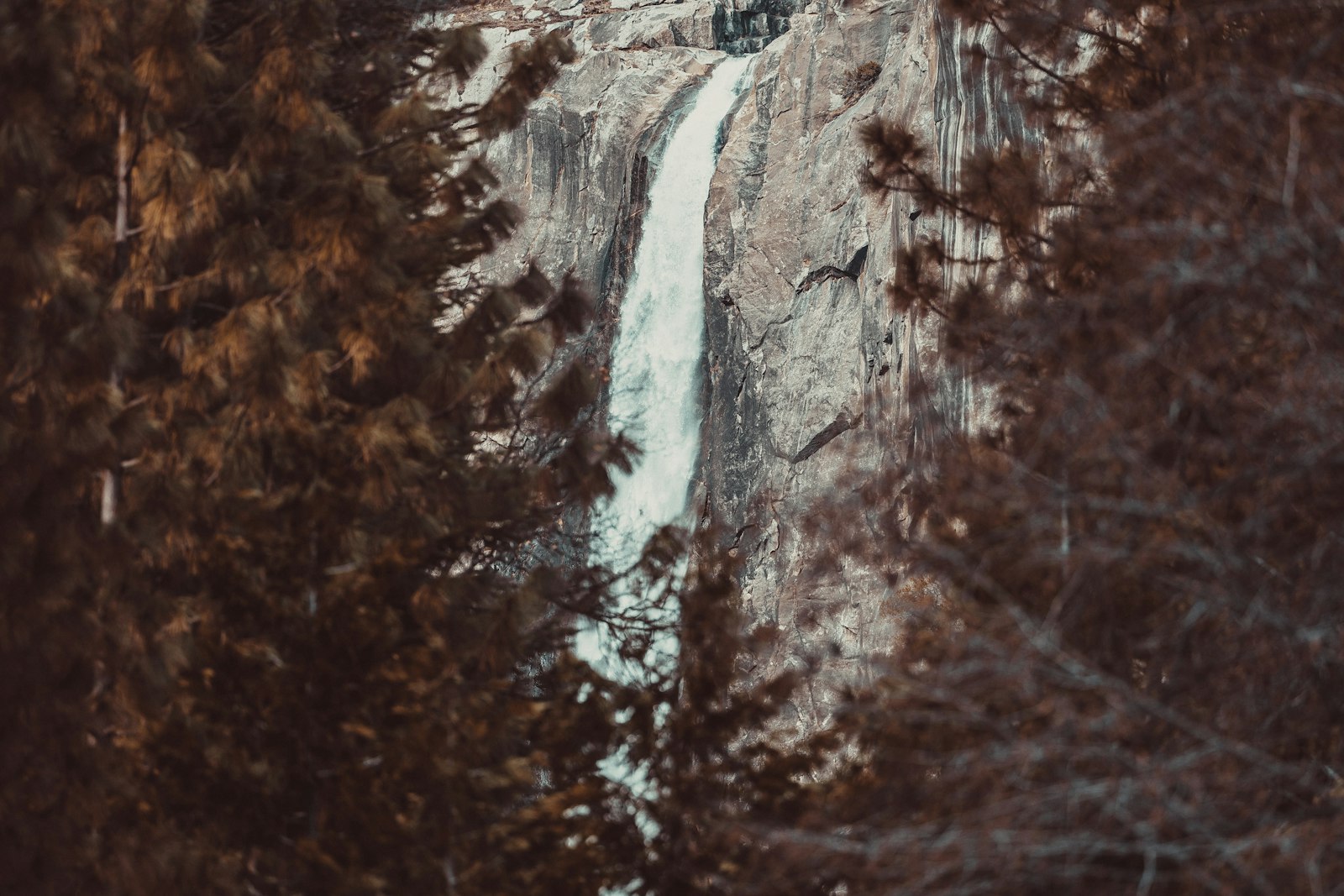
From the floor of Yosemite Valley, Yosemite Falls looks impossibly high, dropping 2,425 feet off a granite wall into the trees. The Upper Yosemite Falls Trail climbs right up beside it, one switchback after another, to the very lip where the creek pours over the edge.
It’s one of Yosemite’s oldest trails, built in the 1870s, and still one of its hardest day hikes. The climb is long, steep and hot. But you don’t have to go all the way: Columbia Rock, just a mile up, already has one of the best views in the park.
This guide covers the distances to each viewpoint, difficulty and time, the switchbacks, parking and the shuttle, water, 2026 entry rules, waterfall flow by month, current conditions, safety and the extensions to Yosemite Point and Eagle Peak.
Cover photo: Yosemite Falls in full flow. Photo: Saketh / Unsplash
Upper Yosemite Falls Trail: The Short Answer
The Upper Yosemite Falls Trail starts near Camp 4 in Yosemite Valley. It’s 7.2 miles round trip to the top of Yosemite Falls, with 2,700 feet of climbing on steep switchbacks, and takes 6–8 hours. The park rates it strenuous. For a shorter hike, Columbia Rock is 2 miles round trip with 1,000 feet of climbing (2–3 hours). Bring 4 liters of water, since there’s none on the trail. The falls usually roar in May and June but are often dry by late summer; as of late October 2026, Yosemite Falls is dry.
Upper Yosemite Falls Trail: Quick Facts
| Detail | Information |
|---|---|
| Location | Yosemite Valley, Yosemite National Park, California |
| Trailhead | Near Camp 4, on the Valley Loop Trail |
| Distance to top | 7.2 miles round trip |
| Elevation gain | 2,700 feet |
| Time | 6–8 hours |
| Difficulty | Strenuous |
| Columbia Rock option | 2 miles round trip, 1,000 feet, 2–3 hours |
| Height of Yosemite Falls | 2,425 feet (upper, middle and lower falls combined) |
| Water on trail | None; bring 4 liters |
| Restrooms | At Camp 4 only |
| Shuttle | Stop #7 |
| Permit | None for a day hike |
| Dogs | Not allowed |
| Best time | April to June for big water flow |
Where Is the Upper Yosemite Falls Trailhead?
The trail starts on the north side of Yosemite Valley, right next to Camp 4, the famous climbers’ campground near Yosemite Valley Lodge. It begins off the Valley Loop Trail, just behind the campground, and is well signed.
Don’t mix it up with Lower Yosemite Fall. The Lower Yosemite Fall Trail is an easy, paved loop of about a mile to the base of the lower falls, a short walk away. The upper trail is a full mountain climb.
Parking and the Yosemite Valley Shuttle
- Where to park: Use the Yosemite Falls parking area, across the road from and just past the Camp 4 entrance. The Camp 4 lot is for campers only.
- Shuttle: Take the free Valleywide Shuttle to stop #7, then cross the road to Camp 4 and follow the signs.
- Does parking fill up? Yes, especially from spring through summer and on weekends. Arrive by 8 a.m., or park elsewhere in the valley and ride the shuttle.
2026 Entry Rules and Fees
- Reservations: Yosemite has no day-use or peak-hours reservation system in 2026. Just pay at the gate.
- Entrance fee: $35 per vehicle (7 days), $70 for a Yosemite annual pass or $80 for the America the Beautiful pass.
- International visitors: From January 1, 2026, nonresidents aged 16 and over pay an extra $100 each, unless the car has the $250 nonresident America the Beautiful pass.
- Fee-free days: October 27 and November 11, 2026 (for U.S. residents).
How Long Is the Upper Yosemite Falls Trail?
| Destination | Round trip | Climb | Time |
|---|---|---|---|
| Columbia Rock | 2 miles | 1,000 feet | 2–3 hours |
| Close-up view of Upper Fall (past Columbia Rock) | About 3 miles | About 1,000+ feet | 3–4 hours |
| Top of Yosemite Falls | 7.2 miles | 2,700 feet | 6–8 hours |
| Add Yosemite Point | +1.6 miles (about 8.8 total) | A little more | +1 hour |
| Add Eagle Peak | +5.8 miles (about 13 total) | Much more | A very long day |
Some park maps round the main hike to 7.4 miles. Plan for 7–7.5 miles if you include the short spur to the viewing platform at the top.
Upper Yosemite Falls Trail Difficulty
It’s strenuous: one of the hardest day hikes in Yosemite Valley. You climb about 2,700 feet in 3.6 miles, which averages roughly 750 feet per mile, and it barely lets up. Here’s what makes it tough:
- Endless switchbacks: dozens of tight turns, starting right from the trailhead.
- Heat: the upper trail faces south and gets no shade until late afternoon.
- Loose footing: granite sand and small rocks act like ball bearings. Sprained ankles and knee injuries are common.
- The descent: 2,700 feet down on tired legs is hard on knees.
- Elevation: you start around 4,000 feet and top out near 6,700 feet.
Is it good for beginners? The full hike isn’t. Columbia Rock is a great challenge for fit beginners. It’s steep but short. Our hiking for beginners guide covers how to prepare.
Upper Yosemite Falls Trail Map and Route
Camp 4 → lower switchbacks through oak woodland → Columbia Rock (1 mile) → traverse to the Upper Fall view → upper switchbacks in the gully beside the falls → valley rim → spur to the Yosemite Falls overlook, then back the same way. At the rim, signed trails continue east to Yosemite Point and west to Eagle Peak.
The park’s Yosemite Falls Trail page and Yosemite Valley day-hikes map show the route. Save them to your phone, since cell service near the cliffs is unreliable.
Upper Yosemite Falls Trail: Step by Step
1. The Lower Switchbacks
From Camp 4, the trail starts climbing almost at once, zigzagging up through black oaks, live oaks and pines on rocky, sandy tread with stone steps. This section gets direct sun even in winter, so it’s often snow-free when the rest of the trail isn’t. Settle into a slow, steady pace; it’s a long day.
2. Columbia Rock (1 Mile)
After about a mile and 1,000 feet of climbing, you reach Columbia Rock, a granite outcrop with a low railing. The view takes in the whole eastern valley: Half Dome, Sentinel Rock, the meadows and the Merced River far below. If you only have a morning, or your legs say stop, this is a superb turnaround point.

3. First Close-Up of Upper Yosemite Fall
Past Columbia Rock, the trail actually drops a little and swings around a corner. Suddenly Upper Yosemite Fall is right in front of you, plunging about 1,430 feet in a single drop. In spring, you’ll feel the spray and hear the roar. Many hikers make this their goal, about 1.5 miles up.
4. The Upper Switchbacks
Now comes the hardest part. The trail climbs a steep, rocky gully beside the falls in tight switchbacks, with little shade and plenty of loose granite. It goes on for about 2 miles. On hot days, this section is brutal, so start early and rest in any shade you find.
5. The Top of Yosemite Falls
At the rim, the trail levels out among pines. Turn right at the signed junction and follow the short spur toward the falls. Narrow granite steps with a metal handrail lead down to the Yosemite Falls Overlook, where you can look over the edge as Yosemite Creek drops into space and see the valley floor half a mile below. It’s thrilling and very exposed, so hold the rail and stay inside it.
Head back the same way, slowly. The descent takes most people 2–3 hours.
Yosemite Point and Eagle Peak
- Yosemite Point (+1.6 miles round trip): cross the footbridge over Yosemite Creek and climb east to a viewpoint with one of the best looks at Half Dome, North Dome and the Lost Arrow Spire. Well worth it if you have energy and daylight.
- Eagle Peak (+5.8 miles round trip): the highest of the Three Brothers, with big views west toward El Capitan. Only for very strong hikers with an early start.
When Does Yosemite Falls Have Water?
Yosemite Falls is fed by snowmelt, so its flow changes enormously during the year.
| Month | Waterfall | Trail conditions |
|---|---|---|
| Nov–March | Low to moderate; may freeze into an ice cone at the base | Upper trail often icy or snowy |
| April | Building fast | Snow and ice possible up high |
| May–June | Peak flow, roaring | Best overall; getting hot by late June |
| July | Dropping | Very hot; start at dawn |
| August–September | Trickle or dry | Hot; valley views only |
| October | Usually dry until rain or snow returns | Cooler and quieter |
Best time to hike: mid-May to mid-June for big water and long days. Start by 7 a.m. to beat the heat on the upper switchbacks.
Is the Upper Yosemite Falls Trail Open Now?
Yes. As of late October 2026, the park lists no closure for the Yosemite Falls Trail. But there are a few things to know:
- The falls are dry. The park’s conditions page says Yosemite Falls is currently dry, so you’ll be hiking for the views and the climb, not the water.
- Dome Fire: a wildfire burned more than 6,800 acres in remote country near Glacier Point Road in October 2026. It didn’t affect the Yosemite Falls Trail, but check air quality if smoke drifts into the valley.
- Winter: from about November, the upper trail sees almost no sun and can be icy or buried in snow, even while the lower trail is clear. Turn back at Columbia Rock if you don’t have traction and experience.
Check the park’s current conditions page before you go.
Upper Yosemite Falls Safety (and Deaths)
People have died in the Yosemite Falls area over the years. Most were swept away after wading or swimming in Yosemite Creek above the falls, or fell after leaving the trail near cliffs. Far more hikers need help for heat exhaustion, dehydration and twisted ankles on the way down.
- Never swim, wade or cross Yosemite Creek above the falls. The current is stronger than it looks, and the rocks are slick.
- Stay on the trail and behind railings. There are steep drop-offs just off the path.
- Carry 4 liters of water and salty snacks, and drink often.
- Start early. The upper trail is in full sun until late afternoon.
- Watch your step on sand and loose rock, especially going down.
- Store food in bear lockers, never in your car. Note that bear spray is not allowed in Yosemite.
What to Pack
- 4 liters of water per person (fill up at the fountain near Camp 4)
- Lunch and salty snacks
- Hiking shoes with good grip
- Sun hat, sunglasses and sunscreen
- Warm layer and rain jacket for the rim (see our waterproof hiking jacket guide)
- Trekking poles for the descent
- Headlamp, first-aid kit and a downloaded map
- Microspikes from late fall to spring
Kids and Families
The full hike is too much for most young children. Fit older kids who hike regularly can manage Columbia Rock with close supervision. For little ones, walk the easy Lower Yosemite Fall loop instead. It’s about a mile, mostly paved and wheelchair-friendly, with a close view of the falls when they’re running. Dogs aren’t allowed on either trail.
Upper vs. Lower Yosemite Falls
| Feature | Upper Yosemite Falls Trail | Lower Yosemite Fall Loop |
|---|---|---|
| Distance | 7.2 miles round trip | About 1 mile loop |
| Climb | 2,700 feet | Almost none |
| Difficulty | Strenuous | Easy |
| Time | 6–8 hours | 30–60 minutes |
| Highlight | Top of the falls and huge valley views | Base of the lower falls |
| Good for kids | Columbia Rock only, for fit older kids | Yes |
Looking for more? See our guide to the best hikes in Yosemite National Park. If you love big climbs, try the Skyline Trail at Mount Rainier or the Grinnell Glacier Trail.
Photography Tips
- Columbia Rock: morning light on Half Dome and the valley.
- Upper Fall view: spring afternoons often bring rainbows in the spray.
- The overlook: a wide-angle lens shows the drop. Shoot from behind the railing only.
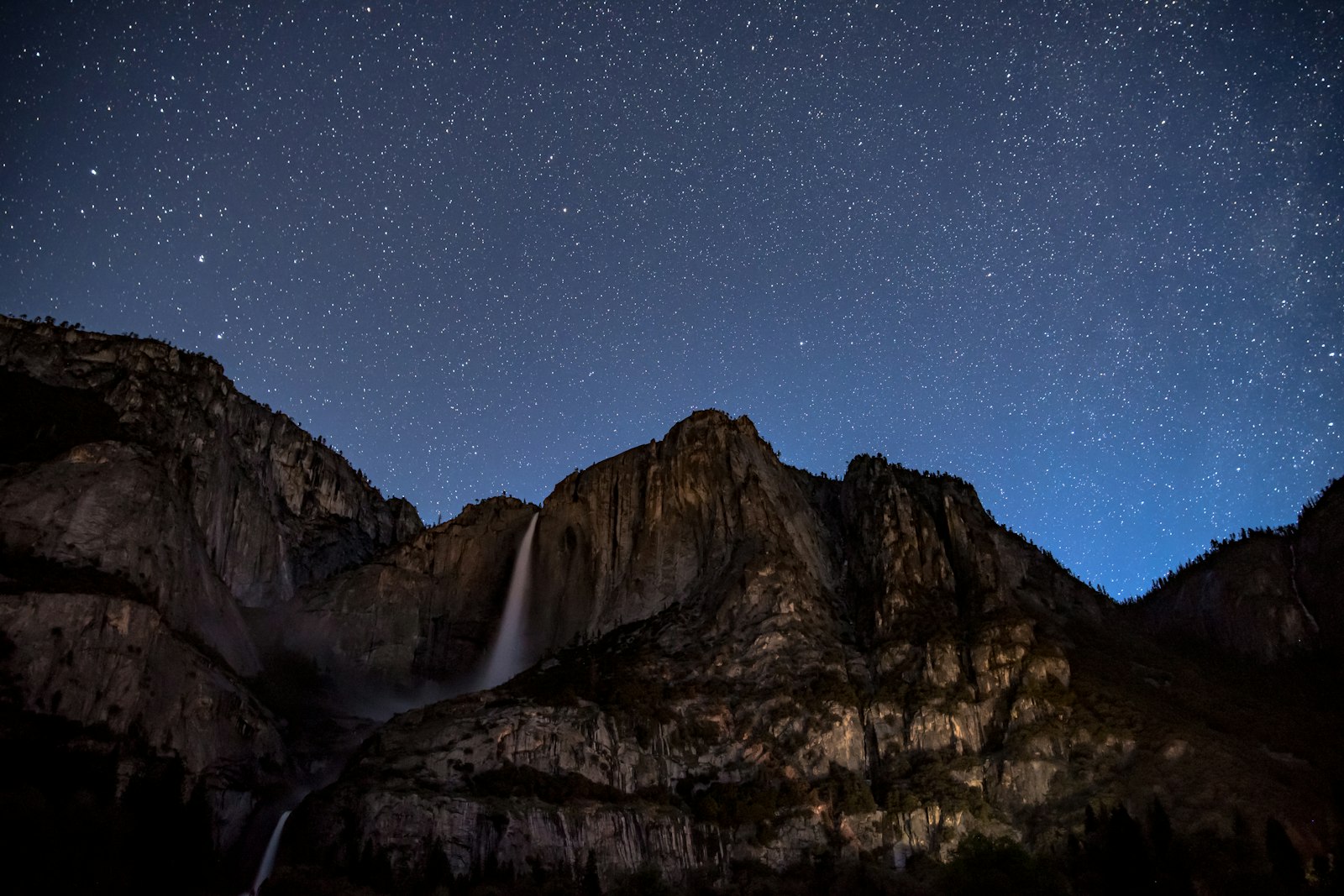
- From the valley: Cook’s Meadow and the Swinging Bridge give classic views of the whole falls, and spring full moons can create “moonbows.”
Sample Day Plan
- 6:30 a.m.: Park at Yosemite Falls parking or ride the shuttle to stop #7. Fill water at Camp 4.
- 7:30 a.m.: Columbia Rock.
- 8:00 a.m.: Upper Fall close-up view.
- 10:00–10:30 a.m.: Top of the falls and the overlook; add Yosemite Point if you feel strong.
- 11:30 a.m.: Start down.
- 2:00 p.m.: Back in the valley. Rest at Yosemite Valley Lodge or Yosemite Village, then stroll the Lower Fall loop.
Where to Stay
- Yosemite Valley Lodge: a short walk from the trailhead.
- Camp 4: walk-in campground right at the trailhead, open year-round; sites are in high demand.
- Curry Village and Upper Pines: other valley options (Upper Pines is open year-round).
- El Portal and Mariposa: outside the park on Highway 140, a 20- to 75-minute drive.
Upper Yosemite Falls Trail FAQs
How long is the Upper Yosemite Falls Trail?
7.2 miles round trip to the top of the falls, with 2,700 feet of climbing.
How long does it take?
The park estimates 6–8 hours round trip. Columbia Rock takes 2–3 hours.
How hard is Upper Yosemite Falls?
Strenuous: steep, nonstop switchbacks, loose rock and lots of sun.
How many switchbacks are on the Upper Yosemite Falls Trail?
There’s no official count, and hikers’ tallies vary, but expect dozens of them, split between the lower section below Columbia Rock and the steep upper section beside the falls.
Where do you park?
At the Yosemite Falls parking area across from Camp 4, or take the free shuttle to stop #7. The Camp 4 lot is for campers only.
Do you need a reservation or permit?
No permit is needed for the day hike, and there’s no entry reservation in 2026. You just pay the park entrance fee.
How much water should I bring?
The park recommends 4 liters (4 quarts) for the hike to the top. There’s no water on the trail.
Is Yosemite Falls flowing right now?
As of late October 2026, it’s dry. It usually returns with winter storms and peaks in May and June.
Is the trail open in winter?
It’s generally open, but the shady upper section is often icy or snowy. Many winter hikers turn around at Columbia Rock.
Have people died on the Upper Yosemite Falls Trail?
Yes, there have been deaths in the Yosemite Falls area, mostly from people entering Yosemite Creek above the falls or leaving the trail near cliffs. Stay on the trail and out of the water.
Can you hike to Yosemite Point from the falls?
Yes. It adds 1.6 miles round trip from the top of the falls and has great views of Half Dome.
Are dogs allowed?
No. Dogs aren’t allowed on Yosemite’s unpaved trails, including this one.
How tall is Yosemite Falls?
2,425 feet in total, making it one of the tallest waterfalls in North America. Upper Yosemite Fall alone drops about 1,430 feet.
Is the Upper Yosemite Falls Trail Worth It?
Yes, and especially in May or June, when the falls thunder beside you all the way up. Even when the falls are dry, the views over Yosemite Valley and Half Dome make it one of the park’s great hikes. Start early, carry plenty of water, stay out of the creek, and remember that Columbia Rock alone is a fantastic hike if the full climb isn’t for you.