
You’re six miles past the last trailhead sign. Your phone says No Service. Then your hiking partner slips on wet rock, and you hear the kind of crack you never want to hear. You can’t carry them out. Nobody knows exactly where you are. What now?
That’s the moment a personal locator beacon (PLB) or satellite messenger was made for. Press one button and a distress signal goes up to satellites and down to search and rescue, with your GPS location attached. No cell tower needed.
But “emergency beacon” covers very different devices. A true PLB is a one-button lifeline with no monthly fee. A satellite messenger like the Garmin inReach lets you text family and talk to rescuers, but needs a subscription. And some gadgets sold as “beacons” only work when your phone already has signal. In this guide we compare 11 devices, from ACR ResQLink and Ocean Signal PLBs to the Garmin inReach Mini 2, ZOLEO and SPOT, so you can pick the one that will actually work where you hike.
Affiliate disclosure: As an Amazon Associate, JoinHikes earns from qualifying purchases. If you buy through Amazon links in this article, we may earn a commission at no extra cost to you.
Our review approach: We used manufacturer specs from ACR, Ocean Signal, Garmin, ZOLEO and SPOT, Amazon listings, owner reviews, and official guidance from NOAA and Cospas-Sarsat. We haven’t field-tested these devices and we never invent results. Prices and ratings were checked on November 6, 2026. This is safety equipment, so always read the manufacturer’s manual before a trip.
Quick Answer: What Is the Best Personal Locator Beacon for Hiking?
For a true no-subscription PLB, the ACR ResQLink View RLS is the best you can buy. It sends your SOS through the government Cospas-Sarsat rescue system and, unlike older beacons, its Return Link Service lets you know rescuers actually received your call. On a tighter budget, the ACR ResQLink 400 and the tiny Ocean Signal rescueME PLB1 do the core job for less.
If you want to text family and talk to rescuers, get a two-way satellite messenger instead: the Garmin inReach Mini 2 is the best standalone device, and ZOLEO is the best value if you’re happy typing on your phone. Both need a paid plan.
Quick rule: emergency-only and no fees? Buy a PLB. Want check-ins, weather and conversation? Buy a messenger. Either way, a gadget that relies on your phone’s cell signal is not a backcountry SOS device.

Quick Comparison: Best Emergency Beacons for Hiking 2026
Tap a photo or button to see the current price on Amazon.
| Device | Type | Monthly plan? | Messaging | Battery | Price** | Shop |
|---|---|---|---|---|---|---|
| Best overall PLB ACR ResQLink View RLS | PLB (406 MHz) | No | SOS confirmation (RLS) | 5-yr battery, 28+ hr signal | ~$530 | 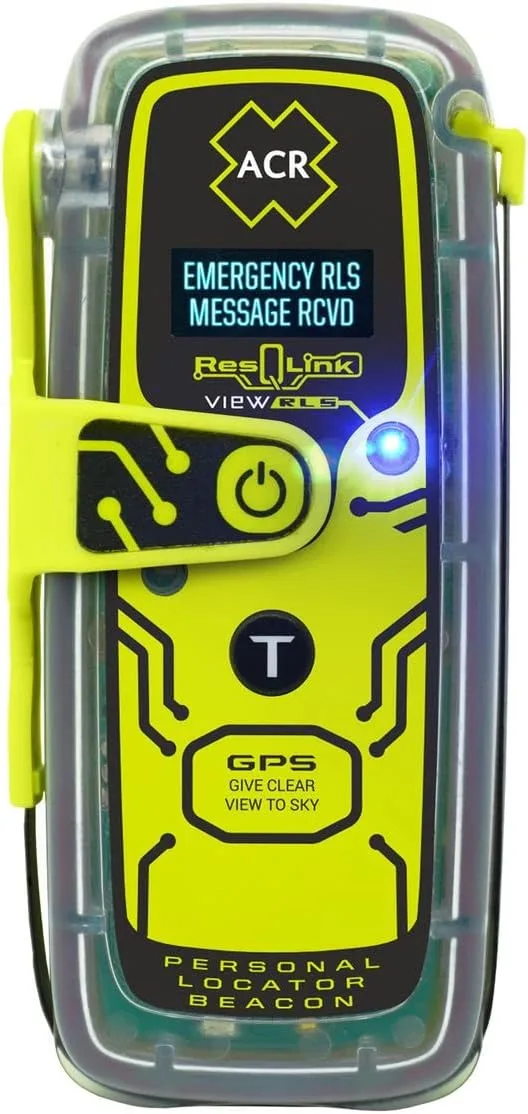 Check Price |
| Best two-way messenger Garmin inReach Mini 2 | Satellite messenger (Iridium) | Yes | Full two-way texting | Up to 14 days (10-min tracking) | ~$299 | 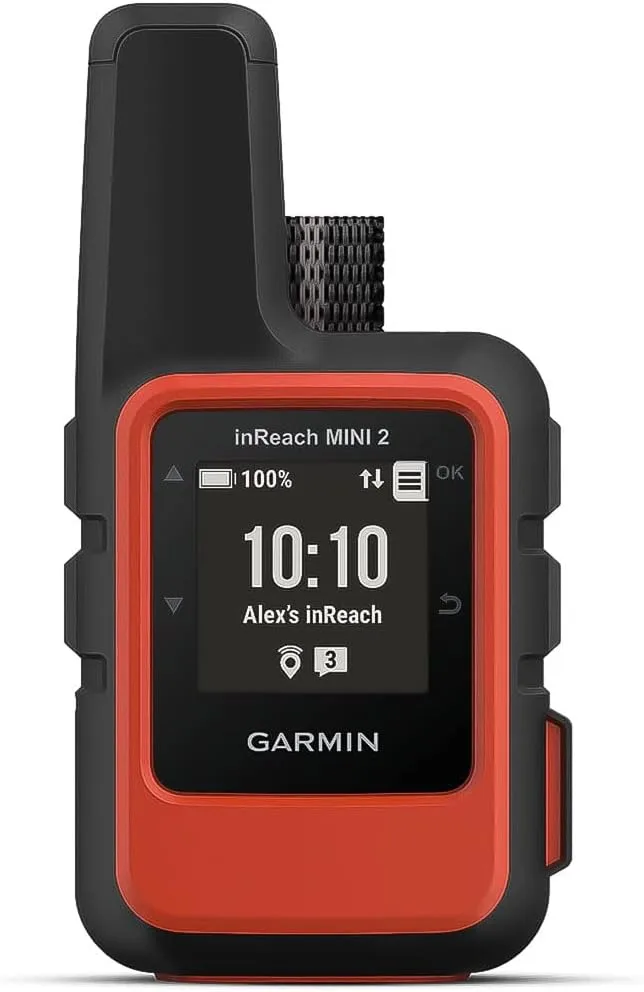 Check Price |
| Best simple PLB ACR ResQLink 400 | PLB (406 MHz) | No | None | 5-yr battery, 24+ hr signal | ~$397* | 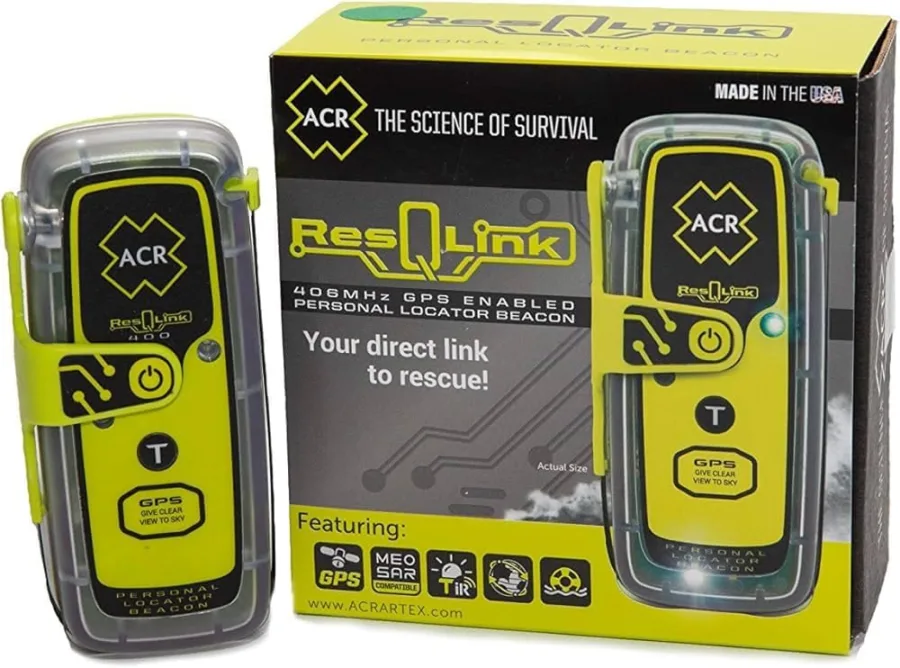 Check Price |
| Best PLB with display ACR ResQLink View | PLB (406 MHz) | No | None | 5-yr battery, 24+ hr signal | ~$470 | 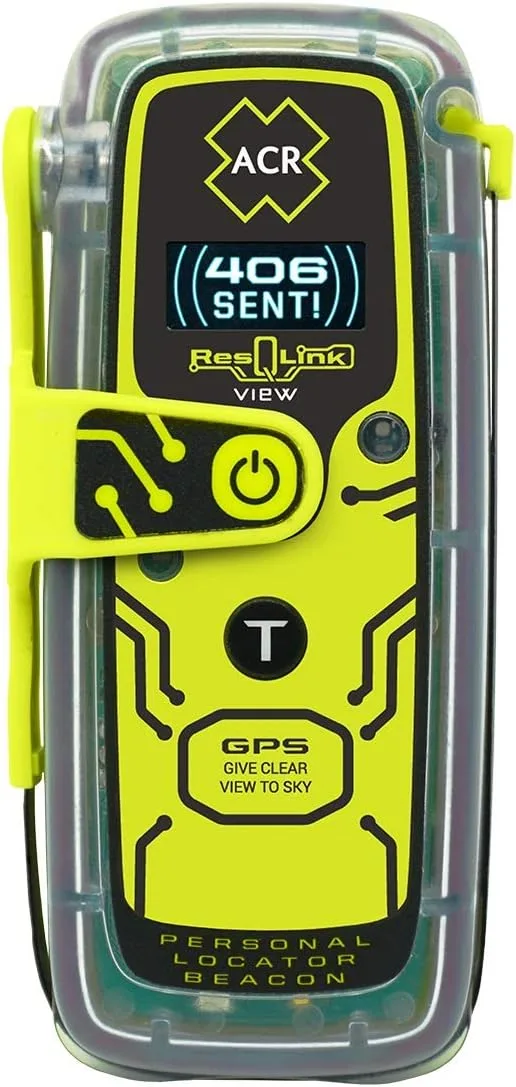 Check Price |
| Lightest PLB Ocean Signal rescueME PLB1 | PLB (406 MHz) | No | None | 7-yr battery, 24+ hr signal | ~$400 | 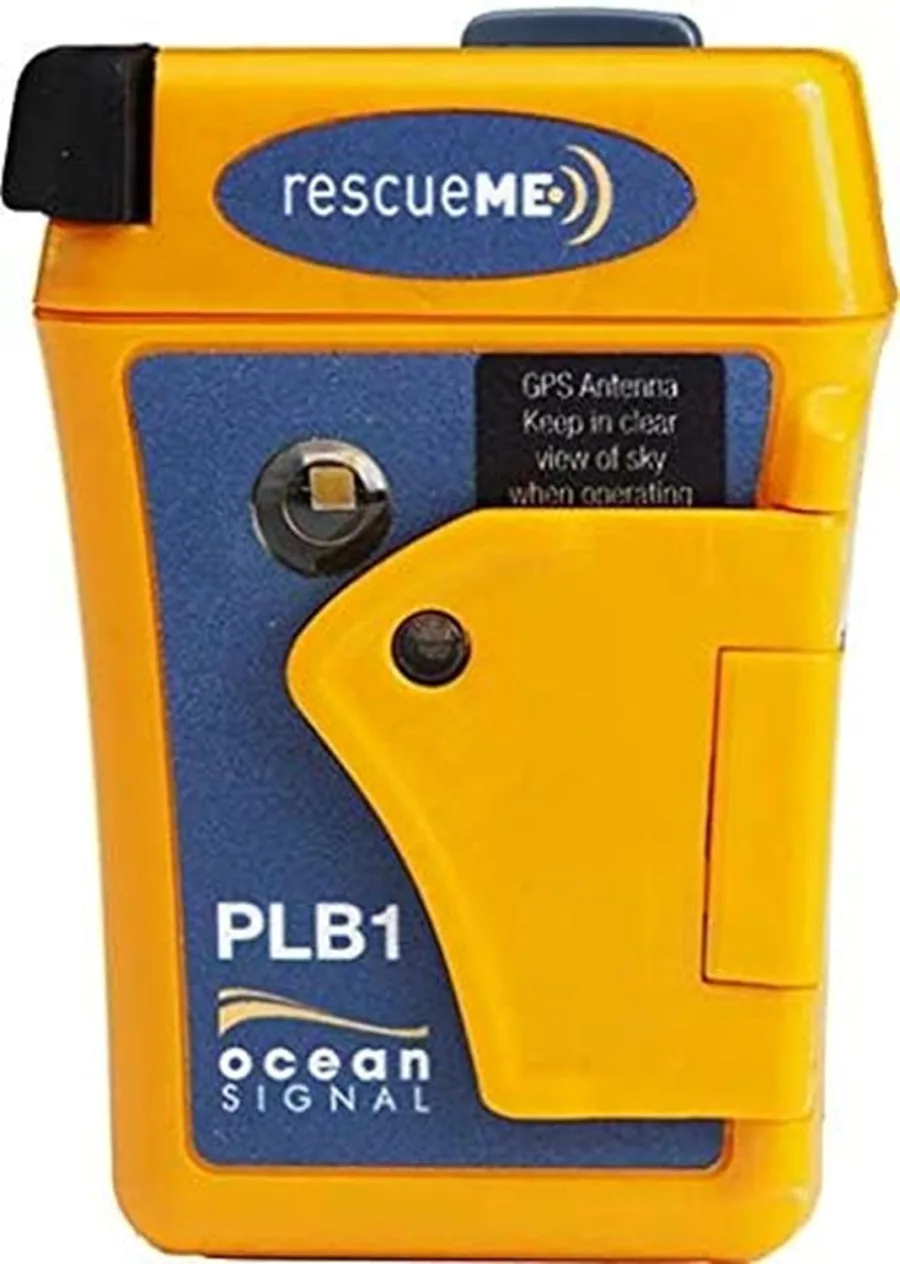 Check Price |
| Best for hikers who paddle ACR ResQLink AIS PLB-450 | PLB + AIS | No | SOS confirmation (RLS) | 5-yr battery | ~$620 | 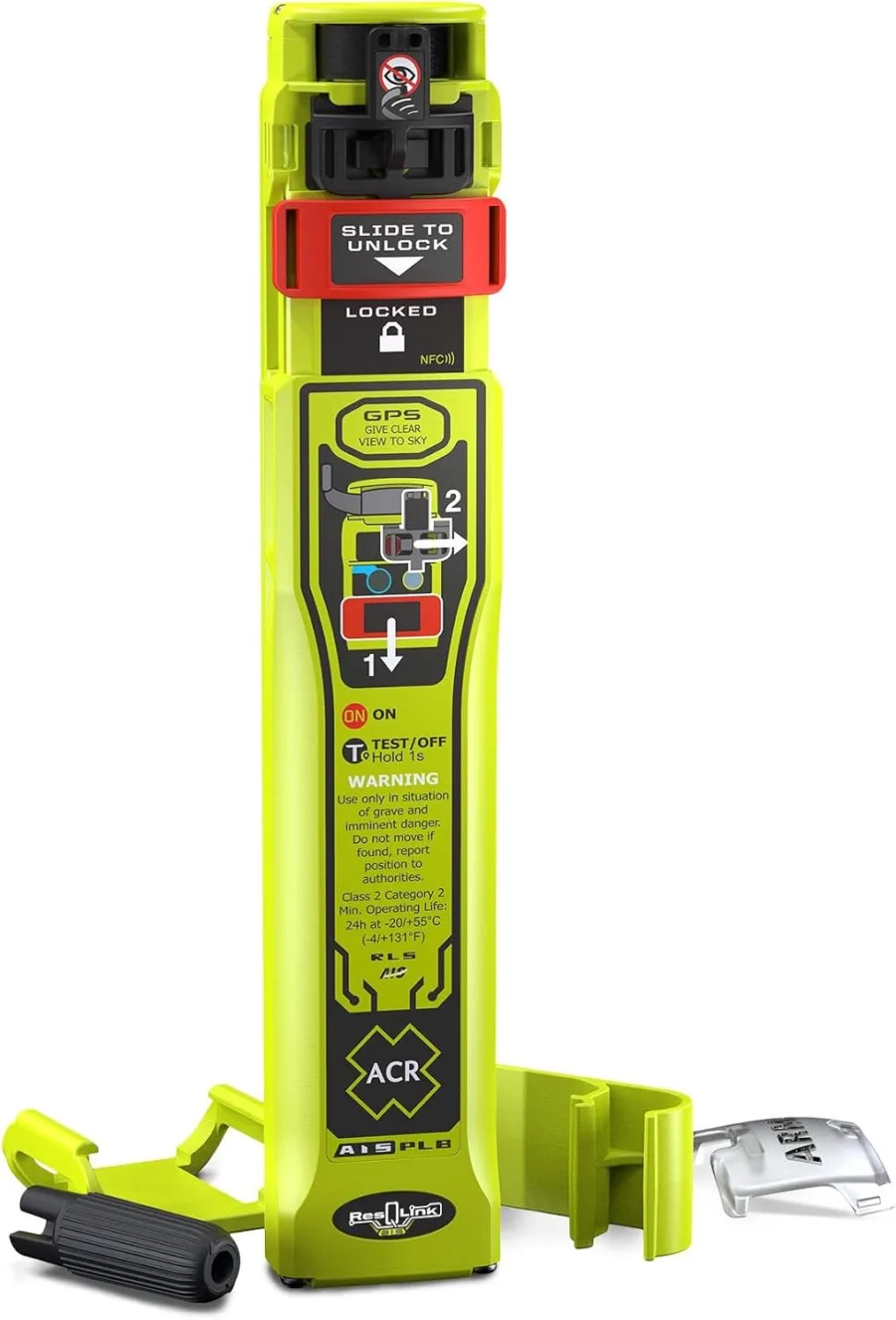 Check Price |
| Best value two-way messenger ZOLEO Satellite Communicator | Satellite messenger (Iridium) | Yes | Two-way via phone app | Rechargeable, multi-day | ~$100 (grey) | 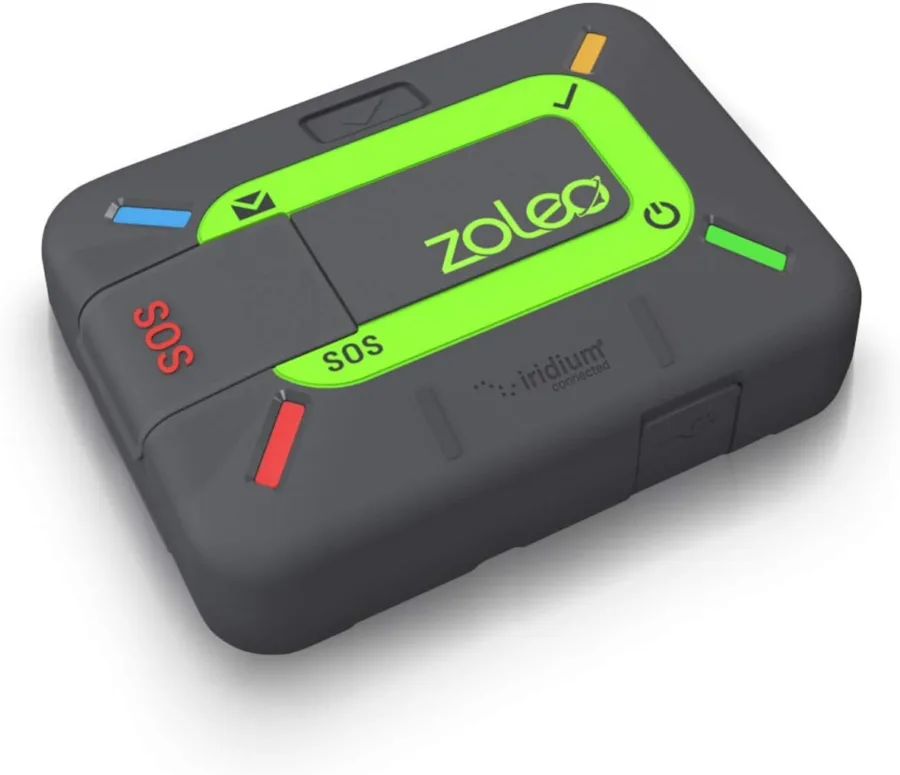 Check Price |
| Best budget SOS messenger SPOT Gen4 | One-way messenger (Globalstar) | Yes | One-way only | AAA lithium batteries | ~$100 | 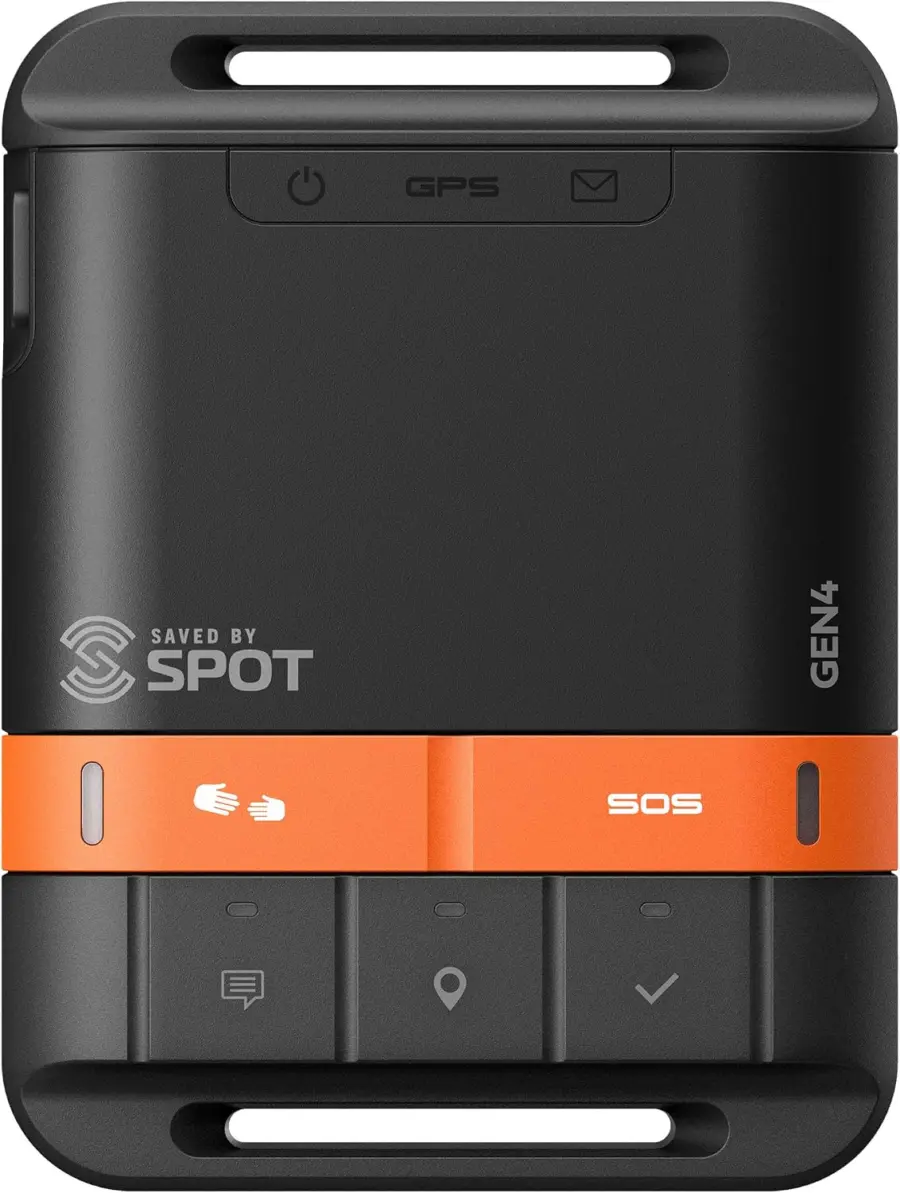 Check Price |
| Tracker only (no SOS) SPOT Trace | Satellite tracker | Yes | None | AAA batteries or USB | ~$80 | 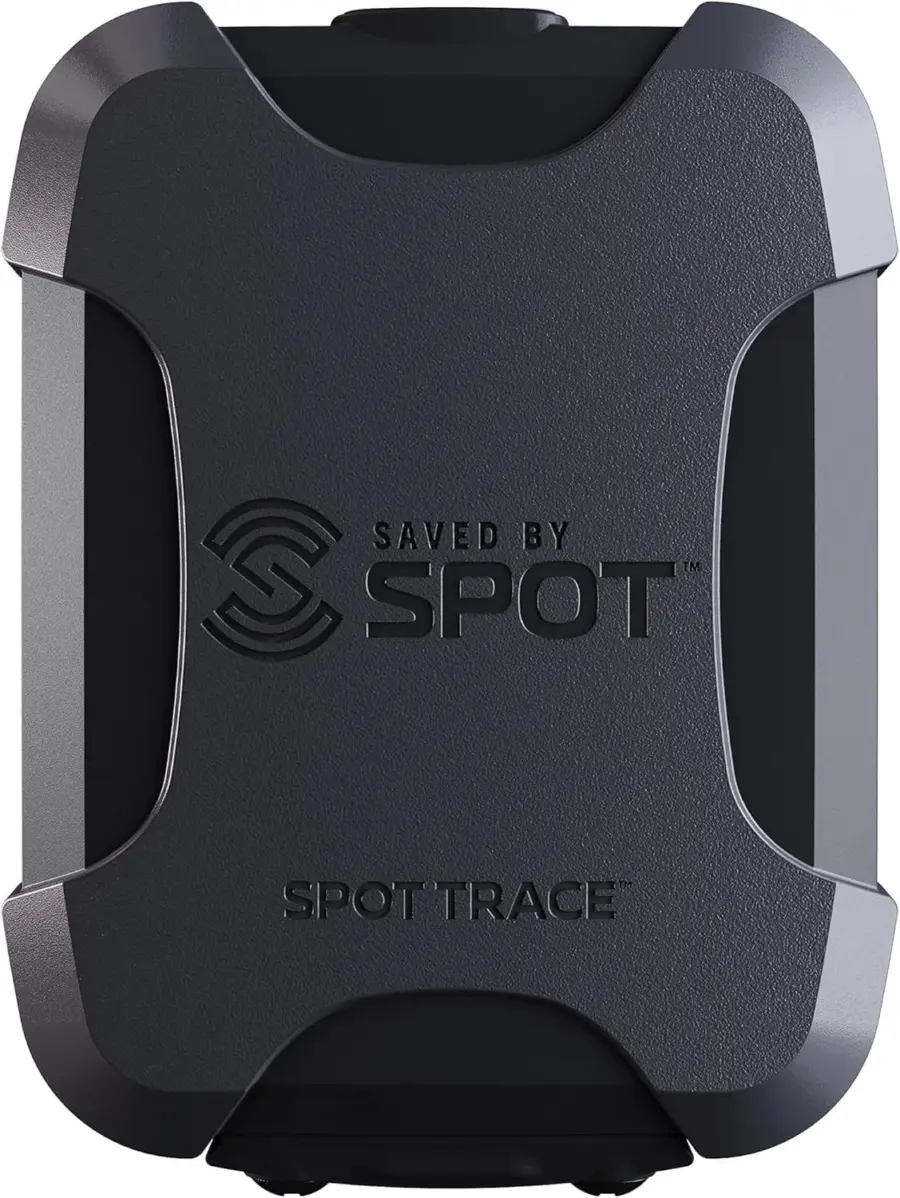 Check Price |
| Must-have accessory ACR PLB Pouch & Carabiner | Beacon pouch | No | n/a | n/a | ~$20 | 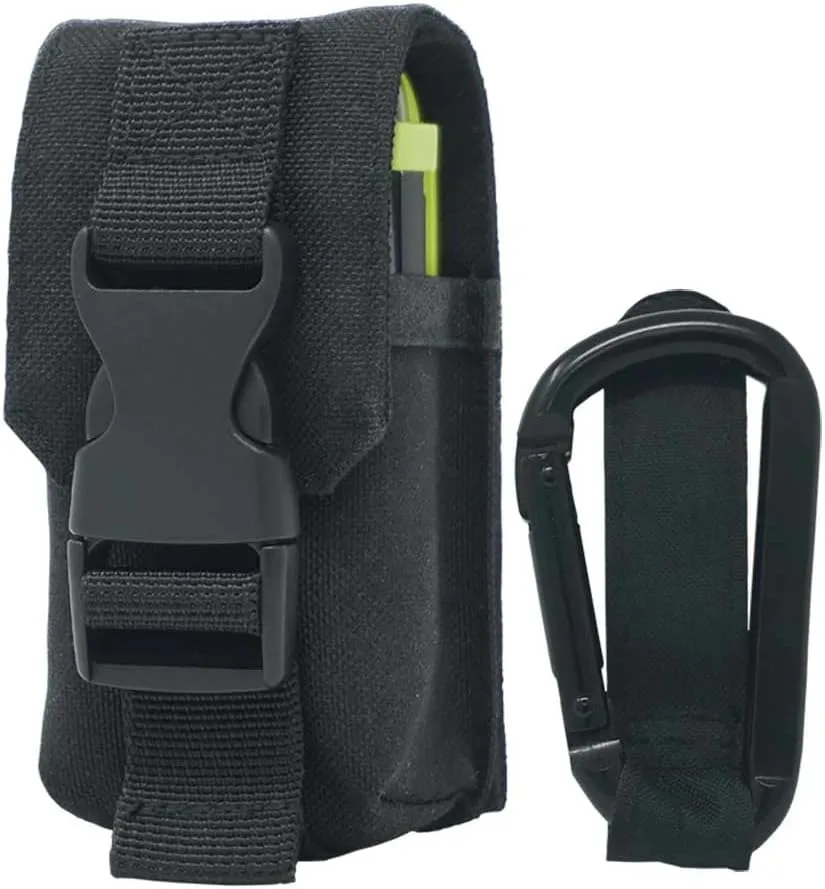 Check Price |
| Cell coverage only Silent Beacon | Bluetooth panic button | App-based | Calls via your phone | Rechargeable | ~$60 | 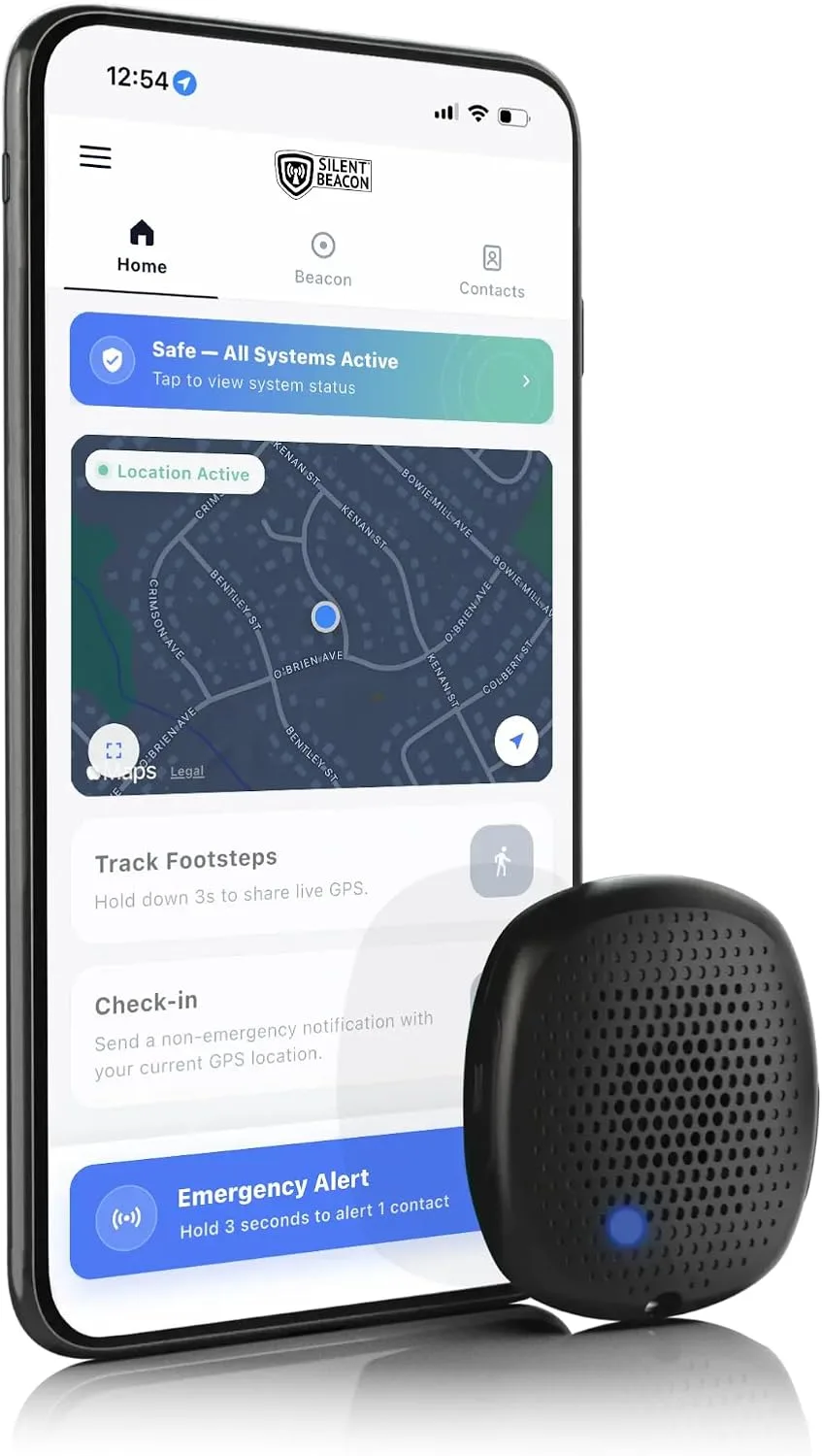 Check Price |
**Approximate Amazon prices on November 6, 2026. *The ResQLink 400 listing showed a price above ACR’s $309 MSRP from a third-party seller, so compare sellers before buying. Battery figures are manufacturer claims.
PLB vs Satellite Messenger: The Most Important Decision
Before you compare models, decide which kind of device you need. They both call for help when you’re out of cell range, but they work in very different ways.
Personal locator beacon (PLB)
A one-job device. Pull the antenna, press SOS, and it transmits on the international 406 MHz distress frequency to the government-run Cospas-Sarsat satellite system, which passes your alert and GPS position to search and rescue. In the US, that’s coordinated by the Air Force Rescue Coordination Center or Coast Guard. No subscription. Most have a 5–7 year battery and transmit for at least 24 hours. You can’t text, and most can’t tell you whether help is coming.
Satellite messenger
A two-way (or one-way) communicator that uses a commercial satellite network, like Iridium (Garmin, ZOLEO) or Globalstar (SPOT). Its SOS goes to a 24/7 private emergency response center that contacts local rescuers and can text back and forth with you. You can also send check-ins, share your location and get weather. Needs a paid plan, and the battery must be charged.
| Feature | PLB | Two-way messenger | One-way messenger |
|---|---|---|---|
| Monthly fee | None | Yes | Yes |
| Satellite network | Cospas-Sarsat (government) | Iridium (global) | Globalstar (not fully global) |
| SOS goes to | Government rescue coordination | 24/7 private response center | 24/7 private response center |
| Know help is coming? | Only with RLS models | Yes, two-way texts | No |
| Text family | No | Yes | Preset messages only |
| Signal strength | Very powerful (5 W) | Low power | Low power |
| Battery | 5–7 yr sealed battery | Rechargeable, days to weeks | Replaceable AAA |
| Best for | Emergency-only backup | Solo, multi-day and family trips | Simple check-ins on a budget |
Plain-English takeaway: if the only thing you’ll ever press is SOS, a PLB is simpler, stronger and cheaper over time. If you’ll use it every trip to say “camp reached, all good,” a messenger is worth the subscription.
The Best Personal Locator Beacons and Satellite Messengers, Reviewed
1. ACR ResQLink View RLS (Model 2932)
Best for: Anyone who wants the most capable no-subscription PLB, especially solo hikers, hunters and remote backpackers.
This is ACR’s top personal locator beacon for hikers, and the one we’d trust most. Like every true PLB, it sends a powerful 406 MHz distress signal with your GPS position straight into the Cospas-Sarsat rescue system, plus a 121.5 MHz homing signal that rescuers use to find you on the final approach. No subscription, ever.
What sets it apart is Return Link Service (RLS). Through the Galileo satellite network, it can show you a confirmation that search and rescue has received your distress signal. If you’ve ever imagined sitting injured on a ledge wondering whether anyone heard you, you’ll understand why that matters.
It also has a digital display showing status, GPS and battery, an infrared strobe, GPS plus Galileo positioning, built-in buoyancy and a clip system. ACR quotes a 5-year battery and 28+ hours of operation after activation.
The catch: at around $530 it’s one of the most expensive beacons here. It still can’t send everyday messages. And like every PLB, you must register it with NOAA (free) before your trip.
- Confirms rescuers got your SOS.
- No monthly fees.
- Clear status display.
- Strong signal, global coverage.
- Floats if dropped in water.
- Expensive up front.
- No everyday messaging.
- Battery service required after 5 years.
- Must be registered.
Who should buy it?
Solo hikers, hunters, backcountry skiers and anyone who wants maximum emergency protection without a subscription.
Who should skip it?
Hikers who want to text family on every trip. A messenger fits better.
2. Garmin inReach Mini 2
Best for: Frequent backpackers, solo hikers and anyone whose family wants check-ins.
The Mini 2 isn’t a PLB. It’s a two-way satellite communicator on the Iridium network, which covers the whole planet. Press SOS and you’re connected to Garmin Response, a 24/7 emergency center that can text back and forth with you, ask what’s wrong, and coordinate with local rescuers. That conversation can make a rescue faster and smarter.
Day to day, it’s just as useful. Send texts and emails to anyone, share a live tracking map with family, get weather forecasts, and use TracBack to retrace your route. It weighs about 3.5 ounces, and Garmin quotes battery life of up to 14 days with 10-minute tracking. Pair it with the Garmin Messenger app to type on your phone.
The catch: SOS and messaging only work with an active Garmin subscription, so budget for a monthly or annual plan. The battery needs charging on long trips (a small power bank solves that). And its low-power signal can struggle under heavy tree cover or in slot canyons.
- Talk to rescuers during an emergency.
- Text family from anywhere.
- Truly global network.
- Tiny and light.
- Weather and tracking built in.
- Subscription required for SOS.
- Must be charged.
- Weaker signal than a PLB.
- Higher long-term cost.
Who should buy it?
Solo and long-distance backpackers, parents of adventurous teens, trip leaders and anyone who wants to stay in touch.
Who should skip it?
Occasional hikers who only want an emergency button and hate subscriptions.
3. ACR ResQLink 400
Best for: Hikers who want a simple, proven emergency-only PLB.
The ResQLink 400 is the no-frills version of ACR’s beacon. Same core job: a 406 MHz SOS with GPS location to Cospas-Sarsat, plus a 121.5 MHz homing signal and a strobe. No display, no subscription, no extras to learn.
It’s buoyant, comes with a clip, and ACR rates it with a long-life battery that lasts for years in storage and transmits for 24+ hours after you activate it. For most hikers who simply want a dependable “last resort” button, this is all you need.
Watch the price: ACR’s list price is $309, but when we checked, this Amazon listing was selling above that through a third-party dealer. Compare sellers before you buy. It also has no return link, so you won’t get confirmation that help is coming.
- Simple and reliable.
- No monthly fees.
- Strong 406 MHz signal.
- Light enough for any pack.
- No confirmation of rescue.
- No display.
- Listing price above MSRP when checked.
- Must be registered.
Who should buy it?
Day hikers and backpackers who want a dedicated emergency beacon without extras.
Who should skip it?
People who want status info or message confirmation. Look at the View RLS.

4. ACR ResQLink View (PLB-425)
Best for: Hikers who want a PLB with a screen, but don’t need return-link confirmation.
The ResQLink View sits between the 400 and the RLS. It adds a digital display that shows GPS status, battery and self-test results, which makes routine testing far less guesswork. It’s buoyant, includes clips, straps and a lanyard, and sends the same 406 MHz SOS and 121.5 MHz homing signal.
ACR also offers optional 406Link tests, which can send non-emergency test messages to your contacts by text or email so you know the beacon works.
The catch: it doesn’t have Return Link Service. If you’re paying this much, check the current price of the View RLS, which adds that confirmation.
- Clear status display.
- Easier self-testing.
- No monthly fees.
- Rugged and buoyant.
- No return link.
- Pricier than the 400.
- No messaging.
Who should buy it?
Hikers who like seeing what the beacon is doing.
Who should skip it?
Anyone who can stretch to the RLS model for confirmed alerts.
5. Ocean Signal rescueME PLB1
Best for: Ultralight backpackers and trail runners who want the smallest real PLB.
The rescueME PLB1 is one of the smallest true PLBs you can buy. Ocean Signal lists it at about 4 ounces, small enough for a hip-belt pocket or shoulder strap. It sends the same 406 MHz Cospas-Sarsat distress signal with GPS position and a 121.5 MHz homing signal.
Ocean Signal quotes a 7-year battery life, longer than ACR’s 5 years, plus 24+ hours of operation and waterproofing to about 49 feet (15 m). That makes it a great “forget it’s there” beacon for long trips.
The catch: no display and no return link. Its small antenna design was originally aimed at boaters, so read the instructions on how to deploy it properly on land.
- Tiny and light.
- Longest battery life here.
- No monthly fees.
- Very waterproof.
- No display.
- No return link.
- Small buttons with gloves.
Who should buy it?
Ultralight hikers, runners, packrafters and anyone counting ounces.
Who should skip it?
Hikers who want status screens or SOS confirmation.
6. ACR ResQLink AIS (PLB-450)
Best for: Hikers who also kayak, packraft, fish or boat.
The PLB-450 adds two features on top of a standard PLB. AIS sends a local distress alert to nearby boats with AIS receivers (ACR says within about 5 miles, conditions apply), which can bring help faster on the water. RLS confirms your SOS was received. It also has NFC, so you can tap your phone to check battery and status in ACR’s app.
It still sends the standard 406 MHz Cospas-Sarsat signal, so it works for hiking too, with a 5-year battery and no subscription.
The catch: at about $620 it’s the priciest device here, and AIS adds little on land. Pure hikers get more value from the View RLS.
- Alerts nearby boats too.
- Confirms your SOS.
- Phone check via NFC.
- No subscription.
- Most expensive.
- AIS mainly helps on water.
- Fewer reviews.
Who should buy it?
Hikers who also spend time on lakes, rivers or the coast.
Who should skip it?
Land-only hikers. Save money with the View RLS.
7. ZOLEO Satellite Communicator
Best for: Hikers who want two-way satellite texting at a lower price, and are happy using their phone.
ZOLEO is the budget-friendly alternative to the inReach. It also runs on the global Iridium network and offers two-way messaging, check-ins, location sharing and a dedicated SOS button monitored 24/7. You type messages in the ZOLEO app on your phone, and the device beams them up by satellite.
A neat feature: you get your own ZOLEO phone number and email address, and messages switch automatically between cell, Wi-Fi and satellite, so you don’t miss texts when you walk back into coverage.
Two colors are on Amazon. When we checked, the Slate Grey version was about $100 and the Limestone version about $199, for the same device. Pick the cheaper color.
The catch: full messaging depends on your phone being charged and paired, and SOS needs an active ZOLEO plan.
- Great price for two-way.
- Global coverage.
- Easy phone typing.
- Seamless cell/satellite switching.
- Needs phone for messaging.
- Subscription required.
- Bulkier than Mini 2.
Who should buy it?
Budget-minded backpackers, families and road-trippers who want two-way contact.
Who should skip it?
Hikers who want a fully standalone device without a phone.
Slate GreyCheck Price (Slate Grey)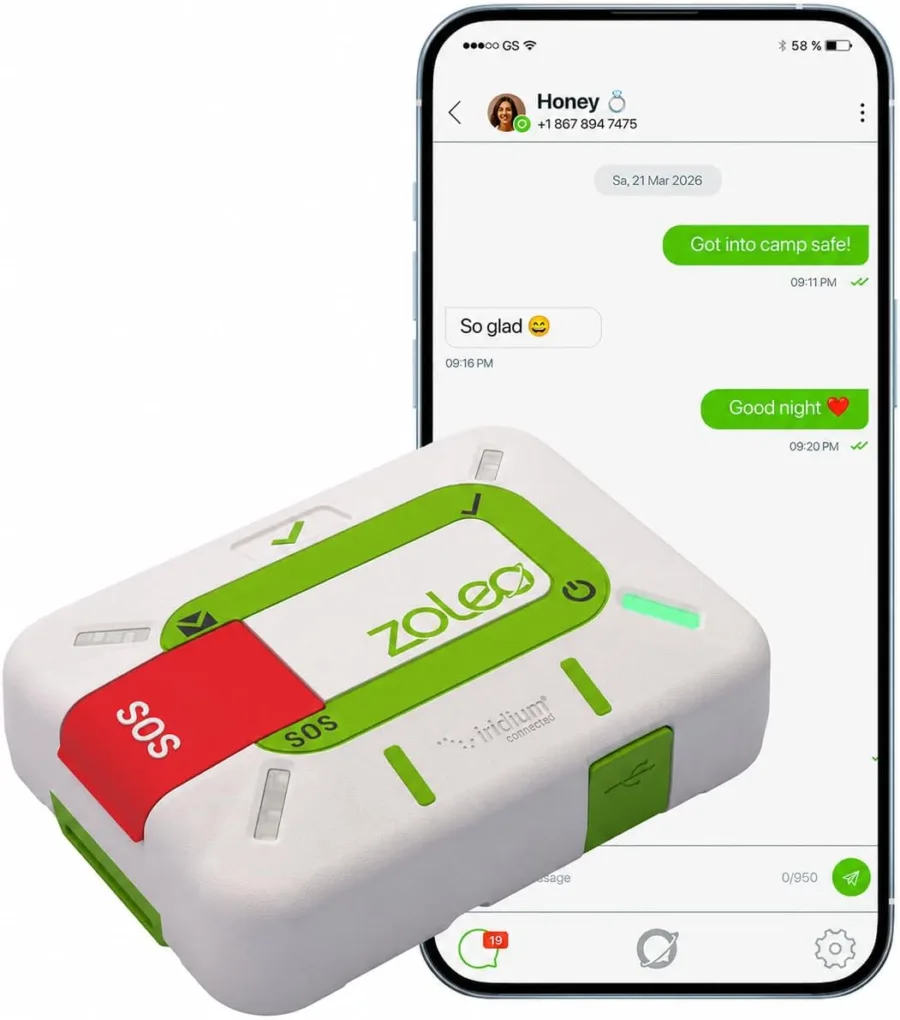 LimestoneCheck Price (Limestone)

8. SPOT Gen4
Best for: Hikers who want simple preset check-ins and an SOS button on a budget.
The SPOT Gen4 is a one-way satellite messenger on the Globalstar network. It has buttons for SOS, Help, Check-in/OK and a custom preset message, plus location tracking that family can follow online. It runs on AAA lithium batteries, which you can swap in the field.
For many weekend hikers, being able to say “I’m OK” every evening and having an SOS button is enough.
The catch: it’s one-way, so you never know if a message got through or if help is coming. Globalstar coverage isn’t fully global, so check SPOT’s coverage map for your destinations. A subscription is required.
- Affordable device.
- Simple buttons.
- Swappable batteries.
- Live tracking.
- No two-way texting.
- Coverage gaps outside core areas.
- Subscription required.
Who should buy it?
Weekend hikers in well-covered regions who just want check-ins.
Who should skip it?
Remote or international trips. Choose a PLB or Iridium messenger.
9. SPOT Trace
Best for: Tracking a vehicle, pack, boat or gear. Not for emergencies.
Let’s be clear: the SPOT Trace is a satellite tracker, not an SOS device. It has no SOS button. It reports its location by satellite and can alert you if something moves, which makes it handy for keeping tabs on a car parked at a remote trailhead, a trailer, a boat or checked luggage.
Why it’s here: it often appears in searches for hiking beacons, and we don’t want you to buy it thinking it can call for help. It can’t. It also needs a subscription.
- Tracks gear and vehicles.
- Movement alerts.
- Small and hideable.
- No SOS or messaging.
- Subscription required.
- Not a safety device.
Who should buy it?
People who want to track a car, trailer, boat or gear.
Who should skip it?
Anyone looking for emergency rescue. Buy a PLB or messenger.
10. ACR PLB Accessory Pouch & Carabiner
Best for: Anyone who owns a ResQLink (or Bivy Stick) and wants it on their body, not buried in the pack.
A beacon is useless if you can’t reach it. If you fall and your pack ends up 20 feet below you, a PLB inside it might as well be at home. This ACR pouch holds your beacon on a hip belt, shoulder strap or belt, with a belt loop and a hook-and-loop carabiner.
It’s a small, cheap add-on, but it fixes one of the most common beacon mistakes.
- Keeps beacon within reach.
- Protects it from scratches.
- Cheap.
- Accessory only.
- Check fit for non-ACR beacons.
Who should buy it?
Every ResQLink owner.
Who should skip it?
Owners of devices with their own clip system who already wear it on a strap.
11. Silent Beacon Bluetooth Panic Button
Best for: Urban walks, trailheads, campgrounds and jogging where your phone has signal.
This little button pairs with your phone by Bluetooth. Press it and your phone calls a number you choose (including 911) and sends your GPS location by text, email and push notification. It has a speaker and microphone for two-way calls.
Important for hikers: it has no satellite connection. It only works if your phone is nearby, charged, and has cell or internet signal. In most backcountry areas, that means it won’t work at all. Its Amazon rating was also low (2.9 stars) when we checked.
We include it so you can see the difference. For walks in town, parking lots or busy campgrounds with coverage, it’s a handy panic button. For real hiking, choose a PLB or satellite messenger above.
- Calls for help quickly.
- Shares GPS location.
- Small and wearable.
- No satellite. Fails without signal.
- Depends on your phone.
- Low owner ratings.
Who should buy it?
Urban walkers, joggers and campground users within cell coverage.
Who should skip it?
Anyone hiking beyond cell service.
Which Emergency Beacon Should You Buy?
| If you… | Choose | Why |
|---|---|---|
| Want the best no-fee emergency beacon | ACR ResQLink View RLS | Confirms rescuers got your SOS |
| Hike solo and want to text home | Garmin inReach Mini 2 | Two-way texting, global coverage |
| Want two-way texting for less | ZOLEO Satellite Communicator | Lower price, phone-based messaging |
| Just want a simple last-resort button | ACR ResQLink 400 | Proven, no frills, no fees |
| Count every ounce | Ocean Signal rescueME PLB1 | About 4 oz, 7-year battery |
| Also paddle or boat | ACR ResQLink AIS PLB-450 | AIS alerts nearby boats |
| Want cheap check-ins in covered areas | SPOT Gen4 | Preset OK messages and SOS |
| Want to track your car or gear | SPOT Trace | Tracker only, no SOS |
| Walk in town with phone signal | Silent Beacon | Bluetooth panic button |
Head-to-Head Comparisons
ACR ResQLink View RLS VS Garmin inReach Mini 2
| Feature | ACR ResQLink View RLS | Garmin inReach Mini 2 |
|---|---|---|
| Photo | | |
| Type | PLB | Two-way messenger |
| Subscription | None Cheaper | Required |
| Messaging | SOS confirmation only | Full texting Better |
| Signal power | Strong 406 MHz Stronger | Low power |
| Battery | 5-yr sealed No charging | Rechargeable |
| Price | ~$530 | ~$299 |
| Shop | Check Price | Check Price |
Garmin inReach Mini 2 VS ZOLEO
| Feature | Garmin inReach Mini 2 | ZOLEO Satellite Communicator |
|---|---|---|
| Photo | | |
| Network | Iridium | Iridium |
| Typing | On device or phone Standalone | Phone app |
| Weight | 3.5 oz Lighter | Heavier |
| Navigation | TracBack, compass More | Basic |
| Price | ~$299 | ~$100 Cheaper |
| Shop | Check Price | Check Price |
ResQLink 400 VS ResQLink View VS rescueME PLB1
| Feature | ACR ResQLink 400 | ACR ResQLink View | Ocean Signal rescueME PLB1 |
|---|---|---|---|
| Photo | | | |
| Display | No | Yes Best | No |
| Battery life | 5 yr | 5 yr | 7 yr Longest |
| Weight | ~5 oz | ~5 oz | ~4 oz Lightest |
| Price | ~$397 | ~$470 | ~$400 |
| Shop | Check Price | Check Price | Check Price |
SPOT Gen4 VS ZOLEO
| Feature | SPOT Gen4 | ZOLEO Satellite Communicator |
|---|---|---|
| Photo | | |
| Messaging | One-way | Two-way Better |
| Network | Globalstar | Iridium (global) Wider |
| Know help is coming? | No | Yes Safer |
| Batteries | AAA lithium Swappable | Rechargeable |
| Shop | Check Price | Check Price |
How Much Does an Emergency Beacon Cost Over Time?
Don’t compare sticker prices alone. A PLB costs more up front but nothing per month. A messenger is cheaper to buy, but the plan adds up. Here’s an illustrative three-year example (not current plan pricing):
| Cost | PLB (e.g. ResQLink) | Two-way messenger |
|---|---|---|
| Device | $350–$530 | $100–$300 |
| Plan (example $15–$25/month) | $0 | $540–$900 over 3 years |
| Battery service | After 5–7 years | Rechargeable |
| 3-year example total | $350–$530 | $640–$1,200 |
Example figures only. Garmin, ZOLEO and SPOT change plans often and many offer cheaper annual or seasonal plans. Check their current pricing before you buy.
Buying Guide: How to Choose a PLB or Satellite Messenger
1. Where do you hike?
Busy trails near town may have patchy cell signal. Remote wilderness, deep canyons and Alaska don’t. The farther from roads, the more you need a satellite device.
2. Do you need two-way messaging?
This is the big one. Emergency only: PLB. Want check-ins, weather and to talk with rescuers: two-way messenger.
3. Check the network
PLBs use Cospas-Sarsat, which works worldwide. Iridium (Garmin, ZOLEO) is global. Globalstar (SPOT) has gaps, so check the coverage map.
4. Battery and power
PLBs have a sealed 5–7 year battery that needs factory service when it expires. Messengers need charging, so carry a power bank on long trips.
5. Weight and size
Anything from about 3.5 oz (Mini 2) to 5 oz is easy to carry. What matters more is that it lives on your shoulder strap, not in the pack.
6. Return link (RLS)
Newer PLBs with RLS show that your distress alert was received. It’s a big confidence boost in a scary situation.
7. Durability and water
Look for waterproofing (and buoyancy if you’re near water) and a rugged case. Compare the manufacturer’s specs.
8. The full cost
Add the subscription to the device price. For occasional hikers, a PLB usually wins. For frequent trips, a messenger’s extra features may be worth it.
How to Register a Personal Locator Beacon in the USA
Every US-coded 406 MHz PLB must be registered with NOAA. It’s free, and it means rescuers instantly know who you are, who to call, and what you might be doing.
- Go to the NOAA Beacon Registration site and create an account.
- Enter your beacon’s unique ID (UIN/Hex ID) from the label.
- Add two emergency contacts who know your hiking habits.
- Describe your usual activities (hiking, hunting, boating) and vehicle.
- Renew your registration every two years, and update it whenever your contacts change.
- Note the battery expiry date and run the manufacturer’s self-test before each season.
Messengers are different: Garmin, ZOLEO and SPOT don’t use NOAA registration. Instead you activate the device with a service plan and set emergency contacts in your account. SOS won’t work without an active plan.
How to Use a PLB or Satellite Messenger in an Emergency
- Only activate in a real, life-threatening emergency when you can’t get help any other way.
- Get a clear view of the sky. Move out of dense trees or deep canyons if you safely can.
- Deploy the antenna fully and hold it upright, pointing at the sky. Don’t cover it with your hand or body.
- Press SOS and leave it on. Don’t turn it off to check, and keep it transmitting until rescuers reach you.
- With a messenger, reply to the response center. Tell them how many people, the injury, and your supplies.
- Stay put if you can, stay warm and visible, and use your strobe, whistle or bright clothing.
Accidental activation? Turn it off right away and call the US Air Force Rescue Coordination Center or the Coast Guard to cancel. There’s no penalty for an honest mistake that you report quickly. Never press SOS “just to test” it: use the self-test button.
Can You Rely on Your Smartphone’s Satellite SOS?
Some newer phones, including iPhone 14 and later and several recent Android models, can text emergency services by satellite. That’s a great backup. But availability depends on your exact phone, carrier, country and software, and your phone’s battery may already be low after a day of navigation and photos.
A dedicated PLB or messenger has its own battery, a stronger or more reliable signal, and is built to survive drops and water. For remote trips, we’d carry one even if your phone has satellite SOS. And remember the cheap gadgets that only work through your phone’s cell signal, like the Silent Beacon, aren’t backcountry tools.
8 Common Emergency Beacon Mistakes
- Buying a messenger when you only need SOS and paying for a plan you never use.
- Buying a PLB when you want check-ins. A PLB can’t tell family you’re running late.
- Letting the subscription lapse. Most messengers can’t send SOS without an active plan.
- Not registering your PLB with NOAA.
- Keeping it inside the pack. Wear it where you can reach it with one hand.
- Forgetting to charge the messenger.
- Thinking SOS means instant rescue. Weather, terrain and distance can mean hours or more.
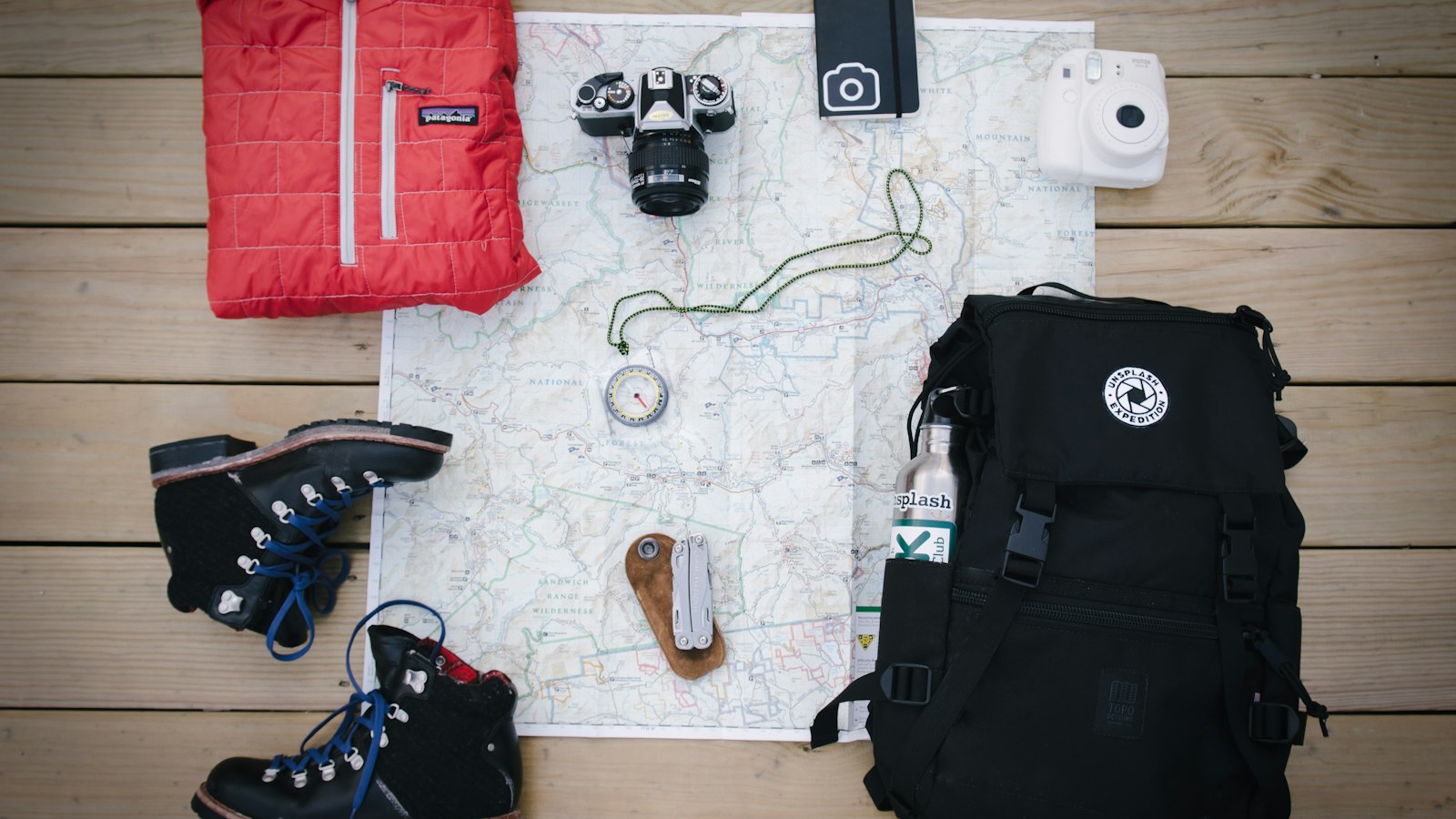
- Replacing trip planning with a gadget. Still carry a map, first aid, water treatment and tell someone your plan.
What Else to Carry With Your Beacon
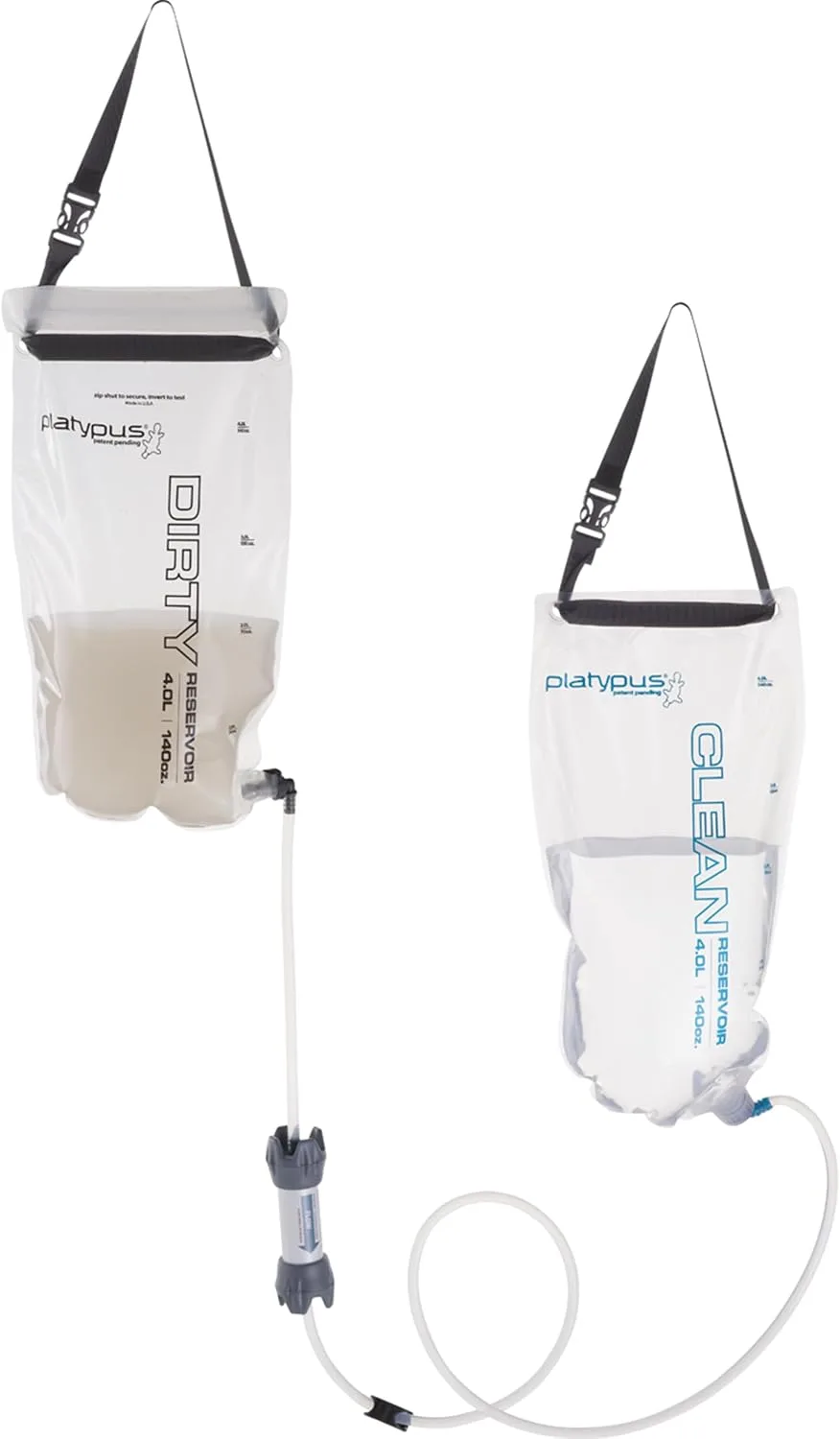
A beacon calls for help, but you still need to survive until it arrives. Pair it with a NOAA weather radio, a camping water filter, warm layers, a headlamp and first aid. Our ultralight backpacking gear list and hiking for beginners guide cover the full kit. Planning a remote trip like the Kalalau Trail, Harding Icefield or Katahdin’s Knife Edge? That’s exactly where a beacon belongs.
Frequently Asked Questions
What is the best personal locator beacon for hiking?
The ACR ResQLink View RLS is the best overall PLB because it adds Return Link Service, which confirms rescuers received your SOS. For a simpler, cheaper PLB, look at the ACR ResQLink 400 or Ocean Signal rescueME PLB1. If you want two-way texting, the Garmin inReach Mini 2 is the best messenger.
Do personal locator beacons work without cell service?
Yes. True PLBs and satellite messengers use satellites, not cell towers, so they work in the backcountry. Devices that pair with your phone over Bluetooth, like the Silent Beacon, need your phone’s signal and won’t work out of coverage.
Do PLBs require a monthly subscription?
No. 406 MHz PLBs use the government Cospas-Sarsat system, so there’s no plan to pay. You just register the beacon free with NOAA. Satellite messengers like Garmin, ZOLEO and SPOT do need a paid plan.
Can a PLB send text messages?
No. A PLB only sends a distress signal with your location. Some newer models with RLS can show that your alert was received. For texting, choose a two-way satellite messenger.
Is a Garmin inReach a PLB?
No. The inReach is a satellite communicator that uses the Iridium network and Garmin’s private response center. It’s not a 406 MHz Cospas-Sarsat PLB.
PLB or inReach: which is better for hiking?
For emergency-only backup with no fees, a PLB. For solo, multi-day or family trips where you’ll message home, an inReach or ZOLEO. Some serious adventurers carry both.
Do I have to register a PLB?
Yes, in the US every 406 MHz PLB must be registered with NOAA. It’s free, and you should renew it every two years or whenever your details change.
How long does a PLB battery last?
Most PLB batteries last 5 to 7 years in storage, depending on the model (ACR quotes 5 years, Ocean Signal quotes 7). Once activated, they transmit for at least 24 hours. Replace or service the battery by the expiry date on the label.
Can I test my PLB?
Yes, use the self-test button as the manual describes. Never trigger a real SOS to test it.
What happens if I press SOS by accident?
Switch the device off and contact the rescue coordination center (for PLBs) or your messenger’s response center to cancel. Reporting a false alarm quickly is what matters.
How long does rescue take after pressing SOS?
It varies with weather, terrain and how remote you are. Alerts can reach rescuers within minutes, but getting to you may take hours. Stay sheltered and visible.
Does a PLB work in national parks?
Yes. PLBs and satellite messengers work in US national parks with a clear view of the sky. Rescue is coordinated with park rangers and local search and rescue teams.
Can I use an iPhone instead of a PLB?
iPhone 14 and later can text emergency services by satellite in supported countries. It’s a good backup, but a dedicated beacon has its own battery and is more rugged, so we still recommend one for remote trips.
What’s the difference between ResQLink 400, View and View RLS?
All three are ACR 406 MHz PLBs. The 400 has no display, the View adds a digital display, and the View RLS adds both a display and Return Link Service confirmation.
Shop All Emergency Beacons: Tap Any Photo
Every device from this guide in one place. Tap a photo or button to check the current price on Amazon.
Final Verdict: Best Personal Locator Beacon for Hiking
For a no-subscription emergency lifeline, the ACR ResQLink View RLS is our top pick. Its return link confirmation is worth the premium on remote trips. The ACR ResQLink 400 and Ocean Signal rescueME PLB1 are excellent simpler options.
If you’d rather stay in touch, the Garmin inReach Mini 2 is the best two-way satellite messenger, and ZOLEO delivers most of that for less. Whatever you choose, register or activate it before you go, keep it on your body, and always share your trip plan with someone at home.
Our winner: Check the ACR ResQLink View RLS on AmazonComplete Your Safety Kit: Readers’ Favorite Picks From Our Other Gear Guides
A beacon is your last line of defense. These top picks from our other buying guides help you stay safe and comfortable out there. Tap a photo to see it on Amazon.
More Hiking Safety & Gear Guides
Editorial disclosure: This guide is based on manufacturer specifications from ACR, Ocean Signal, Garmin, ZOLEO, SPOT and Silent Beacon, Amazon listings, owner reviews and guidance from NOAA and Cospas-Sarsat. No field test is claimed. Emergency devices can’t guarantee rescue. Always follow the manufacturer’s instructions.