
You did everything right. Good tent, decent sleeping bag, a pad under you. And still, around 4 a.m., you wake up a little chilly, a little sticky, and wondering when that bag was last washed.
That’s exactly the gap a sleeping bag liner fills. It’s a thin sack you sleep in, inside your bag. It keeps sweat and body oil off the bag, it can add a bit of warmth, and on its own it doubles as a clean sheet in a hostel, a cabin or a so-so motel.
This guide compares the best sleeping bag liners for camping, backpacking and travel: microfiber, fleece, ultralight polyester and 100% cotton. You’ll see which one fits a mummy bag, which one adds the most warmth, which one is lightest, and when you’d actually be better off with a cheap summer sleeping bag instead. Everything is explained in plain English.
Affiliate disclosure: As an Amazon Associate, JoinHikes earns from qualifying purchases. If you buy through Amazon links in this article, we may earn a commission at no extra cost to you. It never changes how we rank products.
How we chose: We compared manufacturer specs, Amazon listing details, and ratings and review counts (checked November 12, 2026). We looked at fabric, shape, size, weight, packed size, how you get in and out, and how each liner fits into a real camping sleep system. We haven’t run our own hands-on tests and we don’t invent results. Any “adds X degrees” figure below is the seller’s claim, not our measurement. Prices and ratings change, so check the listing before you buy.
Quick Answer: What’s the Best Sleeping Bag Liner?
For most campers, the Friendly Swede Microfiber liner is the best all-rounder. It’s soft, roomy (41 x 86 inches), machine washable, and has a full-length side zipper so you can get in and out easily. If you sleep cold, the Litume Fleece Mummy liner is the warmest pick here and is shaped for mummy bags. If you count every ounce, the Frelaxy Ultralight starts at just 196 grams.
On a tight budget, the JAICOM Travel Sheet costs the least. For hotels and hostels, the Mannice Sleep Sack has a built-in pillowcase. If you want real cotton that feels like a bedsheet, choose the Cozysilk 100% Cotton liner.

Key Takeaways
- Every liner keeps your bag cleaner. Sweat and body oil end up on a liner you can toss in the washer, not on your sleeping bag.
- Only some liners add real warmth. Fleece and thick microfiber help most. Thin polyester, silk and cotton are mainly for hygiene.
- Shape matters. Mummy liners fit tapered backpacking bags. Rectangular liners suit roomy camping bags, cots and beds.
- “Adds 10°F” is a seller claim, not a rating. Don’t add it to your bag’s temperature rating and expect a comfortable night.
- Cold from below? Fix your pad first. A liner can’t stop cold coming up from the ground.
- A liner won’t stop bed bugs. It keeps you off dirty sheets, but it isn’t a bug barrier.
What Is a Sleeping Bag Liner (and Do You Need One)?
A sleeping bag liner is a lightweight sack, shaped like a sleeping bag but with no insulation in it. You slide it inside your bag and sleep in the liner. Think of it as a fitted sheet and top sheet sewn together for your sleeping bag.
It does four jobs, and different liners are better at different ones:
1. Keeps your bag clean
Your skin leaves sweat, oil and sunscreen on whatever you sleep in. A liner catches it. You wash the liner after a trip and wash the bag far less often, which is good news for down bags that don’t love the washer.
2. Adds a little warmth
It’s one more layer that traps air. Fleece and brushed microfiber add the most. Thin travel sheets add very little.
3. Clean sheet anywhere
Hostels, mountain huts, cabins and budget motels. Sleep on your own fabric instead of sheets you’re not sure about.
4. A summer “bag” on its own
On hot, muggy nights a sleeping bag is too much. A liner on its own, or under an open bag, can be all you need.
Do you need one? If you camp more than a few nights a year, own an expensive down bag, sleep a little cold, or stay in hostels and huts, a liner is one of the cheapest upgrades you can make. If you camp once a summer in a cheap synthetic bag you can throw in the washer, clean sleep clothes may be enough.
Quick Comparison: Best Sleeping Bag Liners
Sizes and weights are as listed by each seller (size shown is the single/standard version unless noted). Ratings from Amazon, checked November 12, 2026.
| Liner | Fabric | Shape | Size | Weight | Standout | Amazon rating | Shop |
|---|---|---|---|---|---|---|---|
| Best overall Friendly Swede Microfiber | Microfiber | Rectangular | 41 x 86 in | 17.6 oz (500 g) | Full side zipper | 4.4 (2,212) |  Check Price |
| Best premium choice Litume Fleece Mummy | Fleece | Mummy + hood | See listing | See listing | Drawstring hood | 4.6 (811) |  Check Price |
| Best ultralight Frelaxy Ultralight | Upgraded synthetic | Rectangular | 3 sizes | 196 / 257 / 310 g | Open top | 4.3 (255) | 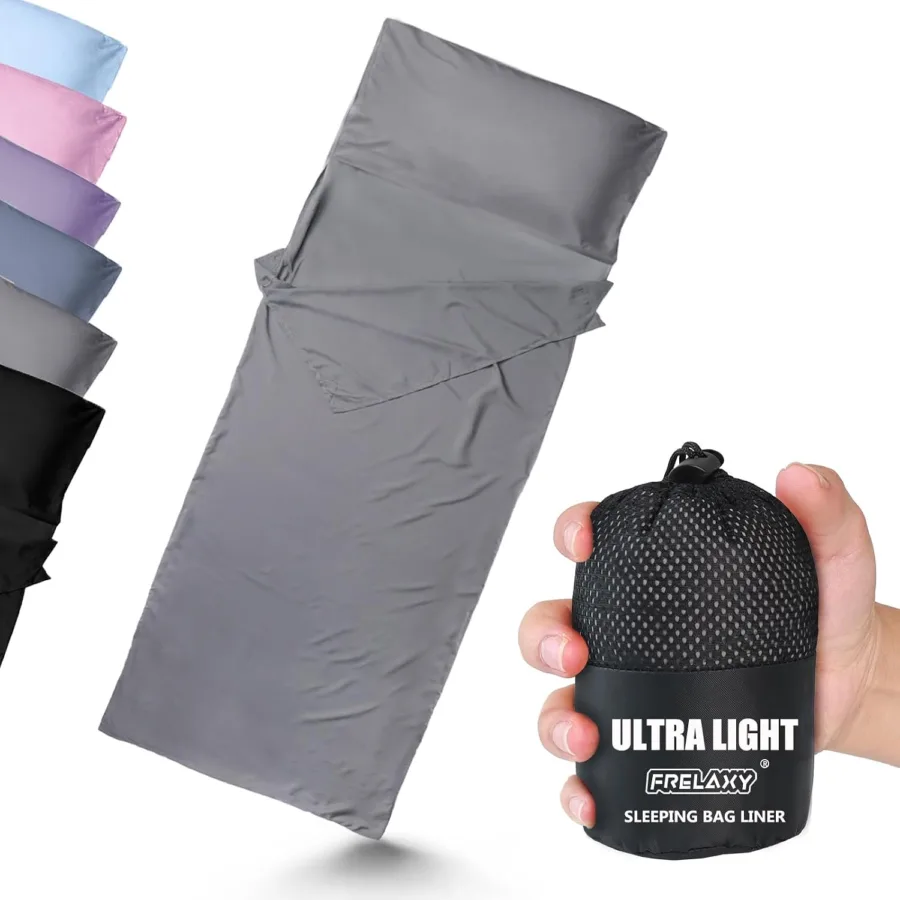 Check Price |
| Best value Mannice Sleep Sack | Sanded polyester | Rectangular | 3 sizes | 1.26 lb | Pillowcase + snaps | 4.4 (1,231) | 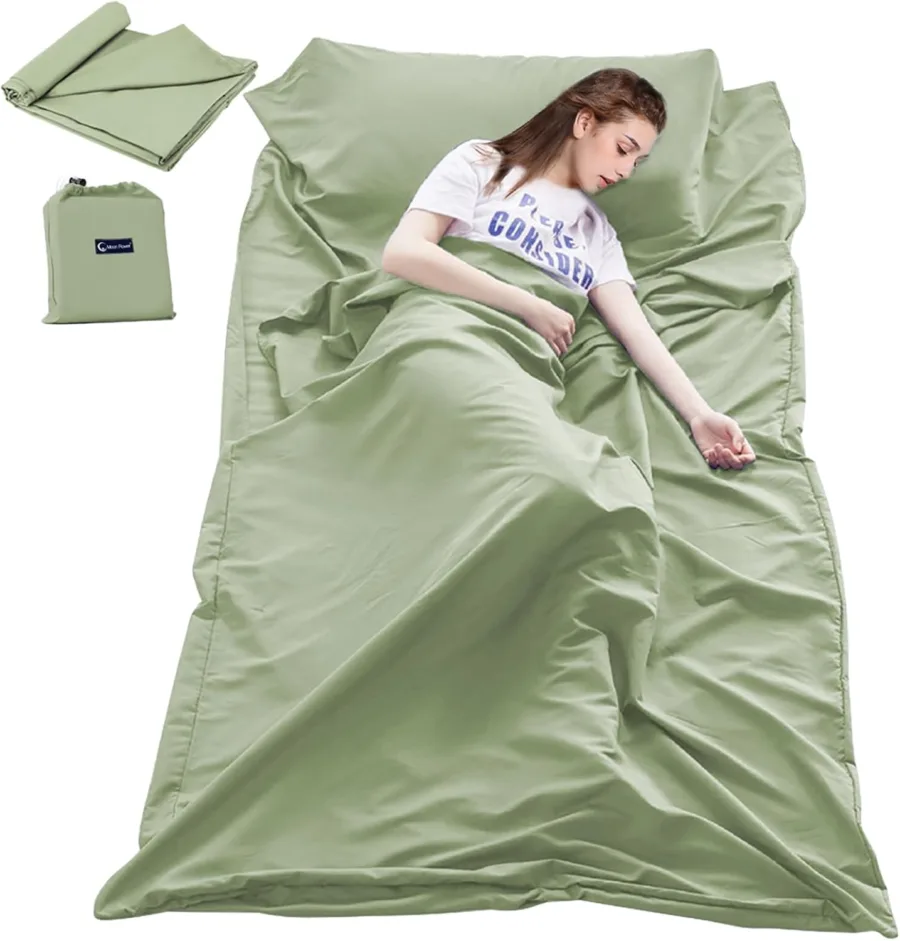 Check Price |
| Best budget option JAICOM Travel Sheet | Polyester | Rectangular | 35.4 x 86.6 in | 1.2 lb | Pillow pocket | 4.4 (552) |  Check Price |
| Best cotton liner Cozysilk Cotton Liner | 100% cotton sateen | Rectangular | 41 x 87 in (Single Luxury) | 552 g (1.22 lb) | Two-way side zipper | 4.2 (608) |  Check Price |
At the time of writing, most liners here cost roughly $18 to $36, with the Litume fleece liner closer to $58. Prices change often, so tap through for today’s price.
The 6 Best Sleeping Bag Liners, Reviewed
1. The Friendly Swede Microfiber Sleeping Bag Liner
Best for: Most campers and travelers who want one liner for the tent, the cabin and the hostel.
The Friendly Swede liner gets the basics right. It’s made of soft microfiber, and at 41 x 86 inches inside it’s roomy enough to turn over without twisting the whole liner around you. That’s a real problem with narrow, cheap liners.
The big plus is the full-length side zipper with a double slider. Most liners are just an open sack you wriggle into. With a zipper, it opens all the way down like a sleeping bag, so getting in, getting out for a midnight bathroom trip, or opening it up on a hot night is easy. The brand says it adds up to 10°F of warmth. Treat that as “a noticeable bit warmer”, not a number to add to your bag’s rating.
It weighs 17.6 oz (500 g) and folds into a stuff sack about 6 x 8 inches. It’s machine washable and comes in three sizes. With 4.4 stars from 2,200+ ratings, it has the biggest review base of the liners in this guide.
- Zipper makes getting in and out easy
- Roomy rectangular cut for side sleepers
- Soft, cotton-like feel
- Largest review base in this guide
- Heavier than ultralight liners
- Rectangular, so it can bunch inside a slim mummy bag
- The 10°F warmth figure is the brand’s claim
2. Litume Fleece Mummy Sleeping Bag Liner
Best for: Cold sleepers, shoulder-season campers, and anyone with a mummy bag that’s a bit too cool.
If your real problem is being cold, a thin sheet won’t fix it. Fleece will help more. The Litume liner is made from thick, soft fleece and cut in a mummy shape with a drawstring hood, so it follows the shape of a backpacking bag instead of bunching up inside it. The hood matters because a lot of heat escapes around your head and shoulders.
Litume claims it adds up to 27°F (15°C). That’s a big claim, and real-world warmth depends on your bag, pad, clothing and how cold you sleep, so think of this as the warmest liner in our list rather than a guaranteed number. It comes with a compression bag, it’s machine washable, and owners give it 4.6 stars from 800+ ratings, the highest score among the liners here.
The trade-off is bulk and price. Fleece takes up more room in your pack than a thin liner, and at about $58 at the time of writing, it costs two to three times as much as most picks here.
- Warmest liner in this guide
- Mummy cut fits backpacking bags
- Hood helps hold heat in
- Highest rating of the liners here
- Bulkier to pack than thin liners
- Costs the most
- Can feel too warm on summer nights

3. Frelaxy Ultralight Sleeping Bag Liner
Best for: Backpackers and thru-hikers who want a clean layer and care about every ounce.
Frelaxy’s liner is all about low weight. Depending on the size you choose, it weighs 196 g, 257 g or 310 g (about 6.9, 9.1 or 10.9 oz). Even the biggest version is lighter than most standard liners. The brand says its fabric feels like cotton at about half the weight, and that it dries faster than cotton.
Three sizes is a real advantage. Ultralight hikers can take the smallest, while taller or wider sleepers can size up and still stay light. It works as a hygiene layer inside your bag, as a warm-weather “bag” on its own, or as a hostel sheet.
Don’t buy it for warmth. A thin liner like this is about keeping clean and comfortable, not adding insulation. It has 4.3 stars from 250+ ratings, a smaller review base than our top picks.
- Lightest liner in this guide
- Three sizes to choose from
- Great as a summer sheet on its own
- Affordable
- Adds little warmth
- Smaller review base
- Open sack, no full zipper
4. Mannice Lightweight Sleep Sack (Travel Sheet Liner)
Best for: Travelers who use hotels, hostels and campgrounds and want a pillowcase built in.
The Mannice Sleep Sack is a travel sheet first, and it’s a good one. It’s made of sanded (brushed) polyester, which the brand describes as silky-soft and quiet, with no crinkly noise when you roll over. The detail travelers love is the integrated pillowcase. You slip a hotel or hostel pillow into it, so your face never touches a pillow you don’t trust.
It has press buttons along the top instead of a long zipper, weighs 1.26 lb, and comes in three sizes: single, one-or-two person, and double. That makes it one of the few liners that works for couples sharing a bed. It’s machine washable and can tumble dry on low. Mannice says it adds 10 to 15°F inside a winter bag. Again, that’s the brand’s claim.
It sells under two Amazon listings with the same name. Both lead to the same product family, so compare color, size and price on each and take whichever is cheaper today. It’s rated 4.4 stars from 1,200+ ratings.
- Pillowcase pocket is great for hotels and hostels
- Double size for couples
- Easy machine wash and dry
- Low price for what you get
- Not the lightest
- Rectangular shape bunches in a mummy bag
- Snaps instead of a full zipper
5. JAICOM Ultralight Sleeping Bag Liner & Travel Sheet
Best for: Anyone who wants a clean, washable layer for the least money.
JAICOM’s liner usually costs the least in this guide. For that, you get a polyester travel sheet measuring 86.6 x 35.4 inches that weighs 1.2 lb and packs to about 7.8 x 3.9 inches.
Its smart touch is a pillow compartment on the back. Tuck your pillow in and it stays put all night instead of sliding off the pad. That’s useful on a slippery sleeping pad, not just in hotels. The brand says it’s machine washable without fading and air-dries quickly.
At 35.4 inches wide, it’s narrower than the Friendly Swede or the Cozysilk, so broad-shouldered sleepers may feel snug. It has 4.4 stars from 550+ ratings.
- Lowest price in this guide
- Pillow pocket keeps your pillow in place
- Packs small
- Easy to wash
- Narrower than our top pick
- Thin, so little added warmth
- Smaller review base than the leaders
6. Cozysilk 100% Cotton Sleeping Bag Liner with Zipper
Best for: Car campers, cabin trips, RVs and guest beds, where comfort matters more than weight.
Some people just want real cotton. The Cozysilk liner (sold under the GANNAFEE name) is 100% cotton sateen, soft and smooth like a good bedsheet, and it breathes well on warm nights.
It has a nearly full-length side zipper. You can flip the liner over to put the zipper on whichever side you get in from, and the brand calls it a “tearaway” zipper: sit up and pull, and it opens quickly. The single version weighs 552 g (1.22 lb) and folds into a pouch about 8.3 x 8.3 inches. The Single Luxury size is 41 x 87 inches.
Cotton has downsides outdoors. It’s heavier than synthetic fabrics for the same size, it holds moisture, and it dries slowly. So it’s a car-camping and indoor liner, not a backpacking one. It’s rated 4.2 stars from 600+ ratings.
- Real cotton feel, like a bedsheet
- Zipper works from either side
- Roomy
- Great for cots, RVs and cabins
- Heavier and bulkier than synthetics
- Cotton holds moisture and dries slowly
- Not for backpacking

Not a Liner, But Worth Knowing: Sleeping Bags and an Emergency Bivy
Here’s an honest truth: if your sleeping bag is simply not warm enough for the conditions, no liner will fix it. And if you’re camping on hot summer nights, a cheap, light sleeping bag can be nicer than a liner alone. These four products show up next to liners when you shop, and each one solves a different problem.
A. Coleman Heritage Big & Tall 10°F Flannel Sleeping Bag
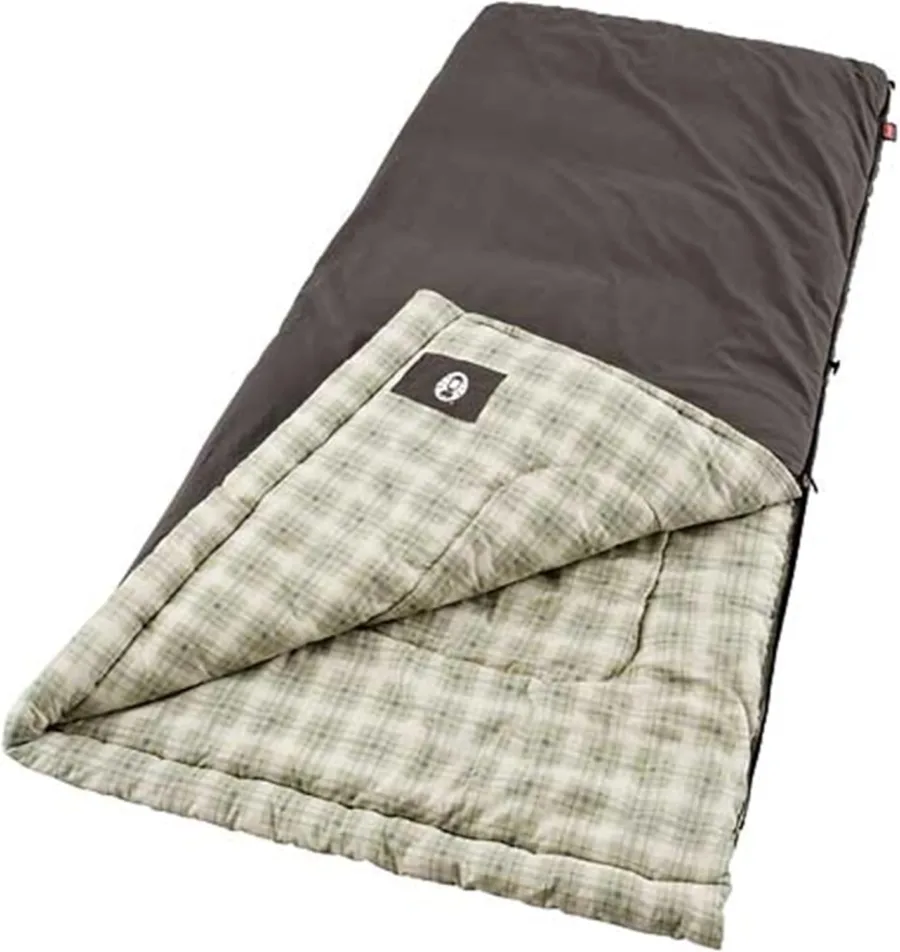
Best for: Car campers who want a big, warm, washable bag with a soft flannel lining.
The Coleman Heritage Big & Tall is the “I never want to buy a liner” option. It has a synthetic flannel lining sewn in, a heavy-duty cotton cover, and 5 lb of Holofill 808 insulation. Coleman rates it at 10°F, and the whole bag is machine washable, so there’s no outer bag to protect.
It’s huge: 40 x 84 inches, sized for tall adults (the listing says up to 6 ft 7 in). Coleman’s no-snag zipper, FiberLock (to stop insulation shifting) and Wrap ‘N Roll storage system are included. Owners rate it 4.7 stars from 3,800+ ratings, the highest score of every product in this guide.
It’s far too heavy and bulky to carry on your back. This is strictly a car-camping, cabin and hunting-camp bag.
- Soft flannel lining means no liner needed
- Machine washable
- Roomy for tall and broad sleepers
- Highest rating in this guide
- Very heavy and bulky
- Car camping only
- Costs much more than a liner
B. KANYAK Camping Sleeping Bag
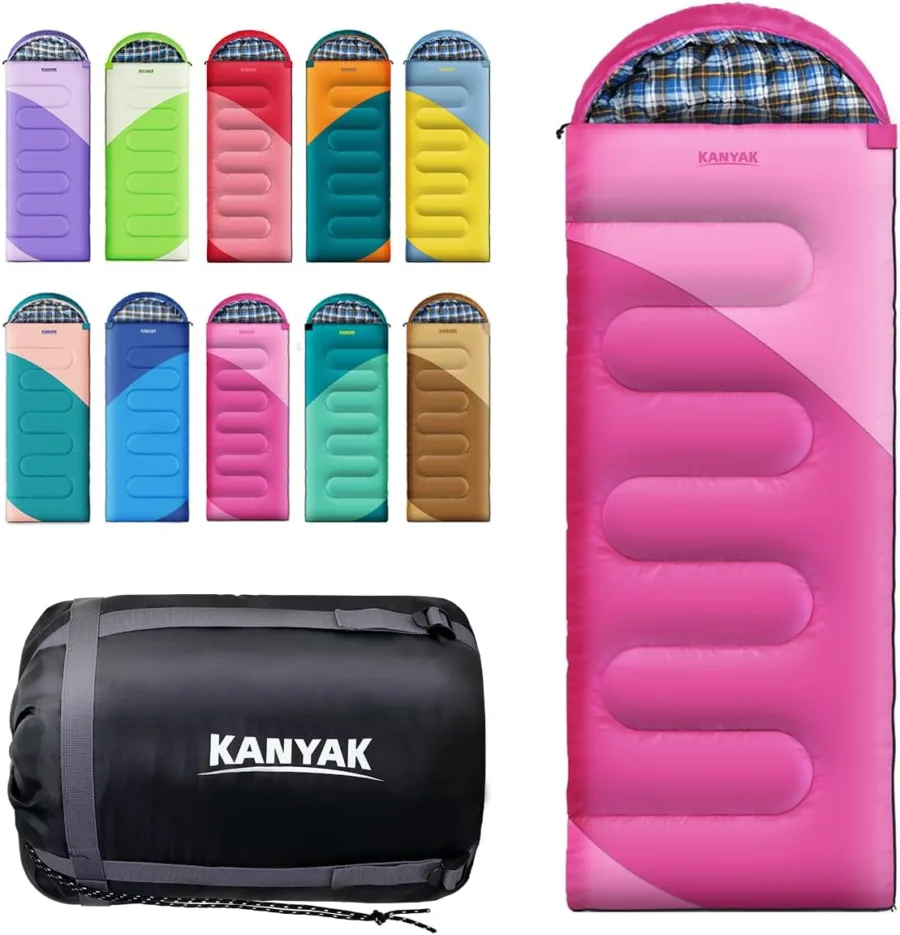
Best for: Campers whose current bag (or liner) is too thin for nights in the 40s.
If you’re shopping for a liner because your summer bag isn’t warm enough, the KANYAK may be the better fix. The seller lists a comfort rating of 41°F and a limit of 32°F, so it’s built for cooler 3-season nights.
It measures 86.6 x 32.48 inches, weighs about 4 lb, and compresses to roughly 11 to 14.2 inches. It has a separate foot zipper for venting your feet, and two of these bags can zip together. Rated 4.5 stars from 1,100+ ratings.
- Clear comfort and limit ratings
- Foot zipper for venting
- Two bags zip together for couples
- Too heavy for backpacking
- Bulky packed size
C. ECOOPRO Warm Weather Sleeping Bag

Best for: Warm-weather campers, scouts and festival-goers who want more than a liner but not much more.
On a 60°F night a liner alone can feel thin, while a 3-season bag feels like an oven. The ECOOPRO fills that gap. The seller rates it for 55 to 60°F, it weighs 1.7 lb, and it compresses to about 11 inches tall.
It’s an envelope (rectangular) bag, 83 x 30 inches, with a nylon shell the seller describes as waterproof and a polyester lining. With 4.5 stars from 9,200+ ratings, it has by far the most reviews of anything in this guide.
- Light and packable for a sleeping bag
- Huge review base
- Low price
- Only for warm nights
- 30 in wide is snug for big sleepers
D. Go Time Gear Life Bivy Emergency Sleeping Bag (2-Pack)

Best for: Hikers, hunters and road-trippers who want an emergency shelter in their pack or car.
This isn’t a liner, and it isn’t something to sleep in every night. The Go Time Gear Life Bivy is an emergency sleeping bag with a reflective Mylar-style lining that bounces your body heat back at you, and a waterproof outer. It weighs only 4.1 ounces, so it disappears into a day pack.
It comes with a 120-decibel whistle and paracord, and the listing we checked is a 2-pack. Rated 4.6 stars from 5,100+ ratings. Reflective bivies trap moisture, so they’re for emergencies, not comfort. In a pinch, though, slipping one over your regular sleeping bag can help on an unexpectedly cold night.
- Tiny and very light
- Useful emergency gear for every pack
- Great reviews
- Not for regular sleeping
- Gets damp inside from condensation
Head-to-Head Comparisons
Friendly Swede VS Litume Fleece
| Feature | Friendly Swede Microfiber | Litume Fleece Mummy |
|---|---|---|
| Photo | | |
| Fabric | Microfiber | Fleece Warmer |
| Shape | Rectangular Roomier | Mummy with hood |
| Opening | Full side zipper Easier | Hood drawstring |
| Best season | Spring to fall, travel | Cold spring and fall nights |
| Rating | 4.4 (2,212) | 4.6 (811) Higher |
| Price | About $26 Cheaper | About $58 |
| Shop | Check Price | Check Price |
Frelaxy VS JAICOM VS Mannice
| Feature | Frelaxy Ultralight | JAICOM Travel Sheet | Mannice Sleep Sack |
|---|---|---|---|
| Photo | | | |
| Weight | 196–310 g Lightest | 1.2 lb | 1.26 lb |
| Pillow feature | None | Pillow pocket | Pillowcase + snaps Best for hotels |
| Sizes | 3 | See listing | 3, incl. double Couples |
| Rating | 4.3 (255) | 4.4 (552) | 4.4 (1,231) |
| Price | About $20 | About $18 Cheapest | About $20 |
| Shop | Check Price | Check Price | Check Price |
Cozysilk Cotton VS Coleman Heritage
| Feature | Cozysilk Cotton Liner | Coleman Heritage 10°F |
|---|---|---|
| Photo | | |
| What it is | Cotton liner | Flannel-lined sleeping bag |
| Warmth | Little on its own | Rated 10°F Much warmer |
| Weight | 552 g Lighter | Very heavy |
| Washable | Yes | Yes |
| Price | About $36 Cheaper | About $102 |
| Shop | Check Price | Check Price |
Buying Guide: How to Choose a Sleeping Bag Liner
1. Decide what you need it for
- Keeping your bag clean: any liner works. Go light and cheap (Frelaxy, JAICOM).
- Extra warmth: pick fleece or thick microfiber (Litume, Friendly Swede).
- Hostels and hotels: look for a pillowcase or pillow pocket (Mannice, JAICOM).
- Car camping comfort: roomy cotton or microfiber (Cozysilk, Friendly Swede).
2. Pick the right fabric
| Fabric | Choose it for | Watch out for | Pick in this guide |
|---|---|---|---|
| Silk | Ultralight backpacking and hut trips | Price, delicate care, narrow foot room | Not in our list (see FAQ) |
| Cotton | Car camping, cabins, RVs, guest beds | Heavy, holds moisture, dries slowly | Cozysilk Cotton |
| Microfiber / brushed polyester | All-round use, soft feel, easy washing | Heavier than ultralight sheets | Friendly Swede, Mannice |
| Thin polyester | Low weight, low price, hygiene | Adds little warmth | Frelaxy, JAICOM |
| Thermal knit | Extra warmth with stretch | Weight and bulk vs. how often you need it | Not in our list (see FAQ) |
| Fleece | Cold sleepers, shoulder seasons | Bulk, too warm in summer | Litume Fleece |
3. Match the shape to your sleeping bag
Mummy liners taper at the feet like a backpacking bag. They sit flat inside a mummy bag and don’t bunch. Rectangular liners are roomier, which side sleepers and restless sleepers love, and they suit rectangular camping bags, cots and beds. A rectangular liner inside a slim mummy bag works, but the extra fabric can twist around your legs.
4. Check the size, not just the length
Look at width as well as length. A 35-inch-wide liner feels snug on broad shoulders. A 41-inch-wide liner gives you room to turn over. If you’re tall, check the length against your height plus a few inches. If a liner has a hood, check whether the listed length includes it.
5. Think about getting in and out
Most cheap liners are an open-topped sack. That’s fine, but a side zipper (Friendly Swede, Cozysilk) makes late-night exits easier and lets you open the liner up flat on hot nights.
6. Weigh it against your pack
For backpacking, every ounce counts. A 7 oz liner is easy to justify. A 1.2 lb liner is worth it only if you’ll use it every night. Compare it against the rest of your ultralight backpacking gear list before deciding.
7. Don’t trust warmth numbers too much
Brands love “adds 10°F” or “adds 27°F”. These aren’t standardized ratings like the ISO ratings on sleeping bags. Real warmth depends on your bag, your pad, what you wear, whether you’re tired or hungry, and whether you naturally sleep warm or cold. Use those numbers to compare liners with each other, not to turn a summer bag into a winter one.
Check Where the Cold Is Coming From First
Before you buy a liner to fix cold nights, figure out why you’re cold. A liner only helps with one of these:
- Cold back and hips? The cold is coming from the ground. Your sleeping bag insulation gets squashed flat under you, so your pad does that job. Check your sleeping pad’s R-value. A liner won’t fix this.
- Cold all over, all night? Your bag is too light for the conditions. Look at ultralight sleeping bags with a suitable comfort rating, or a warmer camping bag like the KANYAK or Coleman above.
- Mostly fine, just chilly before dawn? That’s where a liner shines. A fleece or thick microfiber liner adds a layer for exactly this.
- Cold from drafts under a quilt? Tighten the quilt’s straps first, then consider a liner.
- Damp and clammy? Condensation might be the real culprit. See our guide on stopping condensation in a tent.
Sleeping Bag Liners for Hostels, Huts and Travel
Liners are popular with travelers for a simple reason: you get your own clean sheet in places where you’re not sure about the bedding. Some mountain huts and hostels even ask guests to bring a sleeping sack. For travel, a liner with a pillowcase or pillow pocket (Mannice, JAICOM) is especially handy, and a double size (Mannice) works for couples.

How to Use a Sleeping Bag Liner (Tips That Make a Difference)
- Put the liner in first, then get in. Lay your sleeping bag out, slide the liner in, and shake it down into the footbox so it isn’t twisted.
- Line up the openings. Match the liner’s zipper or opening with your bag’s zipper so you’re not fighting two layers at night.
- Tuck the hood in. With a hooded liner like the Litume, pull the hood inside the bag’s hood before cinching.
- Sleep in clean, dry clothes. Dry base layers plus a liner beat sweaty hiking clothes every time.
- On hot nights, sleep on top. Unzip your bag, lay it flat as a quilt, and sleep in just the liner.
- Air everything out in the morning. Turn the liner and bag inside out and let them dry in the sun or breeze before packing.
How to Wash a Sleeping Bag Liner
Always follow the care label first. As a general rule, most synthetic and cotton liners can go in the washing machine on a gentle cycle in cold or warm water. All the liners in our list are sold as machine washable.
- Use a mild detergent and skip fabric softener, which can coat fibers and reduce breathability. Sea to Summit gives the same advice for its own liner range.
- Wash drawcords and zippers closed, or put the liner in a laundry bag, so nothing snags in a top-loader.
- Air-dry or tumble dry on low. Air-dry silk liners.
- Wash your liner after every trip or two, and you’ll rarely need to wash the sleeping bag itself. When you do, here’s how to wash a sleeping bag safely.
What’s Worth Paying For?
If you mainly want a clean sheet for a few campground trips, a budget liner like the JAICOM is all you need. Pay a bit more for the Friendly Swede if you want a zipper and more room. Spend on the Litume fleece only if you’ll actually use the extra warmth on regular cool-weather trips. And save weight with the Frelaxy if the liner is going on your back every day.
Common Sleeping Bag Liner Mistakes to Avoid
- Buying a liner to fix a cold ground. Upgrade your pad instead.
- Adding the “warmth boost” to your bag’s rating. A 40°F bag plus “10°F” liner is not a 30°F system.
- Using a wide rectangular liner in a skinny mummy bag. It bunches and twists. Go mummy-shaped or narrow.
- Taking cotton backpacking. It’s heavy and slow to dry.
- Never washing the liner. A dirty liner just moves the grime problem one layer in.
- Expecting it to stop bed bugs. It won’t.
Sleeping Bag Liner FAQs
Do sleeping bag liners really add warmth?
Yes, but how much depends on the fabric. Fleece and thick microfiber liners add noticeable warmth. Thin polyester, silk and cotton liners are mainly hygiene layers and add only a little. Your bag, pad and clothing matter just as much.
How much warmth does a sleeping bag liner add?
There’s no standard number. Brands claim anywhere from a few degrees to over 20°F (Litume claims up to 27°F for its fleece liner). These are brand claims, not standardized tests, so don’t add them directly to your sleeping bag’s temperature rating.
What are sleeping bag liners for?
They keep sweat, oil and dirt off your sleeping bag, add a bit of warmth, give you a clean sheet in hostels, huts and hotels, and can work as a light summer sleeping bag on their own.
Are sleeping bag liners worth it?
Yes, if you camp often, own an expensive down bag you’d rather not wash often, sleep a little cold, or stay in hostels and huts. For one or two camping trips a year in a washable synthetic bag, clean sleep clothes may be enough.
Do sleeping bag liners stop bed bugs?
No. A regular liner offers no reliable bed bug protection. The U.S. EPA recommends inspecting the mattress, headboard and luggage rack, and keeping your luggage away from the bed.
Are sleeping bag liners good for summer camping?
Yes. On warm nights a liner alone, or a liner with your sleeping bag opened up like a quilt on top, is often more comfortable than sleeping inside a bag. Pick a thin, light liner like the Frelaxy or JAICOM.
What material is best for a sleeping bag liner?
It depends on the job. Silk for the lowest weight, cotton for a bedsheet feel, microfiber for soft all-round use, thin polyester for low cost and weight, and fleece or thermal knit for warmth.
Do sleeping bag liners keep a sleeping bag clean?
Yes. That’s their main job. Most of the sweat and body oil ends up on the washable liner instead of the bag’s inner fabric. Air out your bag after each trip as well.
Is a silk sleeping bag liner better than cotton?
For backpacking, yes: silk is far lighter and packs smaller. For car camping and cabins, cotton is cheaper, tougher and feels like a regular sheet. Neither adds much warmth.
What is the warmest sleeping bag liner?
Fleece and thick thermal liners are the warmest. In this guide, the Litume Fleece Mummy liner is the warmest pick, with a mummy shape and a drawstring hood.
Do sleeping bag liners keep you warmer under a quilt?
A warm liner adds a layer, but most quilt chills come from drafts. Secure the quilt’s straps and edges first, and make sure your sleeping pad is warm enough for the ground temperature.
Can you use a sleeping bag liner by itself?
Yes. It works as a sheet indoors and as a light covering on very warm nights outdoors. Liners have no real insulation, so carry a proper bag or quilt if it might get cool.
Can a liner turn a summer sleeping bag into a winter bag?
No. Plan winter trips around a sleeping bag and an insulated pad rated for the conditions. A liner can make a borderline night more comfortable, but it can’t turn a summer bag into a winter one.
Should I buy a mummy or rectangular sleeping bag liner?
Choose a mummy liner for a tapered backpacking bag so it doesn’t bunch. Choose a rectangular liner for a roomy camping bag, cot or bed, or if you’re a side sleeper who wants room to move.
How do I choose the right sleeping bag liner size?
Check length, shoulder width and foot width against both your body and your sleeping bag. Tall sleepers should size up. If the liner has a hood, check whether the listed length includes it.
Can I use a liner with a down sleeping bag?
Yes, and it’s a great idea. A liner keeps oils away from the down, so you can wash the bag less often, which helps it keep its loft for longer.
How do you wash a sleeping bag liner?
Follow the care label. Most liners can be machine washed on a gentle cycle with mild detergent and no fabric softener, then air-dried or tumble-dried on low. Air-dry silk. A laundry bag stops drawcords snagging in a top-loader.
What is the best ultralight sleeping bag liner?
In this guide, the Frelaxy Ultralight is the lightest, starting at 196 g (about 6.9 oz) depending on size. Silk liners are another ultralight option if you’re willing to pay more.
What about Sea to Summit, COCOON and Klymit liners?
They’re popular brand-name options. Sea to Summit describes its Reactor Fleece as its warmest liner, and its Breeze range is aimed at warm, humid nights. REI lists the COCOON Silk MummyLiner at 4.7 oz. Klymit says its Nest Hot Weather liner fits both mummy and rectangular bags. Compare them with the picks above on price, weight and shape.
Is a sleeping bag liner the same as a sleep sack or travel sheet?
Basically, yes. “Sleep sack” and “travel sheet” usually mean a thin rectangular liner meant for hostels and hotels, often with a pillow pocket, like the Mannice and JAICOM. “Sleeping bag liner” covers those plus warmer mummy-shaped liners for camping.
Final Verdict: The Best Sleeping Bag Liners
For most people, the Friendly Swede Microfiber liner is the best sleeping bag liner: roomy, soft, easy to wash and easy to get in and out of. The Litume Fleece Mummy is the premium choice for cold sleepers, the Frelaxy Ultralight is the pick for backpackers, the Mannice Sleep Sack is the best value for travel, the JAICOM is the best budget option, and the Cozysilk is the one for real cotton lovers.
And if your bag just isn’t warm enough, skip the liner and look at a warmer bag like the Coleman Heritage or KANYAK instead.
Our winner: Check Friendly Swede PriceAll Liners and Sleeping Bags in This Guide: Tap to See Today’s Price
Every product from this guide in one place. Tap a photo or button to check the latest price and reviews on Amazon.
Complete Your Sleep Kit: Readers’ Favorite Picks From Our Other Gear Guides
One top pick from each of our other buying guides. Tap a photo to see it on Amazon.



More Sleep System & Camping Guides
Editorial disclosure and sources: This guide is based on manufacturer specifications and Amazon listing details, ratings and review counts checked on November 12, 2026, plus published guidance from the U.S. EPA (bed bugs while traveling) and Sea to Summit (liner care). Warmth figures such as “adds 10°F” are the sellers’ own claims. No hands-on testing is claimed. Specs, prices and stock change, so check the listing before you buy.
2 thoughts on “6 Best Sleeping Bag Liners for Camping & Backpacking (2026): Fleece, Cotton, Microfiber & Ultralight Picks”