
Washington, DC doesn’t shut down when the museums close at 5:30. In some ways, that’s when the city gets good.
The tour buses leave. The marble memorials light up, gold and white, against a dark sky. The air cools off after a sticky summer afternoon. Down by the Potomac, the waterfront fills with people eating outside, while across town the theaters open their doors and the jazz clubs warm up.
Best of all, some of the most memorable things to do in Washington DC at night cost nothing. This guide covers 30 evening ideas: monuments, military parades, waterfronts, shows, live music, sports, late museums and seasonal events. You’ll also find ideas for couples, families and solo travelers, safety tips, Metro hours, and a ready-made plan for your first night.
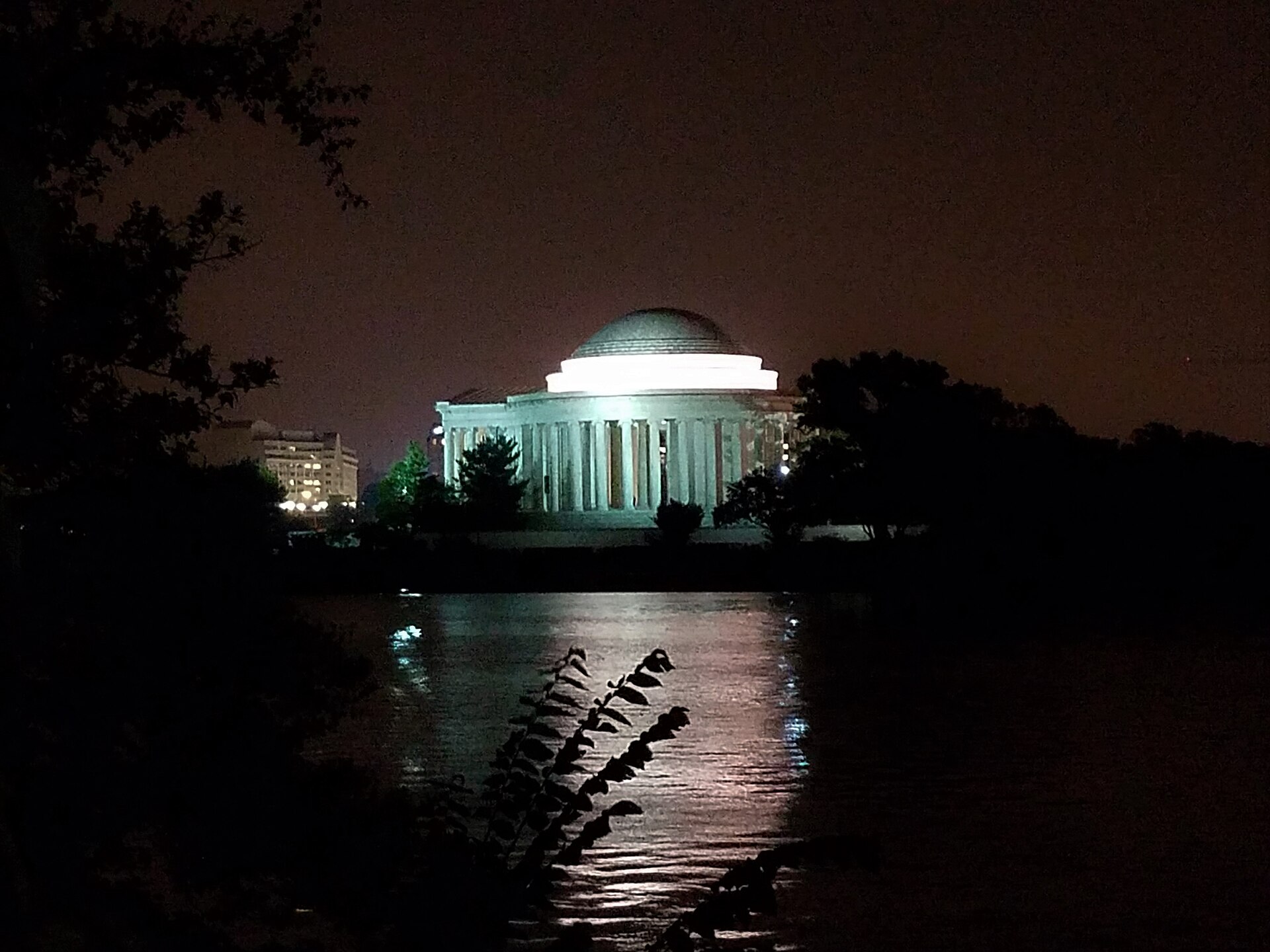
What Can You Do in Washington DC at Night?
The best things to do in Washington DC at night are seeing the illuminated memorials on the National Mall, especially the Lincoln and Jefferson Memorials; spending the evening at The Wharf or Georgetown waterfront; catching a show, concert or live jazz; taking a night monuments tour; and watching a Nationals, Capitals or Wizards game. In summer, the free Marine Corps parades are a unique bonus.
On your first night, start with the monuments. They’re free, unmistakably Washington, and honestly better after dark. Save other evenings for food, music, theater and the neighborhoods.
Washington DC at Night at a Glance
| Night Activity | Best For | Cost |
|---|---|---|
| Monuments on the National Mall | First-time visitors | Free |
| Jefferson Memorial and Tidal Basin | Views and photos | Free |
| Marine Corps summer parades | Something truly unique | Free |
| The Wharf | Dinner, music, waterfront | Free to explore |
| Georgetown waterfront | Sunset walks, dates | Free |
| Night monuments tour | Seeing a lot fast | Paid |
| Theater or comedy | Culture, rainy nights | Paid |
| Live jazz or concerts | Music lovers | Paid |
| Potomac evening cruise | Couples, groups | Paid |
| Pro sports game | Families, groups | Paid |
| Rooftop drinks | Sunset views | Paid |
Washington DC Monuments at Night
The outdoor memorials on the National Mall are open 24 hours a day and free, and National Park Service rangers are usually on duty at the major memorials into the late evening. The crowds thin out, the lighting is dramatic, and in summer it’s far cooler than mid-afternoon.
1. See the Lincoln Memorial After Dark
If you do just one thing in DC at night, make it this. The giant seated Lincoln glows inside the columns, and the steps are quieter than at any point during the day. Then turn around: the Reflecting Pool leads your eye straight to the lit-up Washington Monument, with the Capitol dome beyond it. It’s the classic Washington view, and it costs nothing.
2. Walk the National Mall at Night
You don’t need to see every monument in daylight. Save some for the evening, and spend your daytime hours in the museums instead. An easy route that takes 60 to 90 minutes:
Washington Monument → World War II Memorial → Reflecting Pool → Lincoln Memorial → Korean War Veterans Memorial → Vietnam Veterans Memorial
With more energy, continue south to the MLK Memorial and around the Tidal Basin. The distances are bigger than they look; seeing the next monument doesn’t mean it’s close. Wear comfortable shoes.
3. World War II Memorial
Between the Washington Monument and the Lincoln Memorial, the WWII Memorial’s fountains and granite pillars are beautifully lit at night. Take a few minutes to walk around the Freedom Wall of gold stars instead of just snapping a photo and moving on.
4. Korean War and Vietnam Veterans Memorials
Both are especially moving after dark. At the Korean War Veterans Memorial, 19 steel soldiers in ponchos seem to move through the shadows, and their reflections appear in the polished wall beside them. At the Vietnam Veterans Memorial, visitors run their fingers over the 58,000-plus names in the soft light. Speak quietly; people often come here to remember someone.
5. The Jefferson Memorial and the Tidal Basin
Many visitors skip the Jefferson Memorial at night, and that’s a mistake. The domed memorial reflects in the Tidal Basin like something out of a postcard, and it’s one of the most peaceful places in the city after sunset.
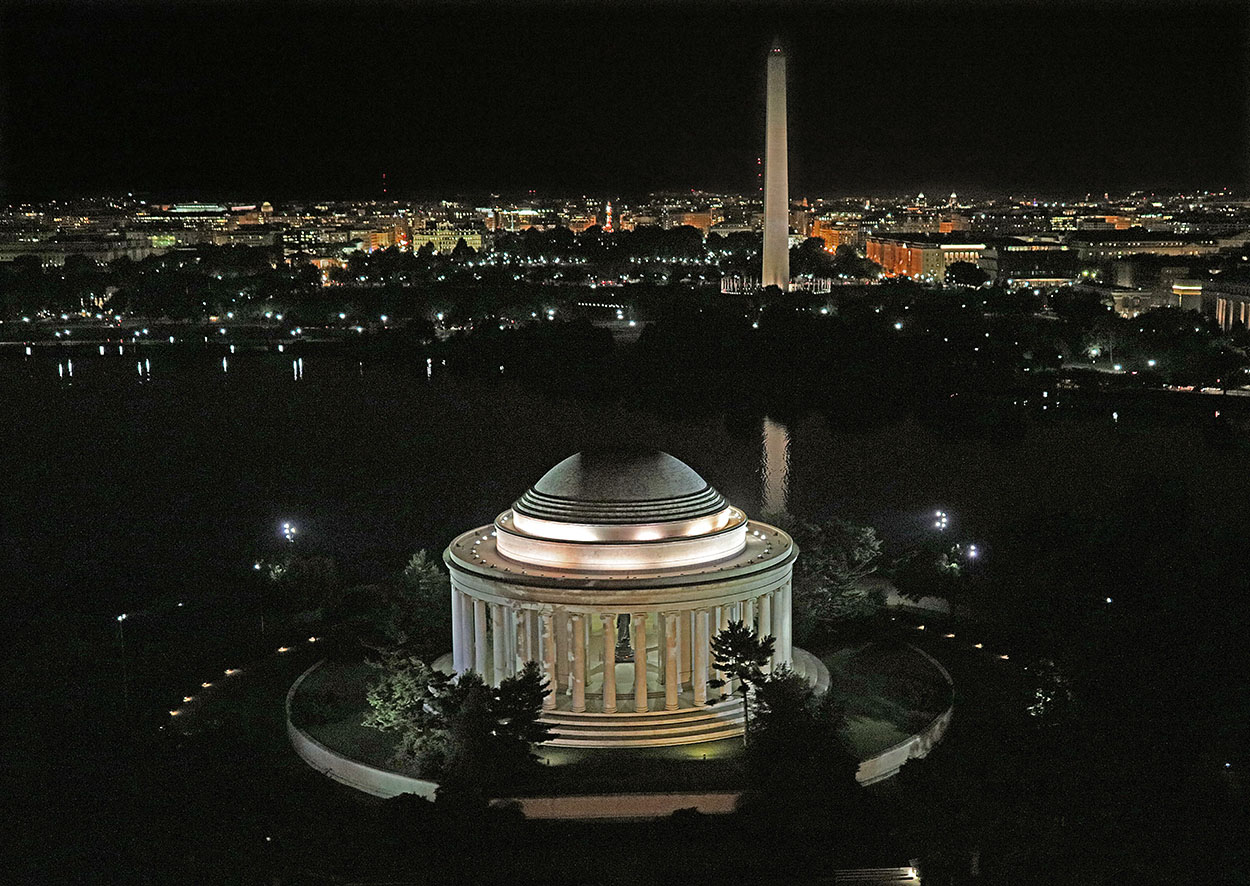
Walking the Tidal Basin loop is easier than ever: the south side’s new seawall and wider path were completed in 2026. Along the way you’ll pass the FDR Memorial, with its waterfalls and outdoor “rooms,” and the MLK Memorial, where the Stone of Hope stands out against the night.
6. The U.S. Capitol at Night
The Capitol dome is lit every night, and the view from the West Front, across the Capitol Reflecting Pool toward the Washington Monument, is one of the best photo spots in the city. It works well as the start or finish of a Mall walk from the east end.
7. The Marine Corps Sunset Parade
This is one of DC’s best-kept summer secrets. On Tuesday evenings in summer, the Marine Corps puts on a free Sunset Parade at the Marine Corps War Memorial (the Iwo Jima statue) in Arlington. You’ll see the Marine Drum & Bugle Corps, the Silent Drill Platoon’s precision rifle routine and the memorial at golden hour.
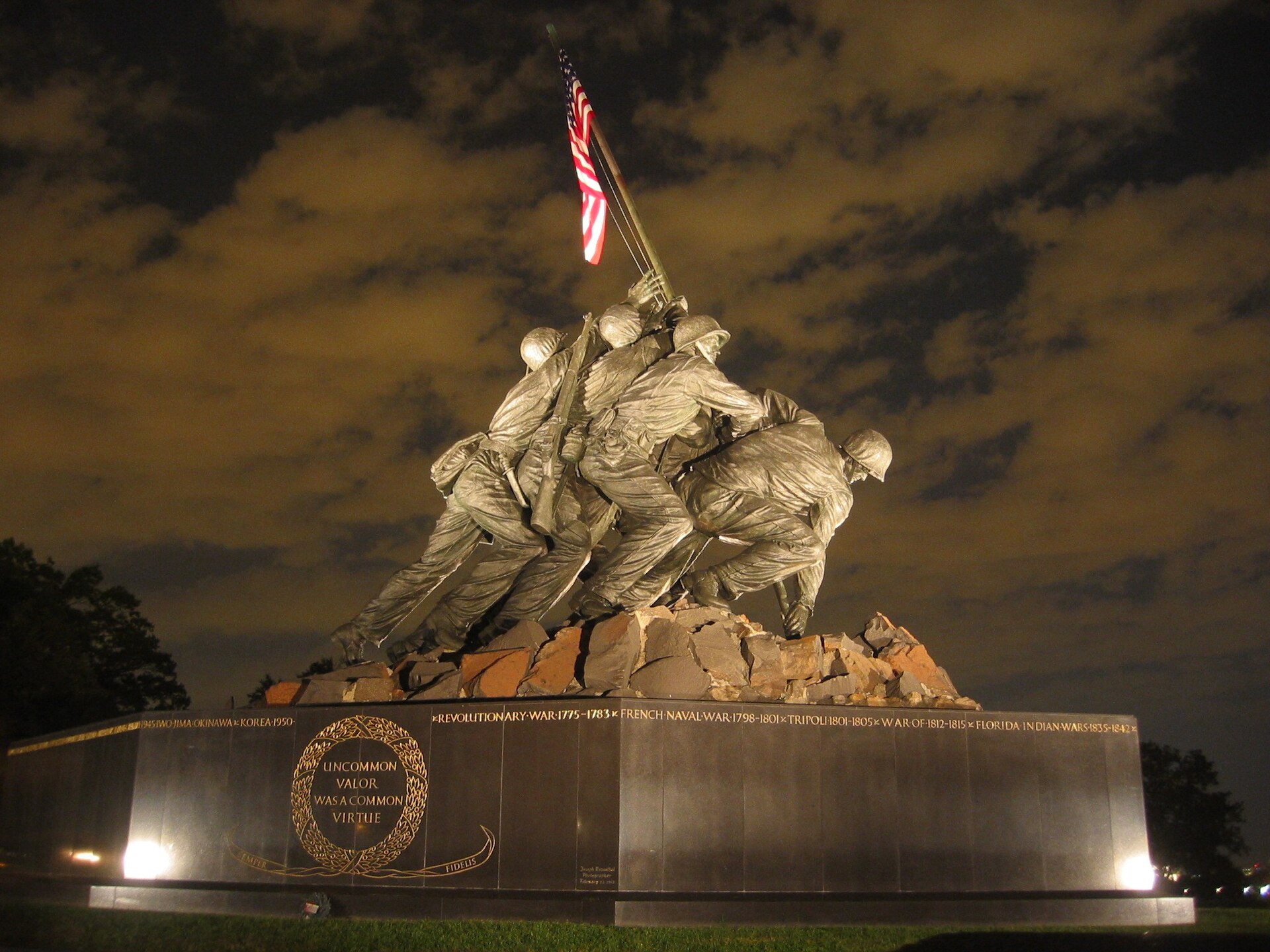
Bring a blanket or a folding chair, and check the Marine Barracks Washington schedule for this year’s dates before you go.
8. The Marine Barracks Friday Evening Parade
Also in summer, the historic Marine Barracks at 8th and I Streets on Capitol Hill hosts a longer Friday Evening Parade, with music, marching and the Silent Drill Platoon under the lights. It’s free, but seating is limited and reservations are typically required, so book well ahead. Visitors often call it the highlight of their whole trip.
9. Take a Night Monuments Tour
If you’d rather not walk several miles, a guided “monuments by moonlight” tour covers the major memorials in about two to three hours. Options include trolleys, open-top buses, bikes, Segways and walking tours. For something different, there are also ghost tours that explore the haunted history of Lafayette Square and Capitol Hill.
Is a night tour worth it? If you’re short on time or don’t want to walk far, yes. You’re paying for transport and commentary, since the monuments themselves are free. If you like walking and have a full evening, you can easily do it yourself.
Waterfront Evenings
10. Spend the Evening at The Wharf
The Wharf is the easiest place in DC to build a whole night. Arrive before sunset, walk the piers, have dinner by the water, and stay for drinks or a concert at The Anthem. There are swings on the pier, fire pits in the cooler months and plenty of outdoor tables. It’s perfect when a group can’t agree: some want dinner, some want drinks, someone wants music, and The Wharf covers all three.
11. Walk the Georgetown Waterfront
Georgetown feels completely different from the monumental core: brick sidewalks, historic row houses, the C&O Canal and the Potomac riverfront. An easy evening here: wander the historic streets, watch the sunset at Georgetown Waterfront Park, then have dinner and dessert. In warm weather, the riverside restaurants around Washington Harbour are packed with people eating outside.
12. Take an Evening Potomac Cruise
Seeing the lit-up monuments and the Kennedy Center from the river is a whole different perspective. Options include sightseeing cruises, sunset sailings and dinner cruises from The Wharf, Georgetown and Alexandria. They’re great for couples and special occasions, but shorter sightseeing cruises work well for families too. Schedules are seasonal, so check dates.
13. Ride the Water Taxi to Old Town Alexandria
For an easy evening escape, take the water taxi from The Wharf or Georgetown down the river to Old Town Alexandria. King Street’s cobblestone blocks are lined with restaurants and bars, and the waterfront is lovely at dusk. You can return by water taxi (check the last departure) or on the Metro from King St-Old Town station.
Shows, Music and Culture After Dark
14. See a Play or Musical
DC has one of the strongest theater scenes in the country. Look at what’s playing at Arena Stage, the Shakespeare Theatre Company, the National Theatre, Woolly Mammoth, Studio Theatre, the Folger Theatre and the Warner Theatre. Checking calendars a few weeks before your trip can uncover something far more memorable than another bar.
15. Catch a Show at Ford’s Theatre
Ford’s Theatre, where President Lincoln was assassinated in 1865, is still a working theater. Seeing a performance in the same room is a rare mix of history and entertainment. Its holiday production of A Christmas Carol is a local tradition.
16. The Kennedy Center
For decades, the Kennedy Center has been DC’s flagship venue for theater, ballet, opera, symphony and jazz, with a riverside terrace that’s worth a visit on its own. Its famous free Millennium Stage shows have been a budget favorite.
In September 2026, though, the center’s board closed the building to the public amid a legal dispute over its name, and the Kennedy Center Honors moved to Capital One Arena. Check its official calendar for what’s actually running before you plan an evening around it.
17. Listen to Live Jazz
DC has deep jazz roots, and Duke Ellington grew up here. The best-known spot is Blues Alley, an intimate, candlelit supper club tucked down an alley in Georgetown that has been hosting jazz greats for decades. Smaller jazz nights pop up in bars and restaurants across the city, especially around U Street. Check calendars, since music doesn’t run every night.
18. See a Concert
DC’s music venues are excellent. The 9:30 Club is one of the most famous rock clubs in America. The Anthem at The Wharf draws big touring acts. Historic halls like the Lincoln Theatre and Howard Theatre carry U Street’s “Black Broadway” legacy. In summer, Wolf Trap in Vienna, Virginia, is the country’s only national park for the performing arts, where you can picnic on the lawn while the stars play.
19. Go to a Comedy Show
Not every night needs history. The DC Improv near Dupont Circle hosts touring comedians and local stand-up, and smaller clubs and improv theaters run shows across the city. It’s a great rainy-night backup.
20. Visit a Museum Open Late
Most Smithsonian museums close at 5:30 p.m., but there’s a handy exception. The National Portrait Gallery and the Smithsonian American Art Museum, which share a building in Penn Quarter, typically stay open until 7 p.m. Their glass-roofed Kogod Courtyard is a lovely, calm place to sit. Many museums, including the National Gallery of Art and the Spy Museum, also host special after-hours events, so check their calendars for your dates.
Night Games and Sports
21. Catch a Capitals or Wizards Game
The Washington Capitals (NHL) and Washington Wizards (NBA) play at Capital One Arena in Penn Quarter, with seasons running roughly October through April. Even if you’re not a big fan, a live game is a fun break from museums. Eat in Chinatown before puck drop or tip-off.
22. See a Nationals Night Game
From spring through early fall, a Washington Nationals evening game at Nationals Park is a relaxed, very American night out. Arrive early to explore Navy Yard. Games run about three hours, so don’t plan anything big afterward.
23. Watch Pro Soccer at Audi Field
Audi Field, near Navy Yard, is home to D.C. United (MLS) and the Washington Spirit (NWSL), one of the best-supported women’s teams in the country. Night matches have a great atmosphere, and tickets are often easier to get than for other sports.
Evening Neighborhoods
24. Navy Yard and the Capitol Riverfront
Even without a game, Navy Yard is a pleasant evening spot: walk the Anacostia Riverwalk, watch the lights at Yards Park, and have dinner or a beer at Bluejacket, a brewery in an old boilermaker factory. On game nights, it’s packed and buzzing; on off nights, it’s calm.
25. Penn Quarter and Chinatown
Central, lively and right on the Metro. You’ll find dozens of restaurants, the arena, the late-opening museums and several theaters within a few blocks. Check the arena schedule before choosing where to eat, because event nights fill every table.
26. Dupont Circle, Logan Circle and 14th Street
For a relaxed night with no fixed plan, start at Dupont Circle’s fountain, browse a late bookstore, then walk east to Logan Circle and the 14th Street corridor, one of DC’s best stretches for restaurants, cocktail bars and small theaters. For specific bar and club picks, see our guide to the best places to go out in Washington DC.
27. U Street
U Street was once known as “Black Broadway,” and its music history still shapes the street. Today it’s one of DC’s liveliest nightlife strips, with music venues, bars and late-night food, including a stop at Ben’s Chili Bowl, open since 1958. Go here for an active night out rather than quiet sightseeing.
28. Union Market
For food-focused groups, the Union Market district in NoMa mixes a food hall with restaurants, bars and frequent events. Everyone can order something different, which makes it great for groups. Hours vary by vendor, so check before you go.
More Ways to Enjoy DC at Night
29. Have Sunset Drinks on a Rooftop
DC’s height limits mean rooftops look out over domes and monuments, not walls of skyscrapers. The best views are from hotel rooftops near the White House, along 14th Street and at The Wharf. Aim for sunset and book ahead on weekends.
30. Photograph Washington After Dark
DC is one of the easiest cities in America for night photography. The best spots are:
- The Lincoln Memorial steps, looking toward the Washington Monument
- The Jefferson Memorial across the Tidal Basin
- The Capitol from its West Front Reflecting Pool
- The WWII Memorial fountains
- The view of the Lincoln Memorial from Arlington Memorial Bridge
- The whole skyline from the Netherlands Carillon area in Arlington
Go at blue hour, about 20 to 40 minutes after sunset, when there’s still color in the sky and the lights have just come on. Phones in night mode do a surprisingly good job. Tripods are generally fine at the outdoor memorials for personal use, but not inside the memorial chambers or museums.
Seasonal Nights Worth Planning Around
- Spring: cherry blossoms around the Tidal Basin, lit by the monuments at night (late March to early April).
- Summer: the Marine Corps parades, outdoor concerts at Wolf Trap, Nationals games, rooftop season, and Fourth of July fireworks on the Mall.
- Fall: crisp walking weather, the start of hockey and basketball seasons, and Halloween events.
- Winter: ZooLights at the National Zoo, the National Christmas Tree near the White House, ice skating in the National Gallery Sculpture Garden, and holiday shows like Ford’s Theatre’s A Christmas Carol.
Free Things to Do in Washington DC at Night
A great DC evening can cost exactly $0. Free options include:
- Every memorial on the National Mall, open 24 hours.
- The Jefferson Memorial and a Tidal Basin walk.
- The Capitol and its reflecting pool.
- The Marine Corps Sunset Parade and Evening Parade (summer).
- The National Portrait Gallery and American Art Museum until about 7 p.m.
- Strolling Georgetown, The Wharf and Dupont Circle.
- Night photography around the monuments.
For daytime freebies too, see our list of free things to do in DC.
Washington DC at Night for Every Type of Traveler
For Couples
Keep it simple and atmospheric. Three easy combinations: dinner, the WWII Memorial, then the Lincoln Memorial; Georgetown streets, a waterfront sunset, dinner and jazz at Blues Alley; or The Wharf, dinner and an evening cruise. For more ideas, see our guide to Washington DC for couples.
With Kids
Keep evenings shorter and start earlier. Families do well with an early-evening monument walk (kids love seeing the Lincoln Memorial lit up), a trolley tour, a ballgame, a waterfront stroll or ZooLights in winter. Older kids find the Marine Corps parades unforgettable. For the full family plan, see Washington DC with kids.
Under 21
There’s lots to do without a bar: the monuments, night tours, theater, sports, all-ages concerts, comedy shows with all-ages policies, The Wharf, Georgetown, cruises and the parades. Always check age rules with individual venues, since many clubs are 21+.
Solo Travelers
DC is easy to enjoy alone at night. Join a guided night tour for instant company, grab a single seat at the theater or a game, sit at a bar for live jazz, or spend the evening photographing the monuments. Stick to busy, well-lit areas when walking back.
Where to Go in Washington DC at Night: By Neighborhood
| Area | Best For |
|---|---|
| National Mall | Illuminated monuments, first nights |
| Georgetown | Dates, dining, waterfront, jazz |
| The Wharf | Waterfront, concerts, dinner |
| U Street | Live music, late nights |
| 14th Street / Logan Circle | Restaurants, bars, theater |
| Dupont Circle | Casual evenings, bars |
| Penn Quarter / Chinatown | Sports, shows, dining |
| Navy Yard | Baseball, soccer, breweries |
| Old Town Alexandria | Quieter, historic evenings |
Choose by what you actually want to do, not just by what’s popular. If you’re still picking a hotel, our guide to where to stay in Washington DC shows which areas are liveliest at night.
Practical Tips for DC at Night
Is Washington DC Safe at Night?
The main visitor areas, including the National Mall memorials, Georgetown, The Wharf, Dupont Circle and Penn Quarter, stay busy after dark, and most visitors explore them at night without problems. Like any big city, conditions vary by street and hour, so use normal precautions. Stick to well-lit, populated routes, keep your phone and valuables secure, plan your route home before you leave, and take a rideshare rather than walking a long, unfamiliar stretch late at night.
The National Mall is huge and open. Stay on the main paths between the memorials, and if you finish far from your hotel, take the Metro or a rideshare rather than adding another mile in the dark.
How Late Does the DC Metro Run?
As of 2026, Metrorail generally runs until midnight Sunday through Thursday, and until 2 a.m. on Friday and Saturday nights. But the last train from each station leaves earlier than closing time, and weekend track work can change schedules. Check WMATA’s trip planner on the day, especially after concerts, games and late shows. Metrobus and rideshares fill the gaps.
What Time Should You Start?
For monuments, start around sunset. You’ll see them three ways: in daylight, at blue hour and in full darkness. For dinner and nightlife, 6 to 8 p.m. is natural. For shows and games, let the event set the schedule. Sunset ranges from about 4:50 p.m. in December to 8:35 p.m. in late June.
DC at Night by Season
Summer: nights are the best part of the day. Do museums in the heat of the afternoon and head out after the sun drops, but carry water, because the humidity doesn’t leave at sunset. Winter: mix indoors and outdoors, for example dinner, then the Lincoln Memorial, then a warm drink, and dress for the wind on the Mall. Rainy nights: head for theater, comedy, concerts, sports or a late museum. In light rain, the lit monuments reflected on wet pavement make fantastic photos. For month-by-month details, check our Washington DC weather by month guide.
A Perfect First Night in Washington DC
If it’s your first visit, don’t overthink it.
- Early evening: have dinner in Penn Quarter, Downtown or Foggy Bottom.
- Sunset: walk to the Washington Monument.
- Blue hour: continue to the WWII Memorial as the fountains light up.
- After dark: walk along the Reflecting Pool to the Lincoln Memorial. Take your time on the steps and look back toward the Washington Monument.
- Bonus: if you still have energy, visit the Korean War and Vietnam memorials next door.
- Home: take the Metro from Foggy Bottom or a rideshare back.
It’s simple, it’s free except for dinner, and it’s unmistakably Washington.
Your Second and Third Nights
Make each one different: The Wharf with dinner and live music; Georgetown with sunset, dinner and jazz; Dupont or 14th Street with dinner and a show; a ballgame in Navy Yard; or, on a summer Tuesday or Friday, a Marine Corps parade. For a full day-and-night plan, see our Washington DC 3-day itinerary.
Mistakes to Avoid
- Trying to walk everywhere. Use the Metro or a rideshare between neighborhoods.
- Cramming every monument into one night. Pick a manageable route.
- Assuming museums stay open late. Most close at 5:30 p.m.
- Showing up at popular rooftops or the Marine Barracks parade without a reservation.
- Missing the last train. Check it before you head out.
- Spending every night in the same area. DC has many distinct evening neighborhoods.
Things to Do in Washington DC by Day
The best DC days end at night, but they start on the Mall. Most Smithsonian museums close at 5:30 p.m., so spend the daylight hours on the things that close early: the Washington Monument, the Capitol tour, the Library of Congress, the National Archives and a museum like Air and Space or Natural History. Then save the memorials for after dinner, when they’re lit up and quiet. For daytime ideas, see our guide to the 30 best things to do in Washington DC, or follow our Washington DC 3-day itinerary.
Related Guides
Planning more of this trip? These guides pick up where this one leaves off:
- Free Museums in Washington DC
- Best Restaurants in Washington DC
- Things to Do in Georgetown Washington DC
- National Mall Guide
FAQ: Things to Do in Washington DC at Night
What are the best things to do in Washington DC at night?
See the illuminated memorials, especially the Lincoln and Jefferson, spend an evening at The Wharf or Georgetown, see a show or live jazz, take a night tour, catch a game, and in summer attend a free Marine Corps parade.
Are the DC monuments open at night?
Yes. The outdoor memorials on the National Mall are open 24 hours a day and free, though the Washington Monument’s elevator and museum buildings close in the evening.
What is the best monument to see at night?
The Lincoln Memorial, for its glowing statue and the view down the Reflecting Pool. The Jefferson Memorial reflecting in the Tidal Basin is a close second.
What can you do for free in DC at night?
Walk the memorials, circle the Tidal Basin, see the lit Capitol, stroll Georgetown and The Wharf, visit the Portrait Gallery until about 7 p.m., and attend the summer Marine Corps parades.
Are any museums in DC open late?
The National Portrait Gallery and Smithsonian American Art Museum typically stay open until 7 p.m. Other museums host occasional after-hours events, so check their calendars.
Is Washington DC safe at night?
The main tourist areas stay busy in the evening and most visitors explore them without problems. Use normal big-city precautions: stay on lit, busy routes and plan your trip home.
How late does the Metro run in DC?
Generally until midnight Sunday to Thursday and until 2 a.m. on Friday and Saturday, but last trains vary by station. Check WMATA’s trip planner on the day.
What can families do in DC at night?
An early-evening monument walk, a trolley night tour, a ballgame, a waterfront stroll, ZooLights in winter and the Marine Corps summer parades.
What is there to do in DC at night if you’re under 21?
Monuments, night tours, theater, sports, all-ages concerts and comedy, The Wharf, Georgetown, cruises and the Marine parades.
Do you need a car in DC at night?
No. Metro, walking and rideshares cover the central areas, and you’ll avoid expensive parking.
Don’t Let Sightseeing Stop at Sunset
Nighttime isn’t the part of your Washington trip when sightseeing ends. It’s when you see the city differently. Spend the days in museums, then return to the Mall as the monuments light up. Give another evening to the Potomac. Catch a show, hear some jazz, cheer at a ballgame, or watch the Silent Drill Platoon on a summer night.
And if you only have one evening? Walk from the Washington Monument to the Lincoln Memorial after sunset. Of all the things to do in Washington DC at night, that simple walk is very hard to beat.