
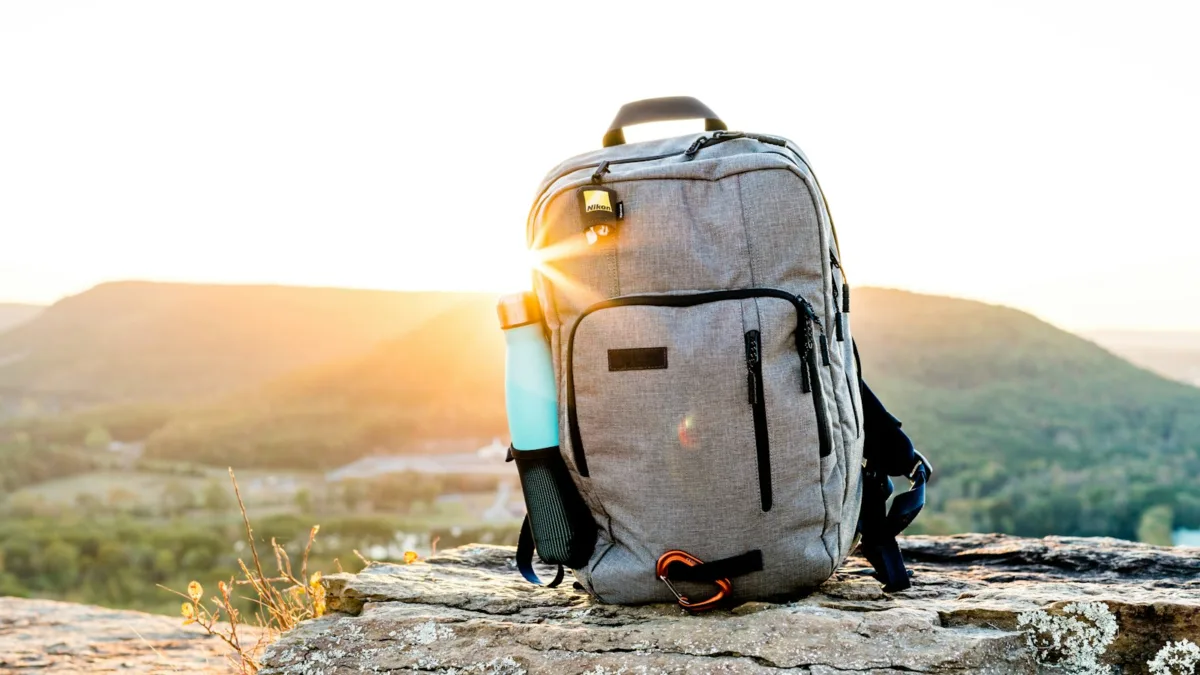
A gear checklist helps long before you pick a trail. It gives you time to walk in new shoes, adjust a new pack, and find out the headlamp you bought takes a different battery than the ones in your drawer.
This hiking gear checklist covers the reusable equipment you own, borrow or plan to buy, sorted by type. It also works as a hiking equipment checklist to test everything before the season starts. For food, water and the things you use up on each trip, see the hiking supplies checklist. For the full trip list, see the complete hiking checklist.
Quick answer: The core hiking gear is footwear that fits, a comfortable backpack, layered clothing with a rain jacket, a navigation setup, a headlamp, a first-aid kit, a knife or multi tool, water bottles or a reservoir, and an emergency shelter. Add trekking poles, a water filter and a power bank for longer hikes. Winter hikes need traction and warmer layers, and overnight trips need a shelter, a sleeping bag and pad, and a stove.
What Hiking Gear to Buy First
You don’t need everything at once. If you’re building a kit from scratch, this order gets you hiking sooner and saves money.
| Priority | Gear | Why |
|---|---|---|
| 1 | Hiking shoes or boots and good socks | Sore feet and blisters end more hikes than anything else |
| 2 | Rain jacket and a warm layer | Keep you safe when the weather turns |
| 3 | Daypack | Carries water, food and safety gear comfortably |
| 4 | Headlamp and first-aid kit | Small, cheap, and you’ll be glad you have them |
| 5 | Trekking poles, water filter, power bank | Worth buying once your hikes get longer |
| 6 | Tent, sleeping bag and pad, stove | Only once you’re ready to camp. Borrow or rent first |
🥾 Footwear and Clothing
Try everything on together, with the socks you’ll actually hike in. Shoes should leave room to wiggle your toes and stop your heel from lifting on climbs.
- Hiking boots, hiking shoes or trail runners for the terrain
- Waterproof hiking shoes for wet trails
- Hiking socks (merino or synthetic) and liner socks
- Insoles or orthotics, if you use them
- Gaiters
- Hiking sandals or camp shoes
- Moisture-wicking base layers
- Hiking pants, shorts or winter pants
- Fleece and insulated jacket
- Waterproof hiking jacket
- Waterproof hiking pants or a poncho
- Sun hat, sunglasses and gloves

🎒 Pack, Water and Carry Gear
- Daypack, 15 to 30 liters
- Weekend or overnight backpack, 40 to 65 liters
- Pack liner, rain cover and dry bags
- Shoulder-strap phone holder
- Water bottles or a hydration reservoir
- Water filter or purifier
- Collapsible water container
- Trekking poles (or poles sized for women)
- Sit pad
Walk around the house with the pack fully loaded. Check whether the shoulder straps rub, the load shifts as you walk, or your heels slip in your shoes. Our hiking pack checklist shows where each item should go.
🧭 Navigation, Light and Safety Gear
- Paper map and compass
- Handheld GPS or hiking watch
- Satellite messenger or personal locator beacon
- Walkie-talkies for groups
- Headlamp and backup light
- Power bank and cables
- First-aid kit
- Multi tool or knife
- Emergency bivy and whistle
- Lighter and fire starter
- Repair kit: tape, cord, zip ties, spare buckle
- Camera and binoculars (optional)
🔧 Test and Maintain Your Gear
Do this at the start of each season and a few days before any big trip. It’s far easier to fix a problem at home than at the trailhead.
- Check bottles, reservoir seals and hoses for leaks
- Check your water filter works, and that its adapters fit your bottles
- Switch on your headlamp, and charge it or replace the batteries
- Test your power bank with the exact cable you’ll carry
- Check your compass needle, and keep your map in a waterproof pouch
- Open the first-aid kit and emergency shelter pouches, and replace anything used or out of date
- Check your multi tool, tape, cord, spare buckles and zip ties
- Check pole locks and tips, and replace worn tips
- Check boot tread and laces, and reproof waterproof jackets that no longer bead water
After every wet hike: dry boots slowly away from direct heat. A boot dryer helps. Hang your rain jacket and tent so they dry fully, and see how to store camping gear between trips.
❄️⛺ Winter and Overnight Equipment
For winter hikes:
- Microspikes or other traction for the conditions
- Snowshoes for deep snow
- Poles with snow baskets
- Insulated bottle or bottle sleeve
- Goggles for wind and glare
- Ice axe and crampons, only if you’re trained to use them
For overnight trips:
- Backpacking tent, see what size you need
- Footprint, stakes and repair kit
- Sleeping bag or quilt
- Insulated sleeping pad and patch kit
- Backpacking stove and a pot
- Food storage or a bear canister where required
✅ Final Trailhead Check
- Pack straps, footwear grip, laces and pole locks are all good
- Electronics are charged, and the spare batteries fit
- Your filter is assembled, or you’re carrying all the water you need
- Overnight trips: shelter parts counted and sleep system checked
📋 Free printable checklist
Every gear item on this page is in the free hiking checklist PDF, sorted by section.
Hiking Gear Checklist FAQs
What hiking gear should I buy first?
Start with footwear that fits, a rain jacket and warm layer, and a daypack that carries the essentials comfortably. Then add a headlamp and first-aid kit.
Can I use a regular backpack for hiking?
On a short, easy trail, yes, if it holds your gear securely and feels comfortable loaded. For longer hikes, a hiking pack with a hip belt carries weight much better.
Do I need waterproof hiking shoes?
It depends on your trails. They help on wet or muddy routes and in cold weather. In hot, dry conditions, breathable shoes dry faster and can feel better. Fit and grip matter more than either.
What should I check on trekking poles?
Check that the locks hold, the tips aren’t worn down, and any snow baskets you plan to use fit your poles.
What equipment can I borrow or rent?
Tents, sleeping pads, stoves and snowshoes are easy to borrow or rent. Set them up at home first so you know every part is there.
When should I replace hiking gear?
When cleaning, repairing or replacing a part no longer makes it reliable. Worn-out tread, a jacket that soaks through and a pad that won’t hold air are common signs.
Is a hiking gear checklist the same as a packing list?
Not quite. A gear checklist covers the equipment you own. A packing list is what you take on a specific trip, including food, water and supplies. Use the hiking checklist for that.
More Hiking Checklists
🥾Day Hiking ChecklistShort loops to full-day trails.Open checklist →
❄️Winter Hiking ChecklistLayers, traction and dry spares for snow and ice.Open checklist →
⛺Overnight Hiking ChecklistShelter, sleep and kitchen for one night out.Open checklist →
🏔️3-Day Hiking ChecklistMeals, fuel and power for two nights.Open checklist →
🧭Ten Essentials ChecklistThe safety gear that goes on every hike.Open checklist →
🎒Hiking Pack ChecklistWhat goes where in your backpack.Open checklist →
🥜Hiking Supplies ChecklistFood, water and refills to restock.Open checklist →
🩹First-Aid Kit ChecklistWhat to carry and restock.Open checklist →
4 thoughts on “Hiking Gear Checklist: Equipment to Own, Fit and Check”